Everyone has moments they wish they could take back. One mistake from a burst of anger can ruin years of trust and permanently change the way a family sees each other. It could also leave wounds that no amount of apologies would heal. You see, for some people, moving on is possible, but for others, it never really is.
This man spent 5 years trying to make amends after violently lashing out at his older sister when they were teenagers. He tried hard and thought every apology brought him one step closer to earning her forgiveness. Then, he realized he may have been making things even worse all along.
More info: Reddit
Some mistakes only take a few minutes to make but leave a lifetime of regret to live with

Image credits: magnific / Magnific (not the actual photo)

The narrator violently lashed out at his sister after she snitched on him for cheating at school

Image credits: katemangostar / Magnific (not the actual photo)
The sister cut off all contact after the incident, while he spent years searching for forgiveness
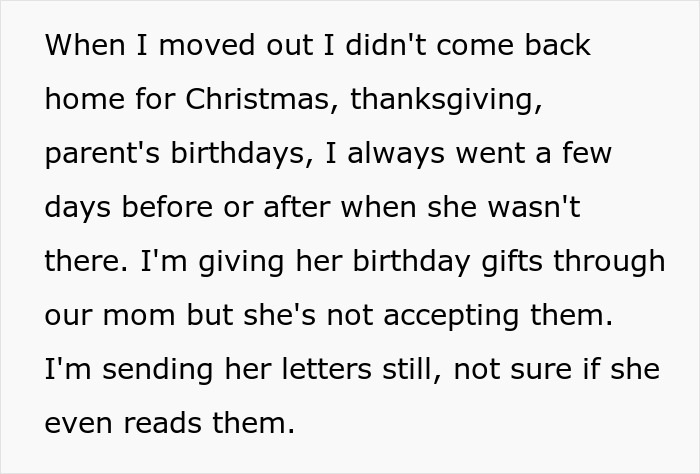
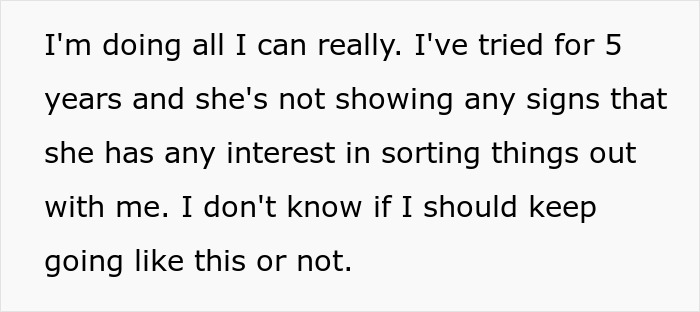
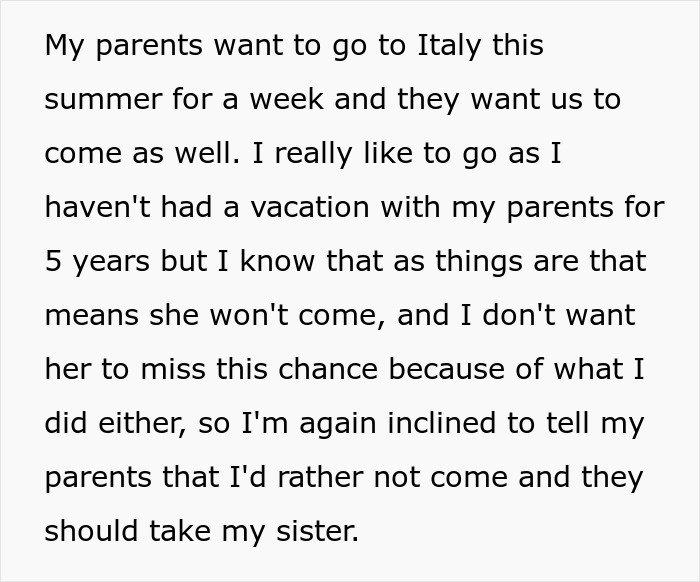
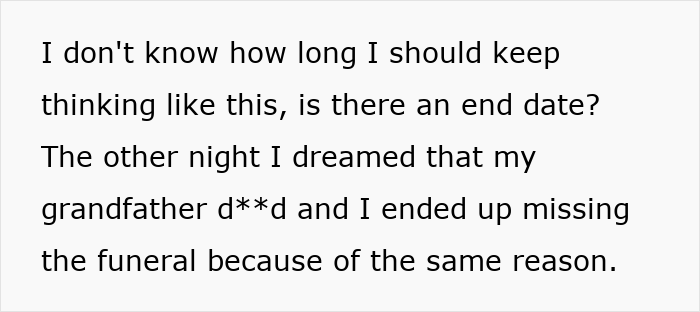
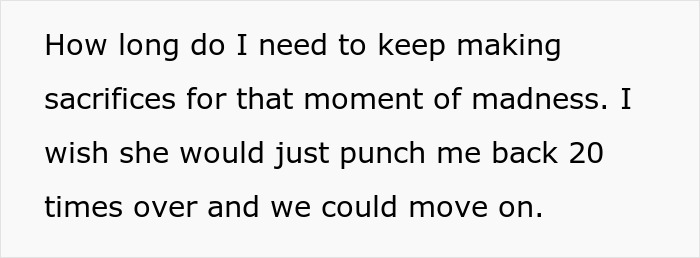
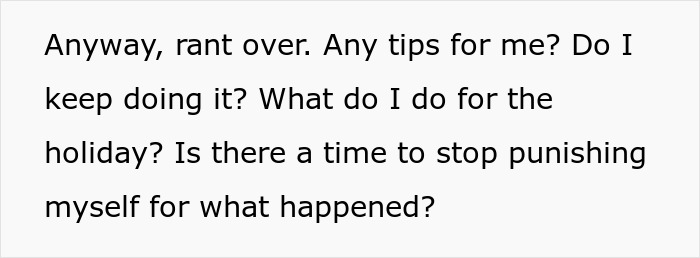
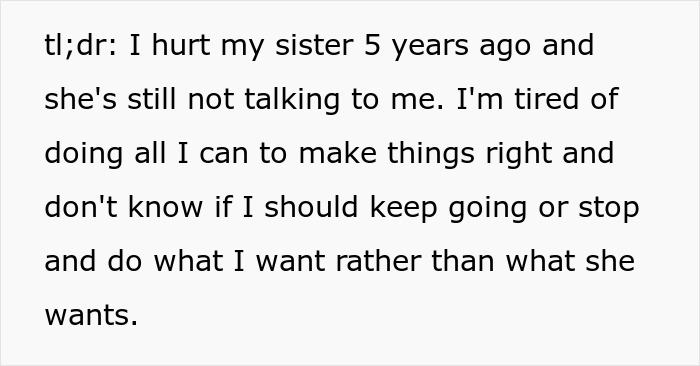
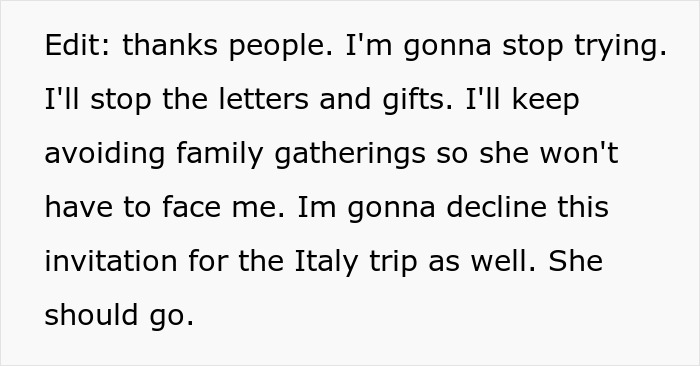
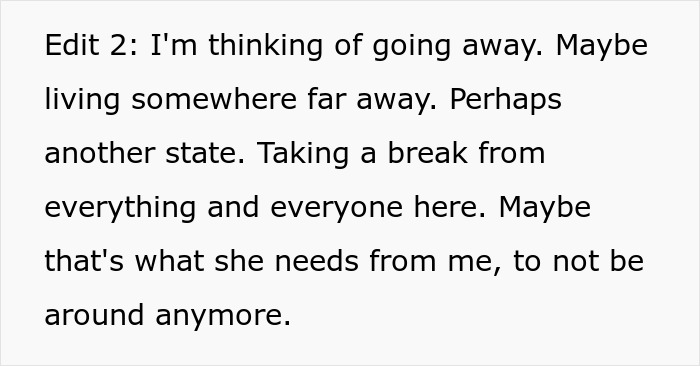

Image credits: polya_olya / Magnific (not the actual photo)
The poster skipped holidays, birthdays, and family trips, hoping to keep his distance and respect her wishes

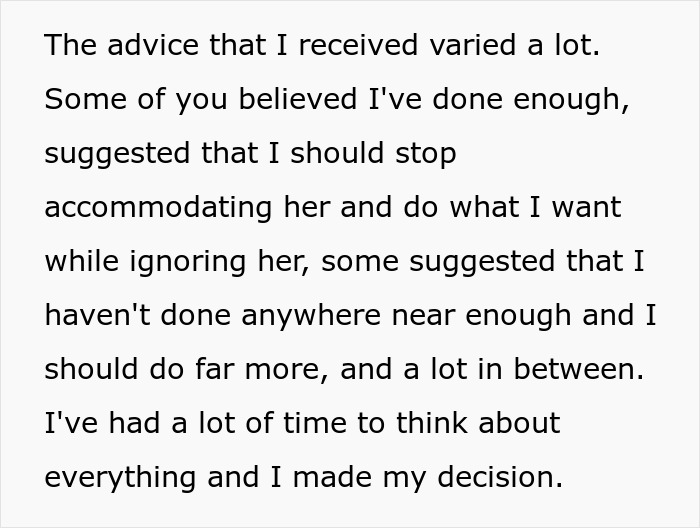
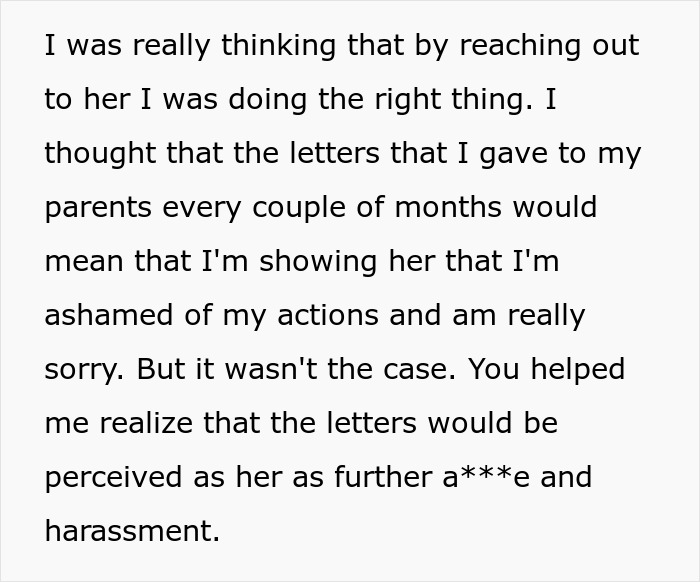

Image credits: drobtdean / Magnific (not the actual photo)
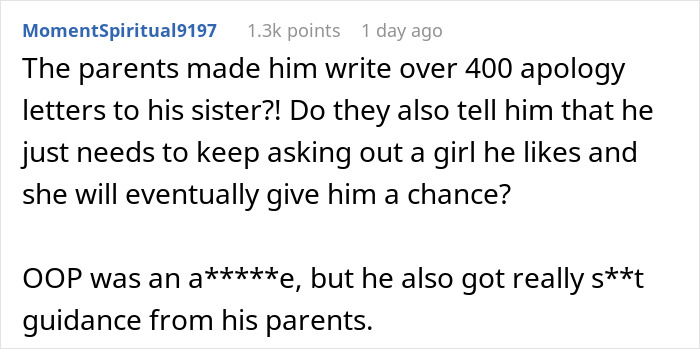
Hundreds of apology letters went unanswered and made him question whether he was making things worse
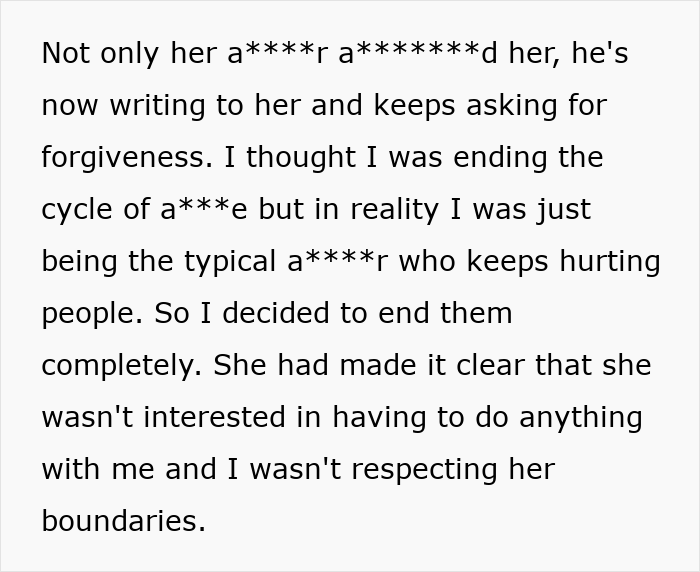
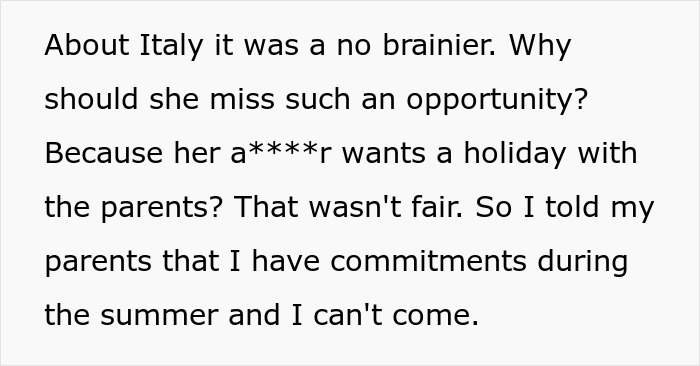
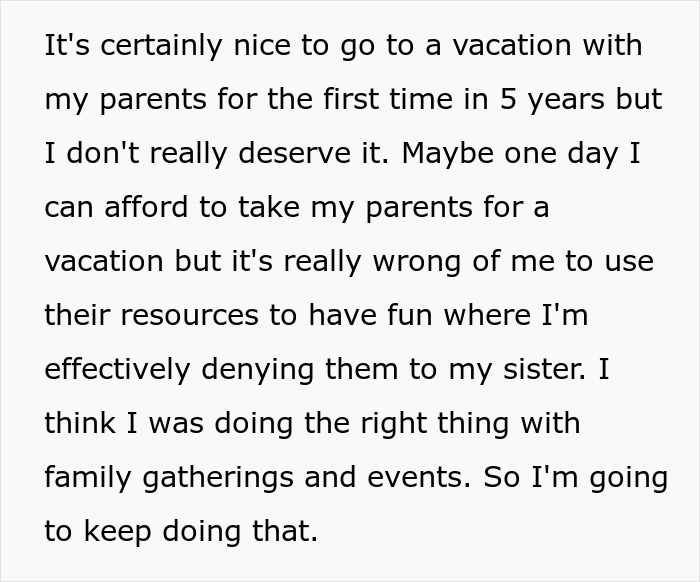
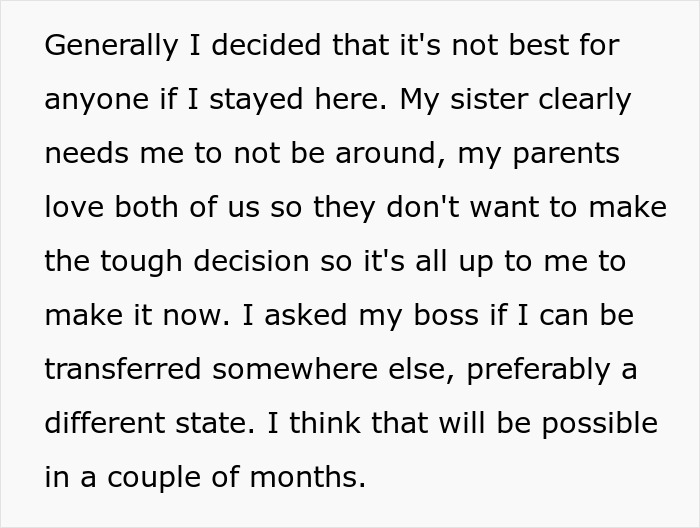
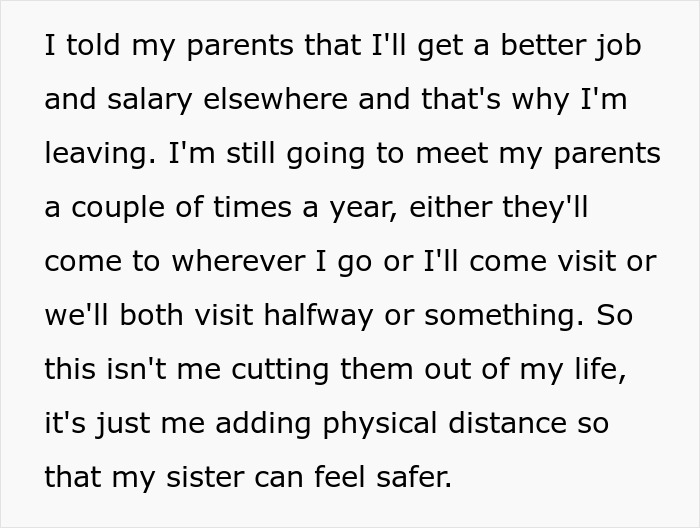

Image credits: rawpixel.com / Magnific (not the actual photo)
Advice from strangers helped him see his constant and persistent apologies in another light
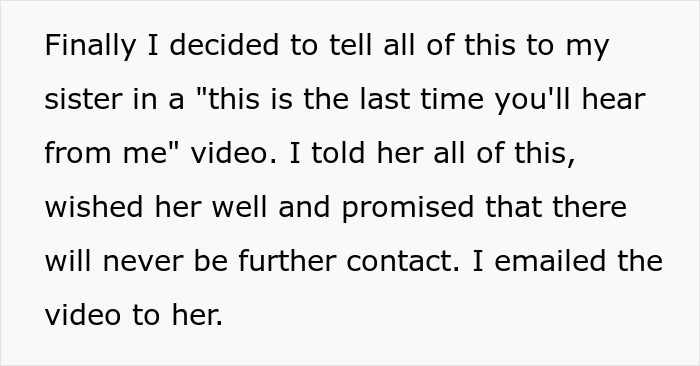
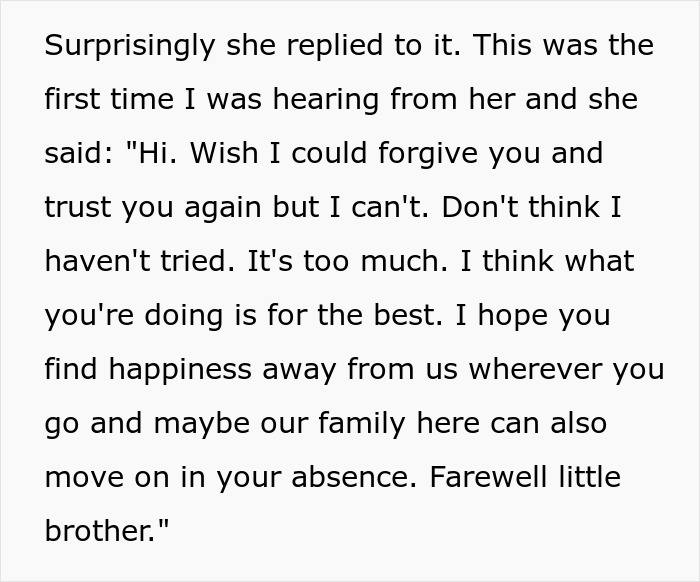

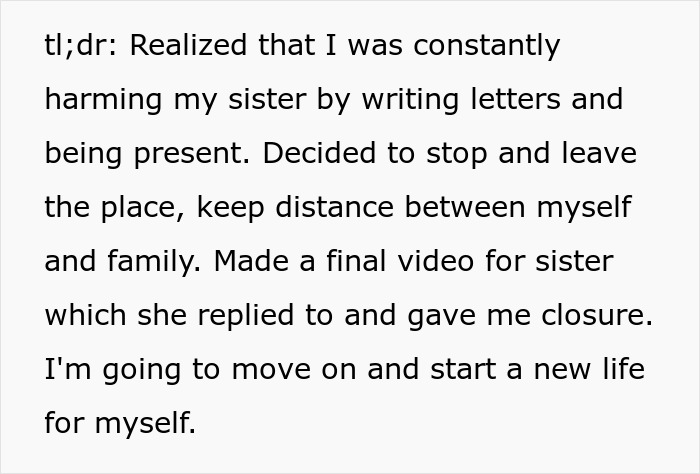
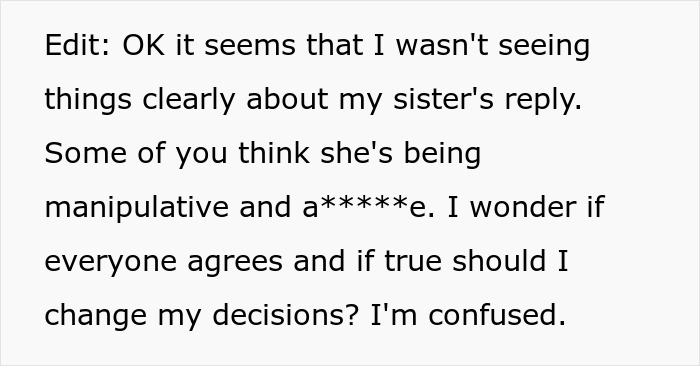
Image credits: Direct-Caterpillar77
One final apology brought the first response he’d received in 5 years, and it was heartbreaking
When the Original poster (OP) was 16 years old, he lashed out at his older sister for reporting him for cheating at school and beat her up seriously. He confessed that it was the worst thing he had ever done, and he regretted it so much afterward. His parents grounded him, but that was only the beginning of his lifelong punishment.
His sister stopped speaking to him after the incident, moved out a few months later, and refused every attempt to reconnect. Determined to give her space, the poster skipped their parent’s birthdays, holidays, relatives weddings, and even family vacations so she wouldn’t have to see him. He also spent years writing apology letters, hoping one of them might finally reach her heart.
After 5 years of silence, he admitted he was exhausted. He wondered if he should keep sacrificing time with his parents, or finally start living his own life again. When netizens pointed out that the constant letters might actually be reopening old wounds instead of helping them heal, it hit him like a bucket of ice water. He realized that letting things be might be the kinder thing to do.
So he made one final video, promising his sister she’d never hear from him again after moving away to give her the distance she seemed to need. To his surprise, she actually replied. She told him she wished she could forgive him, but couldn’t, and believed this goodbye was the best path for both of them.
Heartbroken, but finally with the closure he’d spent years chasing, the poster decided to stop looking backward and holding the heavy guilt over his head. Instead, he tried to move on and become a better person for himself.

Image credits: milanmarkovic / Magnific (not the actual photo)
One of the hardest truths about reconciliation is that remorse does not guarantee forgiveness. Mental health experts at Psychology Today note that while taking responsibility is an important step after causing harm, the person who was hurt has the right to decide whether they ever want to rebuild their relationship or keep their distance.
This perspective mirrors the poster’s painful realization. After years of trying to make up for the hurt, he came to believe that his repeated attempts to apologize may have been causing more harm than good. Psychologists distinguish forgiveness from reconciliation, pointing out that someone can choose not to reconnect while prioritizing their own emotions and recovery.
Professionals also emphasize that healing looks different for everyone after family violence. Some relationships recover with time, accountability, and therapy, while others remain permanently estranged because distance feels safest. In cases like this, respecting boundaries can become an important part of healing for both, even if it isn’t the ending either of them hoped for.
The story sparked an emotional debate among readers. Some felt the brother had shown genuine remorse over the years and it was time to move on. Others believed the sister had every right to maintain her boundaries, no matter how much time had passed. Where do you stand? In this case, was the sister doing too much or was she right to remain resolute in her decision?
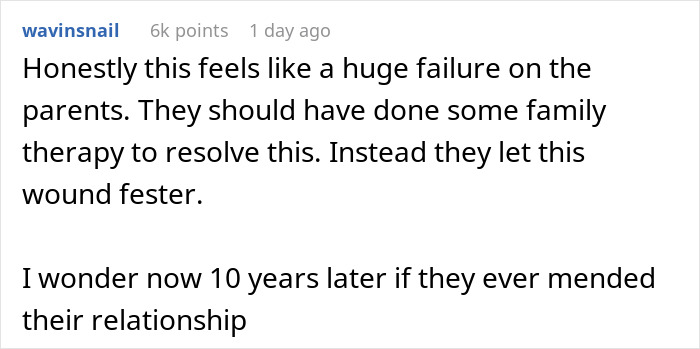
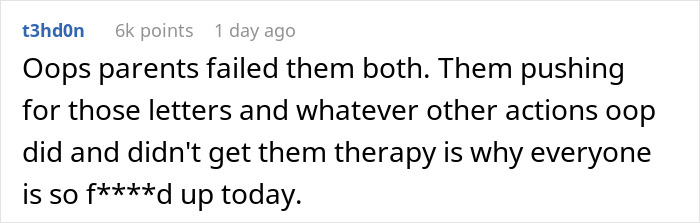
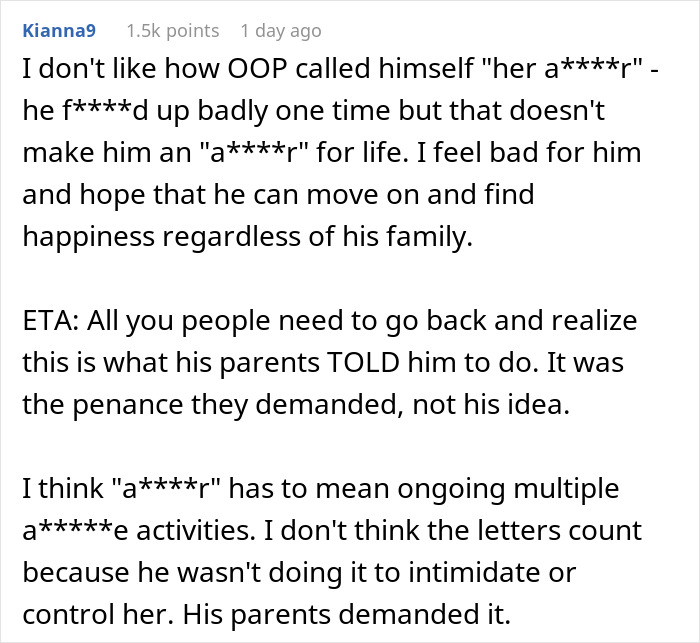
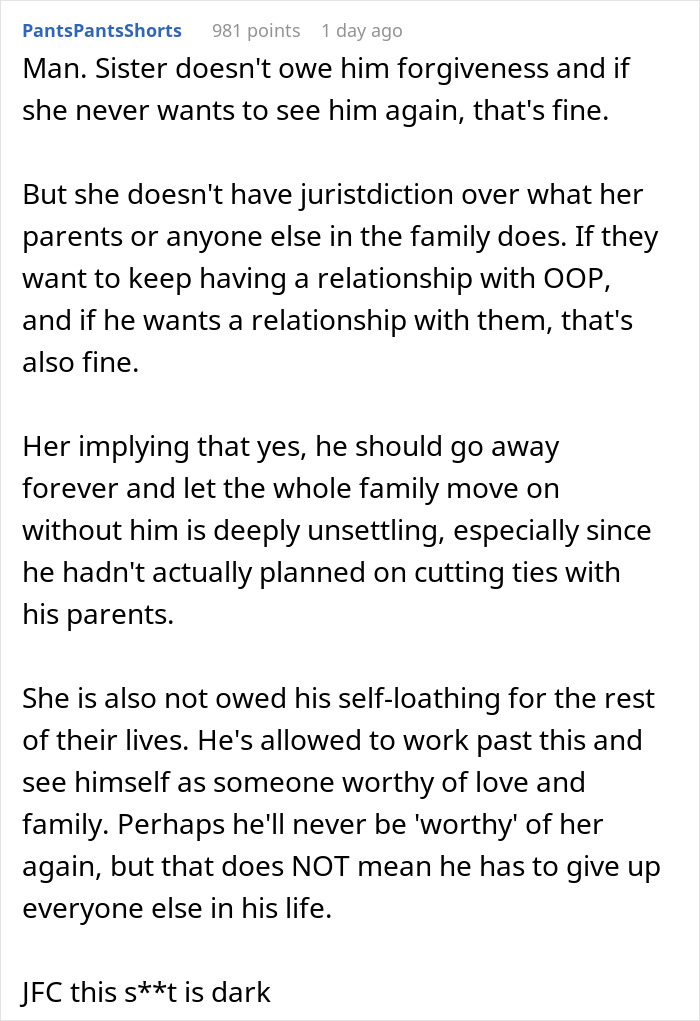
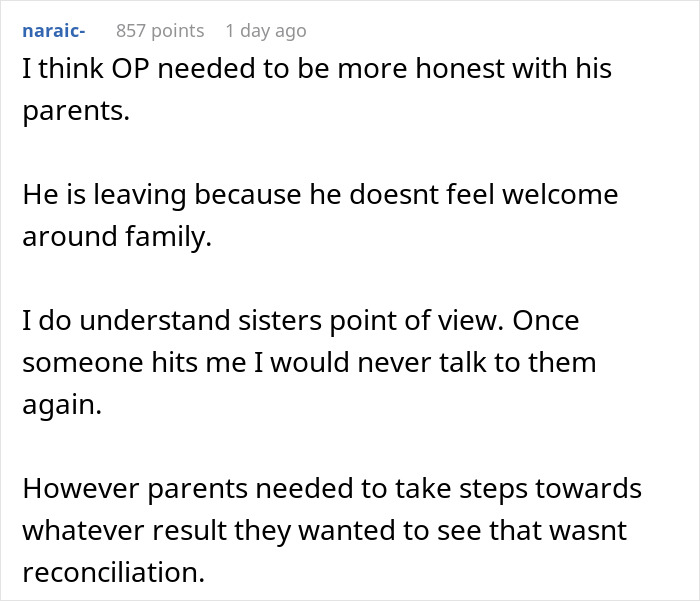
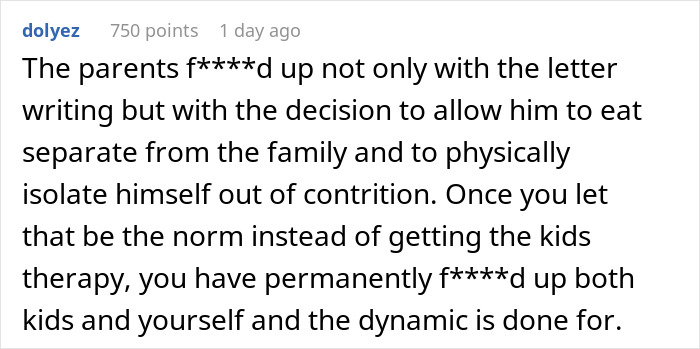
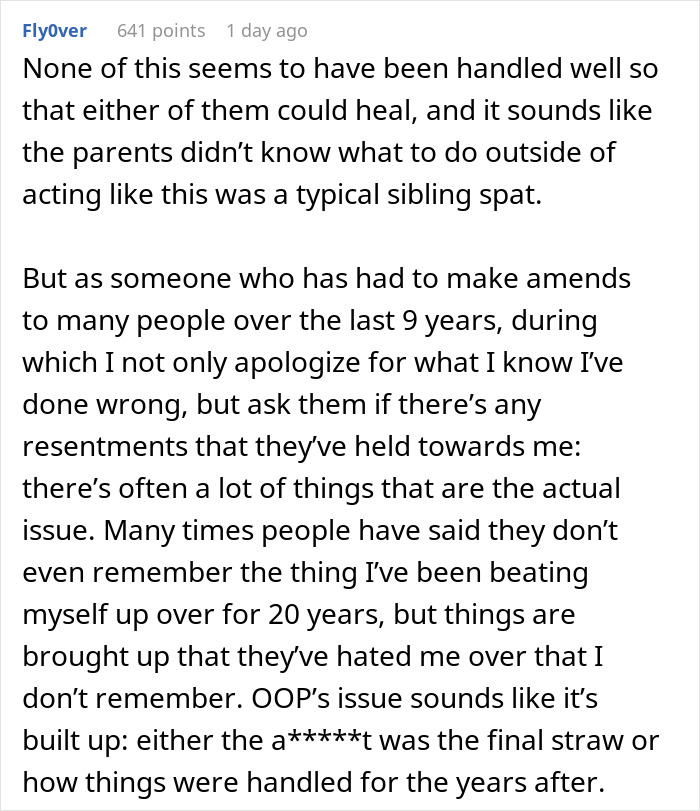
Readers were divided over whether remorse should ever lead to forgiveness, or if some wounds never heal







 Follow Us