Before smartphones buzzed in our pockets and 24-hour news networks filled our screens with breaking alerts, most people relied on newspapers for info.
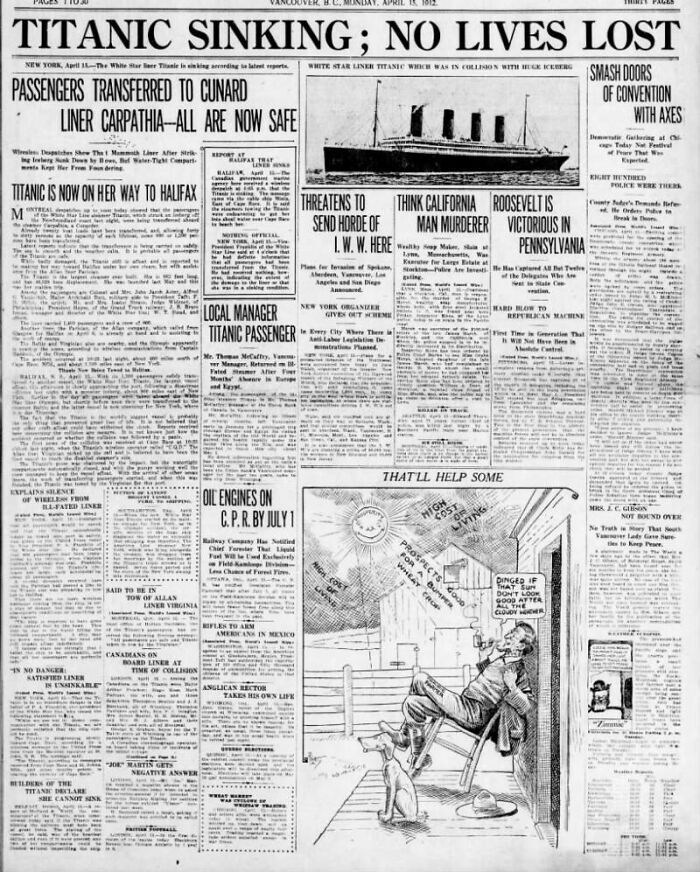
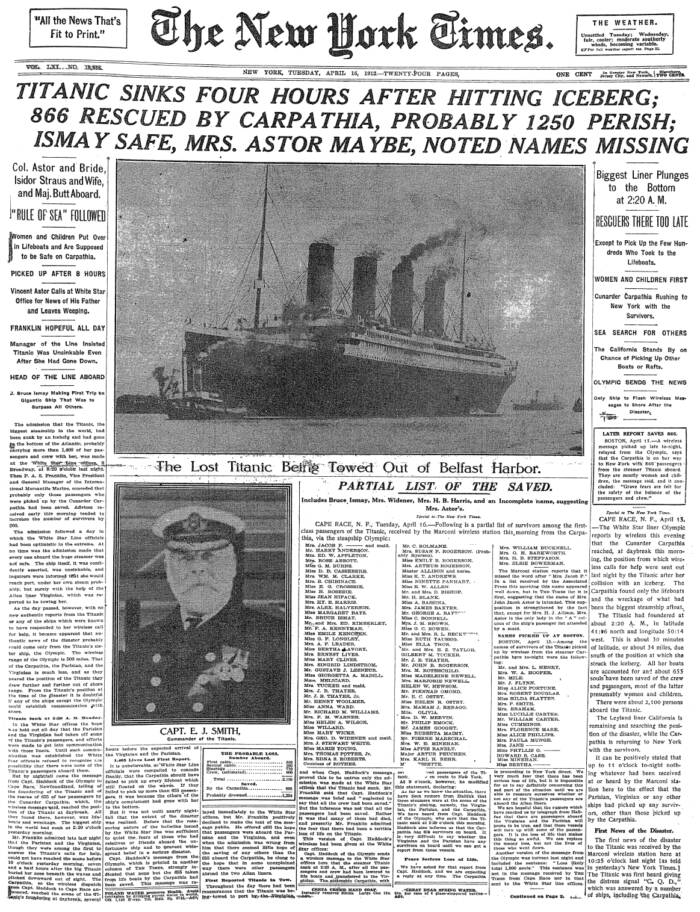
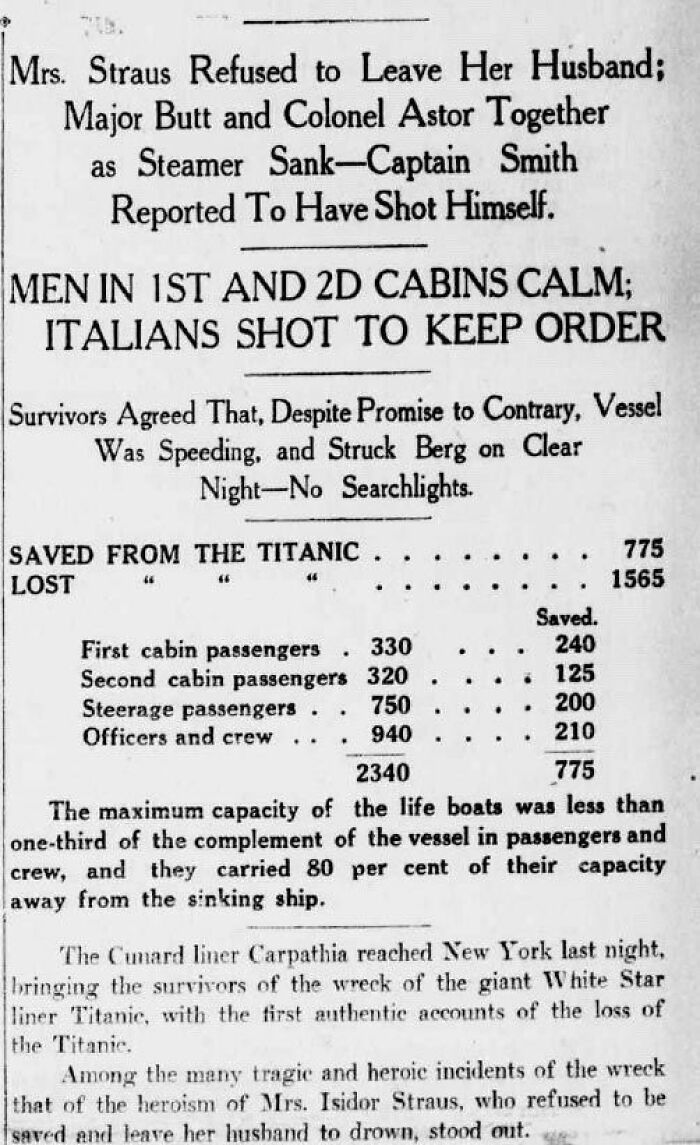
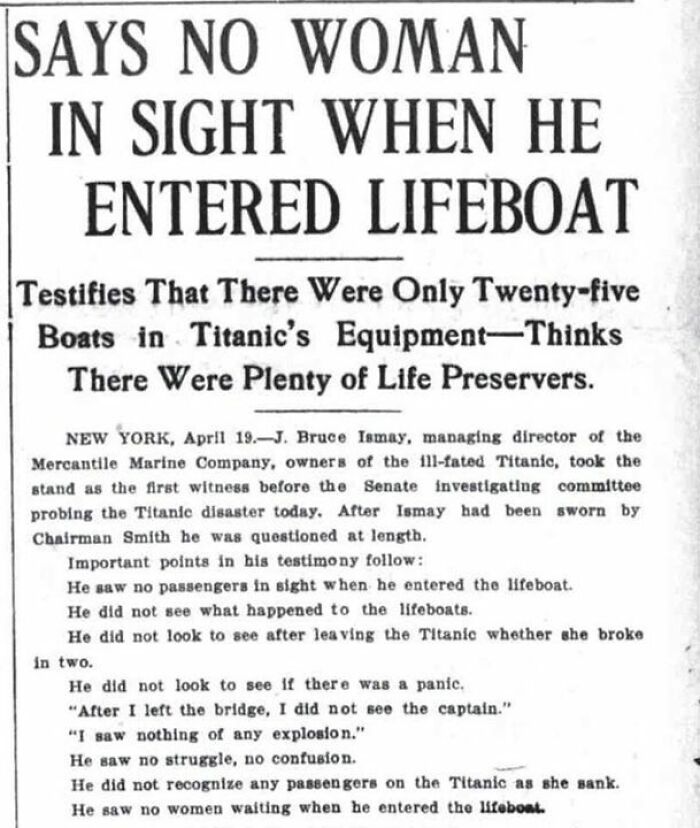
When the Titanic struck an iceberg in 1912, the world didn’t learn about it through a viral tweet. For most people, the truth arrived the next morning — in bold, black ink on the front pages.
Today, these very newspapers serve as a window into the past, showing us the exact moments of triumph, tragedy, innovation, and change.
Bored Panda has rounded up some of history’s most iconic clippings. You’ll find out how the world searched for Amelia Earhart after her plane vanished in 1937. And how communities celebrated the end of wars.
Some of these might send a chill down your spine. Others might make you want to dig a little deeper.
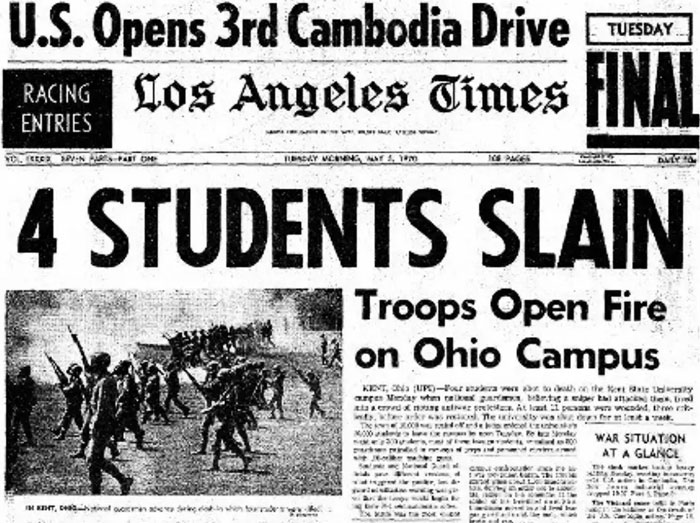
#1
The Kent State University shooting – May 1970

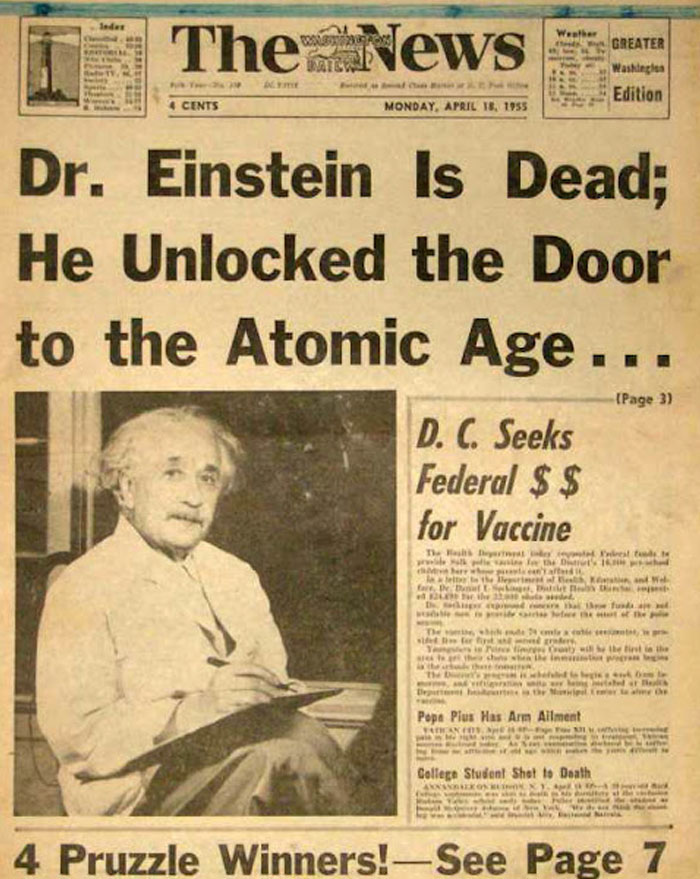
#2
Dr. Einstein Is Dead. The Washington Daily News, Monday, April 18th, 1955
To understand why these specific front pages still carry such immense weight, it helps to know where the medium actually began.
The ancient Romans are often credited with publishing the first newspaper-like product — the Acta Diurna — in 59 BCE. Carved onto stone or metal and displayed in public spaces, it carried news of events, assemblies, births, and even daily gossip.
For centuries, news traveled slowly through handwritten bulletins, merchant newsletters, and official notices. That changed in the 17th century when the printing press emerged in early modern Europe.
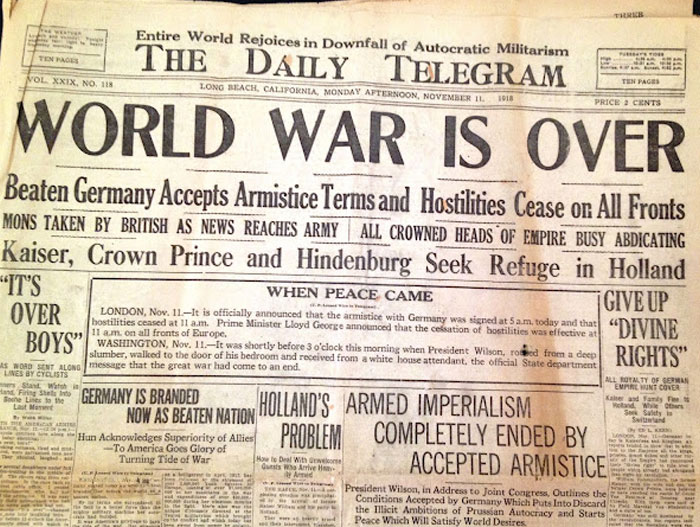
#3
The Daily Telegram. November 11, 1918: “World War is Over”
#4
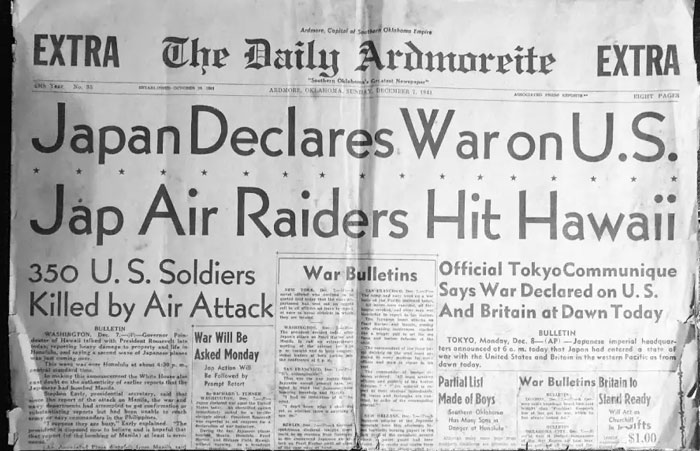
The attack on Pearl Harbor – December 1941
#5
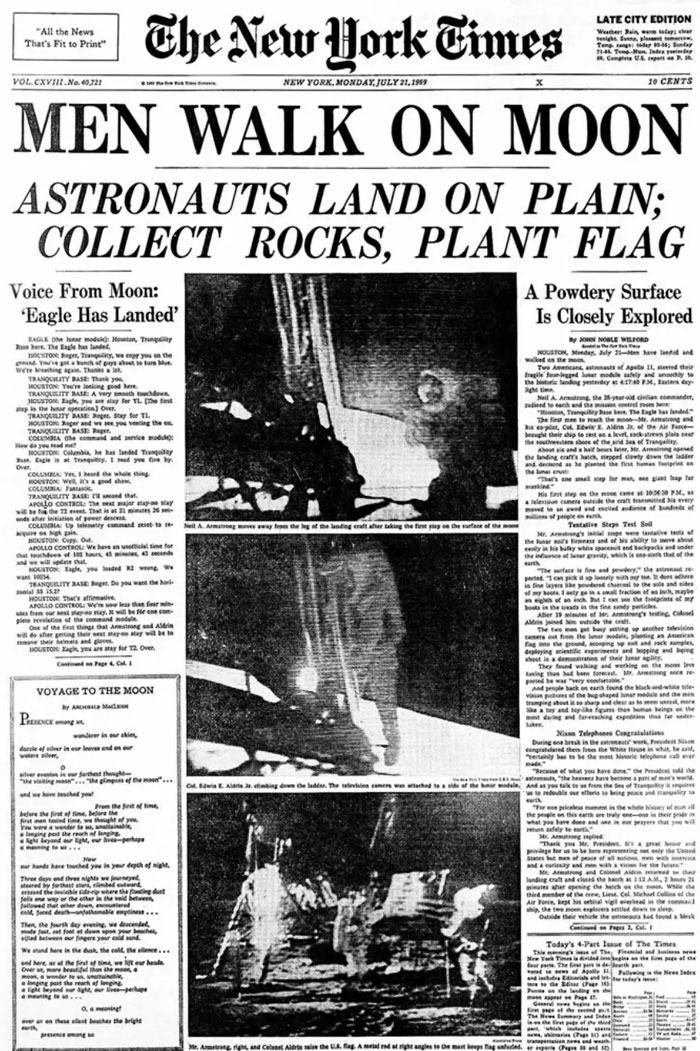
The Apollo 11 moon landing – July 1969
By the 20th century, newspapers were at their peak. Official data shows that the US daily newspaper circulation hit 40 million copies in the 1940s.
They held immense power. At their best, they toppled corrupt governments and held the powerful to account. But they were never perfect, objective mirrors of reality.
For as long as newspapers have existed, they have often belonged to the rich and powerful — used by media barons to push private political agendas, fuel corporate interests, and weaponize public opinion.
Sensationalism and media bias aren’t new digital inventions… they are built into the very history of print.
Still, the physical nature of the medium kept things grounded in a daily routine. But then came the TV and the internet, and everything began to unravel at an unprecedented speed.
#6
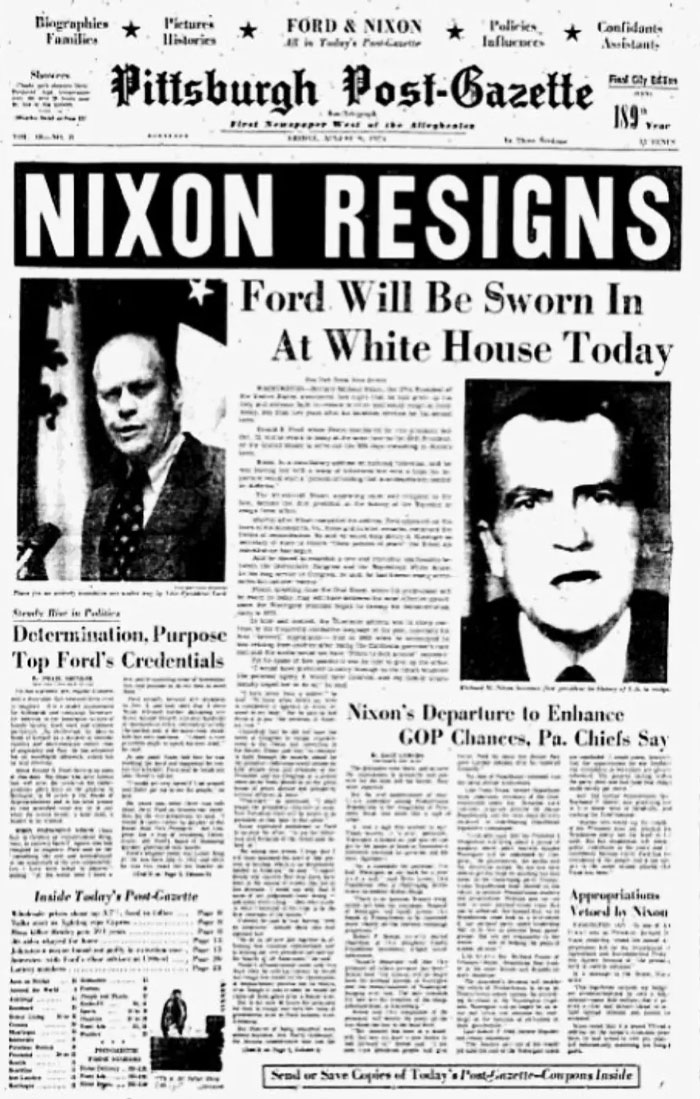
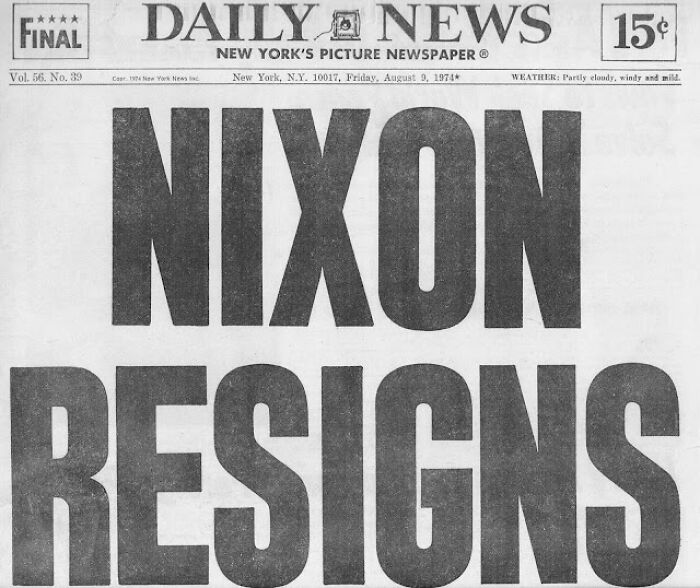
The resignation of Richard Nixon – August 1974
#7
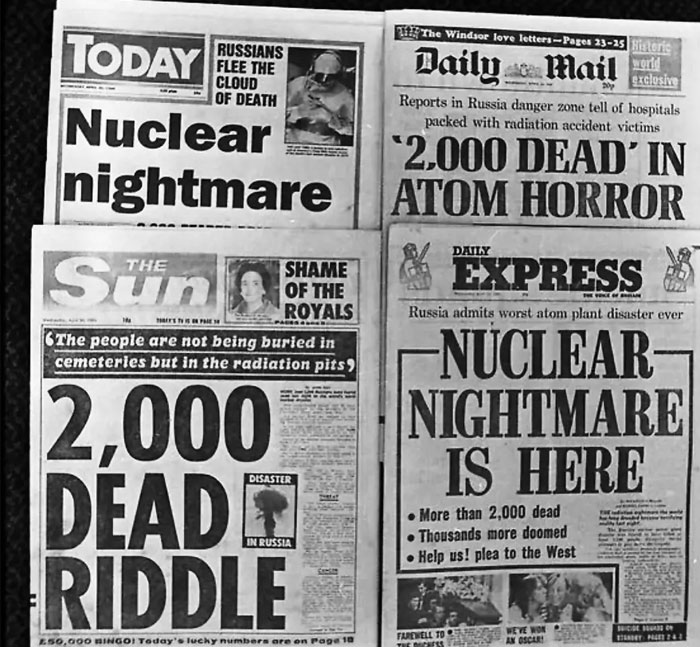
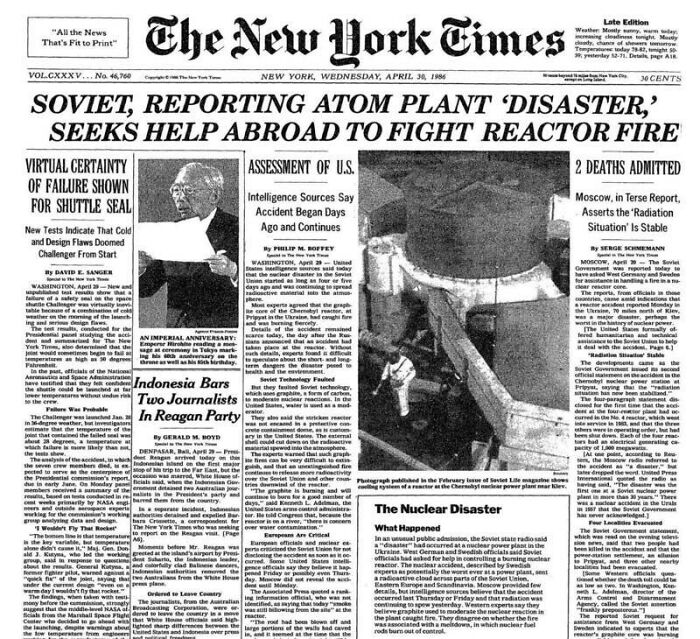
The Chernobyl nuclear disaster – April 1986
#8
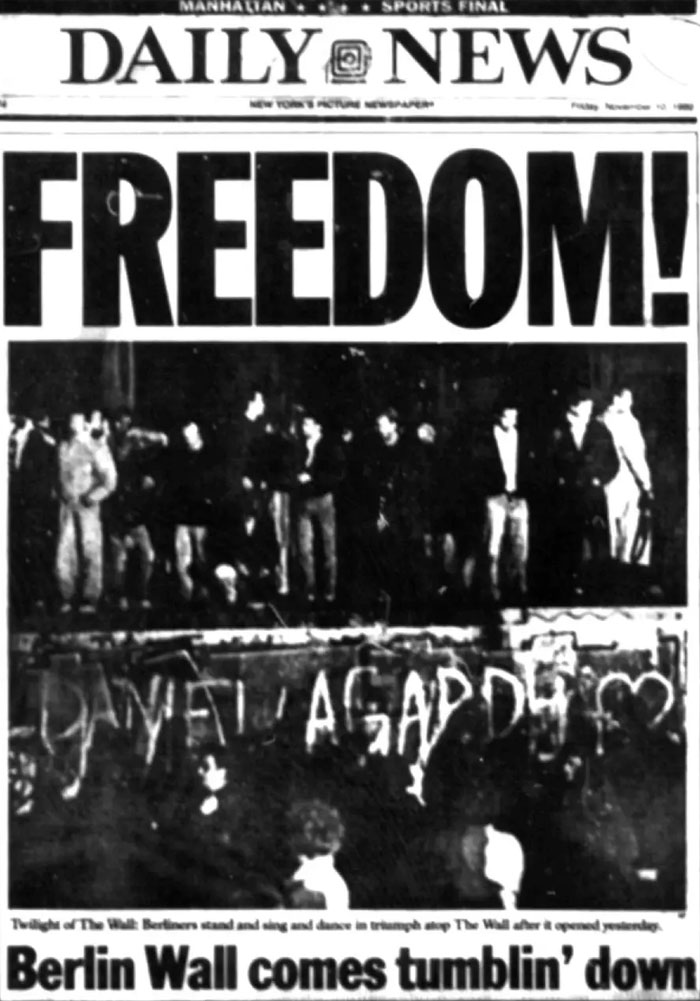
The fall of the Berlin Wall – November 1989
Over the past two decades, print newspaper circulation across the US has dropped by an estimated 80 million, a loss of 70% from 2005 levels.
According to a 2025 report by Northwestern University’s Medill School of Journalism — the most comprehensive annual survey of the American news landscape — almost 40% of all local US newspapers have vanished. This has left 50 million Americans with limited or no access to a reliable local news source.
Fewer newspapers now maintain a seven-day print schedule, as many have shifted to reduced print editions or digital-only formats.
#9
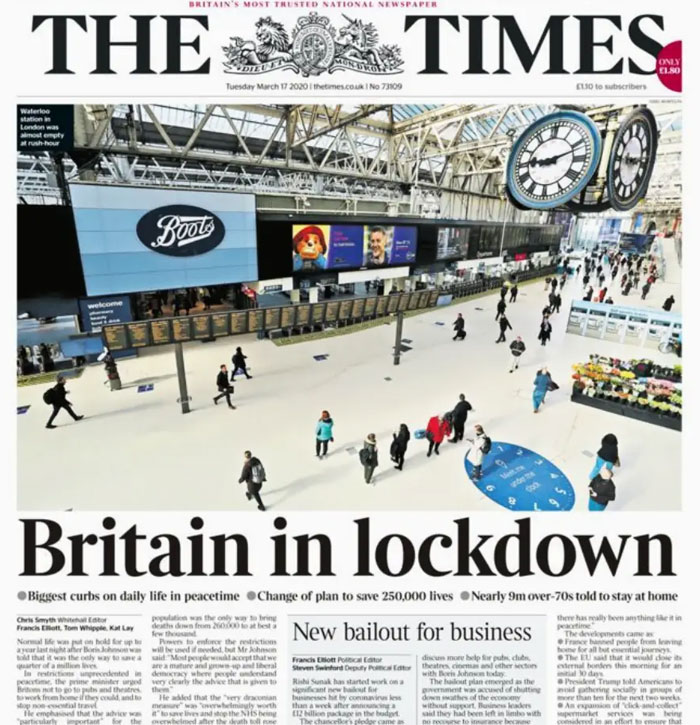
The absolute lockdown of the world – March 2020
#10
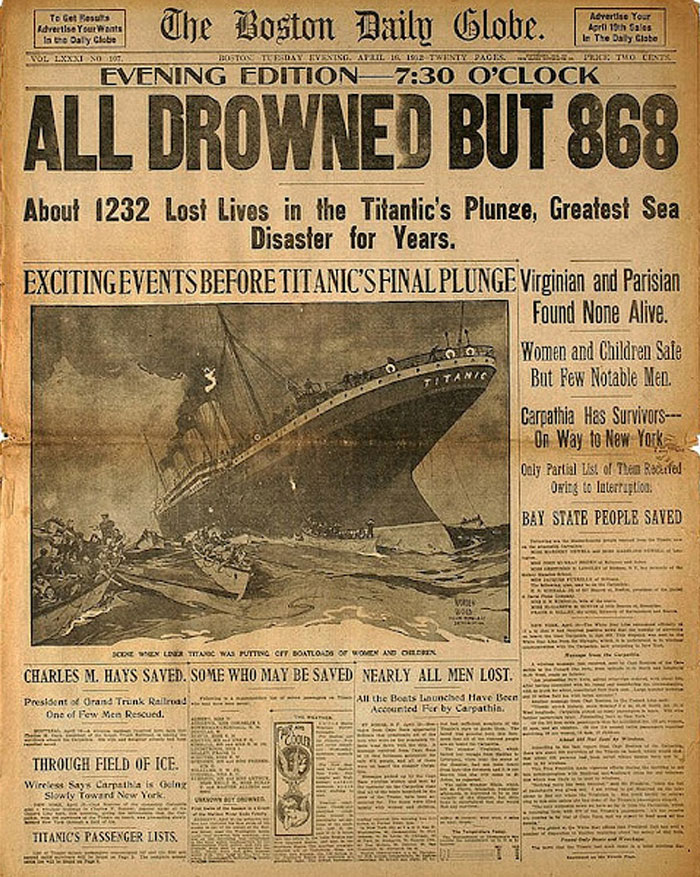
The front page of the April 16, 1912 evening edition of the Boston Globe, detailing the Titanic disaster
#11
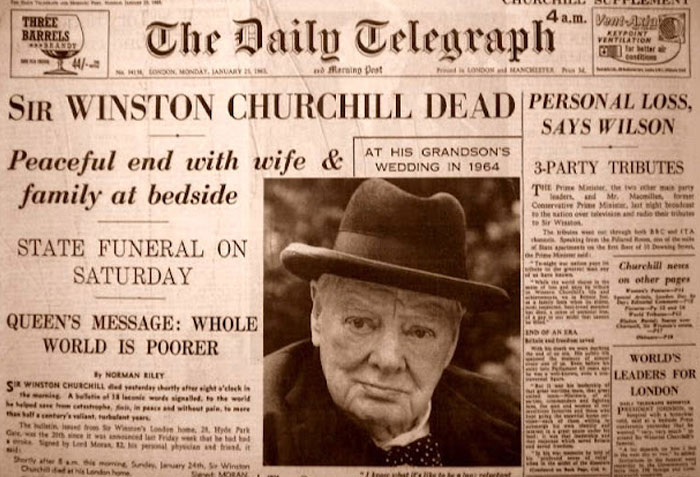
Sir WINSTON CHURCHILL DEAD. January 16, 1965: The Daily Telegraph starts with this front page. Journalists had received the bulletin of his stroke at 3pm, and a warning at 9:40 that he was ‘slipping into deeper sleep’.
The jobs are going too. Since 2005, the newspaper industry has lost more than three-quarters of its workforce — over 270,000 jobs.
“It’s been a story of pretty dramatic transformation. The key element of that transformation is a widening gap between who has access to local news and who doesn’t. In 2005, there were three newspapers for every 100,000 people in the US. Today that number’s been cut in half,” said Zach Metzger, the director of the State of Local News Project by Medill Journalism School at Northwestern.
#12
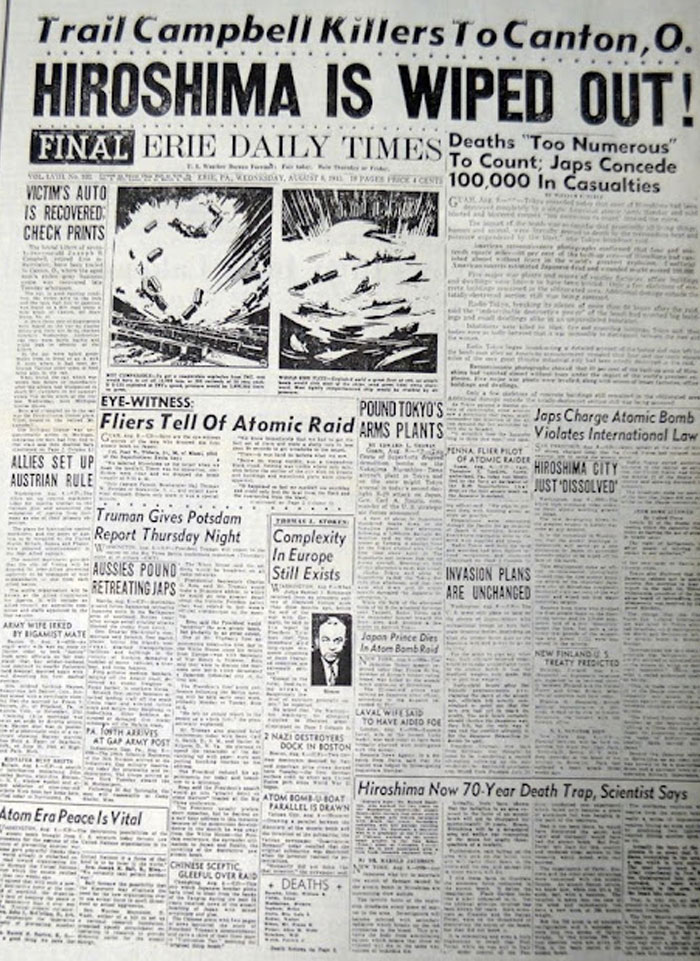
Iconic front page detailing coverage of the atomic bomb dropped on Hiroshima dated August 8, 1945
#13
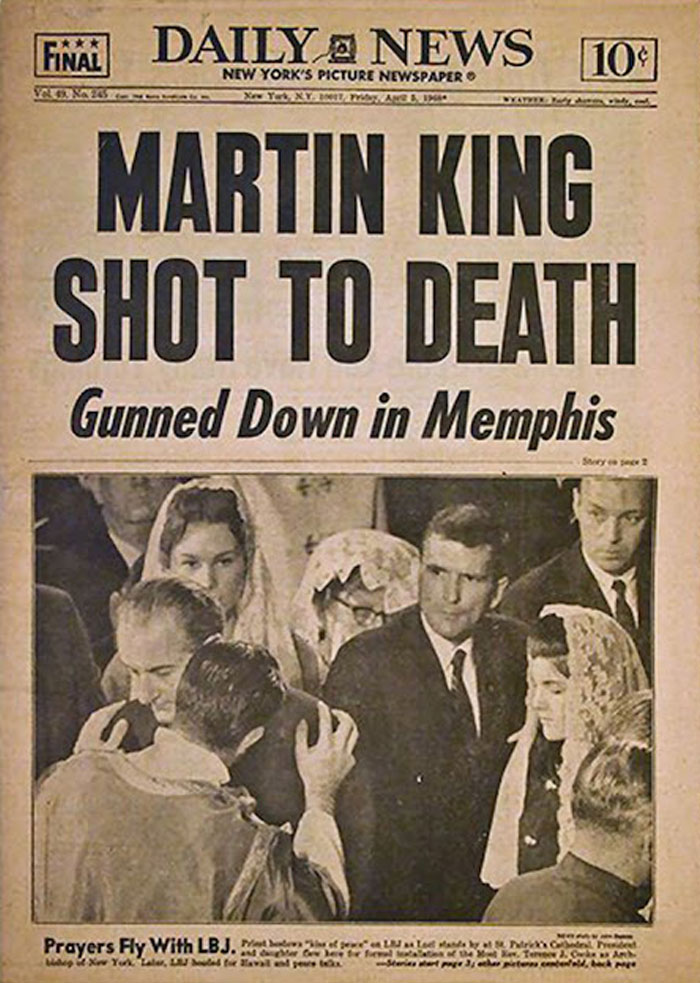
Martin Luther King was assassinated on April 4, 1968 in Memphis, TN by James Earl Ray. In real “Breaking News,” Daily News prints the huge front page headline: “MARTIN KING SHOT TO DEATH. Gunned Down in Memphis”
#14
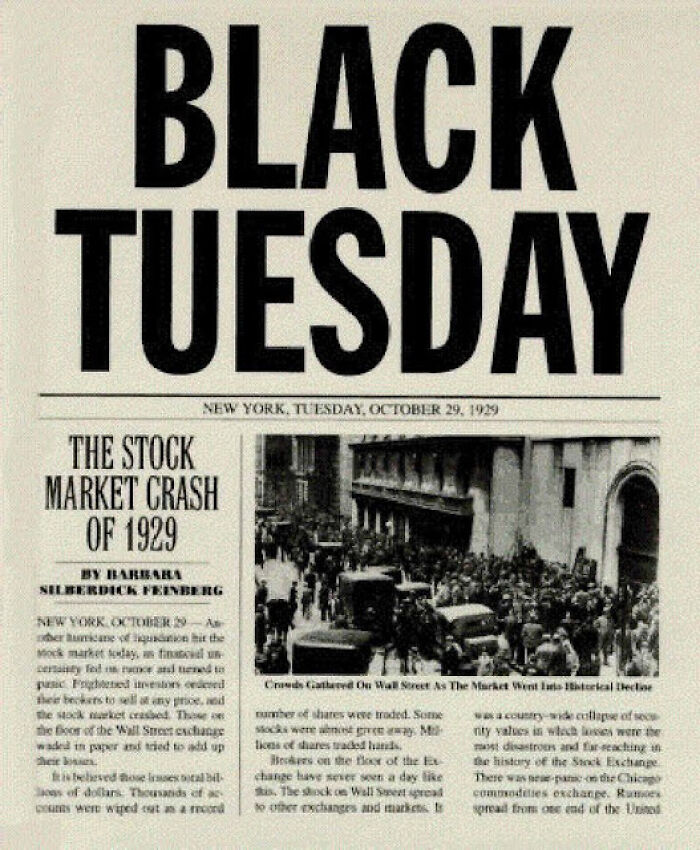
Black Tuesday. October 29, 1929 – The Stock Market Crash and beginning of the Great Depression
Losing a community’s main source of news leads to lower voter turnout, fewer people running for office, more corruption, and less civic engagement.
Research has also found that voters in communities where local newspapers have closed are measurably less likely to split their votes between candidates from different parties.
It’s a sign that losing local news makes people more politically polarized.
“Local newspapers are uniquely positioned to unite communities around shared local identities, cultivated and emphasized through a distinctive home style, and provide a civil and regulated forum for debating solutions to local problems,” the researchers wrote in an article.
#15
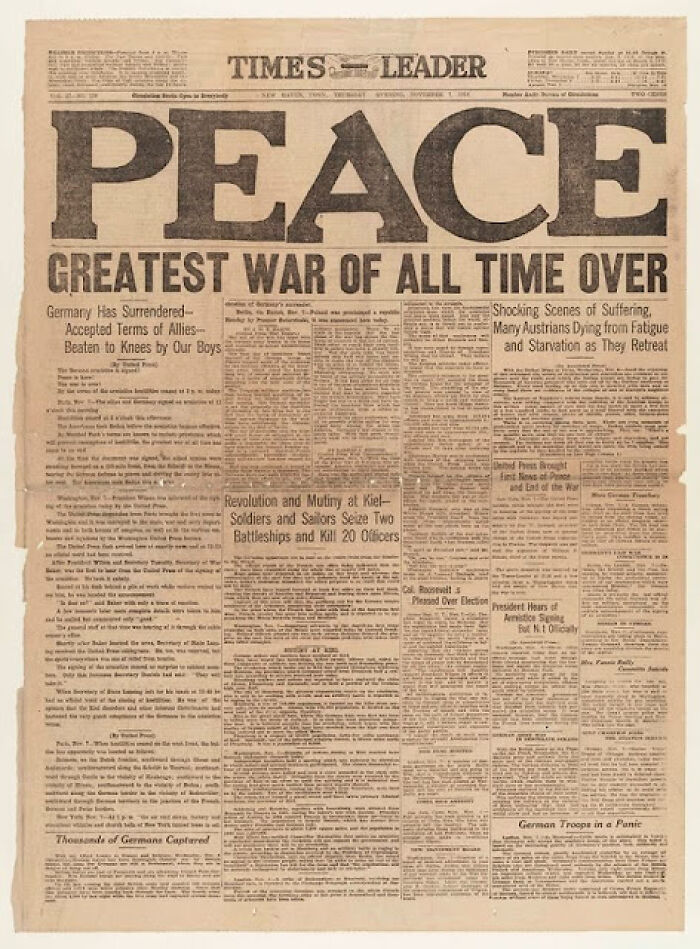
Nov. 11, 1918: Fighting in World War I ended with the signing of an armistice between the Allies and Germany
#16
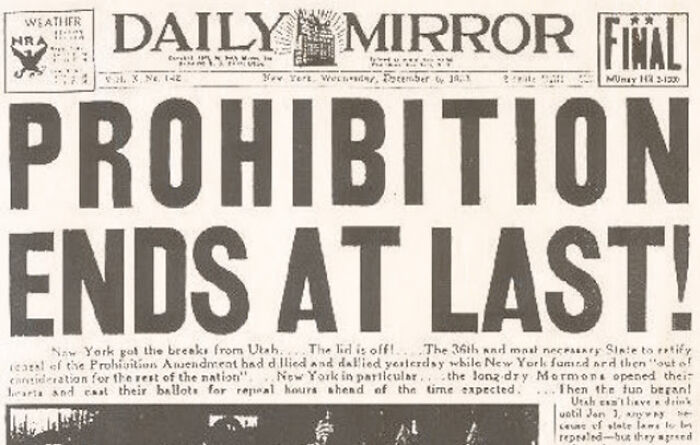
Prohibition Ends at Last. Daily Mirror December 5, 1933
#17
Research shows that print journalism prioritizes depth, analysis, and editorial accountability. It operates within a production cycle that rewards thoroughness over speed.
Researchers at the University of Valencia found that the relationship between reading printed texts and comprehension was six to eight times stronger than for reading the same content on a digital device.
There is also the matter of trust. According to the 2024 Digital News Report by the Reuters Institute for the Study of Journalism, 58% of Americans say they trust their local newspaper — compared to fewer than half who trust major national outlets, and far fewer still who trust news on social media.
#18
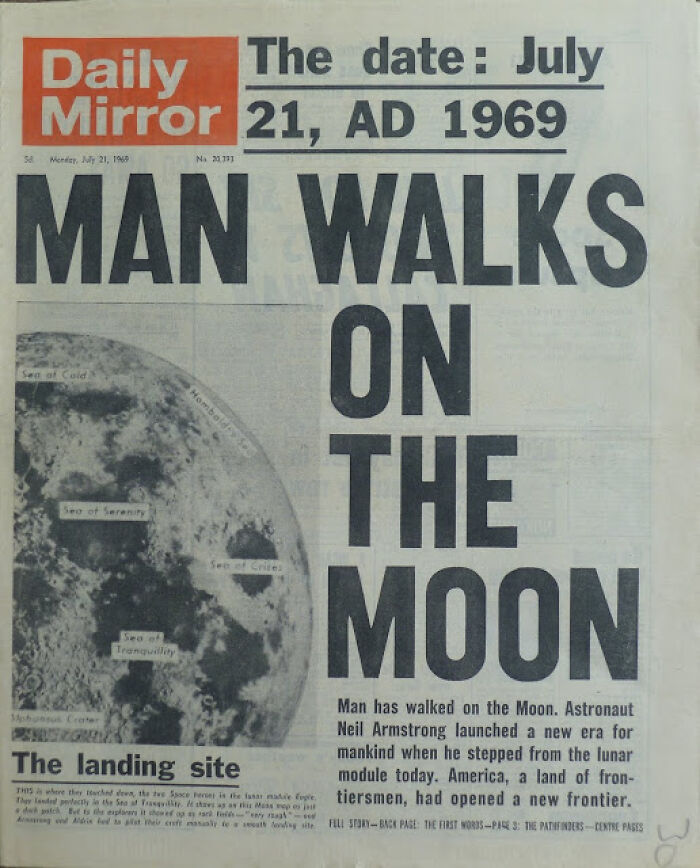
Man Walks on the Moon. Daily Mirror 21st July, 1969
#19
The central character of this cover story is the comedian Freddie Starr, who was a popular TV personality in the 1970s and 1980s. Although he carried on into the 1990s, he was overstepping the mark with some of his antics then. For instance at the beginning of his appearance on London Weekend Television’s An Audience with Freddie Starr in 1996, he threw handfuls of live maggots at the audience. In Another Audience with Freddie Starr the following year, he hit eggs with a golf club into the audience. (However maybe he thought he could get away with that because the live audience at those shows had been invited and were not just the general public.)
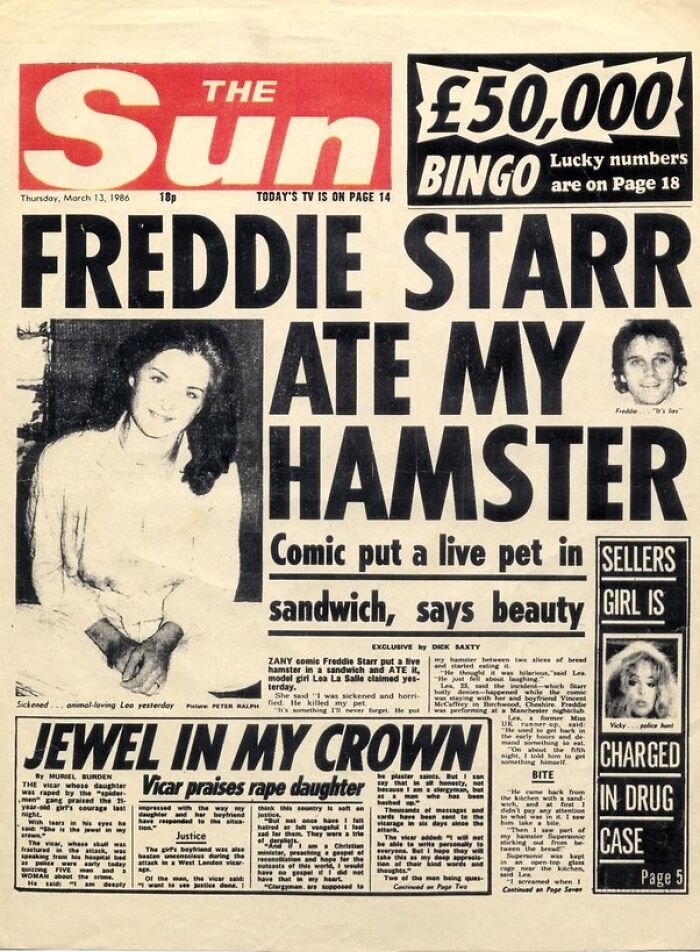
Image source: unknown
In 1905, a newspaper article described the press this way: “The newspapers are making morning after morning the rough draft of history.”
As a primary source, a newspaper issue provides a snapshot of daily living and current events. But when taken as a collection, newspapers record and influence history and culture in real time.
Research by the Ohio State University notes that one of the key benefits of newspapers includes seeing how people viewed an event when it actually happened.
They also allow researchers to trace the historical development of subjects over time.
#20
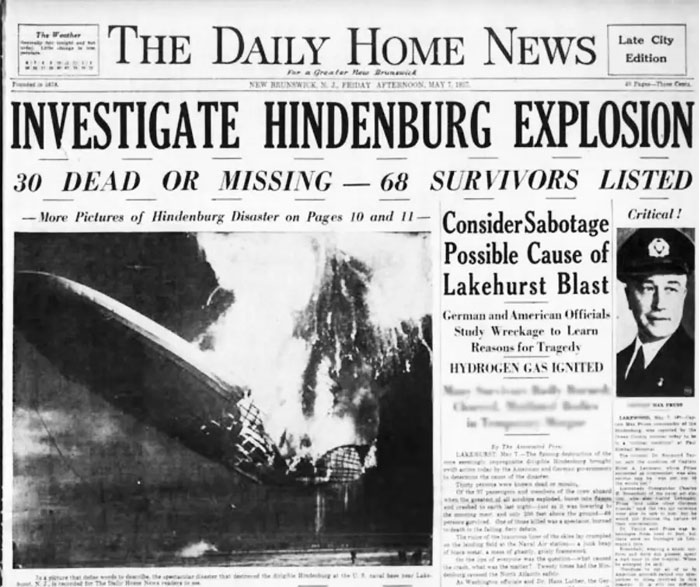
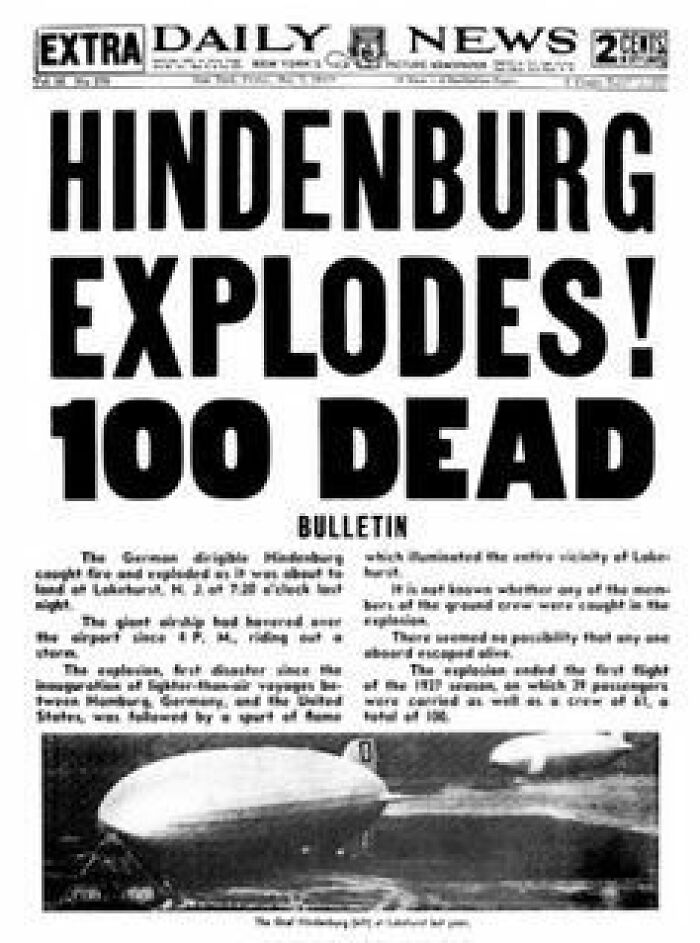
The Hindenburg disaster – May 1937
#21
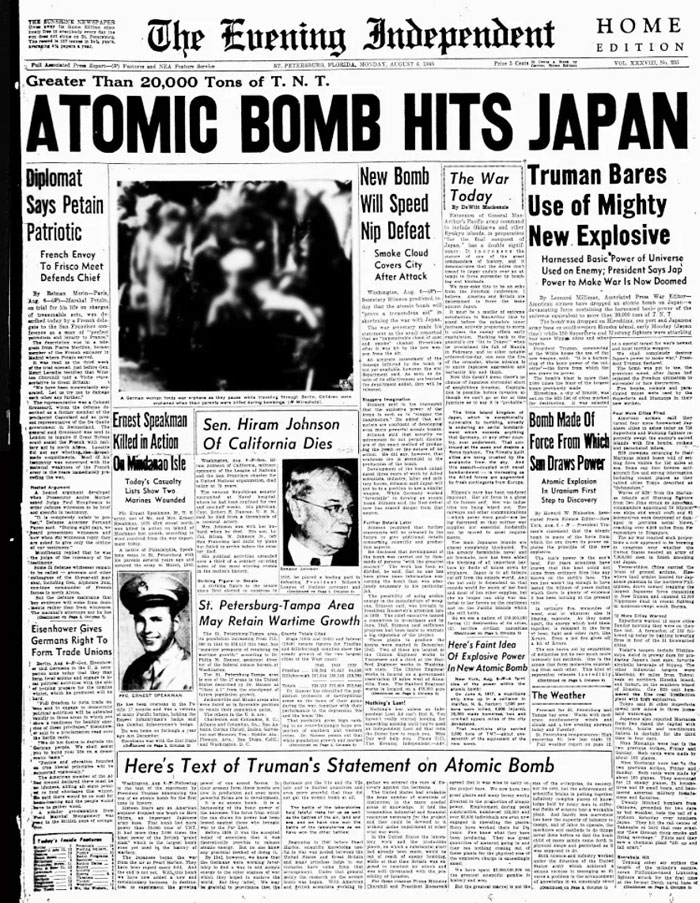
The atomic bombing of Hiroshima – August 1945
Even authorities are realizing how important newspaper archives are to preserve history.
The National Digital Newspaper Program in the US is a long-term effort to provide permanent access to a national digital resource of historic newspapers from all US states and territories.
Over 16 million pages of newspapers published between 1789 and 1963 are now publicly available online, covering 174 years of American history.
#22
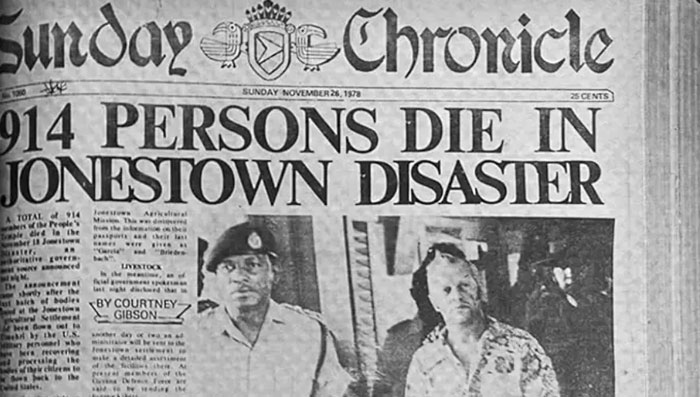
The Jonestown massacre – November 1978
#23
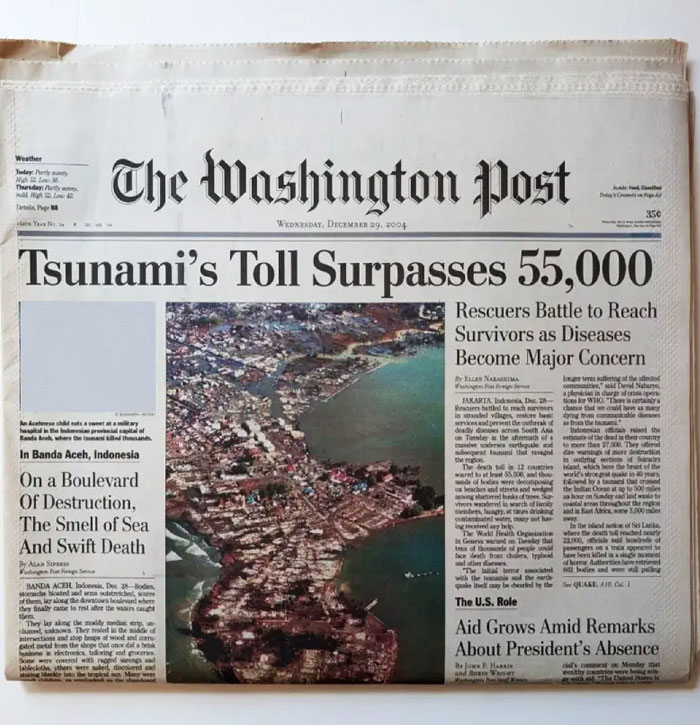
The Indian Ocean tsunami – December 2004
When you look at an old front page, you are seeing history through the eyes of the people who actually had to survive it.
You see it in the black ink of 1918, where ads for modern fashion sat right next to desperate notices on how to survive the Spanish Flu.
Even the terrifying and uncertain headlines of the Cold War show communities finding ways to go to work, raise families, and build lives during a global crisis.
These headlines remind us that today’s global upheaval isn’t new. Humanity has survived these breaking points before, and hopefully, we will do it again.
#24
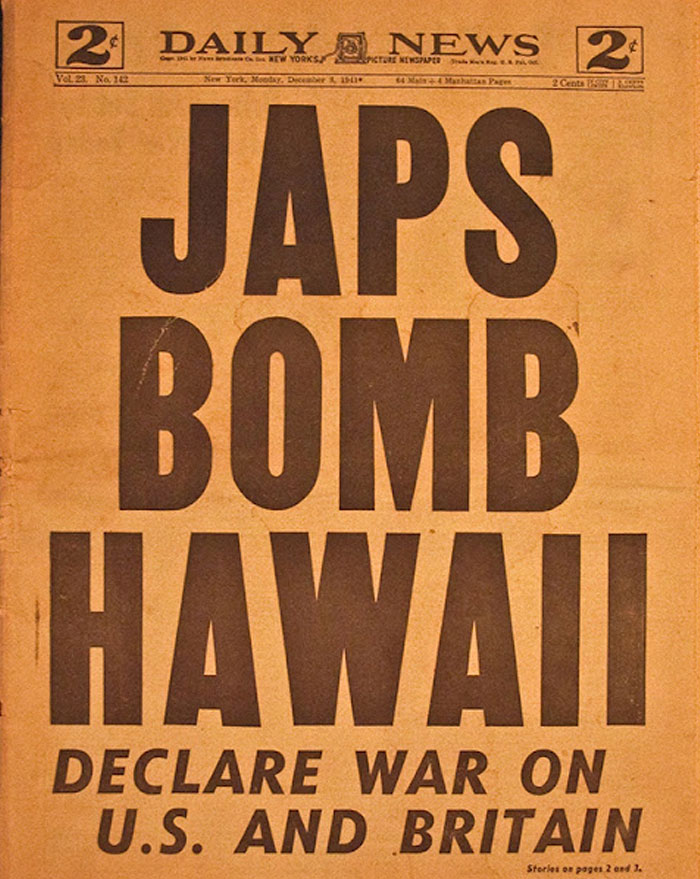
JAPS BOMB HAWAII. Daily News. December 8, 1941
#25
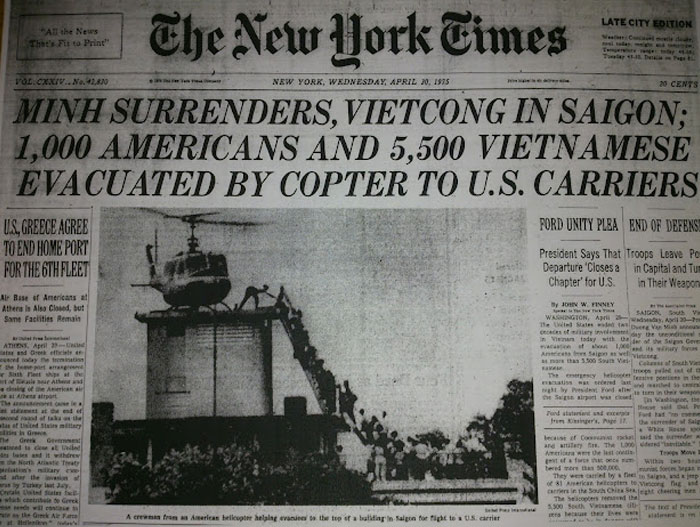
The front page New York Times in 1975. Operation Frequent Wind begins removing the last Americans from Saigon
#26
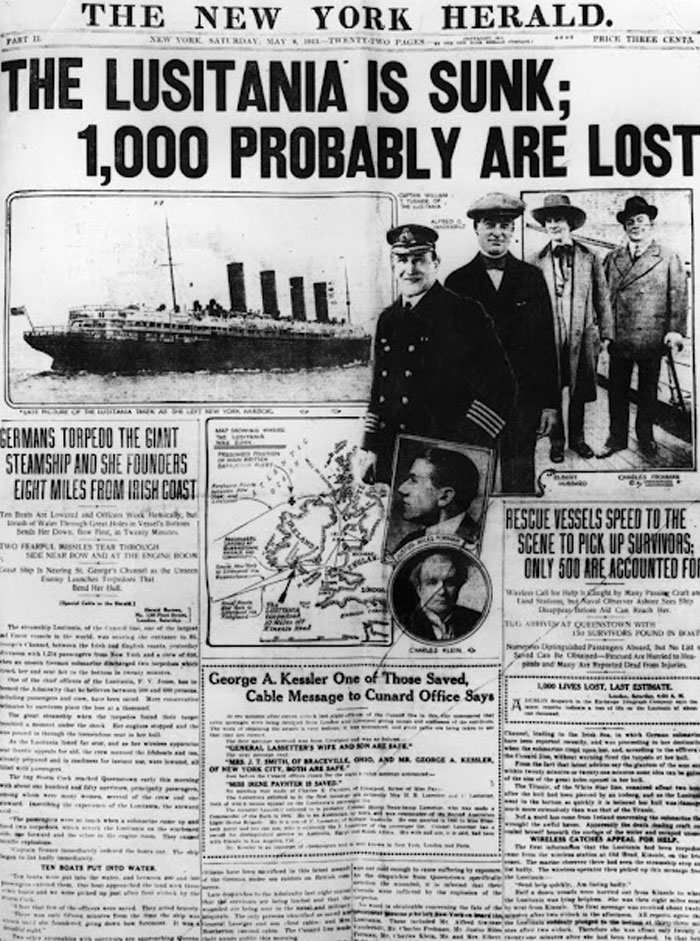
May 8, 1915: The New York Herald reports the sinking of the Lusitania
#27
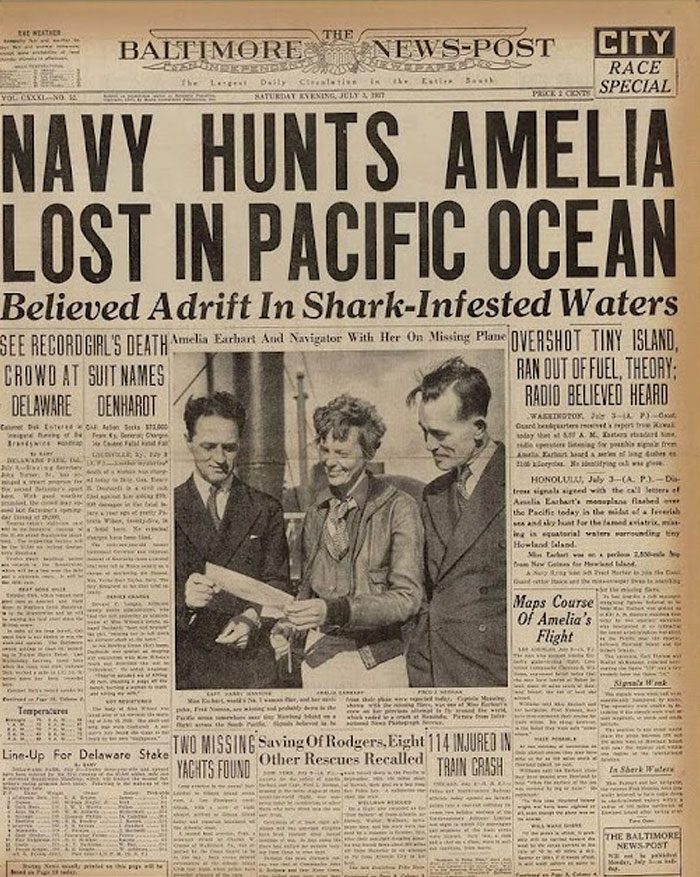
Speculation about shark-infested waters was the top headline in the July 3, 1937, edition of The Baltimore News-Post
#28
The headline of The National News reports on the shooting of U.S. President Abraham Lincoln in Washington on April 14, 1865
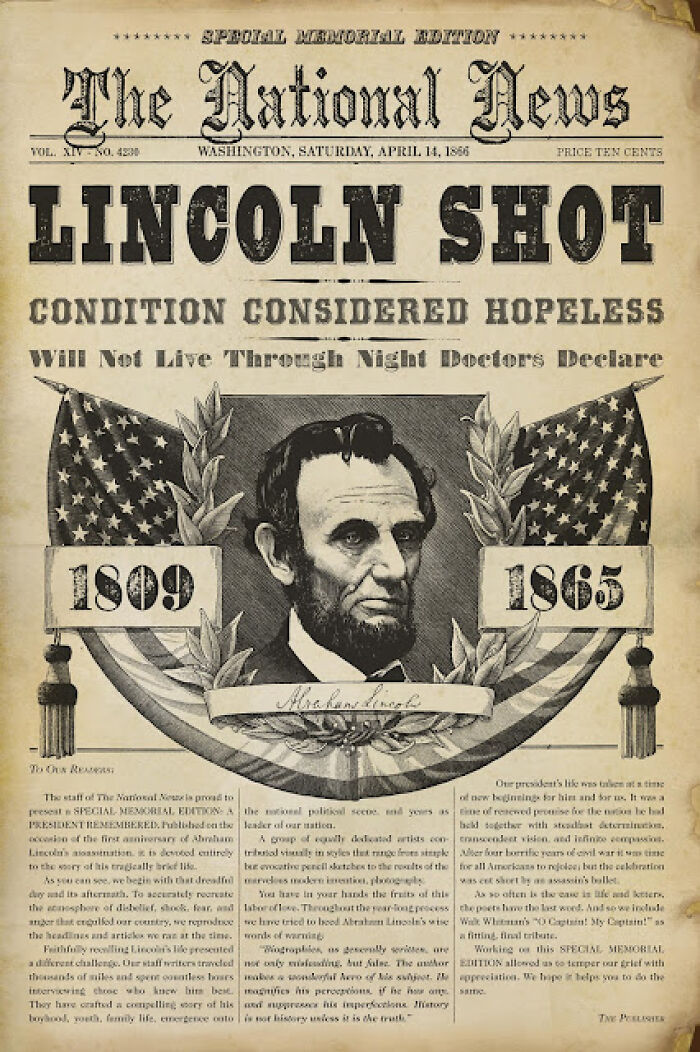
#29
The Evening News announces the birth of Louise Brown in 1978. Louise was the first baby to be born after being conceived by in vitro fertilisation (IVF). The media response described the process as making ‘test tube babies’, and the Pope aired concerns that women would be forced to become baby factories
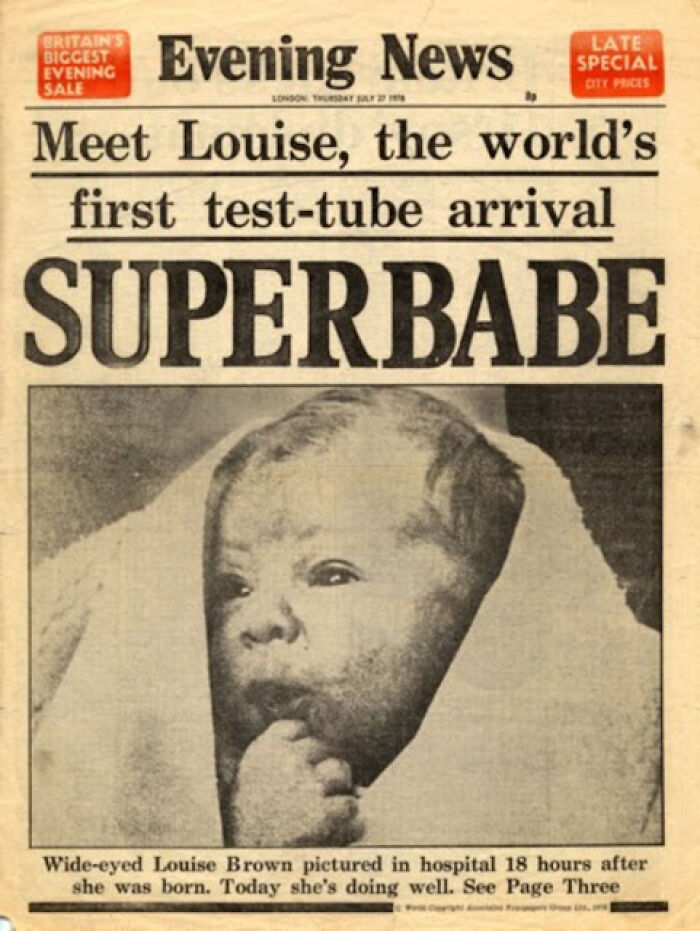
#30
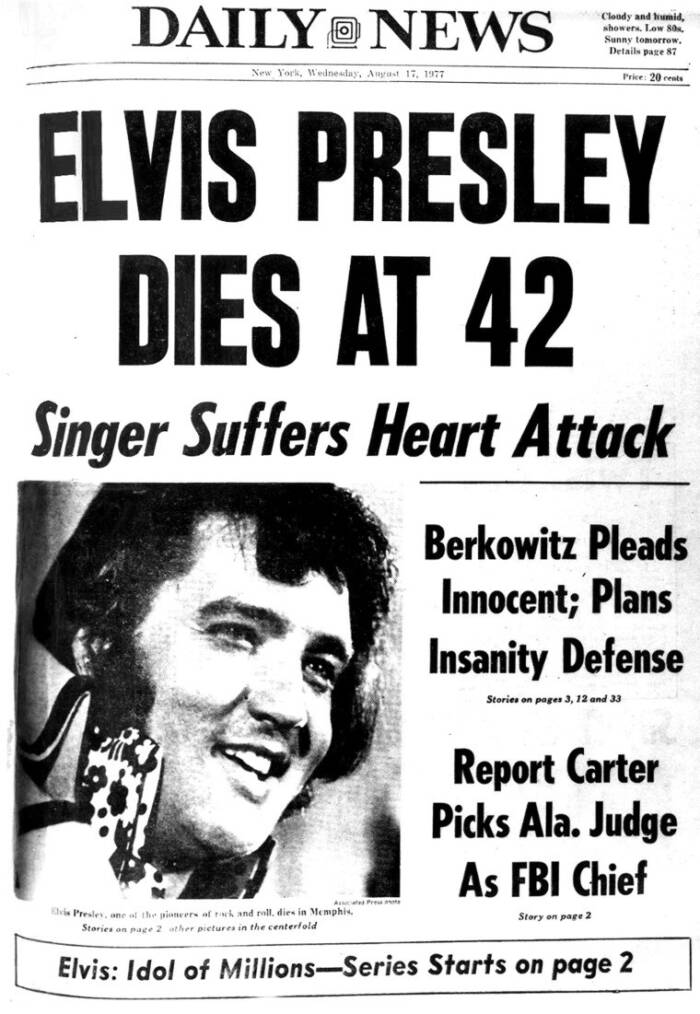
Elvis Presley dies at 42 on August 16, 1977. Front page of the Daily Mail the day after Elvis’ death
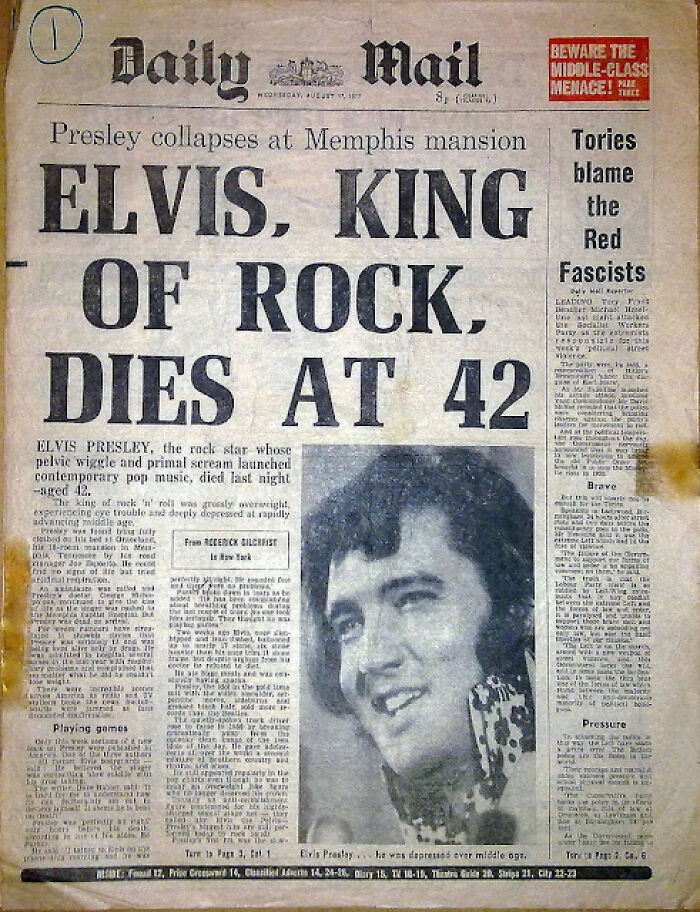
#31
Huge crowds at Trafalgar Square celebrate VE- Day in London. The Daly Mirror front page reporting VE Day
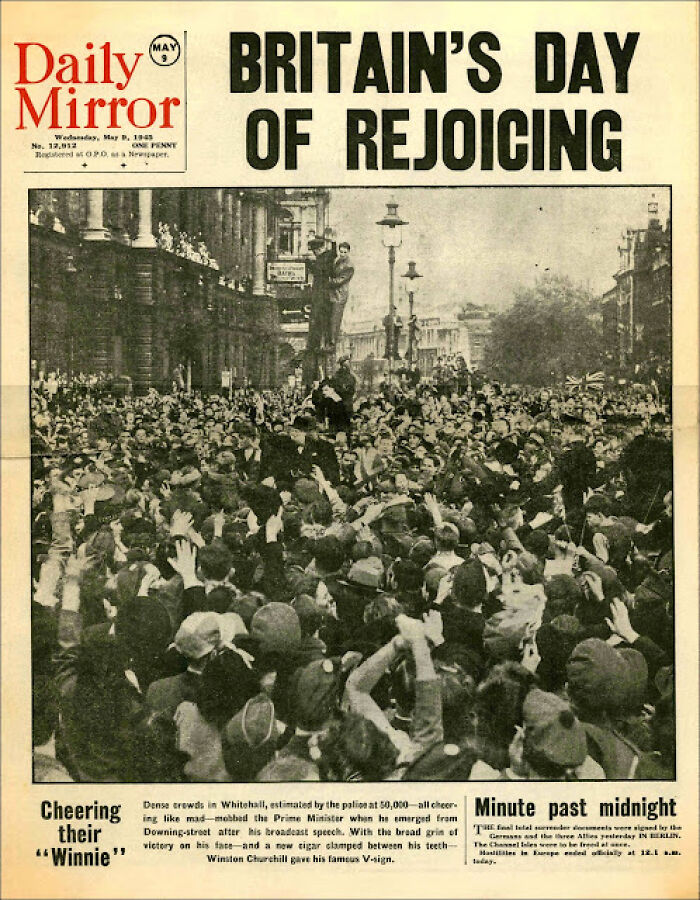
#32
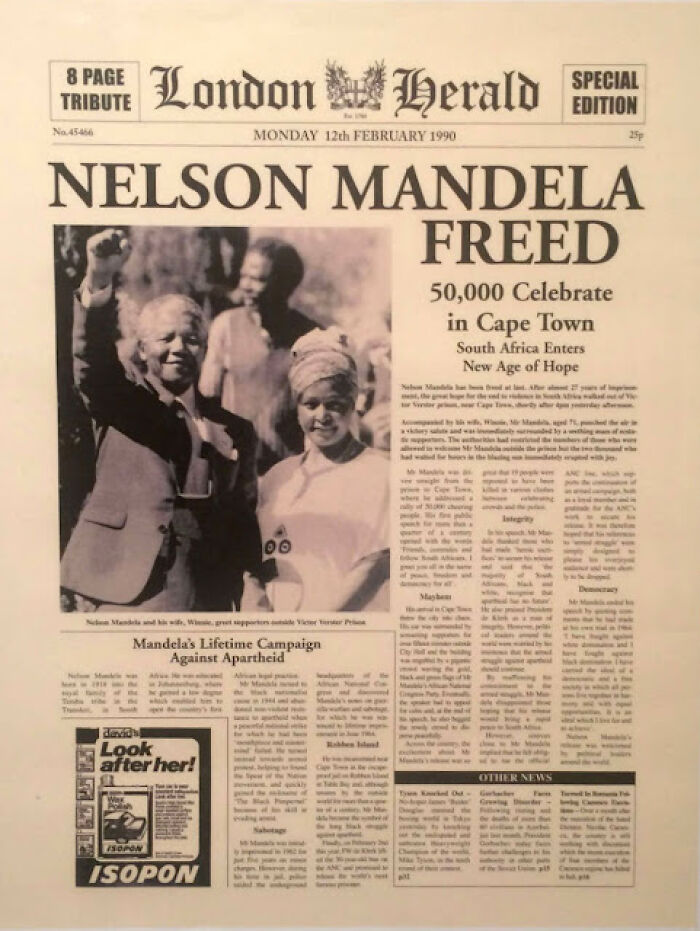
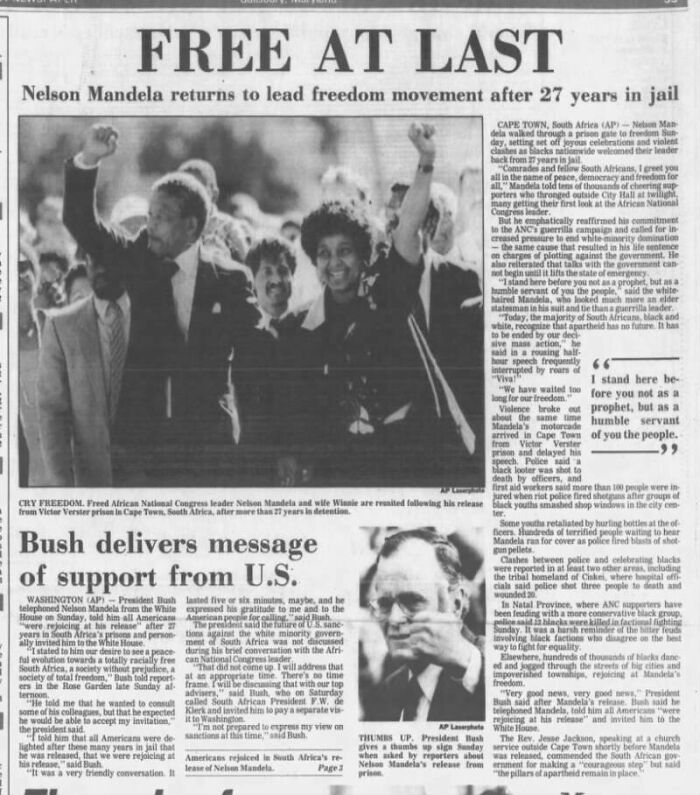
Nelson Mandela freed from prison after 27 years in captivity. February 11th 1990. London Herald front page
#33
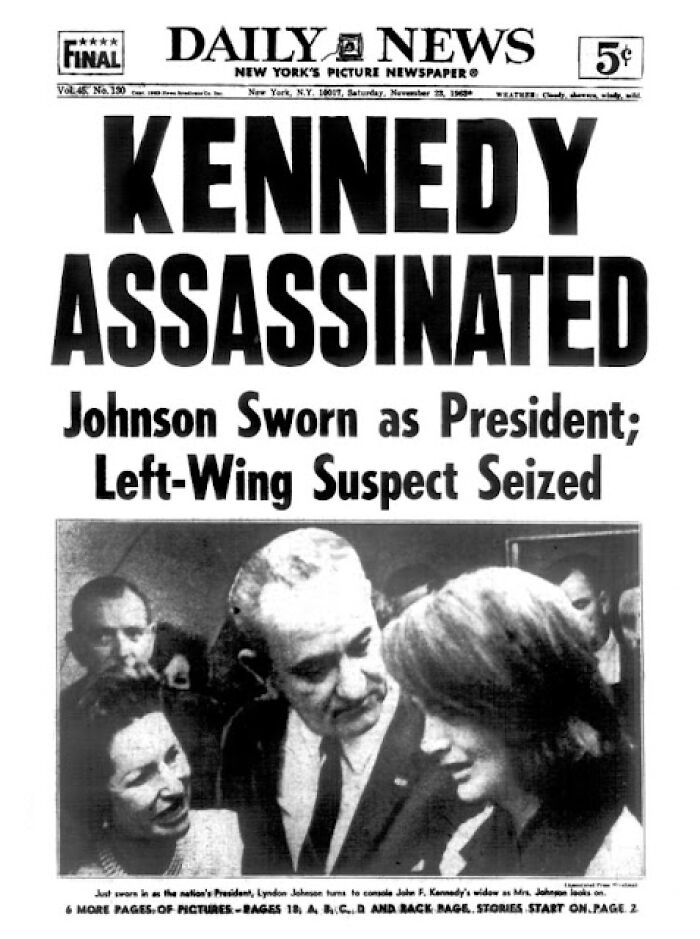
Daily News front page the day after the assassination
#34
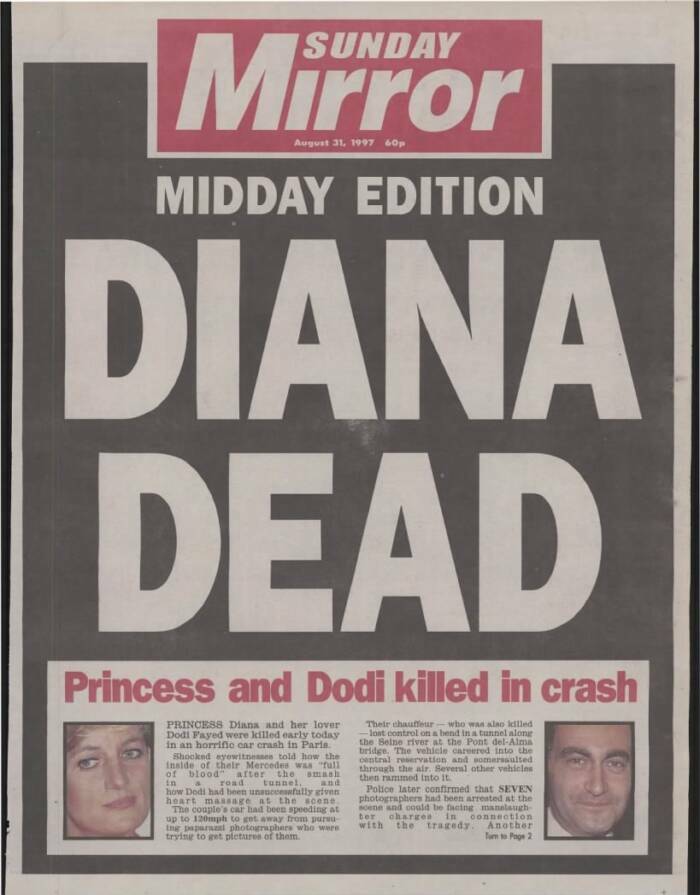
Coverage of the shocking death of Princess Diana, who perished in a car crash in Paris on August 31, 1997
#35
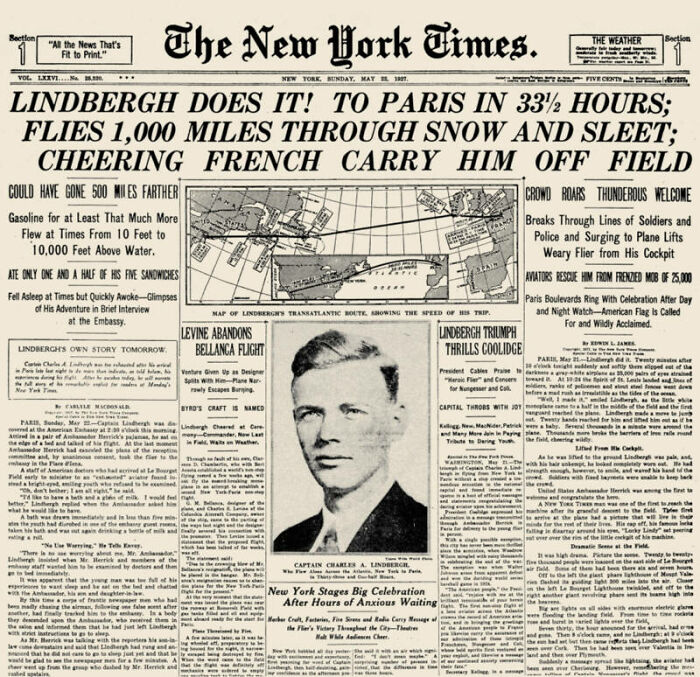
Newspaper coverage of Charles Lindbergh’s historic flight, the first solo, nonstop flight across the Atlantic Ocean in 1927
#36
Elvis Presley’s death shocked the world, as the singer was only 42 when he died of cardiac arrhythmia on August 16, 1977
#37
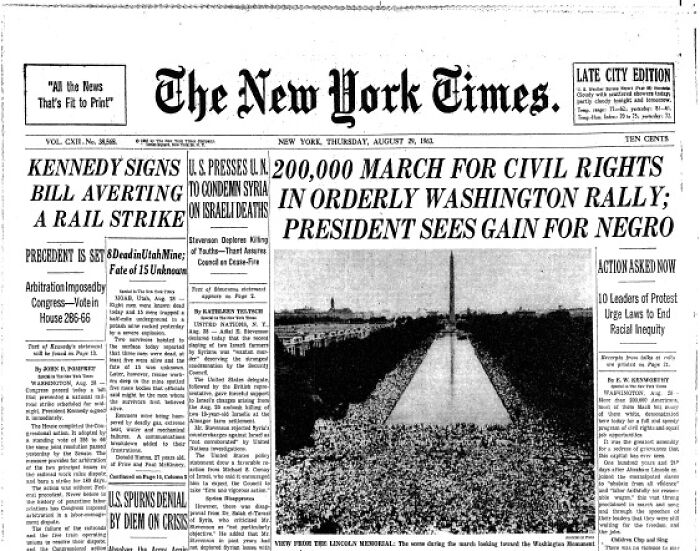
Coverage of the March on Washington for Jobs and Freedom, on August 28, 1963, where Martin Luther King Jr. famously gave his “I Have a Dream” speech
#38
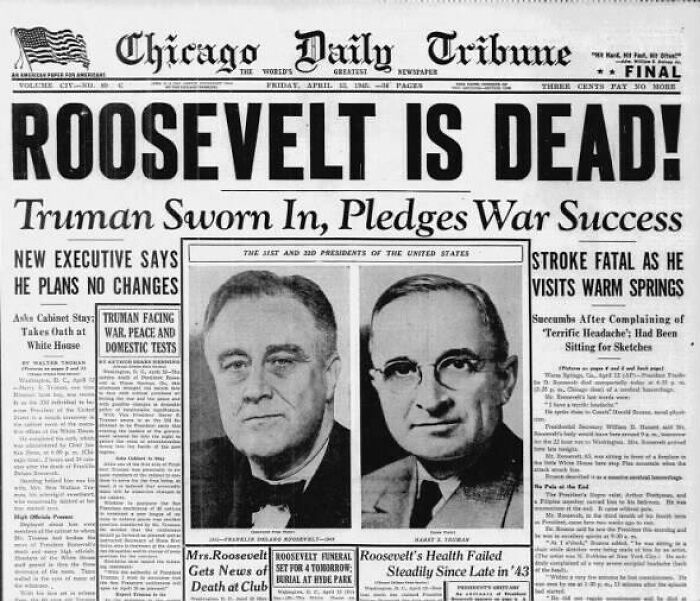
The death of President Franklin Roosevelt on April 12, 1945 marked the end of an era, as he had been in office since 1933. His vice president, Harry S. Truman, succeeded him
#39
#40
#41
#42
#43
#44
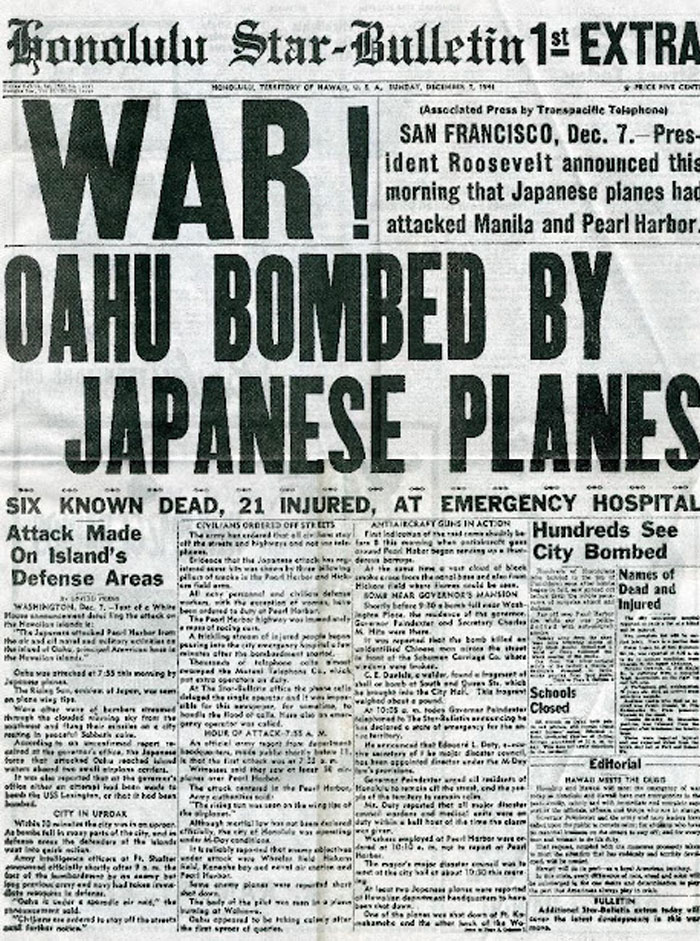
Harbor Attack. Honolulu Star newspaper headlines. December 7, 1941
#45
#46
#47
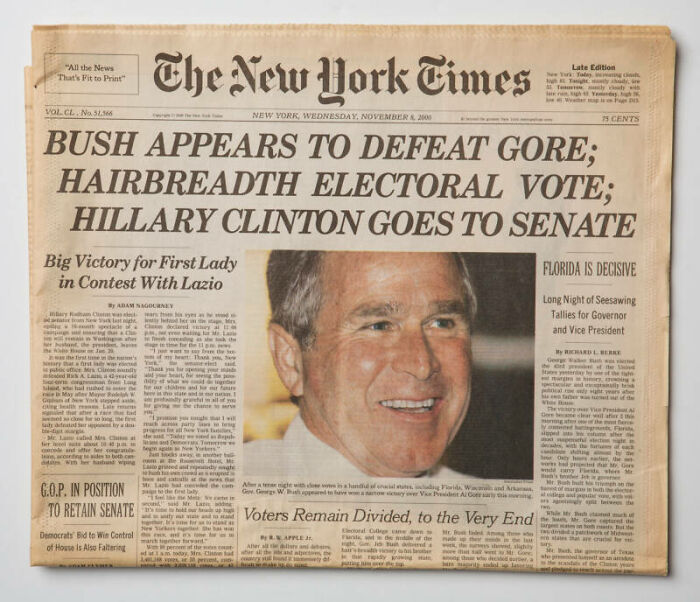
Newspaper coverage of the close George W. Bush-Al Gore presidential election in 2000, which ended with Bush’s victory
#48
Early coverage of the Chernobyl disaster in Pripyat, Ukraine, then part of the Soviet Union. April 1986
#49
After 27 years, anti-apartheid activist Nelson Mandela was released from prison on Feb. 11, 1990. He later became the president of South Africa
#50
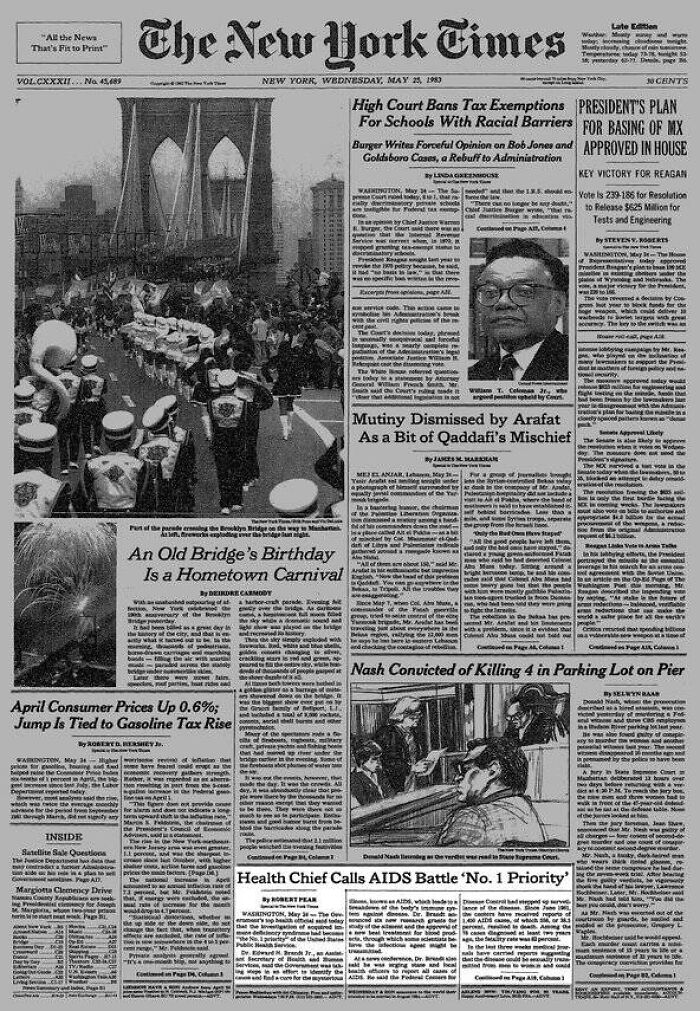
Though not exactly a famous headline, the story at the bottom of the page marked one of the first times that the AIDS crisis made it to the front page of a major newspaper
#51
#52
#53
#54
#55
#56
#57
 Follow Us