We all know how important trust is in a relationship. When it’s present, we feel secure, valued and supported. When it’s lacking, it can lead to insecurity and conflict, or even the end of a relationship. And it doesn’t always take something major to plant the first seed of doubt. Sometimes, just a little icon on a phone screen is enough to have you questioning absolutely everything…
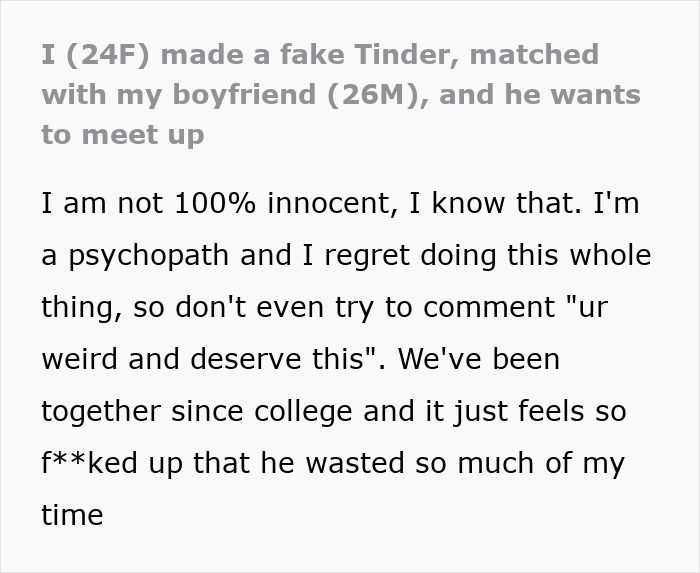
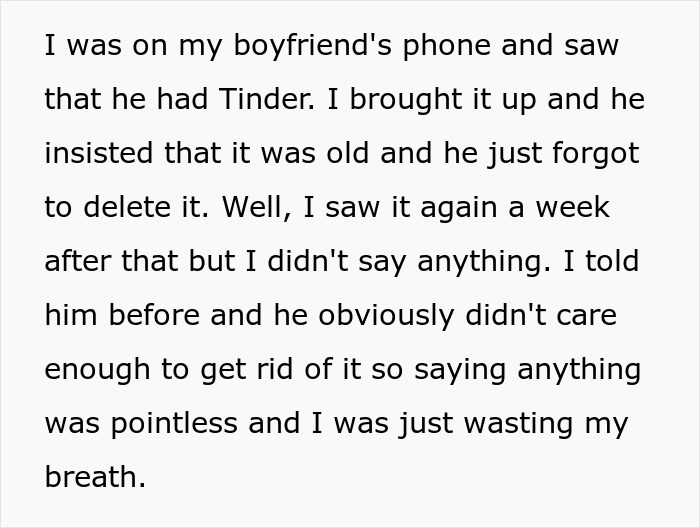
That’s what happened to one 24-year-old woman when she spotted Tinder on her boyfriend’s phone. He insisted that the app was old and that he had simply forgotten to delete it, and she initially decided to give him the benefit of the doubt. But when she saw it again a week later, she started to wonder whether there was more to the story. Rather than simply take his word for it a second time, she decided to find out for herself.
This woman started to question her boyfriend’s loyalty after spotting Tinder on his phone
gorynvd / Magnific (not the actual photo)

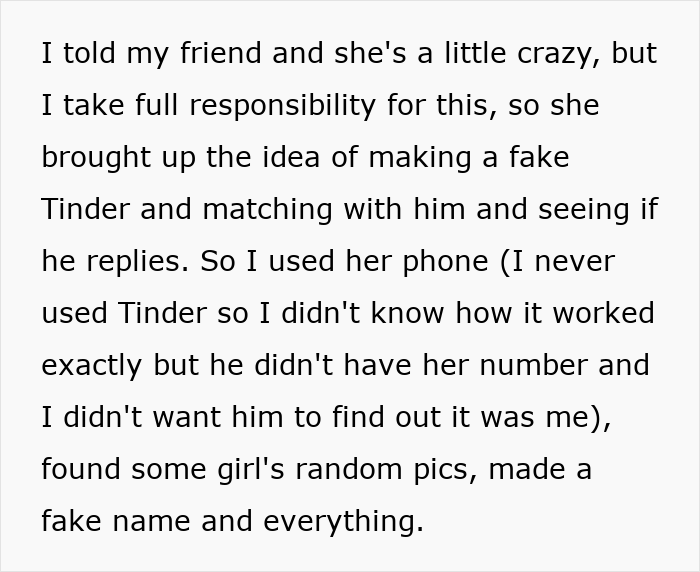
He told her it was old but didn’t delete it, so she decided to put his story to the test
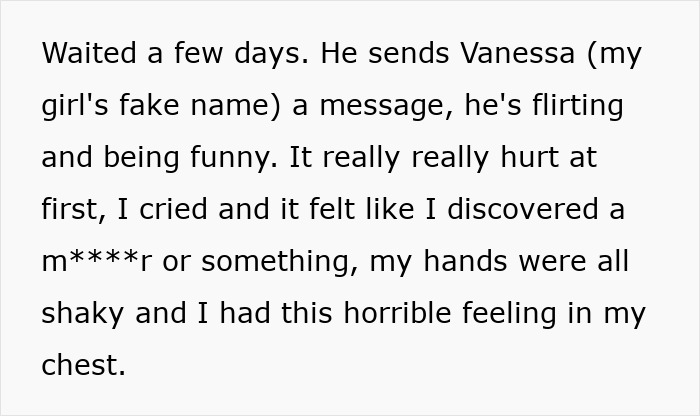



dimaberlin / Magnific (not the actual photo)
Commenters gave the poster loads of “incredible advice”

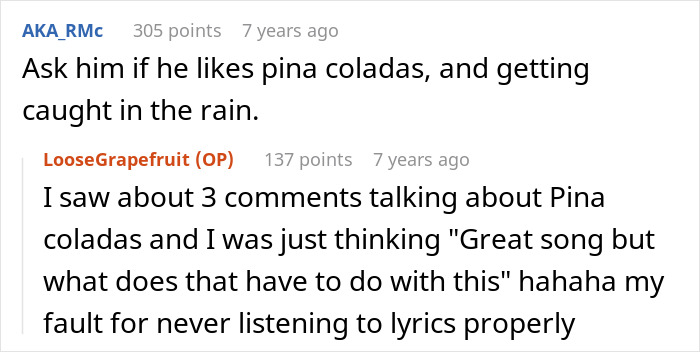

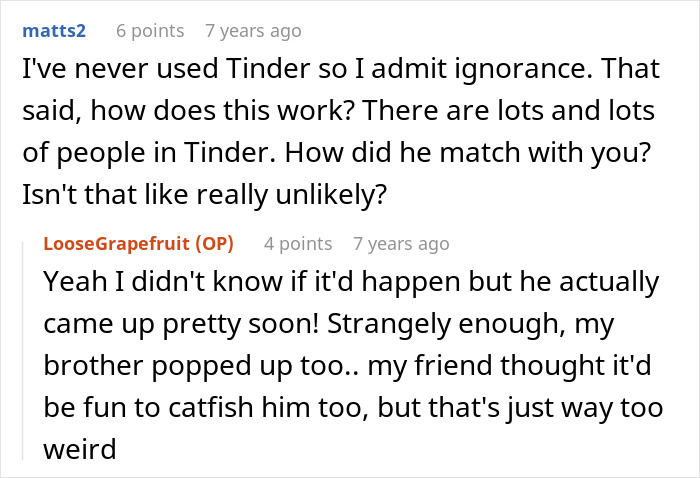
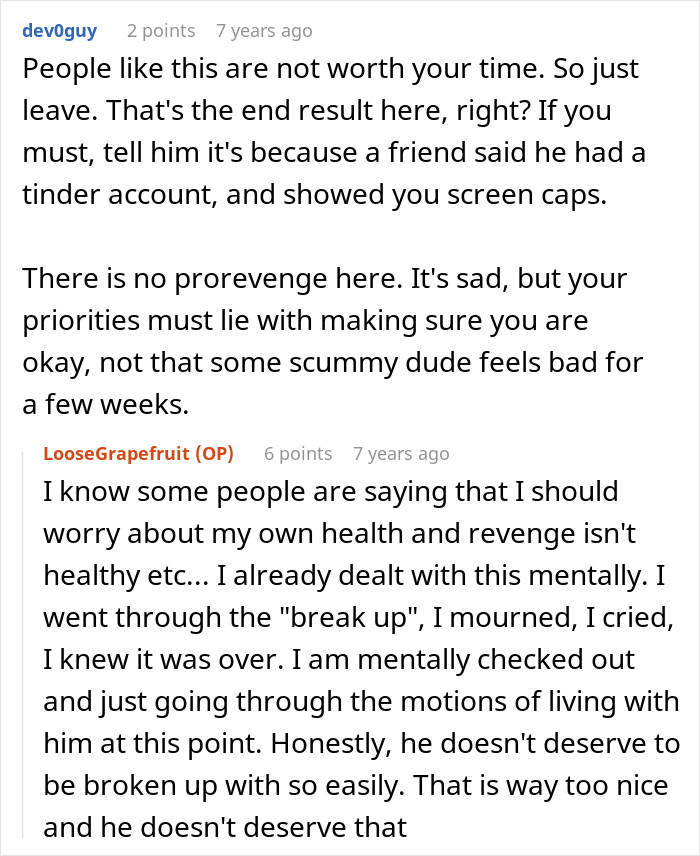


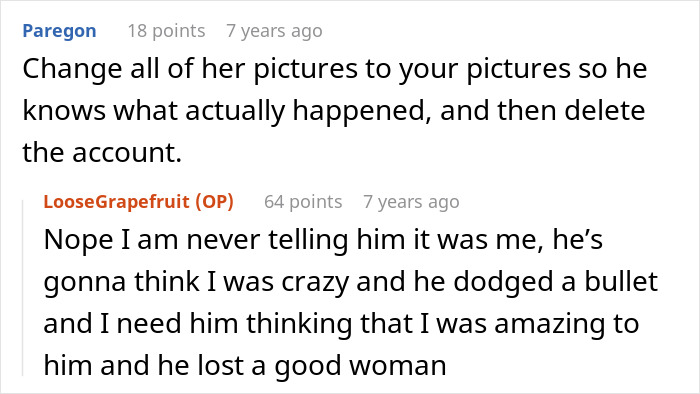

Camandona / Magnific (not the actual photo)
The poster returned a week later to reveal how everything unfolded
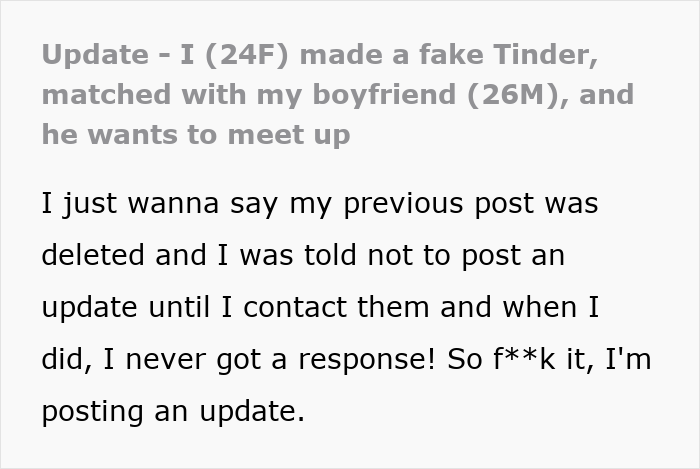


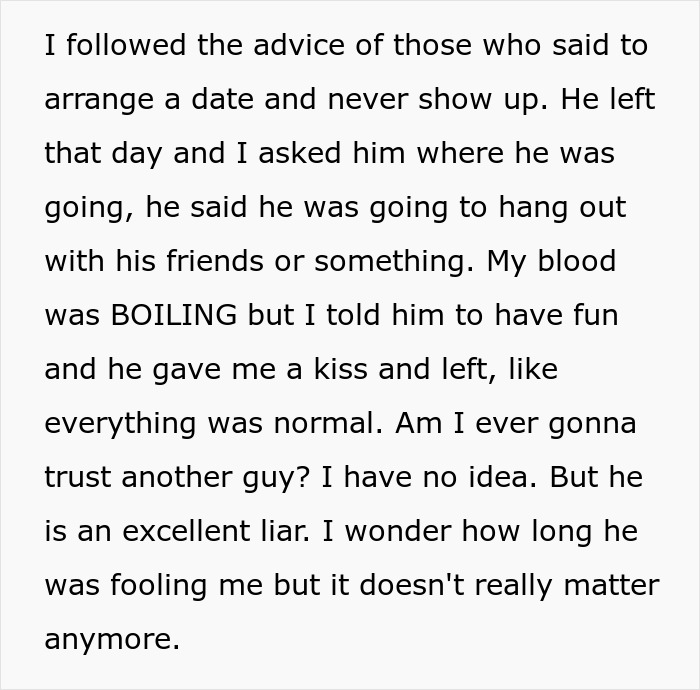

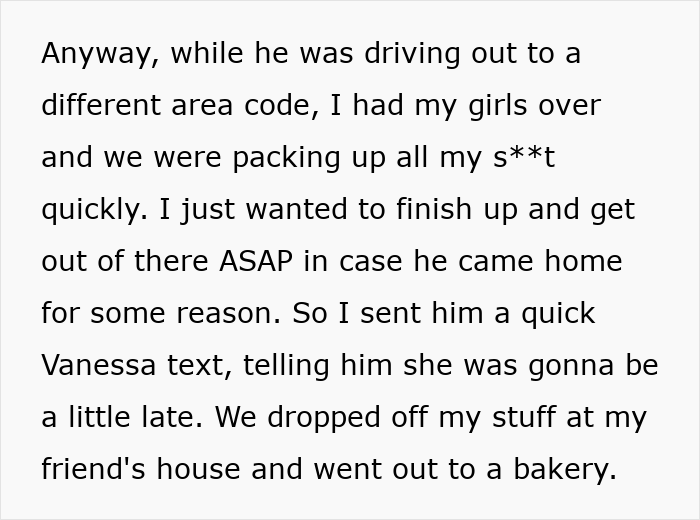

magnific / Magnific (not the actual photo)


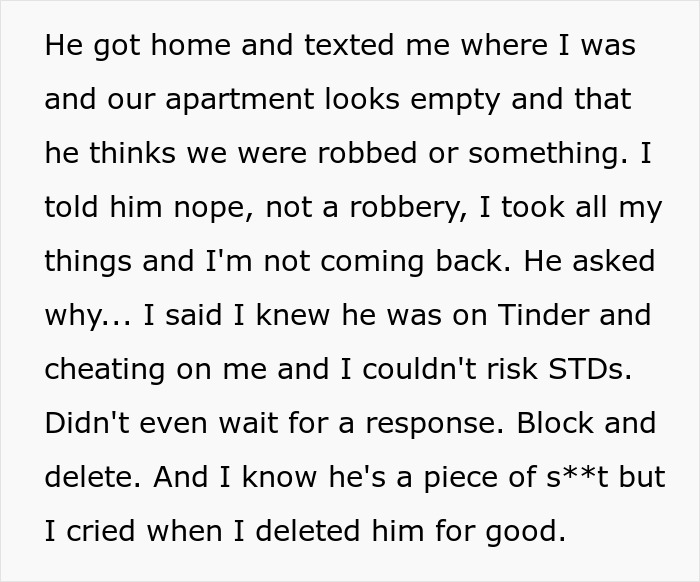
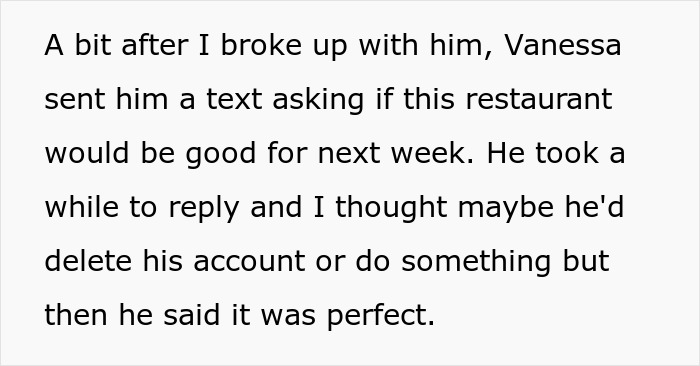



The Yuri Arcurs Collection (not the actual photo)
Not everyone on Tinder is single
Tinder and apps like it have become an increasingly integral part of the modern dating landscape. Approximately 360 million people reportedly used dating apps around the world in 2025, with Tinder alone accounting for roughly 90 million users. But as this story shows, not everyone swiping, matching and messaging is necessarily single, suggesting that the relationship between dating apps and committed relationships may be more complicated than it first appears.
As researchers Elisabeth Timmermans, Elien De Caluwé and Cassandra Alexopoulos noted in a 2018 study, being single was once one of the “most obvious predictors” of engaging in online dating. But they found that this was no longer necessarily the case, with “more and more non-single people benefiting from the technology as well.” And, sure, we’ve all heard the shady stories, but this may be more common than we might think: according to US data cited by the researchers, some 42% of people with a Tinder profile were married or in a relationship.
Having a profile, however, isn’t necessarily the same as actively using it—a distinction that was central to the poster’s boyfriend’s explanation for having the app on his phone, and one she was determined to put to the test, even if it made her feel like a “psychopath” in the process.
In this respect, the researchers cited several international academic studies on Tinder use, which indicated that “between 18 and 25% of participants reported being in a committed relationship while using Tinder.” Interestingly, they also cited a separate study that found that in a sample of U.S. undergraduate students, 73.1% said they knew a male friend who had used Tinder while in a relationship, while 56.1% said the same about a female friend.
When “matching” goes off-app
But even active use of a dating app doesn’t necessarily mean someone is actually meeting people in person. For some, the interaction may stop at swiping, matching or messaging. For others, however, it can go considerably further (and I don’t just mean traveling to a different area code like old “Chad” here hilariously did).
Timmermans and her colleagues found that more than half of the Tinder users surveyed who were in relationships reported meeting someone they had matched with on the app: 57.7% had had such an offline meeting. That doesn’t necessarily mean all those encounters constituted physical infidelity, but it does suggest that for some, being “exclusive” doesn’t necessarily mean staying off the dating apps or limiting interactions to them.
This raises an interesting question: where do people draw the line? Because apparently, not everyone considers having or using a dating app while in a relationship to be cheating. A 2014 YouGov survey, for example, found the following: 67% of women considered using Tinder while in a relationship to be cheating, compared with 43% of men. This suggests that, even before anyone starts swiping, matching or arranging to meet, couples may have very different ideas about what behavior crosses the line.
Whatever Chad considered acceptable, he clearly wasn’t interested in checking whether his girlfriend was on the same page. He flirted with Vanessa, sent her spicy messages, and made plans to meet up IRL—all while acting like everything was completely normal at home. That’s arguably what makes this story so unsettling: not just that Chad was using Tinder, but how easily he seemed to compartmentalize it, playing the doting boyfriend one moment and pursuing the beer-drinking, Marvel-loving “Vanessa” the next.
Now make of this what you will, but it’s perhaps worth noting here that Timmermans and her colleagues found that non-single Tinder users scored significantly higher on measures of psychopathy than non-single people who weren’t using the app. And if that doesn’t put the poster’s “psychopath” comment in a different light, I don’t know what does.
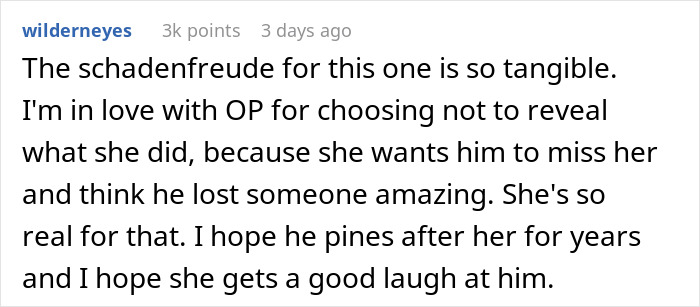
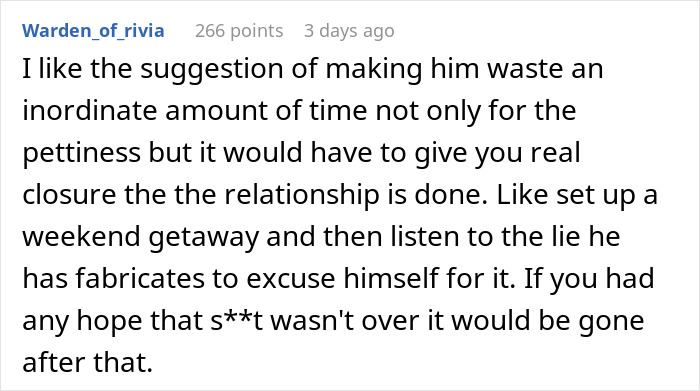
Commenters were pretty impressed by the poster’s “brilliant pettiness”











 Follow Us