It’s tough to find a healthy balance between supporting your loved ones and being your own person. On the one hand, you love your parents and siblings. On the other hand, their expectations and attempts to control your life decisions can make you feel cornered. And if you try to gently push back, you might see just how entitled they are.
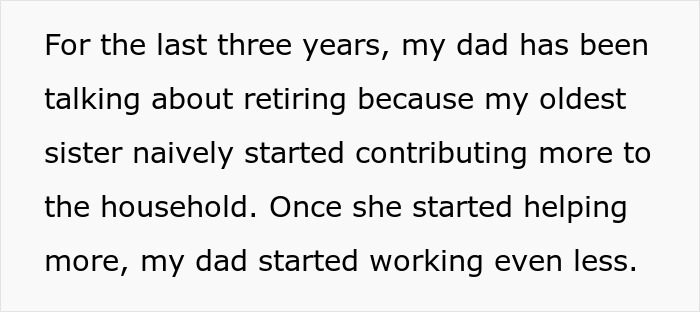
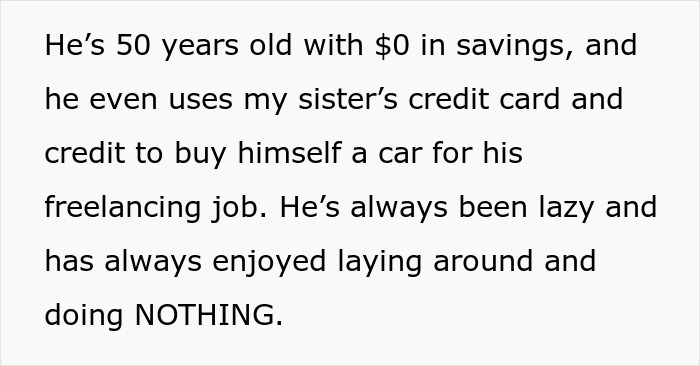
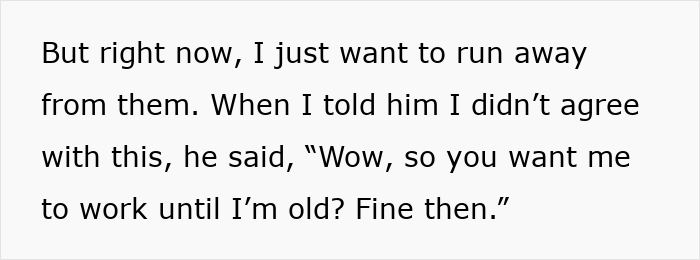
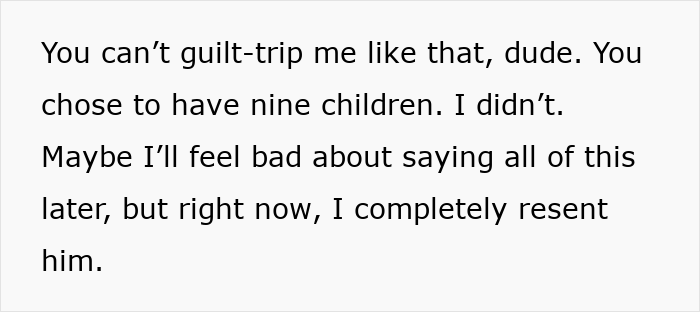
A woman vented on the ‘Girl Dinner Diaries’ online community about the immense pressure that her father is placing on her shoulders to start supporting their huge family after she finishes college. Meanwhile, the dad wants to retire early and enjoy himself. Well, his daughter was having none of it and started to fight for her right to live her own life. Read on for the full family drama.
Parental expectations can put so much pressure on you that you barely have room to breathe

vasilij33 / Magnific (not the actual photo)

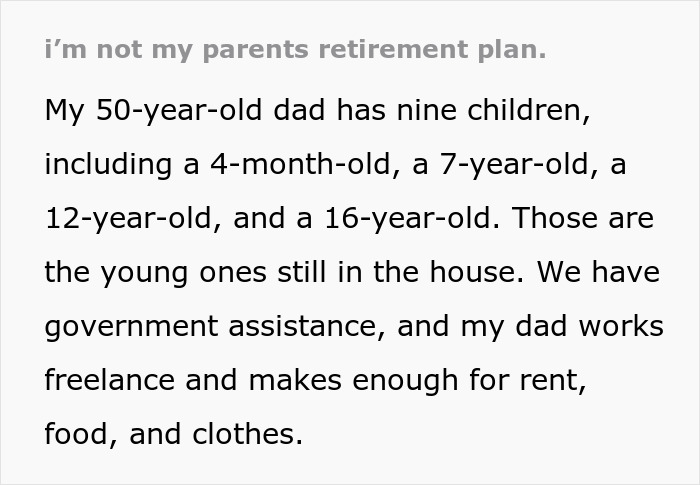
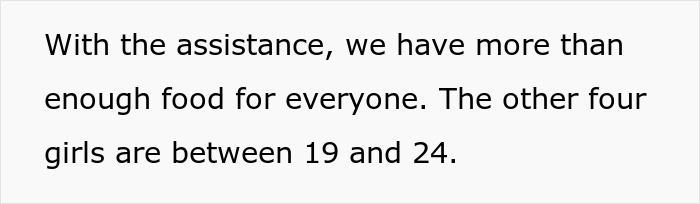
This woman vented online about how her dad wants to retire and dump all the financial pressure on her shoulders

Dicemedia / Magnific (not the actual photo)
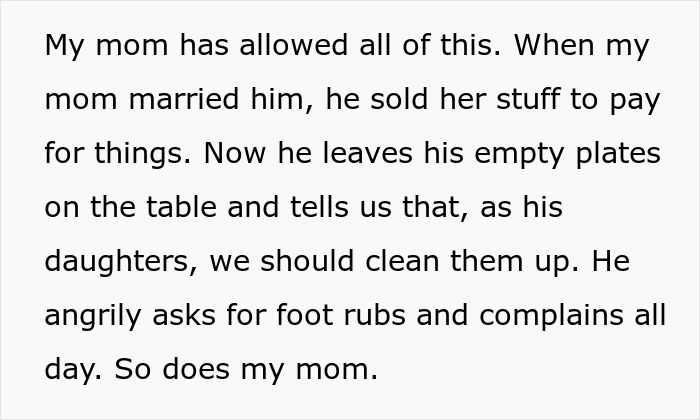
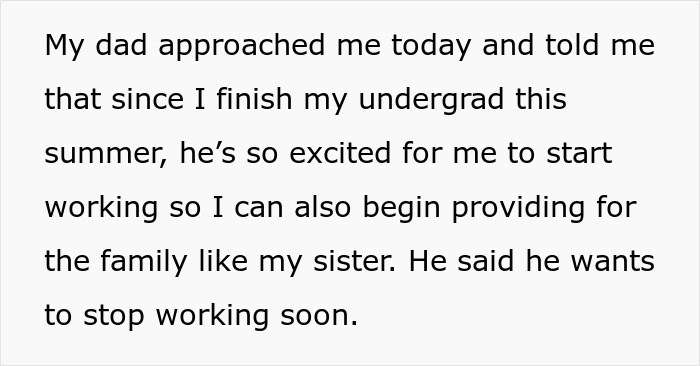
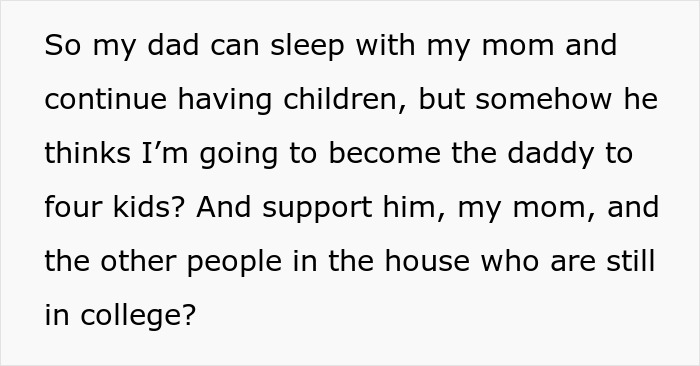
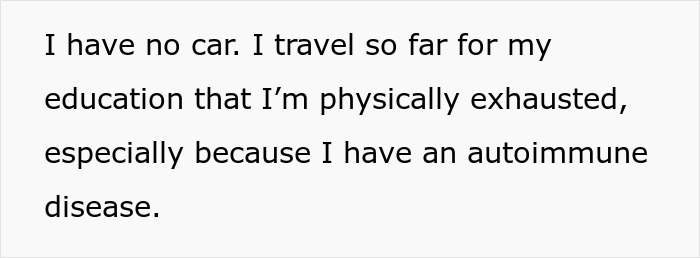
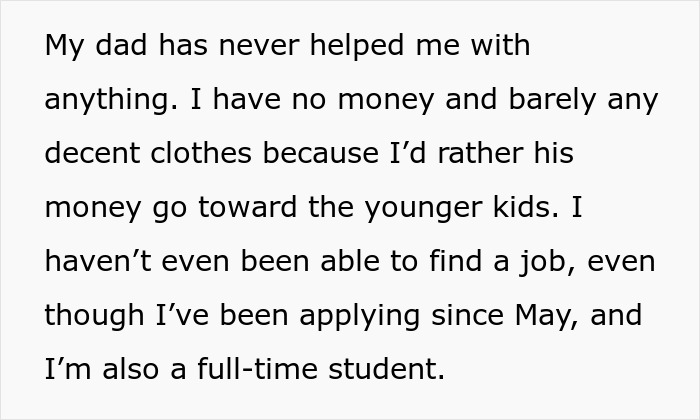
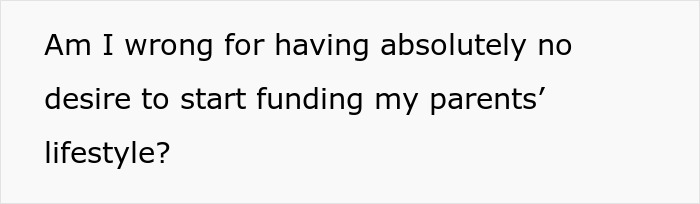
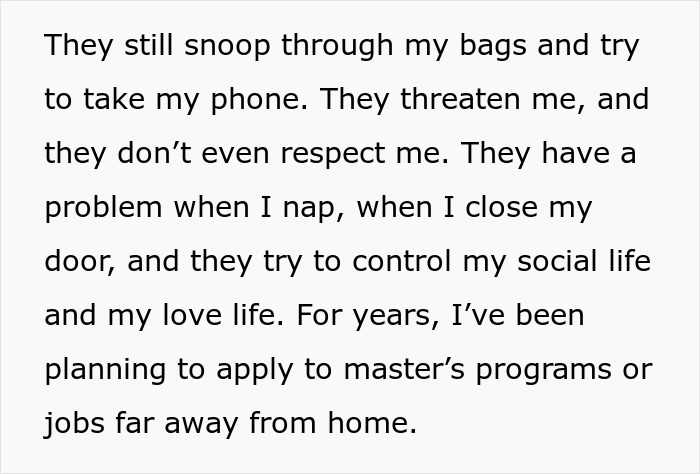
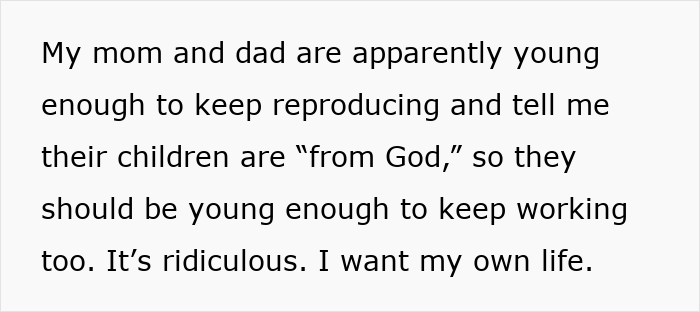
The family situation and level of control seem very concerning
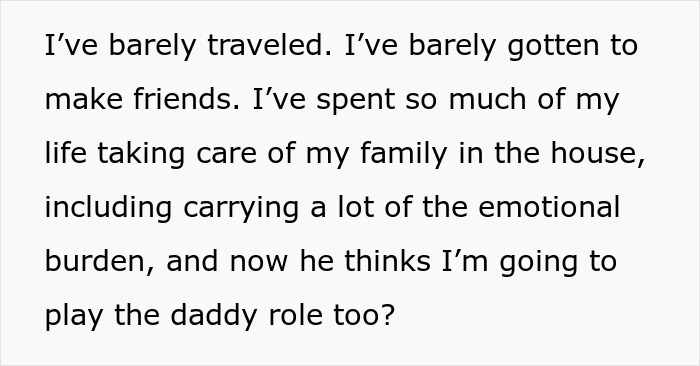
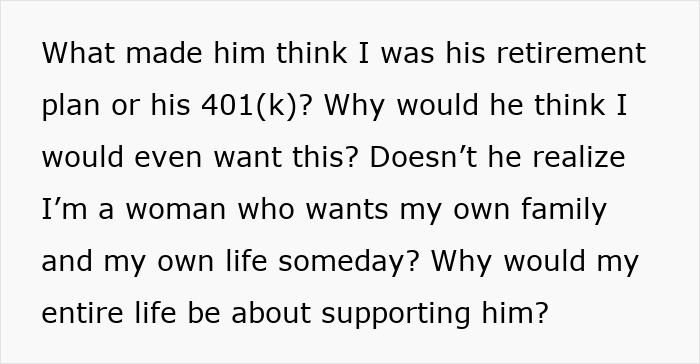
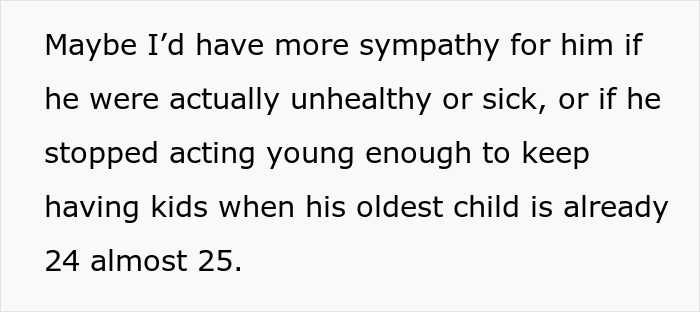
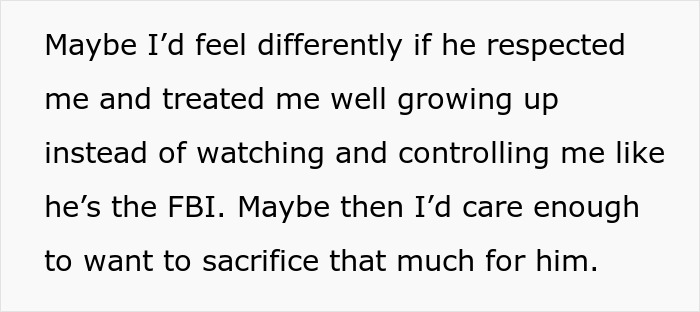

magnific / Magnific (not the actual photo)
Expectations can sometimes take years of therapy to untangle and move past
Parental expectations put a lot of pressure on kids. When those expectations are unrealistic or needlessly restrictive, all of that pressure can impact your mental and emotional health. They lead to frustration, resentment, guilt, and feeling like you’ll never be good enough.
But at the end of the day, you are your own person. You have to learn to put your well-being and needs first, otherwise, you can’t take care of others properly. And that means being able to say “no” to your loved ones when they make unreasonable requests. The key word here is “unreasonable.” If someone’s acting overly entitled and you genuinely can’t do a favor for them, it is fair to refuse it.
It’s likely that your family will have problems with your setting healthy boundaries if you’ve never done this before. At least at first. It will take time and effort for them to adapt to these new standards.
According to PsychCentral, when a child is small, they are fully dependent on their parents. And so, they have “no other choice but to undertake whatever role or standard they are expected to meet in order to be accepted and loved, at least conditionally.”
If you try to resist this pressure while you’re growing up, you might be called disobedient or bad. In some cases, you might even get punished, whether actively or passively.

Andrej Lišakov / Unsplash (not the actual photo)
If you can look past the guilt you feel when setting boundaries, you can create better relationships
“The child often grows up thinking that they are indeed a failure, a disappointment, a bad person. Such a person often struggles with toxic guilt and shame. They are also confused about who they really are since they have been conditioned not to be themselves and be whatever they are expected to be. In other words, they are conditioned to self-erase. Early roles and expectations set by our caregivers are very difficult to let go of and may take months or years of therapy and self-work to identify and escape from.”
They might even try to convince you that having boundaries is somehow wrong. And yet, boundaries are genuinely healthy for everyone.
“It’s expected to feel a little guilt when setting boundaries. If you believe they have good intentions, you may want to avoid hurting their feelings, “ Healthline states.
“Even when you set boundaries with compassion, they could still feel hurt. If you then feel guilty for offending them, you might give them some ground when they push back against those limits. Flimsy or nonexistent boundaries might make your guardians feel better, but they won’t improve your situation.”
Furthermore, if you believe that your parents don’t respect your ability to make your choices for yourself, it can seriously damage both your self-worth and self-respect. “When those guilty feelings bubble up, remind yourself that by standing firm and politely repeating your boundaries, you’re supporting your well-being.”
We want to hear from you, Pandas. Tell us what you think, how you’d handle the situation, and how you protect your own boundaries in the comments.
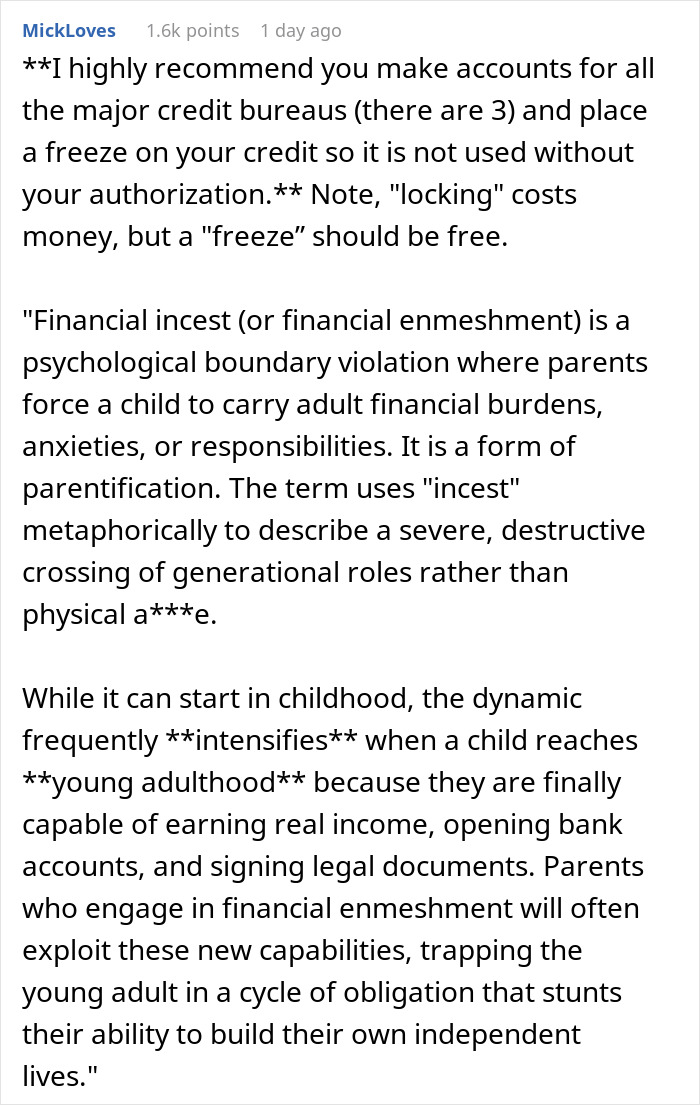
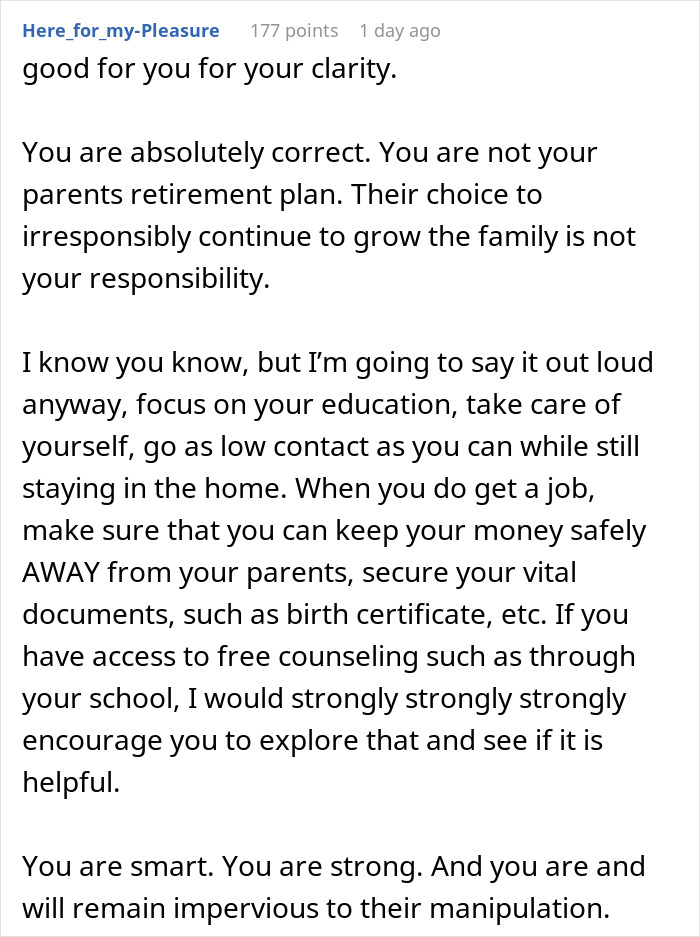
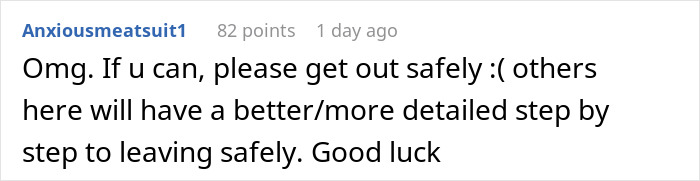
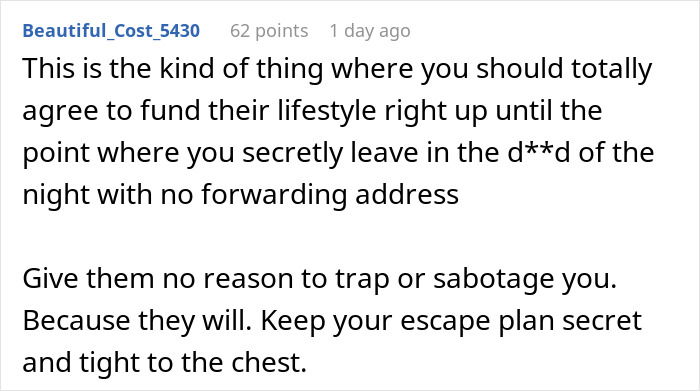
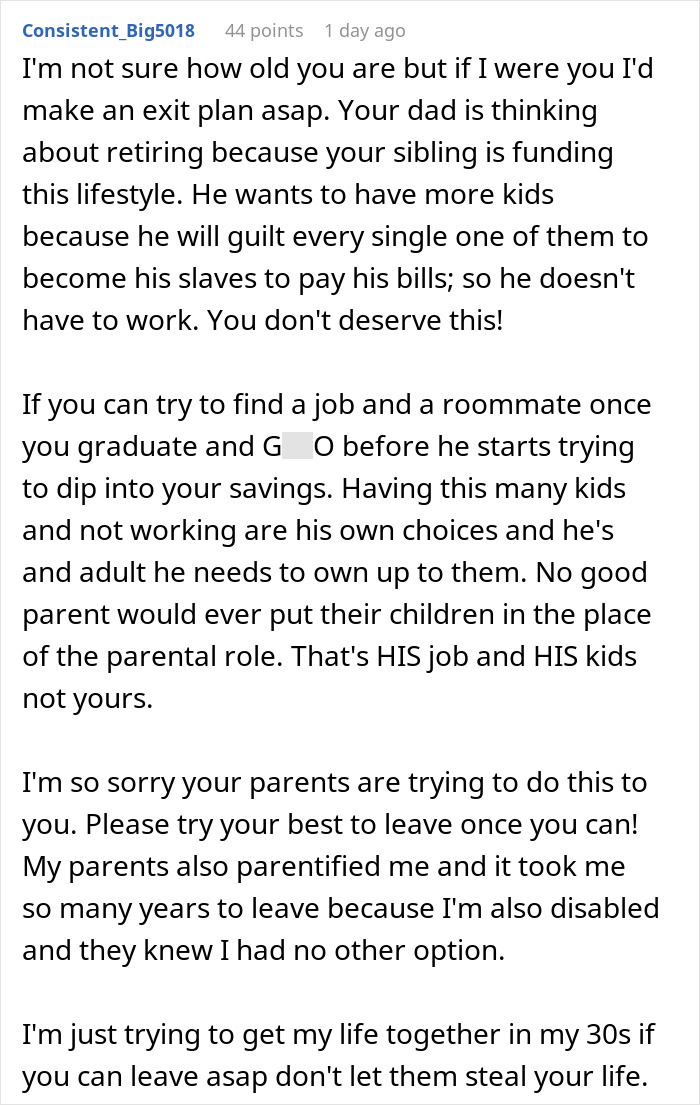
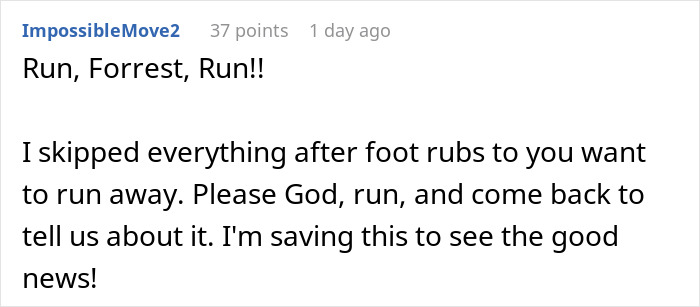
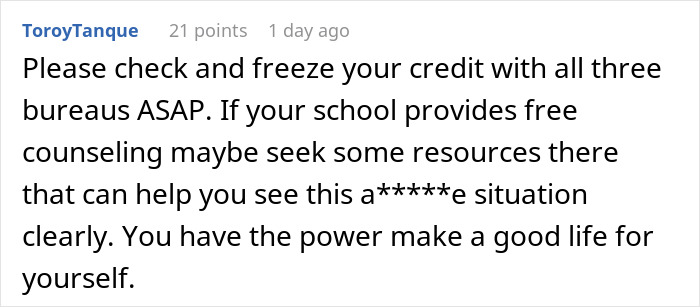
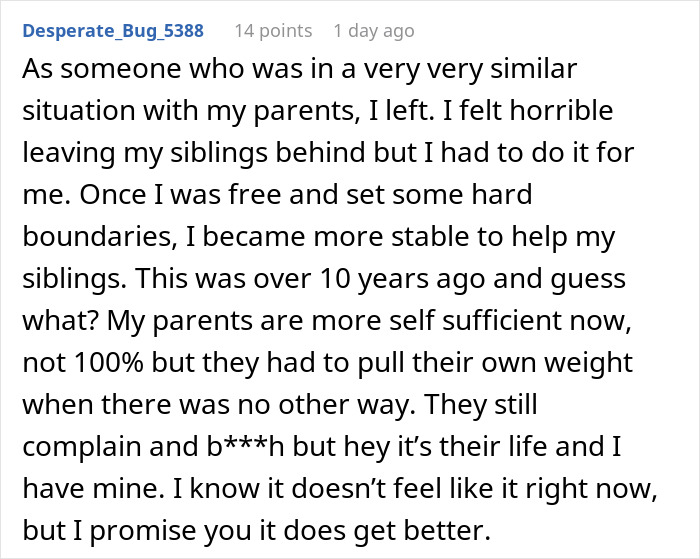
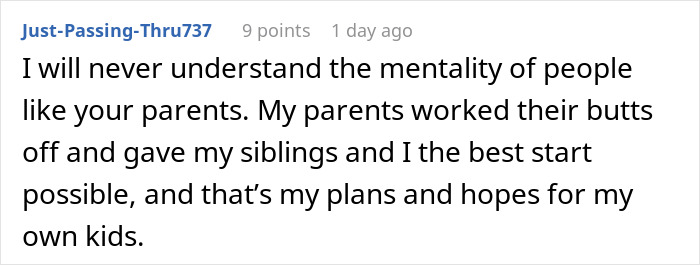
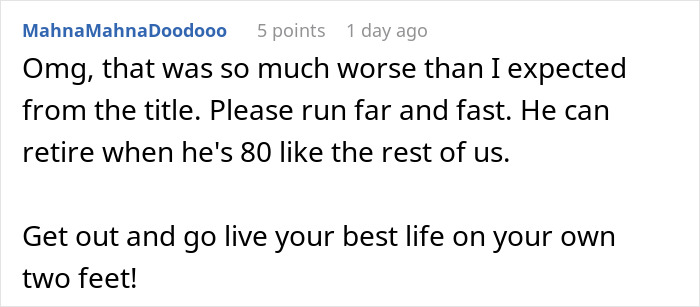
Internet users didn’t play around and gave the woman practical and useful advice on what to do next





 Follow Us