From across the room, a Michael Mapes portrait could pass for a Dutch Golden Age painting: a pale face, a starched lace collar, a glint of pearls. Step closer, and it comes apart. The face turns out to be hundreds of tiny photo fragments, each held in place with an entomologist’s insect pin. Costume jewelry, locks of hair, fingerprints, and fabric swatches are tucked into gelatin capsules, glass vials, and labeled specimen bags, as if someone had dissected the sitter and carefully filed away the evidence.
Mapes calls these materials “biographical DNA,” and collecting them is half the job. He researches every subject and makes hundreds of individual elements before he places the first one. For a portrait of the poet Charles Baudelaire, commissioned by New York’s Fifth Avenue Hotel, he spent five weeks wandering Paris the way the poet himself once did. He picked up paperbacks, ink nibs, postcards, and even cigarette butts, and photographed the Hôtel de Lauzun, where Baudelaire stayed.
The results land somewhere between portrait, collage, and natural history display, and they’ve been exhibited at the Museum of Arts and Design in New York, the Victoria and Albert Museum in London, and the National Museum of Modern Art in Tokyo. Below are works spanning two decades, from his early “Human Specimens” to the reimagined Dutch Masters that made his name.
More info: room62.com | Instagram
#1 21-Year-Old Dutch Female (2014)
“Part of the “Dutch Master” series, in which I re-examine various portraits by the Dutch Master painters. In this piece, factual content is combined with contemporary references to give the subject depth beyond the original painting.”
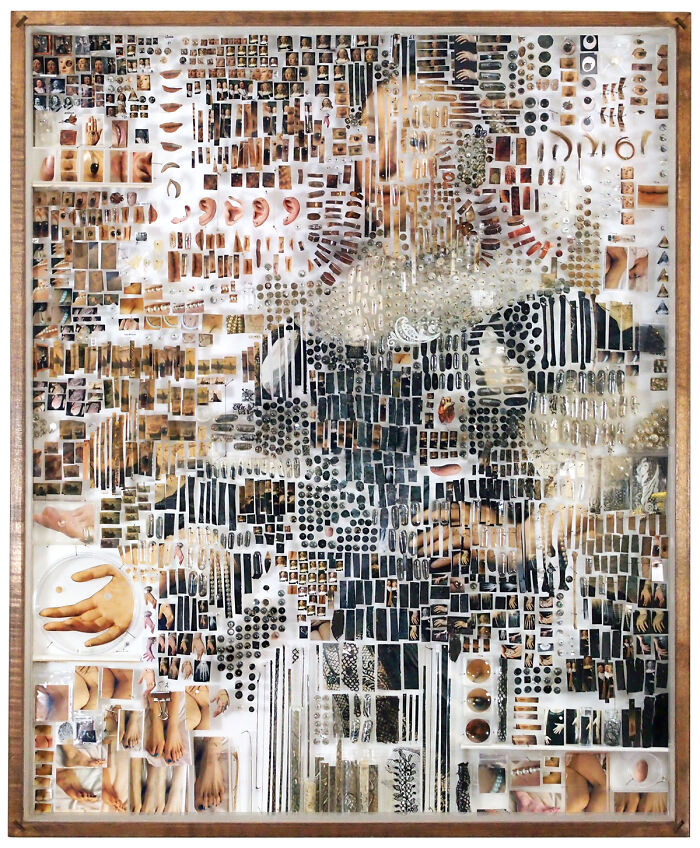
Image source: Michael Mapes
Mapes took the long way into the art world. Born in Fort Knox, Kentucky, he earned an MFA from the University of Illinois. He also spent nearly 20 years running MINC, a wholesale t-shirt company whose best seller was a humorous field guide to bird droppings. He didn’t commit to art full time until he was 40. The spark came from a single photo of a friend that had been hole-punched and pinned back together with sewing pins.
There’s no sketch or blueprint behind these compositions. Mapes builds a stockpile first, then arranges the pieces quickly and intuitively, like a painter, often leaving plenty of material unused. “Each specimen is like a paintbrush stroke,” he shared. Commissions are the exception. They tend to be more planned and are often built around personal items the client provides, from family photos to jewelry and fabric.

#2 Specimen No: Bh1 (2006)
“From the “Human Specimens” series. This work reflects my approach: first gathering information, then collecting and creating content based on my impressions of the subject. Here, the “specimen” is an art collector and dealer.”
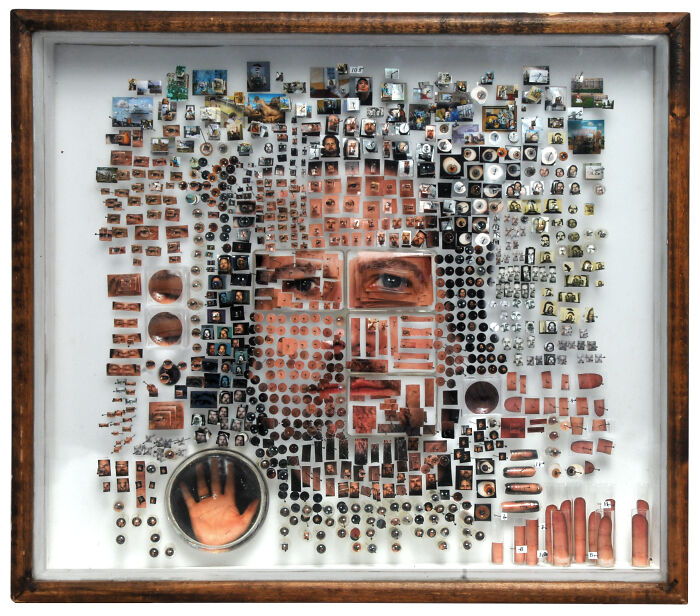
Image source: Michael Mapes
#3 Baudelaire (2023)
“This work was commissioned by a very high-end hotel in Manhattan. Baudelaire was chosen to represent the hotel’s interest in the history of the flaneur, a type of urban walker who wanders or saunters while observing the society around them. Baudelaire was part of that society in Paris. I spent five weeks in Paris collecting content for the work, including prints of portraits, paperbacks, postcards, ink nibs, postage stamps, Paris ephemera, and photos of residences where the poet once stayed.”
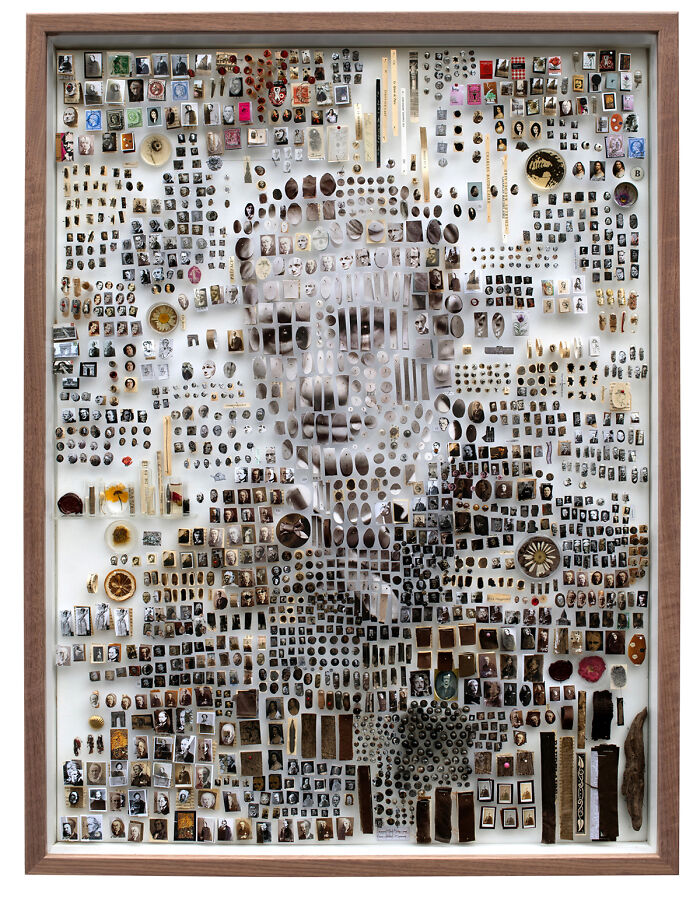
Image source: Michael Mapes
The Dutch Master series began in 2013 with Rembrandt’s 1639 portrait of Maria Trip. Mapes chose these paintings because he sees them as the most iconic form of portraiture. There’s a quiet wink hidden in them, too: up close, photos of bare legs and bits of cleavage fill in the skin tones of the famously buttoned-up sitters. Today, he works from Mexico City, where he held his first exhibition in the country, including a tribute to the Mexican vedette Rossy Mendoza.
#4 Untitled
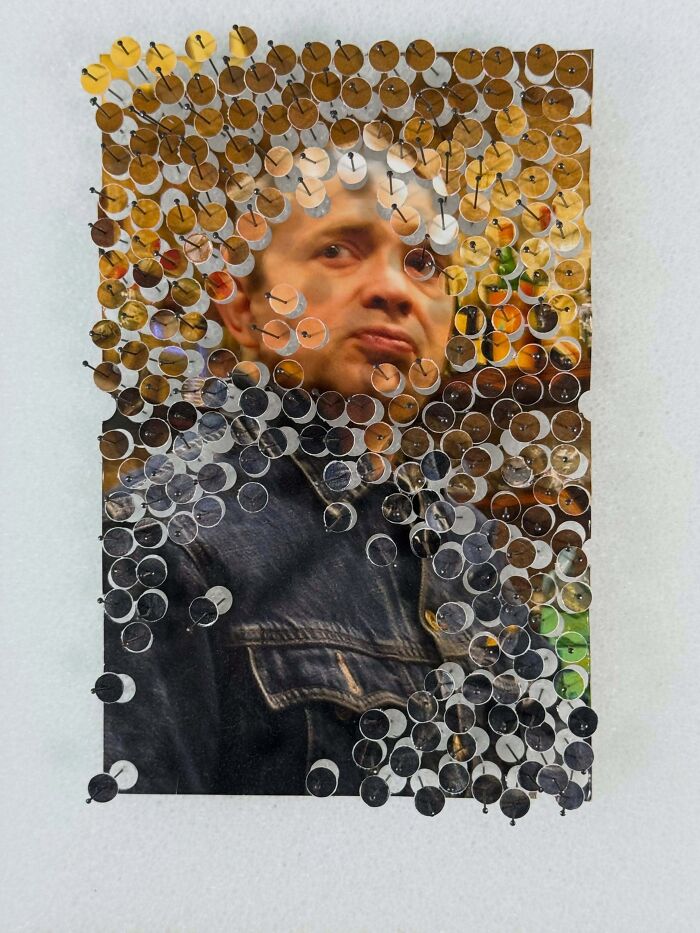
Image source: Michael Mapes
#5 Dutch Missa (2024)
“Portraits by 17th-century Dutch artists followed certain compositional conventions. In this work, I sought to represent those conventions by combining elements from numerous portraits of Dutch women. The result of this creative exercise was “Dutch Missa.” Only on closer examination does the viewer see that numerous subjects have been combined to form one.”
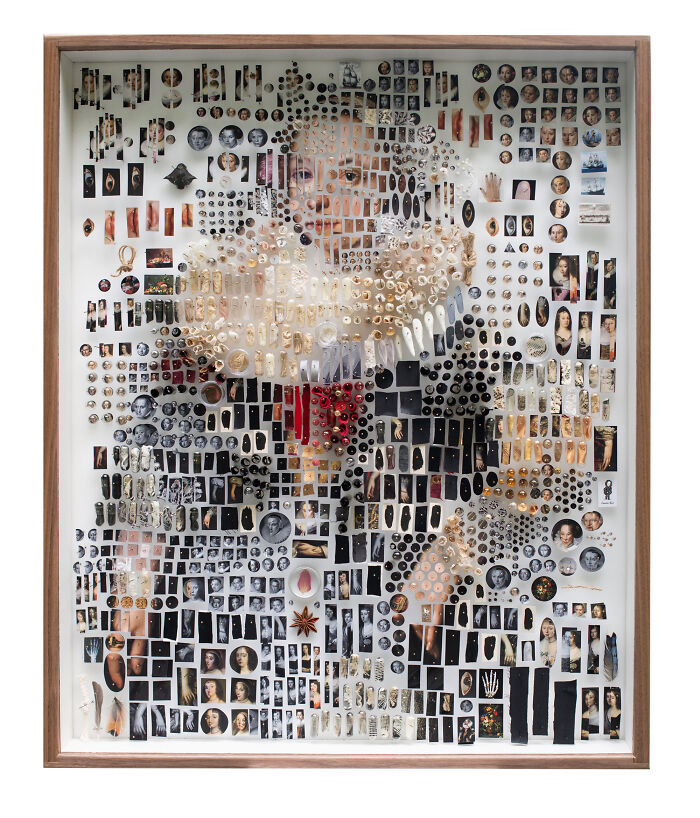
Image source: Michael Mapes
#6 Parental Specimen 1 / Specimen 2 (2019)
“These two works are portraits of my parents. As is usually my practice, I took the primary photos of them myself. I then deconstructed the photos and used them to reconstruct a likeness that also includes other biographical elements.”
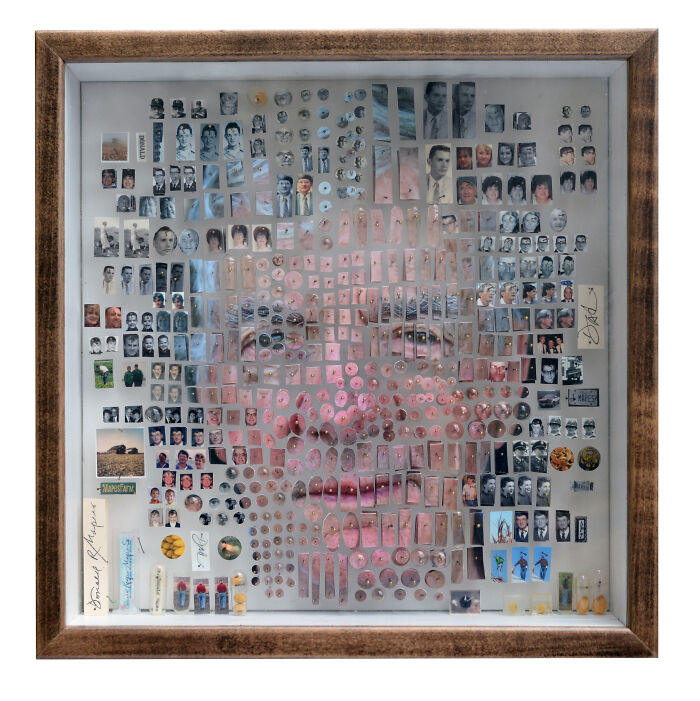
Image source: Michael Mapes
#7 Dark-Haired Female (2016)
“From the “Pin-Up Specimens” series, this work examines paintings by some of the great pin-up artists of the mid-20th century. I reinterpret what the viewer sees by deconstructing the subject to include makeup brushes, pantyhose, lipstick samples, bobby pins, false eyelashes, and fingernails. By incorporating contemporary photos of women, fingerprints, and X-rays, I push these figures beyond being mythical icons.”
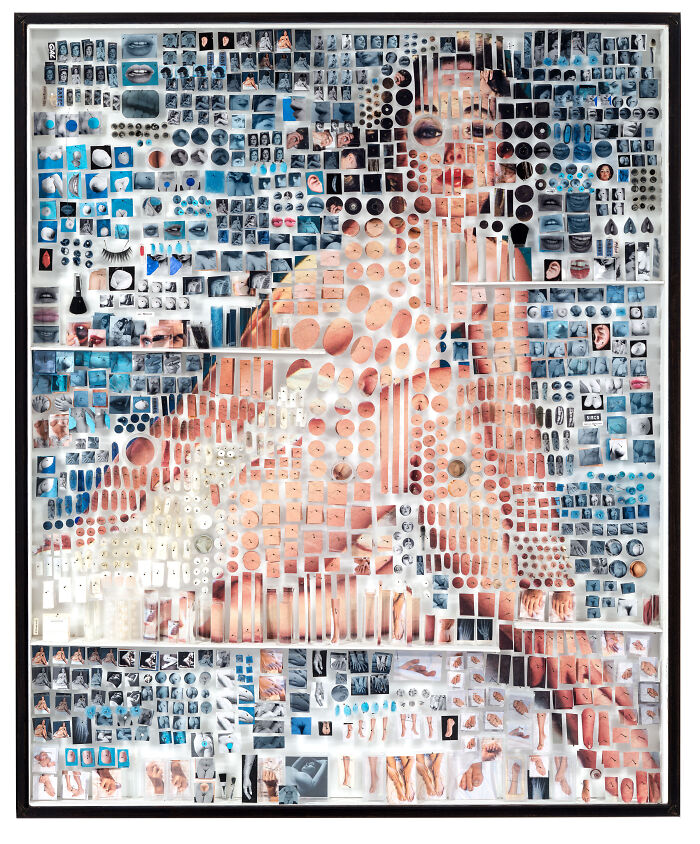
Image source: Michael Mapes
#8 Dutch Female Specimen: Charlotte (2005)
“A work from my first year of working with this pseudoscientific metaphor built on entomological references.”
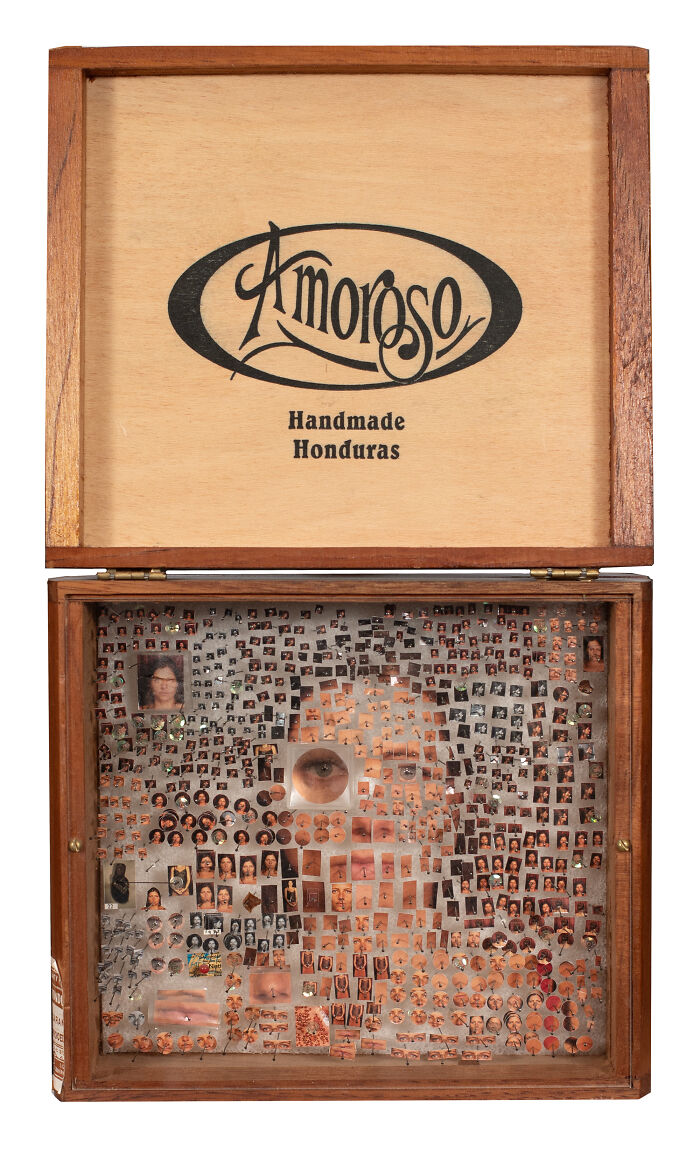
Image source: Michael Mapes
#9 Dutch Specimen Hdp 02 (2016)
“My technique for this work was unique. I painted a study in the likeness of the original painting, then added pinned giclée prints and other collage materials to the canvas.”
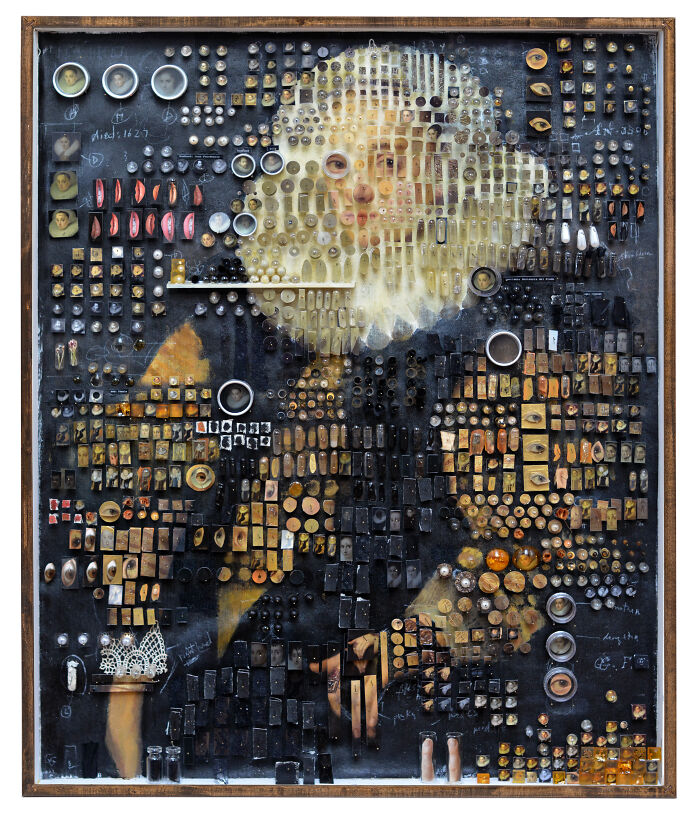
Image source: Michael Mapes
#10 Dutch Specimen MT1639 (2013)
“This is the first work created in the “Dutch Master” series. In this piece, based on a Rembrandt painting, I sought to examine and reinterpret the original. I combined elements of the painting with my research and interpretation, such as genealogical references, costume pearls, contemporary photographs, and references to Rembrandt. The combined effect is a work that directly references a painting from hundreds of years ago through a contemporary lens.”
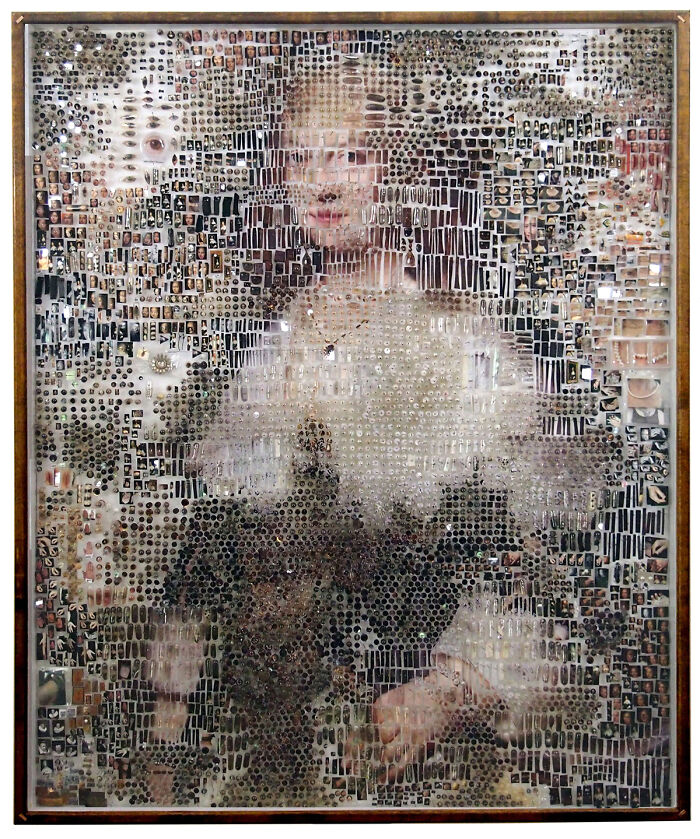
Image source: Michael Mapes
#11 Italian Specimen (2019)
“A commissioned work from the “Anatomy of a Muse” series. This work examines a Botticelli painting. Beyond images directly related to the painting, it incorporates material I solicited from the client, much of it connected to Italy: dried botanical specimens, sand, seashells, rocks, and fabric.”
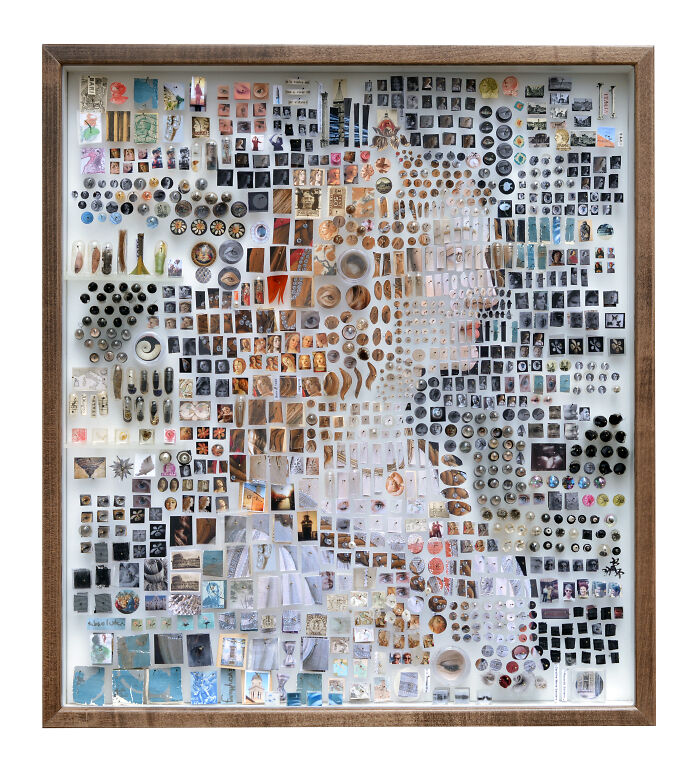
Image source: Michael Mapes
#12 P2 (2007)
“One of my early still-life pieces. As in my other work, I deconstruct a subject, in this case a pear, and represent it as a collection of parts, some real and some depicted.”
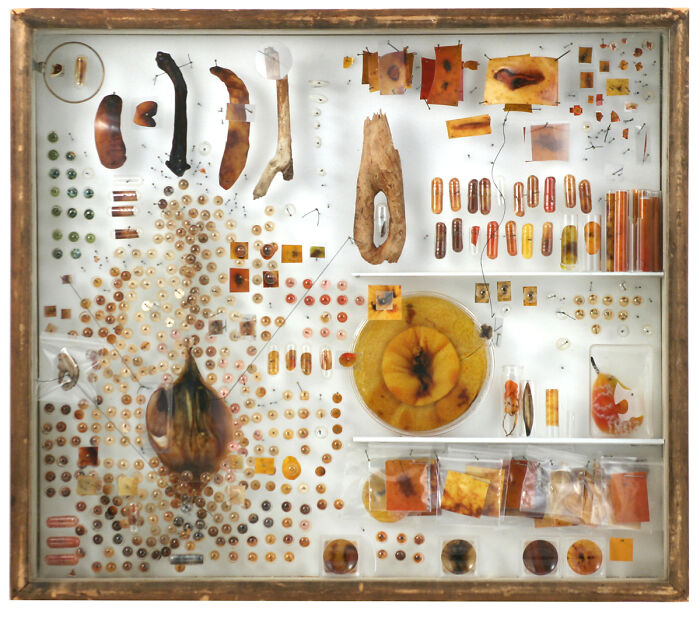
Image source: Michael Mapes
#13 Queen E (2020)
“One of my favorite works in the “Anatomy of a Muse” series. This commissioned portrait of Queen Elizabeth reflects the collector’s passion for the Queen. That passion was expressed by incorporating the collector’s personal items into the composition: photographs, jewelry, fabric, and paper samples. The resulting work is a portrait of both the Queen and the collector.”
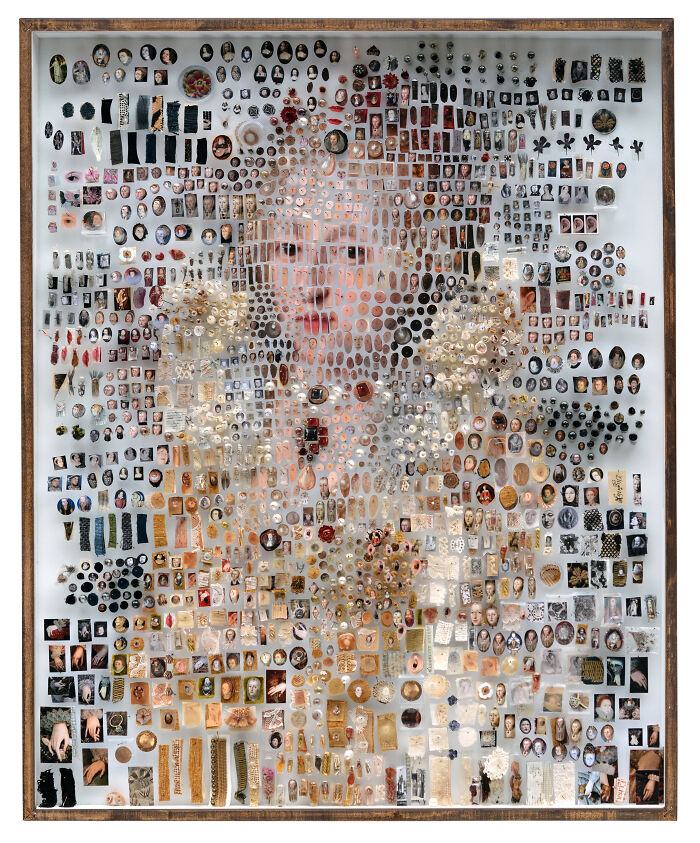
Image source: Michael Mapes
#14 Rossy (2024)
“Rossy Mendoza was a famous vedette from Mexico. This piece celebrates her life as a performer. It was part of the first exhibition of my work in Mexico City.”
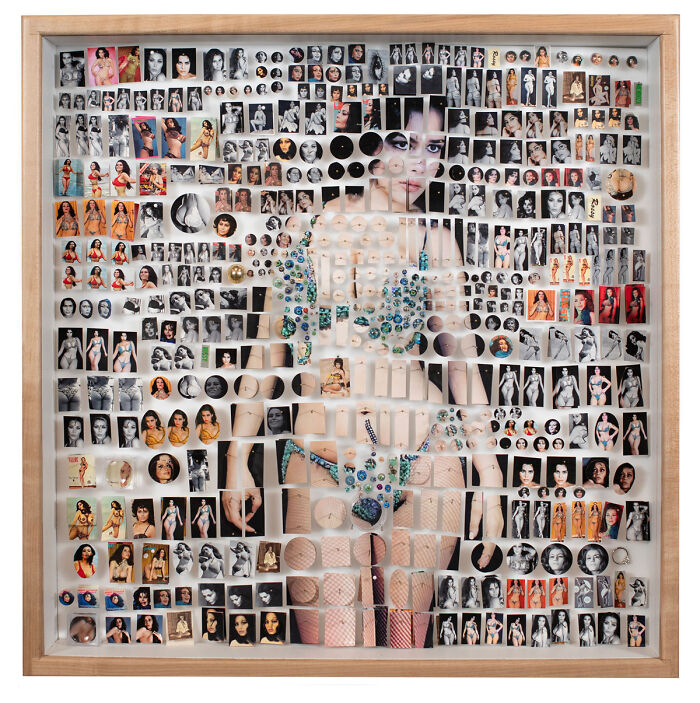
Image source: Michael Mapes
#15 Specimen Jane (2025)
“Jane Morris was the wife of William Morris, the celebrated textile designer, artist, and poet. Jane was also a highly regarded embroiderer. This piece incorporates new techniques using cast resin with embedded specimens.”
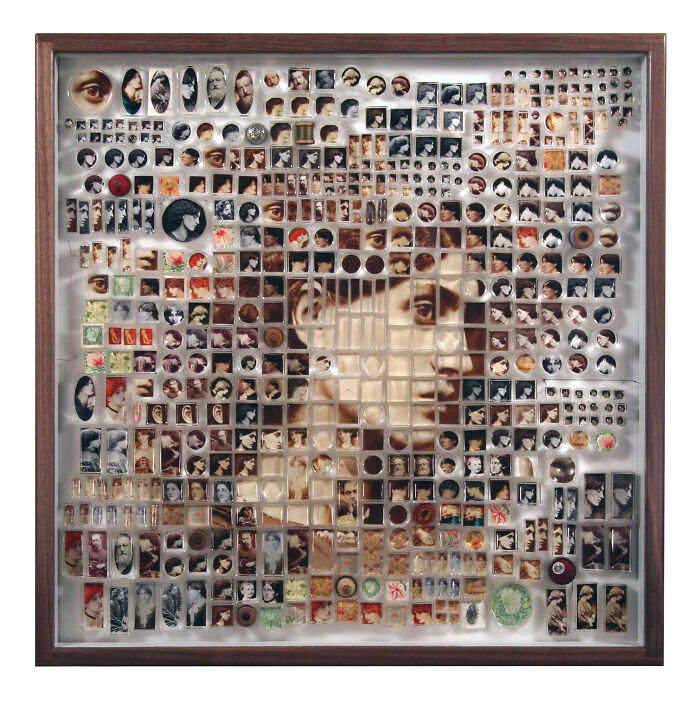
Image source: Michael Mapes
#16 Specimen No. 6 (2006)
One of the early “Human Specimens” works. This subject was a muse of mine for years.
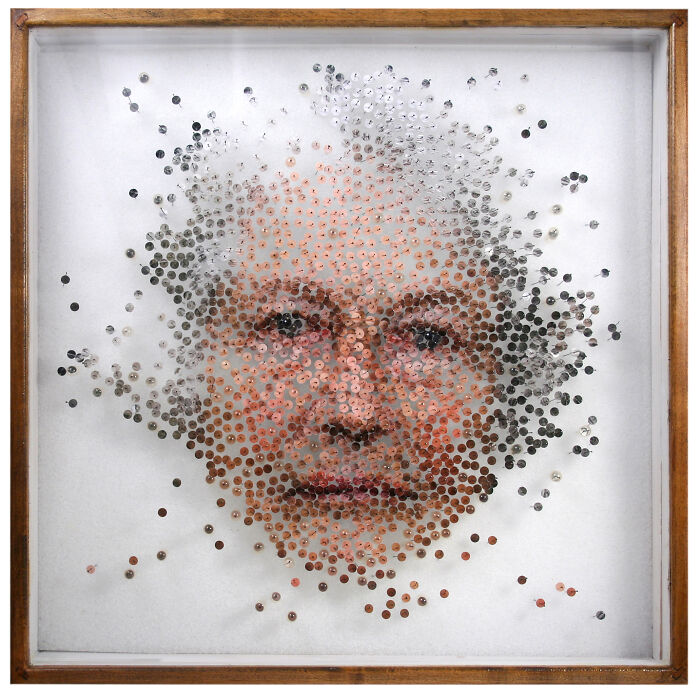
Image source: Michael Mapes
#17 Specimen No. 7 (2006)
Many of my first works were based on people I knew, including specimen no. 7. I saw the potential to create a kind of portraiture that represented the person beyond the surface.
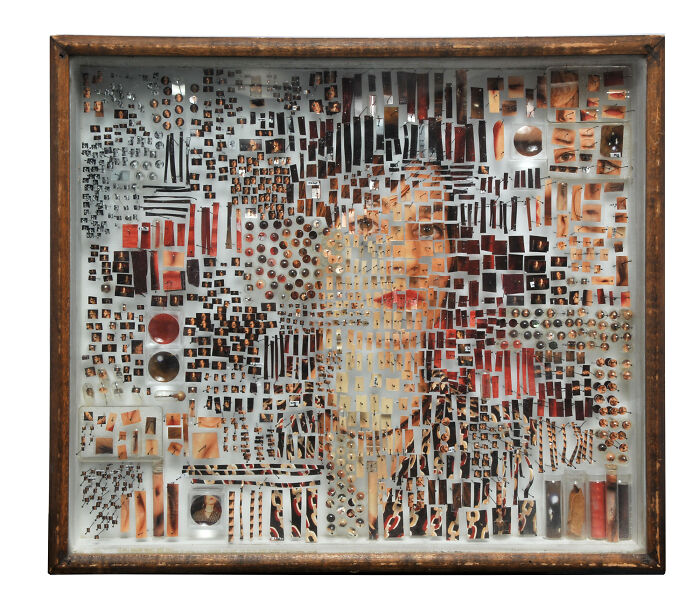
Image source: Michael Mapes
#18 Specimen Fxyb (2008)
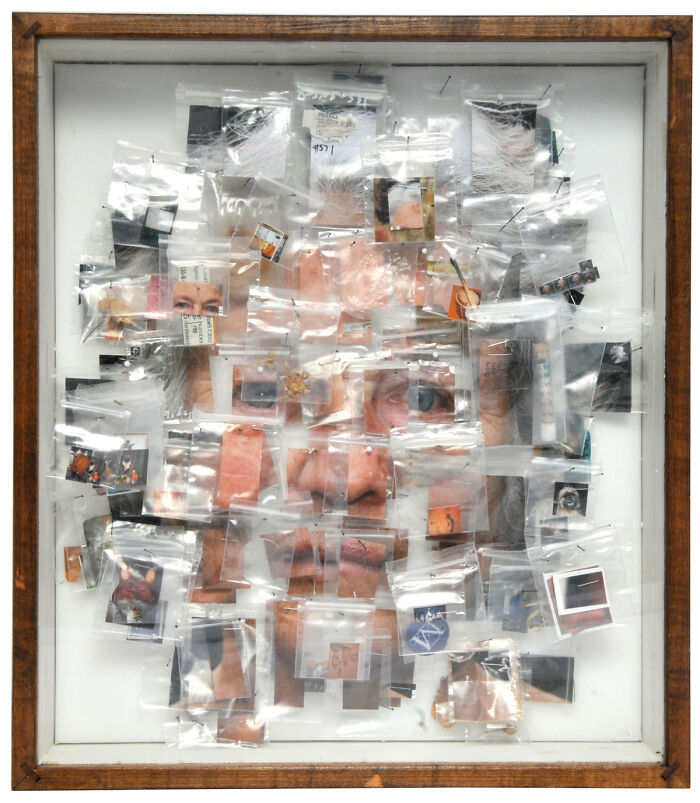
Image source: Michael Mapes
#19 Specimen No. 41 (2007)
“This is another work from the “Human Specimens” series. What I learned about the subject informed the composition, as well as the kind of content I collected and created.”
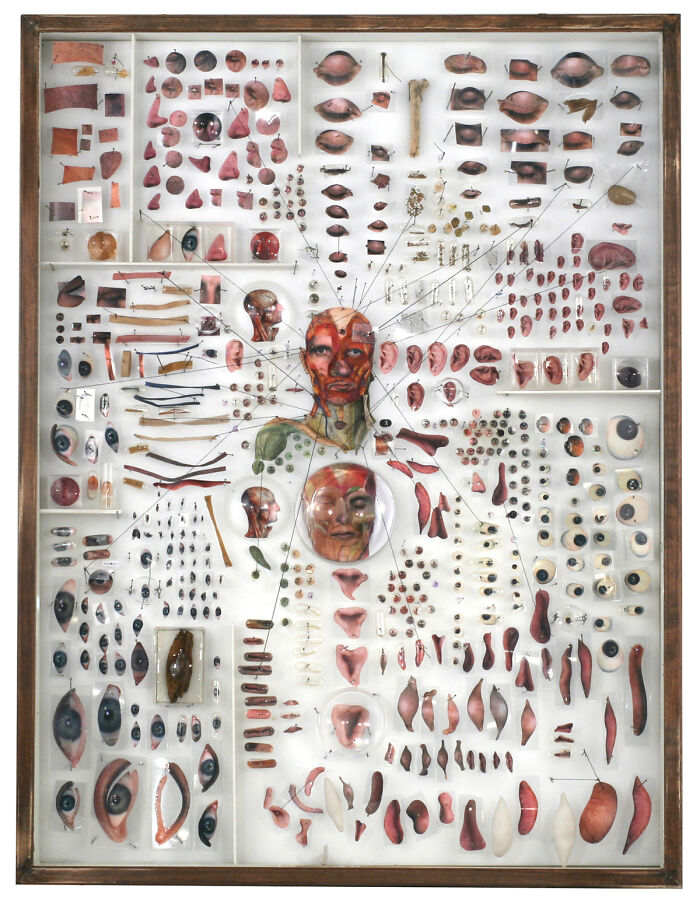
Image source: Michael Mapes
#20 Specimen V07 (2017)
“One of the works from the “Vanitas” series. Vanitas is a genre dating back to the 16th century. These artworks symbolized the transience of life, the uselessness of pleasure, and the certainty of mortality, and thus the vanity of ambition and all worldly desires.”
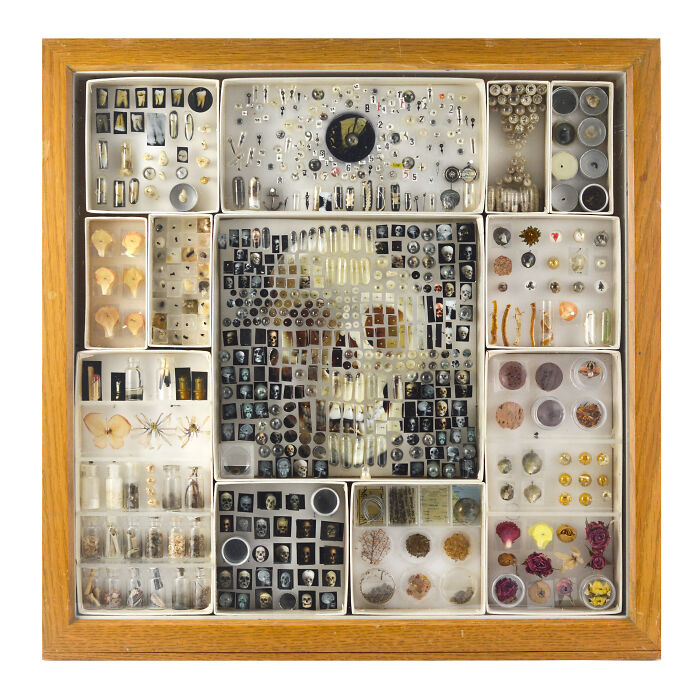
Image source: Michael Mapes
 Follow Us