No matter what era you’re from, the sea is both fascinating and terrifying. And when a ship gets lost at sea, or its crew mysteriously disappears, the creepy mystery continues to fascinate people for decades and even centuries to come.
Our team at Bored Panda has collected the most intriguing and disturbing ghost ship stories that might just haunt your nightmares tonight and change how you see the sea. Keep reading for a good scare, and be sure to share these real-life stories with anyone you know who is a horror fan.
#1 Andrea Gail And The Storm That Swallowed Her Whole
On September 20, 1991, the fishing boat Andrea Gail left Gloucester, Massachusetts with six men aboard, bound for the Grand Banks in search of swordfish. After weeks of poor luck and a failing ice machine, Captain Billy Tyne decided to push farther east to the Flemish Cap. The gamble worked, and the holds finally filled with fish. But by late October, a rare weather phenomenon was brewing. Hurricane Grace, a massive cold front, and a low-pressure system collided off Nova Scotia to form what became known as the “Perfect Storm.” When the Andrea Gail turned for home, she was unknowingly sailing straight into one of the fiercest tempests ever recorded in the North Atlantic. By October 28, the crew reported 80-knot winds and 100-foot waves. “She’s comin’ on strong,” Captain Tyne radioed, in what became their last known words at sea. The next day, all contact was lost. Days later, the ship’s emergency beacon washed ashore on Sable Island, followed by bits of debris, but the vessel and her men were never found. The Perfect Storm took lives of 13 people and caused nearly $500 million in damages along the U.S. coast. The Andrea Gail became the most haunting loss of the storm, later immortalized in Sebastian Junger’s book and the Hollywood film. Yet the real fate of the six fishermen remains unknown, their ship swallowed whole by the sea.
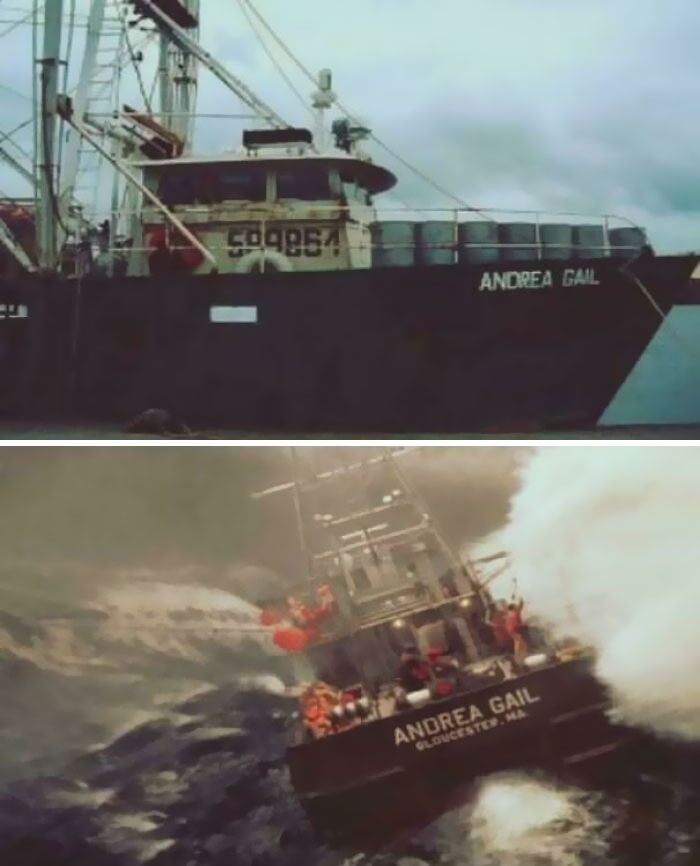
Image source: theyanardageffect

#2 The Mary Celeste Was A Ship Found Adrift And Deserted With No One Aboard On 1872
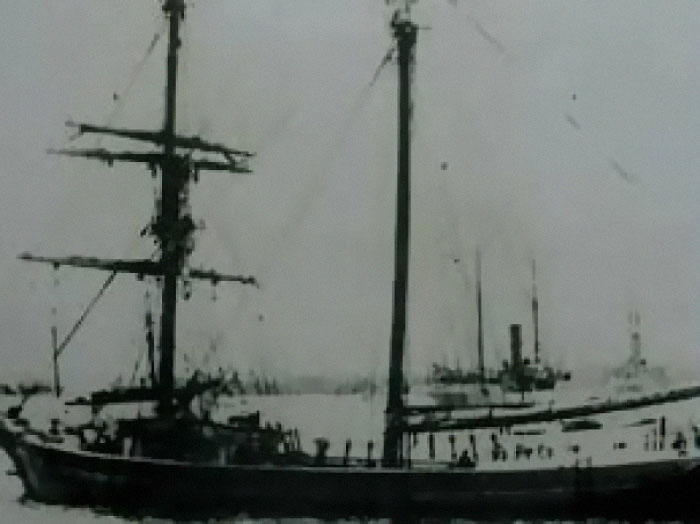
Image source: FishermanNo8304
#3 Adella Shores
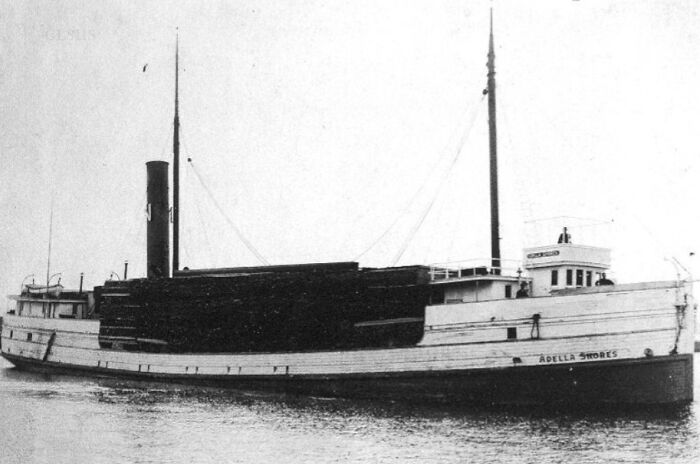
This ship mysteriously vanished 115 years ago. now, it’s been found at the bottom of lake superior
Ghost and phantom ships are essentially vessels that are found abandoned at sea, the crew is missing, and there’s no clear explanation for what happened. Human beings are fascinated by horror, terror, and the unknown, so it’s natural if you feel drawn to these mysterious events. However, researching derelicts and looking for shipwrecks is expensive and time-consuming work.
It’s unclear how many shipwrecks there are around the world. “Various people have thrown numbers out. No one really knows exactly what that number should be,” ancient maritime history expert and associate professor of classics at Luther College, Dan Davis, told Discover magazine.
#4 The “Ghost Fleet” Of Mallows Bay In Maryland, Is The Hundreds Of Ships Whose Remains Still Rest In It’s Relatively Shallow Waters Of The Potomac, In Total, 230
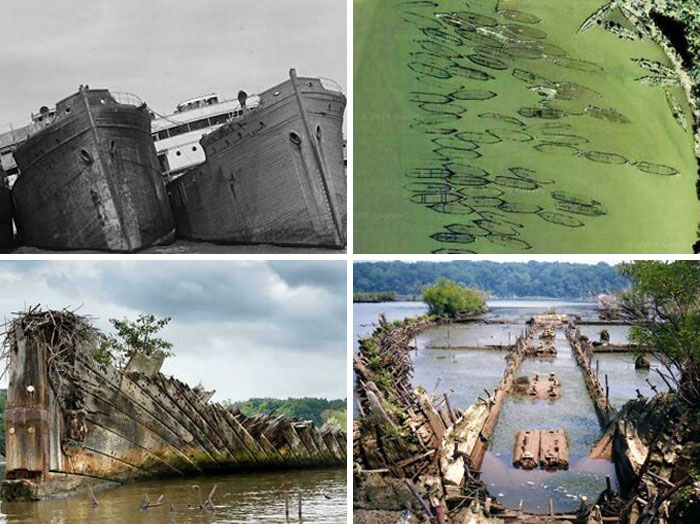
Image source: rastroboy
#5 Even Though This Hasn’t Been Discovered, It’s Still Intriguing. The USS Cyclops… This Navy Ship Disappeared In 1918 With 306 People In The Bermuda Triangle. 101 Years Later, It Has Still Not Been Found
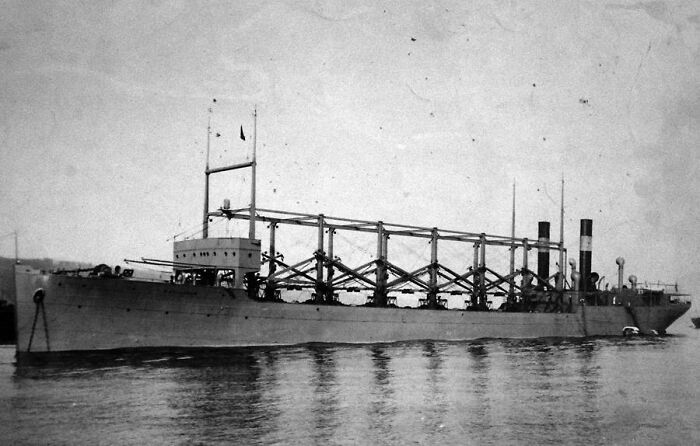
Image source: DaltonMillekMaritime
#6 July 27th 1909 Ss “Waratah” Departs From Durban, South Africa With 211 Passengers And Crew. She Was Never Seen Again
“Waratah’s” second voyage commenced when she left Durban en route to Cape Town, South Africa. She was last seen from the “Clan Macintyre”. The wreck of the “Waratah” remains undiscovered to this day.
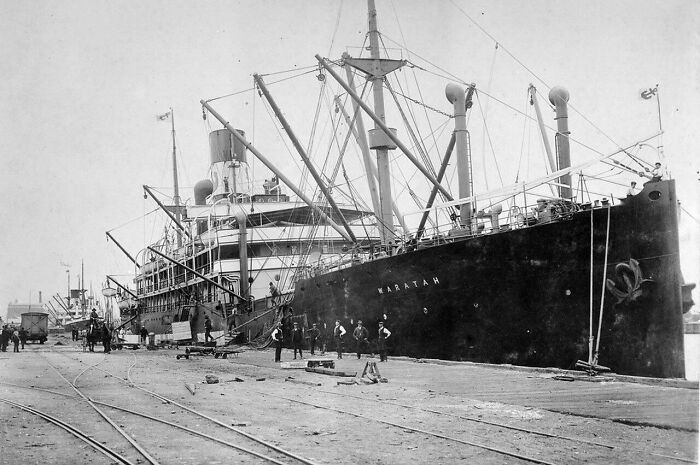
Image source: Specialist_Point7983
Researchers can look for shipwrecks using multibeam sonar and side-scan sonar, two of the most common forms of imagery. Then, the collected data gets immediately reviewed by the researchers while at sea. That way, they can investigate any interesting data points ASAP. The hope is that machine learning can simplify this entire image analysis and review process so that scientists have less of a hectic workload.
According to Leila Character, a postdoctoral researcher in marine archaeology at the University of Delaware, finding shipwrecks is an emotional priority for some families who have lost relatives aboard. For example, shipwrecks from WW2 contain the remains of many mariners.
“As a family member, […] I certainly might be really invested if we were able to turn up some information about where [missing relatives] might have gone down and where [their] final resting place is,” she said.
#7 The French Cruiser Submarine Surcouf(Nn-3)
The French submarine Surcouf (NN3) was the largest cruiser submarine of the 1930s. The most striking feature is that enormous conning tower carrying her twin 203 mm (8-inch) guns.
Surcouf was aunched on the 18 November 1929 and commissioned on the 16 April 1934. In service during 1934–1942.
When France surrendered to the Germans Surcouf took refuge in the U.K. and joined the Free French Fleet.
Surcouf disappeared during the night of 18/19 February 1942 in the Caribbean Sea, possibly after colliding with the US freighter Thompson Lykes, although this has not been definitely established. She was named after the French privateer and shipowner Robert Surcouf.
Surcouf was the largest submarine built until surpassed by the first Japanese I-400 class aircraft carrier submarine in 1944.
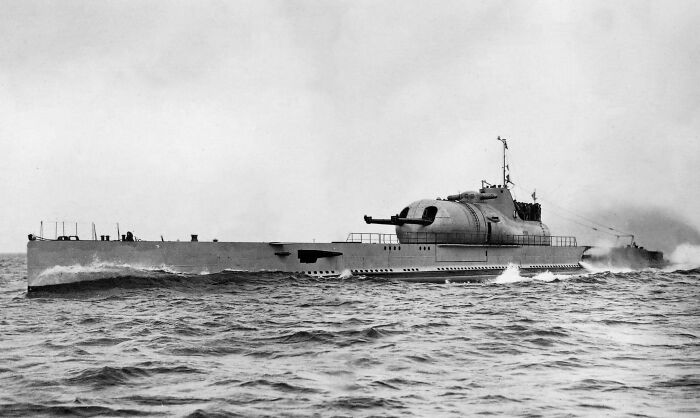
Image source: [deleted]
#8 This 1,322-Ton Cargo Steamer, Built In 1914, Began A Life Of Its Own After Becoming Trapped In Ice And Abandoned
It broke free and drifted through the Arctic for at least 38 years with no one on board. It was last sighted in 1969. Has never been recovered
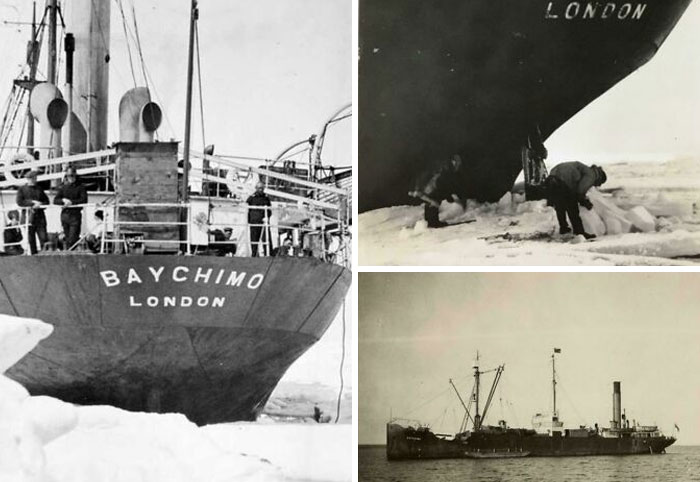
Image source: vtosnaks
#9 Danish Navy København, It Was The World’s Largest Sailing Ship At The Time, And Primarily Served For Sail Training Of Young Cadets
It disappeared without a trace in route from Argentina to Australia on Dec 22nd 1928
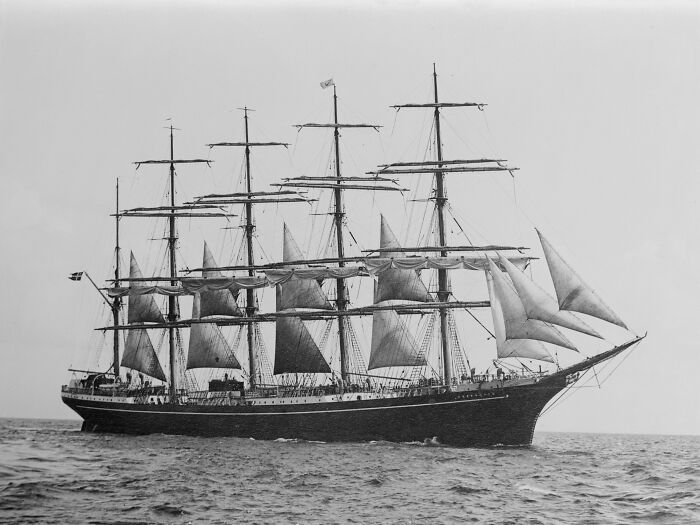
Image source: abt137
Fast forward to today, and some of the most common problems that seafarers face include hand-arm vibration syndrome (HAVS), cardiovascular disease (CVD), musculoskeletal disorder (MSD), cancer, pandemic and epidemic diseases, and hypertension, Marine Insight reports.
For instance, merchant marine vessel seafarers often operate power tools for prolonged periods of time, which may lead to disability in their hands and arms if not treated in time.
What’s more, seafarers are at risk of cardiovascular disease because of smoking, stress, bad diets, lack of exercise, etc.
Furthermore, seafarers visit many different ports around the world, so they are exposed to different diseases, such as malaria, cholera, yellow fever, tuberculosis, and others.
#10 Did You Know? 15 Kilometers (9 Miles) From The Wreck Of The Passenger Ferry M/S Estonia Lies The Wreck Of The Finnish Warship “Ilmarinen” That Sunk On 13th Of September 1941 After Struck By A Mine
The ship capsized almost immediately after striking the mine and was gone under after 7 minutes
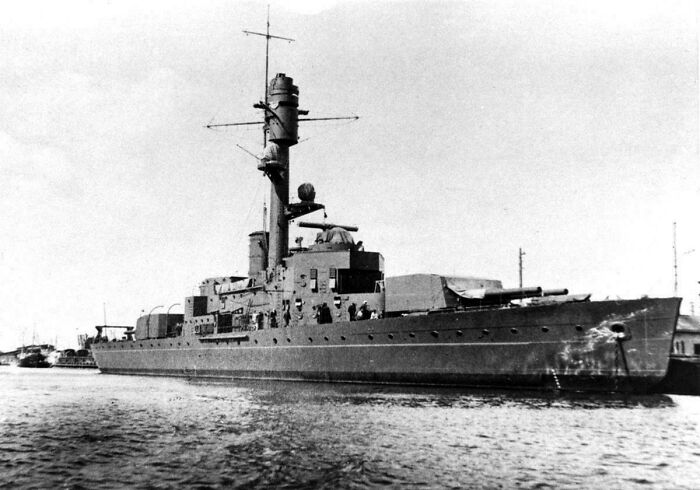
Image source: Boosted_Fin
#11 The S.s Leafield In Drylock. Likely After Her Running Aground In 1912. She Would Be Lost On November 9th, 1913 With All Hands. The Wreckage Has Never Been Located
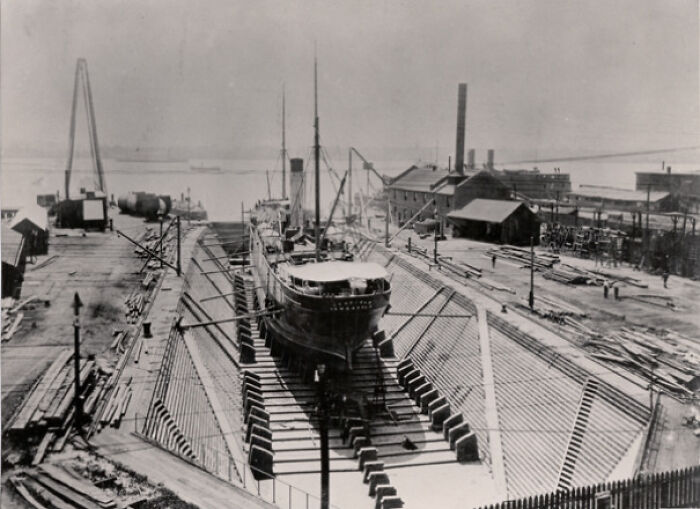
Image source: OxideGas
#12 Rip Falls Of Clyde. The Ship Was Sunk 25 Miles Off Shore On October 15, 2025
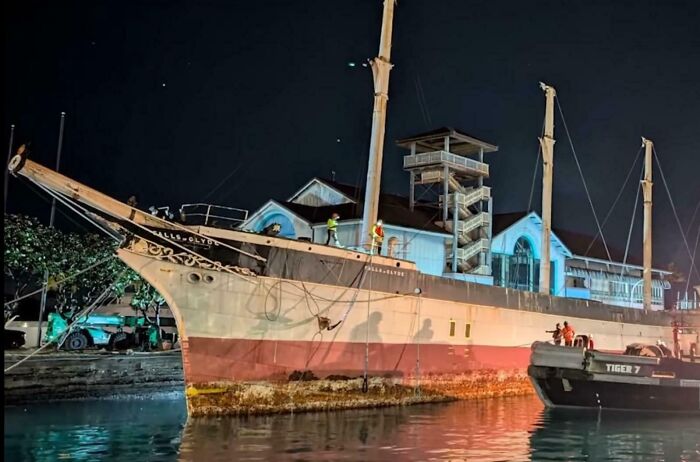
Image source: Im-Wasting-MyTime
“Seafarers are vaccinated and medically checked thoroughly; however they are in major danger of being exposed to sudden outburst of new diseases in areas they visit,” Marine Insight explains.
“The best practice for such situations is to use all preventive measures to contain the spread of contagious diseases on board. The master and the crew should be informed about the diseases before docking and restriction of people embarking the vessel and shore leaves can be effectively controlled to prevent such illness from spreading.”
#13 SS Bannockburn
The SS Bannockburn was a Canadian registered steel-hulled freighter that disappeared on Lake Superior in snowy weather on November 21, 1902. She was sighted by the captain of a passing vessel, the SS Algonquin, around noon of that day but minutes later disappeared. The wreck of the ship has never been found, with the exception of a life preserver, and no bodies were ever recovered. Within a year of her disappearance she acquired a reputation as a ghost ship and became known as “The Flying Dutchman of the Great Lakes”. Her fate remains an unsolved mystery.
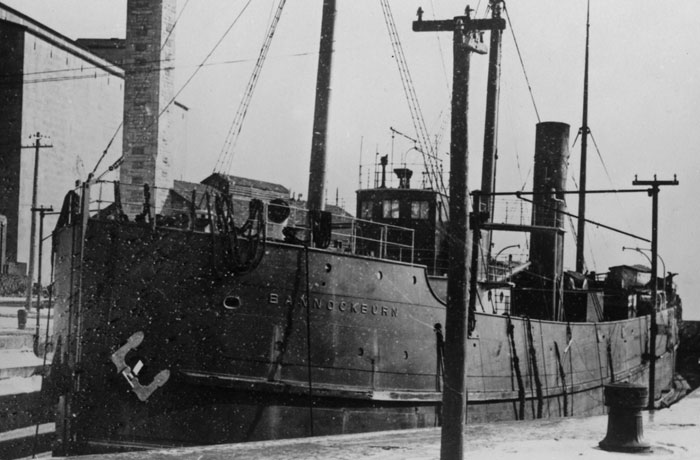
Image source: Wikipedia
#14 Polish Submarine Orp Orzeł, The Lead Ship Of Her Class, At Sea. 10 February, 1939
On 23 May 1940, Orzeł departed on its seventh patrol in the central North Sea. On 1 and 2 June, radio messages were transmitted from the Rosyth Naval base ordering the boat to alter its patrol area and proceed to the Skagerrak (the strait separating Norway and Sweden from the Danish Jutland peninsula). No radio signals had been received from her since she had sailed, and on 5 June Orzeł was ordered to return to base. No reception was acknowledged. On 8 June 1940 the submarine was officially declared lost. The true cause is unknown, although it is commonly believed Orzeł most likely struck a British or German sea mine in or near the Skagerrak. Another theory suggests the boat may have been sunk mistakenly by a British aircraft
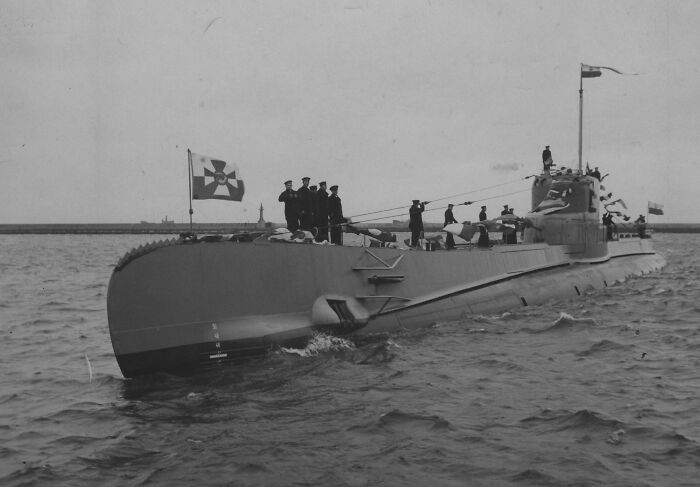
Image source: DepressedMemerBoi
#15 Flor De La Mar
Flor do Mar (modern Portuguese) or Flor de la Mar (‘Flower of the Sea’, spelled Frol de la Mar in Portuguese chronicles of the 16th century) was a Portuguese nau (carrack) of 400 tons, which over nine years participated in decisive events in the Indian Ocean until her sinking in November 1511. Nobleman Afonso de Albuquerque was returning from the conquest of Malacca, bringing with him a large treasure trove for the Portuguese king, when the ship was lost off the coast of Sumatra. Her wreck remains undiscovered
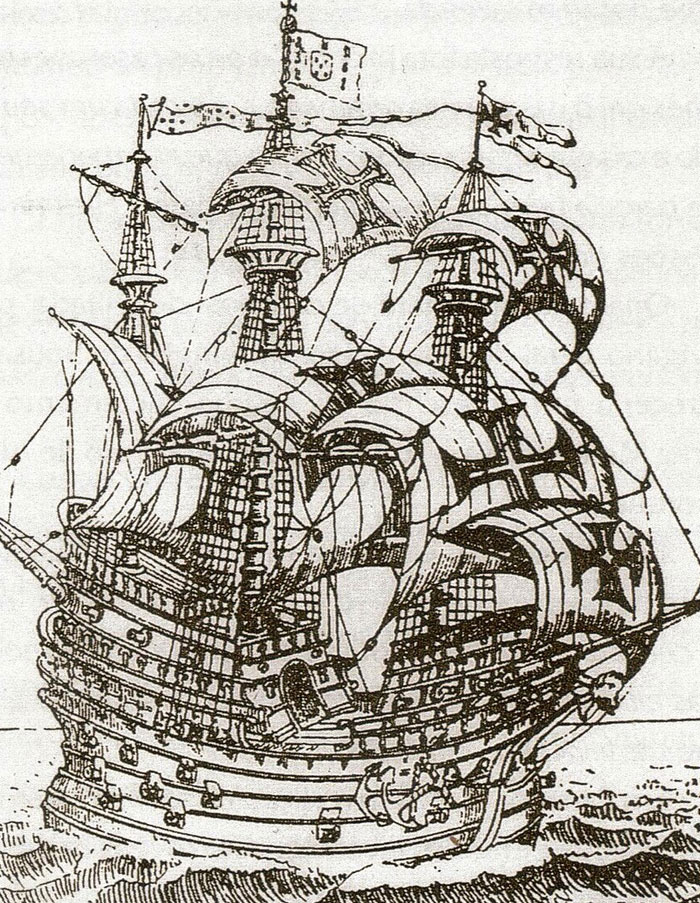
Image source: Wikipedia
Which of the ghost ship stories that we’ve featured here fascinated you the most?
What is your relationship with horror and real-life disturbing tales like? Are you a fan of sea-related spookiness, or do you prefer your creepy stories to be themed differently?
What is the scariest historical mystery you know? What is the oddest thing that has ever happened to you at sea? Would you ever want to work at sea?
We want to hear from you! Share your thoughts, stories, and insights in the comments section at the very bottom of this post.
#16 133 Years Ago Today, On 11 February 1893, S.S. Naronic, A Livestock Carrier Owned By The White Star Line, Was Last Seen Steaming Eastward Into The Expanse Of The North Atlantic After Disembarking Its Pilot At Point Lynas, Wales. It Disappeared Soon After And Its Wreck Has Never Been Found
133 years ago today, on 11 February 1893, S.S. Naronic, a livestock carrier owned by the White Star Line, was last seen steaming eastward into the expanse of the North Atlantic after disembarking its pilot at Point Lynas, Wales. Sometime during the voyage from Liverpool to New York City, Naronic disappeared with the loss of all 80 souls aboard. Its wreck has never been found. S.S. Naronic was the product of the White Star Line’s increasing involvement in the transatlantic cattle trade and efforts to assert itself as a proponent of the humane treatment of livestock. As stated by John P. Eaton and Charles Haas in their 1989 book, Falling Star: Misadventures of White Star Line Ships, “the company established and maintains safety and comfort standards for livestock beyond those of other companies’ vessels.” The vessel was constructed by Harland & Wolff at Belfast, and when it was launched on 26 May 1892, “the 470 ft. 6,594 ton Naronic was the largest cargo steamer afloat. The four-masted schooner-rigged vessel was constructed of steel and had three decks, nine bulkheads, and sixteen water ballast tanks capable of holding 1.193 tons.” The White Star Line also made concerted efforts to ensure that the livestock spaces, capable of holding 1,050 cattle, were well-ventilated and that animals had access to freshwater. In addition to livestock spaces, Naronic had six cargo holds, one of which was refrigerated, along with enough accommodations for its 60 crew and 15 passengers. According to the website “Naronic Archive,” “The ship was powered by four Scotch Marine Boilers, two single-ended and two double-ended, which consumed fifty tonnes of coal daily. These boilers supplied steam to a pair of twin reciprocating engines that drove the ship’s twin screw propellers, enabling her to achieve a maximum speed of 13 knots.” By the time of its final voyage, Naronic had completed 12 Atlantic crossings without issue, and during the last three transatlantic trips, had been commanded by Captain William Roberts, “an experienced officer in White Star service for twenty years… [who] held an extra master’s certificate.” Before his transfer to Naronic, Roberts had captained the Oceanic-class liner, S.S. Adriatic, and livestock carrier, S.S. Tauric. However, Roberts was not the only experienced member of Naronic’s crew. 1st Officer George Wright, 2nd Officer Herbert G. Burbidge, Chief Engineer John Duncan, 2nd Engineer Robert T. Lucock, 3rd Engineer Charles F. Pugh, 4th Engineer John B. Jolley, and all eight greasers had worked aboard Naronic since her maiden voyage on 15 July 1892. The remaining 45 crewmen had all familiarized themselves with the vessel over the last five voyages. Leading up to Naronic’s departure, the ship was loaded with 2,876 tons of various cargo, including, as per Eaton and Hass, “earthenware, steel strips, oil, glass, machinery, fish hooks. Soda ash, bleaching powder, chlorate of potash. Rice, sugar, chillies, potatoes. Tallow, cattle hair, calf skins… ‘General cargo’: thousands of items for nearly ninety consignees.” The ship’s coal bunkers were also filled with 1,017 tons of coal, with an additional 200 tons loaded on the deck “to permit a New York turnaround without refueling. However, over the course of the voyage, “this coal would be taken below, and it appeared its presence on deck would not materially affect stability.” Naronic’s No. 7 ballast tank was also flooded with 140 tons to bolster its stability. However, for the voyage to New York, the livestock spaces remained largely empty, with the 14 cattlemen aboard, employed by Eastman’s Cattle Yard in New York, “d**dheading back across the Atlantic under their hire’s customary terms.” As such, the only ones engaged in any tending of livestock were three of Naronic’s passengers. John J. Hollenshead and James Jackson appear to have been tasked with caring for “two horses consigned to W. Burgess, a former American diplomat residing in Trenton, New Jersey,” while Sgt. Maj. James E. K. Spence, an amateur ornithologist, tended to fifteen crates of prize-winning pigeons bound for a poultry show in America. At 6:00 A.M., on 11 February 1893, S.S. Naronic dropped her moorings and departed Liverpool. The last sighting of her was by harbor pilot, Captain William Davies, as he departed Naronic at Point Lynas, Wales, after which he watched as the ship “steamed onward into a light fog that enveloped the Irish Sea.” Numerous vessels crossing the Atlantic at the same time as Naronic reported encountering severe storms, gale-force winds of at least 60 miles per hour, and large ice fields, all of which could have potentially doomed the vessel. Although Naronic was scheduled to arrive in New York on 22 February 1893, it was not listed as overdue until 15 March 1893, by which time any hope of survival for its crew and passengers was lost. On 19 March 1893, the only confirmed remnants of Naronic were found by S.S. Coventry, with its captain reporting that “on 4 March at 2:00 A.M. in latitude 44° 02′ N, longitude 47° 37′ W, a ship’s white-painted lifeboat had been sighted floating keel up. Twelve hours later, in latitude 34° 44′ N, longitude 45° 25′ W, another drifting boat was spotted. Captain Wilson steamed close alongside it. Although half full of water, the boat was in good condition and not stoved in. Its mast floated at the bows, made fast to the painter as if used for a sea anchor. The words on the bows: ‘Naronic. Liverpool.’” However, neither boat was recovered, and the reasons for this are not known. Speculation about the cause of Naronic’s loss was also fueled by several messages in bottles, the veracity of which is heavily disputed to this day, given the locations where they were found and the fact that none of the signed names match any of the crew’s. Nonetheless, the causes of the ship’s sinking described in the letters range from having struck an iceberg to an explosion. Additionally, on 28 April 1893, numerous newspapers began publishing an interview with John Lucock, the younger brother of Naronic’s 2nd Engineer, Robert Lucock. According to John, “just after the vessel [Naronic] arrived at Liverpool on its last trip, he [2nd Eng. Robert Lucock] wrote a letter to his brother Thomas, who is located in Chicago, stating that the ship’s boilers were in very bad shape and that they had had a hard time going over from New York to Liverpool. The writer states that unless repairs were made while the vessel was lying at Liverpool, the return trip would very likely prove to be a dangerous one. [John] Lucock was averse to talking, but said that while of course he had not the remotest idea [of] what caused the vessel to sink, from the tone of his brother’s letter, he was inclined to think that the boiler had blown up. Robert, he said, was a very conservative man and would not write anything about the boilers that would be inaccurate or unreliable. As he is among the missing, it would be a difficult matter to prove that the vessel’s destruction was caused in this way. The letter also stated that he was about to make his last trip and did not intend to follow the ocean any longer.” Although some may doubt the claims made in this interview, I have confirmed that Robert Lucock indeed had two younger brothers living in America, John Saul Lucock and Thomas Henry Lucock. Overall, although an official inquiry was launched in Liverpool in June 1893, no definitive cause for Naronic’s loss was found. As its wreck has never been found, the disappearance of S.S. Naronic and the 80 souls aboard it has remained a persistent, albeit lesser-known, mystery. Over the last two years, I have been researching S.S. Naronic and its crew. In the course of my research, I have definitively identified all 80 crew and passengers that were lost on its final voyage, all of whom are listed below. However, I have been able to locate a photograph of but one of them, Naronic’s carpenter, Joseph Pipes Owen, thanks to one of his descendants. Additionally, I found that only two crewmen have cenotaph headstones: Chief Engineer John Duncan Sr. at Liverpool’s Anfield Cemetery and 2nd Engineer Robert Thomlinson Lucock at Aspatria’s St. Kentigern Churchyard.
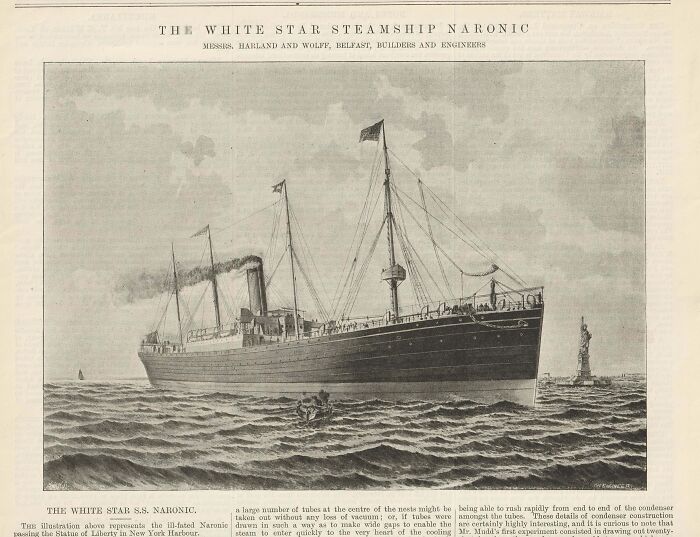
Image source: The_Public_Historian
#17 January 30, 1959: The MS Hans Hedtoft Collided With An Iceberg On Her Maiden Voyage Off The Coast Of Greenland
The only piece of wreckage ever found was a lifebelt
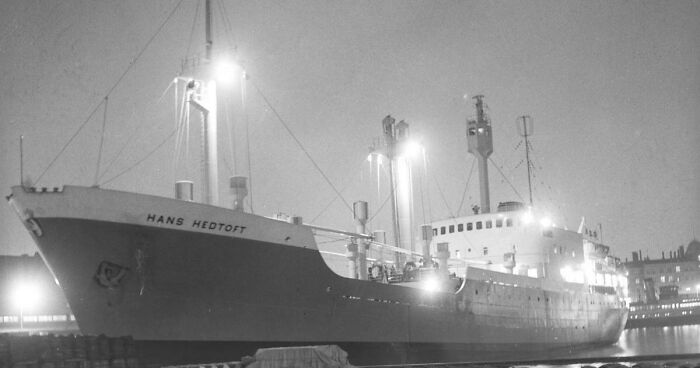
Image source: [deleted]
#18 The Only 2 Known Photographs Of The Ijn’s Aircraft Carrier Shinano
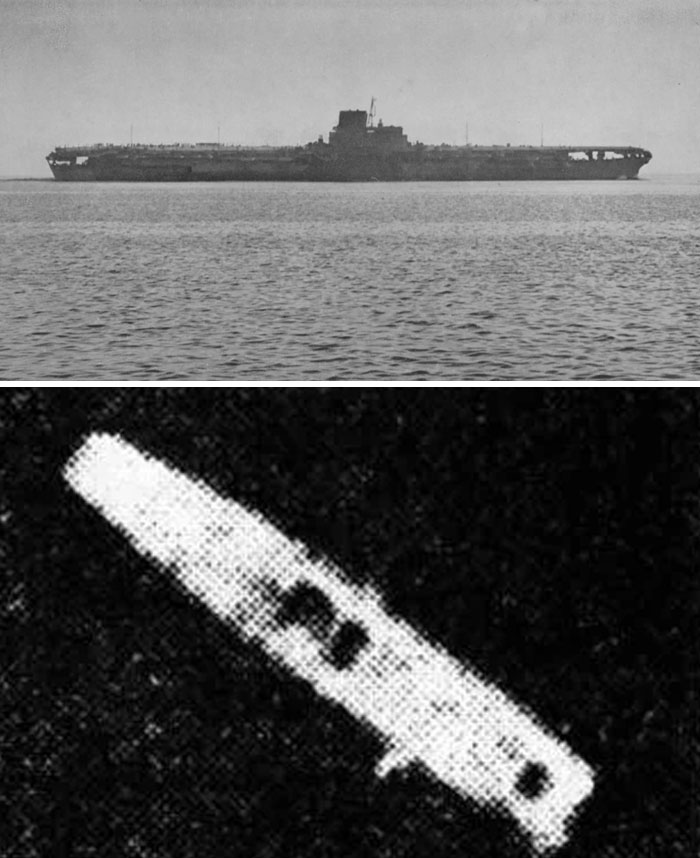
Image source: LowOnDairy
#19 The American Destroyer USS Reuben James (Dd-245) On The Hudson River On April 29, 1939
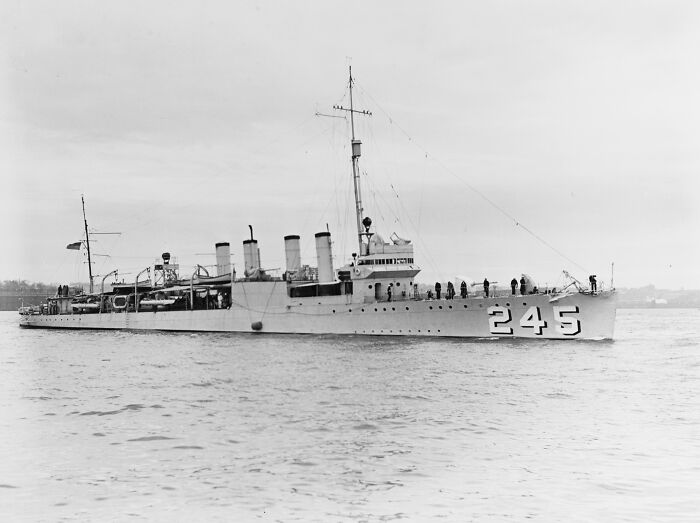
Image source: icantthinkofaname940
#20 Hms Barham, 1941
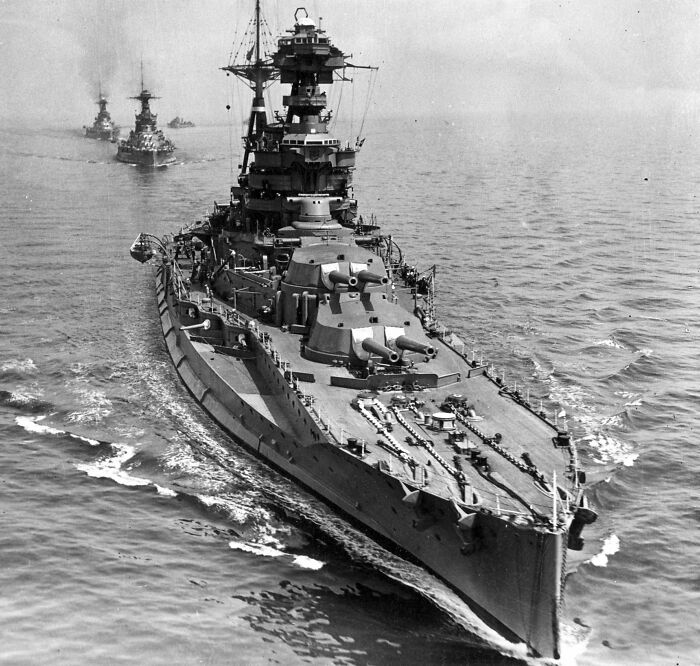
Image source: surrounded_by_vapor
#21 Japanese Aircraft Carrier Taiho At Anchor, Probably At Tawi-Tawi, Philippines. In The Background Are A Shokaku-Class Carrier And A Kongo Class Battleship
Taiho (“Great Phoenix”) was the largest purpose-built carrier and largest fleet carrier the Imperial Japanese Navy built (and, IMHO, the best looking carrier they built) during the second world war (the mammoth Shinano was larger by ~20,000-30,000 tons but was a converted Yamato class battleship and was not a fleet carrier). She featured several departures from previous Japanese carrier designs: her funnel was vertical and canted over, a design tested on the two Hiyo class carriers, and she featured a heavy armored belt and armored flight deck as well as a closed bow, unlike her predecessors. Designed to carry the most modern Japanese aircraft, such as the A7M Reppu fighter, B7A Ryusei torpedo/dive bomber, and D4Y Suisei dive bomber, Taiho was the most capable and modern carrier of the IJN when she was commissioned and was soon made the flagship of the 1st Mobile Force, under the command of Vice Admiral Jisaburo Ozawa.
Taiho’s career was, unfortunately for the Japanese Navy, short and catastrophic-during her first and only combat mission, the disastrous battle of the Philippine sea, Taiho was targeted by the submarine USS Albacore, who despite not having a proper firing solution managed to score a single hit on the carrier with a torpedo. Her ‘green’ air groups were mauled by US fighters and anti-aircraft fire. The single torpedo hit caused fuel leakage, and her ‘green’ damage control crew made several mistakes that spread the fumes of her unrefined, volatile fuel around the interior of the ship. Over 6 hours after the seemingly ineffectual attack Taiho exploded, taking lives of hundreds of men and forcing VADM Ozawa to abandon her as a flagship. Soon after, she sank. The carrier Shokaku suffered a similar fate on the same day from 3 torpedo hits by another submarine, and the Hiyo was sunk the next day by American dive bombers. Thus ended the maiden combat voyage of Japan’s most modern carrier.
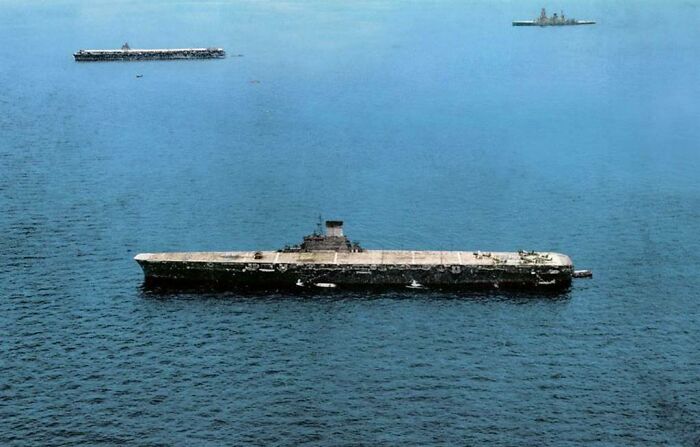
Image source: HourDark
#22 Lake Erie’s Greatest Mystery. 30-38 Perished, 9 D**d Found In Lifeboat, Clothes Of 10th Left In Lifeboat, One Occupant Was Carrying Knives On His Person, D**d Captain Found Later On With Slash Marks
(Marquette & Bessemer No. 2, disappeared December 8th, 1909)
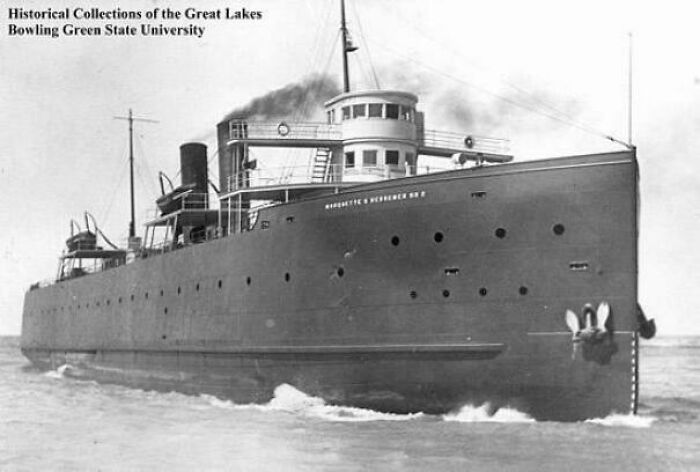
Image source: Hermit_187_purveyor
#23 A Top Down View Of Brazilian Minas Geraes Class Battleship São Paulo
It sank in 1951 during a storm while heading to a scrapyard
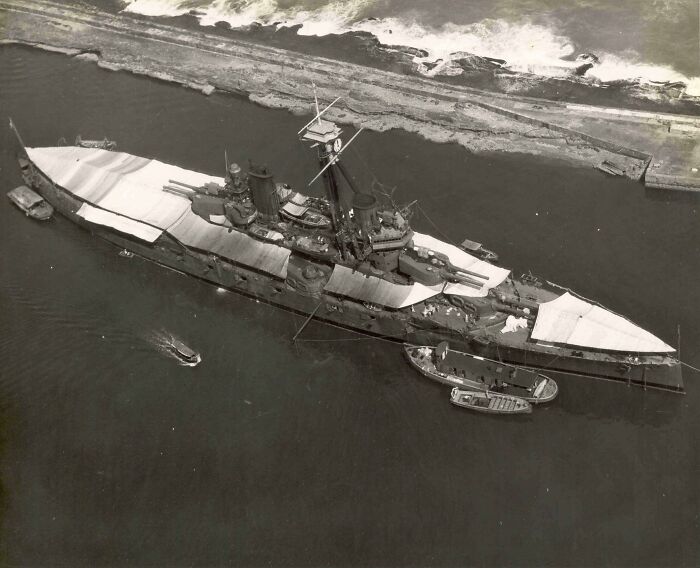
Image source: Freefight
#24 What’s Your Theory On Her Loss? I Personally Think A Wave Flipped Her Upside Down And The Sea Swallowed Her Shortly Afterward
(SS Waratah, disappeared off the coast of South Africa, last confirmed sighting on July 27th, 1909. All 211 passengers perished)
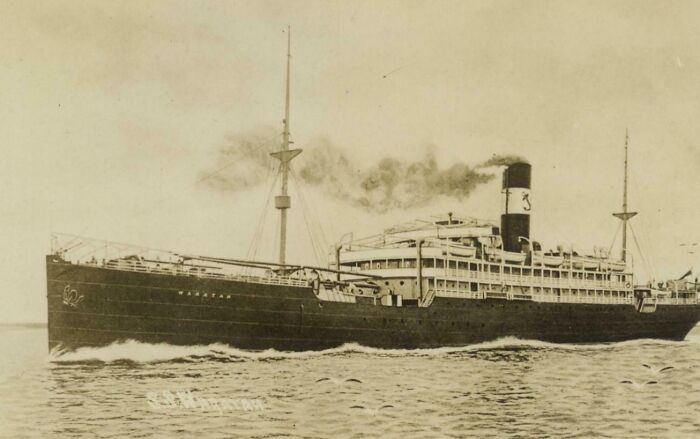
Image source: Hermit_187_purveyor
#25 The Carroll A Deering Was A Five-Masted Schooner Built In 1919 And Once Praised As One Of The Last Great Wooden Cargo Ships
The Carroll A Deering was a five-masted schooner built in 1919 and once praised as one of the last great wooden cargo ships. She was fitted with modern comforts like steam heat and electricity, unusual for a work vessel, and carried coal to South America. In August 1920, she left Virginia for Brazil, but the captain fell ill, leaving a replacement crew led by Willis Wormell and first mate Charles McLellan. The two clashed bitterly, and in Barbados, Wormell complained about his first mate’s drinking and cruelty. McLellan even threatened to take out him before their return to the United States. By January 1921, the Deering was sighted off North Carolina. A lightship keeper noted strange behavior — the crew was on the quarterdeck, not the officers, and a red-haired sailor said they had lost anchors. That was the last confirmed sighting before she ran aground at Cape Hatteras. When rescuers finally boarded on January 31, they found the ship abandoned. Lifeboats, navigation gear, and even the captain’s log were gone. Food sat prepared in the galley, suggesting a sudden escape. Only a six-toed cat remained alive. Despite investigations by the Coast Guard, Navy, FBI, and even Secretary of Commerce Herbert Hoover, no answer ever came. Theories ranged from mutiny to piracy, rumrunners, or even the Bermuda Triangle, but the fate of the crew was never proven. The wreck was eventually dynamited in March 1921 as a hazard, and her timbers washed ashore to build local homes. Today, the Carroll A Deering is remembered as one of America’s most famous ghost ships, a chilling case in the “Graveyard of the Atlantic” where her sailors disappeared without a trace.
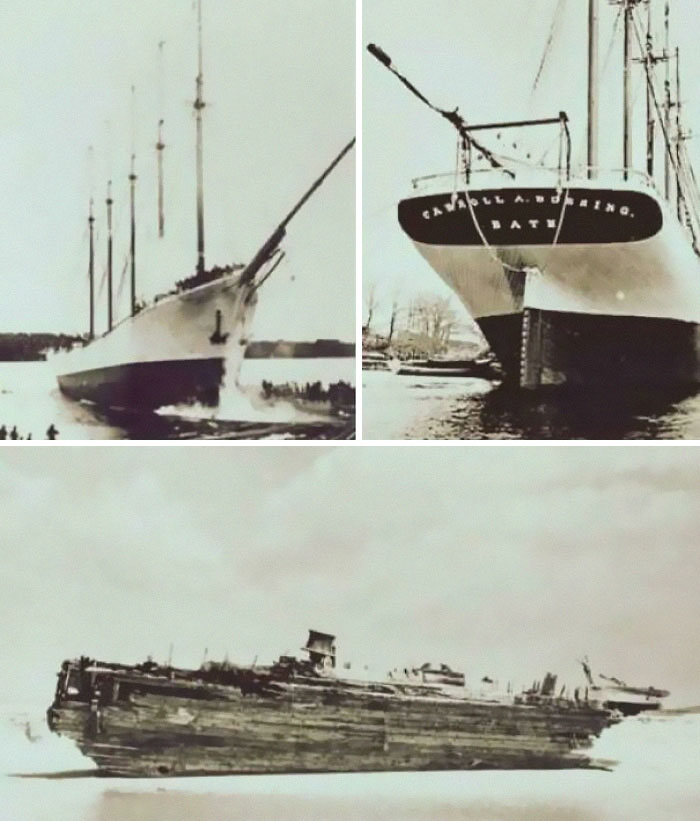
Image source: theyanardageffect
#26 Derbyshire
Derbyshire was a 294-meter bulk carrier that disappeared with all 44 people on board during Typhoon Orchid on 10 September 1980, about 230 miles off Okinawa, Japan. She had departed Sept-Îles, Canada on 11 July with 157,446 tonnes of iron ore bound for Kawasaki, Japan. When she failed to arrive, a large-scale search found only an oil slick but no survivors, and no distress signal had been sent. At just four years old, classed A1 by Lloyd’s Register, and commanded by an experienced crew, her sudden loss shocked the maritime world.
Investigations over the years explored several causes. A 1989 inquiry suggested she had been overwhelmed by extreme waves, losing her hatch covers before flooding rapidly. Later discoveries pointed to structural flaws around bulkhead frame 65, already linked to cracks and failures on her sister ships Tyne Bridge and Kowloon Bridge. In 1994, wreck surveys initially hinted at crew negligence, but a reopened inquiry in 2000 cleared the crew and confirmed that forward vent damage during the typhoon caused progressive flooding. With her found 4 km beneath the sea, Derbyshire remains the largest British ship ever lost at sea, a case that reshaped bulk carrier safety standards worldwide.
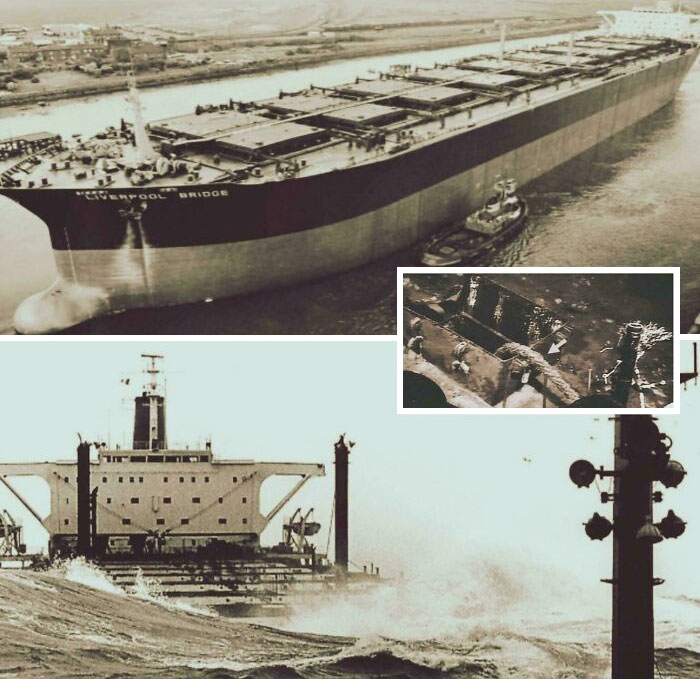
Image source: theyanardageffect
#27 August 7, 1679, The Brigantine Le Griffon, Commissioned By René-Robert Cavelier, Sieur De La Salle, Is Towed To The South-Eastern End Of The Niagara River, To Become The First Ship To Sail The Upper Great Lakes Of North America
In September 1679, the French brigantine Le Griffon—built by explorer René-Robert Cavelier, Sieur de La Salle—set sail from Green Bay (Lake Michigan) bound for Niagara loaded with valuable animal furs. It vanished with its six crew members shortly after departing and was never seen again, making it one of the Great Lakes’ most famous mysteries.
The Key Theories:
Fierce Storm (Most Likely): The prevailing view among historians is that the ship sank during a severe multi-day storm that swept Lake Michigan right after its departure.
Mutiny: La Salle suspected the ship’s pilot, “Lucas the Dane,” and crew mutinied, scuttled the vessel, and ran off with the lucrative fur cargo.
Indigenous Attack: Another theory suggests local Native American tribes (such as the Potawatomi or Odawa) attacked the crew, boarded the ship, and set it ablaze.
Ransacking by Rivals: Some speculated rival French fur traders or Jesuits orchestrated an ambush to sabotage La Salle’s venture.
Over 30 “discoveries” have been claimed over the years, including a heavily publicized potential site found near Poverty Island in northern Lake Michigan. However, state archeologists and maritime experts maintain there is no conclusive proof, leaving Le Griffon officially unfound.
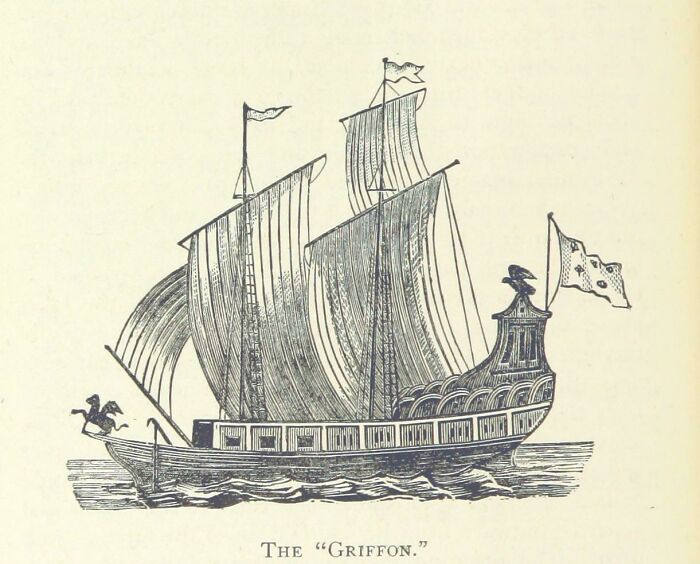
Image source: [deleted]
#28 Ijn Kongo
On 16 November, following a US air raid on Brunei, Kongō, along with Yamato, Nagato and the rest of the First Fleet, departed from Brunei bound for Kure in preparation for a major reorganization of the fleet and battle repairs. On 20 November, they entered the Formosa Strait. Shortly after midnight on 21 November, the submarine USS Sealion made radar contact with the fleet at 44,000 yards (40,000 m). Maneuvering into position at 02:45, Sealion fired six bow torpedoes at Kongō followed by three stern torpedoes at Nagato fifteen minutes later. One minute after the first salvo was launched, two of the torpedoes were seen to hit Kongō on the port side, while a third sank the destroyer Urakaze with all hands. The torpedoes flooded two of Kongō’s boiler rooms, but she was still able to make 16 kn (30 km/h; 18 mph). By 05:00, she had slowed to 11 kn (20 km/h; 13 mph) and was given permission to break off from the fleet and head to the port of Keelung in Formosa along with the destroyers Hamakaze and Isokaze as escort.[46] Within fifteen minutes of detaching from the main force, Kongō was listing 45 degrees and flooding uncontrollably. At 5:18 the ship lost all power and the order was given to abandon ship.[47] At 5:24, while the evacuation was under way, the forward 14-inch magazine exploded, and the broken ship sank quickly, with the loss of over 1,200 of her crew, including the commander of the Third Battleship Division and her captain.
Kongō is believed to have sunk in 350 feet (110 m) of water approximately 55 nautical miles (102 km; 63 mi) northwest of Keelung. She was one of only three British-built battleships sunk by submarine attack during World War II. The other two were the British Revenge-class battleship HMS Royal Oak and the Queen Elizabeth-class battleship HMS Barham. Kongō is the only Japanese battleship from World War II whose wreck has not been located or surveyed.
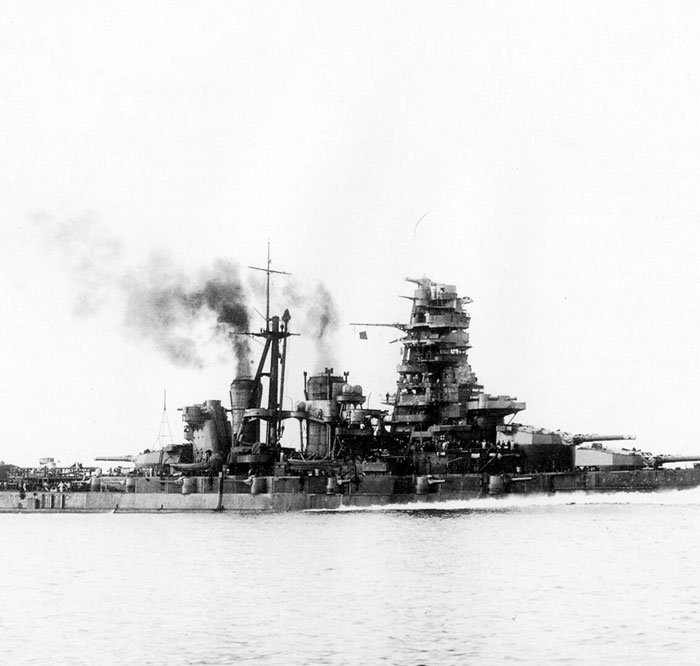
Image source: Wikipedia
#29 Santa Maria
On Christmas Eve 1492, Christopher Columbus’s flagship, La Santa María, ran aground on a coral reef off the coast of Cap-Haïtien, Haiti, after an inexperienced cabin boy was left at the helm.
What Happened to the Ship:
Dismantled for Fortification: Realizing the ship couldn’t be saved, Columbus ordered it stripped. Its wooden timbers and planks were repurposed to build La Navidad, the first Spanish settlement in the Americas.
Abandoned Remains: The submerged hull was left to rot, swallowed by sea life, sand, and ocean currents.
In 2014, explorer Barry Clifford claimed to have found the wreck. However, UNESCO investigators ruled it out after identifying metal fasteners dating to the 17th or 18th century. The true location of Santa María’s remains stays lost to history.
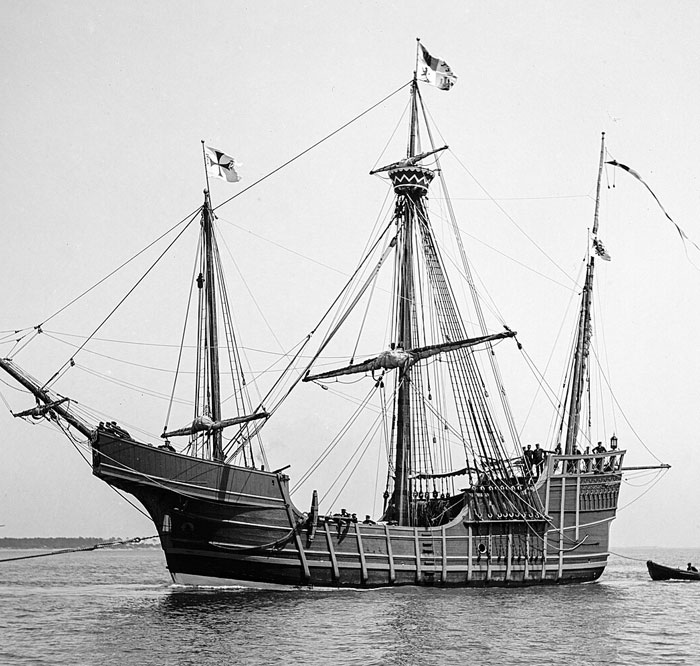
Image source: Wikipedia
#30 Uss Bonhomme Richard (1765)
On September 23, 1779, the Continental Navy frigate USS Bonhomme Richard, commanded by John Paul Jones, engaged the British warship HMS Serapis in the Battle of Flamborough Head off the English coast.
Battle and Sinking:
Bloody Engagement: Heavily outgunned, Jones lashed his burning ship to Serapis to neutralize its advantage. When asked to surrender, he famously replied, “I have not yet begun to fight!”
Victorious Defeat: Jones’s crew forced the British to surrender and seized Serapis. However, Bonhomme Richard was severely damaged, ablaze, and taking on water.
Final Resting Place: After 36 hours of attempts to save her, the ship sank into the North Sea on September 25, 1779.
Despite decades of searches off Yorkshire, the exact wreck location remains unconfirmed.
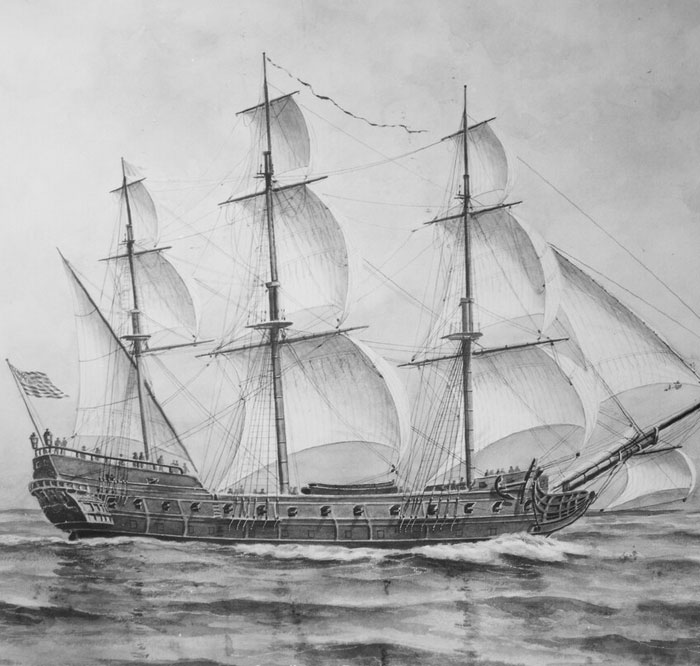
Image source: Wikipedia
#31 Uss Tang
USS Tang (hull number SS-306) was a Balao-class submarine of World War II, the first ship of the United States Navy to bear the name Tang. She was built and launched in 1943, serving until being sunk by her own torpedo off China in the Taiwan Strait on 24 October 1944.
In her short career in the Pacific War, Tang sank 33 ships totalling 116,454 tons.Commander Richard O’Kane received the Medal of Honor for her last two engagements (23 and 24 October 1944).
Tang was sunk during the last engagement by a circular run of her final torpedo, going down in 180 ft (55 m) of water; 78 men were lost, and the 9 survivors were picked up by a Japanese frigate and taken as prisoners of war. This was the only known time that a Momsen lung was used to escape a sunken submarine.
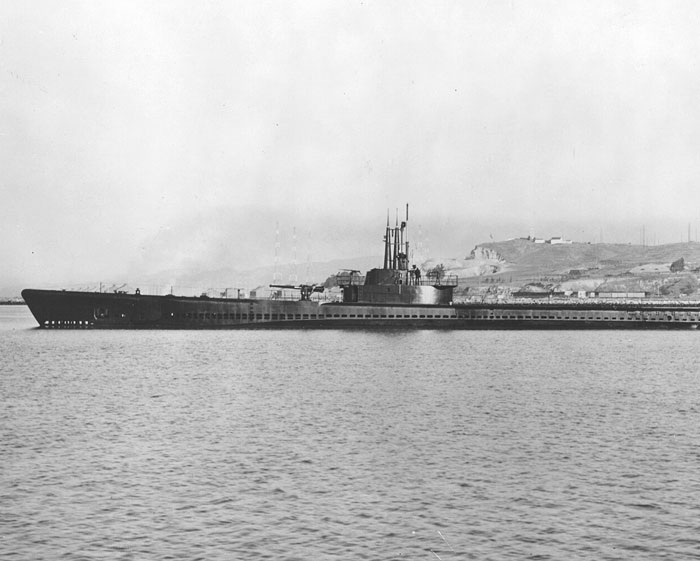
Image source: Wikipedia
#32 Hiryu
The Japanese aircraft carrier Hiryū was destroyed during the pivotal Battle of Midway on June 4–5, 1942.
Battle and Sinking:
Lone Counterattack: After three other Japanese carriers were knocked out, Hiryū launched airstrikes that severely damaged the USS Yorktown.
American Retaliation: Hours later, U.S. SBD Dauntless dive-bombers struck back, hitting Hiryū with four 1,000-pound bombs. The explosions ignited aviation fuel, destroying the flight deck and triggering uncontrollable fires.
Scuttled at Sea: On the morning of June 5, unable to control the blazes, Japanese destroyers torpedoed the crippled vessel to prevent capture. She sank into the Pacific with over 400 crew members.
In October 2019, deep-sea explorers located Hiryū’s wreck sitting upright nearly 18,000 feet below the surface in the Papahānaumokuākea Marine National Monument.
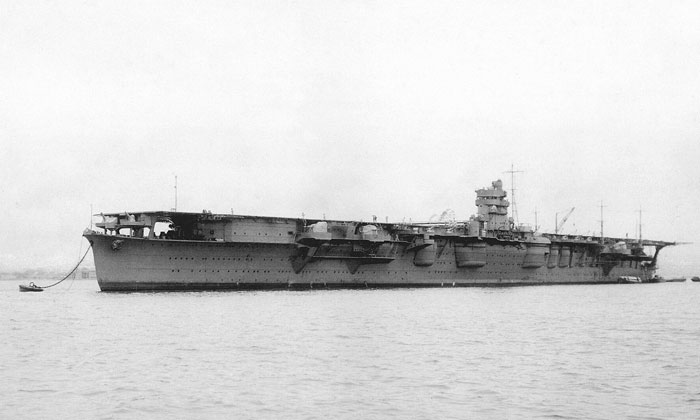
Image source: Wikipedia
#33 SS Marine Sulphur Queen
SS Marine Sulphur Queen, formerly Esso New Haven, was a T2 tanker converted to carry molten sulphur. It is notable for its disappearance in 1963 near the southern coast of Florida, taking the lives of 39 crewmen.
In the investigation, the Coast Guard determined that the ship was unsafe and not seaworthy, and never should have sailed. The final report suggested four causes of the disaster, all due to poor design and maintenance of the ship. The loss of the ship was the subject of lengthy litigation between the owner and families of the missing men.
Despite the clear cause of the disaster and its last known position being off Florida in the Gulf of Mexico, an inaccurate and incomplete version of the ship’s disappearance is often used to justify Bermuda Triangle conspiracies.
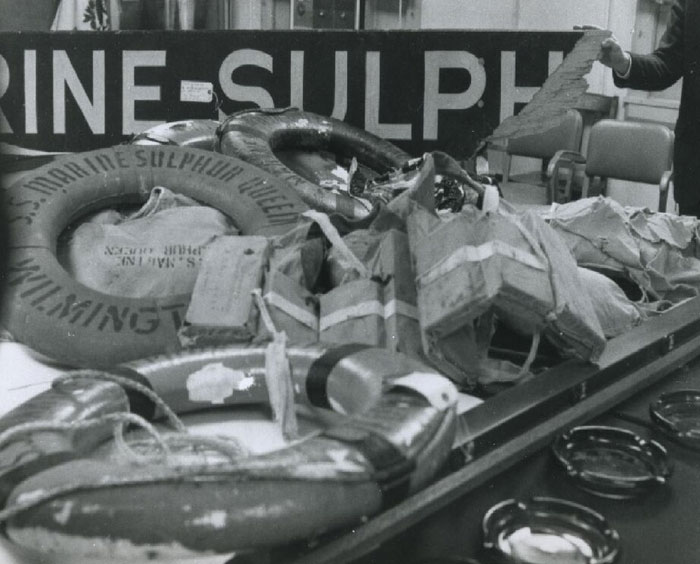
Image source: Wikipedia
 Follow Us