Whether you are a history buff, a science fan, or just someone who loves learning random new things, there is a popular corner of the internet made just for you.
With over 1.4 million members, this massive Facebook group brings people from around the globe together to share fun facts, deep thoughts, and heartwarming real-life stories. Take the kind man who walks the streets carrying rescue pups to help them find loving homes — nobody asked him to, yet he shows up every day. Or the incredible mom who shocked the world by giving birth to not one, not two, but nine babies all at once.
To save you some scrolling, Bored Panda has gathered the most curious gems from the group right here. Keep reading to stock up on great conversation starters for your next trivia night or dinner party.
#1
In 2021, a woman was told she was expecting seven babies, but doctors later discovered she was actually carrying nine. Against extraordinary odds, she gave birth to five girls and four boys, and every single one survived, making medical history.
Halima Cissé, a 25-year-old woman from Mali, was already preparing for an incredibly unusual pregnancy when doctors initially informed her that she was expecting seven children.
However, after being transferred to a specialist hospital in Casablanca, Morocco, doctors discovered something even more astonishing.
She was carrying nine babies!
On May 4, 2021, Halima underwent an emergency Caesarean section at just 30 weeks of pregnancy.
A team of medical professionals worked together to safely deliver all nine newborns, who weighed between approximately 500 grams and 1 kilogram each.
The babies were incredibly premature and required months of intensive medical care, with doctors carefully monitoring their development.
But against the odds, every single child survived.
The five girls and four boys became the first known set of nonuplets to survive, earning their family a place in the Guinness World Records.
The babies spent months receiving specialist treatment in Morocco before eventually being able to return home with their parents.
And the most heartwarming part?
In May 2026, all nine children celebrated their fifth birthday, an extraordinary milestone considering the challenges they faced at birth.
Their parents, Halima and Abdelkader Arby, now have ten children altogether, including an older daughter.
What began as an incredibly high-risk pregnancy became one of the most remarkable survival stories in modern medical history.
Nine tiny babies, born together against extraordinary odds, have grown into nine children celebrating birthdays, playing and experiencing life alongside one another.
A beautiful reminder of how far modern medicine has come and the incredible dedication of the doctors, nurses and families who help give vulnerable newborns a chance at life.
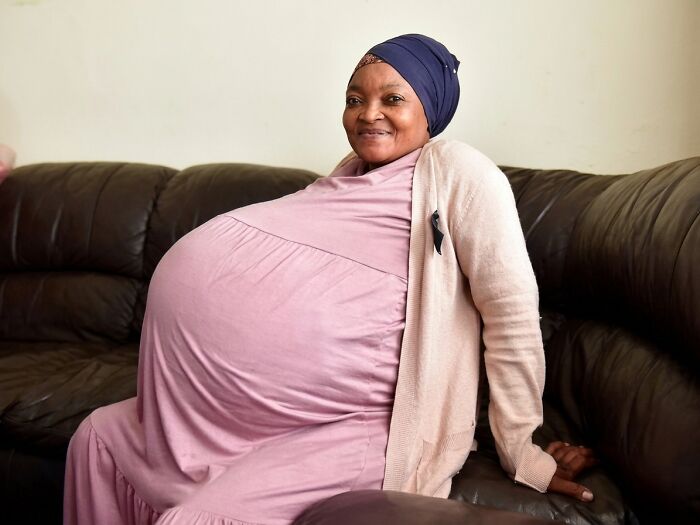
Image source: PetBuzz

#2
Zeus the cat fancied a trip to London, so he hopped on a train.
The four-year-old travelled 37 miles from Braintree, Essex, to London Liverpool Street all by himself. Station staff found him, looked after him and escorted him home on another train.
The best part? He’s done this before. Zeus used to catch trains to Stansted Airport. London is his furthest adventure yet.

Image source: House Crafted
#3
British environmental lawyer Paul Powlesland is facing potential legal consequences after leading a volunteer group to clean a heavily polluted river in East London.
Alongside volunteers from the River Roding Trust, he helped remove more than 200 bags of rubbish, including plastic waste, discarded needles, household appliances, and other debris from a 250-metre stretch of Alders Brook.
However, the Environment Agency began investigating the project because the river restoration work was allegedly carried out without the required environmental permits. Certain violations can carry a prison sentence of up to two years, although no decision to prosecute had been made at the time of reporting.
Paul believes authorities should support people trying to protect nature rather than discourage them. The controversy has sparked debate about environmental regulations, community action, and the importance of protecting Britain’s polluted waterways.
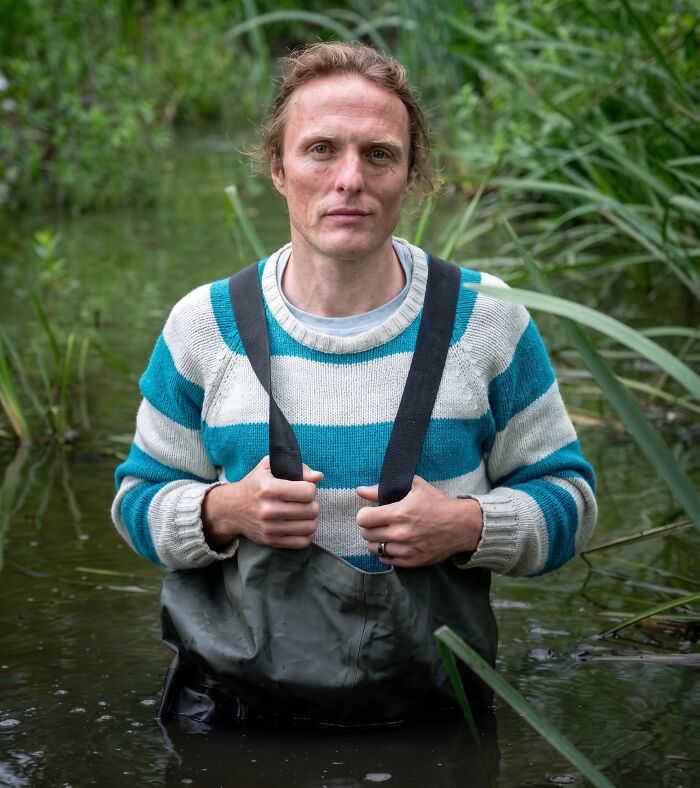
Image source: House Crafted
Space discoveries, inventions, historical tales, and everyday news stories might seem like totally separate topics. Yet they all share the same root: our drive to explore the unknown and understand our place in the world.
People aren’t always trying to build the next big gadget right out of the gate, yet this basic urge to find answers drives our greatest tools and inventions.
For example, consider how penicillin was discovered. Scientist Alexander Fleming wasn’t trying to save millions of lives or win a prize when he went to work that day. He just spotted some weird mold growing in a messy dish and wondered what it was. That one spark of wonder changed modern medicine forever.
#4
For nearly 3,000 years, people climbed this mountain to leave offerings to the gods — and nobody knew it was here.
Archaeologists working near the summit of Mount Olympus on the Greek island of Euboea have uncovered a peak sanctuary that was in use from the 9th century BC all the way into the Roman Imperial era. There is no temple, no grand building — just an open-air sacred place where worshippers left pottery and the bones of sheep and goats in the crevices of the rock, and shared feasts a thousand metres above the sea.
The team from the Swiss School of Archaeology in Greece, led by Chloé Chezeaux, first spotted the site during a survey in 2025 and excavated it this year. The pottery alone is extraordinary — layer after layer of it, the earliest pieces dating to the early Greek Geometric period.
No altar has been found yet, and the goddess herself is still a careful guess. An inscription found down in the city of Eretria mentions “Artemis Olympia”, which suggests the wild goddess Artemis may have been the one worshipped up here. Zeus is the god usually linked with mountaintops, so if it is Artemis, that makes this place even more unusual.
Getting there was not easy, then or now. The final stretch is a three-kilometre climb with 650 metres of elevation gain — the same walk the worshippers of Eretria made, carrying their offerings, for hundreds of years.
Would you make that climb for a goddess you believed in?
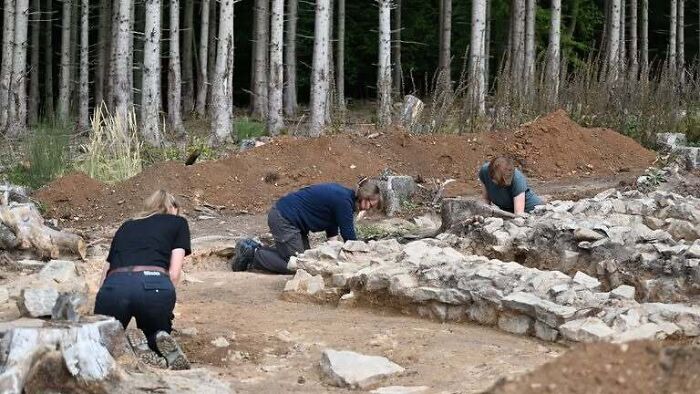
Image source: HistoricalFacts
#5
When 17-year-old Joey found $3,500 outside a store, he didn’t keep it—he handed it straight to the cashier. The grateful owner later tracked him down, rewarded his honesty with $1,000, offered him a job, and helped raise money for his first truck. Joey also asked that the remaining money go to a man battling cancer. One honest choice—and one thoughtful response—turned a lost wallet into a story of generosity. What would you have done?

Image source: PetBuzz
#6
Do you remember Punch?
The little monkey who was rejected by his mother and found comfort in a stuffed toy?
Last year, he was the only baby born on that monkey mountain. His start in life was difficult. The other monkeys mistreated him, sometimes even dragging him along the ground. Whenever things became too much, he would run back to his stuffed toy, holding close to the one thing that seemed to offer him comfort.
That image stayed with so many of us: a tiny monkey looking for somewhere to belong, with a stuffed companion by his side.
But now, there’s a new moment to remember.
A new baby came running over to Punch and climbed straight onto his back. Such a small gesture, yet after everything he had been through, it felt enormous. Another little monkey had chosen to come close to him.
The little one who once needed someone to carry him is now carrying someone else. Watching that change is enough to make your heart ache in the sweetest way.
His difficult beginning will always be part of his story, but now there is room for moments like this, too: closeness, companionship, and a little baby holding on to him.
You did it, Punch. We were all rooting for you.
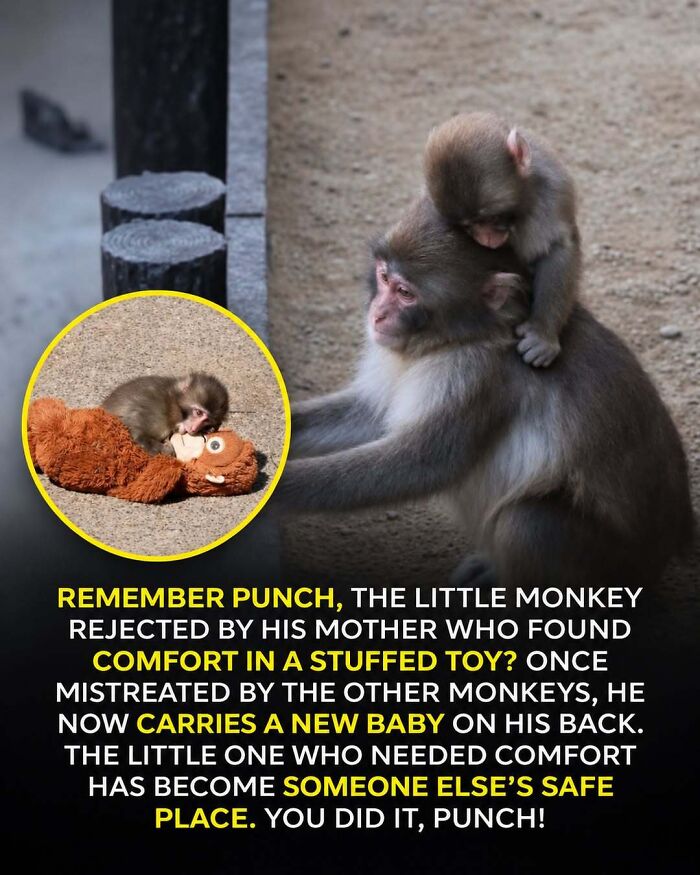
Image source: PetBuzz
You don’t need a lab coat to enjoy the perks of an active mind. Looking up random trivia and digging into strange tales can actually change how your brain works in daily life.
Research shows that when something grabs our interest, the reward centers in our heads light up and release dopamine. Even though a fun fact isn’t a physical treat like cold water or a sweet snack, our minds still react to it like a prize. We are built to feel good when we learn something new.
#7
A familiar voice brought unexpected comfort to three-month-old Noah during one of the most difficult periods his family had ever faced. When the baby became unsettled, his mother, Ashleigh Ackerley, decided to play a recording of his father, Jason Bunce, speaking to him.
Jason, who was just 25, had been seriously injured in a hit-and-run accident and was in a coma in hospital. Since the accident, Noah had been unable to hear his father’s voice in person. Ashleigh kept a recording of Jason speaking gently to their little boy before the tragedy.
As soon as the recording began playing, Noah appeared to settle down. The baby who had been restless moments earlier became calmer as his father’s familiar voice filled the room.
The emotional moment captured the special connection between a father and his child, even during a time when they could not be together. For Ashleigh, that recording offered a precious way to keep Jason’s presence close to their son.
Sometimes, the smallest things carry the greatest meaning. A simple voice recording became a treasured reminder of a father’s love and the bond he shared with his baby.
May Jason and his family find strength and support through such a difficult time.
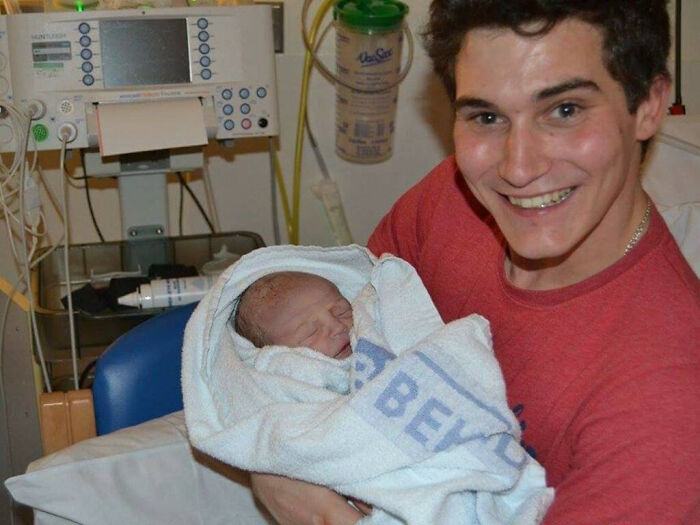
Image source: Buried Civilization
#8
A subway ride, a new toy, a pup cup… and a home of their own.
About once a week, Bryan Reisberg takes a shelter dog out for a day in New York City. His backpack says “Adopt Me,” and he shares videos of their adventures so people can see each dog’s personality shine.
Bertha spent her day soaking up neck scratches from strangers and picking out a toy. A few days later, she was adopted.
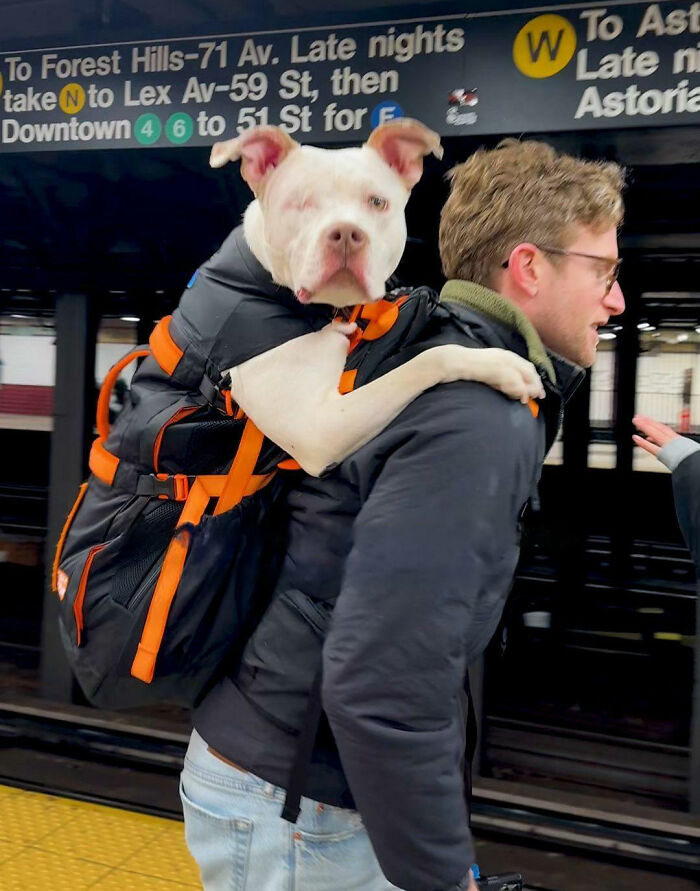
Image source: House Crafted
#9
They thought she was an easy target.
Winifred Peel, 77, from Bromborough in England, had just put her card in at the ATM.
Felix Stoica, 19, Florin Geblescu, 18, and Piper Dumitru, 18, were out in a car hunting for what they called an easy target. In Bromborough, on the Wirral, they found Winifred Peel alone at an ATM.
Winifred had stopped on her walk to get some cash. She had already noticed one of them outside Barclays Bank earlier that morning. Now that same man was standing right beside her at the machine, pressed up so close against her side that she was rocked off balance.
While he crowded her in, the other man leaned across her and pressed the button to take £200 out of her account.
It wasn’t a mistake or a misunderstanding.
She was being robbed in broad daylight, with two of them on top of her and the third one, Dumitru, keeping watch a few steps away.
Winifred didn’t freeze.
She grabbed the man who had just pressed the button, Stoica, by the collar and banged his head against the cash machine three times to try and stop him. The three of them ran off. She went straight into the bank and raised the alarm.
Police traced them on CCTV.
Stoica still had the injury on his head from where she had hit him.
All three pleaded guilty to robbery. Stoica got two years in a young offenders institution. Geblescu got 18 months. Dumitru got eight months.
The judge told them they had targeted a vulnerable victim, a lady 77 years of age in the twilight of her life, and cast a deep shadow over that.
Winifred doesn’t call herself a hero.
She said they did not care how it would affect her, that it has changed her life, that she will never have the confidence she once did. She only hopes it returns.
Who thinks she deserves a medal?
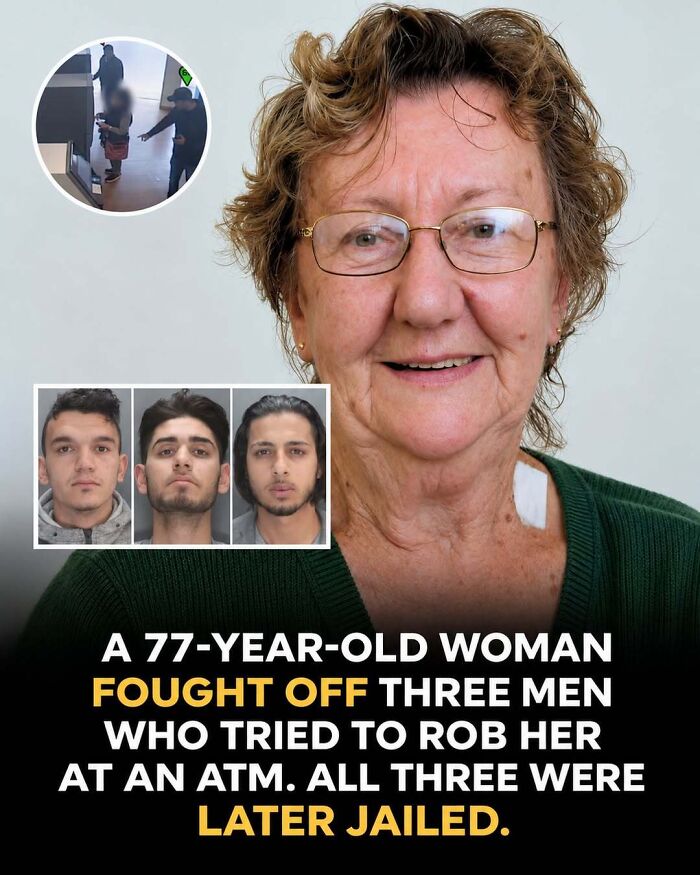
Image source: House Crafted
The rush of feel-good chemicals when we learn something new can also make our memory sharper.
In 2014, neuroscientist Charan Ranganath and his team at the University of California, Davis, tested how this works by scanning people’s brains while they answered trivia questions. They found that curiosity peaks when we know a little about a subject, only to realize a piece of the puzzle is missing. That gap creates a strong pull to find the answer.
“When we compare trials where people are highly curious to know an answer with trials where they are not, and look at the differences in brain activity, it beautifully follows the pathways in the brain that are involved in transmitting dopamine signals,” said Dr. Ranganath. “The activity ramps up, and the amount it ramps up is highly correlated with how curious they are.”
#10
A local man in the Tibetan Highlands was spotted taking his giant white yak for a leisurely walk, almost as if he were walking an ordinary pet dog. With its enormous size and fluffy white coat, it almost looks like Appa, Aang’s beloved flying bison from Avatar: The Last Airbender! But yaks are much more than just impressive-looking animals. They have a long history and play an important role in life across the high mountains of Central Asia.
Yaks originally come from the Qinghai–Tibetan Plateau, particularly Tibet and the surrounding Himalayan region. Their wild ancestors evolved in these high-altitude environments, and local communities domesticated them thousands of years ago.
These remarkable animals are perfectly adapted to life in the mountains, often living at elevations of 2,000 to 5,000 meters (6,500–16,400 feet). Their thick, long coats protect them from freezing temperatures, while their specialized bodies help them cope with the low oxygen levels found at such high altitudes.
Unlike ordinary cattle, yaks are particularly well suited to cold, rugged environments. They feed mainly on grasses and other mountain vegetation and can provide local communities with milk, meat, wool, hides, and even fuel from their dried dung. They are also traditionally used to carry heavy loads across difficult mountain terrain.
For generations, yaks have been an essential part of Tibetan culture and livelihoods. And while this giant white yak may look like an unusual walking companion, it represents an animal that has supported mountain communities for thousands of years.
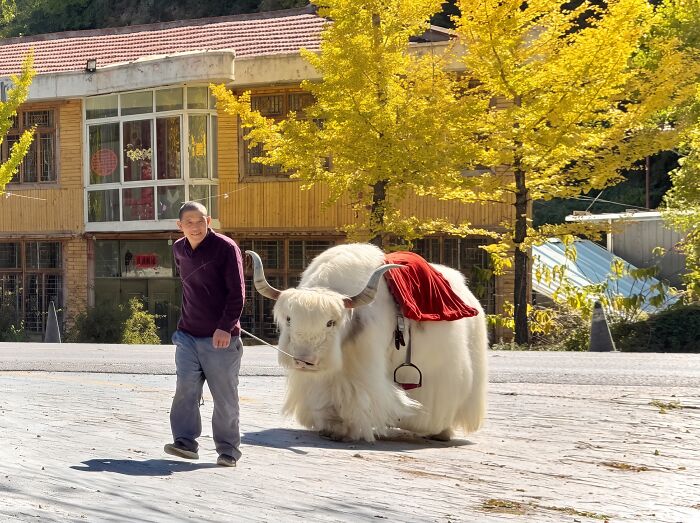
Image source: PetBuzz
#11
On his birthday in Istanbul, Ali Çiftçi was injured after falling from a third-floor window while struggling with a burglar who had entered his home. The fall caused severe injuries, and doctors later found that about 83% of his skull’s volume was missing. He spent months in intensive care and underwent numerous surgeries over the following two years.
A medical team used his scans to design custom titanium implants, which were produced with 3D-printing technology and surgically fitted to rebuild the damaged area. His doctors said his neurological symptoms improved significantly after the operation. His recovery is a striking example of how patient-specific implants and complex surgery can help repair devastating injuries.
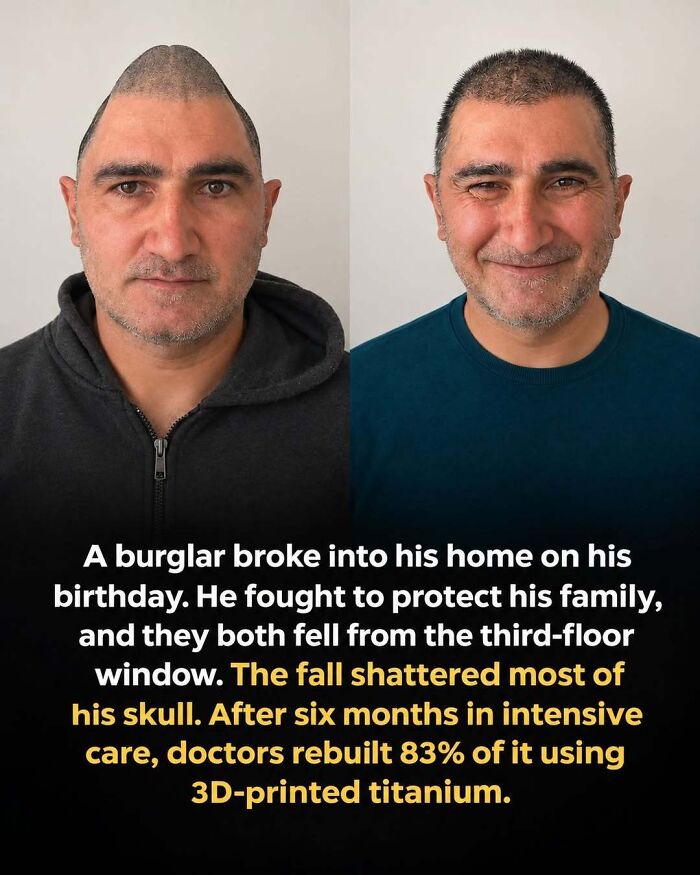
Image source: House Crafted
#12
No lithium, no nickel, no cobalt. This car battery runs on sodium.
In February 2026, in the frozen city of Yakeshi, Inner Mongolia, Chinese automaker Changan and battery giant CATL unveiled what they called the world’s first mass-production passenger car with a sodium-ion battery, a version of the Changan Nevo A06. It was set to go on sale in China from mid-2026.
Sodium is one of the most common elements on Earth, found in ordinary salt. CATL says its Naxtra cells reach 175 watt-hours per kilogram, close to the lithium iron phosphate batteries in many EVs, and keep about 90% of usable power at minus 40 degrees.
The car’s 45-kilowatt-hour pack is rated for over 400 kilometers, about 249 miles, on China’s test cycle. CATL spent roughly $1.4 billion developing the technology.
Sodium batteries could cut dependence on lithium mines and handle brutal winters better than many lithium packs.
Would you buy an electric car with a salt-based battery?
Source: CATL, 2026.
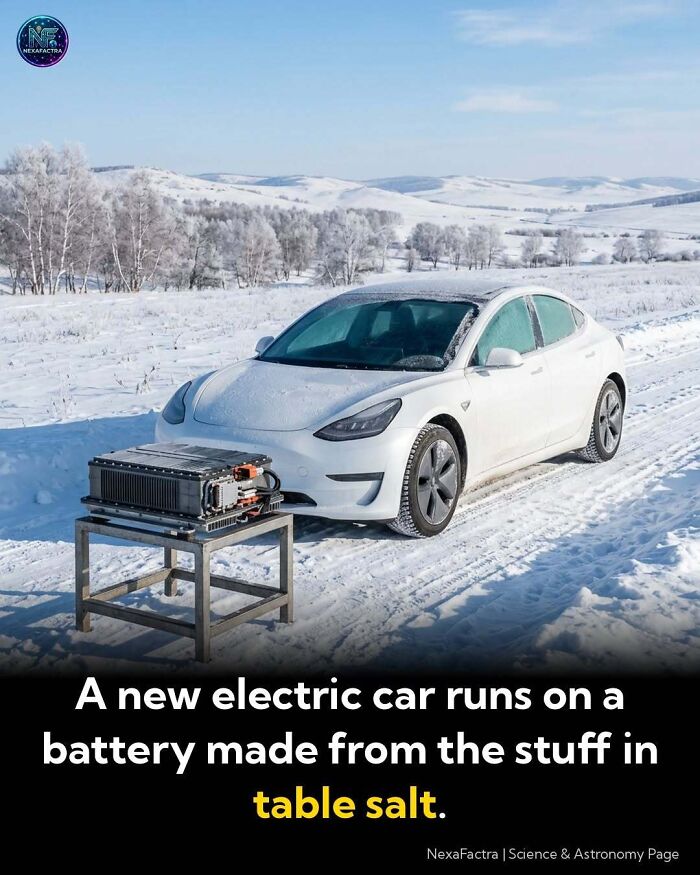
Image source: NexaFactra
During experiments, the University of California researchers noticed something else amazing. Whenever a person really wanted an answer, their hippocampus — the brain’s main memory center of the brain — woke up alongside the reward system.
This burst of energy helped them recall the trivia later, and also remember random details shown in between, like strangers’ faces. Once curiosity kicks in, your mind turns into a giant sponge that soaks up all kinds of details around you.
#13
Your ceiling fan doesn’t cool the room. It cools you, and that’s why it saves money.
According to the U.S. Department of Energy, using a ceiling fan allows you to raise your thermostat setting by about 4°F without reducing your comfort.
That’s because fans create a wind chill effect. Moving air helps sweat evaporate from your skin, so you feel cooler even though the air temperature is the same.
Why does 4 degrees matter? Air conditioning is one of the biggest energy costs in many American homes. Every degree you raise the thermostat in summer means your AC runs less.
The Energy Department also says that in moderate climates, ceiling fans can sometimes replace air conditioning altogether.
A few important tips from the department:
Run your fan counterclockwise in summer to create a cooling breeze.
In winter, reverse it to run clockwise on low speed. That pushes warm air that collects near the ceiling back down into the room.
Turn fans off when you leave a room. Since they cool people, not rooms, a fan spinning in an empty room just wastes electricity.
Make sure your ceiling is at least eight feet high for a safe installation.
ENERGY STAR certified fans are also more efficient than standard ones.
It’s one of the cheapest comfort upgrades in a home, and most people already have one they aren’t using the right way.
Did you know your ceiling fan has a winter setting, and do you actually use it?
Source: U.S. Department of Energy, Energy Saver: Fans for Cooling.

Image source: Factovix
#14
ARTIST PAINTS THE STATUE OF LIBERTY IN JUST 43.5 SECONDS, SETTING A NEW GUINNESS WORLD RECORD.
American performance artist David Garibaldi made history on November 19, 2026, during Guinness World Records Day by creating an impressive painting of the Statue of Liberty in just 43.5 seconds.
The remarkable performance took place on the rooftop of DUMBO House in Brooklyn, New York, with the iconic Brooklyn Bridge providing a spectacular backdrop. A crowd gathered to watch as Garibaldi moved rapidly across a large canvas, applying bold strokes of green and blue paint to create an abstract image.
At first, the painting looked like a collection of random brushstrokes. But when he finished, Garibaldi dramatically turned the canvas upside down, revealing the unmistakable face of the Statue of Liberty.
Guinness World Records officially recognized his achievement as the fastest time to paint a landmark statue. It also marked his first official Guinness World Records title.
Garibaldi has spent more than two decades developing his unique performance-painting style. He became widely known after reaching the finals of America’s Got Talent in 2012, where audiences were introduced to his energetic combination of music, movement, and live painting.
Today, he performs around the world, creating large-scale portraits in front of live audiences. His work has also supported charitable causes, with some of his paintings being auctioned to raise money for people in need.
For Garibaldi, this achievement was about more than speed. He wanted to challenge himself, set a new personal standard, and encourage others to pursue their creative ambitions.
His performance showed what years of practice, confidence, and artistic dedication can accomplish. In less than a minute, he transformed a blank canvas into a recognizable symbol of freedom and became an official world-record holder.
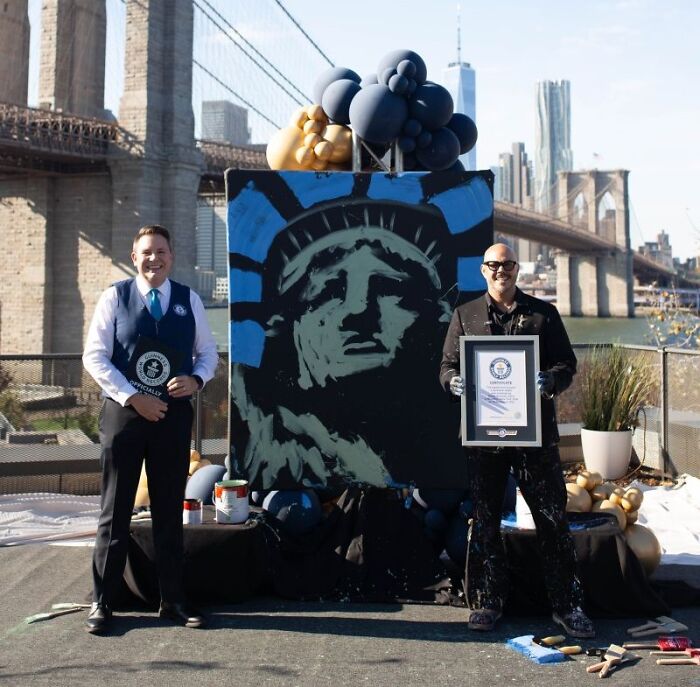
Image source: Buried Civilization
#15
Two strangers met in GTA Online in 2015. Years of heists and missions later, they finally met in person and recreated one of their favorite in-game photos.
The players, known as “nikkievercetti” and “KingDuncan,” met up at Santa Monica Pier, the real-life inspiration for Del Perro Pier. They even struck the same pose by the railing.
The photo comparison went viral through Rockstar Games and Reddit.
It’s a sweet reminder of how a friendship that starts in a game can become part of your life.
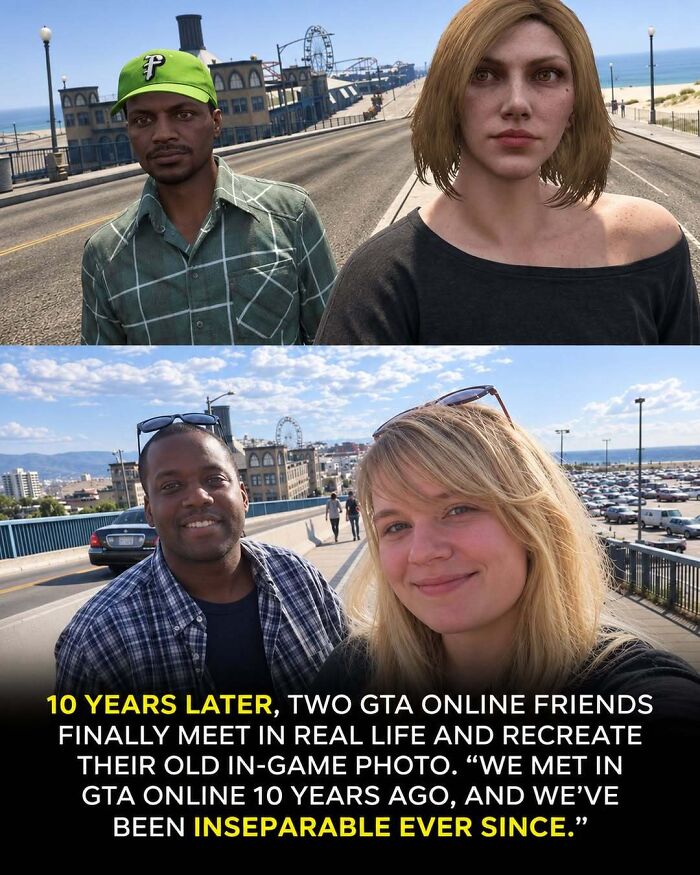
Image source: House Crafted
General curiosity often fades as we get older. Research on aging and personality links older age with a drop in openness to new ideas. One study found that people often see learning new things as less important as they get older.
This is usually because of habit and comfort. Many grown-ups feel like they already know enough, so they stick to familiar routines instead of asking why. Social media feeds also make it easy to stay comfortable, handing us quick entertainment without asking us to think or wonder.
#16
For over a century, the Antikythera wreck has been treated as a single ship. A new study says it might have been two.
Researchers studying the famous wreck site off the coast of Greece have found a second concentration of ship parts and cargo about 200 metres from the main wreck — wooden hull fragments, bronze nails, anchor parts and rows of amphorae, all dating to the first century BC.
The two areas held very similar pottery, and that is what makes this so interesting. The team is now weighing three possibilities: two merchant ships travelling together that sank in the same storm, two unrelated ships that wrecked in the same spot around the same time, or one enormous ship that broke apart and scattered across the seabed.
They have not settled on an answer yet. The sediment samples and the layout of the wreckage point toward a second vessel, but the work is still going on — this is the strongest evidence yet for the two-ship idea, not a final verdict.
What is certain is that the site that gave us the Antikythera Mechanism, a 2,000-year-old device that could predict eclipses, is still rewriting its own story more than a century after sponge divers first found it in 1900.
If it turns out to have been a convoy, what else do you think those ships were carrying together?
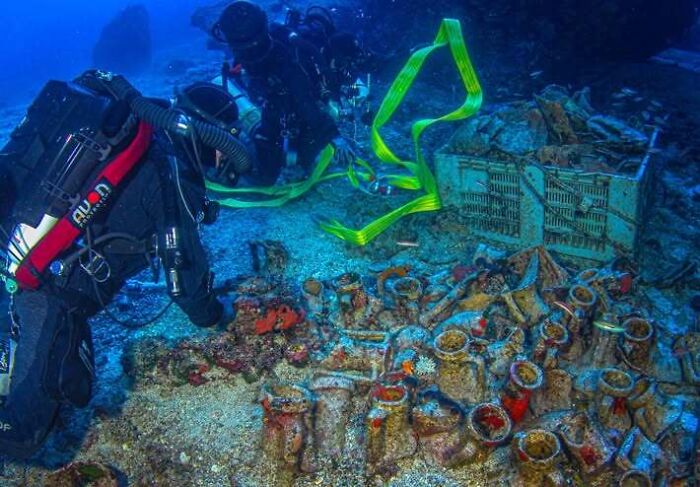
Image source: HistoricalFacts
#17
Doctors Feared She Wouldn’t Reach Her First Birthday. Charlotte Garside Lived To 16 And Touched Hearts Around The World
When Charlotte Garside was born in the UK in 2007, she weighed just 900 grams. Her tiny size and medical condition left doctors deeply concerned about her future. After she was discharged from hospital, her parents, Emma and Scott, were warned that she might not survive her first birthday.
Charlotte had a rare form of primordial dwarfism, a genetic condition that affects growth and results in an unusually small body size. Even ordinary newborn clothes were too large for her, so her parents often had to find tiny outfits that would fit.
As Charlotte grew, she continued to surprise the people around her. At just 68 centimetres tall, she reached the milestone of starting school. Her parents were proud of her progress and spoke about her curiosity, personality and determination to experience life like other children.
Her journey attracted attention from people around the world, and many followed her family’s updates over the years. Charlotte became known not only for her extraordinary size but also for the life she built despite the challenges associated with her condition.
Sadly, her story came to an end in May 2024. Her family announced her passing on May 6, sharing that Charlotte had passed away two days earlier, on May 4, at the age of 16. Her mother described her as a much-loved daughter and family member who had brought something special into their lives.
Charlotte lived more than 15 years beyond the prognosis her parents received when she was a newborn. Her life was filled with challenges, but it was also marked by family love, personal milestones and experiences that her loved ones will always remember.
She may have been incredibly small, but the place she holds in her family’s hearts is immeasurable.
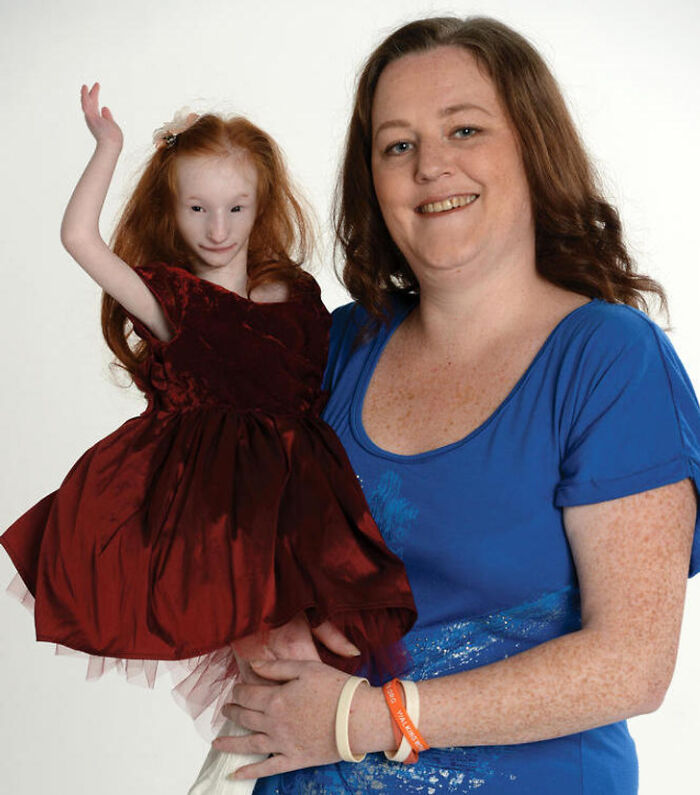
Image source: Buried Civilization
#18
She Donated Her Piggy Bank Savings At Five. At 18, She Won A $48 Million Lottery Jackpot
Sometimes, a childhood act of kindness stays with people for years. In January 2010, five-year-old Juliette Lamour and her younger sister, Sophie, brought their pink piggy bank to a Canadian Red Cross fundraiser in Sault Ste. Marie, Ontario. Inside was their entire savings of C$61.38, which the sisters donated to help people affected by the devastating earthquake in Haiti.
Thirteen years later, Juliette made headlines for an extraordinary reason. Shortly after turning 18, she bought her first-ever lottery ticket after her grandfather encouraged her to try her luck. The ticket was a Quick Pick for Canada’s Lotto 6/49, meaning the numbers were selected automatically. It turned out to be the winning ticket for the C$48 million Gold Ball jackpot drawn on January 7, 2023.
The Ontario Lottery and Gaming Corporation confirmed Juliette as the winner on February 3, 2023. She became the youngest person in Canada to win a lottery jackpot of that size. At the time, she was studying biology at Algoma University and working part-time at a pharmacy.
Despite her sudden fortune, Juliette said she wanted to continue her education and pursue her long-held dream of becoming a doctor. She also spoke about keeping her family, friends and community in mind as she planned for the future.
When news of her lottery win spread, people remembered the photograph of two little girls donating their savings more than a decade earlier. Juliette’s story brought those two very different moments together: a young child giving what she had to help strangers, and a young woman receiving a life-changing fortune.
Her donation did not guarantee a lucky future, but it showed the generous spirit she had as a child. And her plans after winning suggest that helping others remained important to her.
Sometimes, the most meaningful part of a success story is not the money someone receives, but the kindness they showed long before they had it.
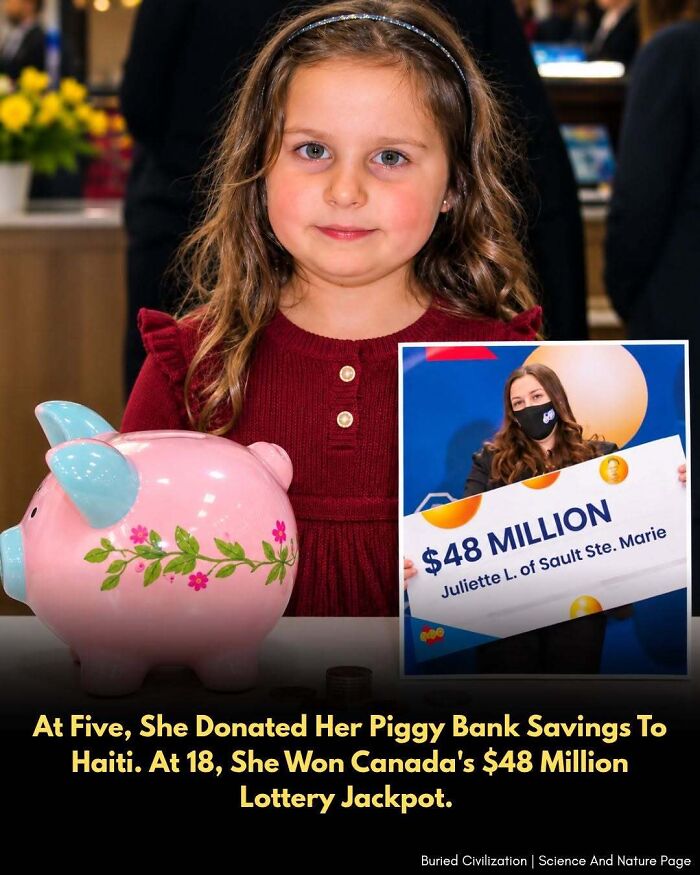
Image source: Buried Civilization
There is a real irony here: even though our curiosity often dips as we get older, staying curious becomes even more important with age.
A 2025 study found that older adults who stay curious and seek out new information tied to their personal interests may help delay or even prevent Alzheimer’s disease. Low curiosity and a lack of interest, on the other hand, can be linked to a higher risk of dementia.
“As we get older, we don’t want to stop learning, we’re just more selective about what we want to learn. You see this in the context of lifelong learning: A lot of older adults will go back to take classes or pick up hobbies or engage in bird watching. I think it shows that this level of curiosity, if maintained, can really keep us sharp as we age,” says UCLA psychologist Alan Castel, the senior author of the paper.
#19
A trucker spotted a car from an AMBER Alert, roughly 170 miles from where a two-year-old boy had been taken. Then other drivers answered his call for help.
On January 9, 2013, authorities in Tennessee were searching for little Cael Whitehead, who had been taken by his father.
Truck driver Jim Lowe saw the alert on electronic highway signs. Moments later, he spotted the matching Pontiac Grand Am travelling along Interstate 24.
He used his radio to notify truckers ahead.
Working together, the drivers positioned their trucks around the car, boxing it in and slowing it down while authorities responded.
When a Tennessee Highway Patrol trooper reached the vehicle, truckers were already helping reduce its speed.
Officers stopped the car in Marion County and arrested the boy’s father.
Cael was found unharmed.
The rescue brought together an AMBER Alert, an observant driver, fellow truckers and officers who acted on the information.
Jim recognised the car. Other drivers responded. Police reached the boy.
That teamwork helped turn a frightening afternoon into a safe recovery for a little child.
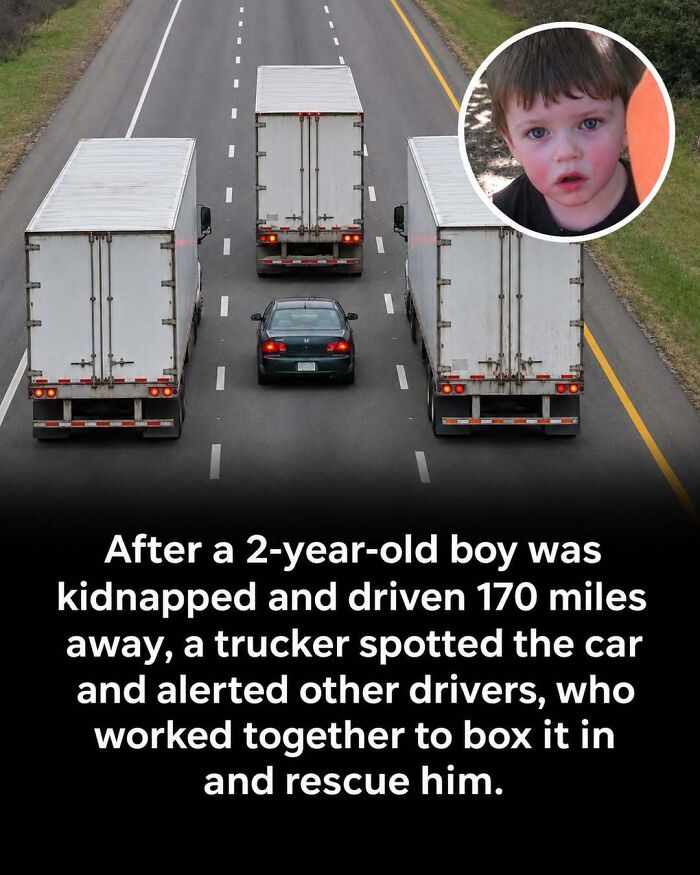
Image source: House Crafted
#20
In April, the Charlotte Convention Center in North Carolina was filled with the sound of saws, drills and sanders, all day and all night.
More than 6,500 volunteers had shown up with one goal: build 10,000 beds in just 24 hours, for children who don’t have a bed of their own.
They came in waves, shift after shift, around the clock. Lowe’s employees in their red vests. Workers from local businesses. Neighbors. Families.
They worked along 16 build lines, turning raw lumber into finished bed frames. Some cut boards. Some sanded. Some drilled. Some stamped each bed with a message for the child who would one day sleep on it.
When the clock ran out, they had built 10,027 beds.
That’s 10,027 kids who will no longer sleep on the floor, on a couch or squeezed into one bed with their brothers and sisters.
The beds were made for Sleep in Heavenly Peace, a nonprofit that builds and delivers free beds to children in need. They’re being delivered to more than 110 of its chapters across 36 states, complete with mattresses, pillows and bedding.
And it all started with one man.
Back in 2012, Luke Mickelson, a dad in Twin Falls, Idaho, heard about local kids sleeping on the floor. So he built a bunk bed for one family.
Then he built another. And another.
Today, his organization has nearly 400 chapters and has delivered more than 385,000 beds across the country.
Its motto is simple: “No kid sleeps on the floor in our town.”
Sometimes the greatest gift you can give a child is a safe place to rest their head.
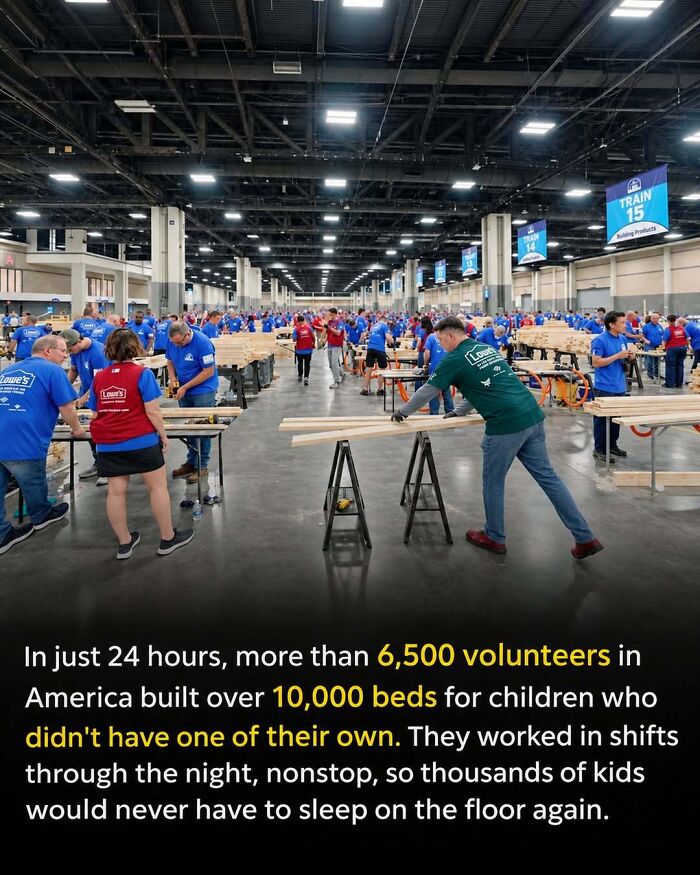
Image source: House Crafted
#21
A Filipina nurse working in Singapore has received recognition for helping save an elderly man’s life after he collapsed at a gym in Toa Payoh. Even though she was off duty, Staff Nurse Bernadette Marie Joy Bernado Borromeo did not hesitate to step in when someone needed urgent medical attention.
The incident happened while Bernadette was at the gym. An elderly man suddenly collapsed on a treadmill and had no detectable pulse. Recognizing the seriousness of the situation, she immediately began cardiopulmonary resuscitation (CPR) to help maintain blood circulation.
She also used an Automated External Defibrillator (AED), delivering two shocks as directed by the device. Her quick response helped restore the man’s pulse before he was taken to Tan Tock Seng Hospital for further medical care.
Tan Tock Seng Hospital later presented Bernadette with a Certificate of Recognition to acknowledge her actions. She also received a small heart-shaped tin as a token of appreciation.
Her actions show that the knowledge and skills nurses develop through their work can make a difference far beyond hospital walls. Bernadette was simply spending time at the gym when an emergency occurred, but she chose to help without hesitation.
For many Filipinos working overseas, her story is a proud reminder of the dedication and compassion healthcare workers bring to their communities. Her response also highlights the importance of learning CPR and knowing how to use an AED.
Bernadette did not set out to receive recognition that day. She saw someone in danger and used her training to help. That decision made all the difference.
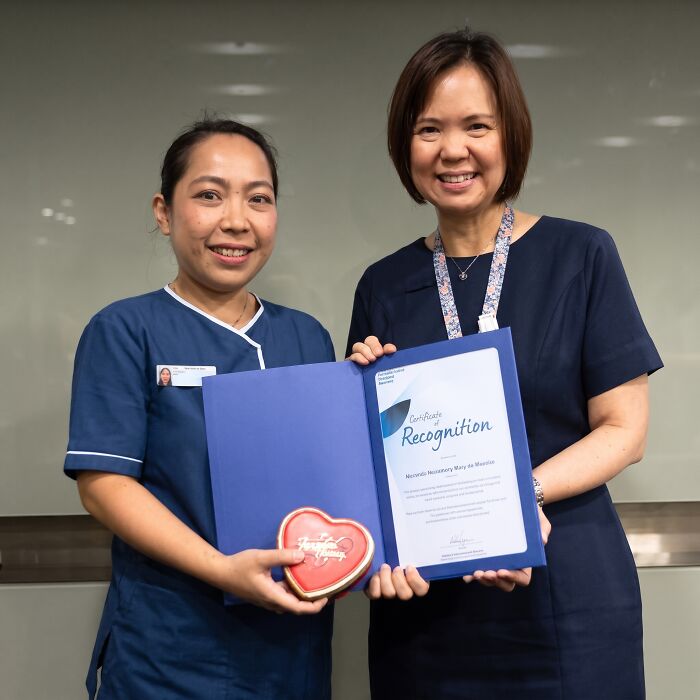
Image source: Buried Civilization
Keeping our curiosity alive matters more than ever today. Most online feeds are packed with mindless noise that leaves us zoning out or doomscrolling.
Reading through a mix of wild facts and true stories does the exact opposite. It wakes up that natural urge to question things and brings back a sense of wonder.
So keep reading and seeking out new and fascinating facts whenever you can.
#22
Rome didn’t always conquer with armies. Sometimes, it conquered with gold.
This 1,500-year-old gold medallion, now kept at Dumbarton Oaks in Washington, may have been a diplomatic gift from Emperor Anastasius to a king of Lazica, a small kingdom on the eastern Black Sea coast in what is today Georgia.
For decades, scholars thought the Latin inscription around the emperor’s portrait was just a badly copied imitation of Roman coin lettering. But historian Marco Cristini of the University of Florence has a new reading: the letters may be abbreviated Latin words that say, “Our lord Anastasius wishes to appoint you as king.”
If he is right, this was no ordinary piece of jewellery. Lazica sat between two great powers, the Eastern Roman Empire and Sasanian Persia, and both wanted its loyalty. A gift like this told a foreign king that Constantinople recognised him, without Rome giving up its claim to be above him.
The other side of the pendant makes the message even more interesting. It shows Dionysus, the god of wine, pouring drink for a panther, with two satyrs beside him. A Christian emperor sending a pagan god seems strange, until you remember that wine and Dionysian imagery were deeply woven into the culture of ancient Georgia. The gift spoke the king’s own language.
The reading is still debated, and no document names the medallion’s first owner. But the history around it fits: in AD 522, King Tzath of Lazica travelled to Constantinople, was baptised, and received royal garments bearing the emperor’s portrait.
Sometimes the most powerful weapon in an empire’s arsenal was a beautifully made piece of gold, handed over with a smile.
What do you think, was this a genuine honour, or a bribe dressed up as diplomacy?
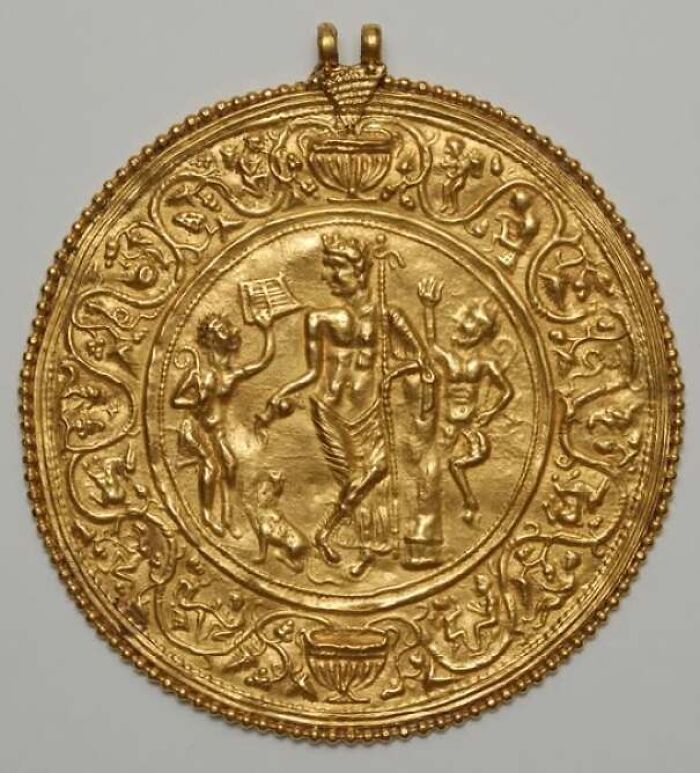
Image source: HistoricalFacts
#23
A dinosaur embryo preserved inside its egg for around 70 million years is helping scientists understand how ancient dinosaurs developed before hatching. The remarkable fossil, known as Baby Yingliang, was discovered in southern China and is considered one of the most complete dinosaur embryos ever found.
The embryo belonged to an oviraptorosaur, a group of feathered, bird-like dinosaurs that lived during the Late Cretaceous period. What caught researchers’ attention was the way the tiny dinosaur was positioned inside its egg.
Its head was tucked beneath its body, its back followed the curve of the eggshell, and its feet rested close to its head. This arrangement closely resembles the position modern bird embryos take shortly before hatching.
Scientists call this behavior “tucking.” In living birds, the movement helps embryos position themselves correctly inside the egg, making it easier to prepare for breaking through the shell. Finding the same posture in Baby Yingliang suggests that this behavior existed in dinosaur ancestors long before modern birds evolved.
The embryo measures approximately 27 centimeters from head to tail, while its egg is around 17 centimeters long. Researchers estimate that it lived between 66 and 72 million years ago, making the fossil an extraordinary window into prehistoric life.
The discovery offers valuable evidence of the evolutionary relationship between dinosaurs and modern birds. It suggests that some behaviors seen in today’s birds developed millions of years before the first modern bird species appeared.
First reported in 2021, Baby Yingliang remains an important scientific discovery. Its exceptional preservation allows researchers to study details of dinosaur development that are rarely found in the fossil record. A single egg has revealed an unexpected connection between ancient dinosaurs and the birds we see today.
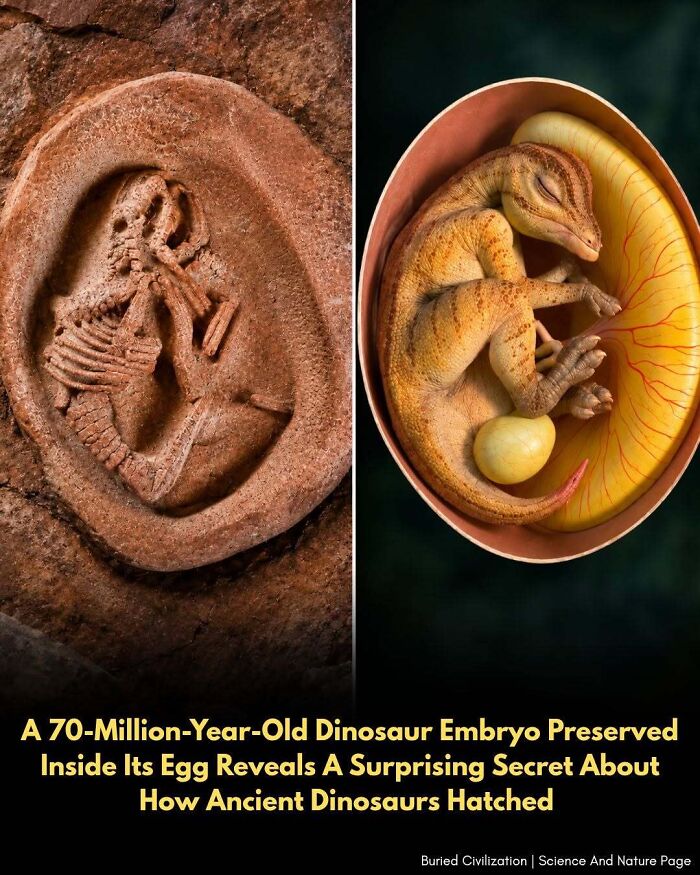
Image source: Buried Civilization
#24
A Suspected Weather Station Scam May Have Helped Someone Win $34,000 on Polymarket. The Strange Part? A Hairdryer Was Among the Theories.
What sounds like a scene from a comedy movie became the subject of a real investigation in France after unusual temperature readings at Paris Charles de Gaulle Airport coincided with some surprisingly profitable online bets.
The incidents happened on April 6 and April 15, 2026. On both evenings, a weather sensor at the airport recorded sudden temperature increases that appeared inconsistent with readings from other weather stations.
On April 6, the temperature briefly climbed above 21°C before dropping again. Nine days later, the same sensor recorded approximately 22°C around 9:30 p.m., despite temperatures having remained much lower earlier in the day.
At almost exactly the same time, traders on Polymarket were making substantial profits by betting on unusually high temperatures in Paris.
Reports indicate that one successful bet generated around $14,000, while another produced approximately $20,000 in winnings. One trader reportedly turned a $119 wager into more than $21,000 in profit.
The unusual timing raised questions about whether someone had deliberately interfered with the weather equipment to influence the outcome of the bets.
One theory discussed by weather enthusiasts was that a portable hairdryer might have been used to artificially heat the sensor. However, this explanation has not been officially confirmed, and investigators have not publicly established exactly how the readings were affected.
France’s national weather service, Météo-France, took the matter seriously. After examining the sensor data and finding physical evidence of possible interference with one of its instruments, the agency filed a formal complaint with the airport’s air transport police.
The incident also exposed a weakness in weather-based prediction markets: when a financial outcome depends on a single measuring instrument, interference with that instrument can raise serious questions about the reliability of the entire market.
Polymarket subsequently changed its reference weather station for Paris temperature bets, moving from Charles de Gaulle Airport to Paris-Le Bourget Airport.
The case attracted international attention because it showed how real-world information can become valuable in unexpected ways when people are allowed to place money on the outcome.
A weather sensor, suspicious temperature readings, and thousands of dollars in winnings turned an ordinary forecasting system into the center of a financial investigation.
It also raises an important question: how can online prediction markets protect themselves when the real-world data used to settle bets may be manipulated?
As of November 2026, I found no publicly confirmed conclusion identifying who was responsible or proving that a hairdryer was used. The investigation remains a case of suspected interference rather than a proven scam.
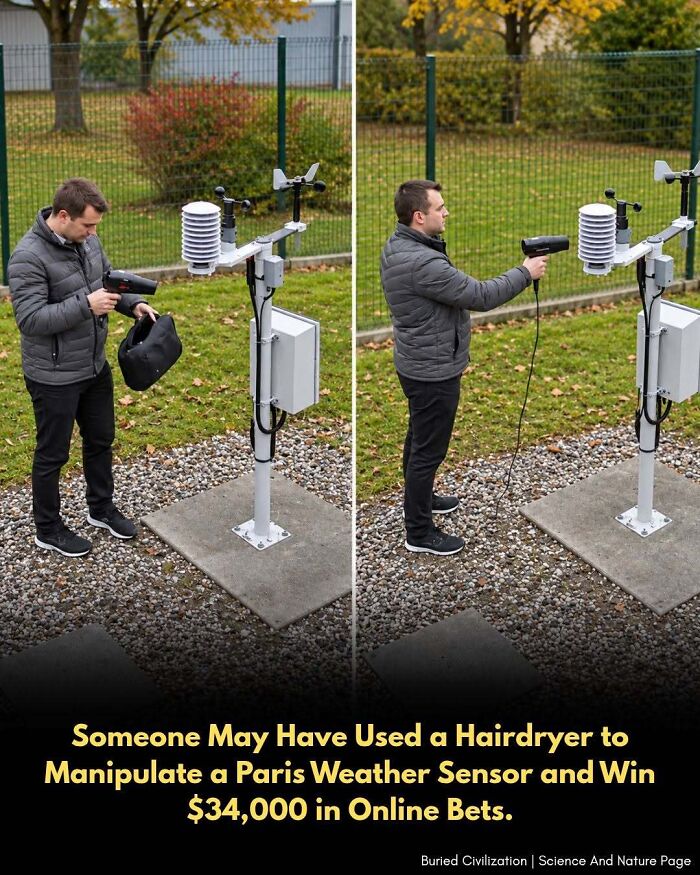
Image source: Buried Civilization
#25
Gloria Kennard has been serving free Thanksgiving meals in Bryan, Texas, since 1988. Today, the annual meal feeds more than 2,000 people at Pleasant Grove Baptist Church with support from the Rotary Club. Gloria also serves meals on New Year’s and volunteers every week at The Bridge Ministries food pantry.
This summer, her community had a chance to give back. On July 29, Gloria was on her way to Bible study when another driver ran a stop sign on East MLK Street and totaled her truck. She walked away unhurt, but the insurance payout fell short of what she needed to replace it.
The Bridge Ministries started a GoFundMe with a $15,000 goal. A total of 174 donors gave about $17,700, and Kent Moore Cabinets chipped in another $10,000. On October 30, Gloria received a 2027 Kia Seltos.
Thank you, Gloria, for keeping a seat at the table for so many of your neighbors. And thank you to everyone who showed up for her.

Image source: PetBuzz
#26
Michael and Julia share the special bond of being twins, but their birth stories are quite different. Michael was born with Down syndrome, while his twin sister, Julia, was not. Their different genetic circumstances make their story an unusual example of how twins can have very different beginnings.
Despite this difference, the two siblings share something far more important: a close family bond. Growing up together, they have shared childhood memories, everyday experiences, and the special connection that comes from being twins.
Their story is a reminder that Down syndrome does not define a person or determine the strength of family relationships. Michael and Julia may have different experiences, but they are united by the love and connection they share as brother and sister.
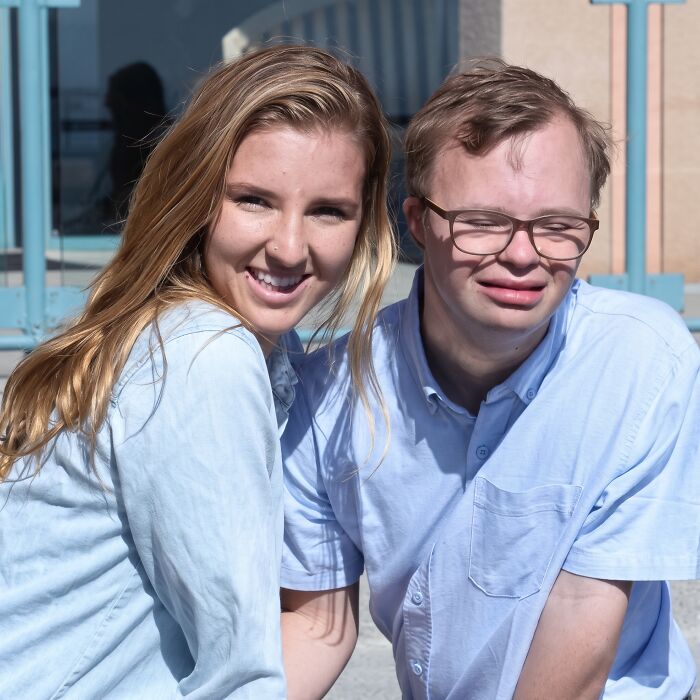
Image source: Buried Civilization
#27
“Go paperless. Save a tree.”
We heard it on every bank statement, every phone bill, every email footer. So we did it. We switched off the paper bills, stopped printing, and felt good about helping the forests.
But all those emails, photos and files didn’t disappear into thin air. They live in data centers. Huge, windowless buildings that run day and night.
And now, in place after place, forests are being cleared to make room for more of them. Hundreds of acres of trees, gone in a few weeks.
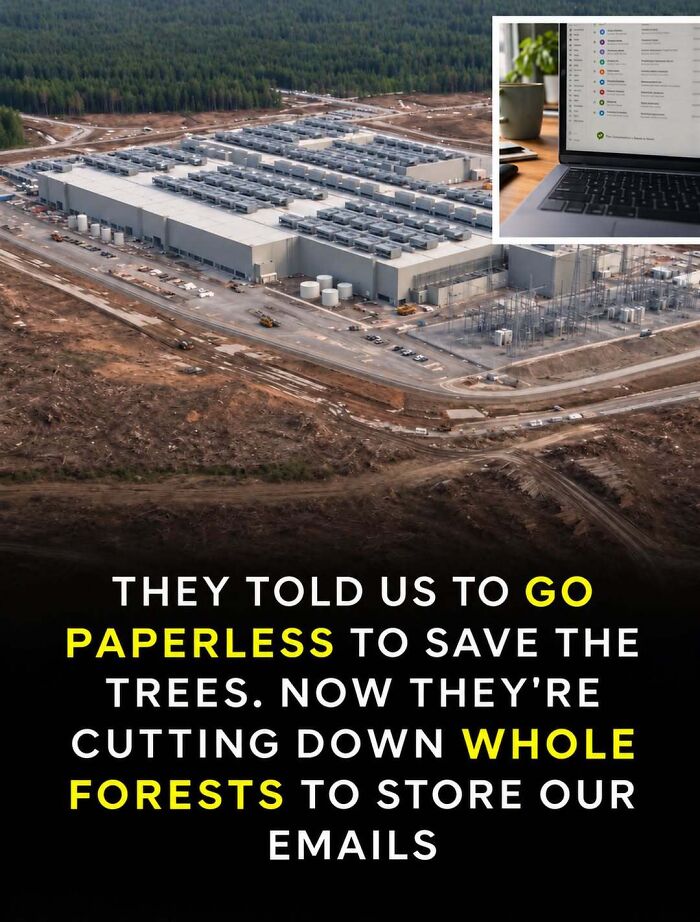
Image source: House Crafted
#28
THREE YEARS OF FIGHTING, ONE UNFORGETTABLE WELCOME!
John Oliver “J.O.” Zippay spent three years battling acute lymphoblastic leukemia, enduring chemotherapy, hospital visits, and long periods away from school.
Despite the challenges, his teachers and classmates never forgot him. With support from tutors, he continued keeping up with his studies.
On December 27, 2019, J.O. completed his final round of intravenous chemotherapy.
When he returned to St. Helen Catholic School in January, his classmates and teachers lined the hallways and welcomed him with a heartwarming standing ovation.
After three difficult years, he returned not just to school, but to a community that had supported him every step of the way.
A beautiful reminder that love and support make every battle easier.
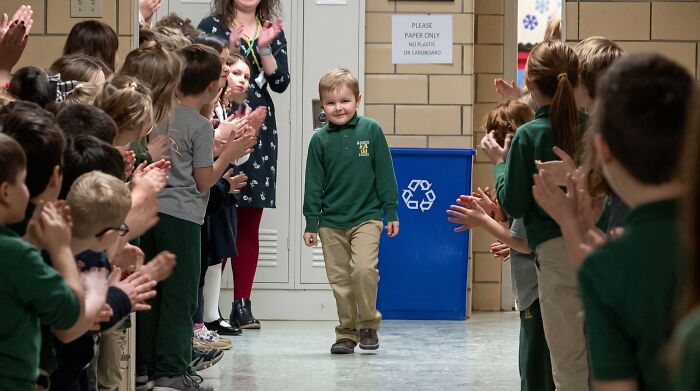
Image source: PetBuzz
#29
At 105 Years Old, She’s Finally Getting the Recognition She Deserves!
Meet Nell Bright, a remarkable World War II pilot who helped make aviation history. At a time when flying military aircraft was considered a man’s job, she became one of the first 20 women selected to fly B-25 bombers through the Women Airforce Service Pilots (WASP) program.
During the war, she towed targets for military training in Texas, helping prepare American pilots for service.
But despite their contributions, women pilots were initially denied veteran status and faced discrimination when seeking jobs with commercial airlines simply because they were women.
Now, after decades of being overlooked, Nell Bright is set to be inducted into the International Air & Space Hall of Fame on November 21.
At 105, her legacy reminds us that courage has no gender, and true heroes deserve to be remembered!
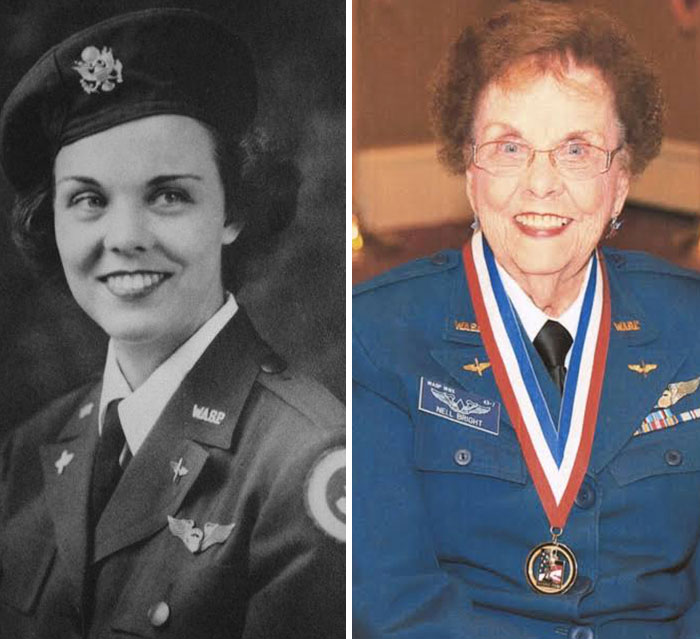
Image source: PetBuzz
#30
America’s biggest nuclear operator got a lot bigger this year.
On January 7, 2026, Constellation Energy completed its purchase of Calpine. The deal was valued at about $26.6 billion including debt, and the combined company calls itself the nation’s largest producer of electricity.
The two fit together like puzzle pieces. Constellation already ran the biggest fleet of nuclear reactors in the U.S. Calpine added about 23 gigawatts of mostly natural gas plants, plus The Geysers in Northern California, the world’s largest geothermal complex. Together they have about 55 gigawatts, enough to power tens of millions of homes, and about 2.5 million retail and business customers.
Regulators made it sell some plants to protect competition, including a 606-megawatt gas plant in Texas.
With AI data centers driving demand, companies that own round-the-clock power now hold enormous leverage. Constellation has already signed nuclear deals with Microsoft and Meta.
Is it good or bad for your electric bill when one company controls this much power?
Source: Constellation Energy, 2026.

Image source: NexaFactra
#31
She only asked for firewood. But he made sure she had everything she needs.
Nana Abernathy, 85, lives alone in North Carolina. A widow. Just days before Christmas in December, she rang Brittain’s Tree and Crane Services in Connelly Springs.
She was cold.
Her Social Security had not arrived yet.
She asked for firewood and said she would pay later.
Paul Brittain took the call. He loaded the truck himself and drove it to her house. At her door, he told her there would be no bill. No coming back for money later.
Then he came back.
With his crew.
They patched her leaking roof. They fixed her heating and AC unit so it would work through winter. They cleaned her gutters and yard. They put new tyres on her car. All free.
Paul started a fundraiser for her Christmas. Over 500 people gave. More than $22,000 (£18,000) by 22 December. And he still checks on her every week.
One call for firewood.
One man who refused to let her face winter alone.
Don’t you think the world needs more men like him?
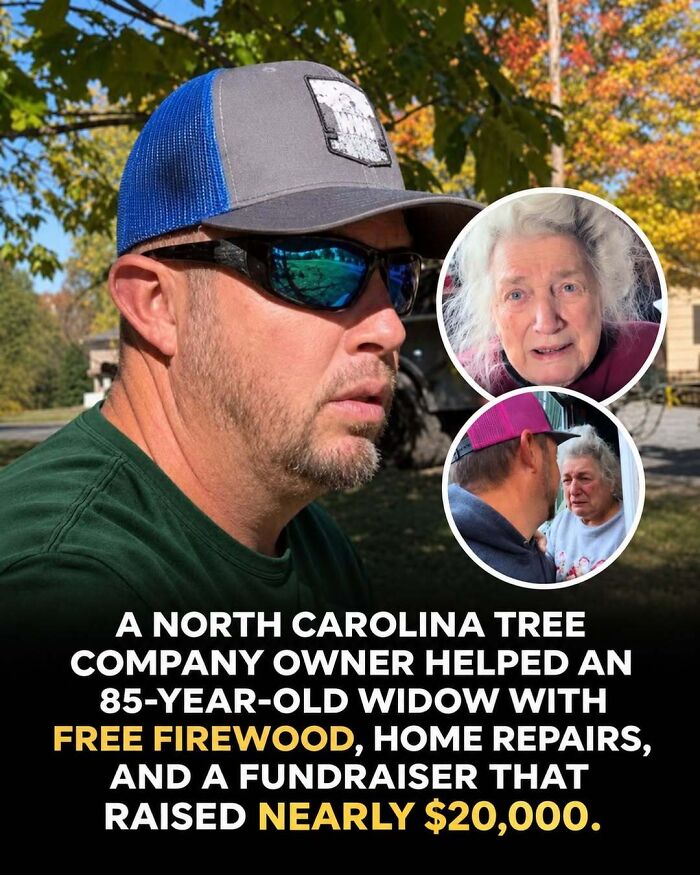
Image source: PetBuzz
#32
Imagine getting paid to live in Antarctica, surrounded by snow, ice, and thousands of penguins!
The UK Antarctic Heritage Trust (UKAHT), a British organization responsible for preserving historic sites in Antarctica, has offered paid seasonal jobs at Port Lockroy, one of the continent’s most famous historic sites.
One of the interesting responsibilities involves monitoring the local Gentoo penguin population by counting their nests, eggs, and chicks. But that’s not all. Workers also help run a small museum, manage a gift shop and post office, welcome visitors, and maintain the historic buildings.
The salary ranges from approximately £1,449 to £2,096 per month, with the highest rate equivalent to around $2,800. Even better, accommodation, meals, and essential work equipment are provided during the assignment, allowing workers to save much of their earnings.
However, life in Antarctica is far from comfortable. Workers spend several months in an extremely remote environment, with limited facilities, no running water, and very limited opportunities for showers. It’s certainly not an ordinary workplace!
The recruitment was for the 2026–2027 Antarctic season, and applications have now closed.
Would you take a job like this for the chance to live and work among penguins in Antarctica?
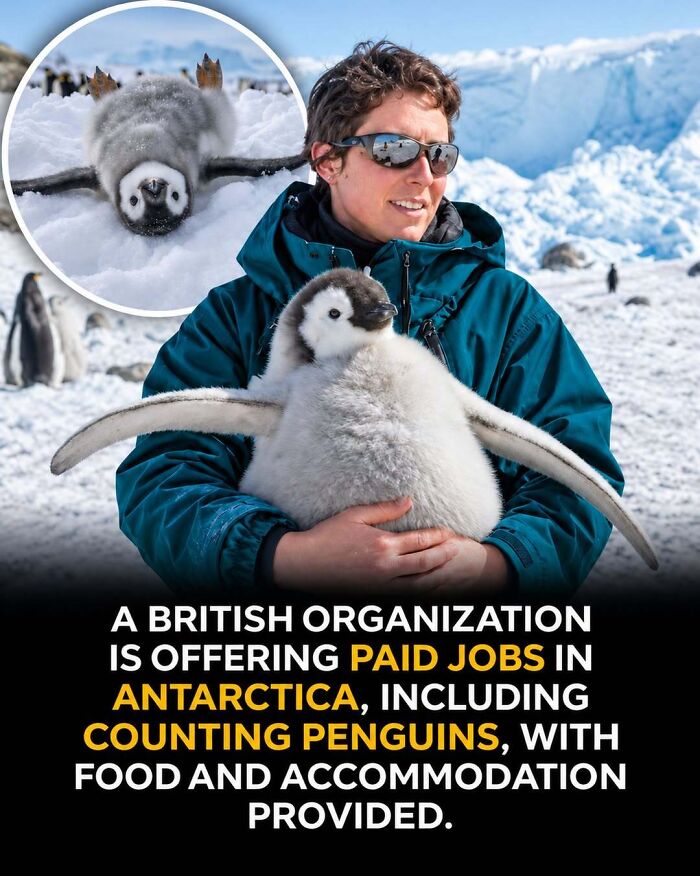
Image source: House Crafted
#33
A tiny retinal implant may help some people with advanced age-related macular degeneration read again. In a clinical trial, the PRIMA system paired a small chip implanted beneath the retina with special glasses that send images to it. Of the 32 participants who completed the one-year follow-up, 27 were able to read with the device.
It’s a promising step in vision research, but it does not restore normal sight or work for everyone. The study also reported surgery- and device-related side effects, so the results need to be understood in the context of clinical care and ongoing research.

Image source: House Crafted
#34
Namibia’s hoodia plant suppressed appetite curing obesity naturally, as Ozempic shortages leave Americans without options
Namibian indigenous communities led researchers to Hoodia gordonii containing P57 compound that eliminates hunger completely, enabling effortless weight loss—natural alternative to expensive GLP-1 medication experiencing widespread shortages.
Obesity results partly from modern diets hijacking appetite regulation, making people constantly hungry despite adequate nutrition. Namibia’s San people traditionally used hoodia cactus to suppress hunger during long hunts. Scientific investigation revealed P57 molecule that directly activates satiety centers in the hypothalamus—the brain region controlling hunger—making people feel completely satisfied with less food without stimulants, side effects, or medical supervision. Clinical trials showed 15-20 pound weight loss over 12 weeks from reduced caloric intake driven by natural hunger elimination.
The pharmaceutical shortage contrast: Ozempic and similar GLP-1 medication create pharmaceutical shortages as demand exceeds supply, leaving diabetics without medication while celebrities use it for vanity weight loss. These medications cost $900-1,200 monthly and require ongoing injections. Hoodia extract costs $40 monthly, works through different mechanisms, requires no prescription, and grows abundantly. Yet pharmaceutical companies never developed hoodia seriously because natural plant extracts generate minimal profits compared to patented injectable medications. American weight loss seekers can’t access Ozempic while ignoring hoodia that works effectively without shortages.
Americans desperately seeking weight loss solutions face Ozempic shortages, insurance denials, and $15,000 annual costs while effective natural appetite suppressant exists affordably but remains marginalized because it threatens pharmaceutical profit models.
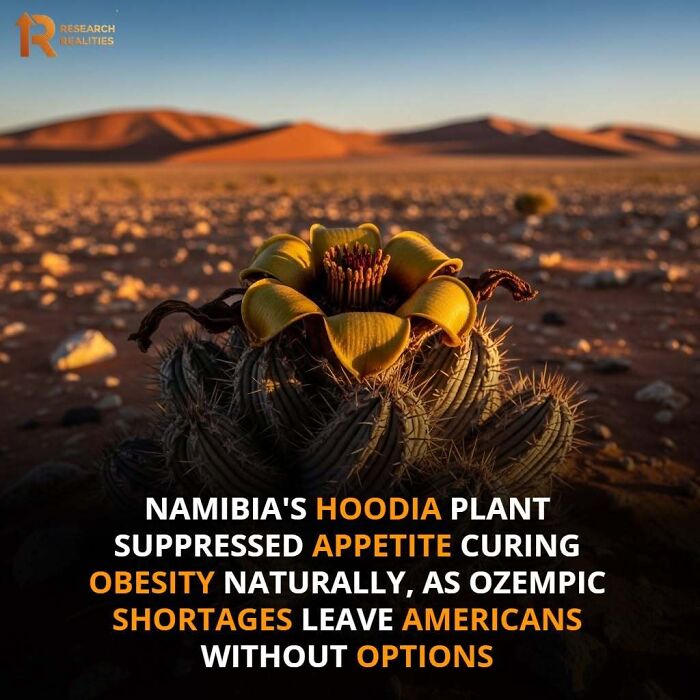
Image source: Research Realities
#35
Scientists in France held a ball of plasma hotter than the core of the Sun for more than 22 minutes.
On February 12, 2025, France’s WEST tokamak, run by the CEA at its Cadarache site, sustained a hydrogen plasma for 1,337 seconds. That beat the previous tokamak record of 1,066 seconds set by China’s EAST machine just weeks earlier, an improvement of about 25 percent.
The plasma reached about 50 million degrees Celsius, roughly three times hotter than the center of the Sun.
A tokamak is a doughnut-shaped machine that uses powerful magnets to hold super-hot plasma in place without letting it touch the walls. That’s the path many scientists hope will lead to fusion power, the same process that powers the stars.
Why does time matter so much? Getting plasma hot for a split second is one thing. A real fusion power plant must keep it stable for long periods, continuously. WEST’s record shows the materials and controls are getting better at handling that heat over time.
The CEA says the result is promising for ITER, the giant international fusion project being built nearby in southern France.
WEST’s inner walls are lined with tungsten, a metal that can survive extreme heat, and they are actively cooled while the plasma runs.
Fusion power isn’t on the grid yet. But records like this keep falling faster than ever.
For 22 minutes, a small piece of a star existed inside a machine on Earth.
Do you think fusion power will light up homes in your lifetime?
Source: CEA, “”Nuclear fusion: WEST beats the world record for plasma duration!”” February 18, 2025.

Image source: Factovix
#36
For twenty years, he thought his family was drowning in debt. Then his father handed him the keys to an empire.
Zhang Zilong grew up in Pingjiang County, Hunan Province, China, believing his family was poor. His father told him for two decades that the family business was struggling, that they were burdened with debt, and that money was always tight. Zilong lived in an ordinary flat. He wore inexpensive clothes. He studied hard and believed every word.
What he did not know was that his father was the founder and president of Mala Prince, a wildly popular Chinese snack brand specializing in spicy gluten strips called latiao. The company produces goods worth around 600 million yuan annually, roughly eighty-three million dollars. The brand was founded the same year Zilong was born. While he was growing up believing in scarcity, his father was building an empire.
Zilong’s dream after graduating university was modest. He wanted a steady job that paid about six thousand yuan a month, around eight hundred dollars, so he could slowly help his family repay what he believed were crippling debts. He even attended one of the best high schools in Hunan without his family pulling any strings, competing for his place like any other student.
Then his father sat him down and told him the truth. The debts were not real. The struggling business was a story. The family owned a mansion, a villa worth about 1.4 million dollars, and eight luxury cars. His father explained his reasoning simply. He wanted his son to be down-to-earth. He wanted him to work hard and succeed on his own terms, not coast on inherited wealth. The father had grown up as the son of a farmer and carried those values forward, saying he had inherited his own father’s teaching of living a simple and frugal life.
Zilong’s reaction was honest. “Being rich does make me happy,” he admitted. But the money did not change his habits. He joined his father’s company in the e-commerce division and is treated like any other young employee. He still rides an electric motorcycle to work. He still lives relatively simply, even after moving into the new villa. His goal now is to help grow the family business, take it international, and eventually list it on the stock market.
His father has made one thing clear. Simply being his son does not guarantee control of the company. He will only consider handing it over if Zilong’s performance justifies it.
The story divided the internet when it went viral in early 2024. Some people called the father a genius for raising a humble, hardworking son. Others questioned whether twenty years of deception was the right way to teach a lesson. But Zilong himself does not seem bitter. He was given a rare thing. He learned how to work before he learned he never had to.

Image source: House Crafted
#37
THE UNITED STATES IS TAKING A MAJOR STEP TOWARD MAKING POWERFUL PERMANENT MAGNETS WITHOUT USING RARE EARTH ELEMENTS.
Niron Magnetics has announced a $1.8 billion investment in a new manufacturing campus in Dothan, Alabama, designed to produce up to 10,000 metric tons of iron nitride magnets every year.
Announced on November 20, 2026, the project will become the company’s second major manufacturing facility in the United States. Construction is expected to begin in 2028, with production planned to start in 2029. The project is also expected to create around 700 jobs within five years.
What makes this development important is the technology behind it. Traditional high-performance permanent magnets often depend on rare earth elements such as neodymium. These materials are essential in many modern technologies, but their supply chains are heavily concentrated in China.
Niron is developing an alternative using iron and nitrogen. Iron is widely available, and the technology aims to produce powerful permanent magnets without relying on rare earth materials. The company believes this approach could help build a more secure and reliable supply chain for American manufacturers.
These magnets have applications across several industries. Electric vehicles use them in motors, wind turbines rely on them to generate electricity, and manufacturers use permanent magnets in robotics, industrial equipment, consumer electronics, and artificial intelligence infrastructure.
The new Alabama facility will be built on a 446-acre industrial site in Dothan. Once fully operational, its planned annual capacity of 10,000 metric tons will make it a major addition to America’s permanent magnet manufacturing industry.
Niron is also building its first full-scale production facility in Sartell, Minnesota. That plant is expected to begin production in 2027, with an annual capacity of up to 1,500 metric tons. The Alabama project will expand the company’s production capacity on a much larger scale.
The development comes as the United States looks for ways to reduce its dependence on overseas suppliers of materials and components used in advanced manufacturing. Producing magnets domestically could support industries that depend on reliable access to these essential parts.
The technology still needs to prove itself at large industrial scale, but the investment marks an important step toward expanding the range of materials used in modern manufacturing.
From electric cars and wind turbines to robots and advanced electronics, powerful magnets are part of the machinery shaping the future. And with this project, iron and nitrogen could play a much bigger role in that future.
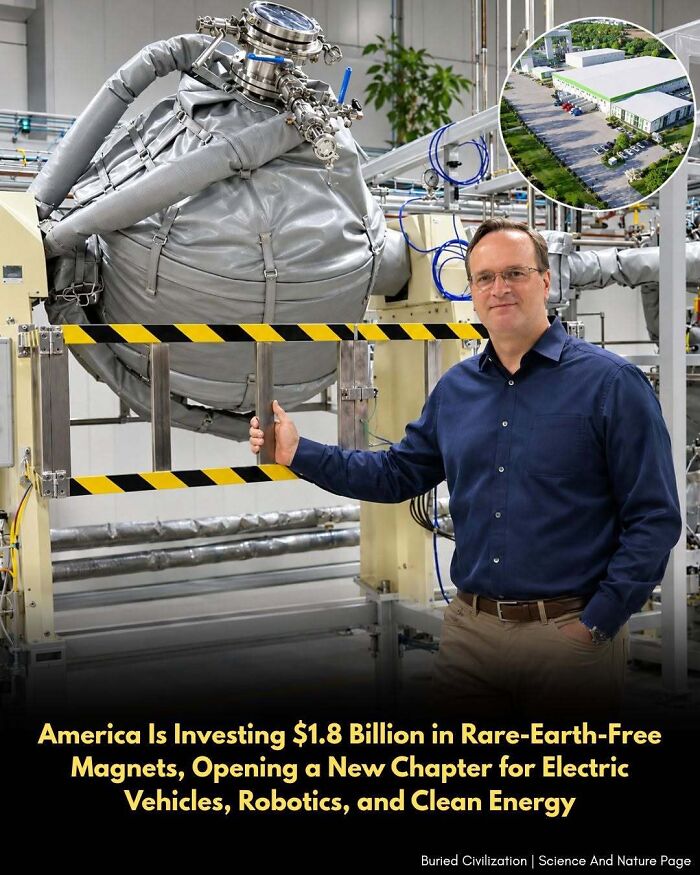
Image source: Buried Civilization
#38
At 38 years old, Deirdre Keane achieved something extraordinary in 2026. The New York nurse practitioner and experienced marathon runner completed all seven World Marathon Majors in a single year, finishing her final race while 34 weeks pregnant.
On November 1, Deirdre crossed the finish line of the New York City Marathon in 4 hours, 6 minutes, and 55 seconds. It was her seventh marathon of the year and the final race needed to complete her ambitious goal.
Her achievement became even more remarkable because pregnancy was never part of the original plan.
After getting married to her husband, Brian, in 2025, Deirdre had planned to make 2026 a year of personal challenges before starting a family. She signed up for 11 endurance events, including all seven World Marathon Majors, two ultramarathons, an Ironman competition, and a trail marathon in Ireland.
She began her journey with the Tokyo Marathon in March. During the Boston and London races in April, however, she noticed that her pace had slowed and she was feeling different from usual. A pregnancy test confirmed that she was expecting a baby.
Rather than abandoning every goal, Deirdre reconsidered her plans. She decided to continue with the marathons after discussing the situation with her obstetrician and receiving medical approval. She also dropped the Ironman and another ultramarathon, choosing to approach each remaining race carefully.
Her pregnancy did not stop her from completing the Sydney Marathon at 25 weeks, the Berlin Marathon at 29 weeks, and the Chicago Marathon at 31 weeks. She finished the Chicago race in just under four hours.
The biggest challenge came in New York, where she was already 34 weeks pregnant. Her husband, Brian, supported her throughout the event, meeting her at different points along the course to provide water. Friends also came out to cheer her on.
Deirdre has completed more than 70 marathons and ultramarathons throughout her running career. Her determination was inspired in part by her father, John, who was also a marathon runner. He continued running even while battling cancer and completed his final New York City Marathon just one day before undergoing surgery to remove a tumour.
Deirdre has said that her experience was a personal decision based on her fitness, medical guidance, and understanding of her changing body. She also recognises that research on extremely demanding exercise during pregnancy remains limited.
Her achievement has attracted attention from runners and families around the world. It is an unusual example of how an experienced athlete adapted her ambitions during a major life change without abandoning a goal that meant so much to her.
Deirdre’s story is about determination, preparation, and the support of loved ones. Completing seven major marathons in one year would be an extraordinary accomplishment on its own. Doing so while preparing to welcome her first child makes her 2026 journey even more memorable.

Image source: Buried Civilization
#39
AN EMPTY ELECTRIC CAR IN CHINA TRIED TO PARK ITSELF 868 TIMES OVERNIGHT, LEAVING A SECURITY GUARD COMPLETELY BAFFLED.
An unusual incident in Anhui province, China, has caught people’s attention after an electric car was seen repeatedly attempting to park itself inside an underground garage with nobody behind the wheel.
The strange episode reportedly happened around 3 a.m. A security guard heard unusual noises coming from the parking area and went to investigate. To his surprise, he found an empty electric vehicle moving forward and backward, repeatedly adjusting its position as if it were struggling to find the perfect parking spot.
CCTV footage captured the vehicle performing the same manoeuvre again and again. When the owner checked the car’s system records the following morning, the results were astonishing: its automatic parking function had been activated 868 times overnight.
The vehicle eventually stopped beside another parked car, bringing its unusual parking marathon to an end.
The incident has sparked questions about what caused the repeated movements. One possibility is a software problem, while another theory suggests that someone may have repeatedly activated the remote parking feature through a smartphone application.
The incident also attracted attention because similar videos appeared online during China’s Huawei Qiankun Intelligent Driving competition. However, the competition’s parking activities were counted only between 6 a.m. and 10 p.m., so the overnight attempts cannot be confirmed as part of the contest.
For now, the exact cause remains unknown. The available CCTV footage shows what happened, but it does not establish whether the vehicle experienced a technical malfunction or was repeatedly controlled remotely.
What should have been an ordinary night in an underground parking garage turned into a bizarre demonstration of automated driving technology. And after 868 attempts, this electric car certainly gave the internet a parking story to remember.
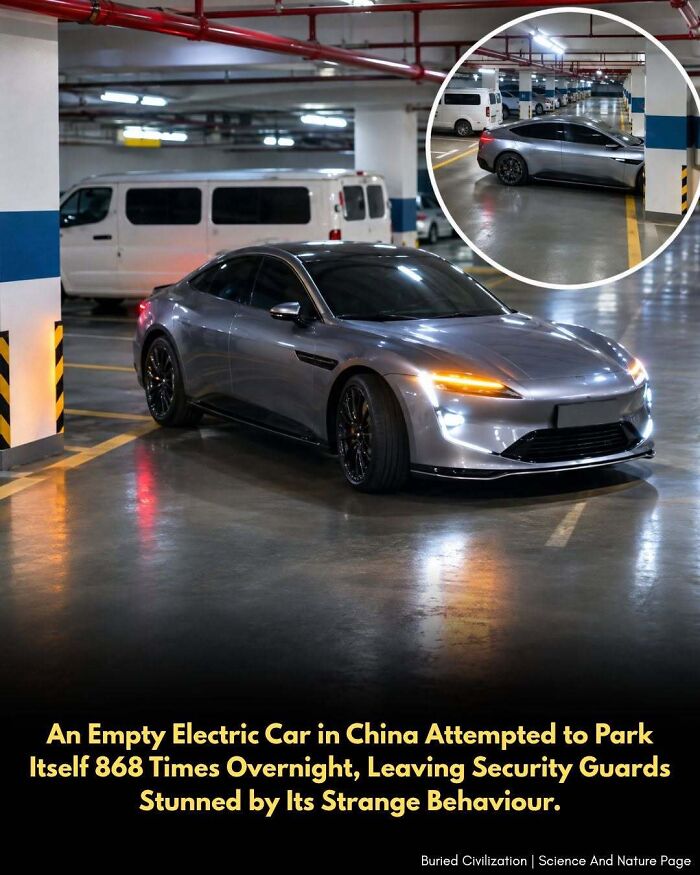
Image source: Buried Civilization
#40
A boat-shaped formation near Mount Ararat in Türkiye has renewed interest in the search for Noah’s Ark. A research team says recent scans and drilling support the idea that the formation could be man-made, and has linked it to the story’s traditional timeline.
But the Ark has not been scientifically confirmed. The reported findings are still claims, and the material’s identity and age need stronger independent verification. For now, it’s an intriguing mystery—not a proven discovery. World News
What do you think: a possible clue, or should we wait for more evidence?
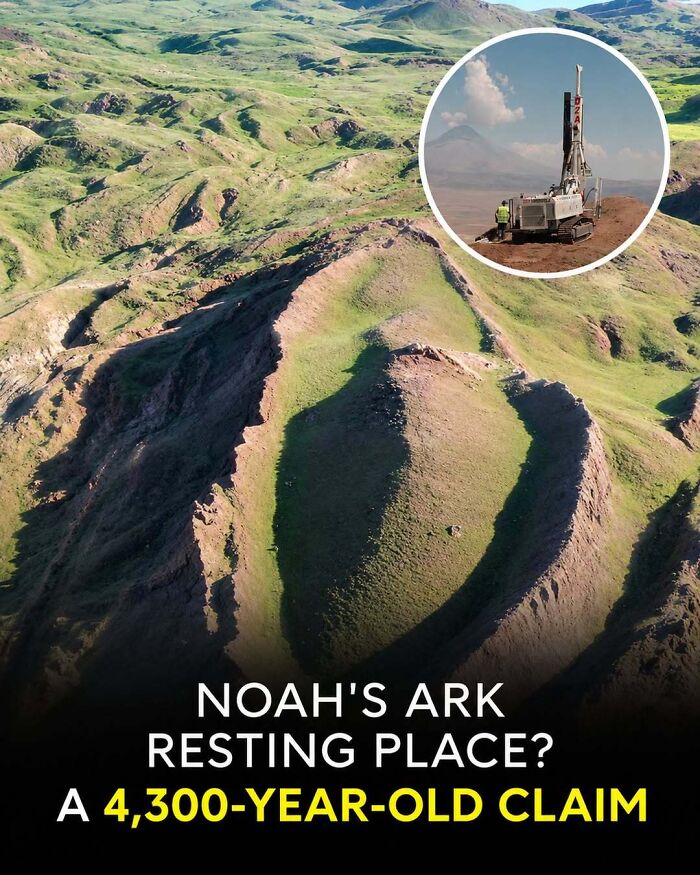
Image source: PetBuzz
#41
Born With Fragile Bones, Kristin Refuses To Let Her Condition Stop Her From Exploring The World
Kristin was born with osteogenesis imperfecta, a rare genetic condition that causes bones to break more easily than usual. Throughout her life, she has experienced numerous fractures and undergone several surgeries. She also lives with scoliosis, a condition that affects the curve of her spine.
Standing just 3 feet 6 inches tall, Kristin has metal rods supporting her bones. She often jokes that she is “full of metal,” using humor to describe the medical hardware that has become part of her life.
Her condition has brought many challenges, but it has never taken away her love of adventure. Alongside her husband, Mark, Kristin travels to different parts of the world, explores new places and enjoys experiences that create lasting memories.
Their journeys show that a meaningful life does not have to look the same for everyone. Kristin has faced physical challenges that require extra care and planning, but she continues to make room for the things she loves.
For her, life is about more than the condition she was born with. It is about sharing experiences, discovering new places and making the most of every opportunity alongside the person she loves.
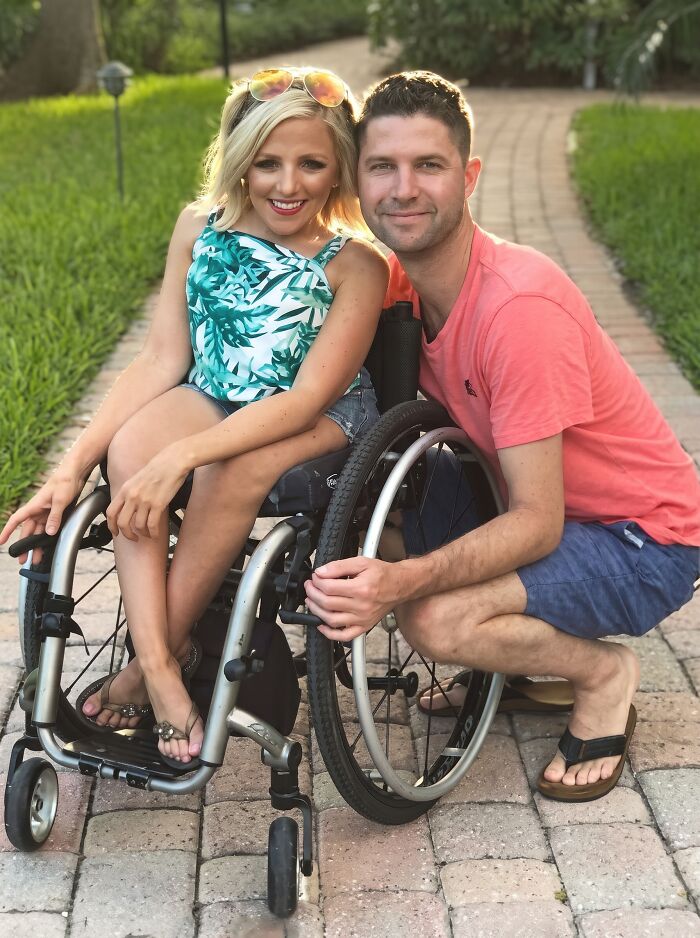
Image source: Buried Civilization
#42
During a rainy Memorial Day game at Atlanta’s SunTrust Park in 2018, a Parkview High School Marine Corps JROTC cadet stood at attention beside the stadium’s POW-MIA memorial. While the cadet remained at his post in the downpour, a Braves fan in a red raincoat left his seat and held an umbrella over him to help keep him dry.
The fan’s identity wasn’t reported, but his thoughtful gesture caught people’s attention. It was a simple act of kindness that showed respect for the young cadet and the memorial beside him—a reminder that even a small gesture can mean a lot.

Image source: PetBuzz
#43
A tiny kitten was found alone at a construction site, where the workers gave it a safe place and plenty of care. Before long, the little newcomer was posing in a hard hat and high-visibility vest, looking like it was ready to join the crew. What began as an unexpected discovery turned into a sweet reminder that a small act of kindness can make a big difference.
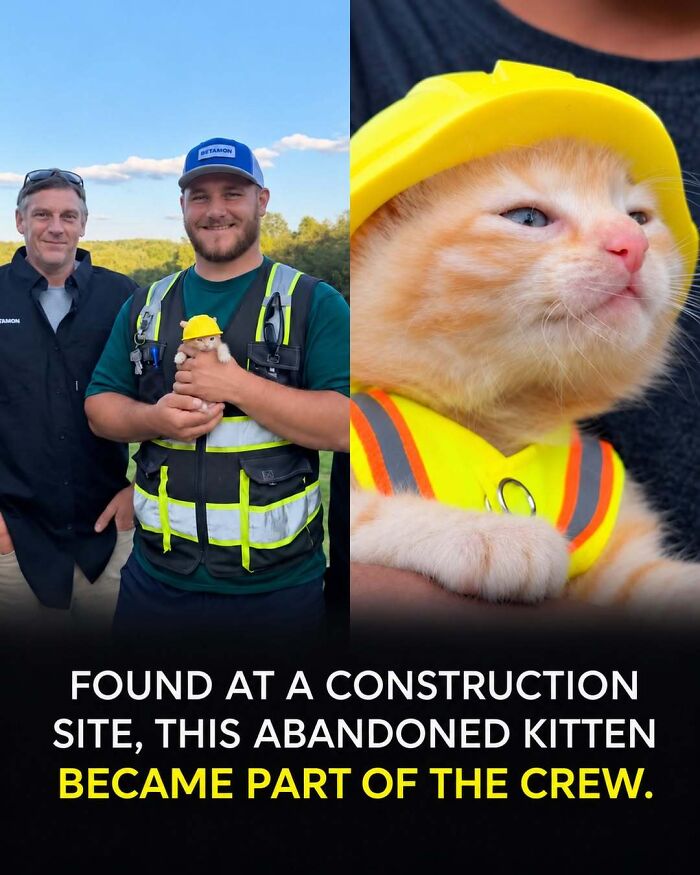
Image source: House Crafted
#44
A flower smaller than a grain of rice hid inside a rock for 130 years — and it may rewrite the story of every flower on Earth.
Scientists have just revealed Tomlinsoniella pedicellata, a 100-million-year-old fossil flower found by accident inside a sandstone specimen collected in Kansas in the 1870s and kept in the Smithsonian’s collections ever since. Nobody could see it from the outside. It was only when paleobotanist Steven Manchester scanned the rock with X-rays that the tiny bloom showed up, perfectly preserved as a hollow mould in the stone.
The flower is just 1.5 millimetres tall, yet it carries the full classic blueprint of the monocots — three sepals, three petals, six stamens and three separate carpels, all arranged in threes. That is the same ground plan you see today in lilies, tulips and daffodils. The team believes it most closely matches an extinct kind of fan palm, which would make it the oldest palm flower ever found — though they are careful to say the exact family is still open to question.
What makes this so remarkable is the timing. Flowering plants were already spreading in the age of the dinosaurs, but fossils of their earliest flowers are vanishingly rare. This one sat unnoticed in a museum drawer for over a century, waiting for a scanner powerful enough to look inside the rock without breaking it.
How many other lost chapters of Earth’s story are still sitting quietly in museum collections, waiting to be found?
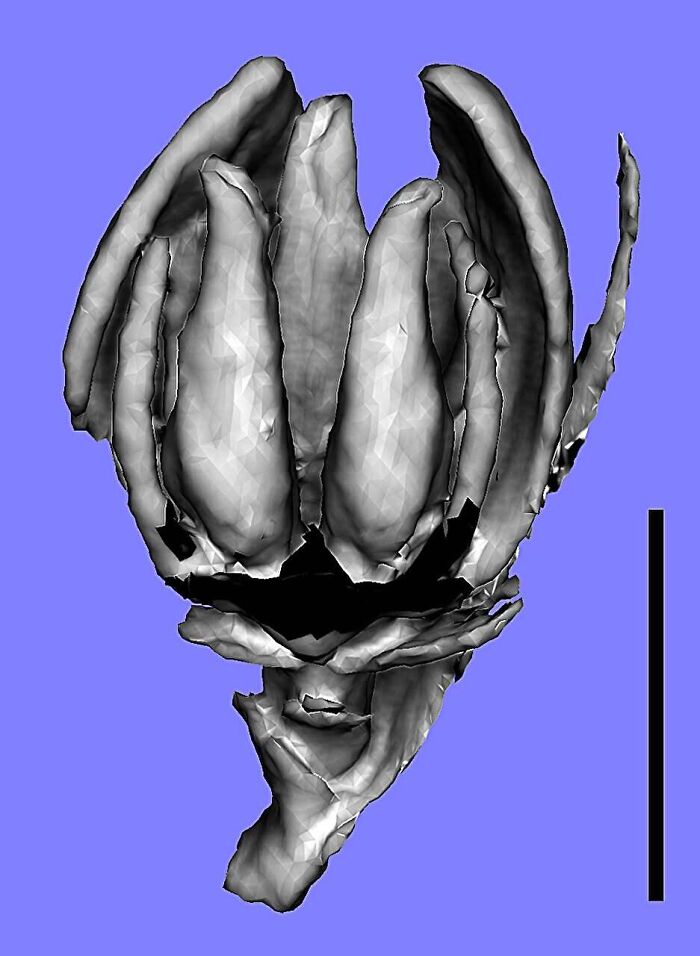
Image source: HistoricalFacts
#45
Some 30,000 years ago, Ice Age hunters lit a fire inside a rock shelter on the Italian coast — and that fire is now rewriting when humans first reached Italy.
The shelter is Riparo Mochi, tucked into the Balzi Rossi cliffs on the French-Italian border. A fresh excavation found an intact hearth there, ringed by marine shells and surrounded by more than 7,500 tiny stone tools. A shell buried beside the fire was radiocarbon dated to between 30,000 and 30,800 years ago.
That pushes the arrival of the Noaillian hunter-gatherers — a culture that spread east from Spain and France — back by 2,000 to 3,000 years, making Riparo Mochi the earliest known Noaillian site in Italy. Before this, the dates made little sense: the culture seemed to appear deep in southern Italy thousands of years before reaching the coastal corridor it must have travelled through.
The tools tell their own story too. Under the microscope, the sharp side edges of the little burins show wear from cutting meat and hide — not from engraving bone, as archaeologists had long assumed. Scrapers and wedges shaped wooden shafts and split bone for marrow.
The timing lines up with a sudden cold snap around 30,500 years ago, when Europe turned harsh and dry. The researchers think the cold pushed these hunters east along the Mediterranean coast, toward milder ground in Italy.
A single hearth, a shell, and a scatter of stone — and a whole migration moves thousands of years earlier. What else do you think is still buried in those cliffs, waiting to change the timeline again?
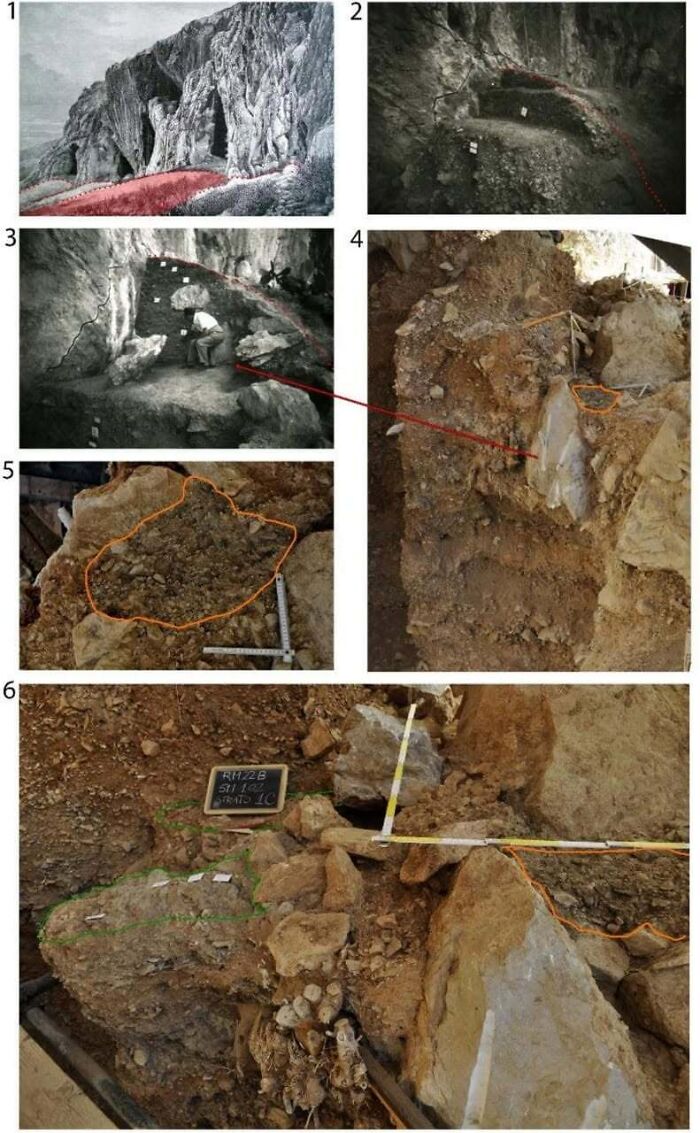
Image source: HistoricalFacts
#46
“Denmark runs its entire grid on wind some days — and the surplus powers four countries simultaneously through cables most Danes don’t know exist.
On a strong North Sea day, Danish wind turbines generate more electricity than 6 million Danes can consume. The surplus does not go to waste. It travels instantly through eight high-voltage interconnectors to Norway, Sweden, Germany, and the Netherlands — countries that at that precise moment need what Denmark cannot absorb.
Norway uses cheap Danish electricity to fill its mountain reservoirs instead of releasing hydropower. Germany displaces gas generation. The transactions happen automatically. No human decides to export Danish wind to a German factory. The electricity market prices it. The cables carry it.
Energinet — Denmark’s grid operator — has been managing this since wind penetration first exceeded 100% of national demand in 2014. A decade of operational experience with a variable renewable grid that no other country has replicated at comparable penetration.
The grid is not theoretical. It is a live demonstration that high wind penetration can be reliable if you build enough interconnection, enough flexibility, and enough respect for the physics of the system.
Denmark did not design the world’s best renewable grid. It built a lot of turbines and then solved the problems that created. The sequence — build first, solve second — is not the sequence that textbooks recommend. It is the sequence that works.
Every country building toward high renewable penetration is hiring Danish engineers to explain how the system functions.
Source: Danish Energy Agency & Energinet, 2023.
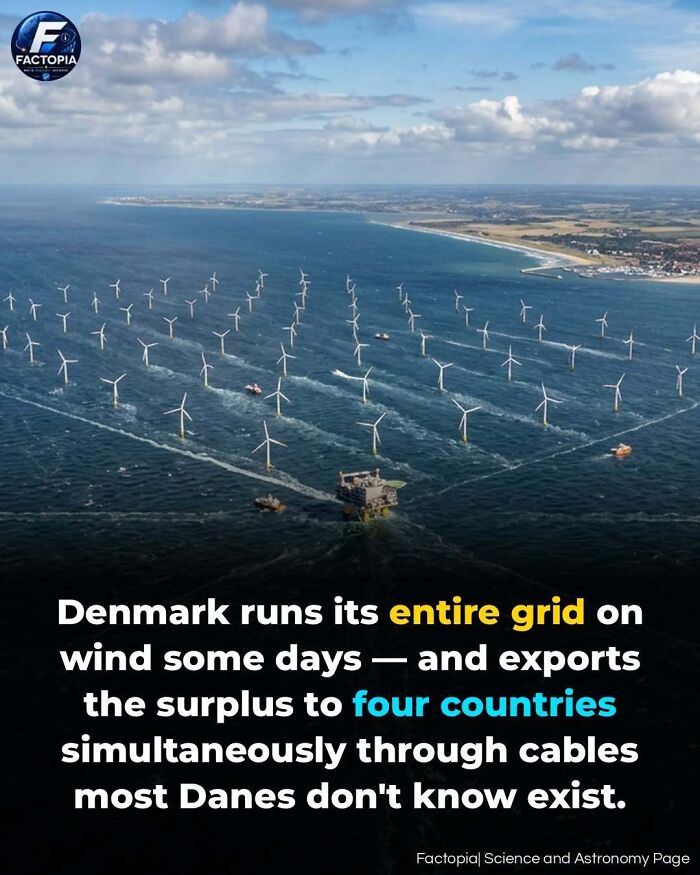
Image source: Factopia
#47
THE SUN HAS DISAPPEARED BELOW THE HORIZON IN ALASKA’S NORTHERNMOST CITY, AND RESIDENTS FACE 65 DAYS WITHOUT A SUNRISE.
Utqiaġvik, Alaska, has entered one of nature’s most remarkable seasonal events. The city’s final sunset of 2026 took place on November 18, and the Sun will remain below the horizon until January 23, 2027.
Located about 320 miles north of the Arctic Circle, Utqiaġvik experiences this phenomenon every winter. Known as the polar night, it occurs when Earth’s northern regions tilt away from the Sun, preventing it from rising above the horizon for an extended period.
From November 19 through January 22, residents will experience 65 consecutive days without a sunrise. During this time, the Sun will not appear above the horizon, even around midday.
But polar night does not mean complete darkness around the clock.
The sky can still become surprisingly bright during the middle of the day. Civil twilight creates beautiful shades of blue and purple along the southern horizon, while moonlight and occasional displays of the northern lights add to the Arctic scenery.
The science behind this phenomenon is connected to Earth’s 23.5-degree axial tilt. As the planet travels around the Sun, its northern regions gradually turn away from direct sunlight during winter. The farther north a place is located, the longer this period without sunrise can last.
Utqiaġvik experiences the opposite phenomenon during summer. Known as the midnight sun, this seasonal event brings continuous daylight, with the Sun remaining above the horizon for weeks at a time.
Residents are accustomed to these dramatic seasonal changes, continuing their daily routines throughout the long winter darkness. Schools, businesses, and community activities carry on as the Arctic landscape changes around them.
The Sun is expected to make its first appearance above the horizon again on January 23, 2027, at approximately 1:03 p.m. local time. Even then, daylight will initially last for only a little over an hour.
It is a remarkable reminder of how Earth’s position in space shapes life in different parts of our planet. In one place, people experience weeks without a sunrise, while others enjoy long summer days filled with sunlight.
One planet, two extraordinary extremes, and a natural cycle that makes our world truly fascinating.
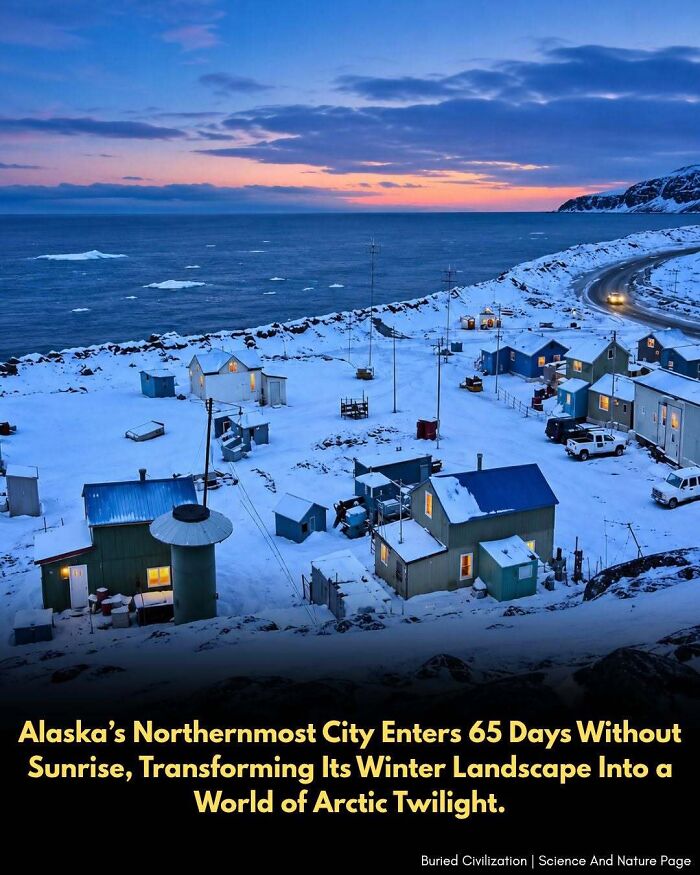
Image source: Buried Civilization
 Follow Us