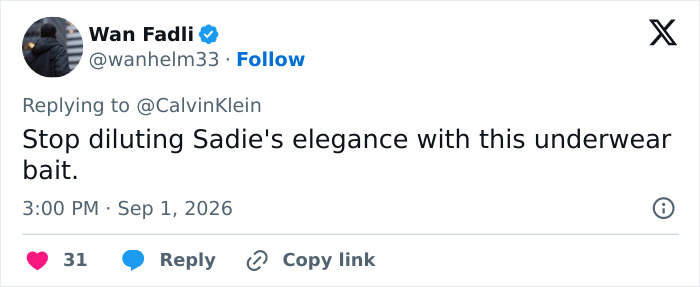
Calvin Klein’s latest campaign starring Sadie Sink has sparked a surprisingly heated debate about more than jeans.
The 24-year-old star’s Fall 2026 campaign has been praised for its nostalgic Y2K aesthetic, but social media users quickly began comparing it with the brand’s “woke” and more openly inclusive campaigns from past years.
While some dubbed the latest ad a “back to normality” moment, others pushed back, arguing that different forms of representation can exist side by side.
Sadie Sink brings Y2K glamor to Calvin Klein’s new “Feel the Fit” denim campaign
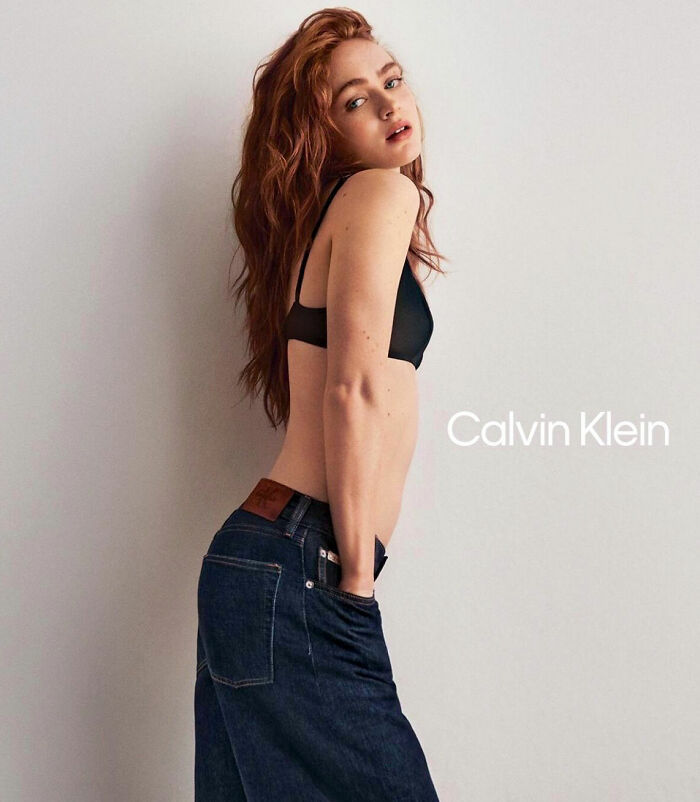
Calvin Klein unveiled the second chapter of its Fall 2026 “Feel the Fit” campaign, starring Sink, on Tuesday, September 1, following Tate McRae’s first chapter, released in August.
The multi-chapter series centers on the confidence that comes with finding the right pair of jeans, with each celebrity bringing her own personality and styling to the brand’s signature denim.
Sink’s campaign leans heavily into ’90s and early-2000s nostalgia.
The actress dances and moves through a series of scenes while wearing Calvin Klein denim, with the soundtrack and styling giving the campaign a distinctly Y2K pop feel.

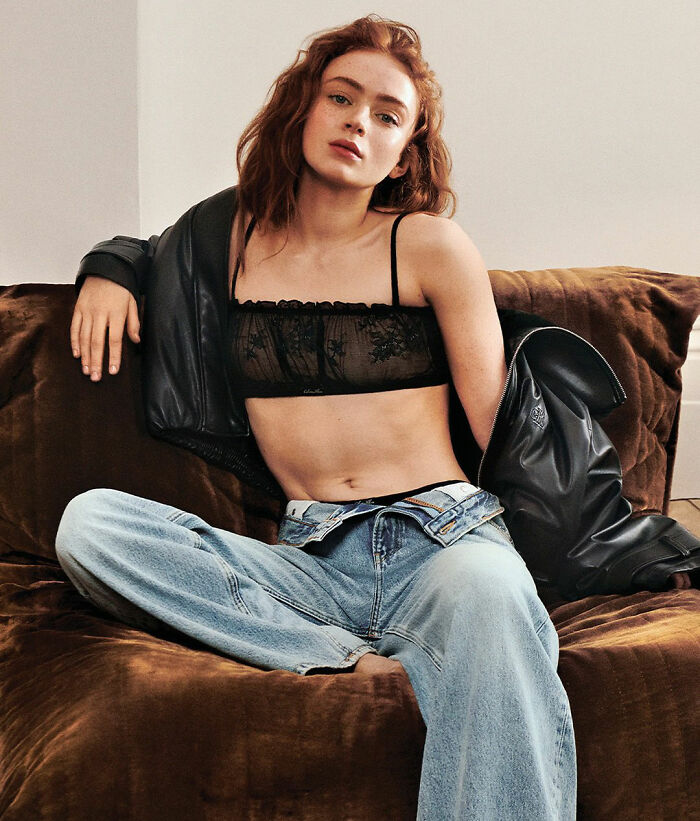
The brand highlighted three key denim silhouettes: the ’90s Straight Jean, the Low Rise Baggy Jean, and the High Rise Loose Jean.
Sadie also appears in other Calvin Klein pieces styled around the denim.
With her long-running role as Max Mayfield in Stranger Things and her growing film career, Sink brings mainstream recognition and younger-generation appeal that fits the campaign’s attempt to connect Calvin Klein’s denim heritage with a new audience.
The brand also has a broader history of putting culturally recognizable figures at the center of its campaigns.
The Stranger Things star’s campaign sparked a viral debate over Calvin Klein’s past ads, which netizens dubbed “woke”
It has repeatedly used actors, musicians, models, and other creatives to reinterpret its classic underwear and denim imagery for different generations.
The Fall 2021 “The Language of Calvin Klein” campaign, for example, featured an international cast including Jennie, Kaia Gerber, Damson Idris, Dominic Fike, Moses Sumney, Deb Never, and Francesca Scorsese.
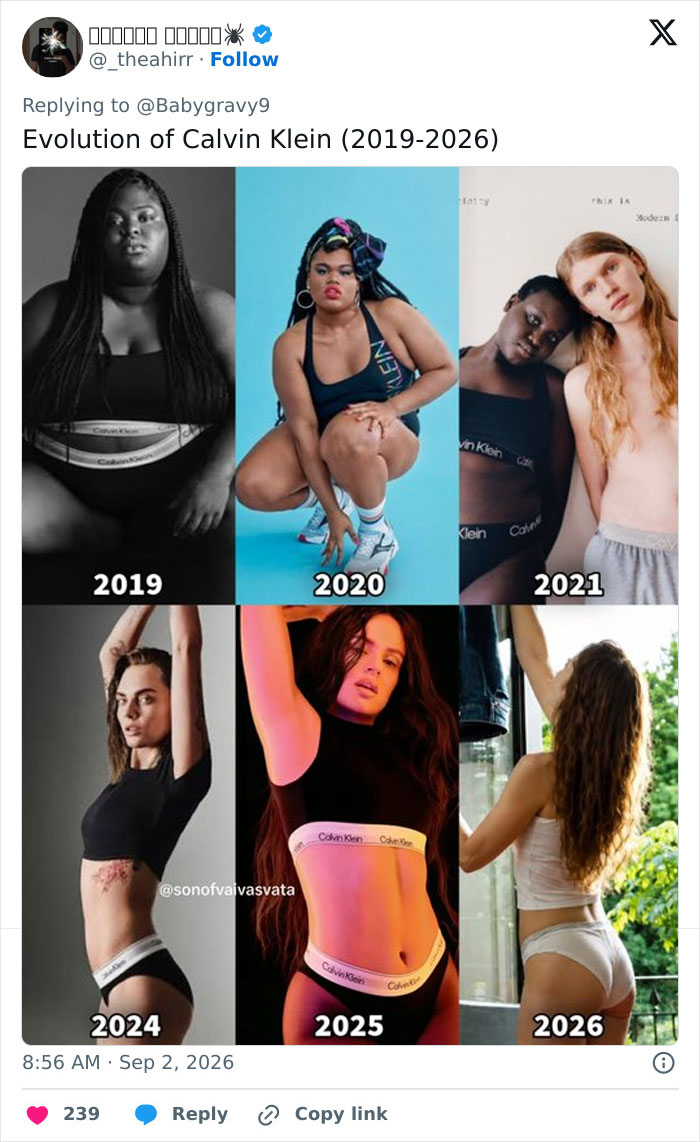
But the latest campaign became controversial when social media users began comparing Sink’s imagery with Calvin Klein’s more openly inclusive campaigns from the late 2010s and early 2020s.
Those visuals prominently featured LGBTQIA+ representation, diverse identities, and a wider range of bodies.
One of the clearest examples was the brand’s #PROUDINMYCALVINS campaign.
In 2020, Calvin Klein featured nine LGBTQIA+ models, artists and activists, including Black trans model and activist Jari Jones, actor and activist Chella Man, model Ama Elsesser, and Brazilian drag queen and pop star Pabllo Vittar.
Vittar made history as the first drag entertainer to be featured in a global campaign for the label.
The following year, Calvin Klein continued the campaign with another LGBTQIA+ lineup that included artists such as Arca and Honey Dijon, musician King Princess, actor Omar Ayuso, and model Raisa Flowers.
The campaign focused on defining moments in the queer and trans journeys of its featured talent.
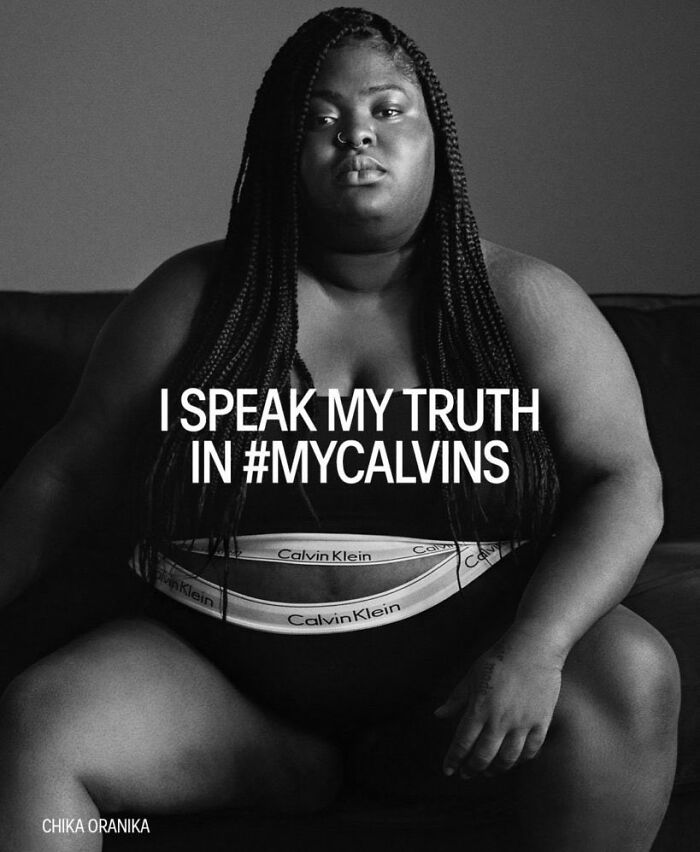
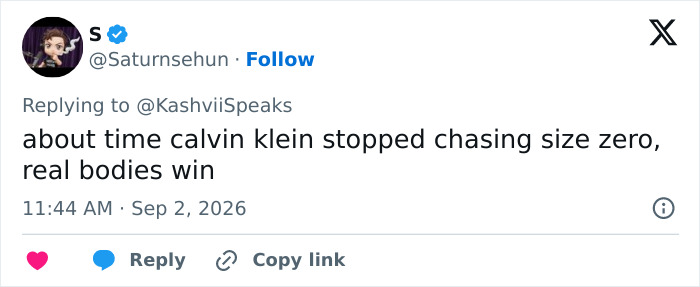
Critics argued that Calvin Klein’s latest visual marked a shift away from the body diversity celebrated in some of its earlier campaigns
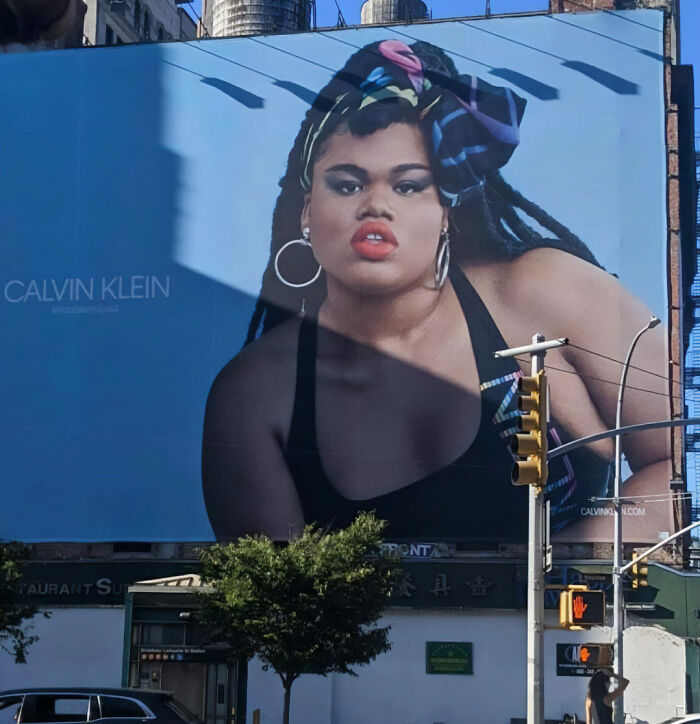
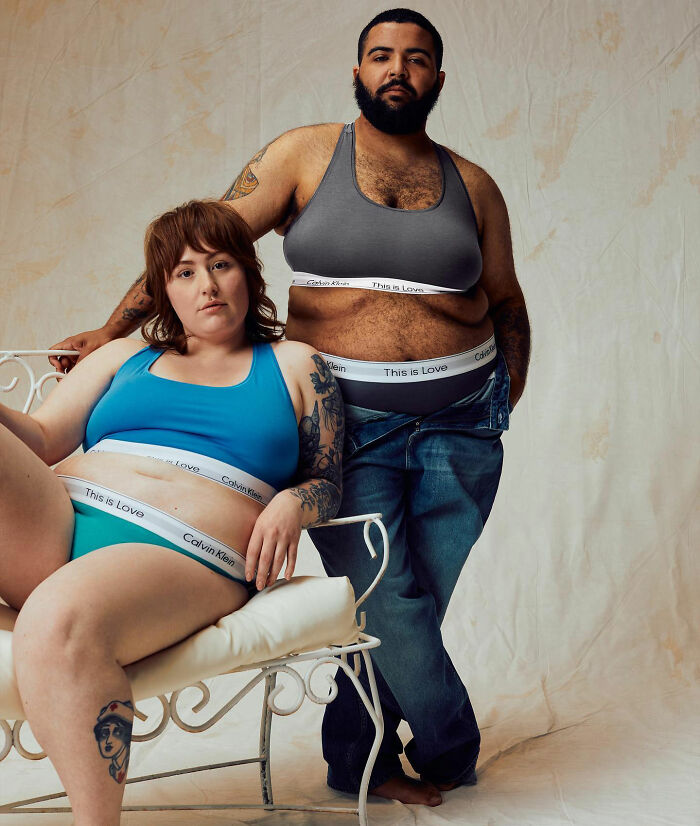
The brand’s wider Fall 2021 advertising also explicitly highlighted body diversity.
One campaign featured models with bodies of different sizes, visible scars and varied skin tones, offering a more diverse take on the traditional underwear campaign.
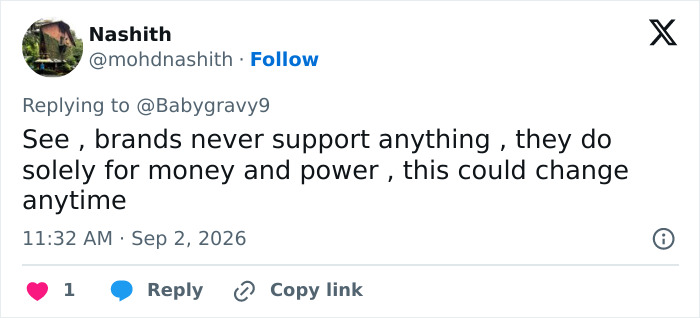
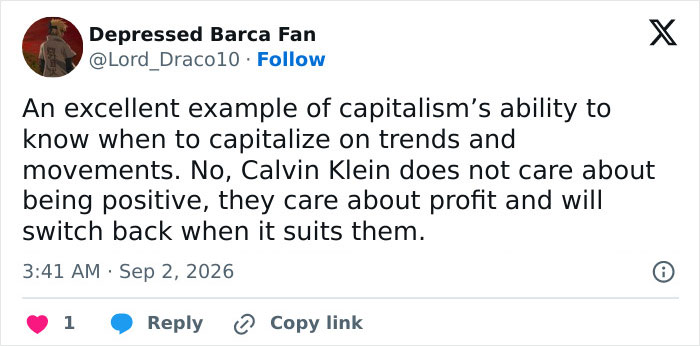
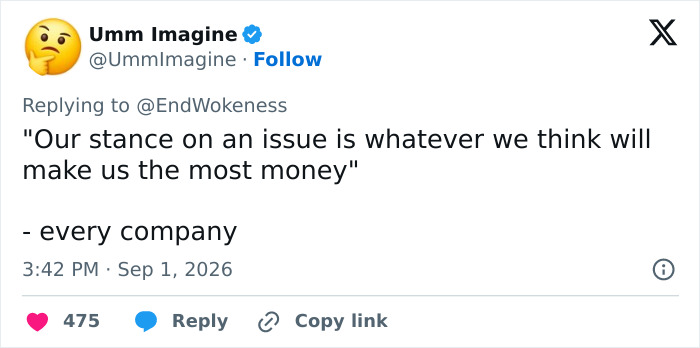
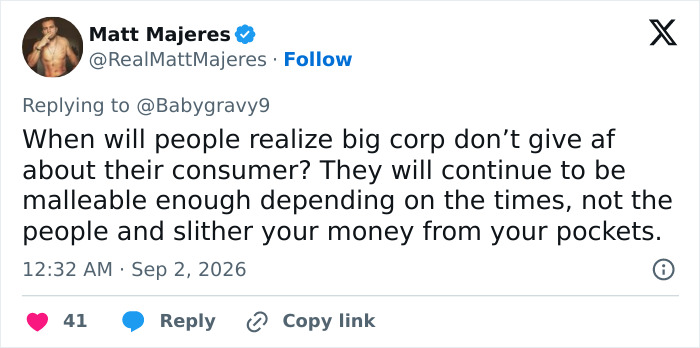
One commenter described the earlier inclusive approach as “An excellent example of capitalism’s ability to know when to capitalize on trends and movements. No, Calvin Klein does not care about being positive, they care about profit and will switch back when it suits them.”
Another argued, “That’s just proof that capitalism absorbs social movement demands and commodifies them when it’s profitable, then moves on to cater to a different group when it’s more profitable.”
A third commented, “That’s just how it goes. Brands follow the money and trends. They are forced.”
Others expressed, “I think it shows they do whatever the trend is to make money. This is no win, as it can flip when the wind starts blowing the other way! The mindset should change.”
Another comment read, “That’s how advertising works. Whatever gets the most attention from the most people.”
Not everyone, however, agreed that Sadie’s campaign represented a retreat from inclusivity.
Some viewers argued that the comparison itself created a false choice between glamorous celebrity advertising and diverse representation.
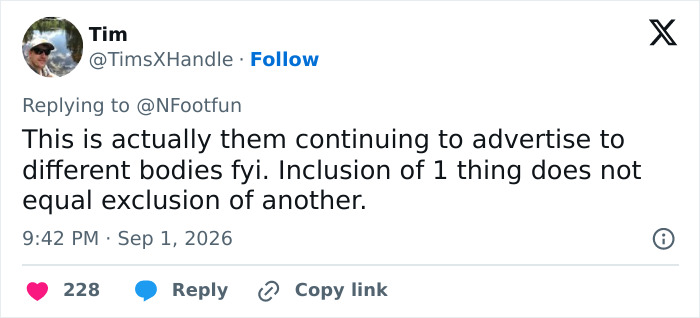
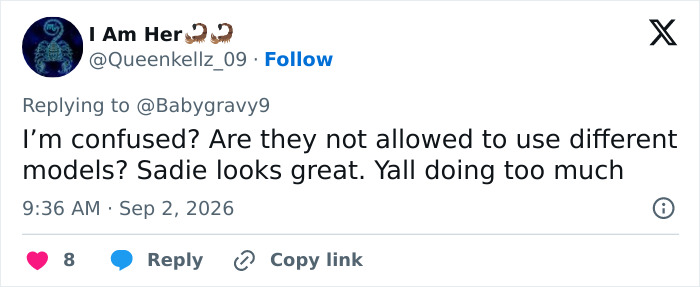
Supporters pushed back, arguing that inclusion of one body type “does not equal exclusion of another”
“This is actually them continuing to advertise to different bodies fyi. Inclusion of 1 thing does not equal exclusion of another,” one commenter wrote.
Another questioned why the campaigns needed to be treated as rivals at all, saying, “I don’t even see the problem with both advertisements being able to coexist, so why do they have to be treated as contrary or rivals in some false struggle?”
A third pushed back against the idea that two carefully selected images could represent Calvin Klein’s entire advertising strategy.
The person wrote, “The dumbest thing about this tweet is cherry picking two people when the company has dozens if not hundreds of models of all different races and body types every year.”
Despite the criticism, Calvin Klein continues to offer inclusive sizing and products designed to accommodate a wider range of bodies.
The brand continues to offer, and actively market, extended sizing, including plus-size underwear lines that run up to 3XL.
It has also expanded its inventory to include adaptive underwear designed with accessibility in mind, including features such as magnetic closures and accessible fits for people with disabilities.
Moreover, despite the viral attention surrounding campaigns like the one featuring Sadie, Calvin Klein’s retail website routinely showcases its clothing on models with different body shapes, heights and skin tones rather than relying exclusively on sample-sized models.
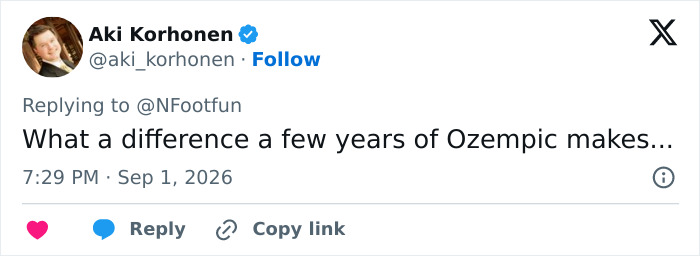
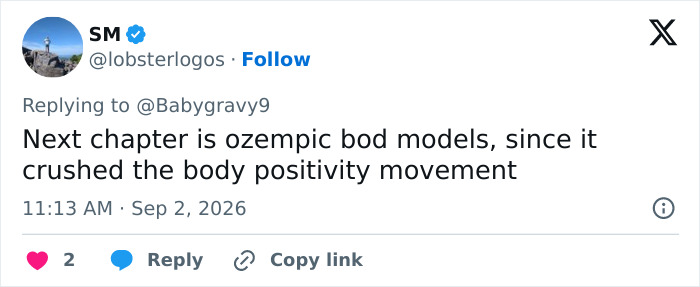
“The ultra woke era was something else… They dropped the hypocrisy and gave the public what it really wants,” one critic wrote


 Follow Us