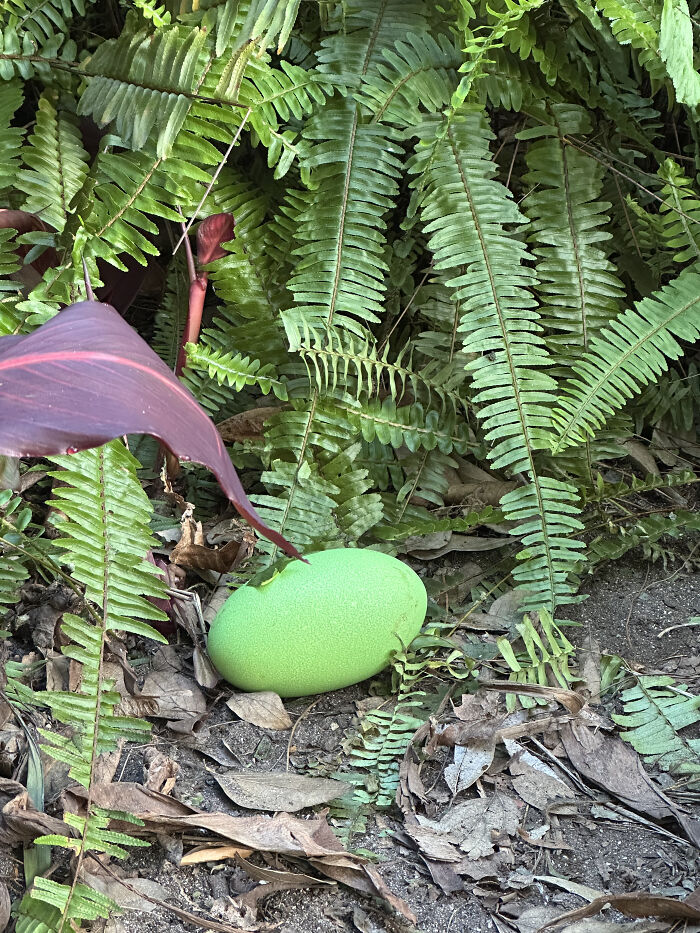
A rather unusual shade of green has given the team at Adelaide Zoo in Australia something to celebrate. For the first time in 34 years, the zoo’s Southern Cassowaries have produced eggs, marking an exciting milestone for a bird that’s notoriously difficult to breed in captivity. And these aren’t ordinary-looking eggs, either. Their striking, almost fluorescent green color makes them look like something straight out of a fantasy movie.
The proud parents-to-be are 10-year-old Martina and 13-year-old Jeffrey, who were introduced to each other earlier this year. Adelaide Zoo initially announced the discovery of their first egg, but the team has since confirmed to Bored Panda that the number has grown to three. Whether any of the eggs are fertile remains unknown, but their arrival alone is already a significant achievement.
Scroll down to meet the unusual feathered couple, take a closer look at their incredible green eggs, and learn a little more about these fascinating birds!
More info: adelaidezoo.com.au | Instagram | youtube.com | Facebook
Adelaide Zoo has something extraordinary to celebrate after a 34-year wait
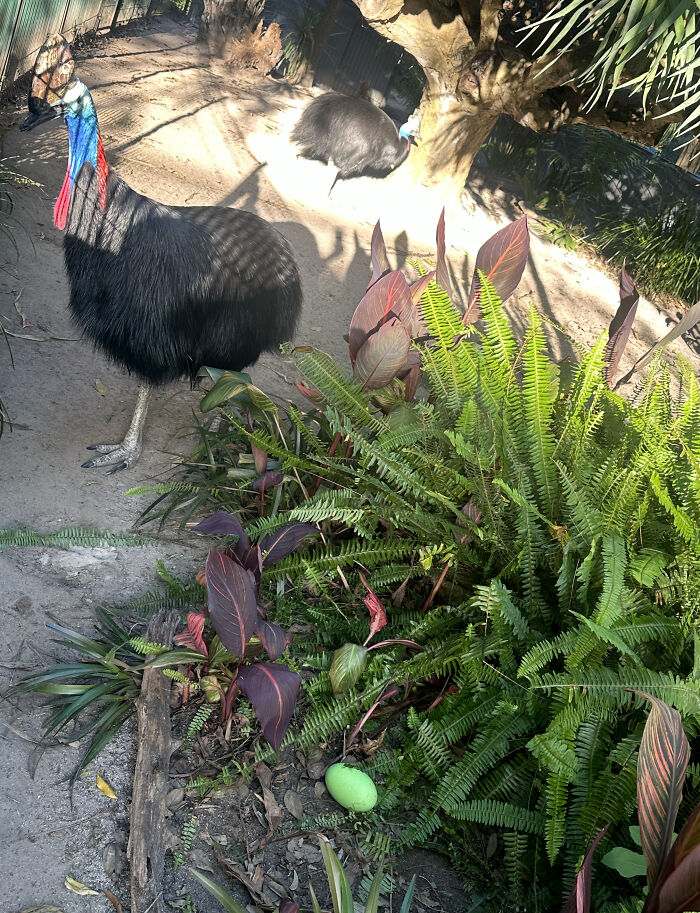
Bringing Martina and Jeffrey together wasn’t quite as simple as introducing two lovebirds. Southern Cassowaries are naturally solitary animals and can be aggressive toward one another, particularly outside the breeding season. Zoo staff carefully monitored their behavior for encouraging signs, such as low rumbling calls and a willingness to eat near each other.
Fortunately, the matchmaking efforts paid off. When keepers finally introduced the two in August, Jeffrey cautiously approached Martina and began preening her. The pair even mated on their first day together, and keepers have observed the behavior several times since.

For the first time since 1992, the zoo’s Southern Cassowaries have laid eggs
Martina and Jeffrey are the feathered couple behind this exciting milestone
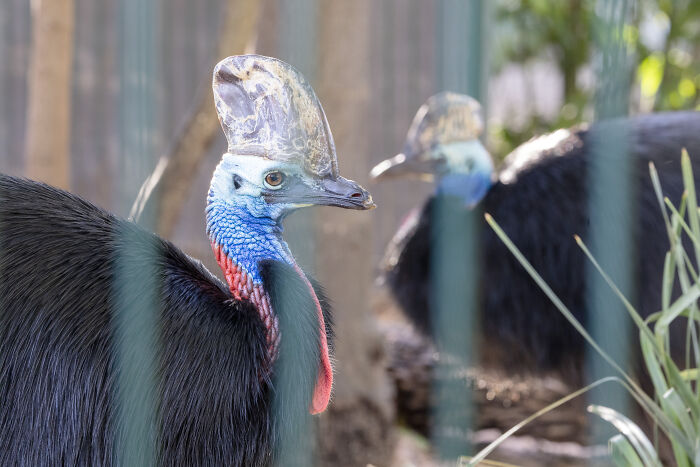
The development is particularly meaningful considering the zoo’s history with the species. Its first cassowary chick hatched in 1968, followed by six more birds born in 1992. Since then, more than three decades have passed without another recorded cassowary egg at Adelaide Zoo.
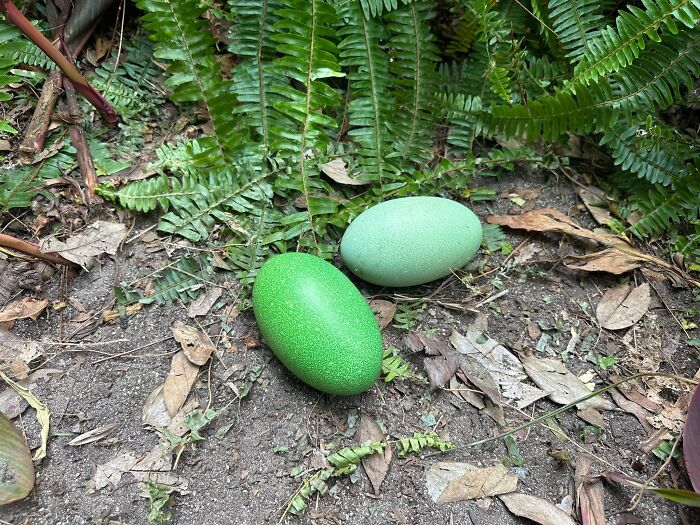
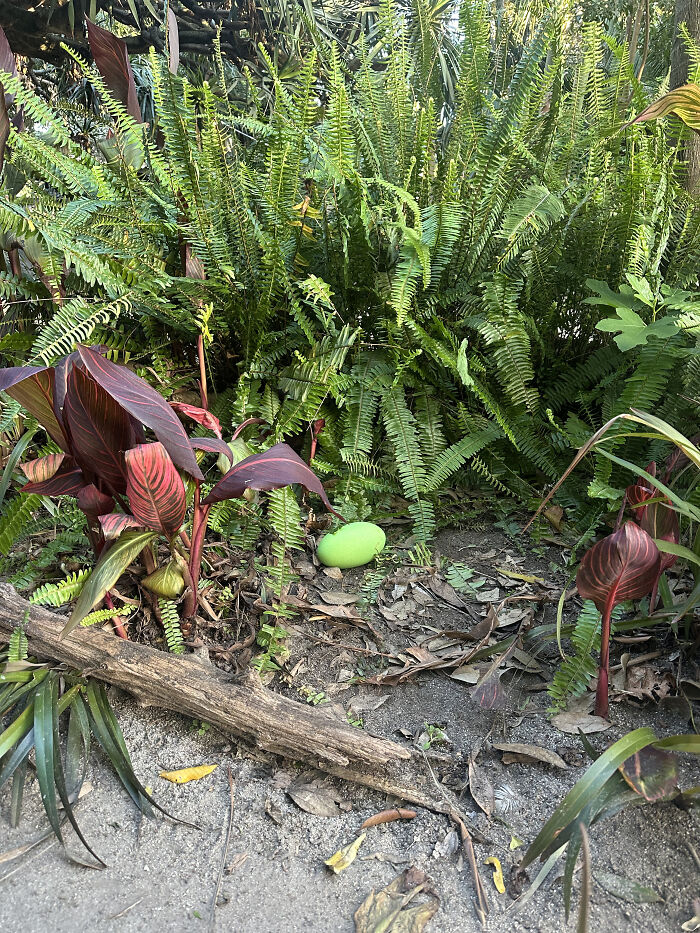
Of course, one of the most fascinating things about this story is the eggs themselves. Unlike the familiar white or brown eggs most people are used to seeing, cassowary eggs come in spectacular shades of green. Their unusual coloring comes from a pigment called biliverdin, which helps camouflage the eggs among vegetation on the rainforest floor. What looks incredibly conspicuous to us can actually serve a practical purpose in the wild.
Bringing these solitary birds together required some careful matchmaking
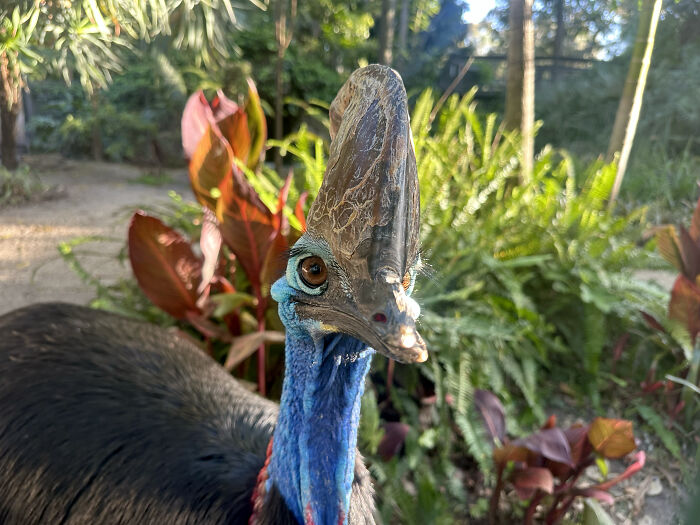
Fortunately, the pair seemed to hit it off almost immediately
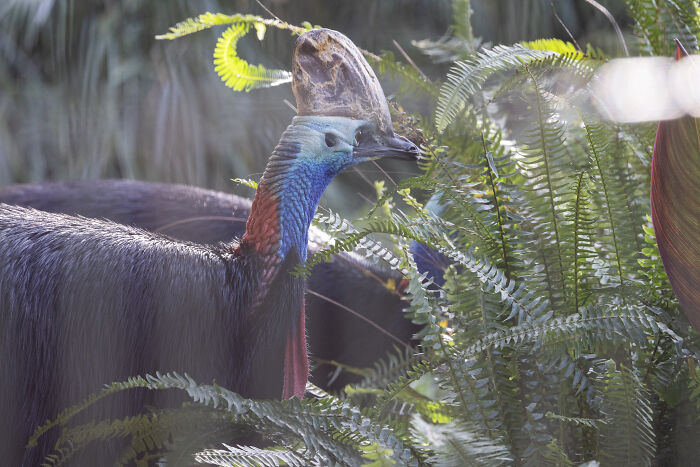
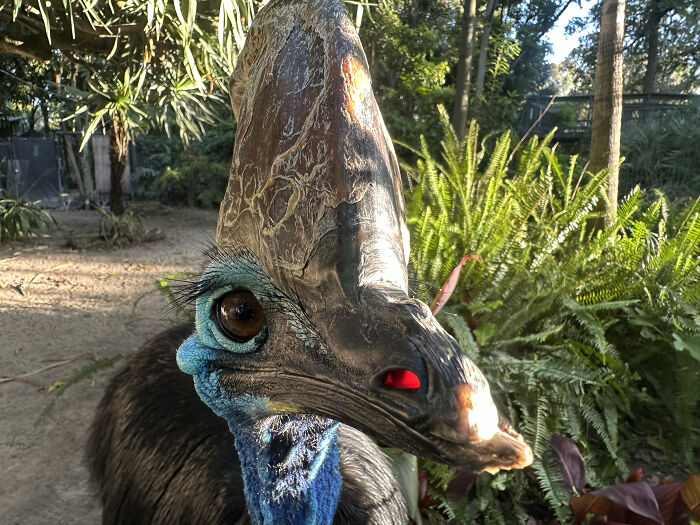
The birds responsible for these colorful creations are just as remarkable. Southern Cassowaries (Casuarius casuarius) are large, flightless birds native to the tropical rainforests of northeastern Australia, New Guinea, and parts of Indonesia. With glossy black feathers, vivid blue heads, bright red wattles, and helmet-like structures called casques, they look almost prehistoric.
Despite their intimidating looks, cassowaries are generally shy and reclusive, preferring to spend their time alone. They communicate through deep rumbling calls, some so low in frequency that humans can barely hear them. However, they can become defensive if threatened or cornered, using their powerful legs and sharp claws to protect themselves.
The zoo has now confirmed three eggs, all sporting a spectacular shade of green
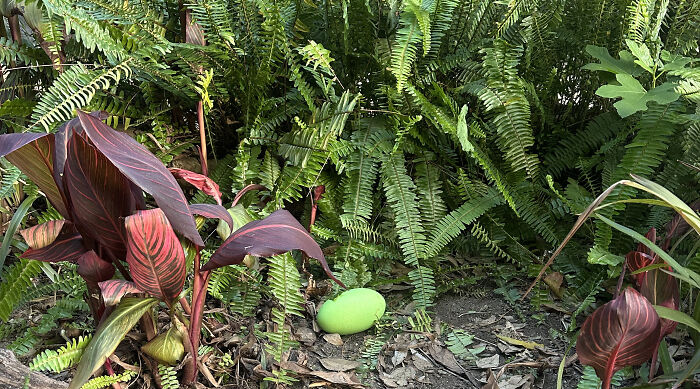
Their unusual color comes from a natural pigment called biliverdin
Their diet, meanwhile, is surprisingly ordinary for such extraordinary-looking creatures. Southern Cassowaries primarily feed on fallen fruit, although they occasionally eat insects, small animals, and other available food. By swallowing fruit and depositing the seeds elsewhere, they act as natural gardeners, helping rainforest plants spread and regenerate. Some of the larger seeds they disperse are too big for most other animals to swallow, making cassowaries especially important to the ecosystems they inhabit.
In the wild, these green shells help camouflage the eggs on the rainforest floor
Cassowaries are often compared to dinosaurs because of their prehistoric appearance
Unfortunately, these remarkable birds face significant challenges in the wild. Although the International Union for Conservation of Nature (IUCN) currently classifies the Southern Cassowary as Least Concern globally, its Australian population is listed as Endangered under national environmental legislation.
Habitat loss and fragmentation have reduced the areas where cassowaries can safely live and roam. Vehicle collisions, attacks by domestic dogs, and other threats also put pressure on their remaining populations. Conservation efforts in Australia focus on protecting and restoring rainforest habitats, reconnecting fragmented forest areas, and reducing the dangers these birds face. Against this backdrop, Adelaide Zoo’s breeding milestone offers an encouraging opportunity to highlight a species whose survival is closely tied to the health of tropical rainforests.
Despite their intimidating looks, these birds are quite shy and play a vital role in keeping rainforests healthy
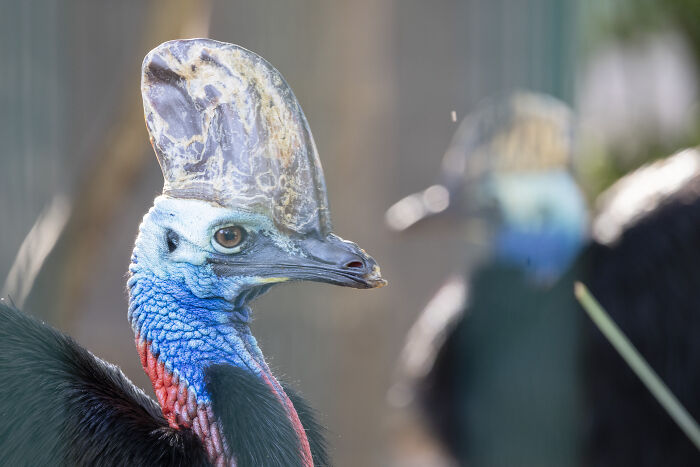
If the eggs are fertile, Jeffrey could soon take on the responsibility of incubating them
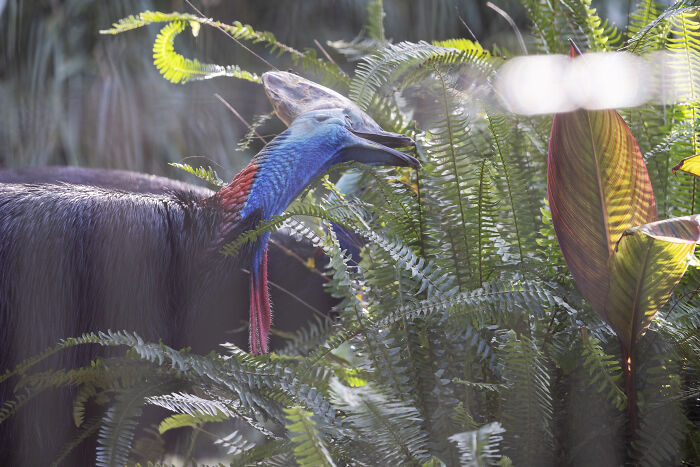
And if Martina’s eggs turn out to be fertile, Jeffrey will have an important job ahead of him. In the cassowary world, it’s the males that take responsibility for incubating the eggs and raising the chicks. Incubation typically lasts around 50 days, and the zoo’s team is monitoring the birds to determine how best to support the process.
Whether or not any chicks hatch, this is already an exciting milestone for Adelaide Zoo
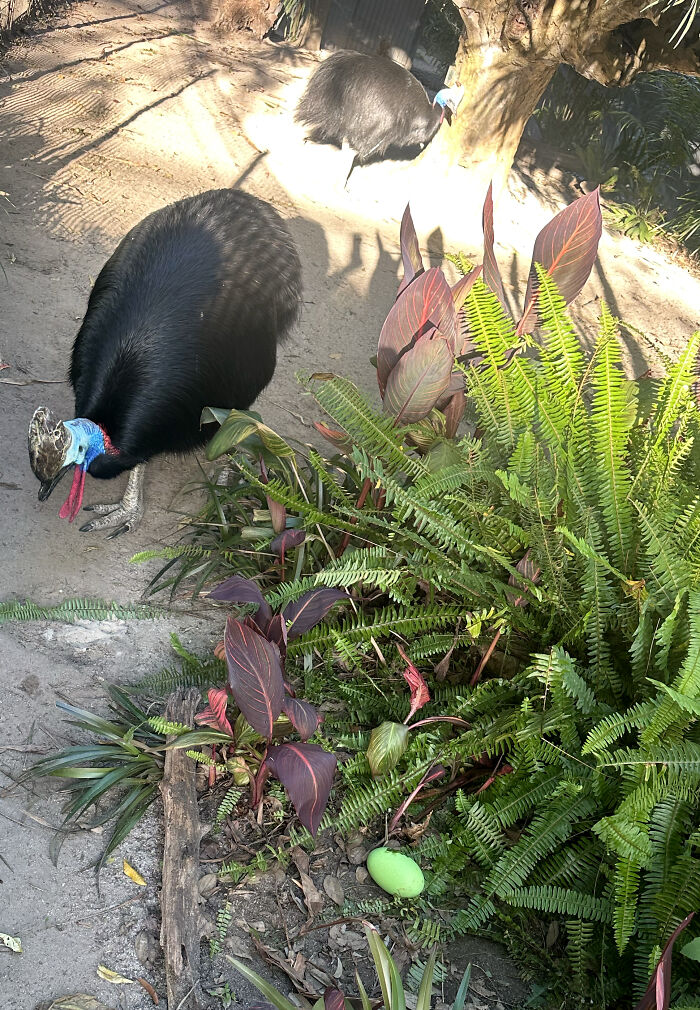
For now, the keepers are giving the pair plenty of privacy and keeping their expectations realistic. There’s no guarantee that chicks will eventually emerge, but after 34 years without an egg, three bright green additions are certainly a promising development. Whether or not they hatch, Martina and Jeffrey have already given the Adelaide Zoo team a reason to celebrate.
 Follow Us