Weddings, unfortunately, are particularly known to have this ability to bring every unresolved conflict bubbling right back to the surface. Suddenly, the guest list becomes less about celebrating love and more about deciding who can be trusted not to ruin the cake-cutting ceremony.
That’s exactly the situation this Original Poster (OP) found herself in after announcing her destination wedding. While most couples worry about seating charts or flower arrangements, she was faced with pressure to invite an aunt she believes tried to take ownership of her childhood home.
More info: Reddit
When a person’s inability to make decisions starts slipping away, they rely on the people around them to protect them, not to look for opportunities to benefit from their struggles
Image credits: prostooleh / Magnific (not the actual photo)

The author grew up close to her grandparents in a family home built by her parents and grandparents, where she hoped to raise her own children someday
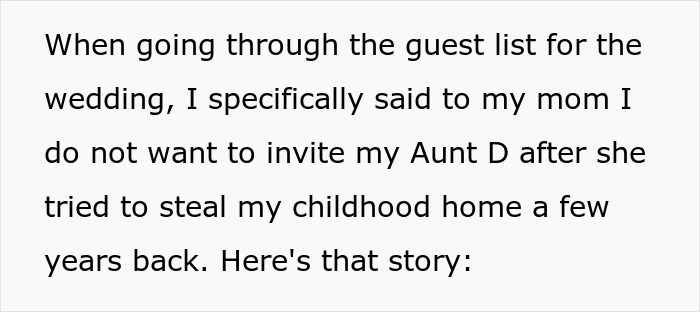
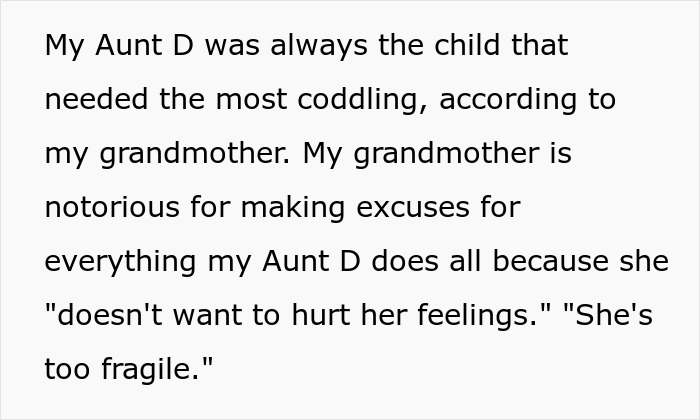

Image credits: The Yuri Arcurs Collection / Magnific (not the actual photo)
Years later, after her grandfather developed dementia, she discovered her aunt had allegedly changed his will to claim his share of the house, leading the family to sell the property

Image credits: tirachardz / Magnific (not the actual photo)
She then cut contact with her aunt after the dispute, but her grandmother continued defending her and now wants them to reconcile
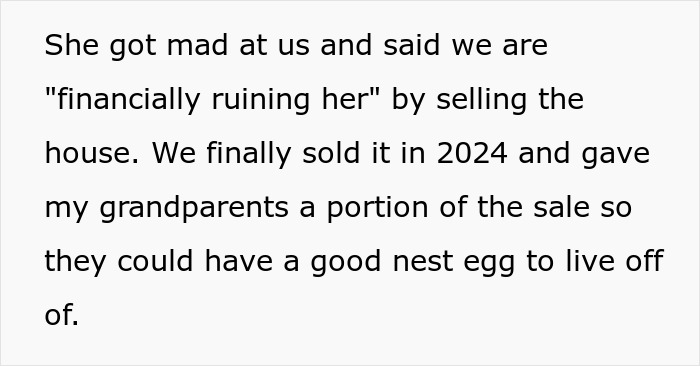
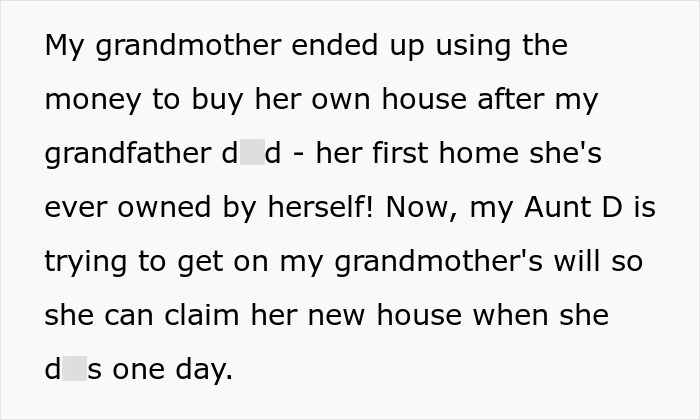
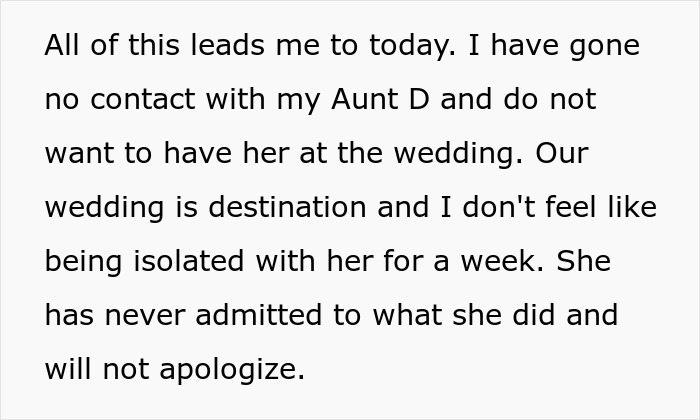
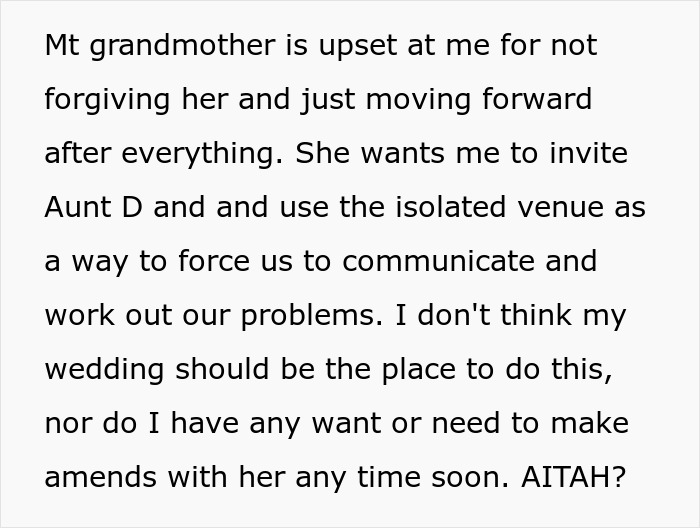
Image credits: Intrepid_Day6113
After getting engaged, the woman refused to invite her aunt to her destination wedding, sparking a disagreement over whether she should forgive and move on
The OP explained that she recently became engaged and immediately started planning their destination wedding. As they worked through the guest list, there was one person she absolutely did not want attending: her aunt, and here’s why.
She shared that she grew up incredibly close to her maternal grandparents, who helped raise her while her parents worked. Decades earlier, her grandparents and parents had built a home together, with all four adults sharing ownership. Because she spent so much of her childhood there, the house held deep emotional significance, and she had long imagined one day raising her own children under the same roof.
Sadly, her father developed dementia, and it gradually worsened over several years until he eventually required full-time memory care. Now, while the family was arranging financial assistance for his care, her uncle discovered that her aunt had quietly taken their grandfather to a lawyer in 2022 to rewrite his will.
The updated document allegedly left her aunt with her grandparents’ share of the family home’s ownership once she lost her grandfather. Feeling that the situation left them with few alternatives, the family ultimately decided to sell the property while her grandfather was still alive. She explained that this prevented her aunt from inheriting a valuable stake in the house later on.
Although her aunt reportedly attempted twice to stop the sale by claiming ownership, those efforts failed because her name was never added to the property’s deed. The OP noted that the aunt never acknowledged any wrongdoing or apologized for her actions. Now, with wedding planning underway, the OP’s grandmother insists that the aunt must be forgiven and invited to the wedding, to which she strongly refused.

Image credits: The Yuri Arcurs Collection / Magnific (not the actual photo)
Sudden changes to a person’s will later in life can sometimes raise concerns about elder financial mistreatment. OC Trial Group notes that financial exploitation is among the most common forms of elder mistreatment and may involve manipulating an older adult into changing legal documents such as wills, property deeds, or powers of attorney.
In this situation, the disagreement didn’t end with the inheritance dispute, but spilled into the OP’s wedding planning. As Hitched points out, weddings often bring long-standing family tensions back to the surface, with guest lists being one of the biggest sources of conflict. Deciding whether to invite estranged relatives can place couples in difficult positions, but they advise that the day should reflect the couple’s wishes.
That perspective also aligns with what mental health professionals say about family reconciliation. According to Psychology Today, forgiveness and reconciliation are not the same thing. Someone may decide to forgive another person for their own peace of mind while still maintaining healthy boundaries if trust has been broken. However, rebuilding a relationship requires accountability and effort from both sides.
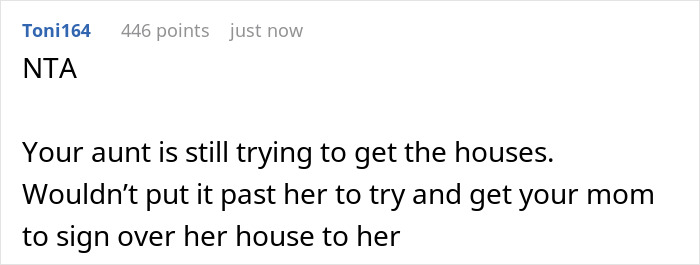
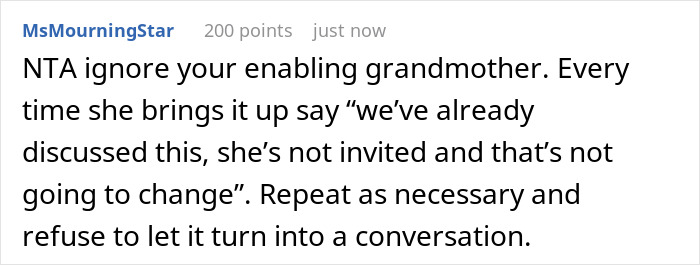
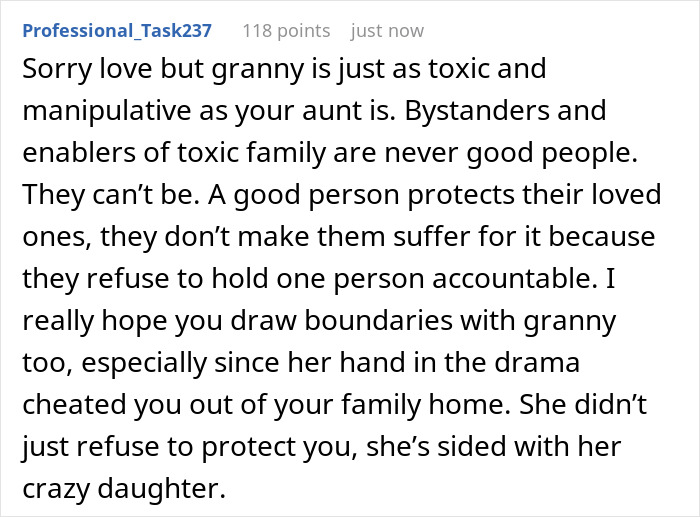
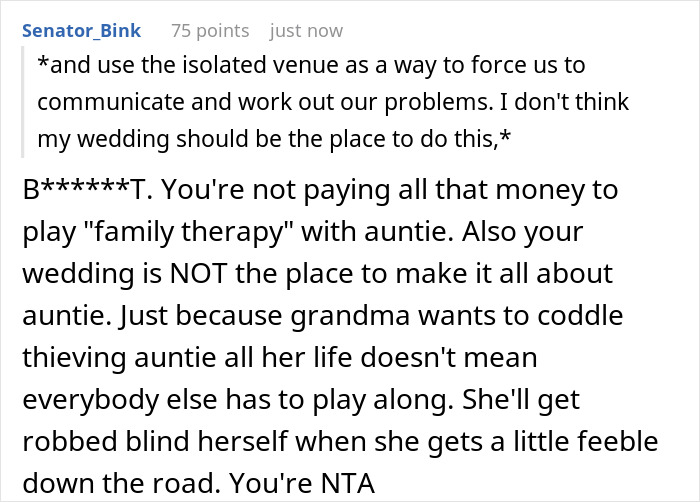
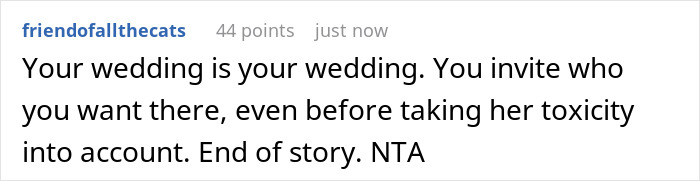
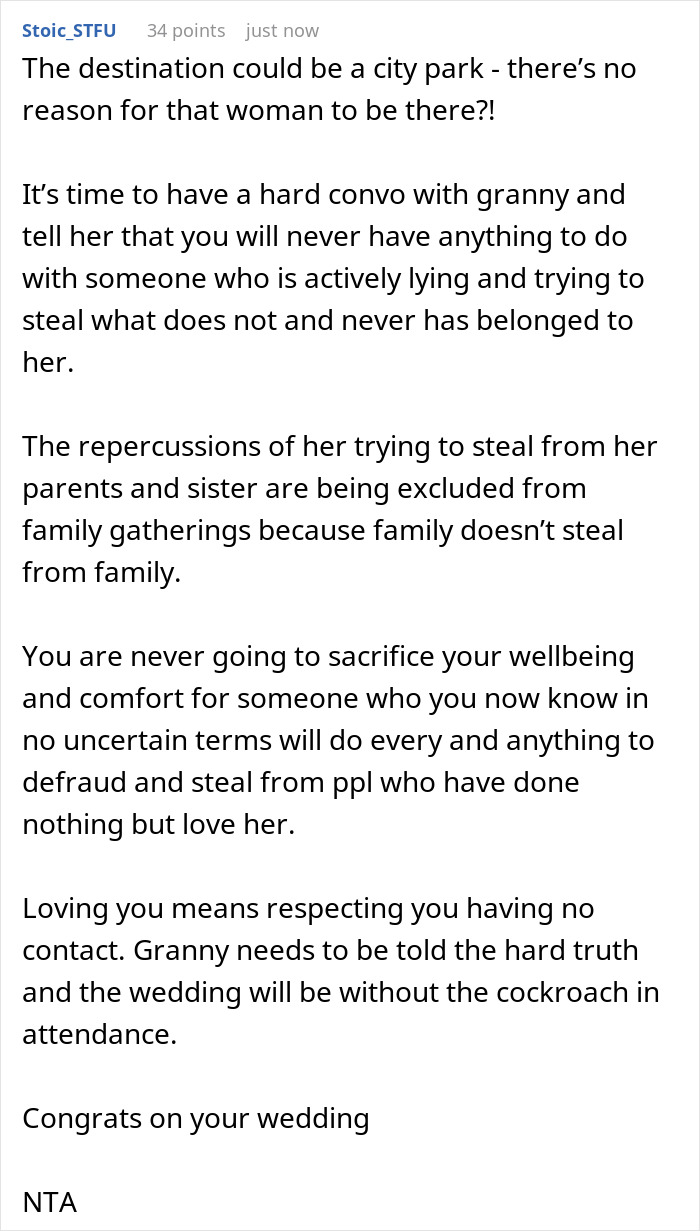
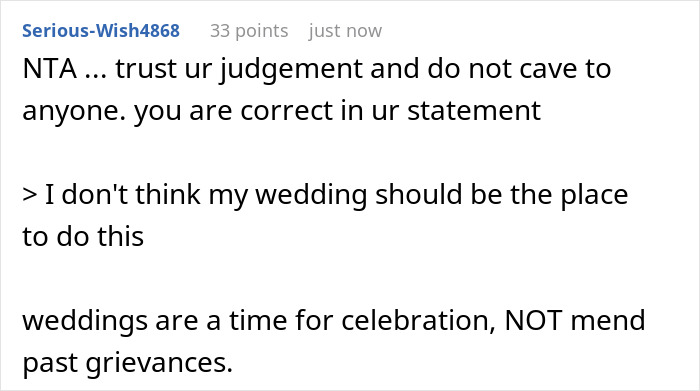
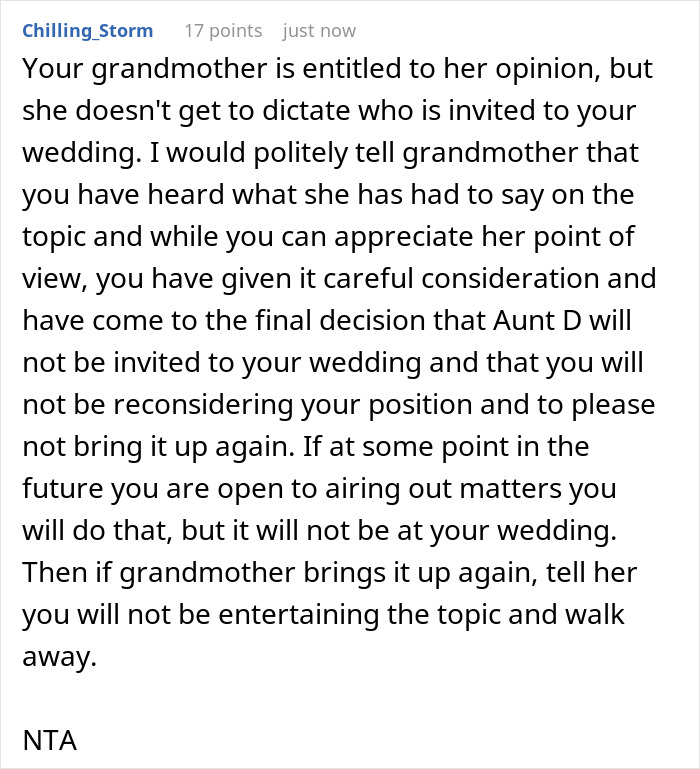
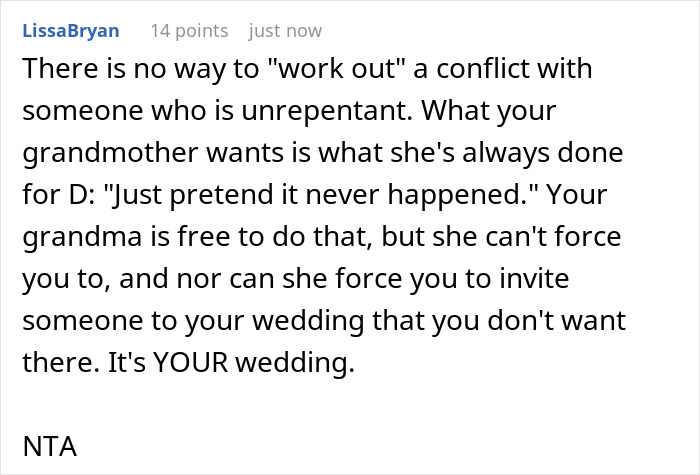
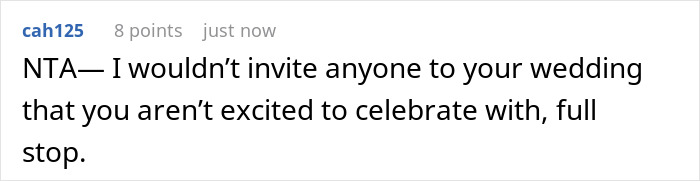
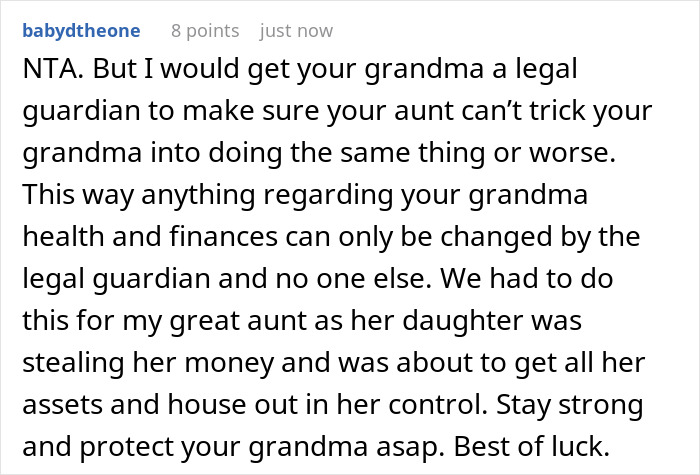
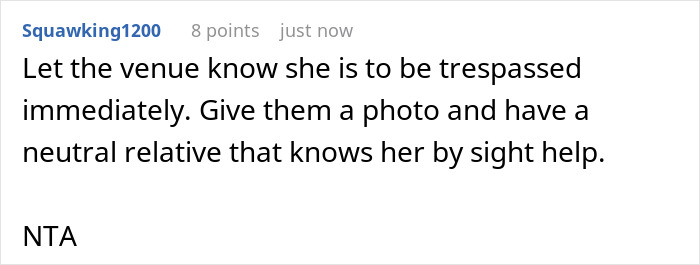
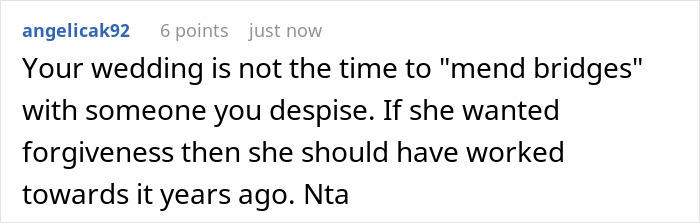
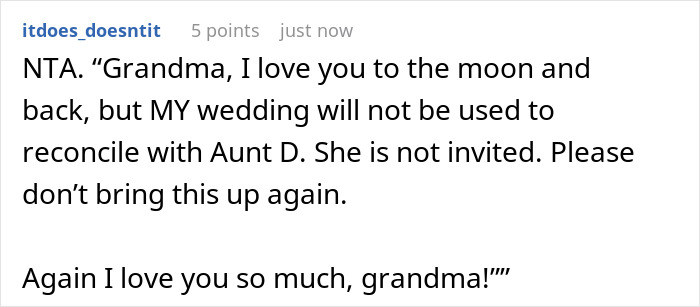
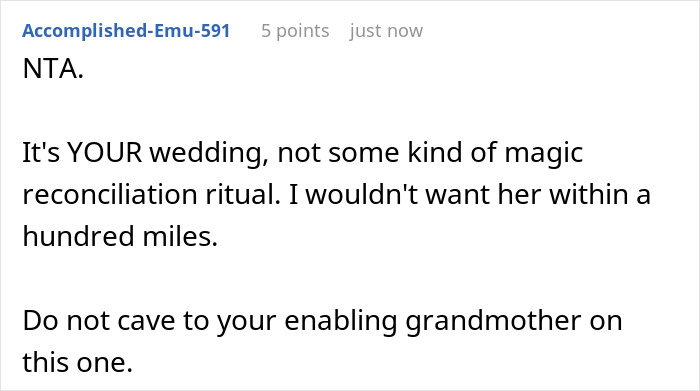
Netizens felt the OP was completely justified in leaving her aunt off the guest list, arguing that her wedding should be about celebrating her marriage rather than repairing broken family relationships. What do you think? Would you invite a family member to your wedding if you believed they had betrayed your family, or would you leave them off the guest list? We would love to know your thoughts!
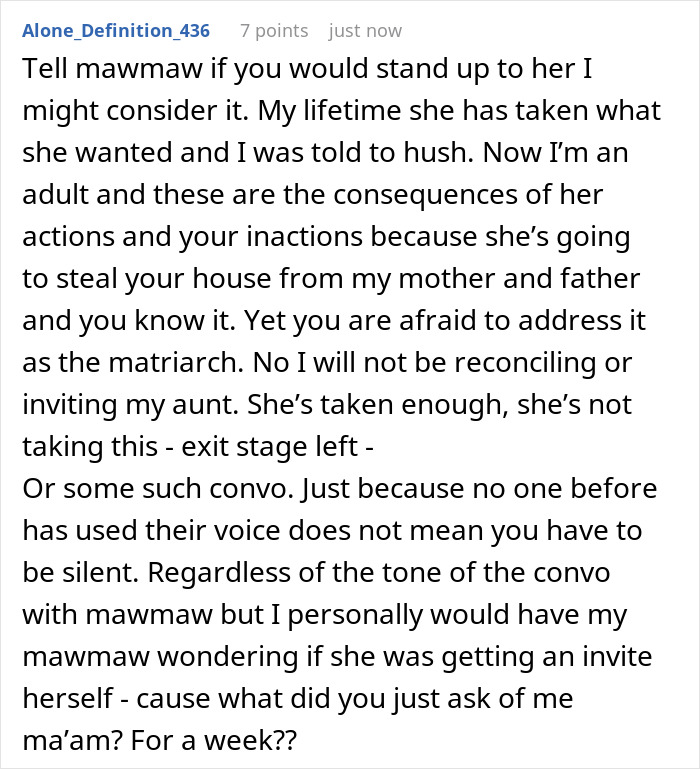
Netizens described the author’s grandmother as an enabler who was trying to pressure her into an unwanted reconciliation








 Follow Us