The internet has become remarkably good at identifying mysterious objects. Post a photo of something unrecognizable, and within minutes someone in the comments will know exactly what it is, where it came from, and probably its entire manufacturing history. It is one of the more wholesome applications of collective human knowledge, and it works almost every time.
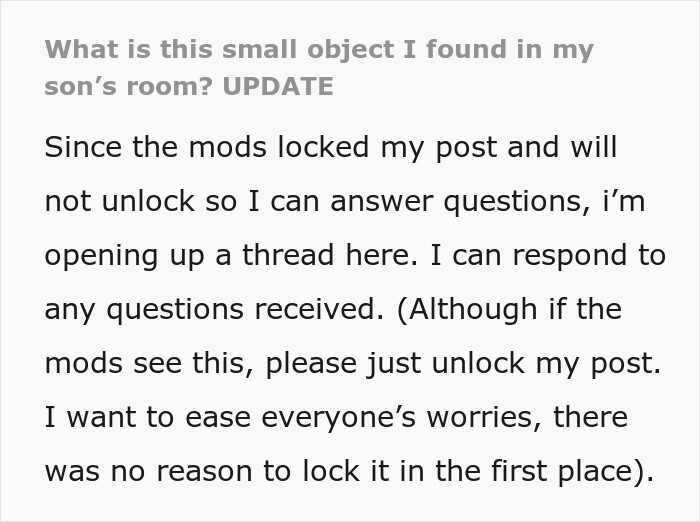
When a grain-of-rice-sized object appeared in a pill bottle in this son’s room, his mother asked Reddit what it was, got her answer faster than she expected, and then had to navigate a series of updates that started with mild concern and ended somewhere rather bittersweet.
Finding an inexplicable item in a teenager’s room almost always sets off alarm bells
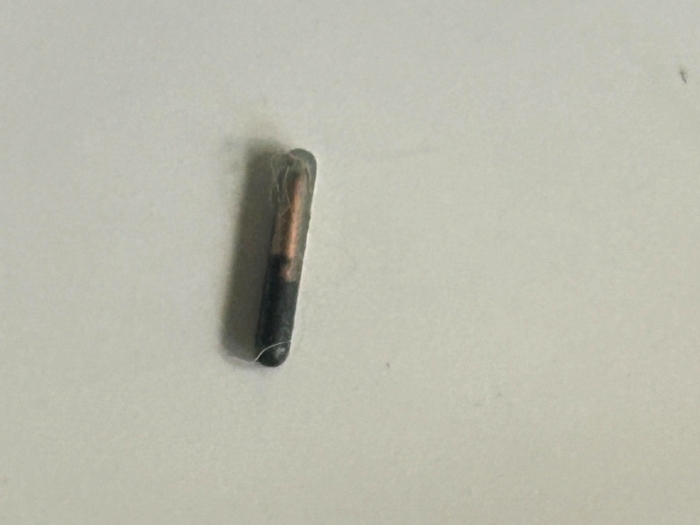

When this mother found a weird item the size of a grain of rice, hidden in her son’s pill bottle, she ran to the internet for answers


Lesli Whitecotton / unsplash (not the actual photo)
Hundreds responded, assuring her it is a microchip placed under a pet’s skin to help get them home if they are lost


















jet-po / magnific (not the actual photo)
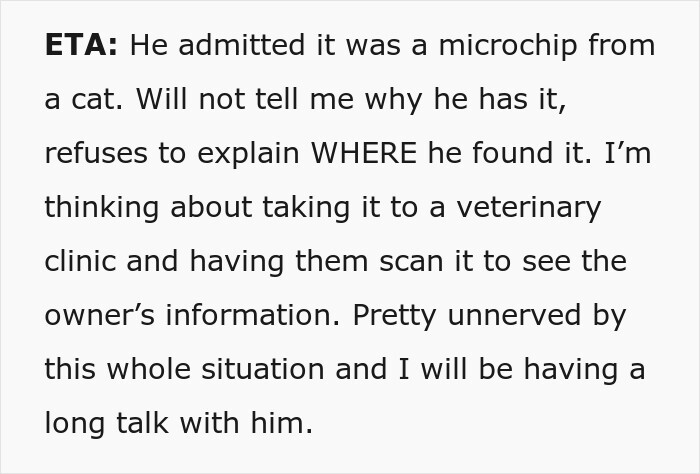
She came back with an update after a vet confirmed what she had found






Manja Vitolic / unsplash (not the actual photo)
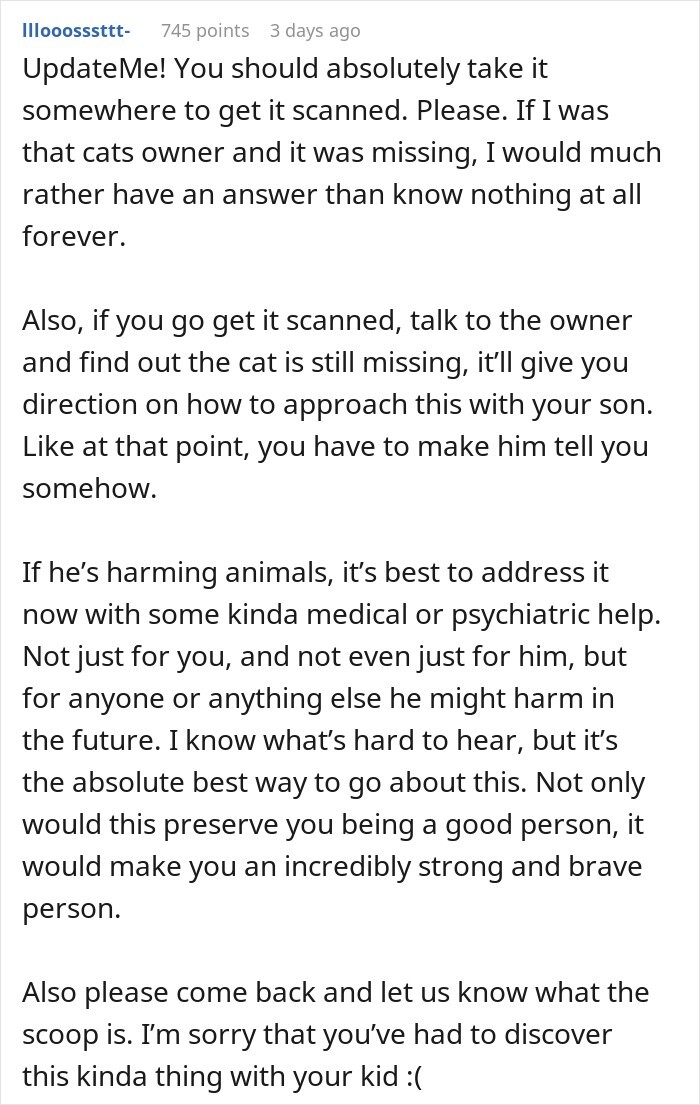
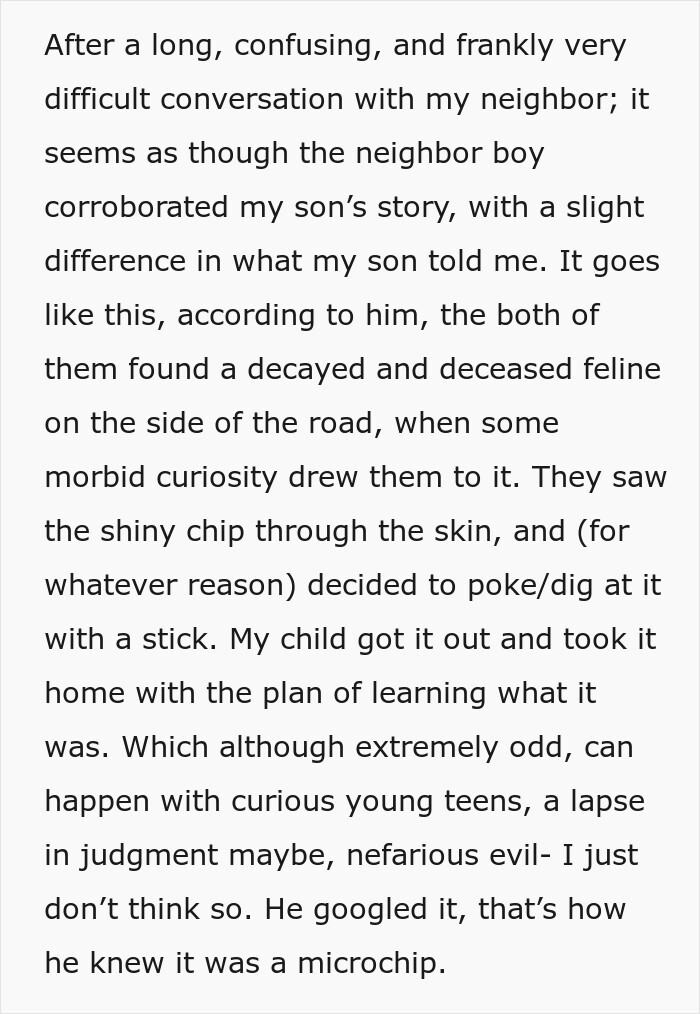
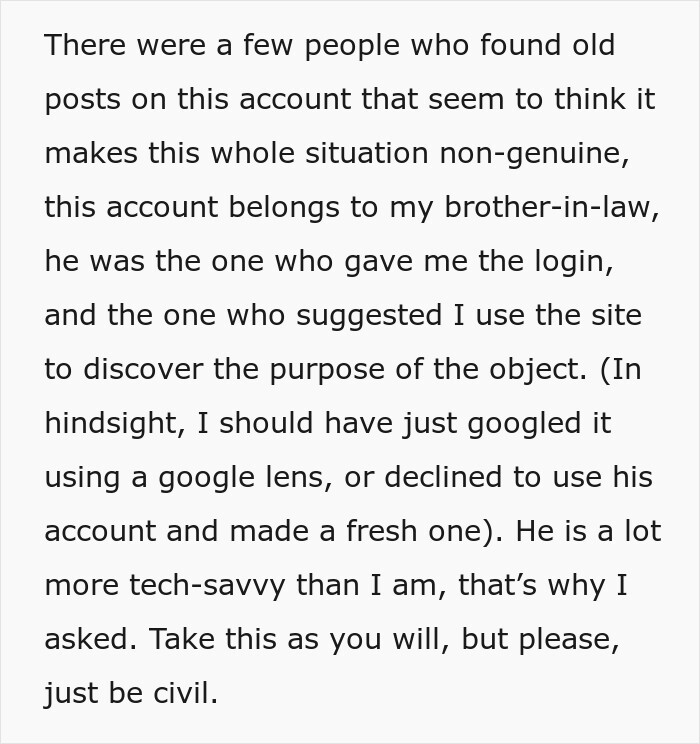
People in the comments were understandably concerned about the boy’s mental health, but the mom came to his defense








Pet microchipping is one of the most straightforward and effective technologies in modern animal welfare. A microchip is a tiny radio-frequency identification device, roughly the size of a grain of rice, that is implanted under a pet’s skin and contains a unique identification number linked to the owner’s contact information in a national database.
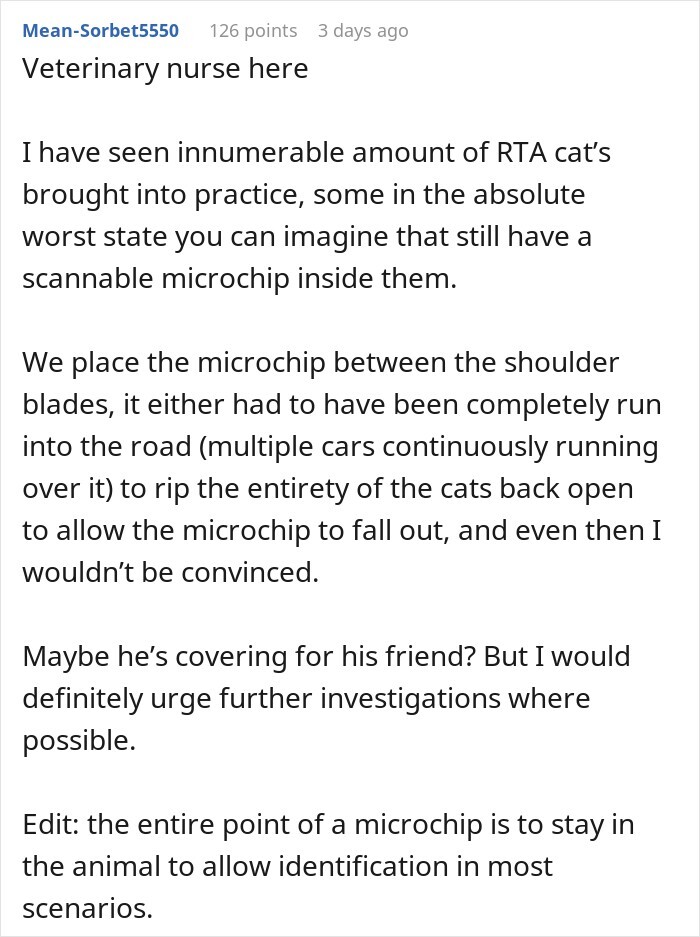
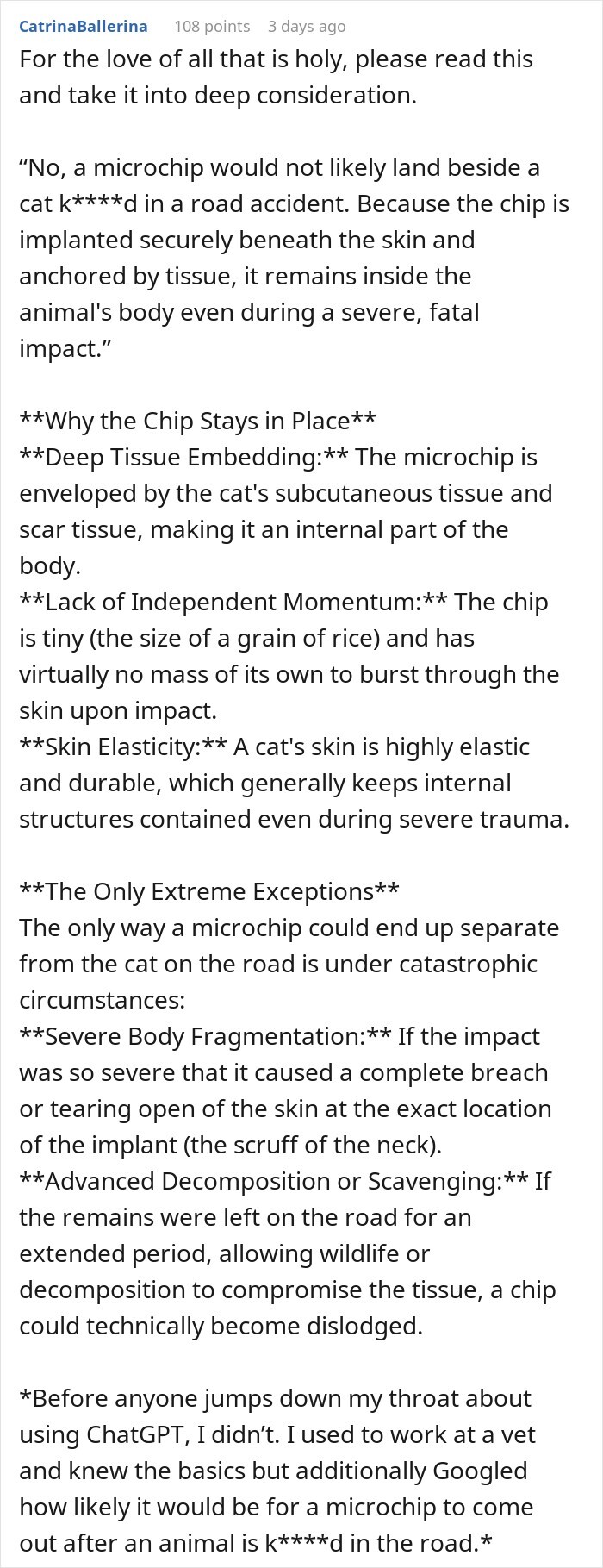
According to the American Veterinary Medical Association, microchipped dogs are more than twice as likely to be returned to their owners as unchipped dogs, and microchipped cats are more than twenty times more likely to be reunited with their families. The chip itself is passive, meaning it has no battery and emits no signal until a scanner is passed over it, which is why it can survive being found beside a road and still contain readable information years later.
The question of what a teenage boy does with a microchip he found beside a non-living cat is, on reflection, entirely consistent with what developmental psychologists describe as the collecting impulse in adolescence. Young people, particularly boys in early to mid adolescence, frequently collect objects that most adults would find baffling, strange, or mildly alarming.

Getty Images / unsplash (not the actual photo)
Rocks, bones, circuit boards, unusual hardware, things that seem interesting or mysterious without any real practical purpose. The behavior is rooted in curiosity, a developing sense of identity, and the very human instinct to hold onto things that feel significant. A microchip is small, technological, and genuinely interesting if you have never seen one before. Finding it beside a cat on the road and pocketing it is, in that context, not as sinister as a pill bottle in a teenager’s bedroom initially suggests.
The mother’s instinct not to simply accept the explanation at face value without due consideration is also well supported by research on adolescent communication. Studies on parent-teen relationships tell us that teenagers withhold information not always because they have done something wrong, but because they anticipate a disproportionate reaction, are embarrassed, or simply lack the emotional vocabulary to explain an impulse they do not fully understand.
He could not explain why he had it because he probably did not have a clean answer. He just found it interesting and put it in a bottle. That is, in all likelihood, the whole story.
Do you think this is normal behavior or should the mother be concerned? Share your thoughts in the comments!
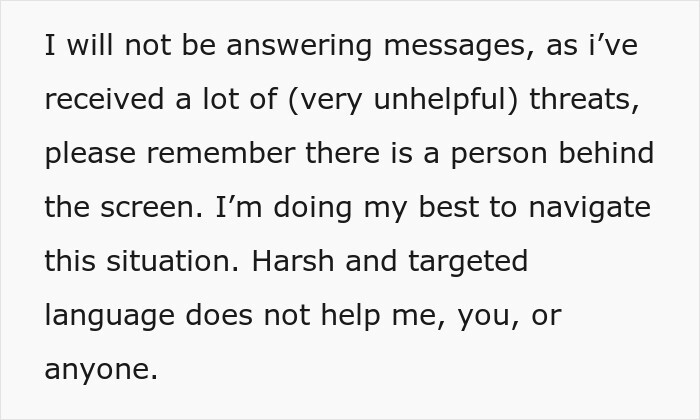
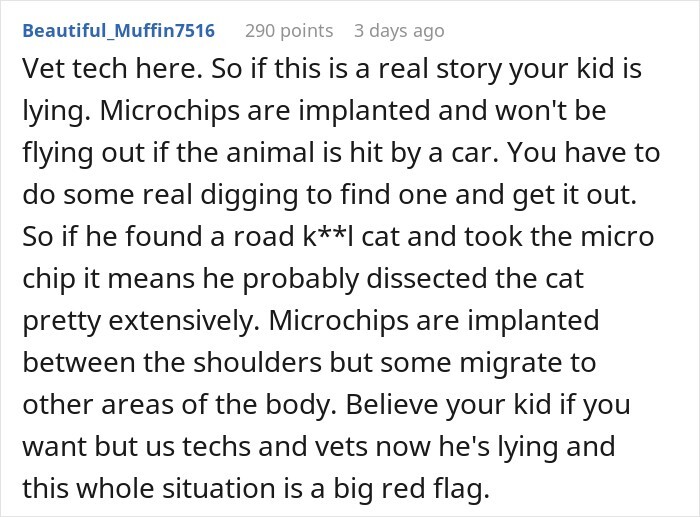
People in the comments weren’t convinced and still raised some concerns about the boy’s mental state















 Follow Us