Sibling rivalry usually looks like an occasional squabble over the remote or the complaint that someone got a bigger slice of cake. It is the general low-level competition that comes with growing up in the same house. But like with many other things, divorce can complicate this significantly, raising the stakes and driving a wedge at the same time.
One teenager spent years working odd jobs, learning to drive properly, and saving every penny to buy his first car. What his sister and mother did in response to that was nothing short of devious. Sadly, spite came too late, and it was only in her adulthood that this daughter could look back at her actions in horror.
Divorce is rarely pretty, and can even drive a nasty wedge between siblings that are supposed to have each other’s backs

magnific / Magnific (not the actual photo)

A pair of siblings entered into a heated power struggle when the older brother managed to buy himself a car with a little help from his dad



magnific / Magnific (not the actual photo)
After some negotiating, she started visiting her dad and brother, but this did not last long once she found out about the car



mike.shots / Magnific (not the actual photo)
She began by insulting his car and threw mud at it while he was washing it







magnific / Magnific (not the actual photo)
She then acted out even further by smashing all the gaming consoles at her dad’s house and stealing the Xbox too


katemangostar / magnific (not the actual photo)
The father tried to keep the peace, but the mother chimed in, saying this was what they deserved after the trauma the daughter had to face through the divorce



haritonovstock / Magnific (not the actual photo)
The father decided to let it go, and quietly back off the relationship with his daughter and ex-wife




syda_productions / Magnific (not the actual photo)
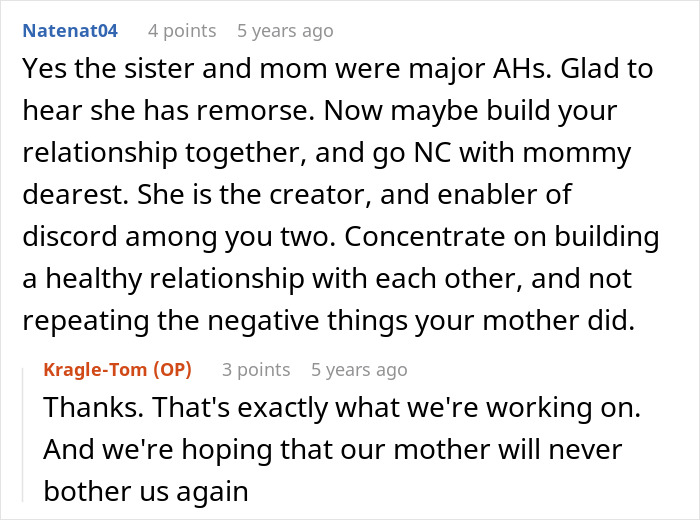
The siblings spent the next few years living apart and essentially lost all contact with their other parent
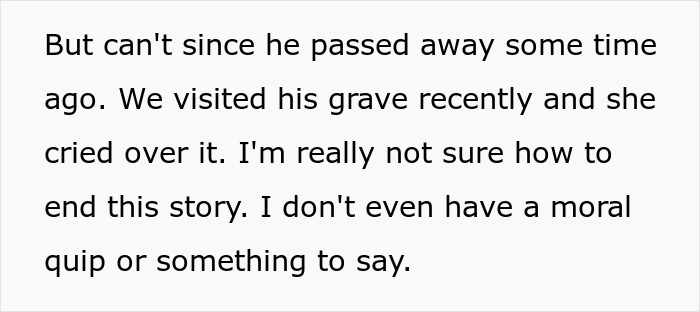
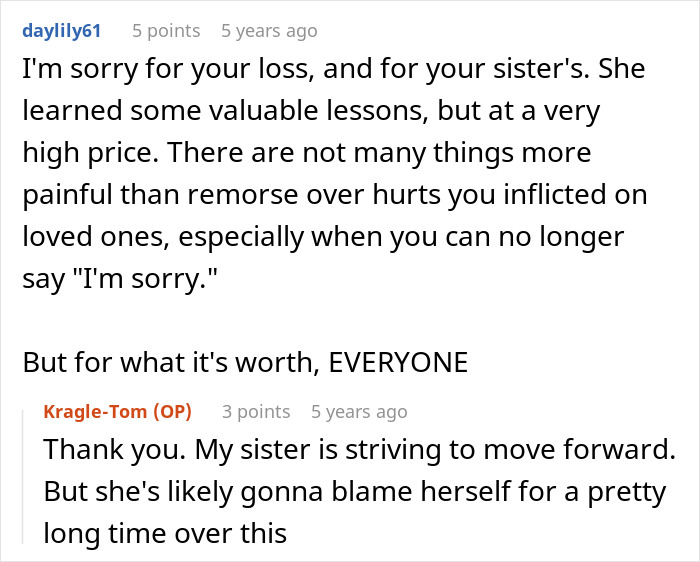
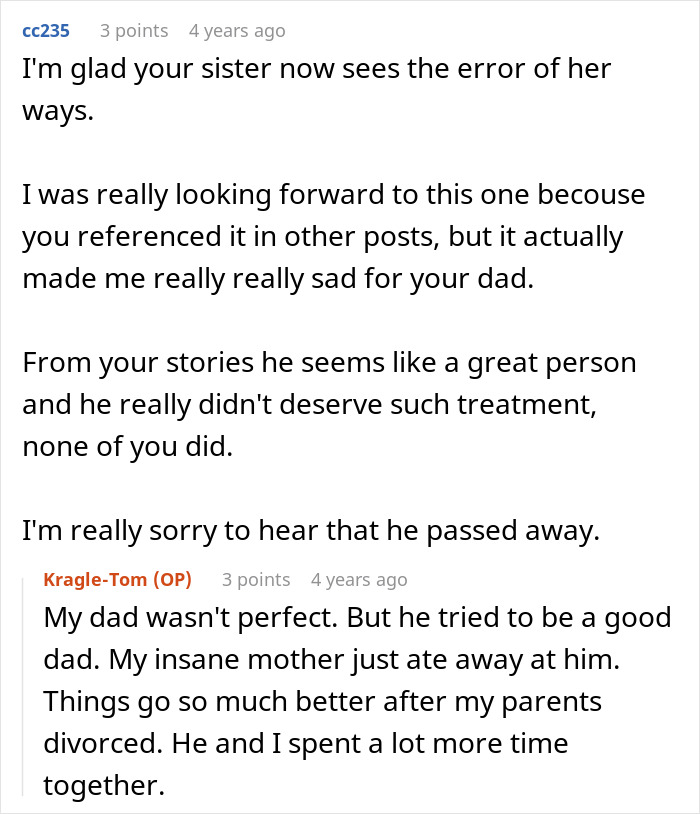
Only years later did the daughter reflect on her actions in horror, but it was sadly too late, as she never got the chance to repair the relationship with her dad
Sibling rivalry is one of the most universal experiences in family life, but research consistently shows that how parents respond to it determines whether it remains a normal developmental friction or escalates into something more damaging. Studies on perceived parental favoritism find that children who believe a sibling is being treated more fairly experience lower self-esteem, higher rates of depression, and greater conflict within the family system.
The mother in this story validated the sibling rivalry, called it stolen property compensation, and effectively told her daughter that her feelings entitled her to take whatever she wanted. She was adding fuel to a very destructive fire.
The psychology of entitlement in adolescents is also very telling. Children who are consistently shielded from the consequences of their actions by a parent who reframes those consequences as injustice develop a distorted relationship with fairness. The thirteen-year-old was not expressing grief in an understandable way. She was doing exactly what she had been taught to do, treating other people’s property as available for redistribution whenever she felt she deserved it. The mother who called it compensation had been teaching her that lesson for years.

Divorce affects children differently depending on their age, temperament, and crucially, how the adults around them frame it. Research on children of divorce consistently finds that when one parent uses the child’s grief as a weapon against the other parent, the child does not heal from the divorce. The sister who told her father she hated him for divorcing her mother was a child in pain being pointed in the wrong direction by an adult who should have known better.
The brother’s path tells a different story. Financial literacy research shows that teenagers who earn their own money develop stronger executive function, greater resilience, and a more stable sense of self-worth than those who receive everything they have. The Camry lasted ten years. The Xbox lasted one weekend. The contrast says everything.
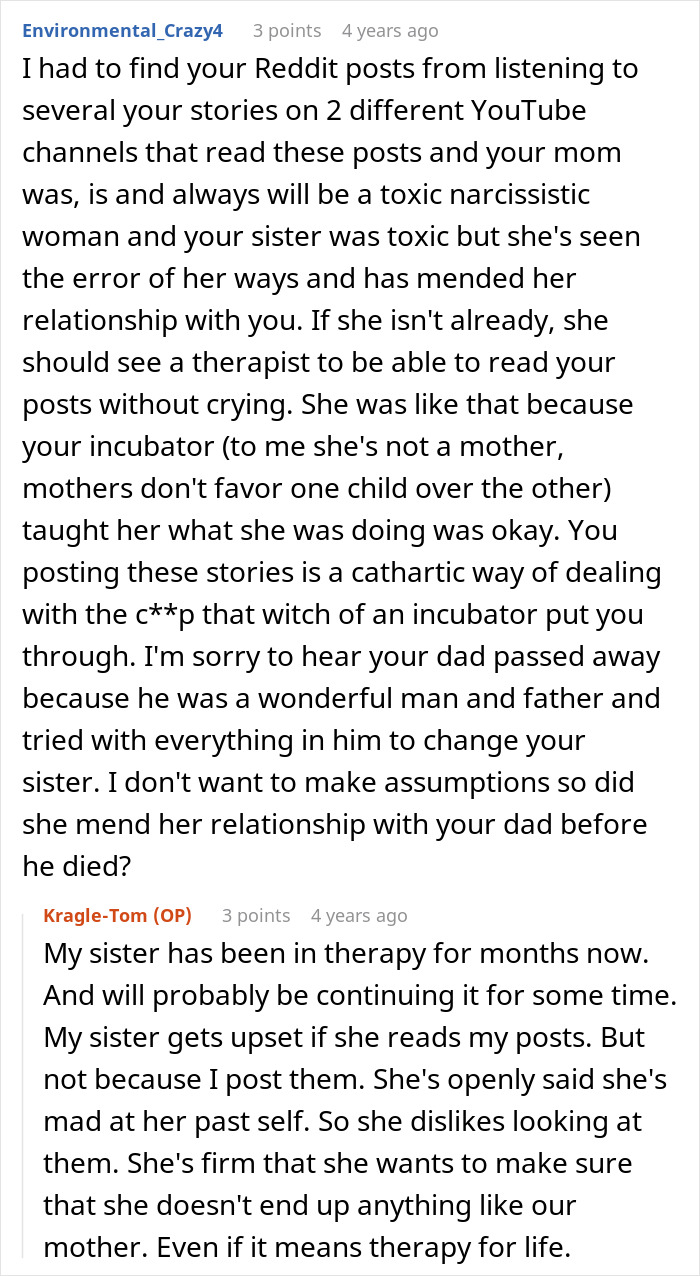
The sister who cried at her father’s grave is not the same person who smashed his game consoles. Research on regret and moral development in adulthood suggests that the capacity to feel genuine shame about childhood behaviour is itself a sign of growth, a recognition that the self who did those things and the self who exists now are connected but not identical. She cannot apologise to him. She can only carry it, which is consequence enough, more painful and longer-lasting than anything a court or a custody agreement could have imposed.
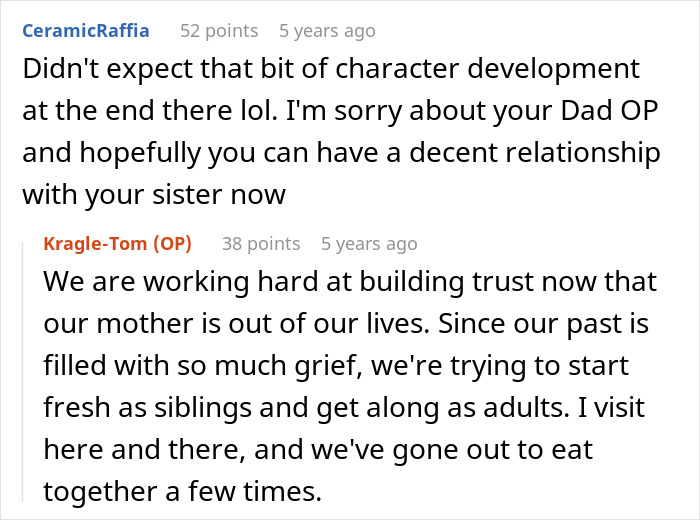
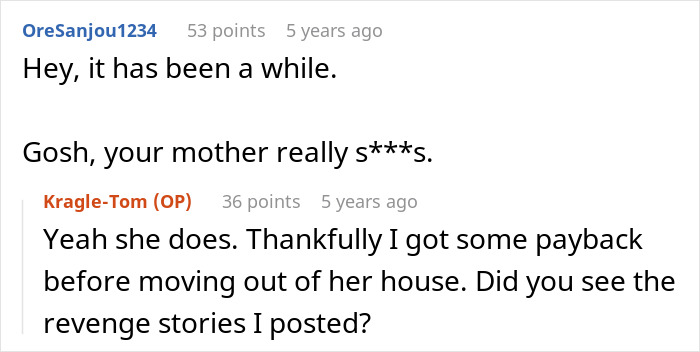
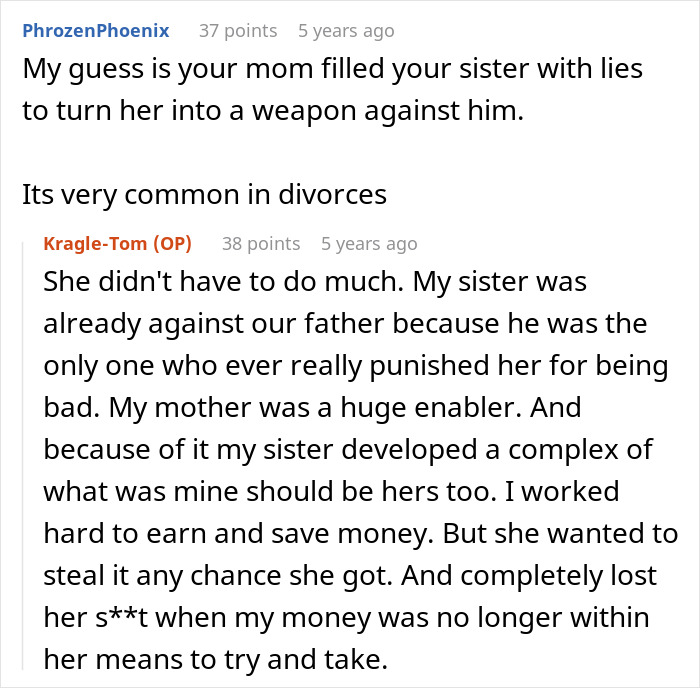
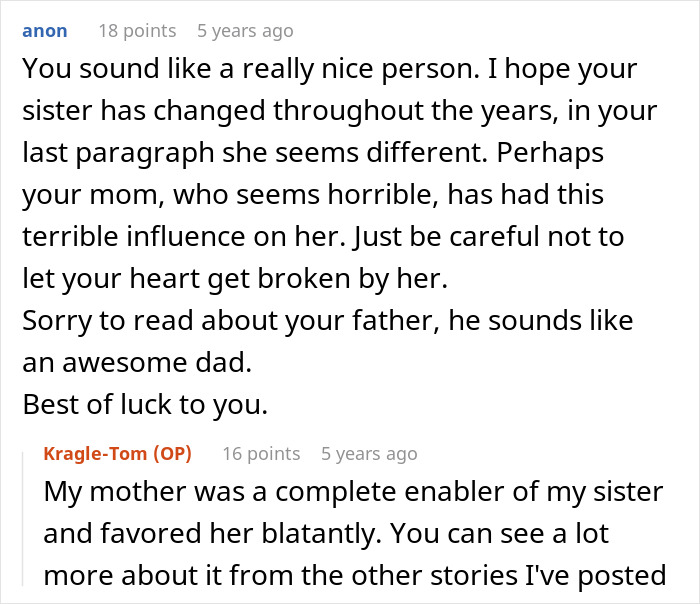
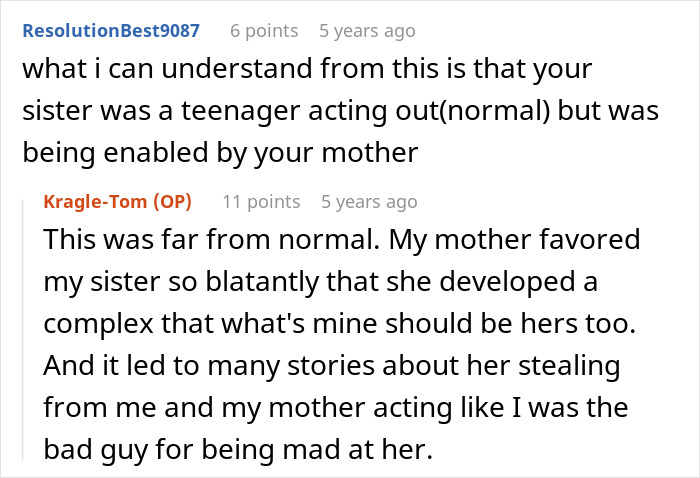
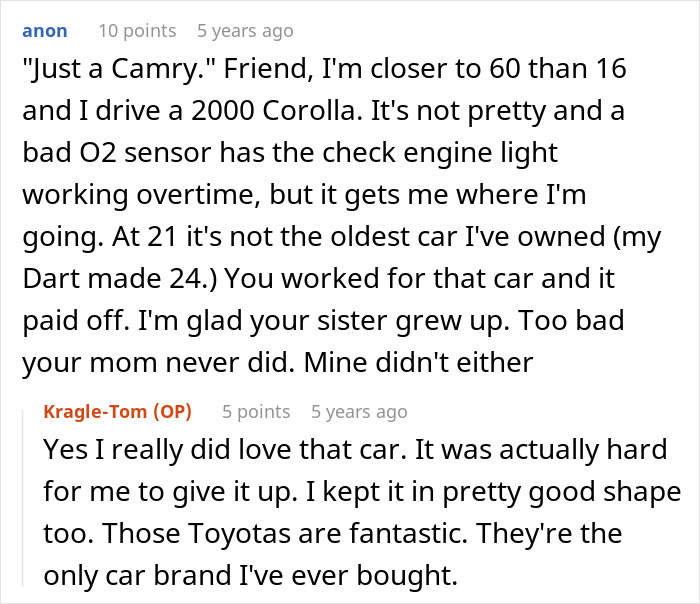
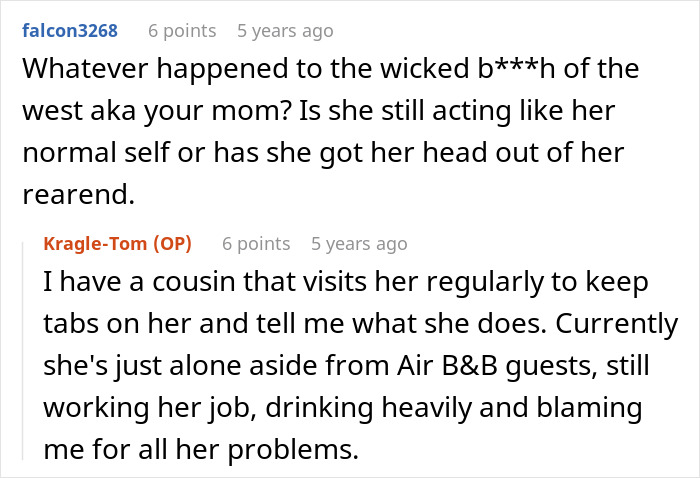
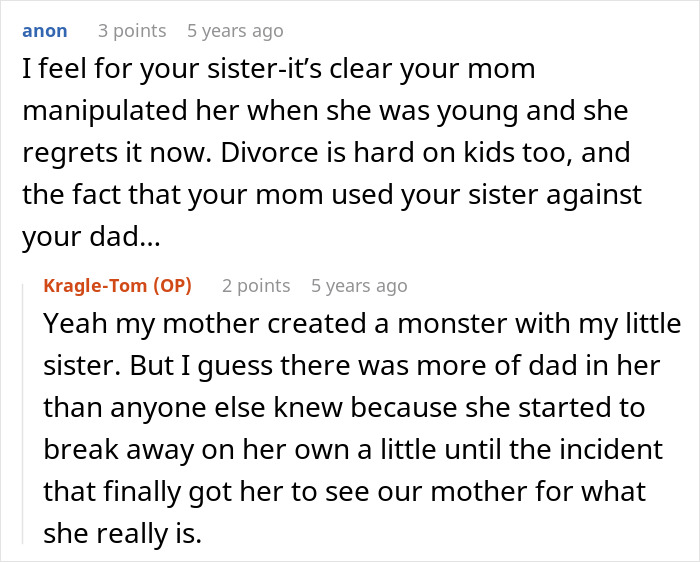
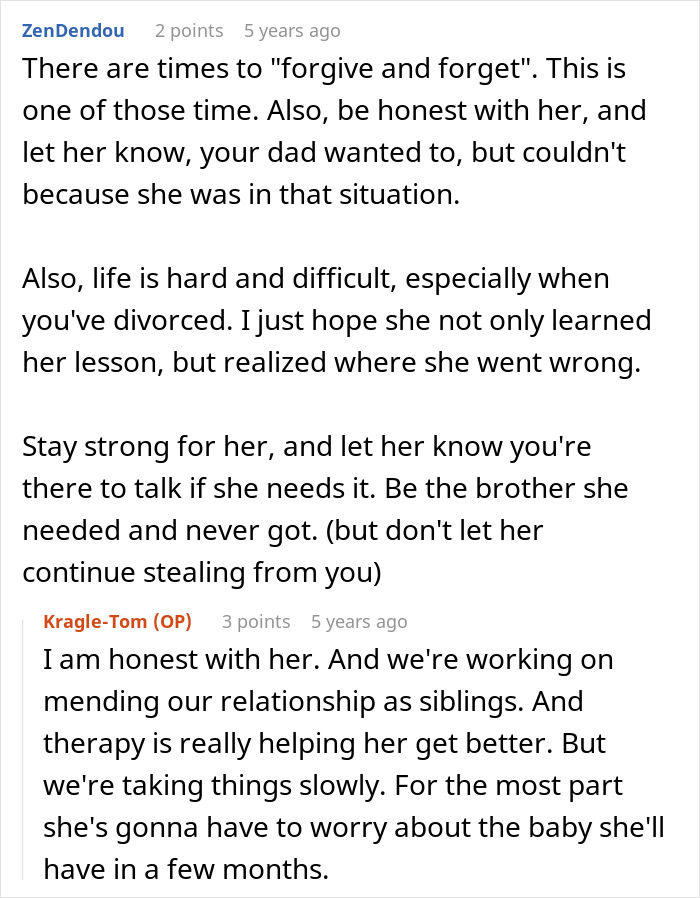
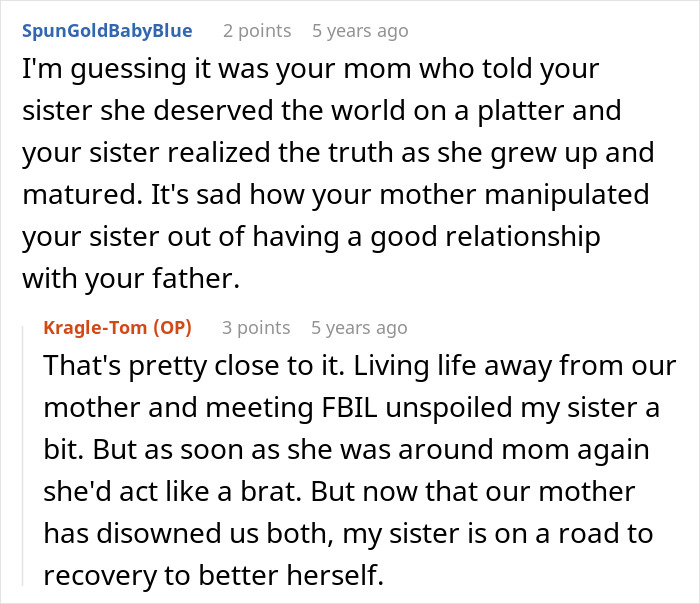
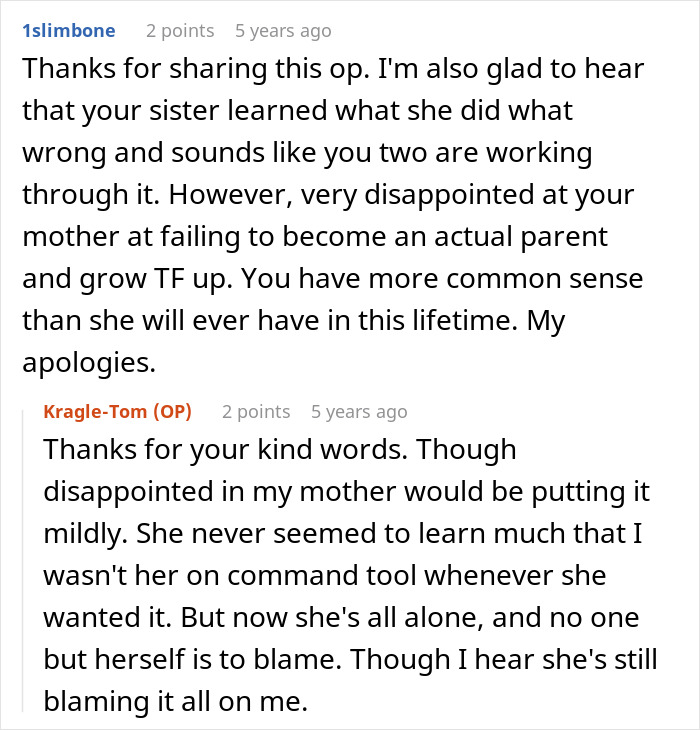
In the comments, he even shared more stories of how toxic his mother was, much to the horror of readers










 Follow Us