A sudden phone call from the cops, a dark interrogation room, and a horrifying video clip — that’s how one guy found out his wife of 12 years was sleeping with someone else.
And as bad as the cheating was, that wasn’t even the worst part. The real damage hit their 11-year-old son, who’d been quietly holding onto his own heartbreaking secrets. Feeling numb and having no idea who to trust, the dad ended up turning to Reddit for advice.
The story has all the ingredients of a viral post, but beneath the drama lies a genuinely chilling question — how well do you actually know the person sharing your home?
A man was brought in for questioning when his wife’s coworker turned up severely beaten

Alena Darmel / Pexels (not the actual photo)

It was quickly revealed that his wife was having an affair with the said colleague


RDNE Stock project / Pexels (not the actual photo)
SHVETS production / Pexels (not the actual photo)
Understanding the reality and statistics of modern infidelity
A recent poll shows that a lot of people are feeling pretty pessimistic about love, and honestly, it is not hard to see why. Open Reddit, TikTok, or YouTube on any given afternoon, and it won’t take long for you to find a wreckage of a broken relationship.
While these modern love stories fall apart for plenty of reasons, one fear seems to weigh heaviest on everyone’s mind: infidelity.
Almost six in ten young women — around 57% — think that cheating in committed relationships has become super common in America today. On the other hand, only 44% of men share the same gloomy outlook.
But when you look past the online stories, figuring out the actual truth about unfaithfulness gets a whole lot trickier.
For starters, getting people to admit they cheated isn’t easy. Research shows that most people won’t readily confess to an affair unless they are completely sure their answer is totally anonymous. This helps explain why different studies produce different estimates of infidelity rates.
“It’s like a disease. People think if you talk about it, you might catch it. Other people might think you’re doing it. There’s a lot of cultural shame around it,” says Bob Huizenga, a relationship coach in Michigan.
When YouGov surveyed in the US recently, only one-third of those who have been in a serious relationship admitted they have cheated — whether that was physical, emotional, or a bit of both. About 63% of Americans said they have never cheated.
The wild part is that when you ask whether they’ve been on the receiving end, the number skyrockets. About 54% said a partner has cheated on them emotionally or physically.
Even when betrayal happens, finding out the truth is rarely as clear-cut as people think. Catching a cheating partner isn’t always like the movies where a hidden text or a surprise encounter instantly blows up the secret. In reality, the odds of getting caught are basically a coin toss. In a recent survey, around 57% of people said that at least one partner eventually discovered their affair. But a similar share also confessed that at least one partner never found out.
We don’t mean to dishearten you with these stats, but instead highlight that infidelity is a common problem faced by couples across the world.
Reasons, causes, excuses, and the aftermath of infidelity
Cheating is not always borne out of a physical need, and a person can be in a marriage they love and still cheat. There can be several reasons — if a person has issues with intimacy or a need to prove one’s desirability; if they feel that marriage and parenthood made them lose their identity and freedom; out of anger or revenge; low self-esteem; or harmful relationships.
Sometimes, heavy drinking or dependency also becomes the easy escape hatch. When someone gets lost in alcohol or substances, it becomes convenient to pin their worst choices on being under the influence.
On top of that, being under the influence strips away normal inhibitions, creating a false sense of freedom where consequences simply stop mattering. In that state, reckless impulses take over. Unfortunately, that temporary numbness makes it way too easy for someone to completely ignore how deeply their unfaithfulness and spiraling behavior are tearing their family apart.
A study found that 53% of infidelity cases ended in divorce within 5 years of couples therapy, compared with 23% of cases where there was no cheating involved.
The immediate impact on the person who has been betrayed is feelings of shame, anxiety, fear, worry, depression, shock, and aggression.
But these exact feelings are also felt by the children in a family where one parent cheats on another.
Studies show that parents who are unable to deal with infidelity properly usually leave their children exposed to increased conflict, trauma, and grief-like symptoms.
“People think an affair is just something personal, that the kids will never find out. But in most cases, it creates emotional distance within the family,” says Ana Nogales, a psychologist and author.
In a survey of over 800 adults who grew up with a cheating parent, nearly nine out of ten reported feeling deeply hurt or angry. Three-quarters felt personally betrayed by the parent who cheated, and almost as many admitted that the affair negatively shaped their own adult romantic relationships.
“If parents would think about the consequences before cheating, maybe they wouldn’t do the things they do,” Nogales adds.
Experts say the first step for the couple is to decide whether to try to rebuild things or file for divorce. But in doing so, it’s important to protect the children from the fallout as much as possible.
Some people choose to stay together for their children or to preserve family dynamics. But if the children are being put in harm’s way, staying together can be more dangerous.
Therapists also strongly warn against forcing kids to choose sides or pitting them against the cheating parent, no matter how bad the behavior was. According to marriage expert Bob Huizenga, the key for parents is to remove the burden of the crisis from their children’s shoulders. Above all, kids need to know that the adults are in control and that it is not their job to fix their parents’ broken relationship.
While we can never fully control whether a partner stays faithful, we can control how we protect our boundaries and how carefully we shield our children from the crossfire.
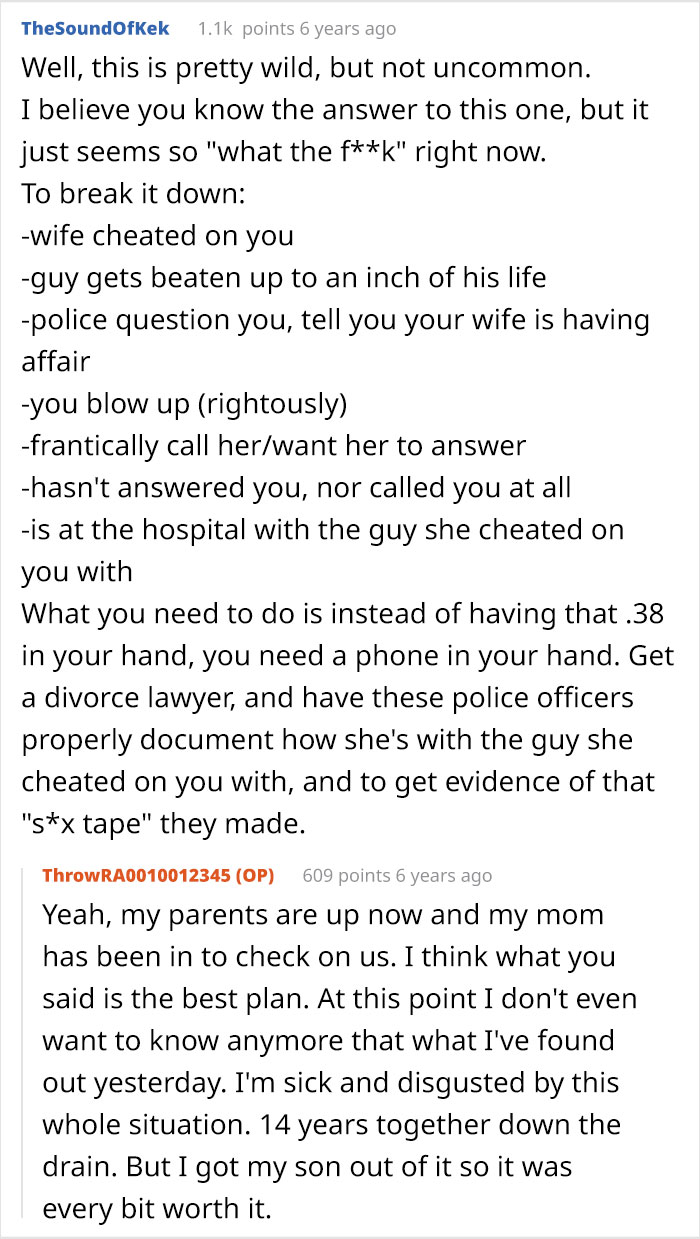
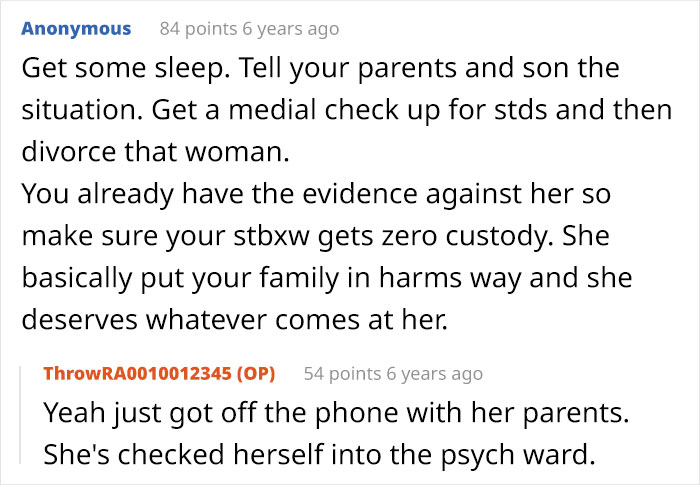
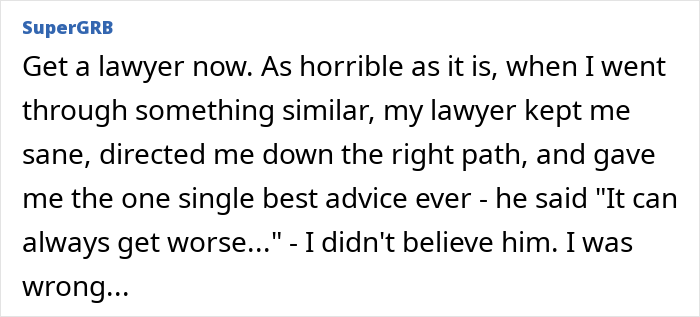
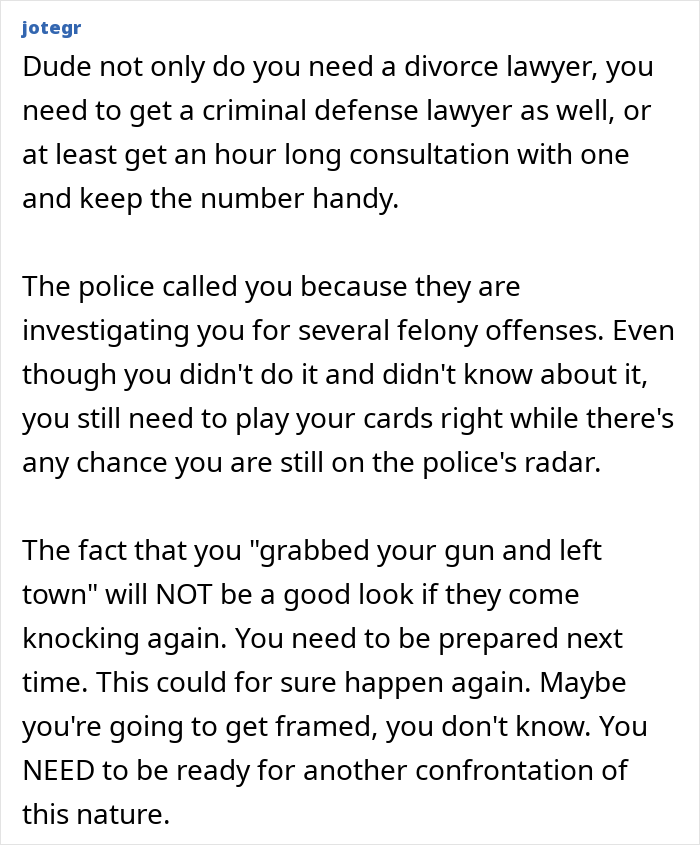
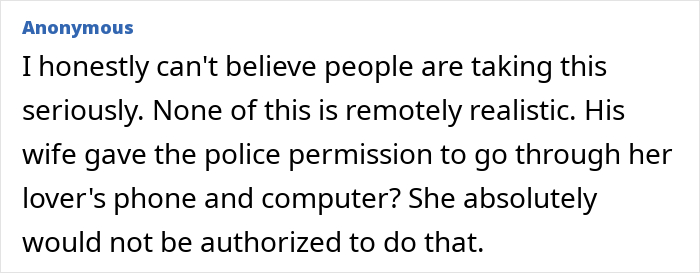
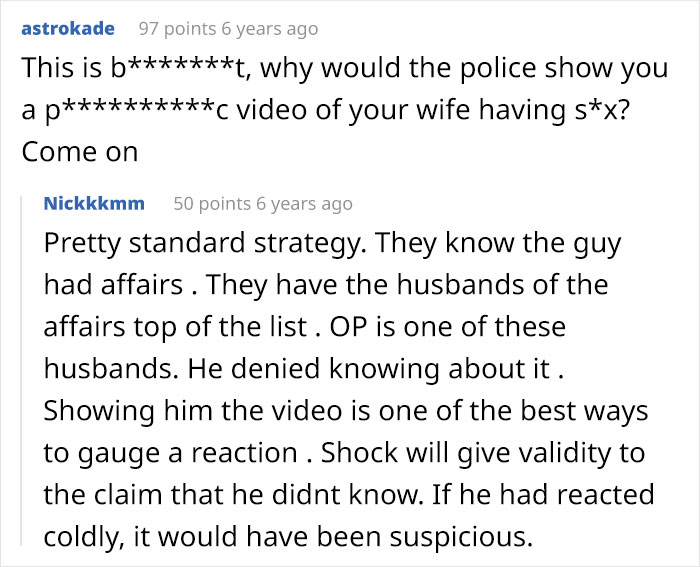
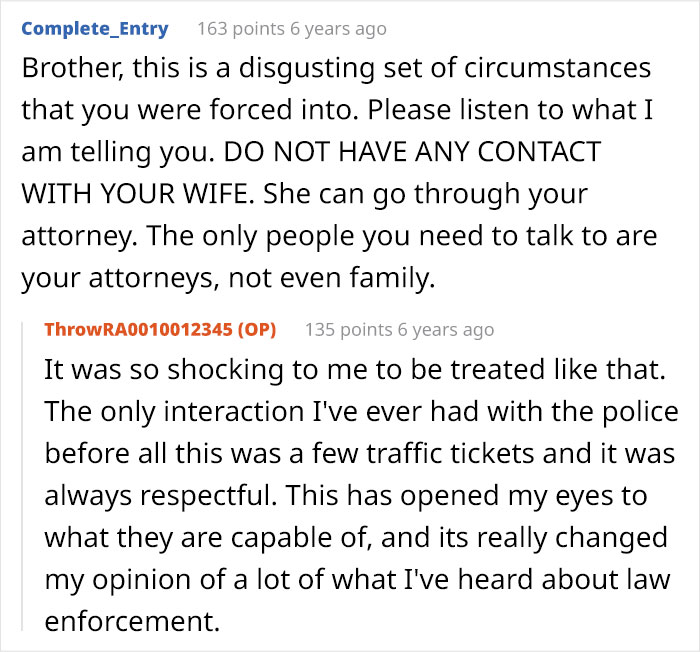
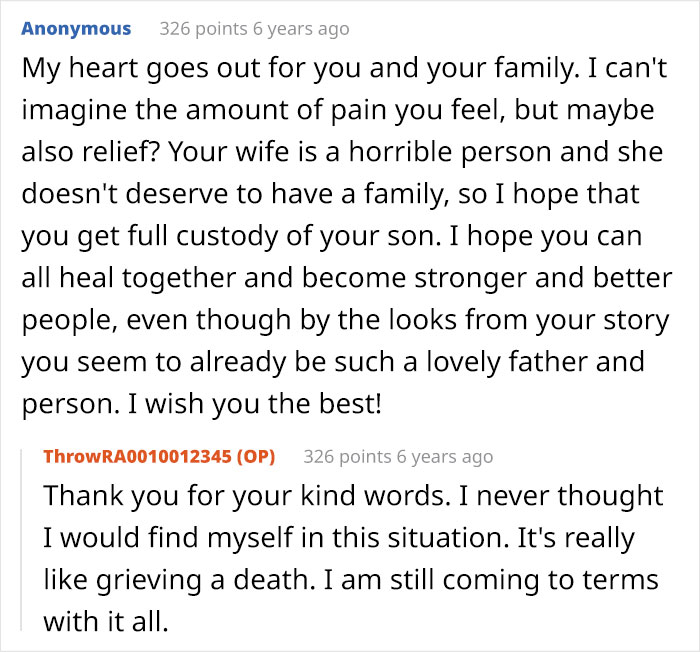
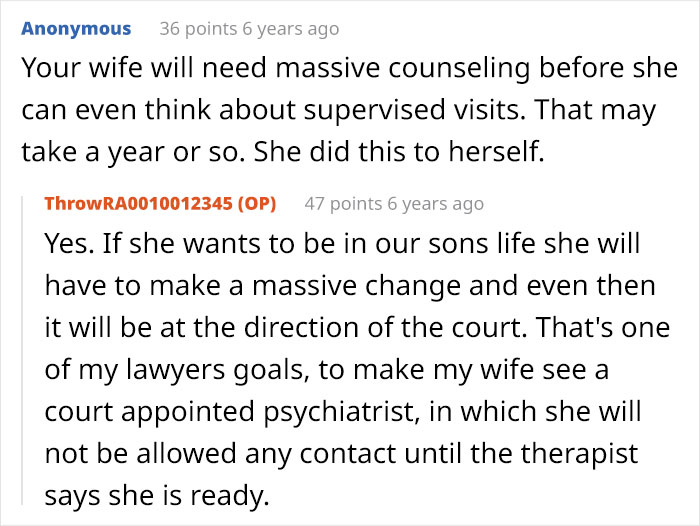
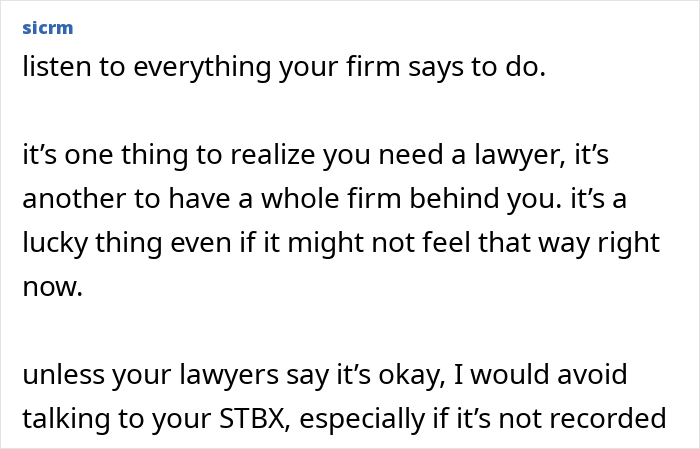
Naturally, the internet had plenty to say about this situation

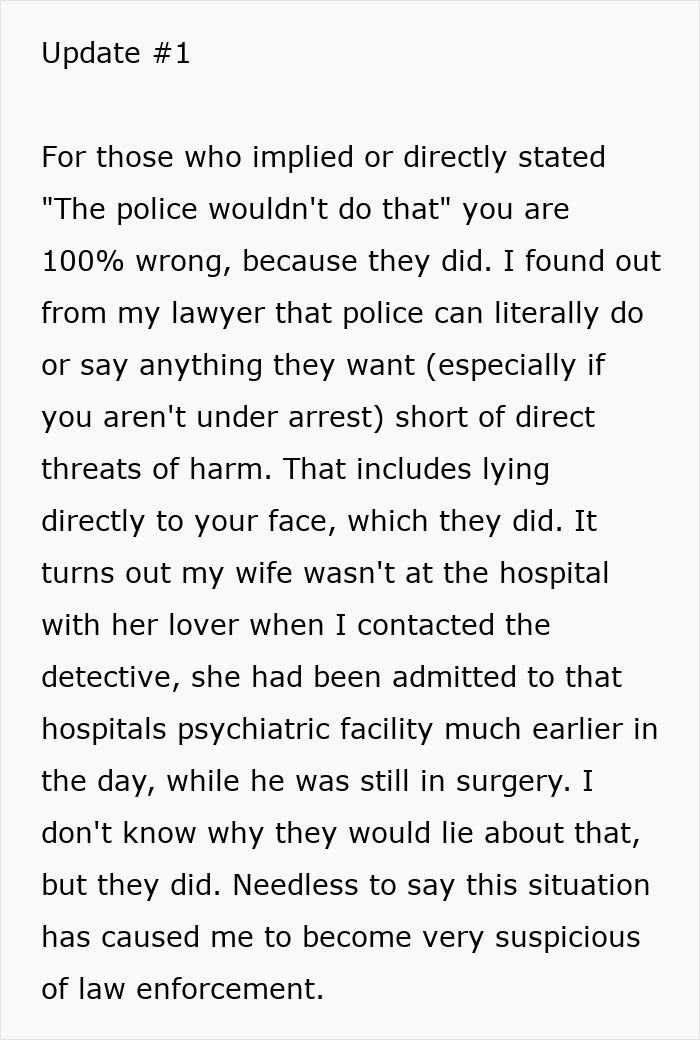
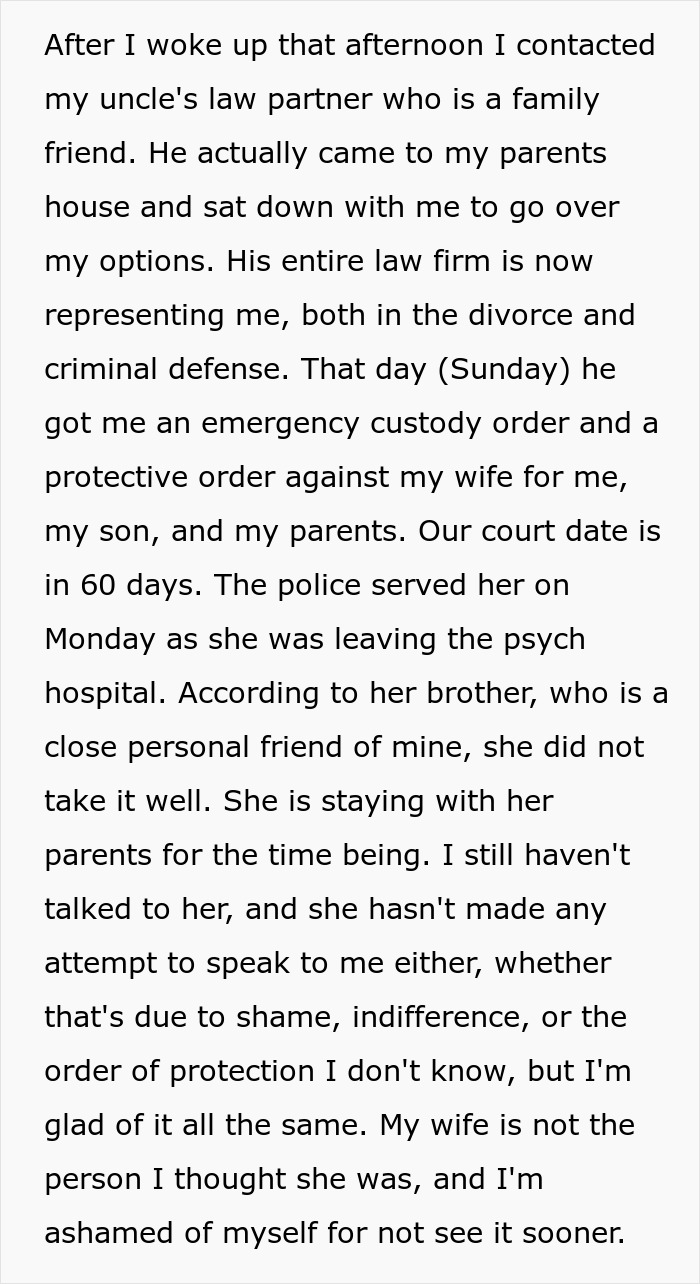
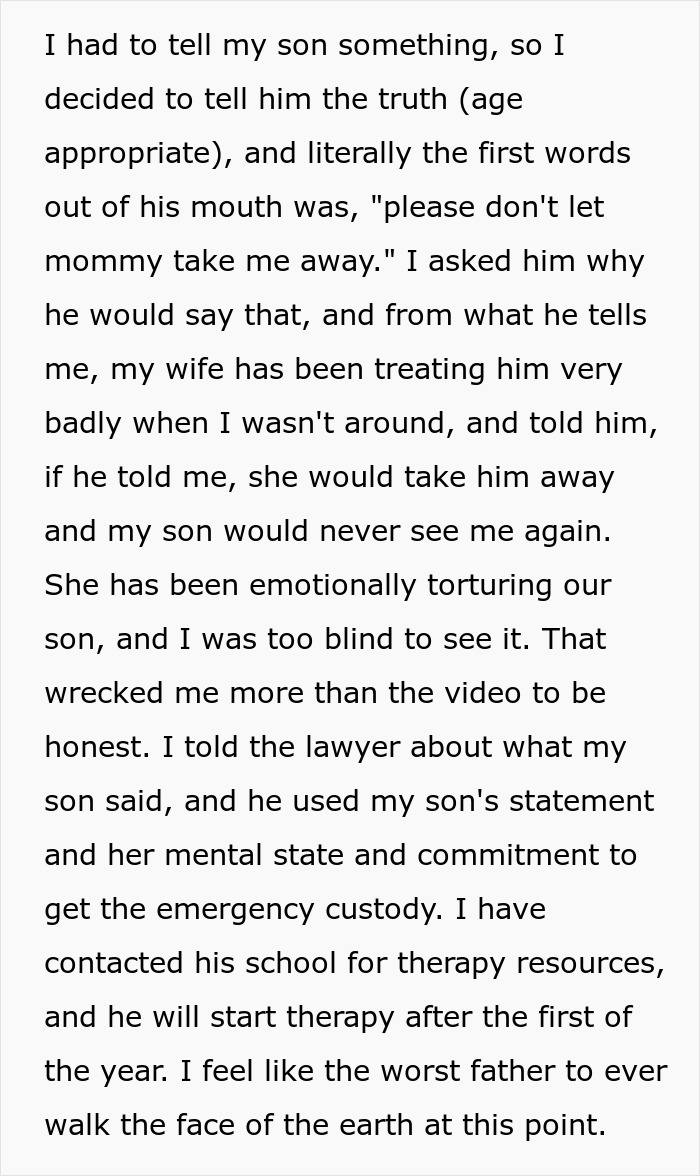
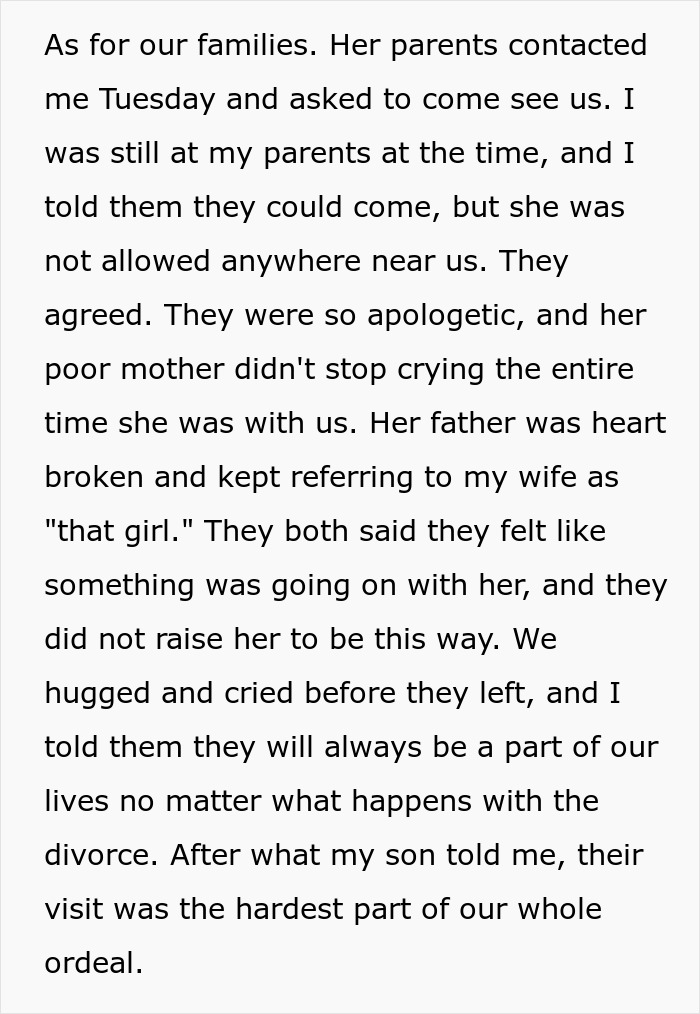
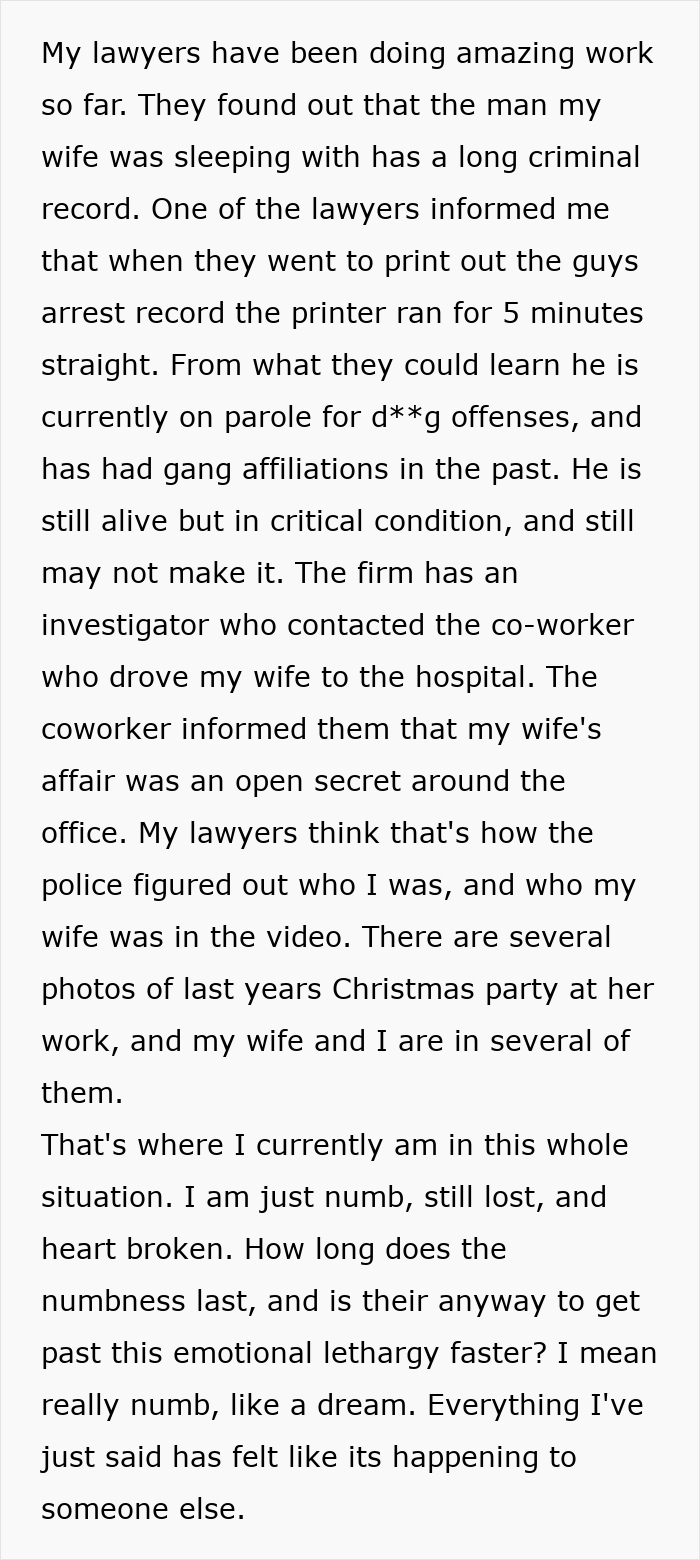
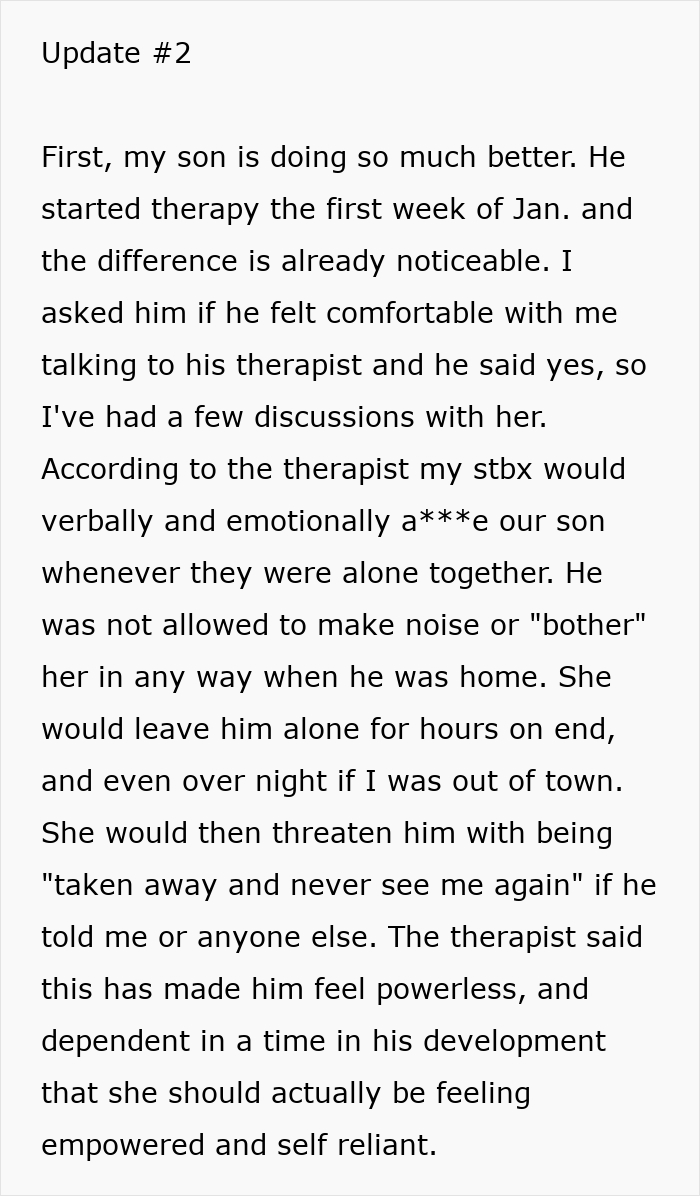
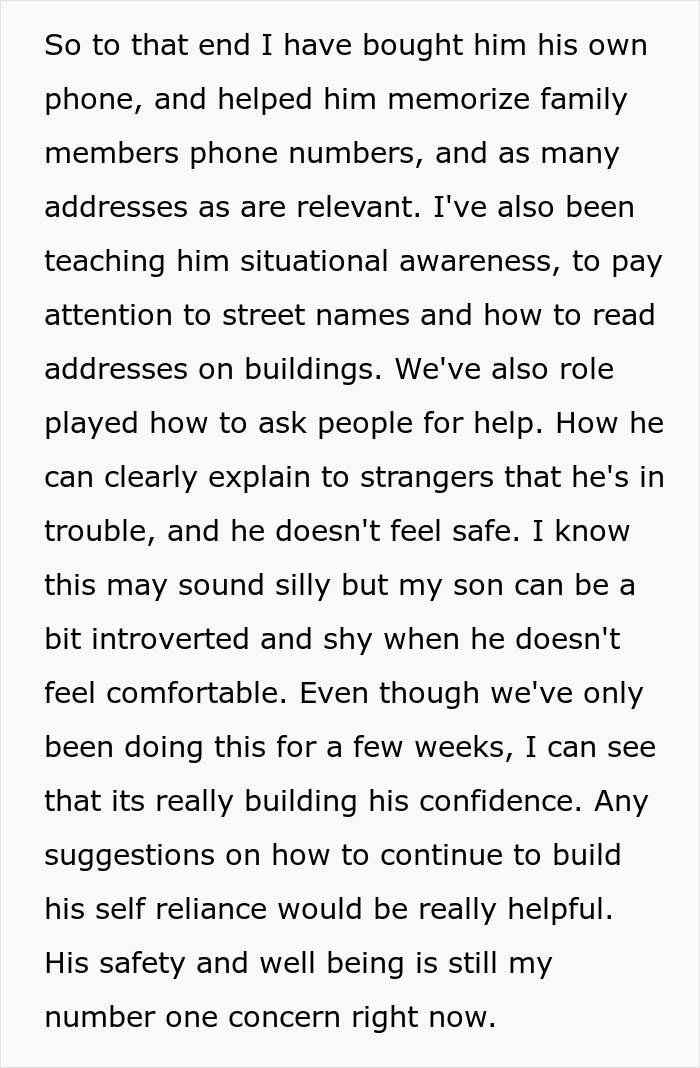
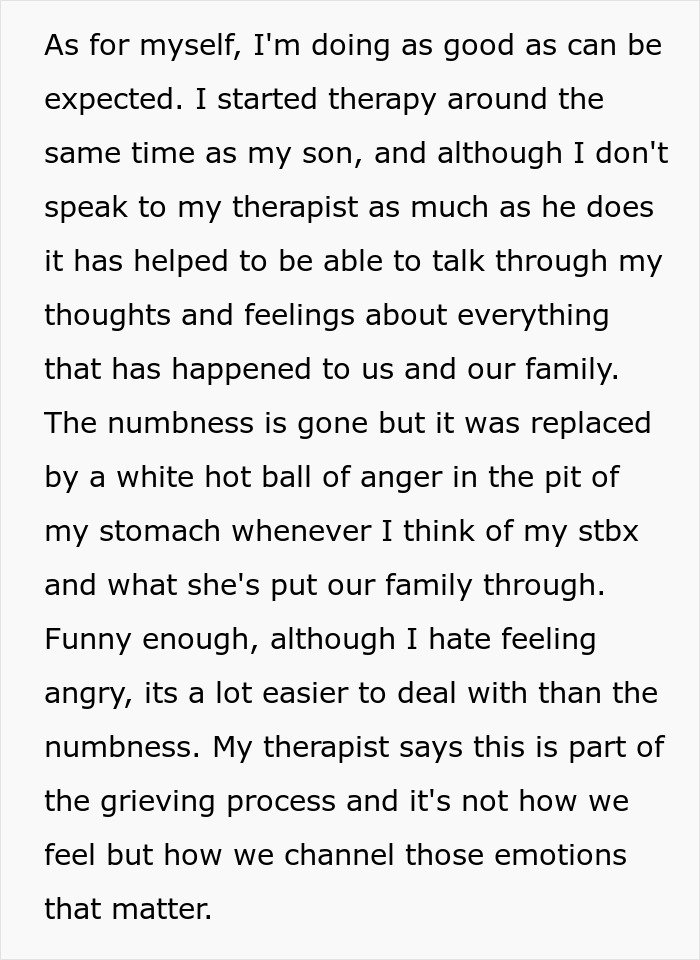
The man came back with an update on his situation and clarified some of the readers’ doubts

Julia M Cameron / Pexels (not the actual photo)

Mikhail Nilov / Pexels (not the actual photo)
He gave some more info in response to the comments
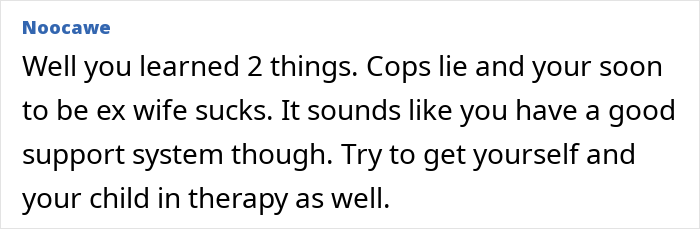

In yet another update, the man shared how their court mediation played out

Vitaly Gariev / Unsplash (not the actual photo)

MART PRODUCTION / Pexels (not the actual photo)


Pavel Danilyuk / Pexels (not the actual photo)
Vitaly Gariev / Pexels (not the actual photo)
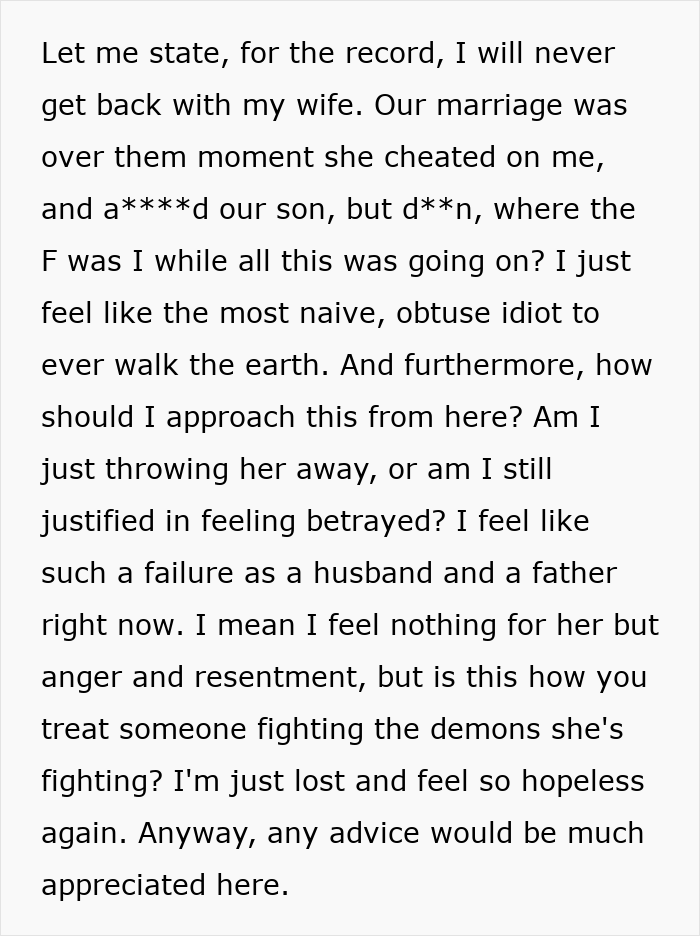
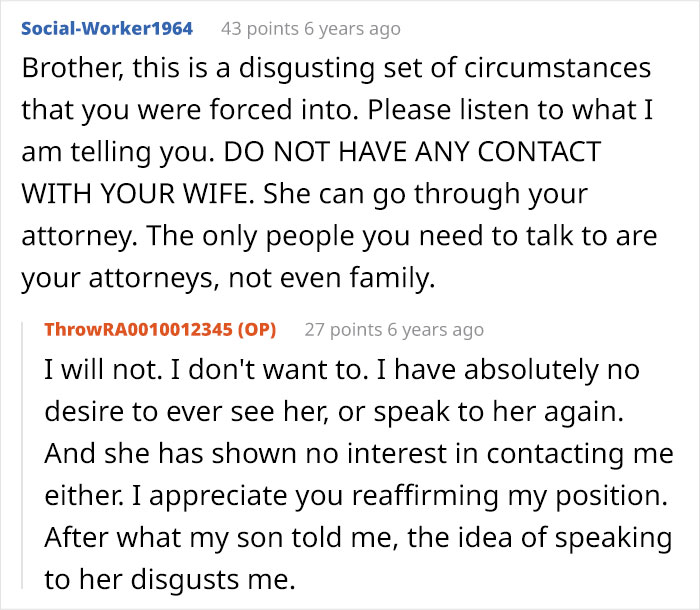
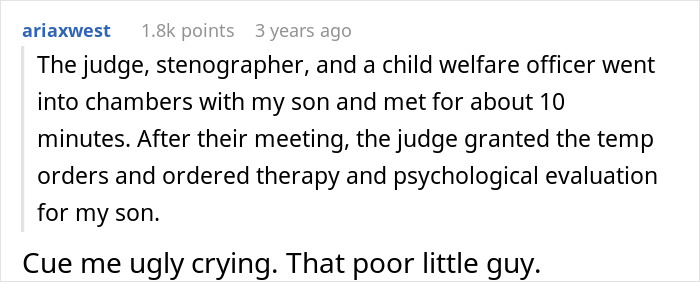
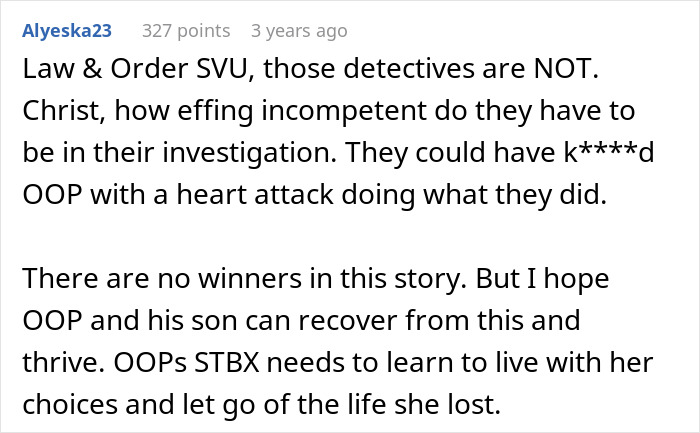
Here is how the internet reacted to his story — and the advice they had for him
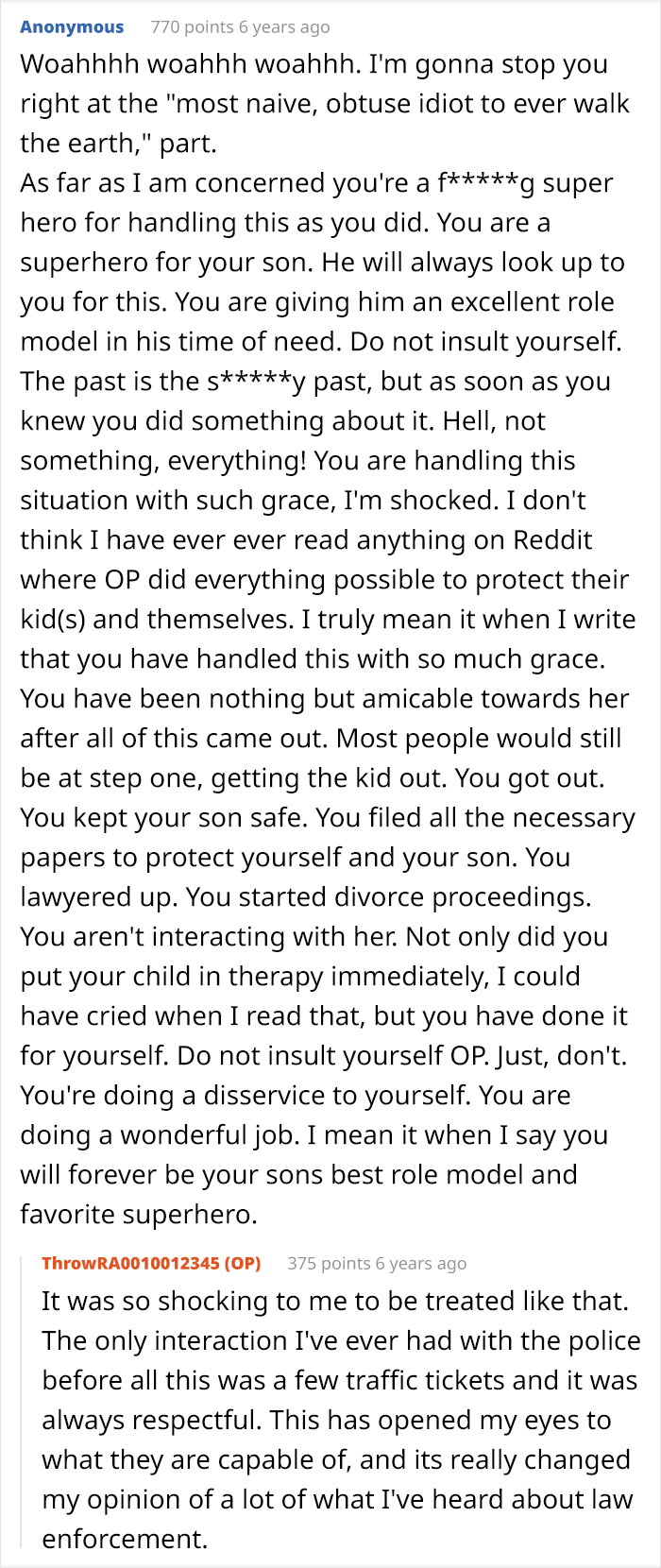

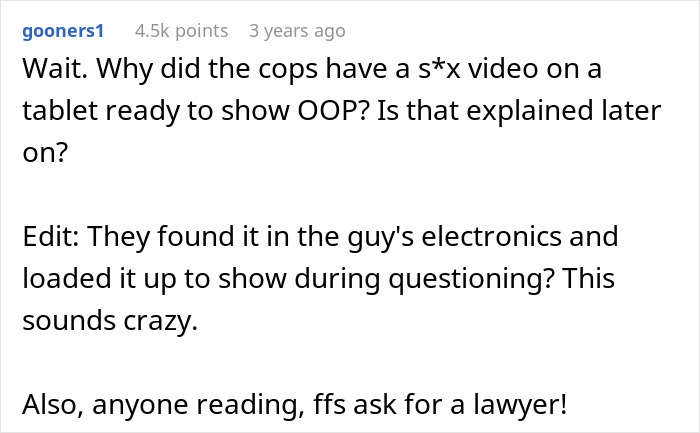




 Follow Us