Every January, roughly 80% of the population decides that this is the year. The year they learn Spanish, master the guitar, get into investing, finally understand what a stock actually is, and become the kind of person who meal preps on Sundays. By February, the Duolingo streak is no more, the guitar is back under the bed, and dinner is whatever can be ordered in under thirty minutes.
The resolution industrial complex has claimed another victim. Better luck next year. Here’s the thing nobody tells you about self-improvement: the version that actually sticks is never the dramatic, life-overhauling, new-year-new-me kind. It’s the unglamorous, useful skill that you picked up in a month because someone on the internet told you it was worth trying and you had nothing better to do.
More info: Reddit
#1
Learning to pause before spending.
Not budgeting. Not spreadsheets. Just the tiny skill of asking: “Do I actually want this, or am I trying to change how I feel right now?” It takes less than a month to practice, but it can change your relationship with money forever.
I got so interested in this that I ended up creating a full app about money patterns and financial habits, partly to learn it myself. It’s called MoneyDNA, and I’m happy to share it if it helps someone else notice their patterns too.

Image source: Mental-Boat-9974, fabrikasimf

#2
Top “less than a month” skills that helped me:
– touch typing vs hunt and peck, can double typing speed for some
– top 60 most common words in a foreign language, two a day, won’t get you to a conversation, but will let you be polite and get you out of being stranded in a foreign country
– non-sub-vocalized speed reading – just above your talking speed. 1 month is enough to get over the sub-vocaliaztion habit when you want to. Saves me a few hours of work each week
– how to politely say no – reading one negotiation book on how to turn things down and PRACTICE it for a month to get comfortable using it
– social dancing – do 4 weekly dances with lessons and it’s enough to impress people and open a door of social and human connection.

Image source: NafariaSiren, jannoon028
#3
Interviewing Skills.
I work as a career coach and I’m often amazed by the progress folks can make in 3 sessions if they are open to feedback and commit to practicing.

Image source: Kennikend, blackNull
There is a persistent 21-day habit rule, but it is not based on research. It originated from a plastic surgeon named Maxwell Maltz who observed that his patients took about 21 days to adjust to their new appearance after surgery. No formal experiment. No control group. So take it with a pinch of salt.
The actual research told a different story. A landmark 2009 study found that habit formation takes anywhere from 18 to 254 days, with an average of around 66 days for participants to reliably incorporate a new daily behaviour. The 21-day figure persisted because it felt reasonable. Not too fast to be implausible, not too long to be daunting. It was just a great piece of PR.
The useful takeaway from the research is that consistent daily repetition is the single biggest factor in whether a behavior becomes automatic, not the specific number of days, not the intensity of the effort, and definitely not the strength of your January conviction. A month of consistent daily practice is enough to build a real foundation for most of the skills in this thread. Whether it becomes permanent is up to you.
#4
Cooking – learning how to make the basics, plus some good stocks/broths, baking, braising, all of it. Will take you very far.

Image source: juneprk2, senivpetro
#5
At age 50 I learned to make my bed right after I get up, almost 65 and still doing it everyday. Simple skill and discipline but start the day with an achievement.

Image source: Zen11Art11, pvproductions
#6
Surprised no one has mentioned CPR training. Take a half-day course and you could save someone’s life—a pretty good investment.

Image source: Loud_Machine_2248, The Yuri Arcurs Collection
Touch typing is the skill on this list with the highest cumulative return for almost anyone in modern professional life, and also the one most people have been meaning to learn for fifteen years and haven’t. The gap between hunt-and-peck typing and touch typing is not a small quality-of-life upgrade. It is approximately 160 hours per year for the average knowledge worker.
Over a 40-year career, it compounds into years of recovered time. Actual years from just typing correctly. The investment is remarkably accessible too. An hour with a free platform like TypingClub, Keybr, or Typing.com, is enough to learn the home row position and correct finger assignments for every key. That hour will not make you fast. The speed comes from weeks of practice that follow it.
But the hour builds the foundation without which the practice cannot work, and the correct foundation learned once prevents the formation of bad habits that make relearning necessary later. For anyone under 30 who hasn’t yet calcified their hunt-and-peck method into something load-bearing, this is the most straightforward ROI available in a single evening. Try to work a little more than your thumb, for once?
#7
How to use Ai for daily life , can speed up your life about 100%.
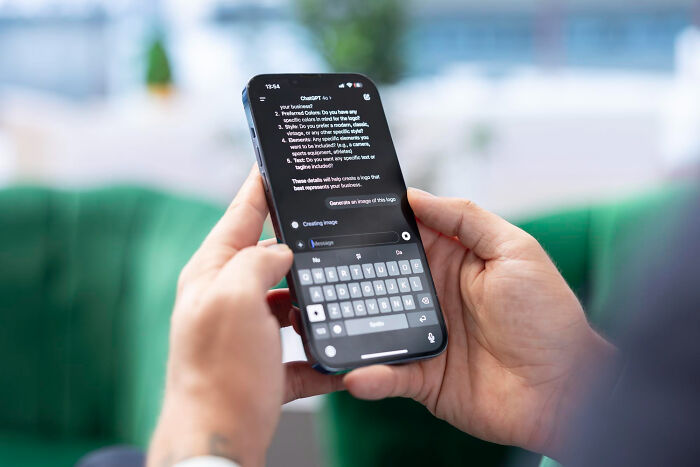
Image source: TonyaStark190, DC Studio
#8
Not to come off pervy, but learn how to properly pleasure your partner. Everyone appreciates a giver. ❤️.

Image source: Parade2thegrave, lookstudio
#9
How to properly launder/take care of clothes depending on the material and treat different type of stains.

Image source: No_Inspection_2120, pressfoto
The Heimlich maneuver takes only 15 minutes to learn from a video and has the potential to save someone’s life at any dinner table, restaurant, or family gathering for the rest of your life. Choking ends approximately 5,000 lives in the United States every year, and many of those accidents occur in the presence of people who simply didn’t know what to do.
The technique itself is specific, learnable in a single session, and requires no equipment, no certification, and no preparation beyond having watched the video. Among all the skills on this list, this is the one where not knowing it carries the most irreversible consequence. The 15 minutes it takes to learn it is the highest-leverage quarter hour available to any adult with people in their life who eat food.
If you are feeling really heroic, you can take it a step further and learn CPR. This one takes a little more practise and some professional instruction, but you can still get certified in 2 to 5 hours. That seems like a small price to pay for saving a life.
#10
I have to share! i took a month-long sewing class at local community college and knowing how to sew is so exciting for me. i’ve always lusted after nice/cool/designer clothes for high-quality craftsmanship and learning how to sew is empowering me to upcycle and eventually make my own stuff. wish i had learned ages ago:).
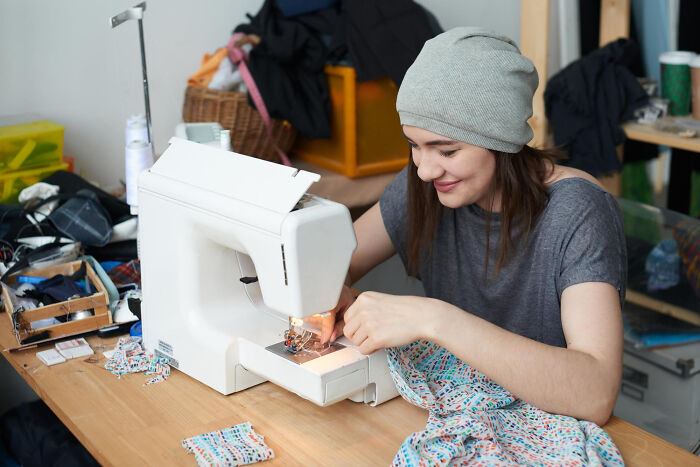
Image source: LongjumpingSurvey801, amixstudio
#11
Baking bread from scratch or very close to it!

Image source: sharkarmycrafts, wavebreakmedia_micro
#12
You could get pretty good at sleight-of-hand in a month. You’d be able to make small objects vanish anything that fits in one hand, then pull it out of anywhere.
You could put together a solid card trick routine in a month. Not just one “yeah I think I remember a card trick, let me make these three piles of seven” but an actual little show.

Image source: mrbrown1980, mike.shots
For once, WebMD delivers some good news. The more you learn, the better your brain becomes at learning, which means that picking up any new skill isn’t just useful in itself; it’s actively improving the hardware doing the learning. A study of adults aged 58 to 86 who took three to five new classes over three months found that their mental abilities increased to the level of people thirty years younger after just six weeks.
The assumption that children learn faster and more effectively than adults turns out to be less about biological advantage and more about circumstance. Children are simply placed in environments where learning new things is constant and expected. A survey of adults over 40 found that 50% don’t learn something new in a given week, which means the gap isn’t neurological; it’s motivational.
The brain doesn’t age out of learning. It just gets asked to do it less often. Ask it more often. It will respond accordingly, and apparently with plenty of enthusiasm.
#13
Learning how to speak in cadence. Specially if you’re looking into public speaking or more inclined to holding presentations. I talk too fast before and when I noticed how great public speakers pauses and speak in cadence, it gave their way of speaking and context more weight.
I personally admire how Jefferson Fisher talk. Look him up, he’s on Youtube.

Image source: Humble_Percentage701, pch.vector
#14
Swimming and bike riding.

Image source: Some-Wishbone2648, Getty Images
#15
Writing letters, sending cards, exchanging snail mail makes things so nice. Doesn’t have to be much. A birthday card, just saying hi, etc.
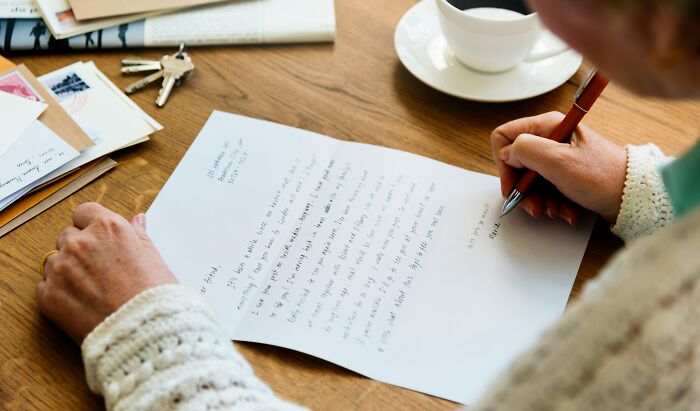
Image source: WaverlyCrowe, Getty Images
The skill that came up more than any other in the thread was cooking. Specifically, learning to actually cook rather than surviving on the same four meals on rotation until the end of time. The returns are immediate, cumulative, financial, social, and nutritional simultaneously, which makes it one of the most efficient single skills on this entire list. Luckily, Lifehack breaks the process down with refreshing practicality.
Start by accepting that failure is part of it; a collapsed soufflé is not a personality flaw; it’s just life. Then, learn to switch between tasks in the kitchen without losing the thread entirely. Also, invest in appropriate tools, which does not mean expensive tools, just the right ones. Find good, healthy, genuinely simple recipes rather than starting with anything that requires a blowtorch or a thermometer.
And prepare in advance wherever possible, because future-you, arriving home tired, will be disproportionately grateful to past-you for having done literally any of this already. One month of cooking consistently will not make you a chef. It will make you someone who can feed themselves well, spend less money, and impress people at dinner parties with very little additional effort. That is a pretty life-changing outcome.
Have you ever learned a life skill in less than 30 days? Share your knowledge with us in the comments!
#16
Being able to identify good vs. bad sources of information as well as being able to tell if the information is being presented in a biased light. This isn’t just directed towards the elderly. Just the other night a friend of mine was worried because he read an article saying that several heavy metals were detected at higher levels in his cities drinking water compared to previous years. I read over the article and while it was factually correct, it failed to mention that the difference between the last year and this year was marginal and also an order of magnitude under what legal limits are. The water was safe to drink, but from the article, you’d of thought the city just dumped industrial waste right into the pipes.

Image source: Internal-Page5974, Roman Kraft
#17
Financial literacy and basic investing skills!

Image source: Ok_Reality_6846, TabTrader.com
#18
Using a fire steel to light a campfire instead of matches. Just a heads-up though, you might end up wanting to spend more time outside and feeling better overall.
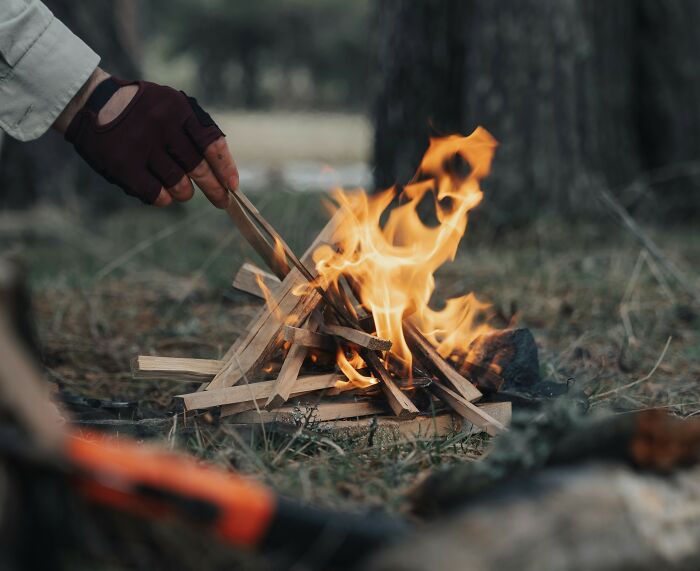
Image source: v3gard, Mohamed hamdi
#19
Proper note rewriting. Being able to look at a bunch of disorganized notes and make the info organized. It didn’t take me that long to figure out but once I did- it’s life changing to be able to take tons of random, scattered info and condense it in an organized way.
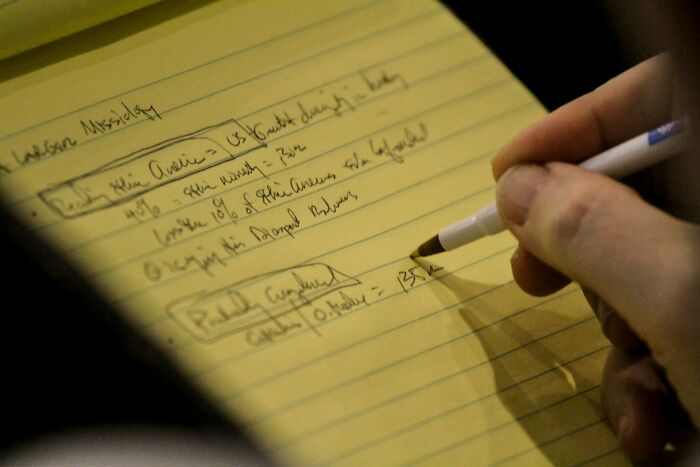
Image source: Hungry_Objective2344, Mick Haupt
#20
Learning to auto draft payments to different accounts when you get paid. savings, retirement, etc.
Compounding over time when you put it in a 401k,Roth, etc. life changing in sure time.

Image source: Primary_Excuse_7183, Kateryna Hliznitsova
#21
Breathing properly. Through your nose.

Image source: royalpyroz, Lucas Caixeta
#22
Tieing my own shoes.
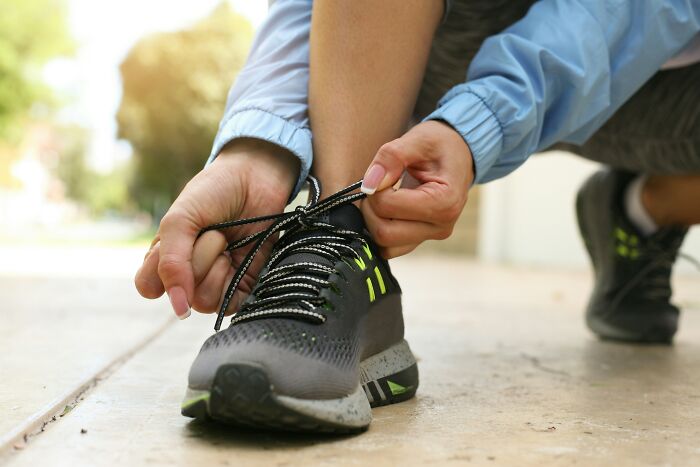
Image source: yournakedbodyisart, Getty Images
#23
Time management.

Image source: Pretend_Whole_565, magnific
#24
Juggling. It’s an instant stress reliever.

Image source: TheGayBob, magnific
#25
Keeping your mouth shut.

Image source: Lower-River-7386, magnific
#26
Pausing before responding to anything.

Image source: travelnmusic, magnific
#27
The two finger whistle thing. it only took a week or two.
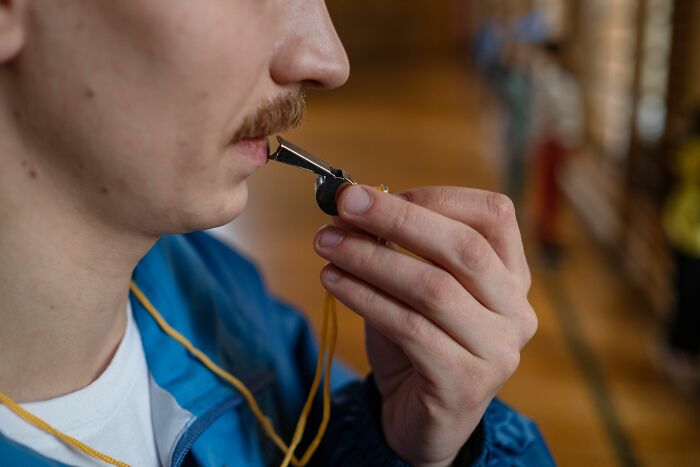
Image source: Ducky555556, cottonbro studio
 Follow Us