An 11-year-old girl tragically lost her life while swimming in a resort pool during a family vacation in Liguria, Italy.
It is the fifth case in three months involving the passing of a minor in a swimming pool in the country.
An expert has since told Bored Panda how these tragedies could be prevented, as well as the major warning signs that could indicate that a pool is not safe for children or adults.
An 11-year-old girl’s family vacation turned into a heartbreaking tragedy after a pool accident
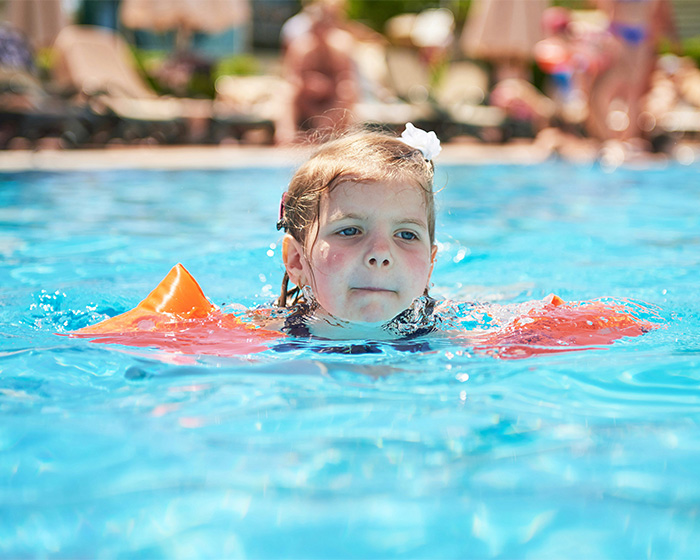
Image credits: Getty Images/Unsplash (Not the actual photo)
On July 15, Alice Ferrari was swimming in a pool during a family vacation in Sestri Levante when her hair became trapped in the pool’s suction pipe.
Another child raised the alarm after noticing the 11-year-old girl had failed to resurface.
The resort’s co-manager, Daniele Muzio, quickly jumped into the pool and cut Alice’s hair with a pair of scissors to free her from the suction nozzle, which was connected to the pool’s filtration system.
Alice was unconscious when she was pulled from the water and received CPR for 45 minutes.


Image credits: Tg1


She was then airlifted in critical condition to Gaslini Children’s Hospital in Genoa, where she lost her life two days later.
Muzio and his mother, Anna Copello, who co-manages the Bagni Segesta resort with him, are now under investigation in connection with the incident.
A resort co-manager desperately tried to save the young girl after her hair became trapped in the pool’s suction pipe
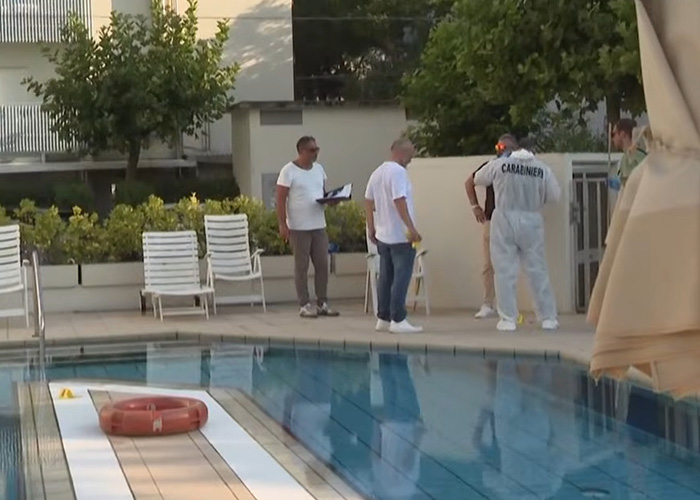
Image credits: Tg1
According to Italian media, authorities are investigating whether the resort managers complied with safety regulations, including the rule requiring children under 12 to be accompanied by an adult while swimming.
Initial investigations suggest the resort failed to display the mandatory sign informing visitors of the rule.
The one-meter-deep pool is also being examined to determine whether it complied with safety regulations.

Image credits: yanadjan/Adobe Stock (Not the actual photo)
Investigators have collected statements from staff members and several swimmers. They have also obtained video surveillance footage and photographs to reconstruct the event leading up to tragedy.
Alissa Magrum, executive director of the National Drowning Prevention Alliance (NDPA), discussed Alice’s case and highlighted the safety issues parents should look out for when determining whether a swimming pool is safe.
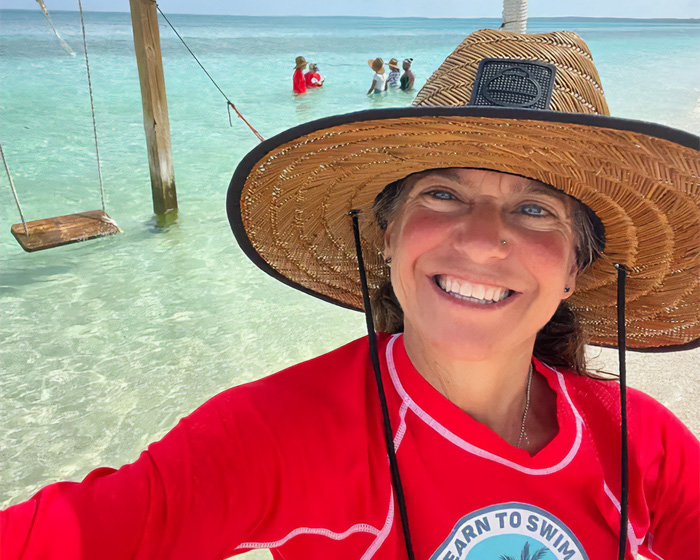
Image credits: Alissa Magrum
Magrum explained that accidents like Alice’s can occur if a pool or its circulation system is not properly maintained, or if a drain cover is damaged, broken, missing screws, or not properly secured.
If these requirements are not met, “powerful suction can be created and a swimmer’s hair (or even bathing suit strings) can become entangled and entrapped.
“This suction is very powerful, making it nearly impossible for a person to break free.”
Alissa Magrum of the National Drowning Prevention Alliance revealed the pool dangers that could put swimmers of all ages at risk
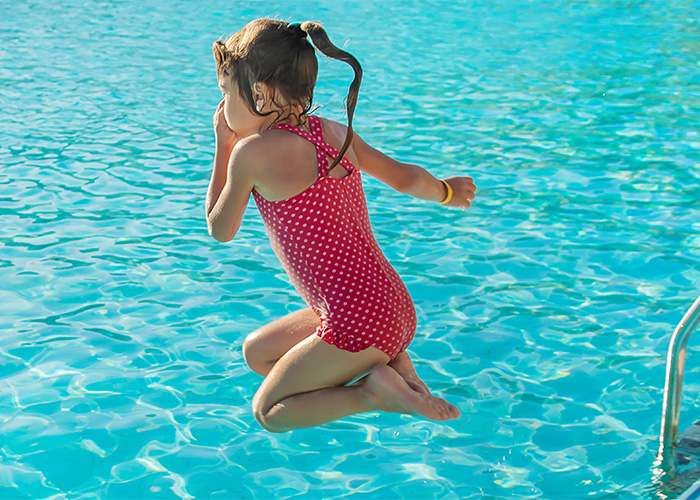
Image credits: yanadjan/Adobe Stock (Not the actual photo)
If this happens, the pool pump should be shut off immediately. The swimmer’s entangled hair or bathing suit strings should also be cut to free them as quickly as possible.
In the United States, pools and spas should be designed and maintained in accordance with the safety standards mandated by the Virginia Graeme Baker Pool and Spa Safety Act, which became law in 2007.
The law is named after Virginia Graeme Baker, a 7-year-old girl who lost her life from drowning due to a suction entrapment caused by a faulty drain cover.
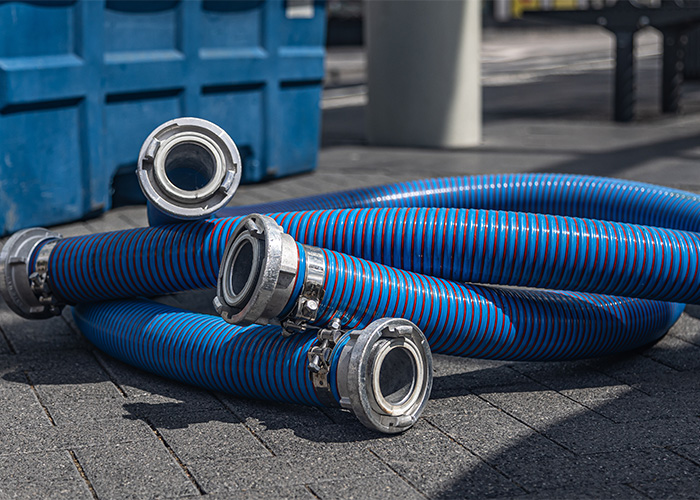
Image credits: jokuephotography/Adobe Stock (Not the actual photo)


The safety standards require anti-entrapment drain covers as well as secondary anti-entrapment systems, such as automatic pump shut-off systems that turn off the pump if an abnormality is detected.
“Pool operators and homeowners should regularly inspect drains to ensure covers are intact,” Magrum stressed. “Safer drain covers should be dome-shaped, not flat.”
A simple piece of damaged equipment can create powerful suction capable of trapping a swimmer
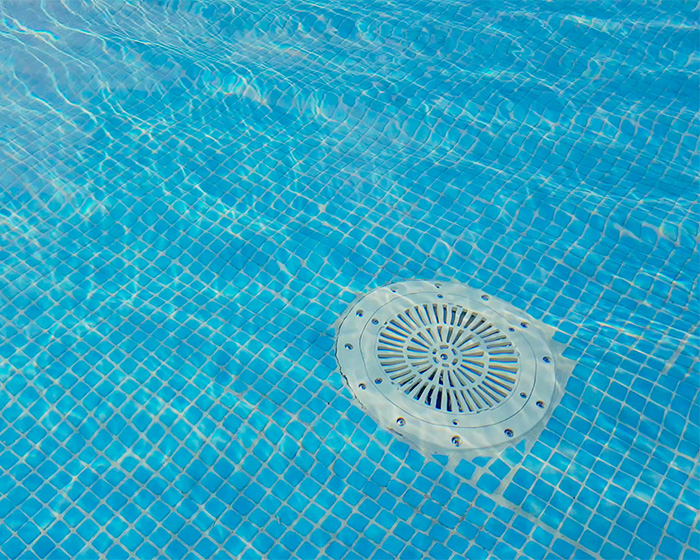
Image credits: clairelucia/Adobe Stock (Not the actual photo)
The expert emphasized that all swimmers, regardless of age, should stay away from drains while swimming in a pool or spa. They should also learn how to shut off the power to the pool pump in case of an emergency.
“We also teach them to tie up long or loose hair and avoid wearing bathing suits with strings to reduce the risk of entrapment and entanglement,” the NDPA executive director said.
Image credits: Monkey Business/Adobe Stock (Not the actual photo)


Magrum warned that, in addition to a swimmer getting their hair trapped in a suction nozzle, pool drain entrapment can occur when a portion of the body—usually the torso or back—completely covers the drain, creating a seal.
They could also have an arm, leg, foot, or hand lodged in or sucked into an open or broken drain pipe, or have their jewelry or clothing become caught or lodged in the drain cover or fittings.
An adult should be assigned as a water watcher, providing constant and close supervision to children while they swim
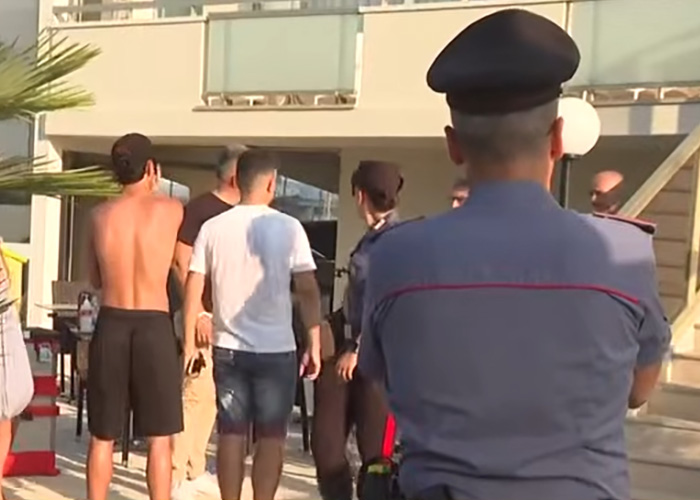
Image credits: Tg1
Magrum continued, “We recommend setting and enforcing pool and water safety rules such as no running in the pool area and identifying any safety hazards upon arriving at a pool.
“This can include slippery surfaces, as well as acknowledging the water depth (where it is shallow and where the depth changes) so that weak or non-swimmers only go where they can safely stand or navigate the water based on their competency.”
To help prevent drowning accidents, the NDPA advises families to assign a responsible adult to act as a water watcher. This person should provide constant, close, and undistracted supervision to children while they swim.

Image credits: Tg1
People should also learn how to perform CPR and teach their children to call for help if something is wrong.
“Drowning is fast, silent, and preventable,” Magrum said. “We know that with education and public policy (legislation) we can prevent drownings and water-related tragedies from occurring.”

Image credits: InfiniteFlow/Adobe Stock (Not the actual photo)
Alice, from Suisio, was a promising young talent in the equestrian community. After the tragedy, her parents consented to their daughter’s organ donation.
Italy’s Minister for Civil Protection and Maritime Policies, Nello Musumeci, has since co-signed a bill with Health Minister Orazio Schillaci to introduce stricter measures for swimming pool safety.
Alice Ferrari became the fifth child to lose their life in a swimming pool in Italy in just three months

Image credits: Tg1
“In the last three months, five minors have d*ed in swimming pools. Strict discipline is needed, but also greater caution is needed in never leaving children alone in the water,” Musumeci stated.
“The Meloni government’s bill, aimed at this goal, will be approved by the relevant committee within the month, and we will do everything possible to schedule it urgently.”
Prime Minister Giorgia Meloni reportedly wrote a letter to the mother of a 12-year-old boy who lost his life in a hot tub at a spa in Pennabilli, Italy, during the Easter period.
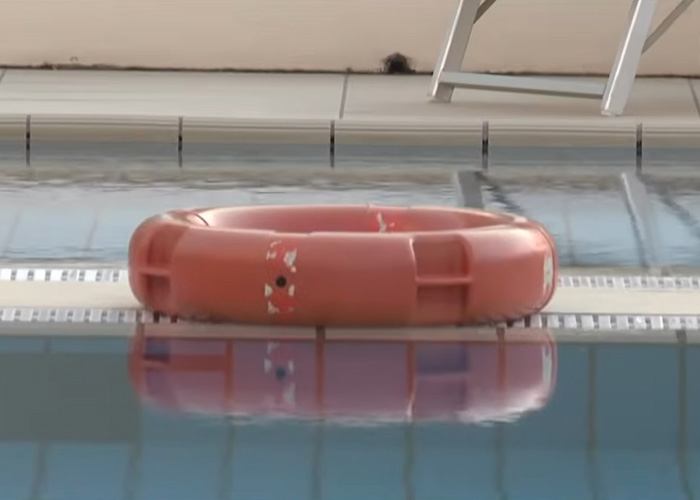
Image credits: Tg1

Image credits: Vox España
The boy’s leg became trapped in the hot tub’s suction system, leaving with his head submerged for several minutes. Family members who were present were unable to save him.
Meloni stated that “a national law is needed to minimize the risk of someone dy*ng in a swimming pool, as unfortunately happened to Matteo and other children and young people in recent months.”
Officials hope new safety measures will prevent other families from experiencing the same unimaginable loss

Image credits: Maurizio Brandimarti/Facebook

Image credits: CronacaNera/Facebook
In April, a 7-year-old boy lost his life after becoming trapped in a hotel swimming pool’s suction system in Castelforte, Lazio, Italy, during his birthday celebration.
“When will this end? These are preventable fatal accidents,” one reader commented

















 Follow Us