If you’re a woman, chances are you’ve faced or witnessed sexism in the workplace. Sadly, it still happens but not everyone turns a blind eye. Take one hardware store, for example, where a customer boldly refused help from a highly skilled female colleague, insisting he needed a “real man” to assist him.
The author could have ignored it but instead, he stepped in with a clever, unforgettable twist. What followed left the customer stunned, humbled, and reminded him that respect and expertise aren’t defined by gender. Keep reading to see how this story unfolded.
Customers in stores can sometimes be impatient, demanding, or downright difficult

Image credits: Oxana Melis / Magnific (not the actual photo)

A man shared how he cleverly dealt with a sexist customer who refused to believe a female employee at the hardware store where they worked

Image credits: ROKA Creative / Magnific (not the actual photo)
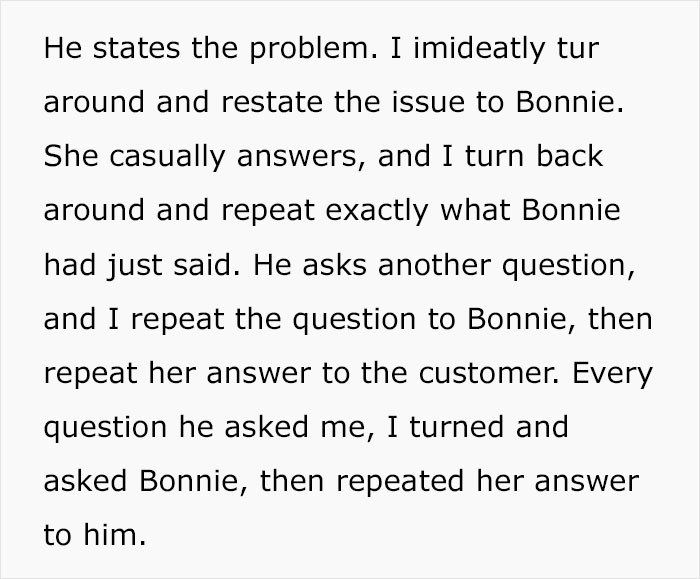
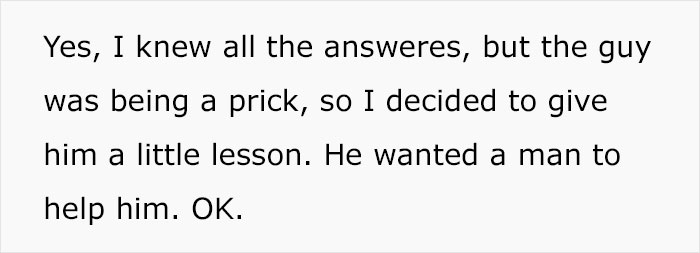
Image credits: goofball1963
Women are often overlooked for leadership roles due to bias, limited mentorship opportunities, and unequal access to career advancement
Over the past few decades, women have steadily entered the workforce around the globe, making up more than 40 percent of the total workforce today. Yet despite this progress, only about one-third hold senior or leadership roles, and fewer than 30 percent work in science, technology, engineering, and mathematics (STEM) fields. It’s clear that while women are present in numbers, their representation in positions of influence and in high-growth, high-paying industries remains far from equal. This gap is not just a statistic; it reflects the barriers, biases, and structural challenges women face every day in their careers.
The challenges start even before women land a job. Finding employment can be significantly harder for women than for men, and the gap is especially striking in certain regions. According to the International Labour Organization, in Northern Africa and the Arab States, women’s unemployment rates exceed 20 percent. Even highly qualified candidates struggle to break into the workforce, and this early disadvantage often sets the stage for unequal opportunities later in life.
Gender discrimination in the workplace takes many subtle and not-so-subtle forms. HR policies and decision-making often fail to account for or actively disadvantage women. Hiring practices, promotions, and career development programs can favor men, intentionally or unintentionally. Studies show that even when women perform at the same or higher levels than their male colleagues, they are frequently underpaid, overlooked for key assignments, and face longer timelines to advance. The system is structured in ways that quietly but persistently favor men over women at nearly every stage of a career.
Research highlights three key areas where gender inequality persists: the gender pay gap, the underrepresentation of women in leadership, and slower career progression for women compared to men. Women are often expected to work harder to prove themselves, and they may face biases, skepticism, or even active resistance from male colleagues who are reluctant to take direction from women. Structural barriers mean women receive less mentorship, fewer high-visibility assignments, and limited sponsorship while men in similar positions are supported and encouraged to rise quickly.
According to the latest Women in the Workplace study, only half of companies actively prioritize women’s career advancement, continuing a worrying trend of declining commitment to gender diversity. Many women report being passed over for critical projects or promotions solely because of their gender, and fewer programs exist to support their professional growth. Even initiatives like formal mentorship, remote work options, and targeted career development programs (which historically benefited women) are being scaled back in some organizations. HR leaders are increasingly aware that these changes could have long-term consequences for women’s career trajectories.
Companies should build more inclusive policies and growth pathways so women can access leadership roles and thrive professionally
Another worrying trend is the ambition gap. Research shows that women are often less interested in pursuing promotions than men, but this isn’t due to a lack of capability or drive. When women receive the same career support, mentorship, and opportunities as men, the ambition gap disappears. The issue isn’t women’s motivation; it’s unequal access to resources, sponsorship, and encouragement. Without these, women may understandably hesitate to pursue advancement in an environment that feels less supportive or more challenging.
Addressing gender discrimination at work requires intentional action. Companies can start by reviewing their HR policies, hiring practices, and promotion criteria to uncover hidden biases and structural barriers. Leadership must commit to creating equitable opportunities, including mentorship programs, sponsorship initiatives, and fair performance evaluations. Transparent processes for pay, promotion, and recognition are crucial, as is ensuring that women have access to high-profile projects that prepare them for leadership roles. The key is not just equal treatment on paper but tangible support that helps women thrive at every stage of their careers.
Cultural change is equally important. Organizations need to foster inclusive workplaces where men actively support women’s growth and challenge outdated stereotypes. Leadership training should build awareness of unconscious bias, and success metrics should reflect diversity and inclusion as core priorities. Work-life balance policies, flexible scheduling, and programs that support caregiving responsibilities can help level the playing field. When companies combine structural reforms with a culture that genuinely values women’s contributions, the workforce becomes not only fairer but also stronger, more innovative, and more resilient.
In this case, the story is a powerful reminder of how impactful workplace support can be. When the customer insisted on being helped by a man, the author didn’t just step in — he highlighted his colleague’s expertise in a way that quietly proved the point. Moments like this show how meaningful it is when coworkers stand up for one another and challenge bias rather than ignoring it. Support from colleagues can make workplaces fairer, more respectful, and far more empowering for everyone involved. What are your thoughts on this situation?
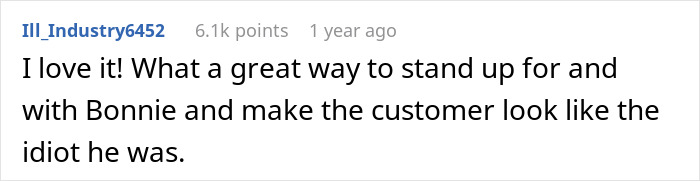
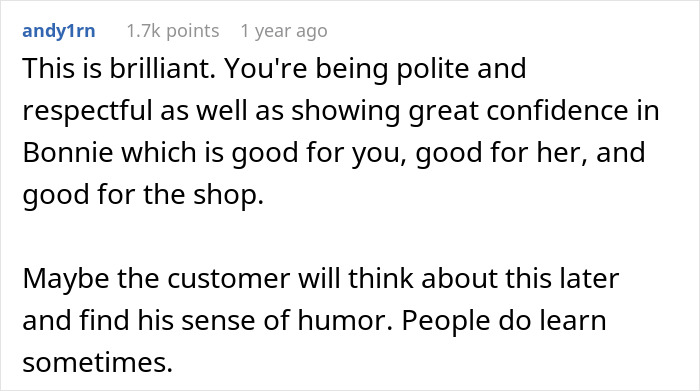
Many people online applauded the man’s response, calling it both satisfying and well-deserved




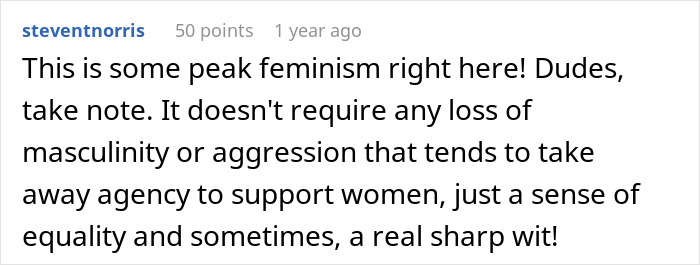

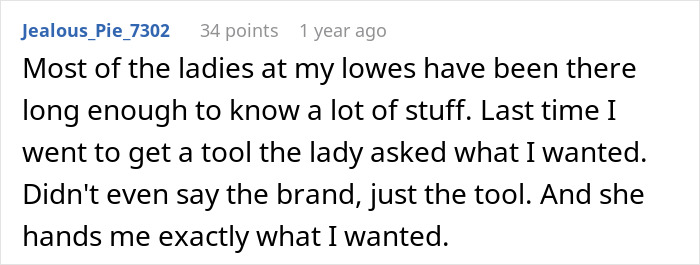
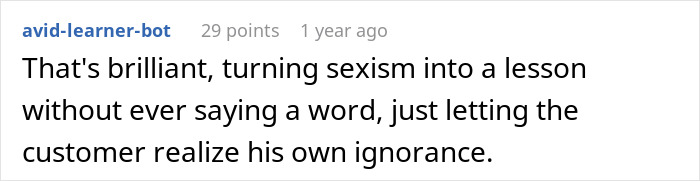

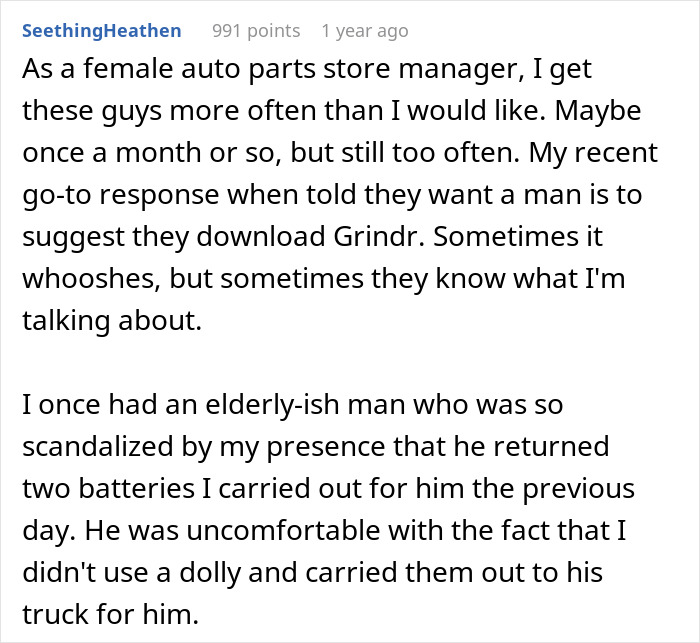
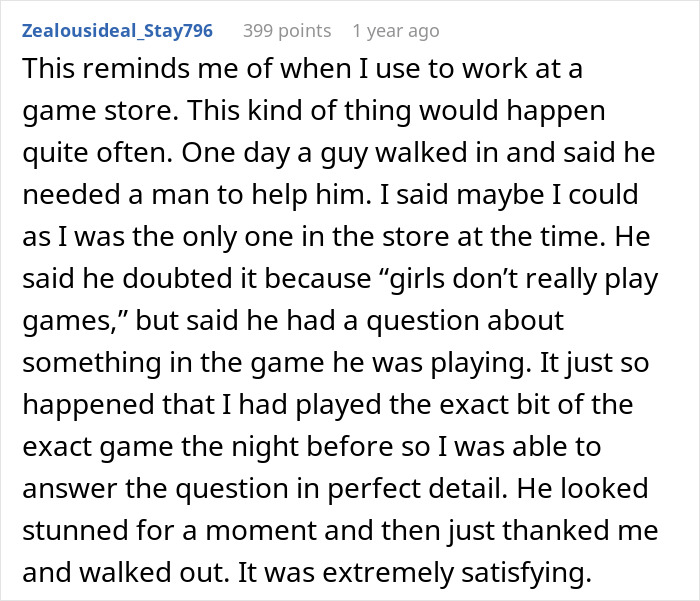
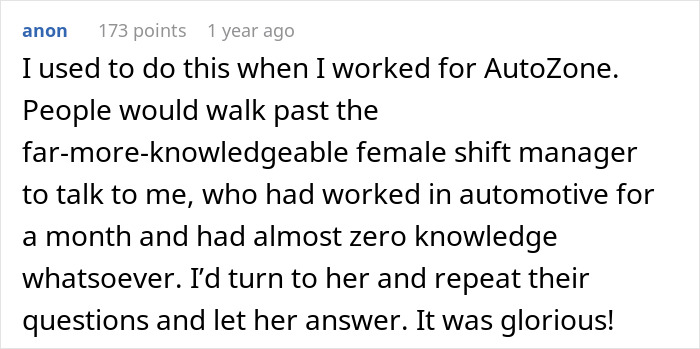
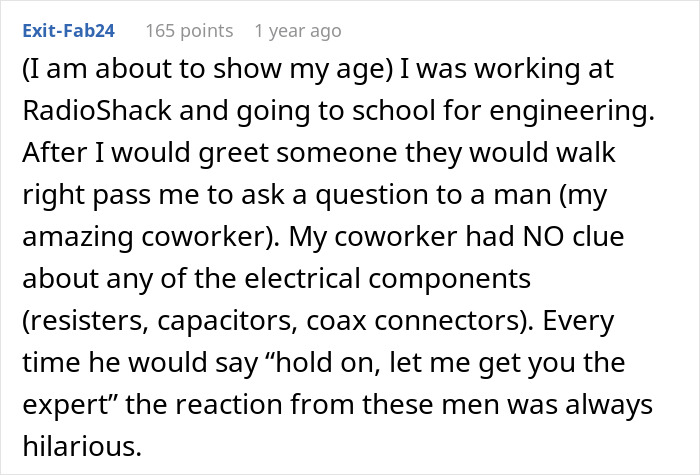
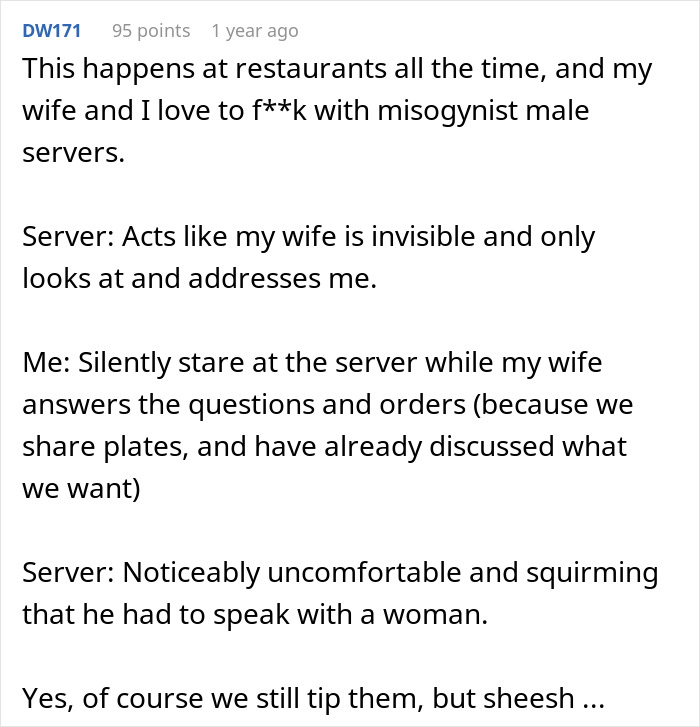
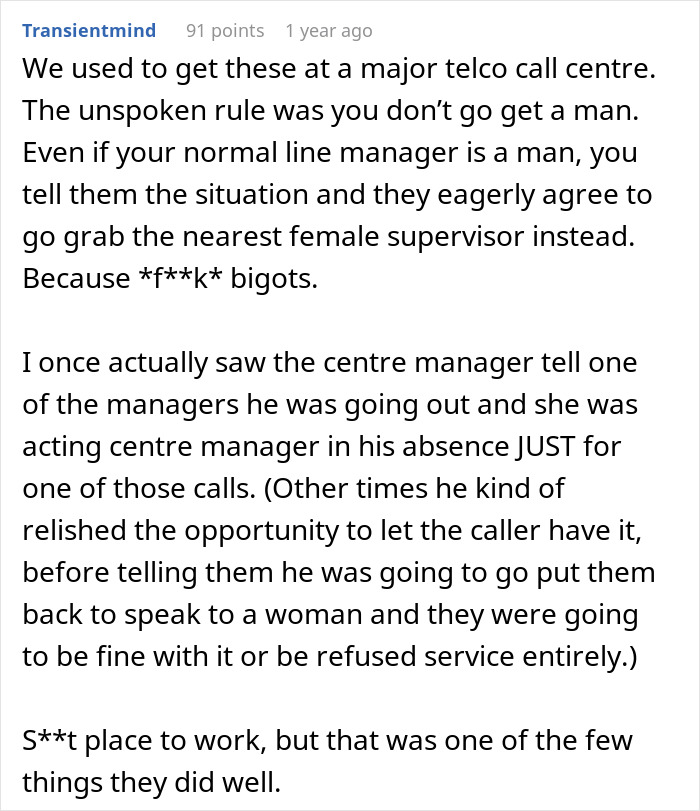
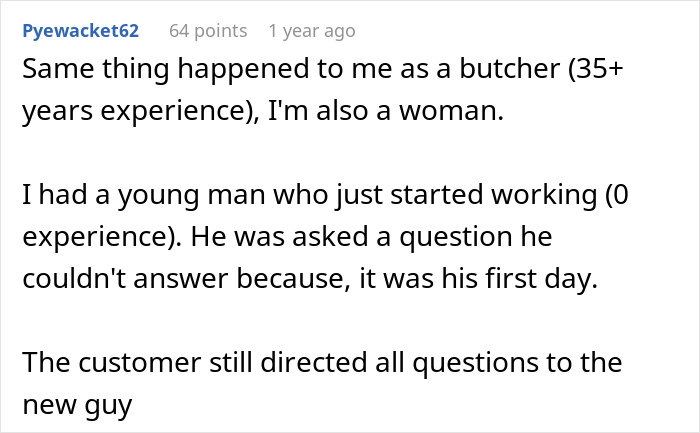
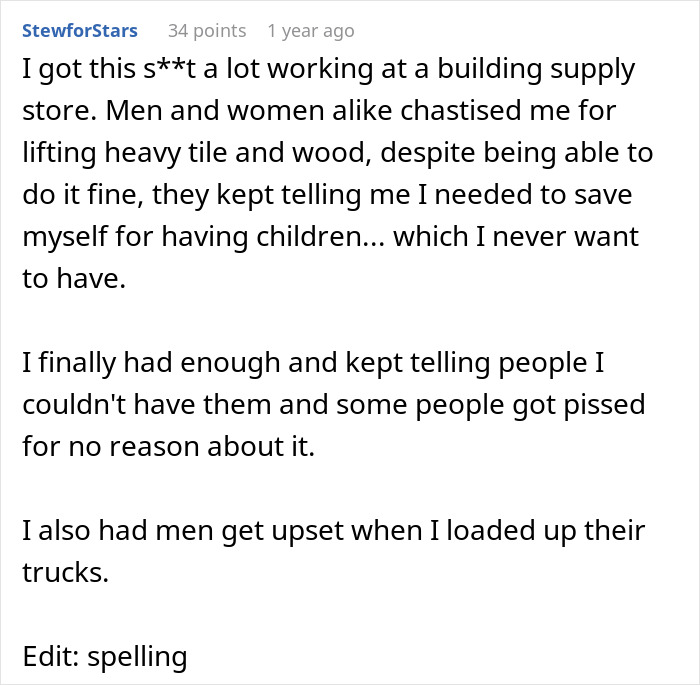
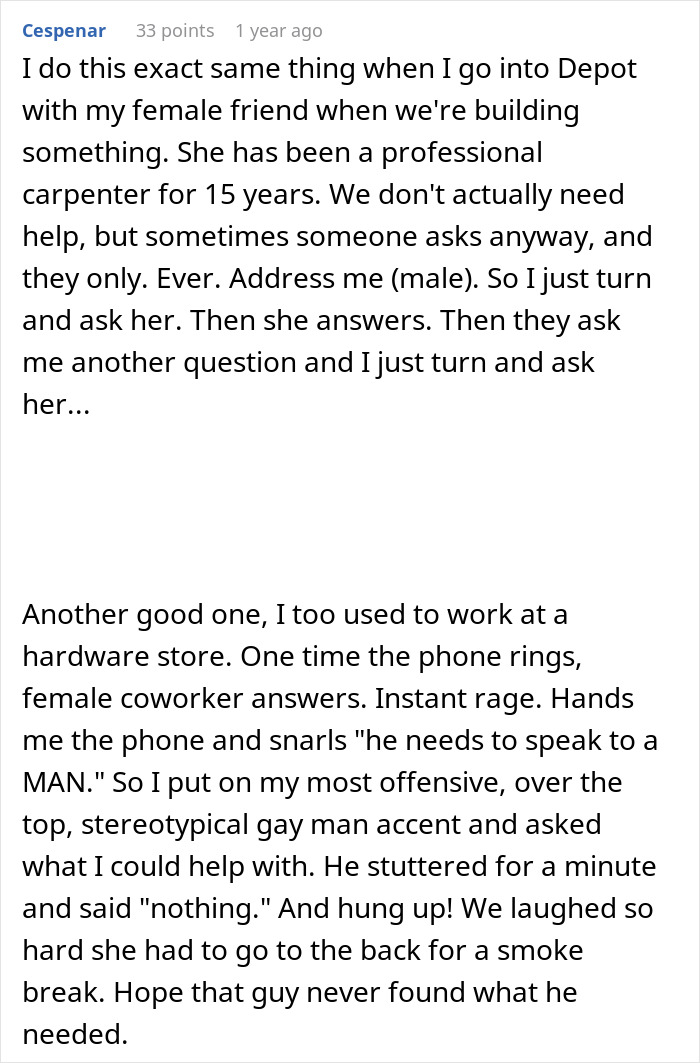
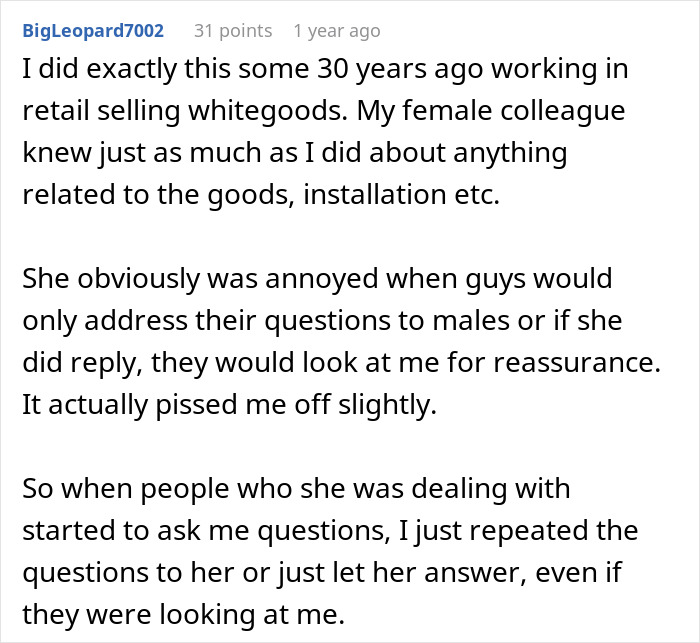
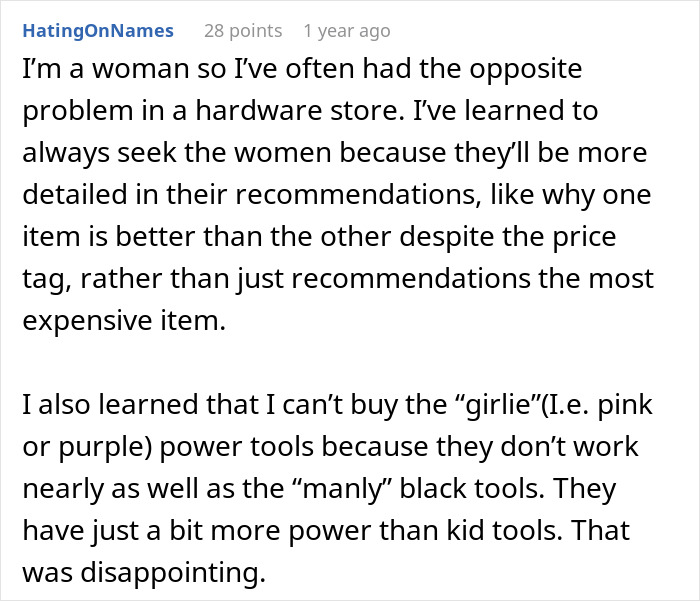
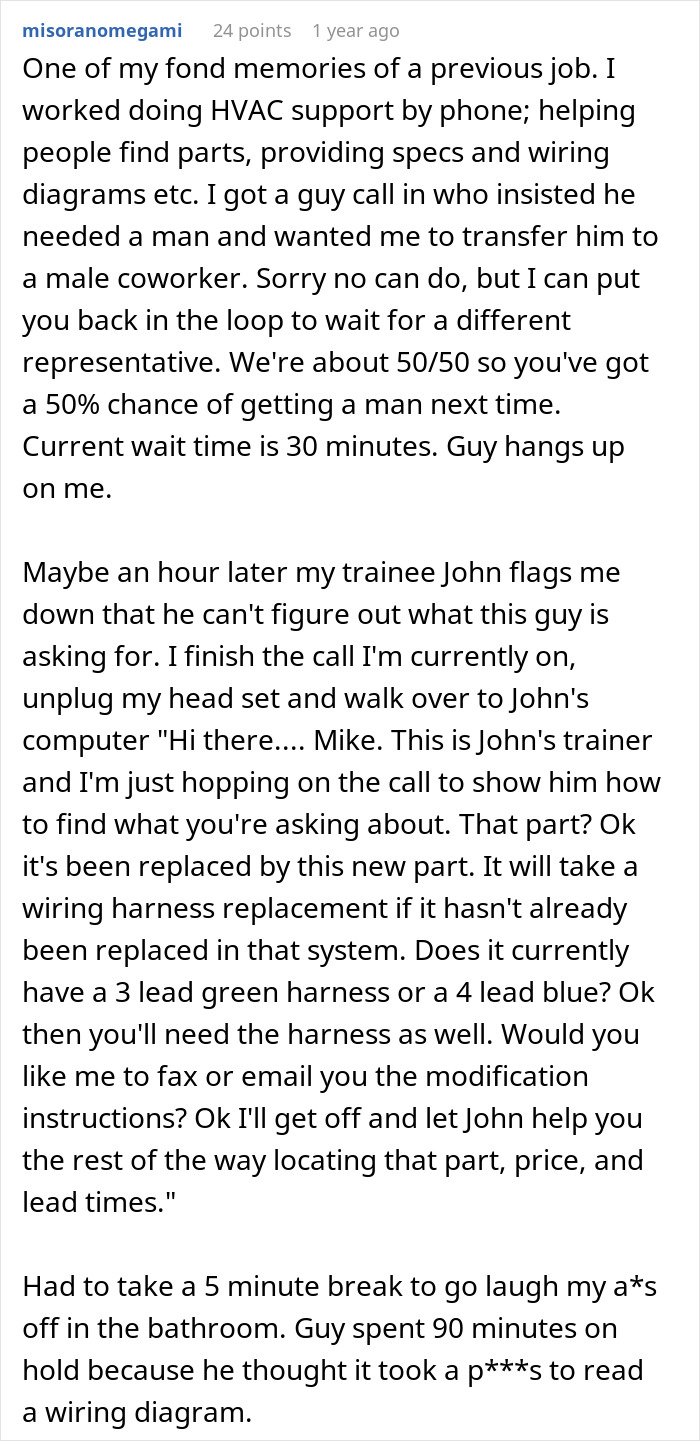
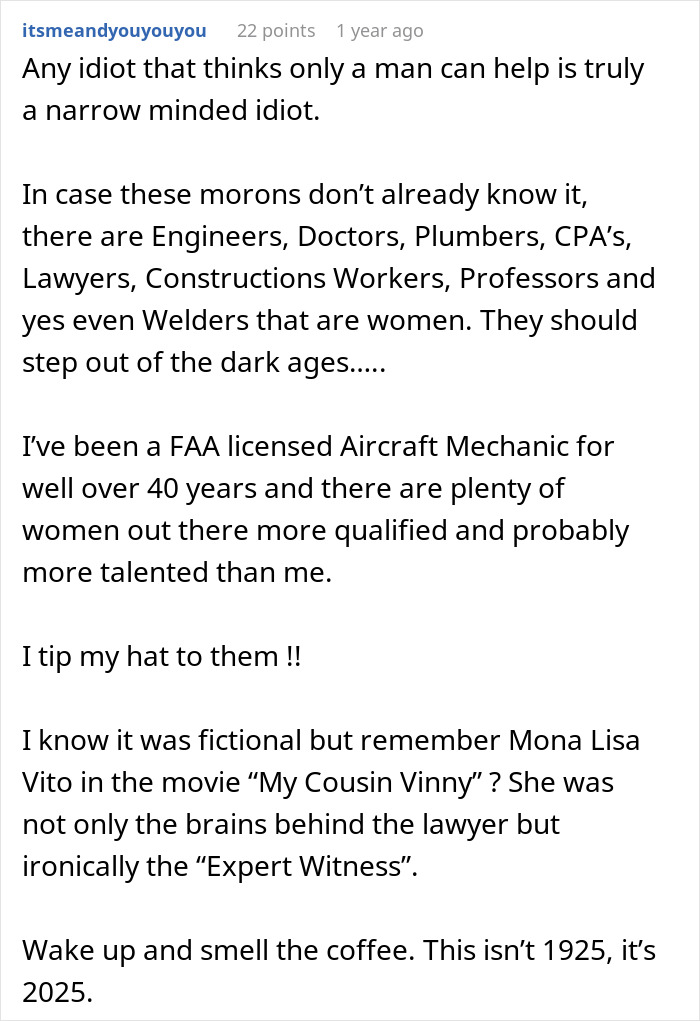
Others chimed in with similar experiences, sharing the frustrating encounters they had faced with sexist or entitled customers themselves
 Follow Us