In the United States, an 18th birthday is a big deal. Freshly turned adults may not be able to purchase alcohol, but they can make questionable decisions in plenty of other ways, including getting a tattoo.
According to a survey by Advanced Dermatology, 28% of tattooed Americans got their first piece of ink before they even turned 19. And while a quarter admit that they no longer like at least one of their tattoos, they’re much more likely to regret pieces they got before age 21.
So it’s no surprise that the tattoo removal industry is now worth 1.29 billion dollars globally. And it’s not expected to slow down any time soon, as it’s been growing at a rate of 15% annually.
But this trend isn’t actually new at all. The British gentry went through it in the 1880s, as did New York Socialites during the 1890s. Tattoos have long been notorious for overstaying their welcome on their canvases.
Tattoo removal has become a booming industry as more and more people rethink decisions they once expected to keep forever
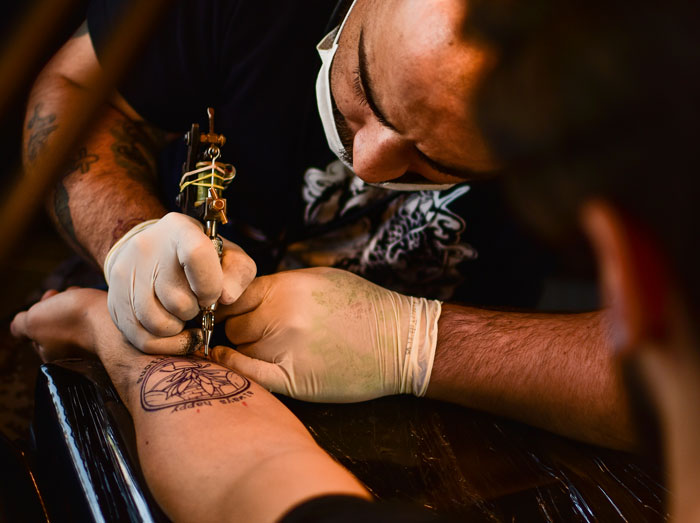
Image credits: Julia Giacomini / Unsplash (not the actual photo)

Tattoos are easier than ever to get, but sometimes the thrill of getting one fades much faster than the ink itself
Getting a tattoo is exhilarating. Following the thrill of coming up with a brilliant idea and finding the perfect artist to execute it, there’s a huge adrenaline rush that comes along with the needle piercing your skin. That’s actually part of the reason why so many people find getting tattoos addictive.
Even if you can’t commit to an entire sleeve, there’s a good chance you have at least one piece of ink on your body. The Pew Research Center reports that one-third of Americans have at least one tattoo, and 22% have more than one.
The most common reasons cited for getting inked are to remember or honor someone or something, to make a statement about their beliefs, or to improve their personal appearance. But committing to something so permanent, particularly at a young age, shouldn’t be taken lightly.
Whether it’s their ex-girlfriend’s name or a Harry Potter quote that a person wants removed, it’s a blessing that we have the technology today to erase these regrets. Tattoo removal clinics are popping up in every city, and certain companies are expanding seemingly overnight. Removery, for example, now has over 150 locations across the U.S.
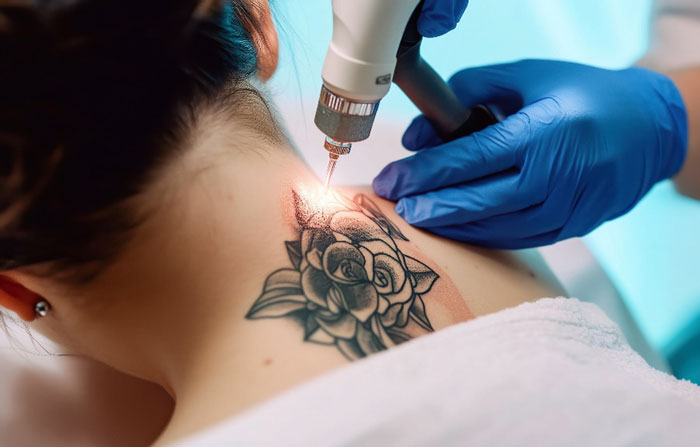
Image credits: alenikart / Magnific (not the actual photo)
Removing a tattoo is usually much more expensive, time-consuming and painful than getting one in the first place
Finding a clinic is by far the easiest part, though. Paying for the sessions and enduring the pain of removal are the next hurdles. The American Society of Plastic Surgeons reports that the average cost of a laser skin treatment, such as tattoo removal, is $697 per session.
Unfortunately, this is not a one-time fee. Removing a tattoo typically requires 7 to 10 sessions over the course of 1 to 5 years. And don’t forget: this is on top of the original cost of the tattoo. Which, depending on its size, may have run the client $100 to $1,000.
And just like getting a tattoo, removing one is not a particularly pleasant experience. Healthline notes that laser tattoo removal is comparable to the pain of a bad sunburn or having a rubber band snapped against your skin repeatedly. That’s why it’s wise to think long and hard about a potential tattoo before going through with it. And ideally, wait until you’re at least old enough to buy a bottle of wine.
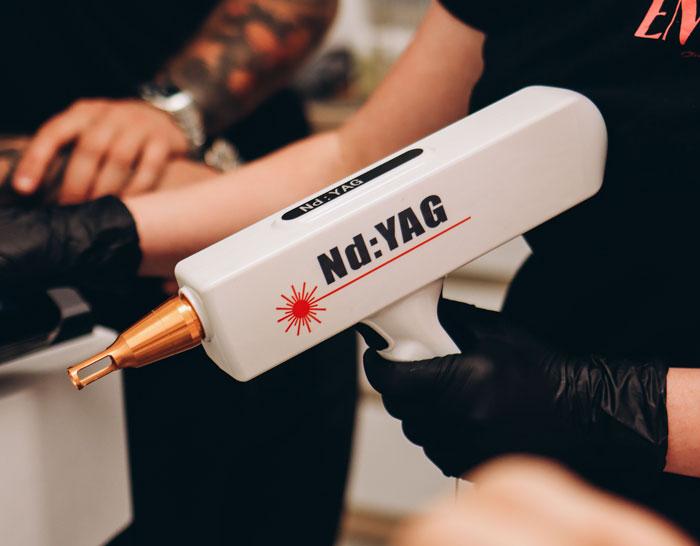
Image credits: Larysa Stratiichuk / Pexels (not the actual photo)
Getting tattooed at a young age and acting on impulse are among the strongest predictors of tattoo regret
According to a study of 417 tattooed teens in one Colorado school district, one-third expressed regret about their ink. Research has also shown that a person is more likely to regret their tattoo after having it for a long period of time, getting one on the face, neck, hands, wrist, or fingers, getting a tattoo due to peer pressure, being under the influence while receiving the tattoo, or experiencing an adverse event related to it.
But we can’t really blame young adults for branding themselves with artwork that they felt passionately about in that moment. After all, adolescents are famous for making decisions they’ll later come to regret. This is primarily because our brains aren’t fully baked until our early thirties.
Scientists say that the temporal gap between the development of the socioemotional system of the brain (which experiences a surge around puberty) and the cognitive control system of the brain (which extends through late adolescence) accounts for some aspects of risk-taking behavior. In fact, this gap has been likened to starting a car without having a skilled driver behind the wheel.
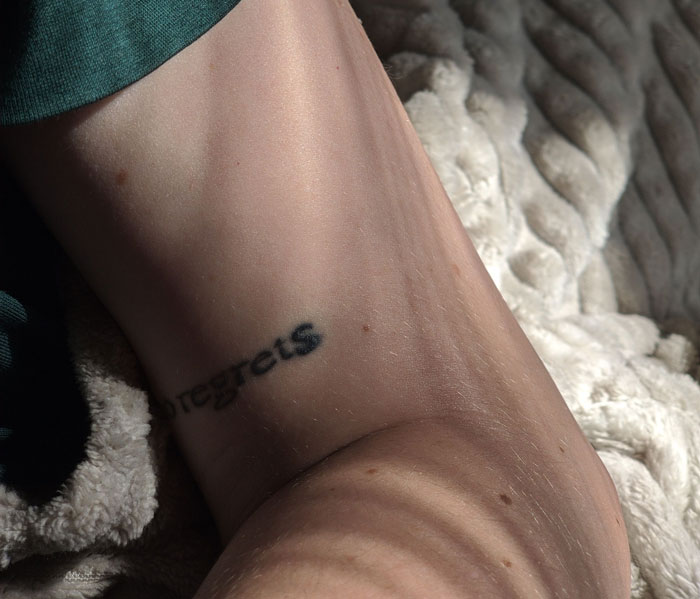
Image credits: Руслана Стельмах / Pexels (not the actual photo)
Tattoos have repeatedly shifted between symbols of status and sources of stigma throughout history
There’s evidence that humans have been tattooing one another for thousands of years. But the reasons for getting them and how they’ve been perceived by society have shifted over time. In the 1800s, for example, Victorian convicts started showing up on the shores of Australia with interesting tattoos that they had acquired during their long journey.
There are records of over 58,000 tattooed Victorian convicts in England’s judicial archives. While examining over 75,000 descriptions of tattoos on convicts from Britain and Australia from 1793 to 1925, researchers found that the most common subjects were naval themes, religion, love, jewelry, national identity, nature, and astronomy.
While some people had a negative view of body art, associating it with criminals, not everyone frowned upon it. Some actually found tattoos to be quite chic. Royal Museums Greenwich notes that Albert, the Prince of Wales, who later became King Edward VII, received a tattoo of a Jerusalem Cross in 1862 while visiting the Holy Land. Later, his sons also got tattoos of dragons while visiting Japan.
Meanwhile, in Russia, Peter the Great, Catherine the Great, and Nicholas II all had tattoos. Even Winston Churchill’s mother had a snake tattoo on her wrist, as it became fashionable for aristocrats in the late 19th century to have body art. At the time, this was a privilege for the elites because tattoos were so expensive; they were seen as a sign of wealth. But it didn’t take long for the tide to turn.
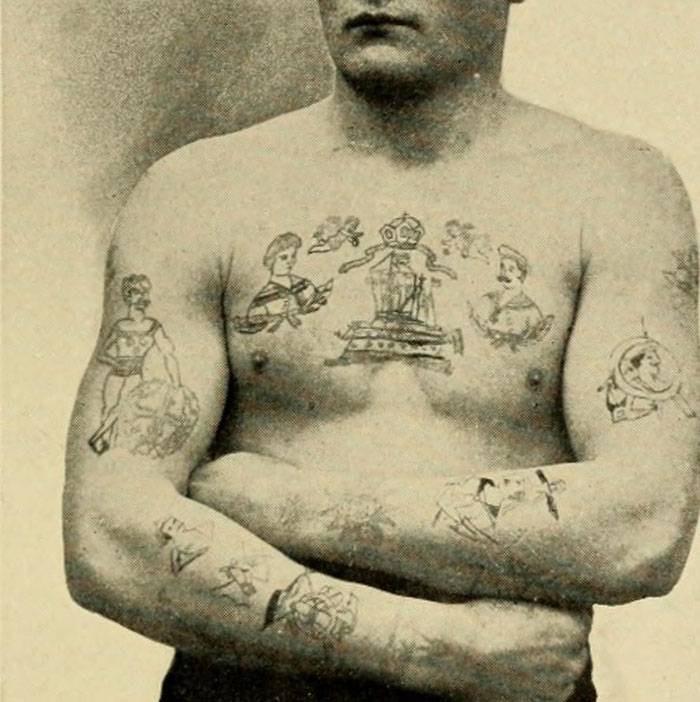
Image credits: Internet Archive Book Images / Flickr (not the actual photo)
As tattoos became mainstream, they lost their appeal among the elite, but anyone who regretted them had little choice but to live with them
By 1897, it was estimated that 75% of all American women had a tattoo. Once they became accessible to the average citizen, however, they were no longer desirable to the upper class. But 40 years later, only 6% of the population was tattooed. Body art was once again associated with sailors and convicts, and many people became ashamed of their tattoos.
Back then, however, there was no easy or accessible way of removing an unwanted tattoo. Even if an individual didn’t regret their ink, they may have been exiled from society or pressured to work as a sideshow performer. Plenty of people frowned upon tattoos themselves, but they weren’t above marveling at the poor decisions of others.
Laser tattoo removal was invented in the 1960s, but it wasn’t exactly accessible or reliable until the 1990s. And we’re lucky to have the technology available today, as it has certainly improved many lives.
Actor and comedian Pete Davidson has reportedly spent $200,000 removing about 200 tattoos over the past six years. Apparently, he received his first piece of ink when he was only 17-years-old. Over time, however, his tattoos turned into painful reminders of his struggles with addiction and mental health issues.

Image credits: www.kaboompics.com / Pexels (not the actual photo)
The idea of regretting a tattoo is nothing new. After all, humans are notorious for changing their minds. Just look at the divorce rates.
But we should probably remind ourselves and our loved ones to think carefully before making decisions that are intended to be permanent. And if you happen to regret that butterfly that’s been on your shoulder blade since college, don’t worry. You’re in good company.
 Follow Us