When Bong Joon Ho’s Parasite won best picture at the 2020 Oscars, it confirmed what cinephiles had been saying for decades: that Korea has fantastic directors, scriptwriters, and acting talent. Keen-eyed readers would probably realize that “Korea” here refers to South Korea, with North Korean cinema being a rather unknown anomaly. It’s easy to blame a lack of resources, poor markets, and oppressive censorship, but, for example, the Soviet Union managed to produce at least a few films capable of winning awards and being viewed in the West.
North Korea has been grappling with this same question for decades, trying everything from kidnapping talent from South Korea to just throwing in the towel and copying Hollywood. The strategy was simple: if they can’t win awards, they might at least try to win over audiences outside of the Democratic People’s Republic of Korea (DPRK). What do Western audiences like? The two thrillers they released in 2022 and 2025 suggest that they thought sex and violence would carry them to success.
“Days and Nights of Confrontation,” sometimes just called Days and Nights, is a sequel to 2022’s One Day and One Night, both films about an anti-hero attempting to kill North Korea’s founding leader, Kim Il Sung. Both are a rather violent break with the normally conservative cinema North Korea produces, although neither goes as far as resembling anything actually criticizing the government.
But sex and violence are only the latest move in a decades-long campaign to make the world watch — a campaign that has driven the regime to lengths no other film industry has ever had to consider, and still left it with almost nothing anyone wants to see.
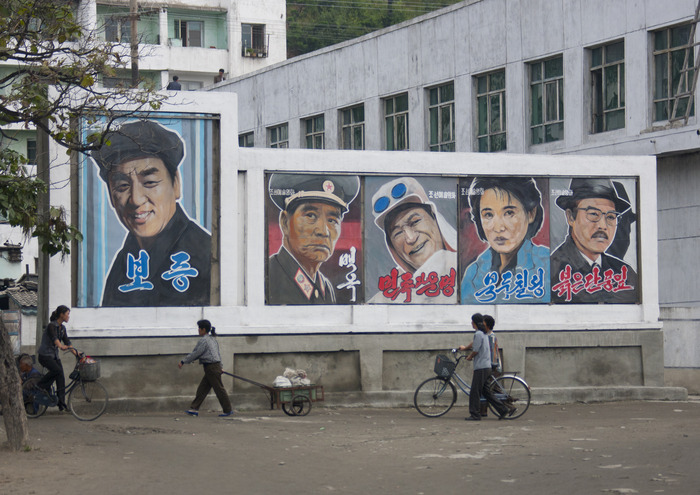
Image credits: Eric Lafforgue/Art in All of Us/Getty Images
North Koreans risk years of hard labor for a USB stick of foreign shows, and rather than keep fighting the smugglers, the government chose to compete with them
Despite the highly militarized demilitarized zone, smugglers still find ways to get goods across into North Korea, often carrying USB drives with music, shows, and movies. While we don’t know if North Korean youths want iPhones and lattes, we do know that they will go to considerable lengths to acquire South Korean soap operas, K-pop, and even music videos. If caught, they risk their permanent reputation, as well as the reputation of their family, and can be sentenced to years of hard labor.
Smugglers, who like any seasoned merchants understand supply and demand, are well aware of what North Koreans are interested in purchasing. Researchers report that a week after a Southern show’s episode premieres, it can already be found on the black market in the North. In the 2000s, DVDs were popular, but carried the risk of getting caught. The authorities would go from neighborhood to neighborhood and shut off electricity, often “trapping” the illicit DVD in its player, where it can’t be removed without power. A USB stick can simply be torn out of the device and easily hidden. Thousands of them are smuggled into the North every month, primarily through its border with China.
Unable to stop the smuggling and unwilling to devote resources to constantly searching every nook and cranny for USBs with BTS’s discography on them, the North Korean government has seemingly decided to fight fire with fire. If you can’t beat them, join them, as the saying goes, with filmmakers being ordered to (or perhaps finally allowed to, depending on one’s point of view) depict sex, violence, and anti-revolutionary behavior like smothering someone with a plastic bag or a suicide bombing.
To understand just how shocking even tame nudity and graphic violence are for (admittedly few) North Korean cinema aficionados out there, it helps to grasp just how much of a gap there still is between the goals of its leaders and the technical ability of its industry. While frequent consumers of North Korean media are probably aware that most of the things they see or hear are fiction, as a state, the DPRK mostly produced documentaries until releasing My Home Village in 1949.

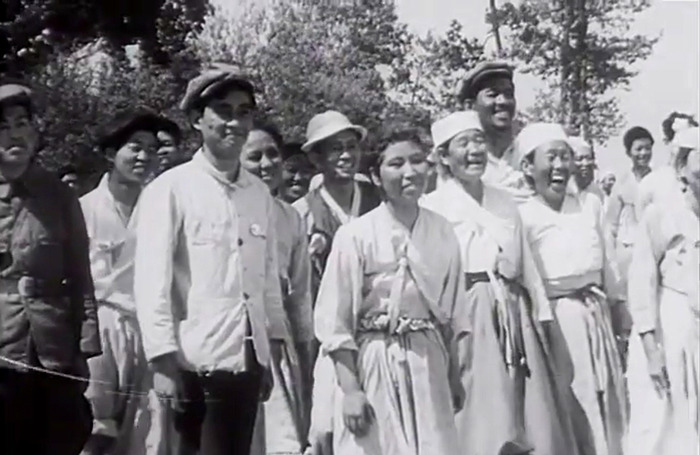
Image credits: Kang Hong-sik/Korean Art Film Studio/Wikimedia Commons
Before the DPRK made movies it made myths, and its very first feature existed to turn the ruling family into the heroes of the nation’s origin story
It follows a very common plot in North Korean media, brave villagers and revolutionary fighters overcoming the Japanese invaders, under the leadership of Kim Il Sung. Characters are one-note, the heroes are heroic, and the Kim family cements its position as the saviors of Korea. The entire film can be viewed for free on Wikipedia, sans subtitles.
A work of fiction in a sea of state-controlled “documentaries,” all designed to establish a new founding legend for the regime. Both Kim Il Sung and his successor Kim Jong Il were reportedly cinephiles and often personally oversaw the production of films, although they, perhaps thankfully, avoided actually assigning leading roles to themselves. Much like other authoritarian leaders, they also understood the importance of propaganda in building their legitimacy and cult of personality.
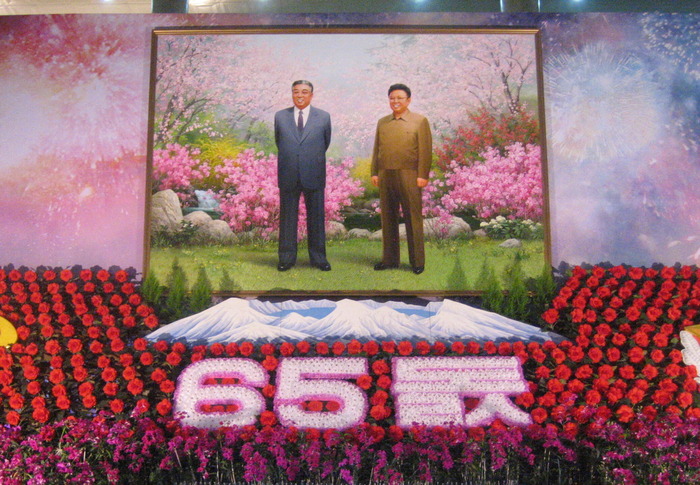
Image credits: Mogadir/Wikimedia Commons
North Korean propaganda made a point of claiming the future leader was correcting the filmmakers’ mistakes before he had turned eight
In the aforementioned My Home Village, Kim Jong Il, seven years old at the time of its production, gave the filmmakers a note that was probably cold-sweat-inducing: there was no snow on the characters’ heads or shoulders in the winter scenes. They had used cotton wool instead of the real thing. Like many “official” stories, it should be taken with a grain of (real) salt, but it’s telling that North Korean propaganda thought it important that people knew the future leader had a keen eye for details.
The same Kim Jong Il later hatched a movie-worthy plot to get North Korean movie production back in the spotlight. While Days and Nights is a modern attempt to make the sort of cinema people would actually view, the impulse behind it is an old one. Decades earlier, Kim Jong Il had been genuinely unhappy with the cinematic work made by the Propaganda and Agitation Department. So he took over as director of the Motion Picture and Arts Division.
As a cinephile, with a movie collection reportedly of over 15,000 films, he thought his passion would translate into an ability to direct. He was wrong, although typically, he’d just blame the cast and crew. In a 1983 tape recording, he complained that “North Korean film industry people knew that the state would feed them even if they performed only minimally, so they didn’t try hard… Because they have to earn money, Southern movie industry people expended blood, sweat, and tears to get results.”
In a scheme perhaps inspired by films he’d seen, he decided that the best way to get that South Korean expertise would be to simply kidnap talent. Under the ruse of an offer to direct a film, North Korean agents invited South Korean actress Choi Eun-hee to Hong Kong. While she didn’t know it yet, she was the bait to attract prolific director Shin Sang-ok, her former husband. Six months after Choi Eun-hee’s kidnapping, in 1978, Shin was seized by North Korean operatives while looking for her in Hong Kong and smuggled to North Korea.
Kim Jong Il put the couple to work, watching and critiquing four films a day. His goal was to get Shin to direct a film that the Propaganda and Agitation Department could submit to an international film contest. Since communism and the exploits of Kim Il Sung would probably not resonate with international audiences, Kim gave Shin more creative freedom. Shin would produce seven films for Kim, including Pulgasari, a North Korean take on Godzilla, which became the first North Korean film to get a cinematic release in the South.
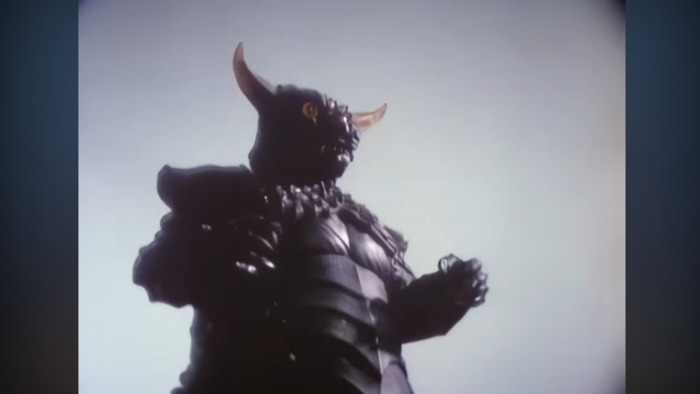
Image credits: Pulgasari/Enhanced Cinema
When his passion for film never translated into talent, Kim Jong Il simply abducted the South Korean talent that had it — and it still ended in their escape
It still has a cult following, albeit not for the reasons Kim Jong Il wanted. As with Plan 9 from Outer Space and The Room, fans enjoyed a bizarre, poorly made film that seemed to be earnestly trying to be good. Viewers praised its special effects, obtained by tricking Japanese specialists into working for the DPRK.
Shin and Choi escaped in 1986 while ostensibly looking for a financial backer in Vienna. After their escape, Kim banned the movies they had worked on, ending this brief injection of non-state ideas in North Korean cinema. North Korean cinema stagnated for decades. International audiences remained uninterested, except as a way to view the “oddity” of the increasingly closed-off state.
Within the DPRK, North Korean cinema is the only option available outside of the black market, with workplaces often organizing screenings for their employees. CNN reports that defectors have shared how these communal viewings are also a way to put a person’s emotions on display. Laughing, crying, or even cheering at the right (or wrong) moments are done publicly, among one’s peers. Not cheering at yet another exploit of the great leader(s) might be noticed by a nosy coworker, as would a lack of attendance. Between that social pressure and a captive audience with nowhere else to turn, there’s little forcing the films to be any good. Quality control begins and ends with the whims of Kim Jong Un.
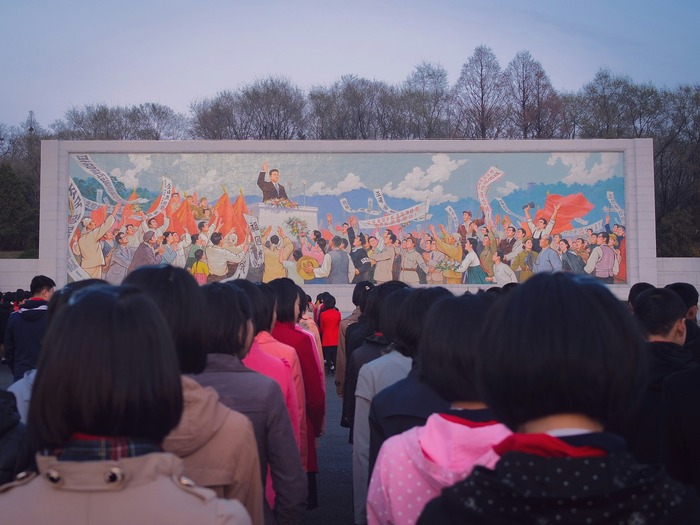
Image credits: Thomas Evans/Unsplash
All the punishment and mandatory screenings in the world couldn’t buy the regime the one thing it wanted: movies people actually prefer
There doesn’t appear to be any evidence that this newfound freedom to show nudity or violence has in any way created an alternative to foreign media. North Korean workers might be pressured to attend film screenings, but it doesn’t seem that this foray into more provocative topics has diminished people’s desires for South Korean media. Interviews with escapees from the North show that exposure to alternative narratives does actually motivate people to leave. Kang Gyuri, who escaped North Korea in 2023, said that she was inspired to get out by the sorts of shows smugglers would bring into the country. “I felt so suffocated, and I suddenly had an urge to leave,” she shared with the BBC.
The DPRK can inflict harsher and harsher punishments on people caught with outside media, and it can make sure its citizens attend movie screenings, but decades of effort have not produced a movie industry actually able to compete with the outside world. This just goes to show that it’s not enough to be a cinephile with the resources of an entire country behind you to make something people want to watch.
 Follow Us