There’s no instruction manual when it comes to raising kids. Some parents are more relaxed, others are fiercely protective, and most fall somewhere in between. What works for one family may not work for another. But when it comes to someone else’s child, there’s one simple rule everyone should follow: don’t assume, always ask. Personal boundaries still apply, even when intentions seem harmless.
For instance, a parent shared how a routine trip to Costco took an uncomfortable turn. A boomer woman walked up and began touching their child without permission. Even after the parent clearly said no, the woman refused to back off. Things escalated quickly, ending with the stranger calling the parent “stupid.” Keep reading to see how the situation unfolded and how the parent stood their ground.
Outings with kids are often fun and memorable, but sometimes all it takes is one stranger to turn a pleasant trip into a stressful experience

Image credits: leungchopan / Envato Elements (not the actual photo)

One parent shared how a boomer crossed boundaries with their child, sparking an uncomfortable confrontation at the supermarket


Image credits: verolunar / Envato Elements (not the actual photo)



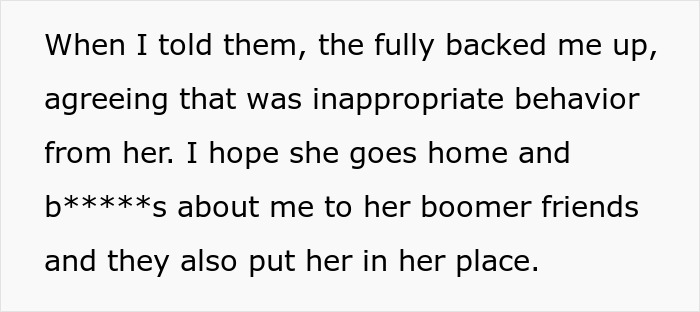
Image credits: dats_what_she

Image credits: Getty Images / Unsplash (not the actual photo)
Boomer parents often follow an authoritative or authoritarian parenting style that emphasizes discipline, clear rules, and respect for authority
Every generation of parents wants to believe they’re doing things a little better than the one before, often shaped by the memories of what felt missing, unfair, or confusing in their own childhoods. Most moms and dads genuinely want the best for their kids. But what “doing better” looks like depends heavily on the time you grew up in. Social norms change, research evolves, and so does our understanding of children. Parenting isn’t static, it reflects the world around it.
For many baby boomer parents, parenting often leaned toward an authoritarian style that focused heavily on rules, discipline, and obedience. This approach didn’t leave much room for emotional discussion or behavioral nuance. Children were expected to listen, comply, and move on. Explanations weren’t always offered, and feelings weren’t always acknowledged. Phrases like “because I said so” became household staples. Tough love was viewed as preparation for adulthood rather than something to question.
Take a common scenario, like a child asking to stay out later than usual to see a movie with friends. An authoritarian parent would often shut the request down immediately, without asking why it mattered or considering the child’s perspective. There’s no discussion or compromise. The answer is no, simply because the parent has the final say. For the child, the decision can feel abrupt and dismissive, even if the intention is to protect or guide.
That said, many boomer parents also practiced an authoritative style, which blended structure with communication. These parents still set clear rules and expectations, but they also took the time to explain their reasoning. They listened, even if the answer didn’t change. Flexibility existed within boundaries. Mistakes weren’t just punished, they were treated as opportunities to learn. The focus was on guidance, not control.
Millennial parents, however, have largely shifted away from those traditional models. According to a study from Lurie Children’s Hospital of Chicago, three out of four millennial parents say they practice gentle parenting. An even larger majority, 73 percent, believe their parenting style improves on those of past generations. This reflects a cultural shift toward emotional awareness. Parenting today is less about authority and more about connection, communication, and long-term emotional health.

Image credits: Getty Images / Unsplash (not the actual photo)
Gentle parenting has its perks, as it focuses on empathy, communication, and emotional awareness, helping children feel heard while still learning healthy boundaries
At its core, gentle parenting aims to raise confident, emotionally secure, and independent children. It centers around empathy, mutual respect, and clearly defined yet healthy boundaries. Children aren’t seen as problems to correct, but as individuals learning how to navigate the world. Age-appropriate behavior is expected, not punished harshly. The goal isn’t perfection or obedience—it’s trust, understanding, and emotional resilience.
Instead of relying on punishment or reward systems, gentle parenting focuses on helping children understand their actions and emotions. For example, when a child has a meltdown, a gentle parent might first help them calm down before talking about what went wrong. The behavior is addressed, but so is the feeling behind it. Over time, this approach encourages self-awareness and emotional regulation. Kids learn why something isn’t okay, not just that it isn’t.
When it comes to Gen Z, many aren’t rushing into parenthood at all, choosing instead to focus on personal growth and stability. Those who do have children often adopt a flexible, hybrid parenting style. They borrow from different approaches while prioritizing authenticity, emotional intelligence, and mental health. There’s a strong emphasis on breaking unhealthy cycles and preparing kids for real life, not just rules. Structure still exists but it’s balanced with openness, adaptability, and modern realities like technology and mental well-being.
Regardless of whether you’re a boomer parent, a millennial, Gen X, or Gen Z, one thing remains true: every parenting style deserves respect. Just because you raised children a certain way doesn’t mean everyone else should be expected to follow the same rules or beliefs. Times change, research evolves, and so do boundaries. What once felt “normal” may no longer be acceptable today.
In this particular case, the boomer parent believed it was okay to touch someone else’s child without permission, even going as far as calling the parent stupid. That kind of behavior crosses a line, no matter the generation. Respecting children also means respecting their parents’ choices and that should never be optional.Do you think this was fair, or did it clearly cross a boundary that shouldn’t be ignored? Share your thoughts and let us know where you stand.
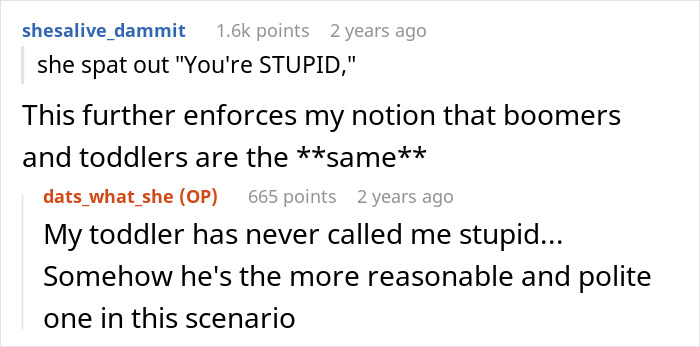
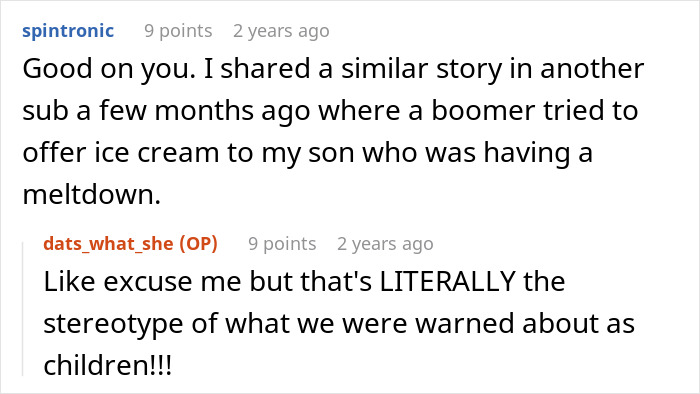
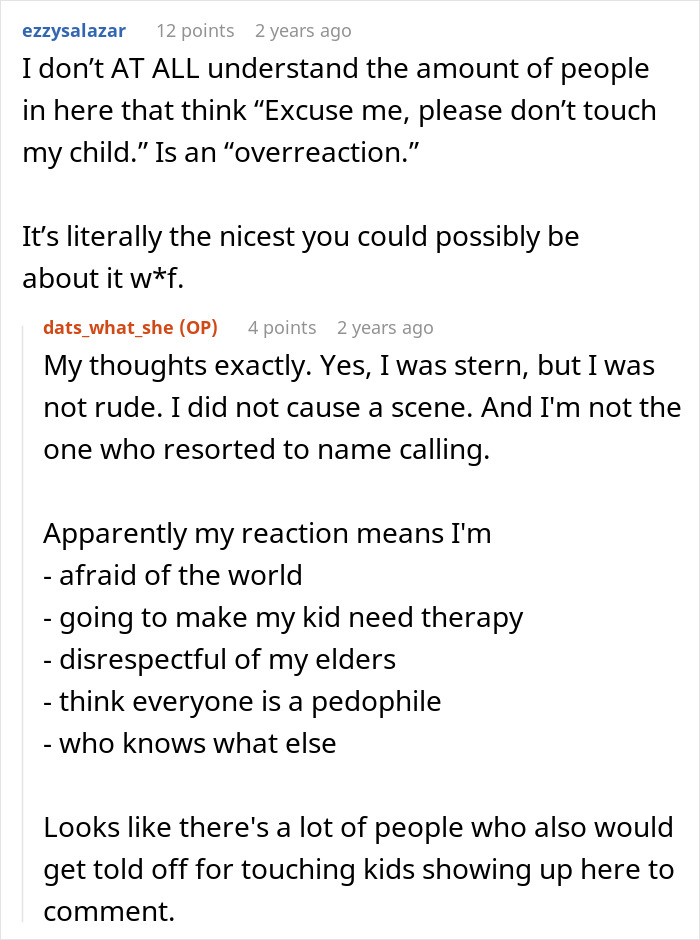
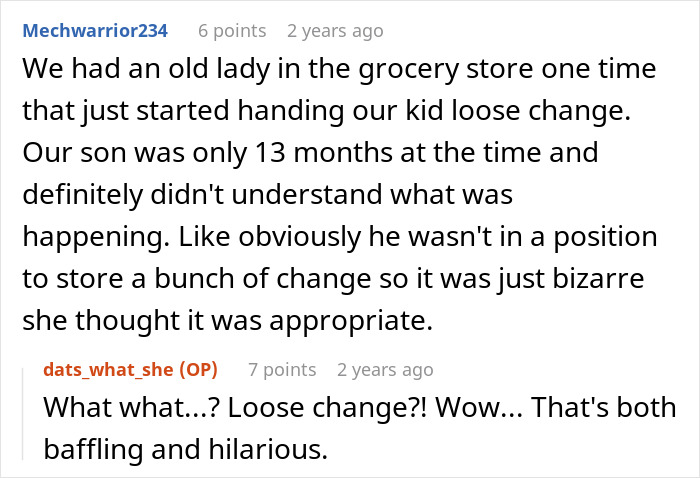
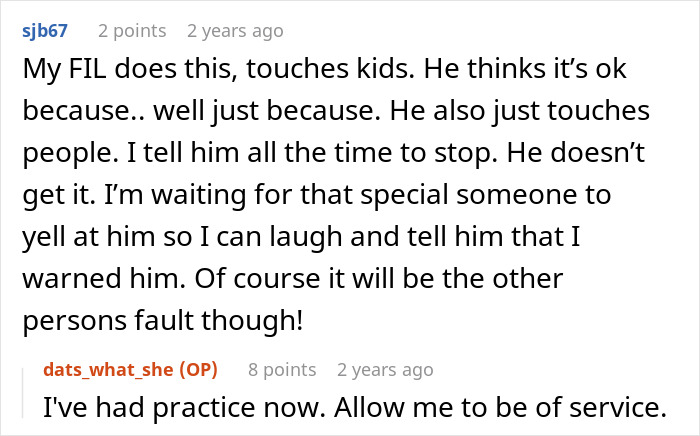
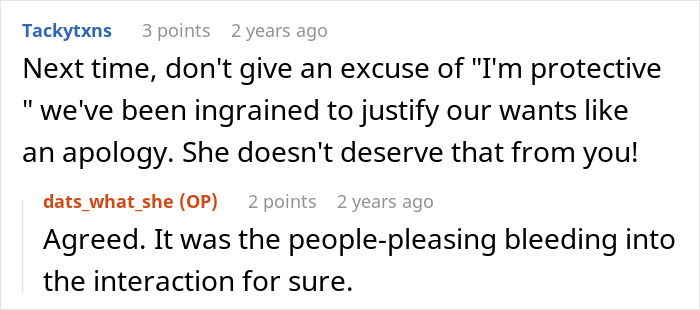
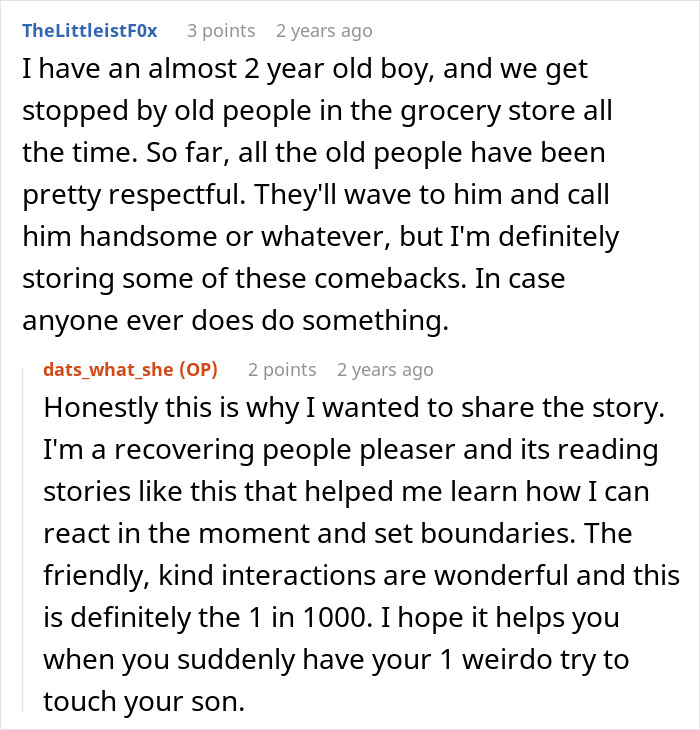
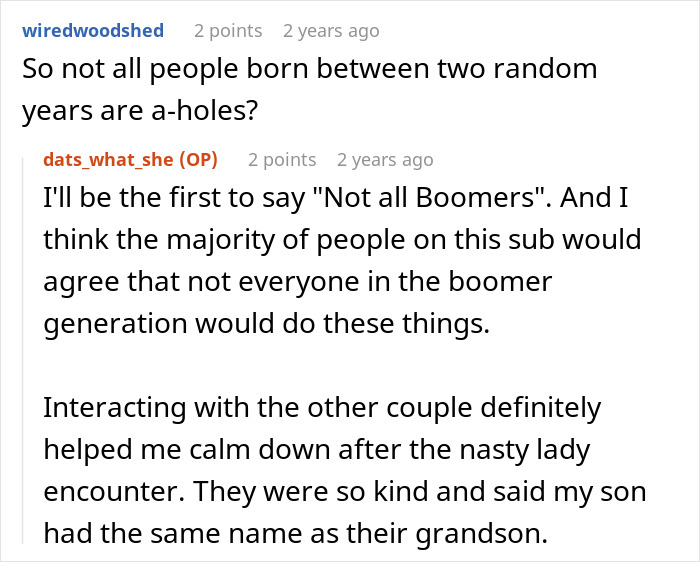
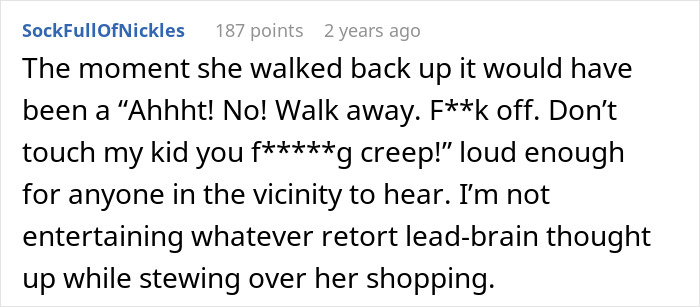
The story quickly divided opinions online, with people sharing mixed reactions, and the original poster later stepped in to clarify a few details in the comments





















 Follow Us