Choosing a baby name is supposed to be one of the most exciting parts of pregnancy. But when you throw in pushy family traditions and a relentless partner, it can turn into a total relationship nightmare.
One pregnant mom is living this reality. In an online post, she revealed she is expecting her third child and is facing a major marital crisis. Her husband, whom she describes as a “huge mommy’s boy,” is pressuring her to name their future daughter after his mother.
Between her husband’s demands and her MIL’s boundary issues, the woman was left in tears, wondering if she was wrong to say no to her husband.
Read her story to find out whose side the internet is on.

Image credits: Getty Images / Unsplash
She said she refused his demands as she doesn’t like her MIL’s name

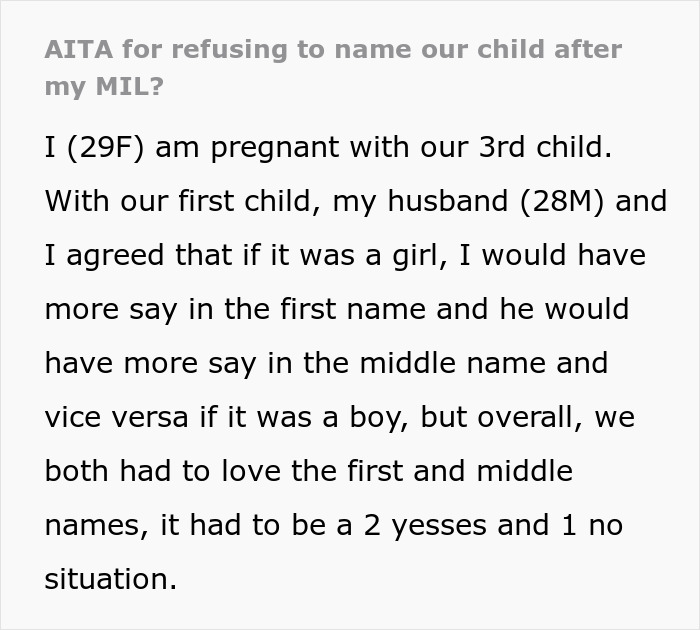
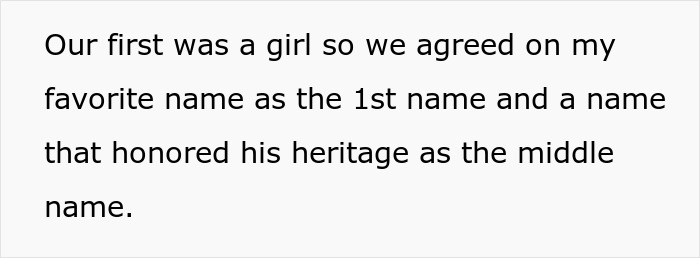
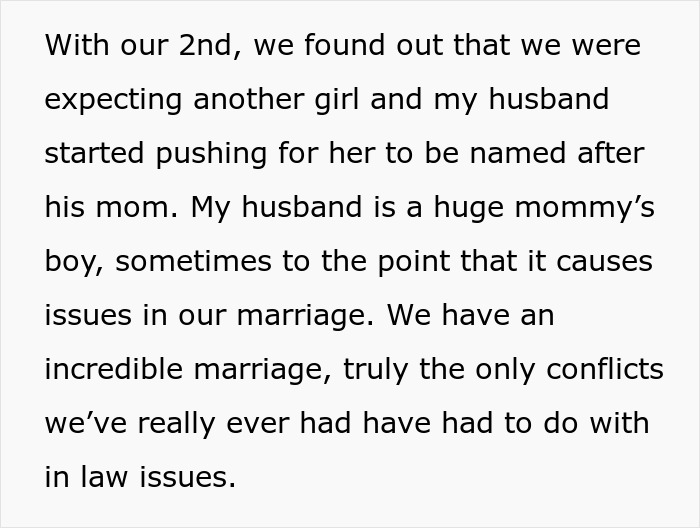
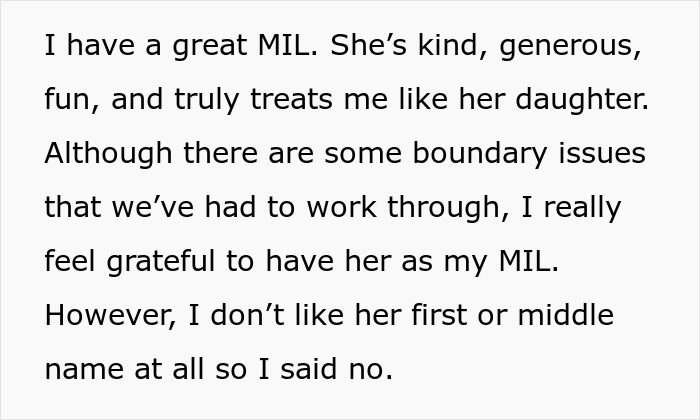

Image generated by Bored Panda using Gemini (not the actual photo)


Image generated by Bored Panda using Gemini (not the actual photo)
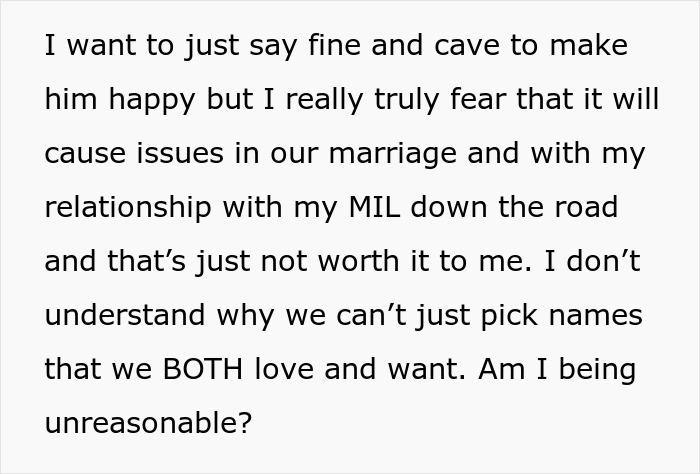
Image credits: JesusLovesYou2911
For centuries, naming a child has been the father’s territory
In most cultures, babies automatically took their father’s surname without debate or discussion.
In fact, an 1881 New York court ruling declared that under “the common law among all English-speaking people,” women should automatically give up their surnames upon marriage.
This tradition runs so deep that even today, over 96% of children born to married heterosexual couples in the United States still take their father’s last name. Moms carry the baby for nine months, while dads contribute the name on the birth certificate.
In the UK as well, around 90% of straight women still take their husband’s name when they marry, many of whom pass it on to their child.
This unfair trend goes beyond surnames.
Historically, firstborn sons were named after their fathers. Daughters were named after paternal grandmothers.
Experts call this patrilineal naming — the practice of using names to trace and reinforce the father’s bloodline. It has never really been about honoring family, but more about marking ownership.
“While everyone should be free to make their own choices, there can be an implication that marriage fundamentally changes a woman’s identity, while it doesn’t for men. Assuming a heterosexual couple, the entire family having the man’s last name implies that the man is the ‘head of the household’,” says Jocelyn Stitt, professor of women’s and gender studies at the University of Michigan.
Stitt believes that this surname tradition, which clearly stems from patriarchy, reinforces power dynamics within the family.
Studies consistently show that women carry the heavier mental load at home. Yet when it comes to decisions that shape family identity, such as naming a child, they often have surprisingly little power.
A 2020 Gallup survey found that even in households that consider themselves equal partnerships, women still make fewer of the big decisions. Men were more likely to have the final say on finances, major purchases, and family traditions. Women, meanwhile, were left managing the day-to-day invisible work.
“We tend to connect a person’s identity with their name and since a name usually lasts a lifetime, new parents feel the pressure to ‘get it right’. The higher the stakes, the more likelihood of conflict,” says marriage and family therapist Kate Engler.
Choosing your husband’s mother’s name for your child might feel like a personal decision. But it’s heavily influenced by old-school traditions that still subtly expect women to bend to their partner’s family dynamics.
While patrilineal surnames are the norm in some countries such as the US and the UK, they are far from universal. In many cultures, including Spain, Mexico, Colombia, and Puerto Rico, children traditionally inherit a double-barrel surname that combines the last names of both their father and mother.
When the power imbalance becomes even more toxic
In this author’s case, the fight over a baby name might be a symptom of a much deeper psychological issue known as emotional enmeshment. It’s where a husband is unable to separate his identity and loyalties from his mother.
When a husband consistently prioritizes his mother’s feelings over his wife’s comfort, marital satisfaction goes down rapidly.
A study by psychologist Dr. Terri Apter revealed that 60% of daughters-in-law experience sustained, high-level stress due to friction with their mothers-in-law. The research showed that this tension almost always boils down to a battle for influence over the husband.
When a husband is emotionally enmeshed, he views his wife’s healthy boundaries as an attack on his mother.
“Being married to a mama’s boy can create drama between you and your husband on a constant basis when he does not distinguish the importance of making you and your family his priority,” says relationship strategist Sherrie Sims Allen, Ph.D.
Dr. Allen suggests that the wife should express to her husband that putting his marriage first is good for him, too.
Still, you can’t do the work for him. Experts believe that the partner who is enmeshed must change the dynamics.
By relentlessly pushing his mother’s name, the author’s husband is trying to physically carve his mother’s influence into the identity of his new household. He is demanding that his wife carry, deliver, and raise a child named after a woman who already oversteps her boundaries.
When naming a child becomes a battlefield, experts say the only way forward is to establish rock-solid boundaries and stand firm. When the process drags on, it can morph into deep anxiety, disappointment, and full-blown resentment.
“The bigger the family you have and the more cultures intertwine, the more difficult it will be to navigate between all suggestions and pick a name that everyone will be happy with,” explains Dr. Max Doshay, PsyD, co-founder of Monima Wellness.
He notes that setting clear boundaries from the very beginning is the only way to simplify a high-stakes decision.
Yet centuries-old traditions still carry significant weight. While women have successfully climbed to the top of corporations, led countries, and rewritten laws, the default expectation in the delivery room remains exactly as it was generations ago. Real progress, it seems, stops at the nursery door.
Ultimately, names are so much more than ink on a birth certificate. They carry our identity, telling the world exactly who we are and where we belong. Because the stakes are for a lifetime, a child’s name must be a choice that both parents genuinely love. It can’t be a compromise born out of exhaustion and tears.
The woman gave some more information in response to the comments
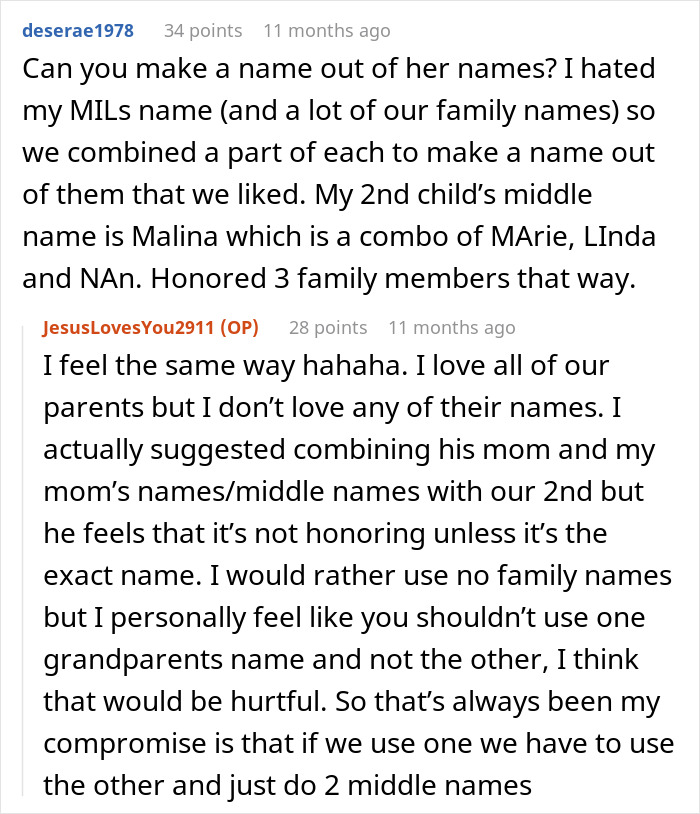
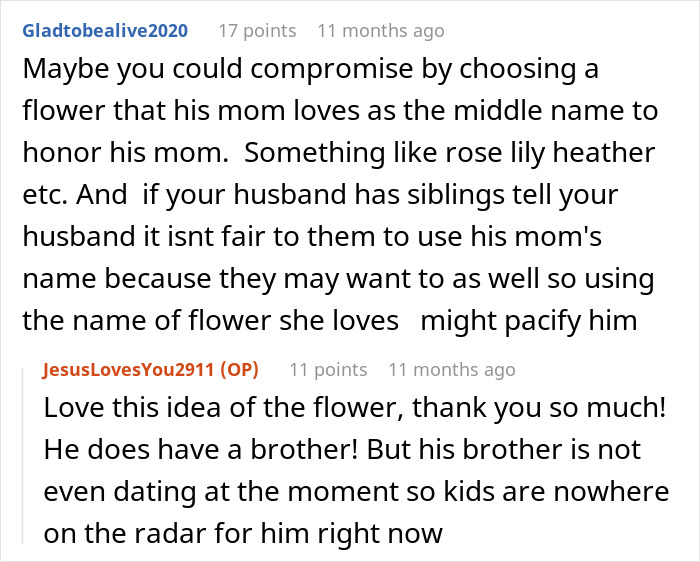

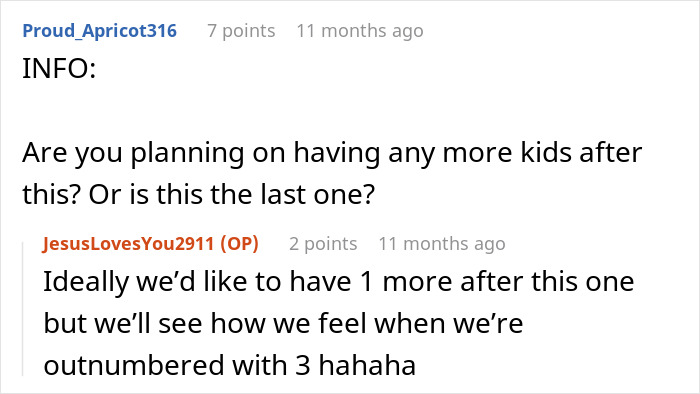
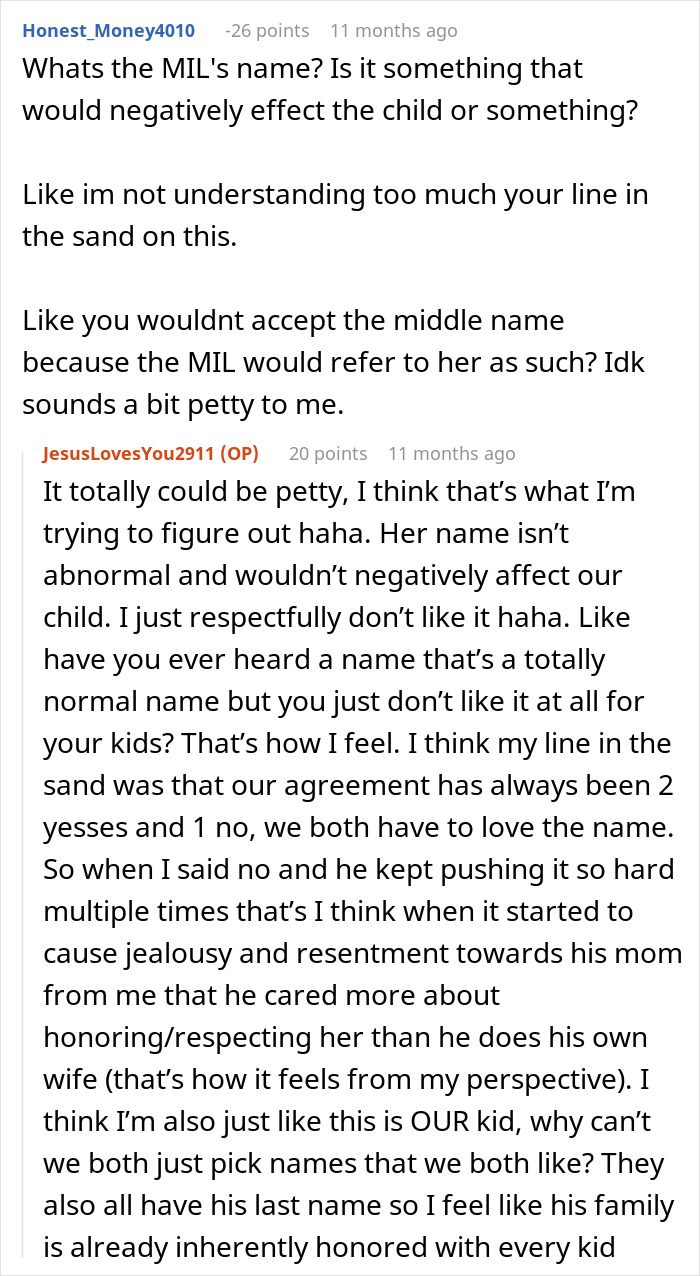
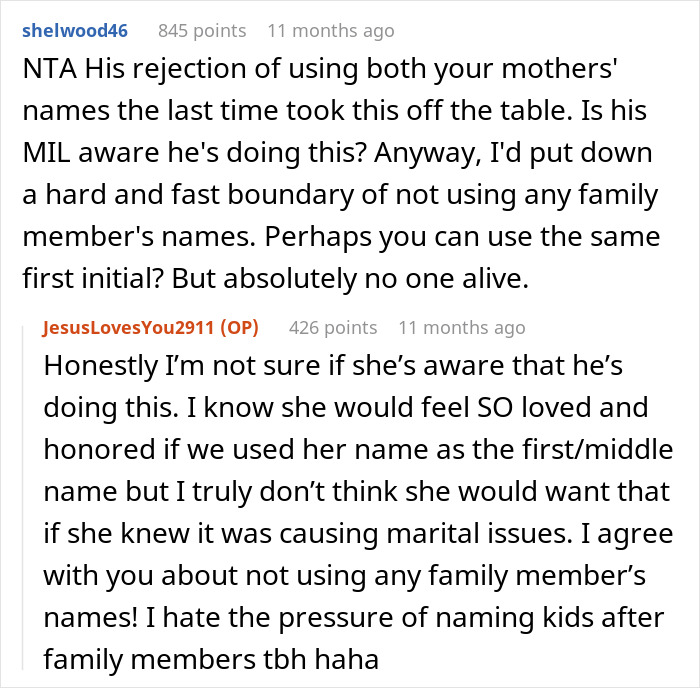
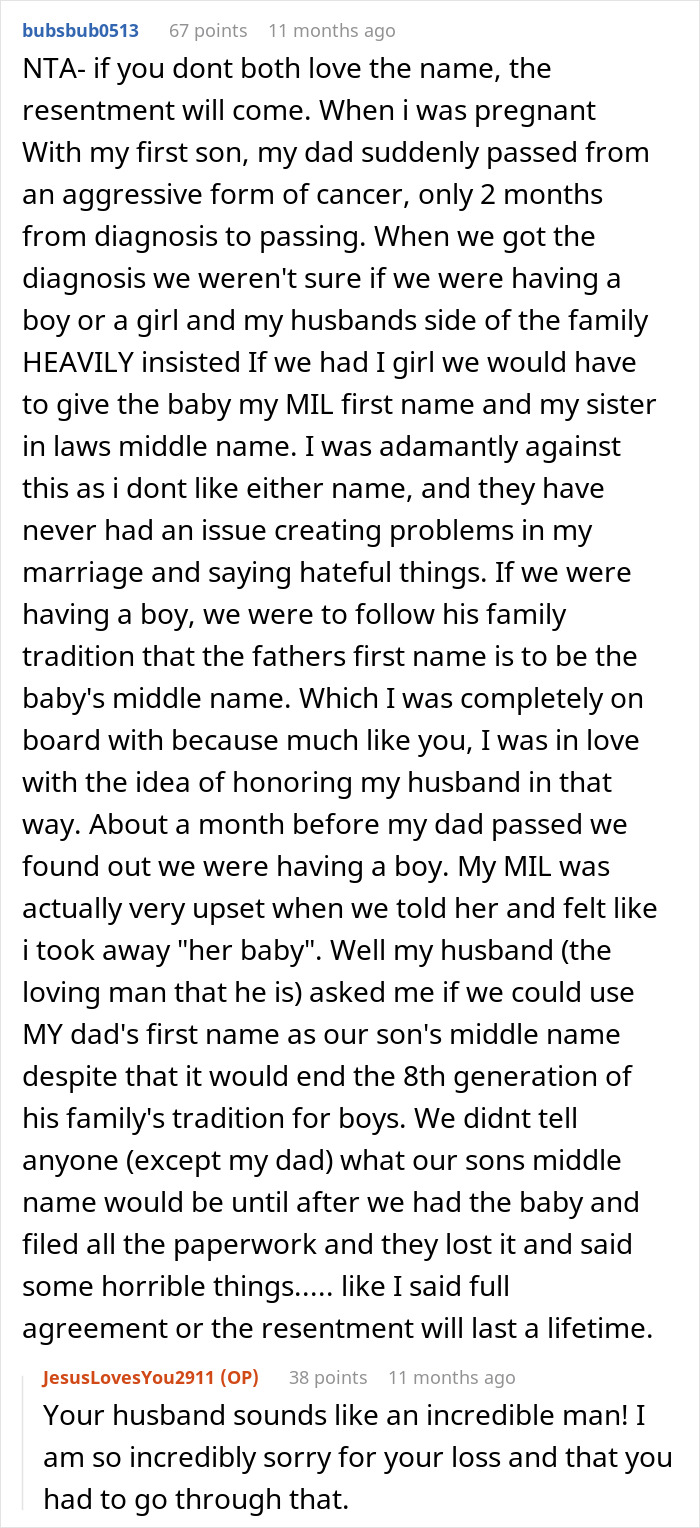
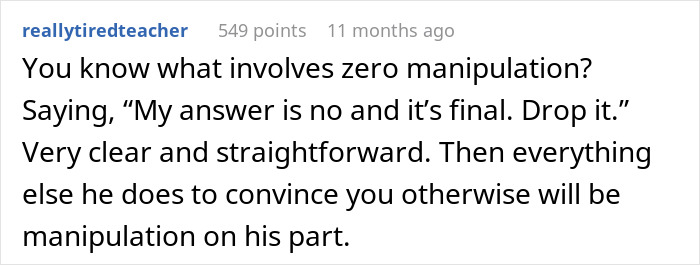
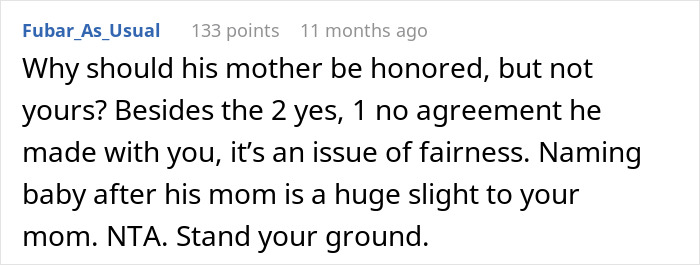
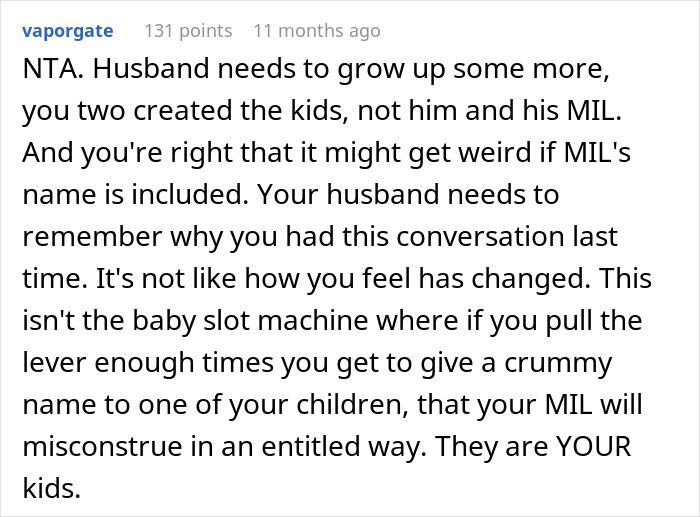
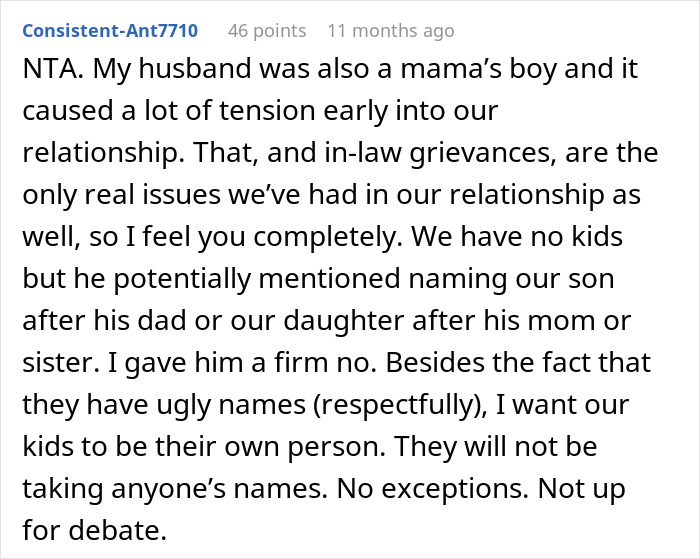
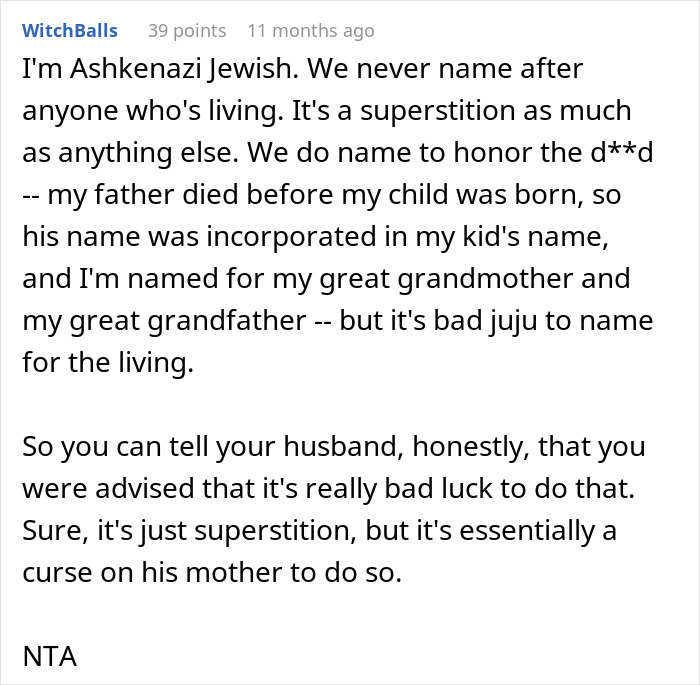
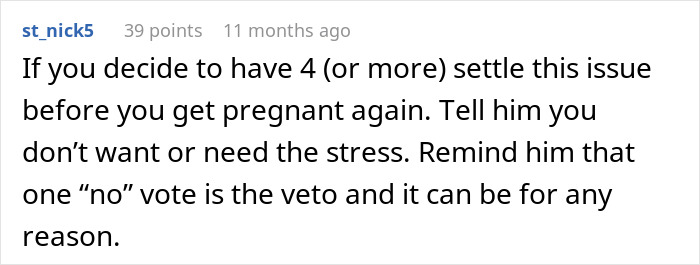
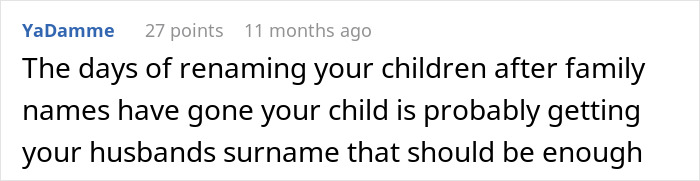
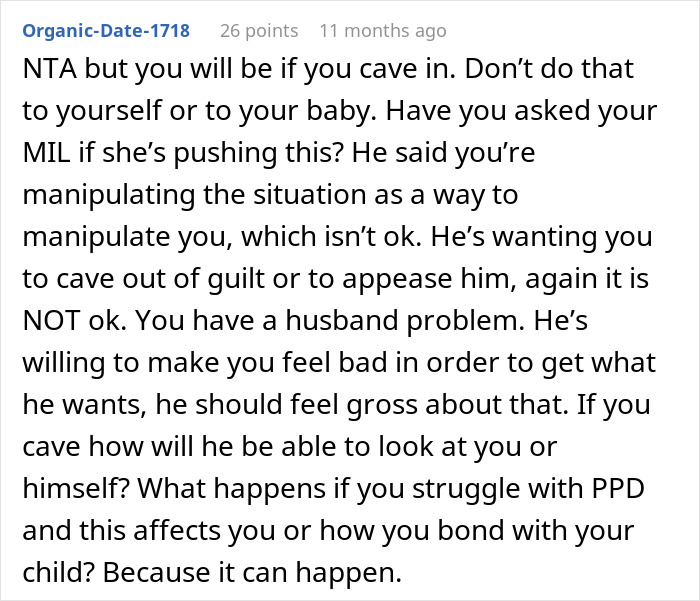
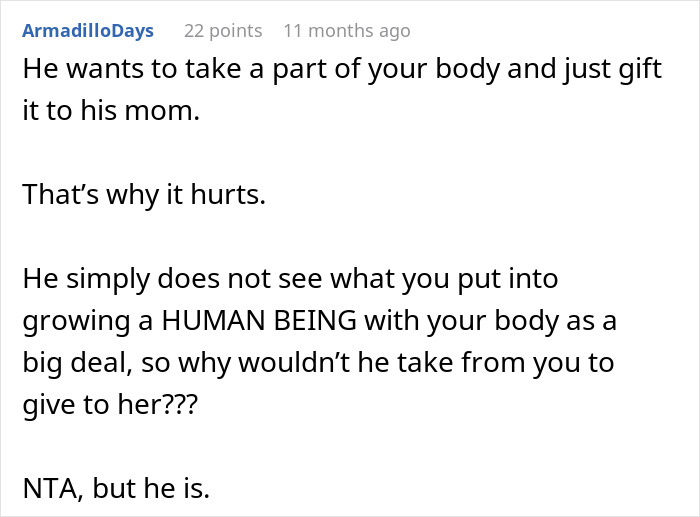
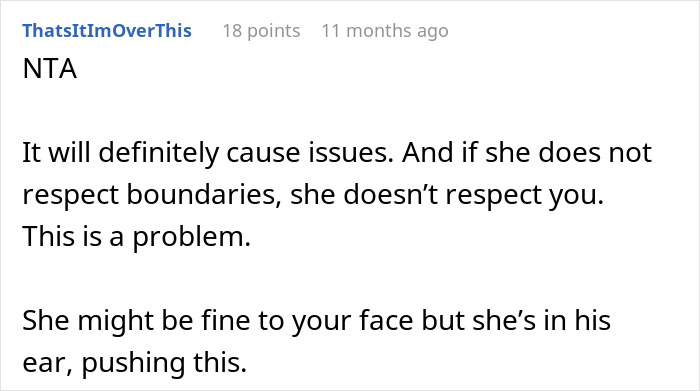
A lot of people in the comments supported the woman’s choice






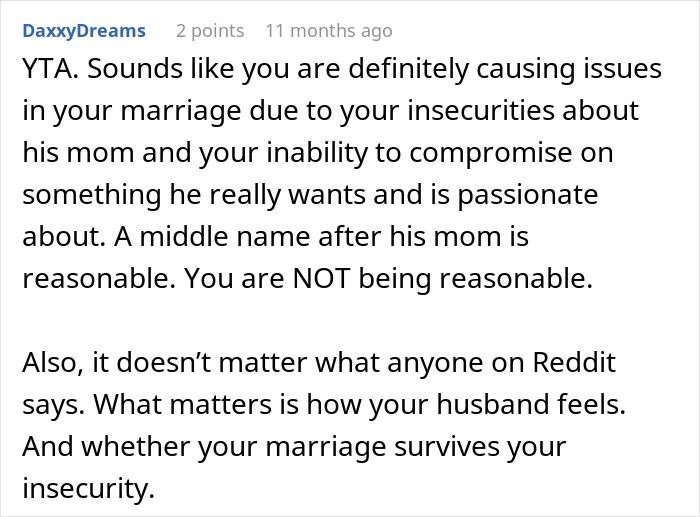
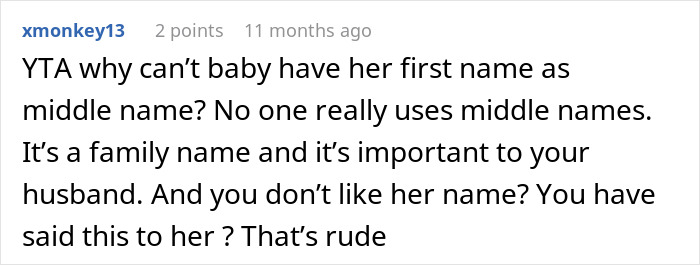
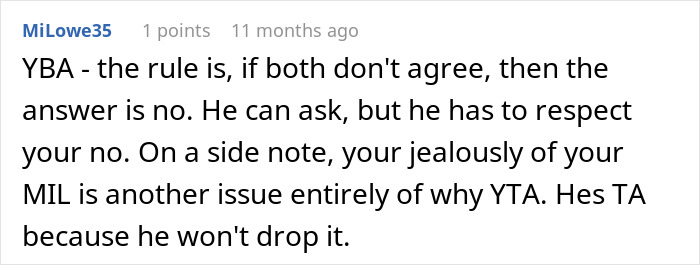
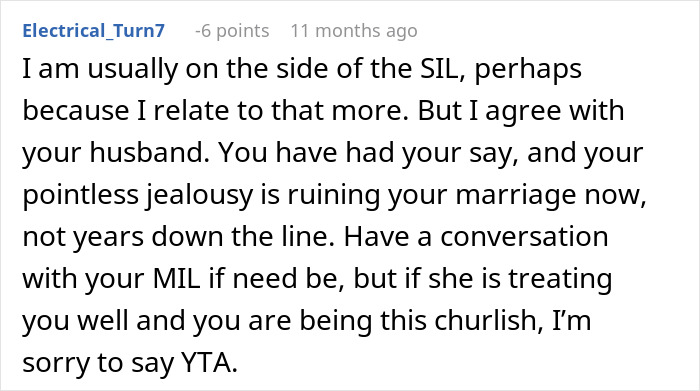
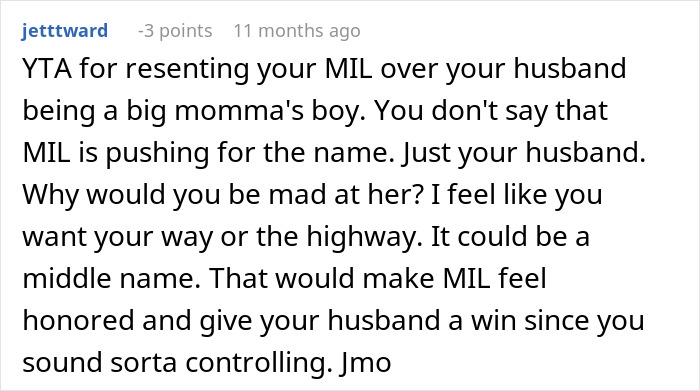
Some people disagreed with the woman, and advised her to compromise

 Follow Us