There are few things more powerful than a cute dog. They can break the ice, attract strangers at the park, and somehow become the most popular person in any social gathering despite contributing absolutely nothing to the conversation besides enthusiastic tail wagging.
If dogs understood modern dating, perhaps they’d probably be horrified to learn they’ve become unofficial wingmen. Today’s Original Poster (OP) was left feeling conflicted when she let her friend borrow her dog and realized that maybe the dog was being used as a prop.
More info: Reddit
Few pet owners would object to a trusted friend spending time with their beloved dog, but when the friend begins talking about the pet as though they’re raising it together, boundaries blur
Image credits: lookstudio / Magnific (not the actual photo)

The author regularly let her close friend borrow her rescue dog for walks and outings after the friend said he helped ease her anxiety about dating again after a breakup
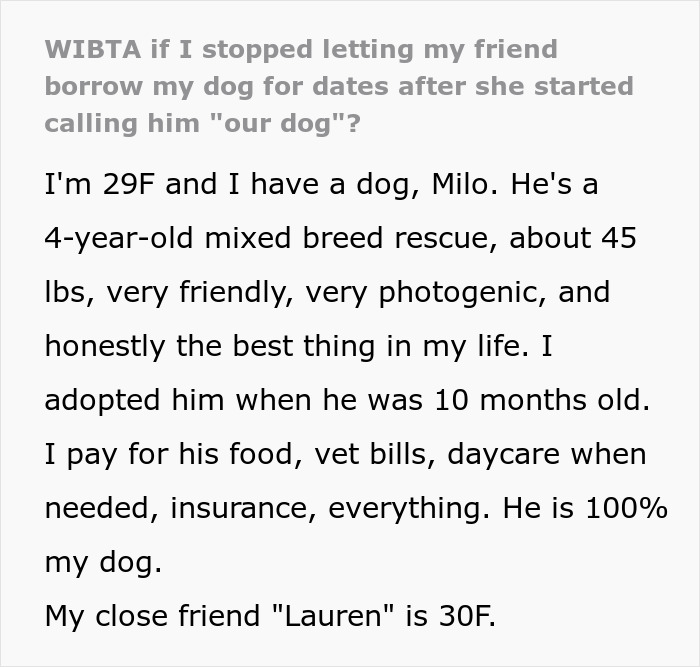
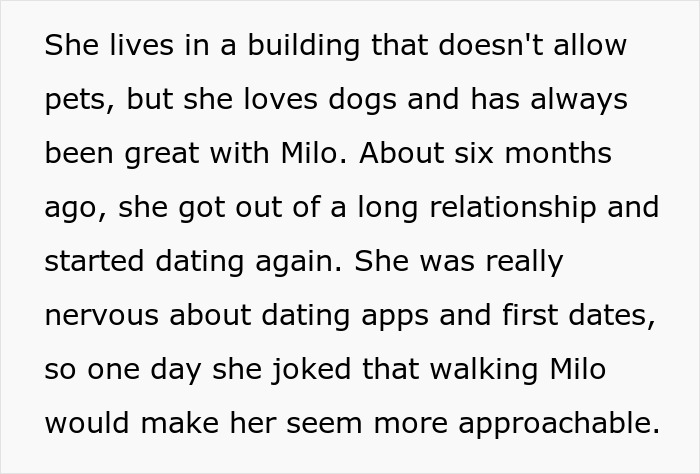
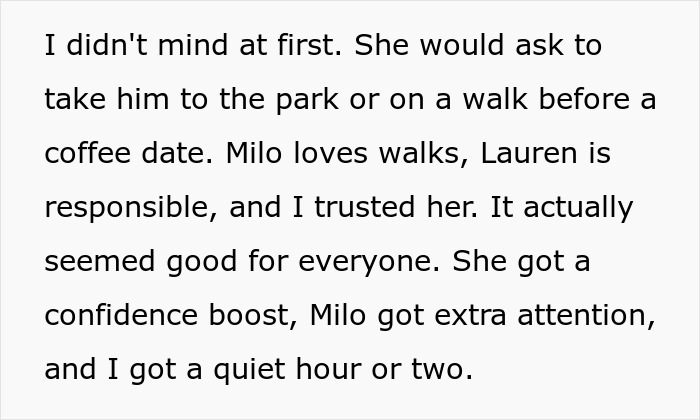
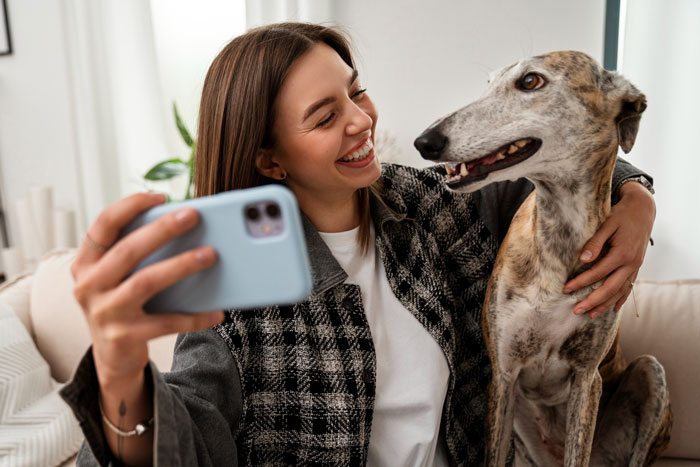
Image credits: freepik / Magnific (not the actual photo)
Over time, the friend began featuring the dog in her dating profiles and telling potential partners stories that made it sound as though she was his owner or had helped rescue him
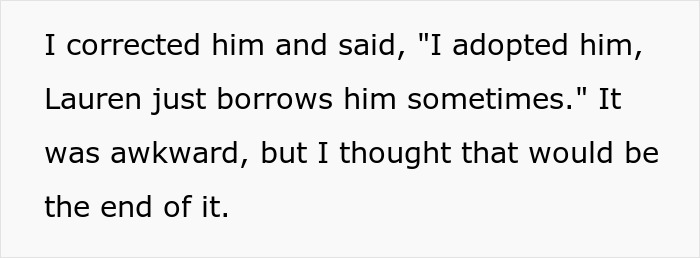
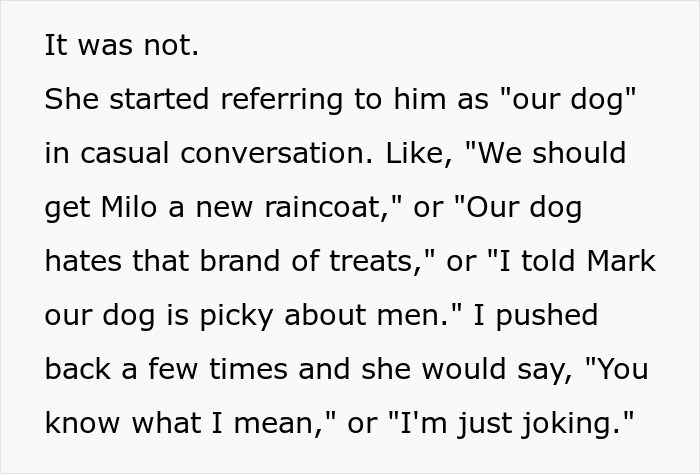


Image credits: prostock-studio / Magnific (not the actual photo)
The author grew increasingly uncomfortable as the friend started referring to the dog as “our dog”, ignored agreed-upon return times, and brushed off concerns when boundaries were raised
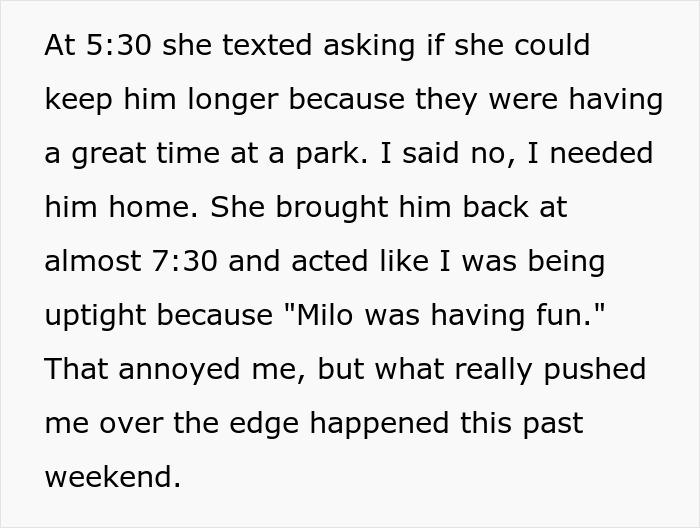
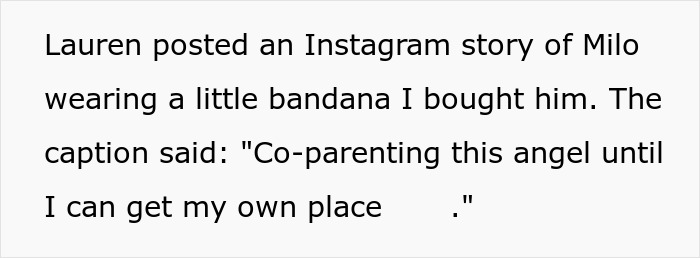
Image credits: Liza Summer / Pexels (not the actual photo)
Things came to a head when the friend posted on social media about “co-parenting” him until she could get her own place

Image credits: mulosapiba424
After confronting her friend and receiving pushback, she began to suspect that the friend was using the dog as a dating prop
The OP shared that she adopted a rescue mixed-breed several years ago and considers him one of the most important parts of her life. Now, her close friend had always loved dogs but lived in a pet-restricted apartment building, making ownership impossible. After a difficult breakup, the friend, nervous about meeting new people, occasionally asked to borrow the dog for walks and outings.
She believed he helped make social interactions feel more natural. At first, it just made sense. The dog enjoyed extra attention, her friend gained confidence, and the OP appreciated the occasional break. However, the OP noticed that the friend started featuring the dog prominently in her dating profiles. She also discovered that the friend had been telling dates that she had helped rescue the dog herself.
As if that wasn’t enough, the friend started referring to the dog as “our dog” as if they both owned him. When the OP tried to remind her that she was the sole owner of the dog, the friend would say she was only joking. One day, the friend failed to return the dog at an agreed-upon time following a date, and this left the OP upset. The friend dismissed her feelings by arguing that the dog was enjoying himself.
Still, the OP let her have the dog until the friend posted the dog on Instagram and claimed she was a co-parent to him. When the OP expressed discomfort, the friend insisted the dog clearly loved her. She also suggested that restricting access now was unfair after months of allowing the arrangement. Still, the OP couldn’t shake the feeling that her friend was using the dog as a prop for dating.
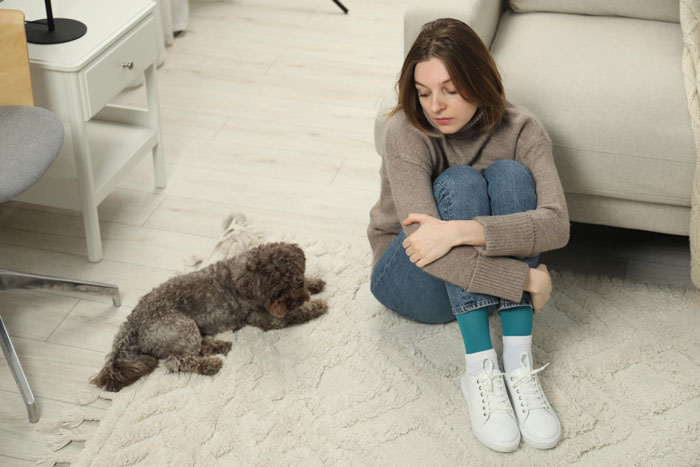
Image credits: New Africa / Magnific (not the actual photo)
Dogs do not develop an exclusive attachment to just one person in a strict “single-owner” sense. Company of Animals highlight that instead, they are capable of forming a secure attachment with multiple trusted humans in their lives. This means a dog can feel safe, relaxed, and emotionally supported by more than one caregiver, similar to how children can bond with several important adults rather than only one primary figure.
At the same time, Cesar emphasizes that while dogs can bond with multiple people, they still rely most heavily on a primary caregiver. This is the person who provides daily structure like feeding routines, walks, sleep schedules, and consistent rules that shape the dog’s sense of stability. Beyond routine, this caregiver is typically the central emotional anchor in the dog’s life, offering predictability and long-term security.
CBC News notes that pets are often used in dating profiles as social signals, helping people appear more approachable. Because animals carry strong positive associations, casual access to a pet can sometimes be reframed as a deeper bond than actually exists. Researchers describe this as “role inflation,” where familiarity or occasional interaction is gradually presented as shared ownership or even co-parenting.
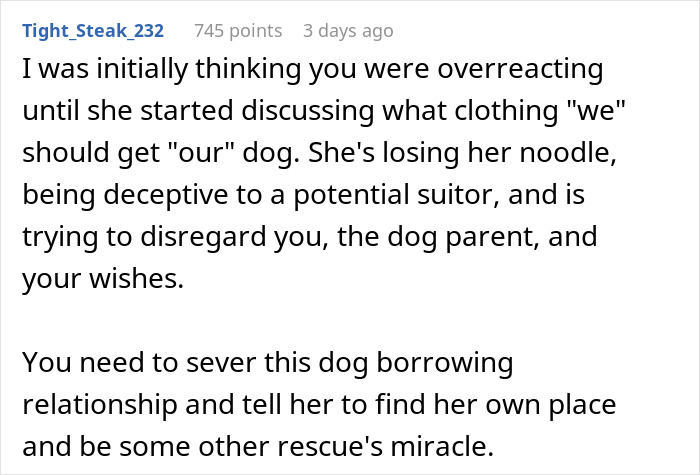
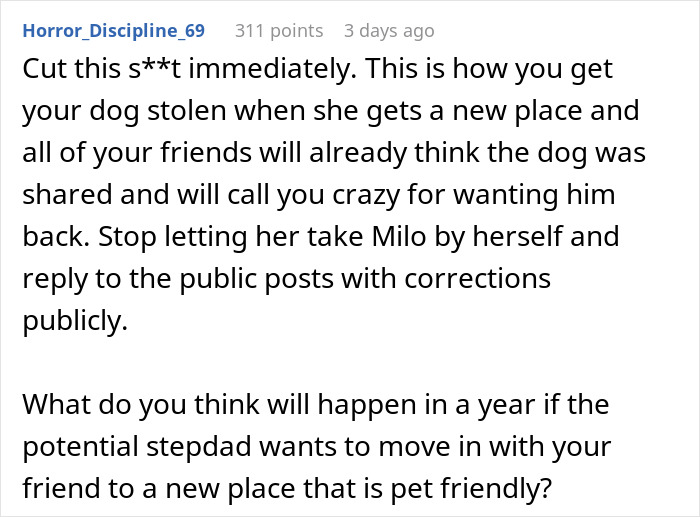
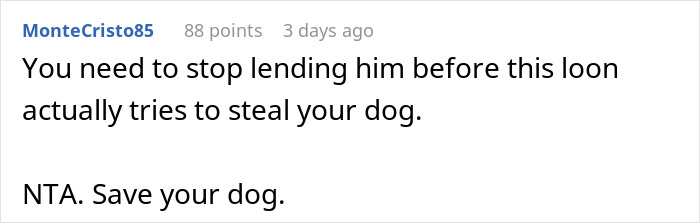
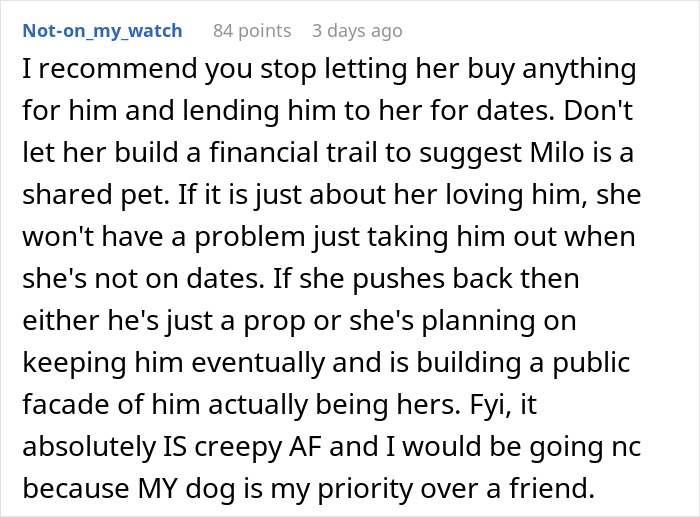
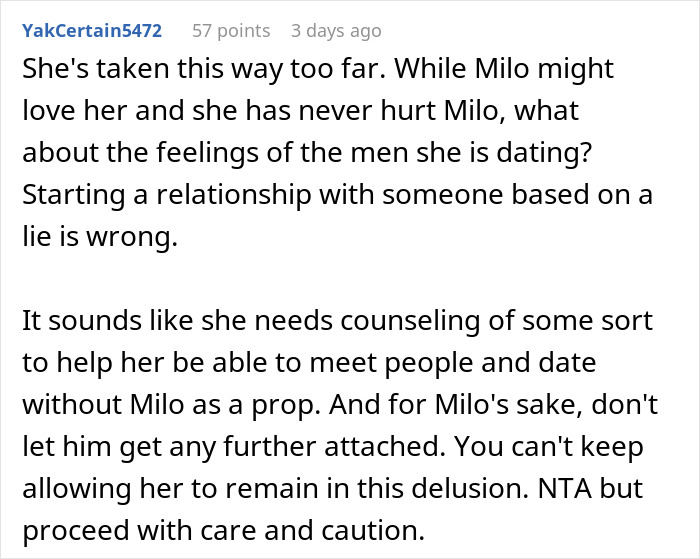
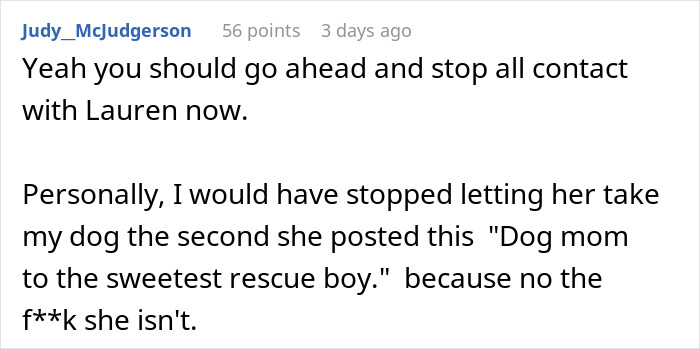
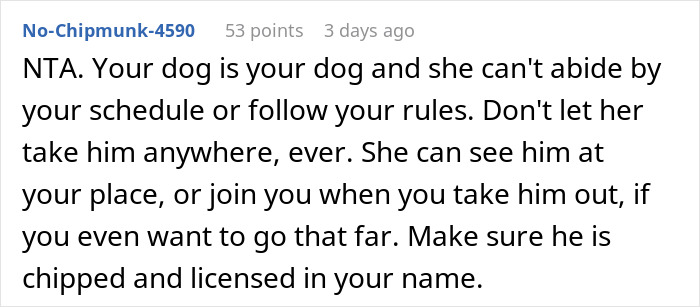
Netizens insisted the friend has gone far beyond harmless borrowing and is now blurring the line between companionship and ownership. They leaned heavily toward protection and urgency, with most urging immediate boundary-setting to prevent the situation from worsening. Where do you think the line is between sharing a pet and acting like you co-own someone else’s dog? We would love to know your thoughts!
Netizens advised the author to immediately end the arrangement, arguing that continued access could eventually lead to confusion over who truly owns the dog



 Follow Us