Turning 18 is lovely. People finally stop asking if you need a kids menu and start asking what your five-year plan is. Usually, birthdays at that age involve freedom, friends, maybe a terrible tattoo idea, and at the very least getting to choose where you eat dinner.
But for today’s Original Poster (OP), his big day somehow became all about making sure a first grader got her favorite meal instead. After deciding he’d had enough of his stepsister always being considered first, he took matters into his own hands.
More info: Reddit
Sometimes family doesn’t feel like the place where you’re seen, it feels like the place where you’re expected to shrink and always accommodate the comfort of others at your own expense

Image credits: Jasper Bennett / Unsplash (not the actual photo)

The author planned a birthday dinner with his mom, but she later changed the restaurant without telling him because his 6-year-old stepsister preferred a different place

Image credits: Wavebreak Media / Magnific (not the actual photo)
He confronted her, leading to a heated argument where she insisted he should prioritize his stepsister’s happiness, while he felt his own birthday was being ignored

Image credits: Freepik / Magnific (not the actual photo)
The conflict escalated over several days, and he eventually refused to attend the dinner, later moving out as tensions with his mom and stepfather continued

Image credits: ThrowRA_Broodyn
After the ruined celebration, his mother apologized and asked for a private make-up birthday dinner, but he is now unsure whether to rebuild the relationship
The OP explained that his mom originally offered to throw him a large family dinner instead of a traditional birthday party. She asked him which restaurants he wanted, and he gave her two choices so she could make reservations depending on availability. However, he later discovered that she had secretly changed the restaurant entirely because his 6-year-old stepsister didn’t like the food options he picked.
When he confronted her, he argued that it was supposed to be his birthday dinner, while his mom insisted he should want to make his stepsister happy. In fact, she repeatedly focused on how “miserable” the stepsister would be eating somewhere else and accused him of being selfish for refusing to go along with it. After several days of arguing, the OP decided to move out instead of continuing the conflict at home.
His stepfather tried to intervene but mostly told him to “grow up”, which only made things worse. In the end, the family still went through with the dinner plans, but the OP never showed up and ignored his mother’s calls that day. A few days later, his mom called saying she hated missing his birthday for the first time. She stated that she’d only wanted to make the younger child happy, and the OP just couldn’t get behind it.
Eventually, he hung up because he felt she still didn’t understand why he was upset in the first place. However, she called back few days later, asking if the two of them could celebrate separately to make up for everything, and this left him conflicted. Part of him wanted to cut contact completely after years of frustration, while another part still loved his mom and didn’t want the argument to become permanent.

Image credits: mariaphoto3 / Magnific (not the actual photo)
In blended family dynamics, relationships and expectations need careful pacing, especially when emotional milestones are involved. According to HelpGuide, children and teenagers in blended families tend to adjust more positively when stepparent–stepchild relationships are allowed to develop gradually rather than being pushed into immediate “real family” roles.
This becomes even more emotionally charged when milestone events are involved. Gray Jay Counselling notes that turning 18 is not just another birthday but a key developmental marker tied to identity formation and independence. At this stage, teens are especially sensitive to feeling ignored or deprioritized, and disappointment during such moments can escalate emotional reactions and conflict.
At the same time, broader family psychology research, as summarized by the BBC, highlights how perceptions of favoritism can have long-lasting effects on trust within parent–child relationships. Even when parents believe they are being fair or simply trying to accommodate younger children, repeated experiences of feeling secondary can slowly erode emotional closeness.
At the same time, broader family psychology research, as summarized by the BBC, highlights how perceptions of favoritism can have long-lasting effects on trust within parent–child relationships. Even when parents believe they are being fair or simply trying to accommodate younger children, repeated experiences of feeling secondary can slowly erode emotional closeness.
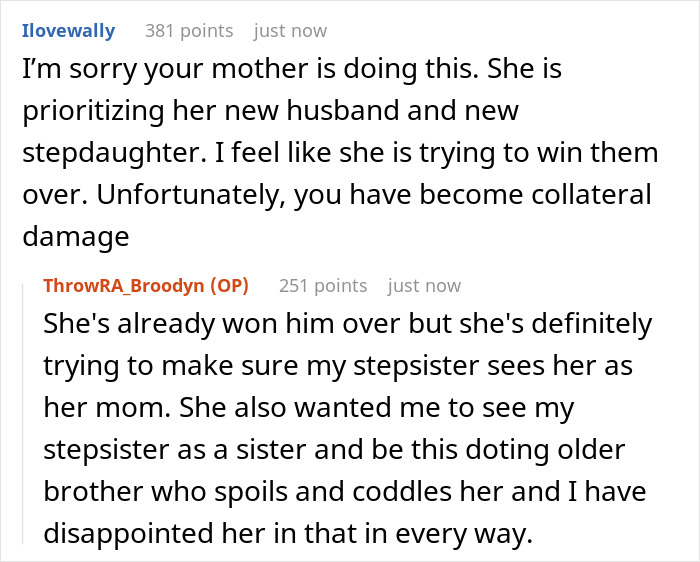
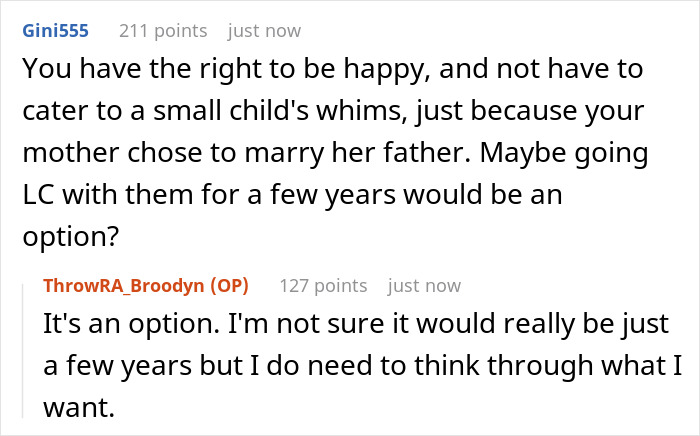
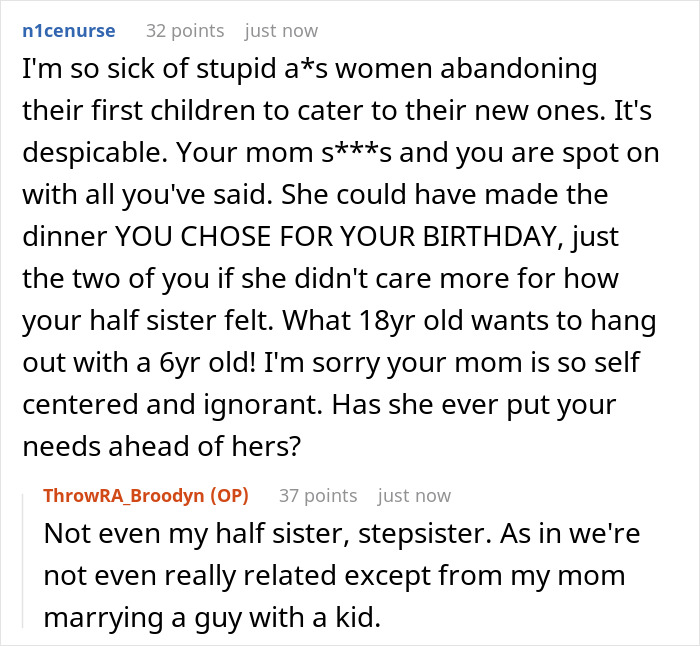
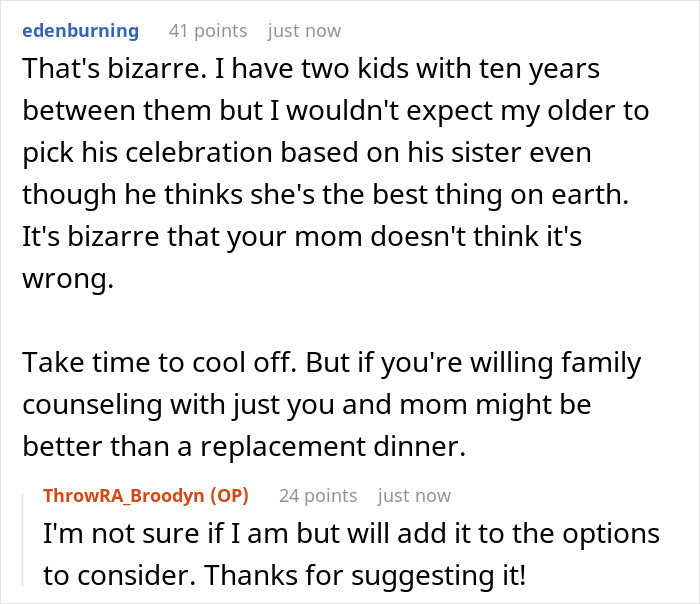
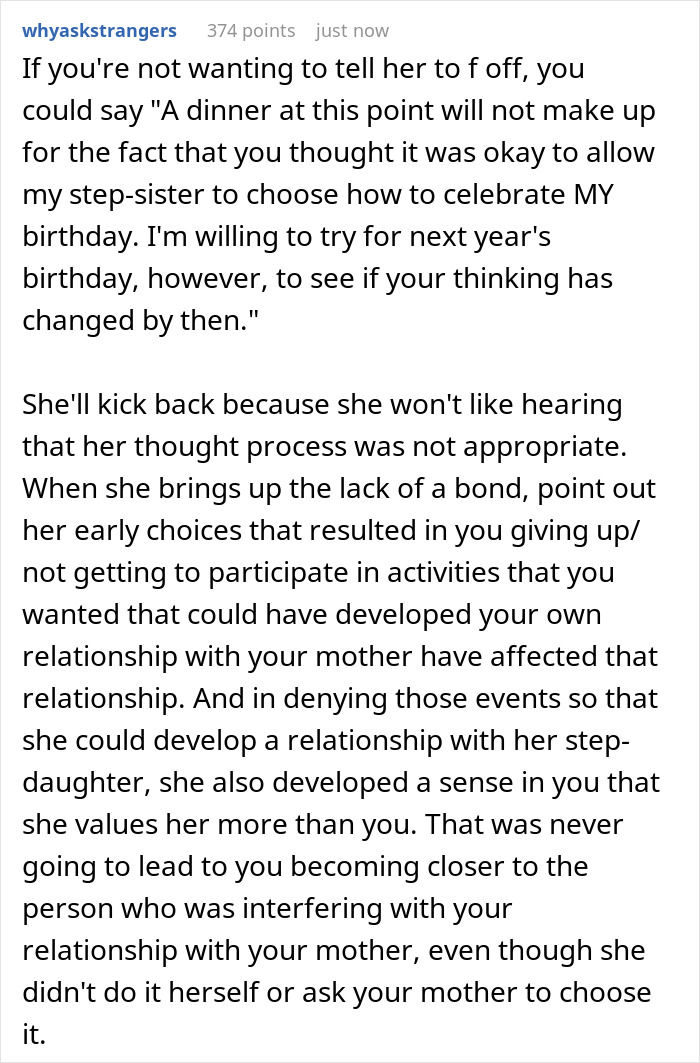
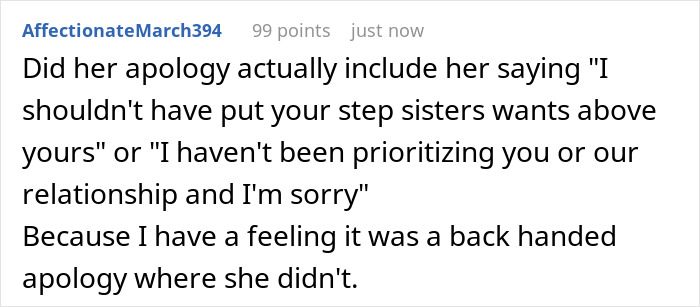
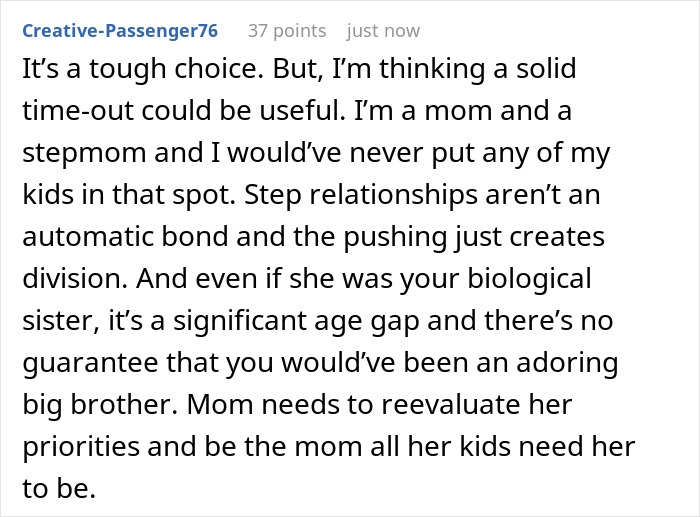
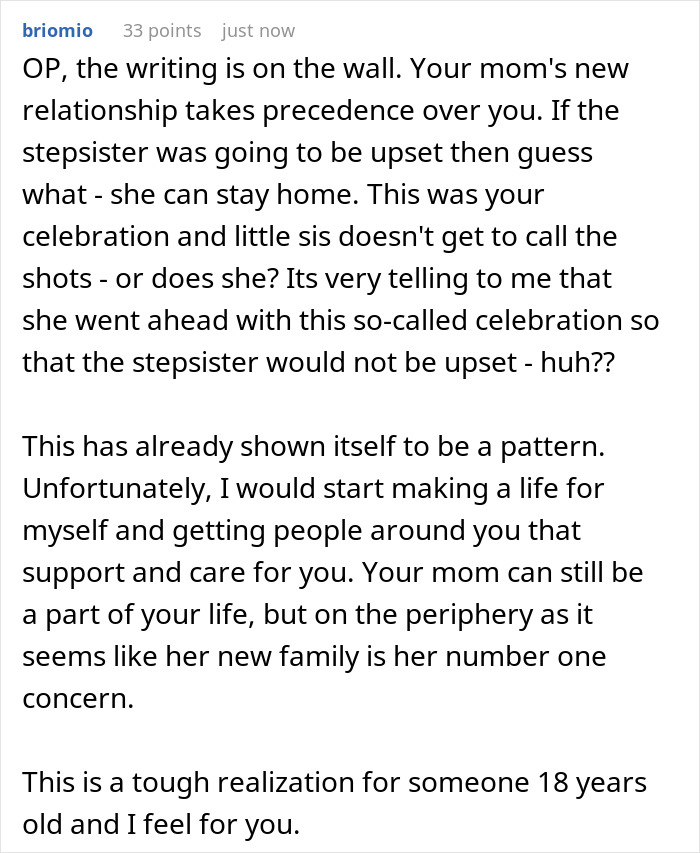
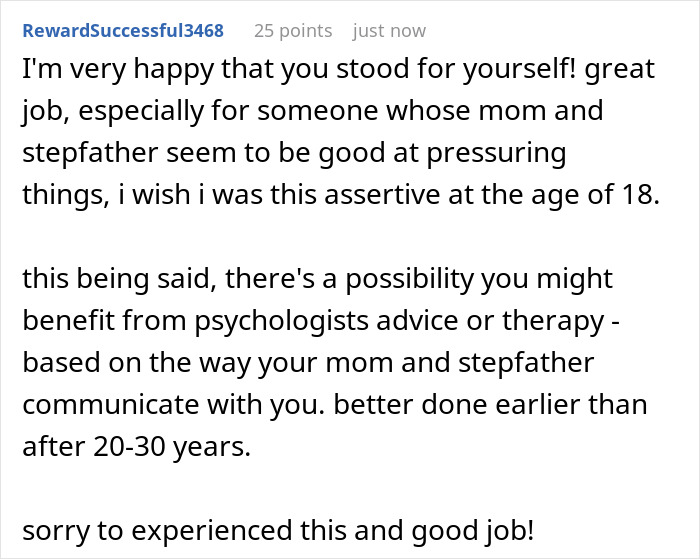
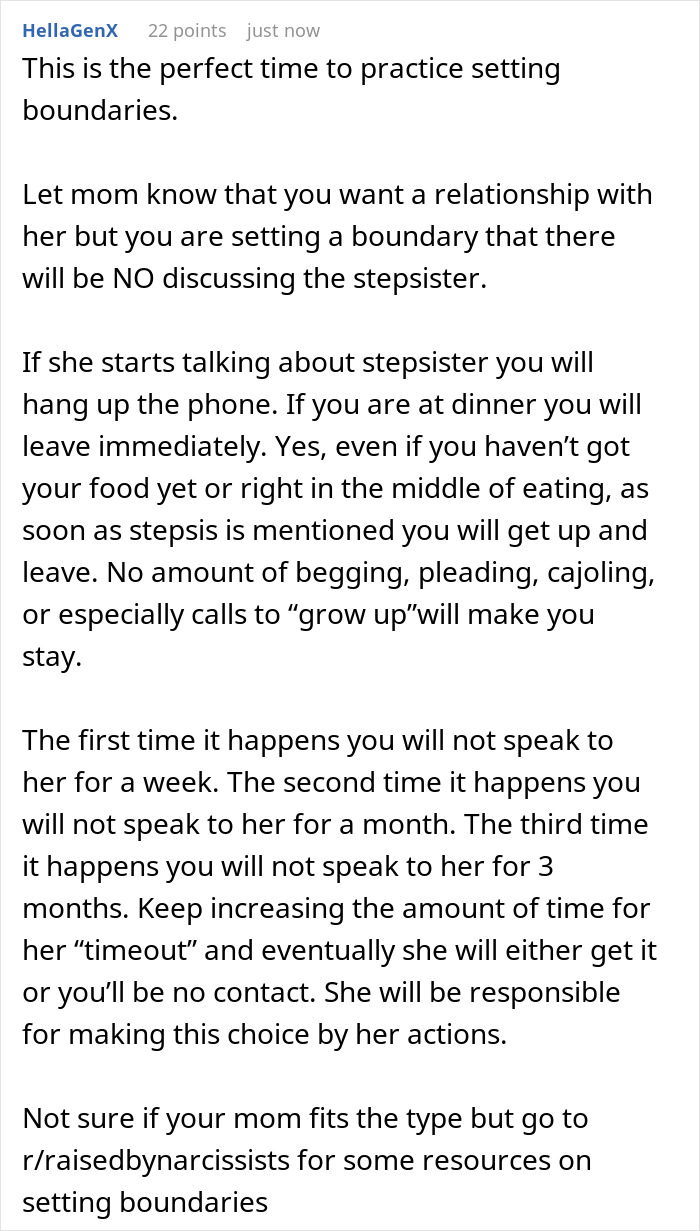
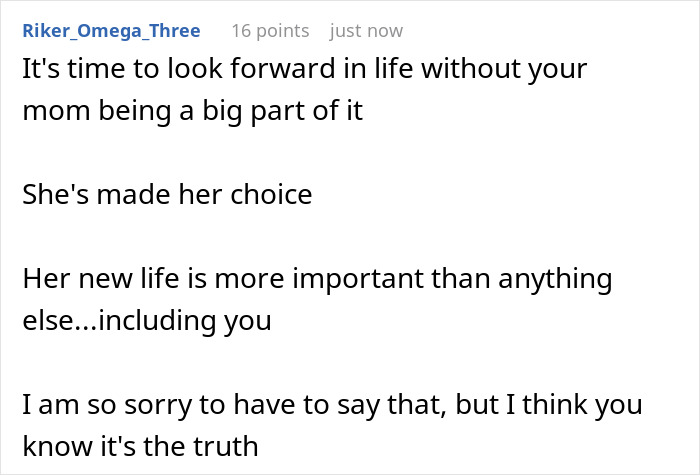
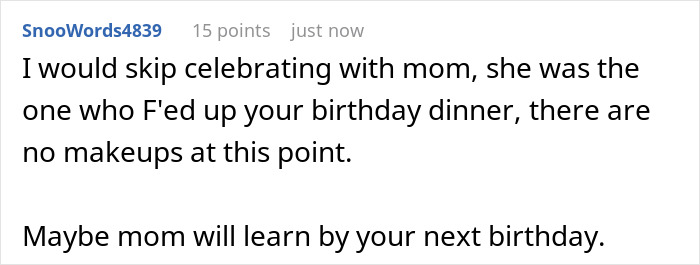
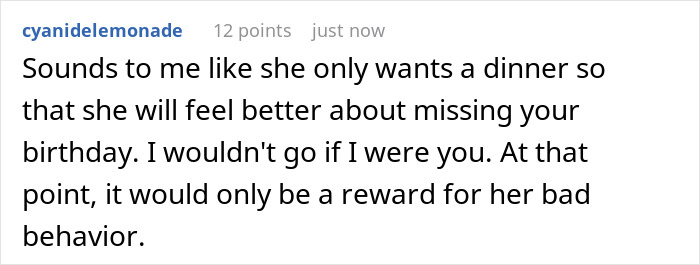
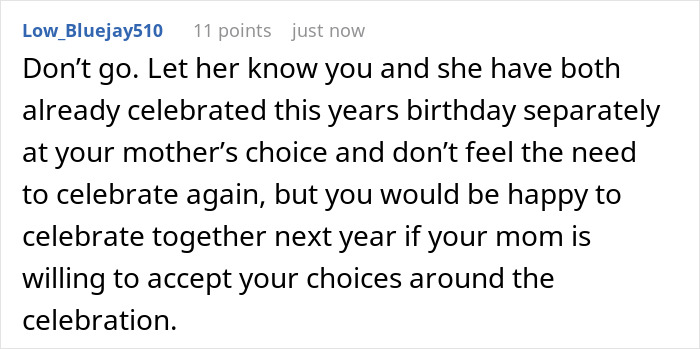
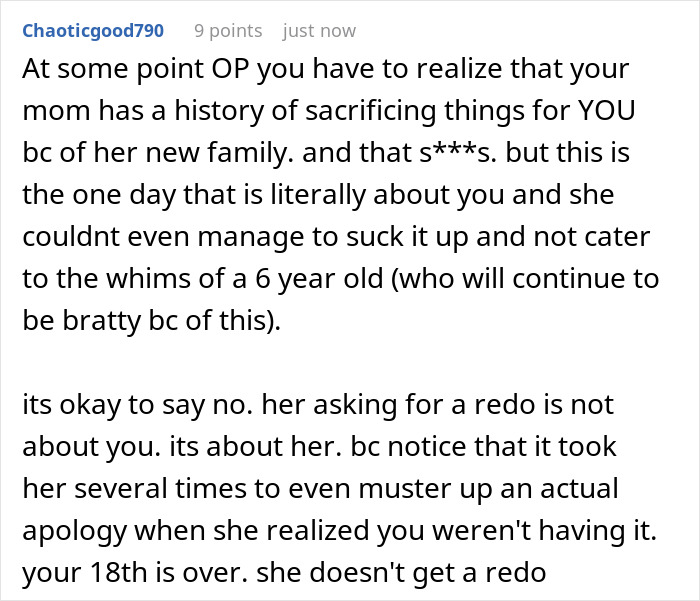
Netizens believe the mother is consistently prioritizing her new family over the OP, leaving him feeling sidelined. They warned against accepting a make-up dinner that only serves to ease his mother’s guilt. What do you think? If you were in his position, would you still go to the private make-up birthday dinner with your mom? We would love to know your thoughts!
Netizens showed support for the author’s decision to set boundaries, alongside expressing concern that his mother’s apology may not be fully genuine or reflective







 Follow Us