For decades, UFO documentaries have occupied a strange space between entertainment and investigation. While some chase rumors, others build their stories around official records, declassified memos, military testimony, and government investigations. That distinction changes everything. When classified files, military reports, and intelligence memos enter the conversation, the mystery takes on a different shape.
The United States government, along with agencies in other countries, has released thousands of pages of UFO-related files through programs like Project Blue Book, the Freedom of Information Act, and recent Pentagon disclosures. Filmmakers have used those records to reconstruct cases that once sat behind locked doors. These documentaries do not prove the existence of extraterrestrial life, and serious filmmakers rarely claim to do so. Instead, they examine what governments documented, what witnesses reported, and why officials continued to study these incidents for decades.
1. The Phenomenon
The Phenomenon stands as one of the most detailed modern UFO documentaries because it draws heavily from declassified military material and government-backed investigations. Director James Fox builds the film around official testimony, including statements from former Senate Majority Leader Harry Reid, who helped fund the Pentagon’s Advanced Aerospace Threat Identification Program. The documentary also examines the Navy’s now-famous UAP footage that the Pentagon authenticated in 2020.
The film moves through landmark cases like the Roswell incident and the Rendlesham Forest incident while using government files to establish timelines. It avoids wild speculation and focuses on official records, witness interviews, and military documentation. Its chosen structure gives it unusual credibility in a genre often filled with exaggeration. It remains one of the strongest entry points for new viewers. The Phenomenon holds a 100% aggregate rating on Rotten Tomatoes.

2. Out of the Blue
Before The Phenomenon, James Fox released Out of the Blue, a film that examined government knowledge of UFO encounters through military testimony and public documents. The documentary includes interviews with pilots, radar operators, and former officials who handled UFO cases directly. Its strength lies in how it treats those witnesses as primary sources rather than entertainment pieces.
The film pays close attention to government investigations from the Cold War era, including Air Force reports and classified case files that later became public. It builds a strong historical framework for understanding how seriously officials treated UFO reports. Many later documentaries borrowed its structure because it blended records with testimony so effectively.
3. I Know What I Saw
I Know What I Saw focuses on testimony from military officers, commercial pilots, and government personnel. The documentary gained attention because it featured a National Press Club event where officials from several countries discussed UFO incidents on the record. The public testimony created a documented trail instead of anonymous claims.
The film revisits several cases with government involvement, including radar-confirmed sightings and military interceptions. It uses official documents to support timelines and witness claims. The method keeps the story grounded, as even skeptics often acknowledge the seriousness of the testimony presented.
4. UFO Files
UFO Files built its entire format around documented government cases. The series ran for several seasons and examined major incidents through Air Force records, FBI memos, and declassified intelligence reports. Each episode focused on a different file or investigation.
Its episodes on Project Blue Book remain some of the strongest because they explain how the Air Force categorized and investigated sightings between 1952 and 1969. The historical grounding helps audiences understand that UFO investigation was once official government business. The series succeeded because it prioritized paperwork over fantasy.
5. Hangar 1: The UFO Files
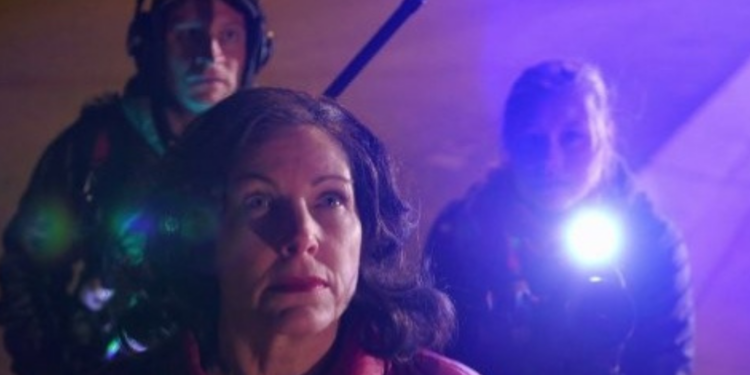
Hangar 1: The UFO Files centers on case files collected by MUFON (Mutual UFO Network), but it often ties those files to government reports and military records. The series explores incidents where official agencies documented strange aerial activity. The connection gives the show more substance than many reality-style UFO programs.
Several episodes examine military base sightings, radar confirmations, and FAA reports. Those records matter because they create paper trails that investigators can verify. The show dramatizes events, but it keeps its foundation in actual case documentation.
6. Unsealed: Alien Files
Unsealed: Alien Files built its identity around Freedom of Information Act releases. Each episode examines files that once remained classified and connects them to well-known UFO cases. The format gave the series a built-in factual foundation.
The show covers documents from agencies like the CIA, FBI, and Air Force. Those records include surveillance notes, witness interviews, and investigation summaries. While the show leans into dramatic storytelling, the source material remains real. It makes it more grounded than many competitors.
7. UFOs: Seeing Is Believing
Journalist Peter Jennings approached UFOs with a reporter’s skepticism in UFOs: Seeing Is Believing. The documentary aired on ABC and examined major UFO cases through scientific analysis, government records, and expert interviews. It avoided sensational claims and asked harder questions than most documentaries in the genre.
The documentary also explored how governments investigated UFOs while scientists challenged extraordinary claims. The balance made it stand out. Jennings framed the issue as a historical and scientific question, not a supernatural mystery. The approach still feels refreshing.
8. Mirage Men
Mirage Men tackles a different side of UFO history by examining government disinformation campaigns. The film investigates how intelligence agencies sometimes encouraged UFO myths to protect classified weapons programs. The angle changes how audiences understand many famous sightings.
The documentary relies on interviews and historical records tied to military intelligence operations. It does not argue that UFOs are alien craft. Instead, it shows how government secrecy created confusion. That makes it one of the most important documentaries in the genre.
9. The Secret KGB UFO Files
This documentary explores Soviet-era UFO investigations through released Russian government material and military accounts. During the Cold War, Soviet officials tracked unexplained aerial events just as aggressively as American agencies did. The documentary uses those records to show how seriously another superpower treated the subject. Its value lies in widening the story beyond the United States. UFO history often centers on American cases, but Soviet archives tell a parallel story. The broader perspective makes the documentary worth revisiting.
10. The True Story of Flying Saucers
Released during the height of the Cold War, the documentary offers a time capsule of how officials handled UFO reports in the 1950s. It shows a government actively collecting reports, interviewing witnesses, and assessing threats. The historical context gives modern audiences a clear look at how official interest in UFOs began.
 Follow Us