History has a way of feeling distant until a single photograph suddenly makes it seem surprisingly close. The Instagram page History Cool Kids, whose content has previously been featured on Bored Panda, brings together rare and lesser-known images that reveal the past through small, striking, and often unexpected moments. Some capture major events and recognizable figures, while others focus on everyday scenes, quiet interactions, and details that rarely make it into history books.
What makes these photos so fascinating is how human they feel, whether they’re depicting personalities whose names have adorned history books for centuries in a way that’s relatable to all of us or show us how much and how little certain objects and activities from our daily lives have changed. From candid snapshots to powerful glimpses of different eras, the collection offers a more personal way to look at history.
Scroll down to explore these remarkable images, upvote the ones that caught your attention the most, and let us know in the comments which photo stayed with you.
More info: Instagram
#1
“Before entering films, Chuck Norris had already built a strong reputation as a competitive martial artist, winning multiple karate championships in the 1960s.
He was well known within martial arts circles, though not yet a public figure in entertainment. His major turning point came when Bruce Lee cast him in Way of the Dragon. Their climactic fight scene, set in the Colosseum, became one of the most iconic moments in martial arts cinema and introduced Norris to a global audience.
Interestingly, parts of that scene were actually filmed inside the real Colosseum despite strict filming restrictions at the time. The crew reportedly posed as tourists, carried their equipment in bags, and even bribed guards so they could shoot there for a few hours.
RIP to these two legends.”
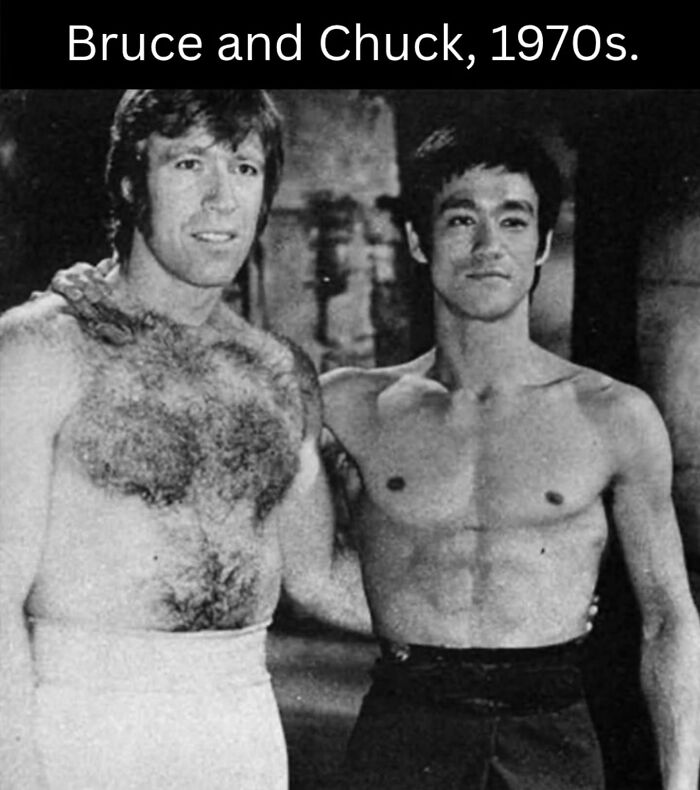
Image source: historycoolkids

#2
“To facilitate the initial contact, Lucie utilized her pregnancy to gain an audience with the notorious Klaus Barbie, the head of the Gestapo in Lyon.
Using the alias “Catherine Boissard,” she tearfully claimed that she had been seduced and abandoned by the prisoner, Raymond, and that her family’s honor could only be restored if they were allowed to marry before his execution. Barbie, surprisingly moved by this “traditional” appeal, granted a brief meeting in a German military vehicle, which allowed Lucie to slip Raymond the details of the upcoming rescue plan.
The actual liberation took place on October 21, 1943, as Raymond and thirteen other Resistance members were being transported from the Montluc prison to the Gestapo headquarters. Lucie led a commando team of the Libération-sud movement, who intercepted the truck at a sharp turn in the road. As the vehicle slowed, the commandos opened fired; Lucie was at the forefront of the assault, personally engaging the guards to ensure the prisoners could escape. They were able to safely extract all 14 captives.
Following the raid, the couple had to go deep underground, moving between various safe houses across France while being hunted by the Gestapo. They eventually managed to escape to London in February 1944, just months before Lucie gave birth to their second child.”
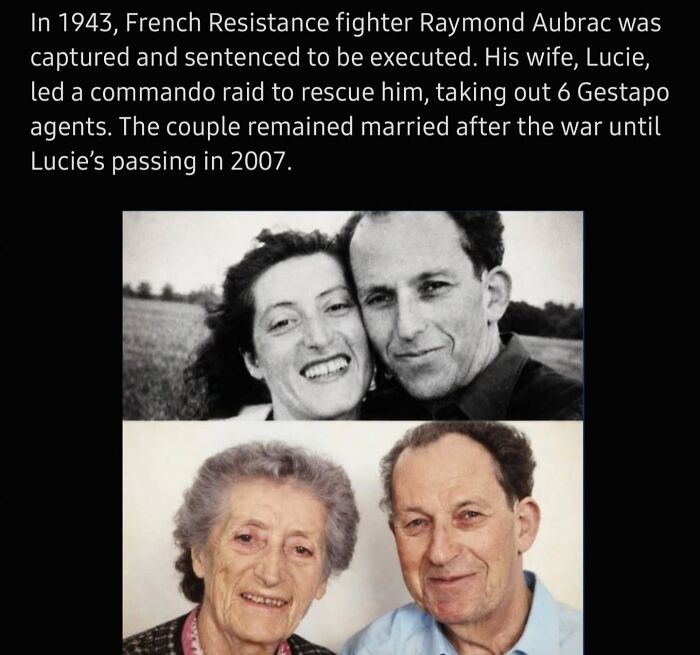
Image source: historycoolkids
#3
“Ron Cobb (1937 – 2020) was an American cartoonist, illustrator, and production designer.
He began his career working as an animator for Walt Disney Productions but became widely known in the 1960s for his political cartoons in underground newspapers.
His cartoons appeared in publications such as Los Angeles Free Press and often criticized war, corporate power, pollution, and government authority. Cobb used intricate drawings, invented machines, and futuristic symbols to satirize modern society and environmental problems.
He later moved into film design and helped shape the visual style of major science fiction movies including Star Wars, Alien, and Back to the Future. His ability to combine imaginative ideas with believable engineering made him highly influential in science fiction art and film design.”
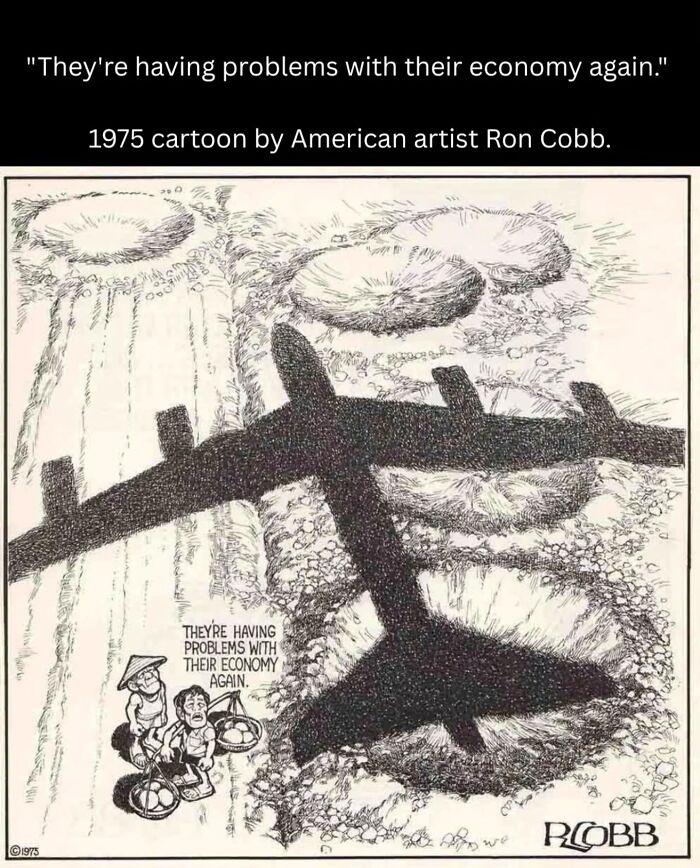
Image source: historycoolkids
#4
“Charles Duke, who served as the lunar module pilot on the Apollo 16 mission, left a small photo of his family on the Moon in April 1972.
He placed it on the surface near the landing site in the Descartes Highlands as a personal memento. The photo showed Duke, his wife Dorothy, and their two sons, and he even wrote a message on the back identifying them as the family of an astronaut who had visited the Moon.
The photograph is still there today. Because the Moon has no atmosphere, there’s no wind or weather to move it, so it remains where he left it. However, the harsh environment, including intense sunlight, radiation, and extreme temperature swings, has likely faded or bleached the image over time.”
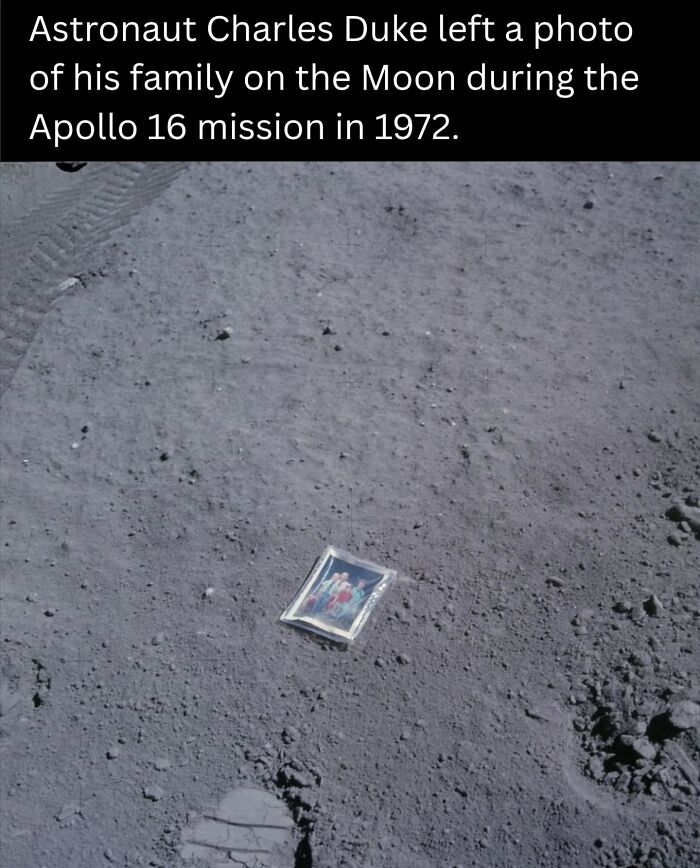
Image source: historycoolkids
#5
“The car was a Volvo PV544, introduced in 1958, the same year as the submarine it collided with.
The submarine was HMS Bävern, whose name means The Beaver in English. It was one of three submarines in the Hajen III class built at Kockums in Malmö, Sweden. The submarine suffered no lasting damage from being struck by a car and continued in service until 1980. It was scrapped the following year in Odense, Denmark.
The later fate of the Volvo after the collision remains unknown.”
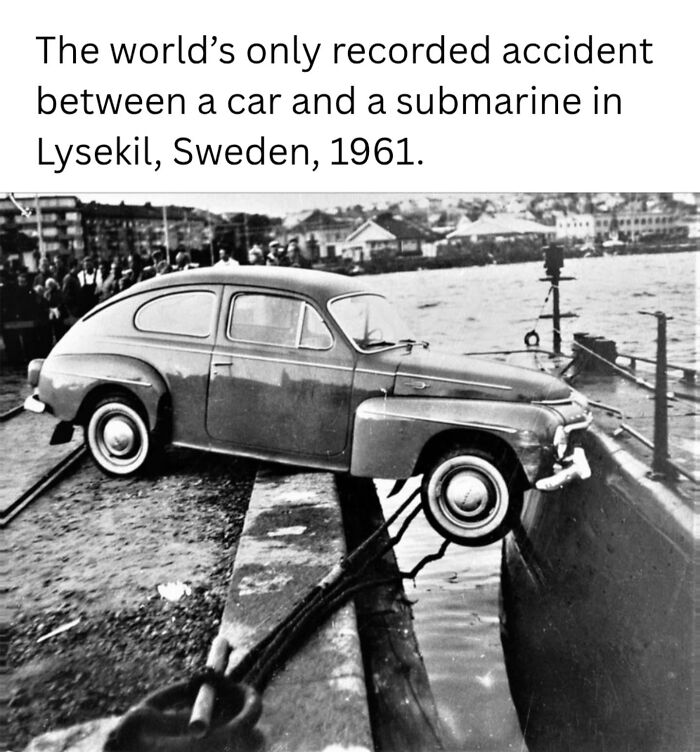
Image source: historycoolkids
#6
“Some things just never change…
This photo was taken on Lombardy Street in the Carver neighborhood of Richmond, Virginia. In the background on the right, the building that once stood there has since been replaced by a U Haul storage facility.
On the left side, the area has been redeveloped and now contains a Kroger grocery store. ”
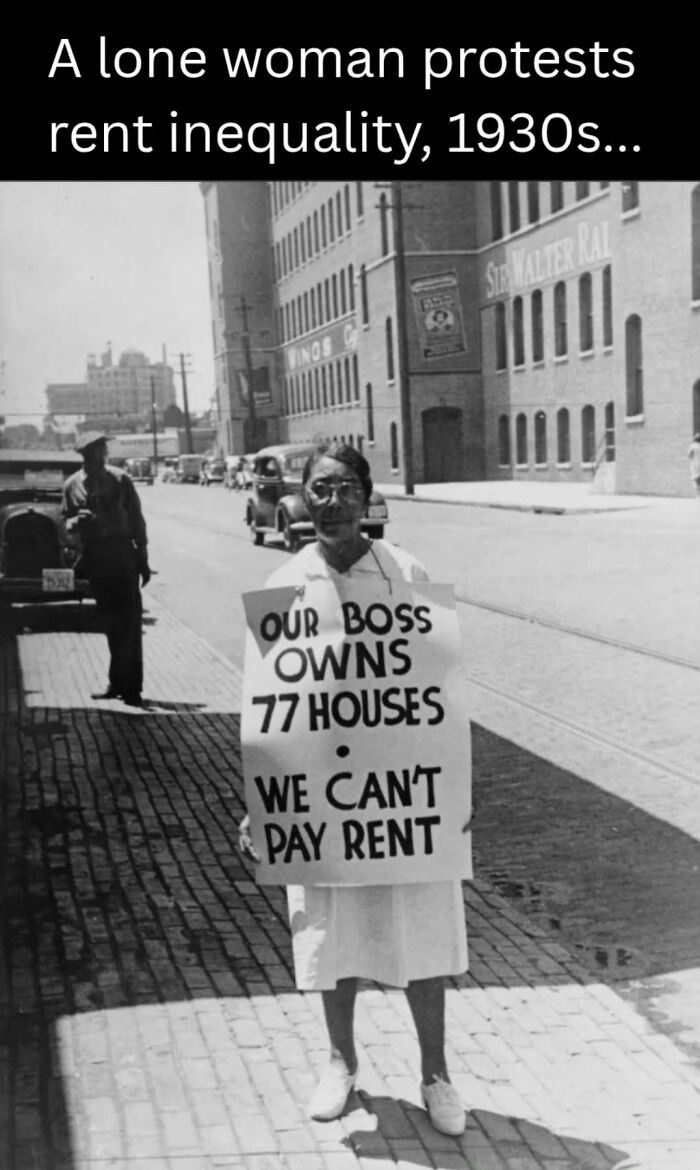
Image source: historycoolkids
#7
“Astronaut Bruce McCandless II drifts untethered in space, 1984.
During the Space Shuttle Challenger mission STS 41 B, McCandless tested the Manned Maneuvering Unit, relying solely on the nitrogen powered backpack to control his motion.
After drifting out to a planned distance he turned around fired the thrusters in a controlled approach and guided himself back to the payload bay where he grabbed hold of the shuttle structure.
The entire maneuver was rehearsed many times on the ground and the MMU had plenty of fuel along with built in safety controls which allowed him to return calmly and precisely to Challenger.”
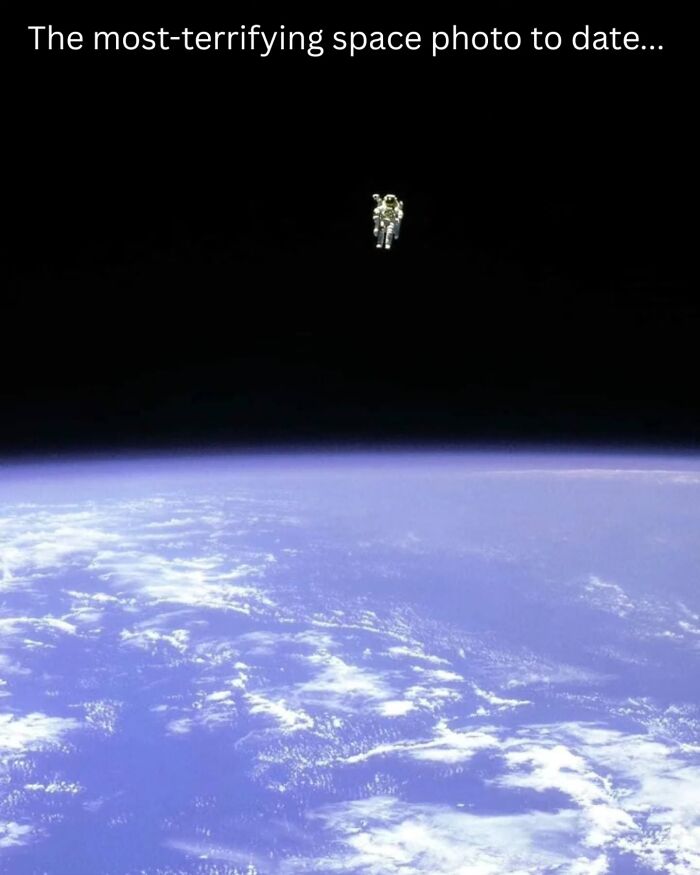
Image source: historycoolkids
#8
“You can still see a rock lodged in the tile, most likely because the tile maker tried to scare it off.
Still a good boy.”
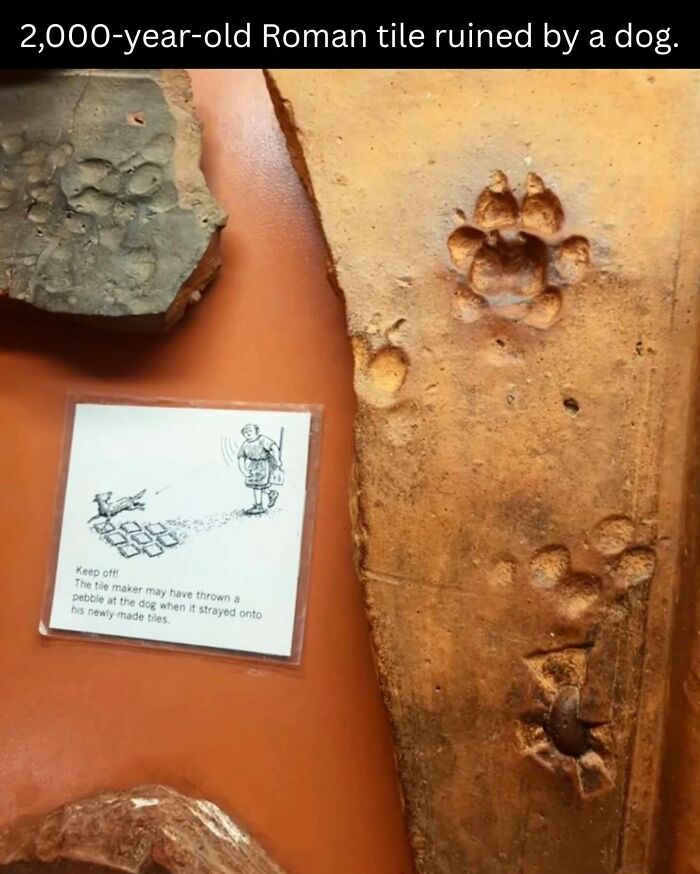
Image source: historycoolkids
#9
“The torch balcony of the Statue of Liberty has been closed to the public since 1916, after the Black Tom explosion.
The blast, which was an act of sabotage during WW1, damaged the statue’s structure and made access to the torch unsafe.
Before that, visitors could actually climb all the way up into the torch and step out onto the balcony for a view of New York Harbor. Today, even though the statue itself is still open to visitors up to the crown, the torch remains off limits, making photos taken from that vantage point extremely rare.”
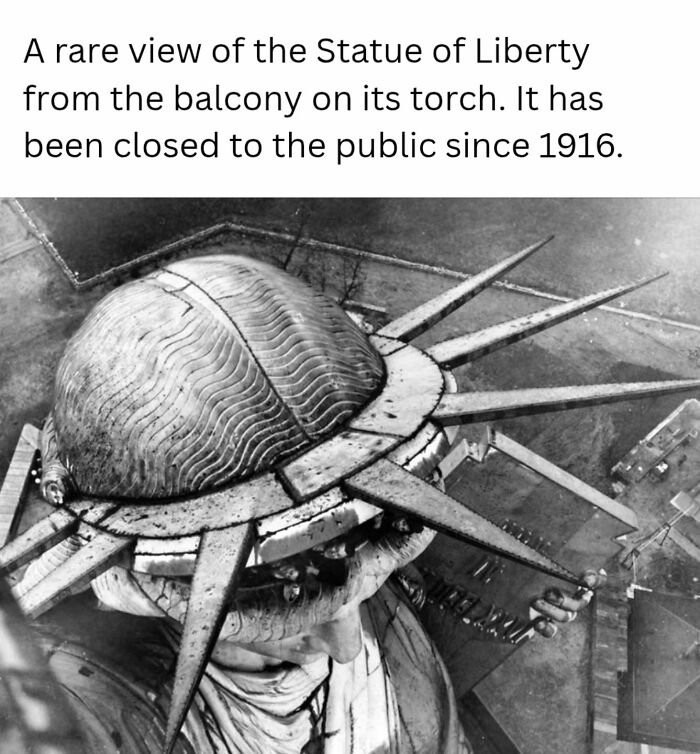
Image source: historycoolkids
#10
“SPC4 Richard Springman of the United States Army was captured in Cambodia on May 25, 1970.
This photo was taken on February 12, 1973 in Lộc Ninh (southeast region of Vietnam) where Springman was one of 28 American prisoners of war released that day by the Viet Cong.
The irony must have been palpable to the Vietnamese soldier, seeing a man who had traveled halfway across the globe to invade his country while wearing a symbol of peace around his neck.”
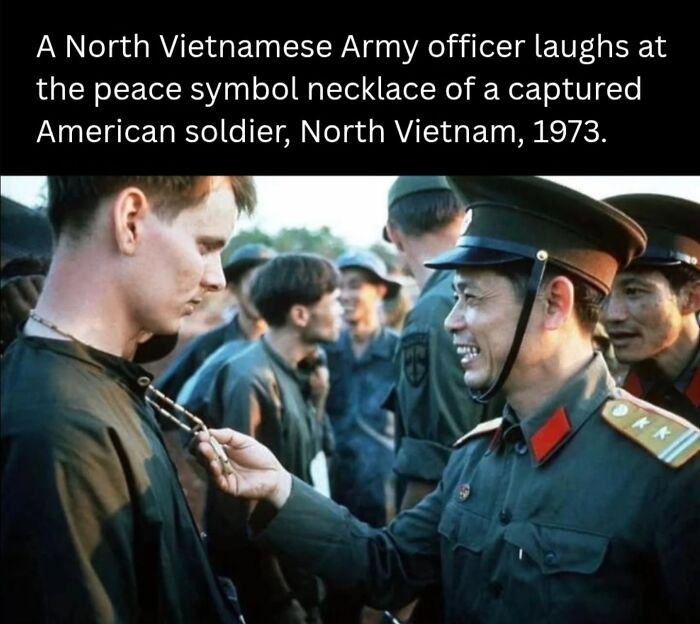
Image source: historycoolkids
#11
“During the Korean War armistice negotiations at Panmunjom, both sides engaged in a symbolic “flag war,” with each delegation bringing a slightly larger national flag than the other.
This rivalry escalated to the point where the flags became too large to fit inside the meeting room, forcing a special session just to set limits on their size.
Despite the eventual signing of the Korean Armistice Agreement in July 1953, which halted the fighting between North Korea and South Korea and their allies, no formal peace treaty was ever concluded, leaving the two Koreas technically still at war in a long running frozen conflict.”
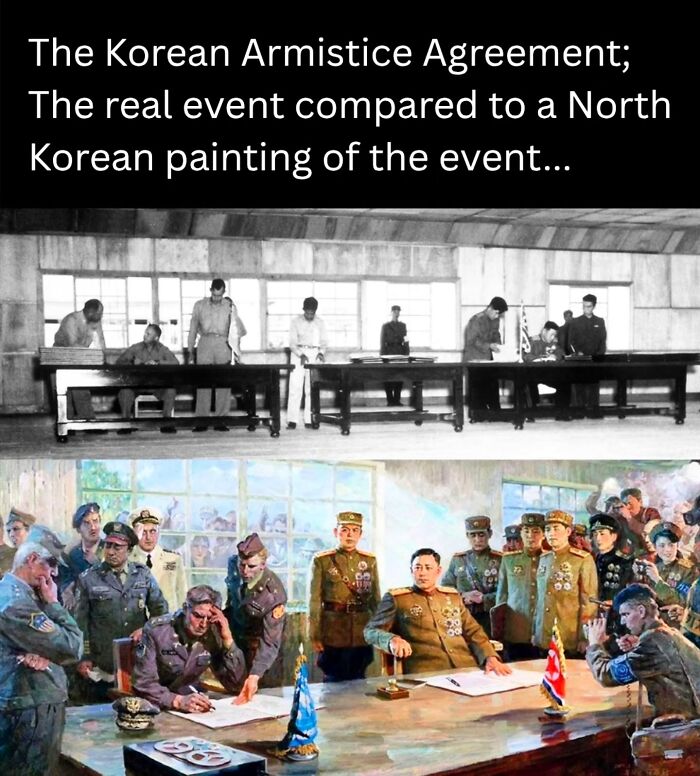
Image source: historycoolkids
#12
Image source: historycoolkids
#13
“The Vespa 150 TAP was a special military version of the Italian Vespa scooter built in the 1950s for French airborne troops.
About 500–600 units were produced under license in France between 1956 and 1959. Its unique feature was the ability to carry a U.S.-designed M20 75 mm recoilless rifle, a lightweight anti-armor weapon. The scooter itself wasn’t meant to fire the weapon directly; instead, it transported the rifle and ammunition quickly after a parachute drop, allowing soldiers to set it up on a tripod for use.
The Vespa 150 TAP had a reinforced frame, a larger 145 cc engine, and modified gearing to handle the extra weight, reaching speeds of 37–40 mph (60 km/h). These scooters were usually deployed in pairs, sometimes with a small trailer for additional supplies, and saw limited use mainly for transport and light support rather than direct anti-tank combat. The program was phased out by the 1960s as military technology advanced.”
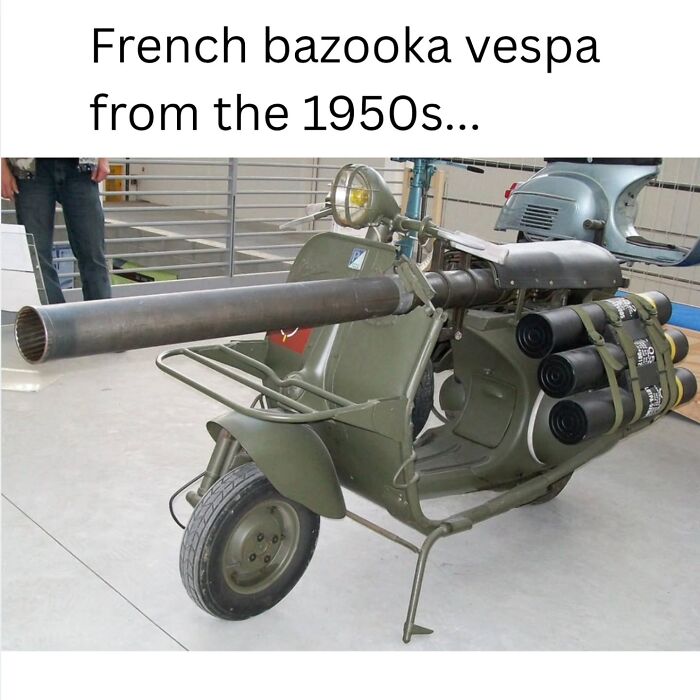
Image source: historycoolkids
#14
“Custer would have been around 20 years old in this photo. He would perished 17 years later…
Custer graduated last in his class (34th out of 34) from the United States Military Academy at West Point in June 1861 after racking up a record 726 demerits in just 4 years, one of the worst conduct records in the academy’s history. Despite this rocky start, he went on to become a cavalry commander during the American Civil War.
In 1876, Custer was warned by his Native American scouts that the Lakota allied forces vastly outnumbered his men. Custer ignored these warnings, believing his well armed forces to be nearly invincible, and then promptly lost his life later that same day.”
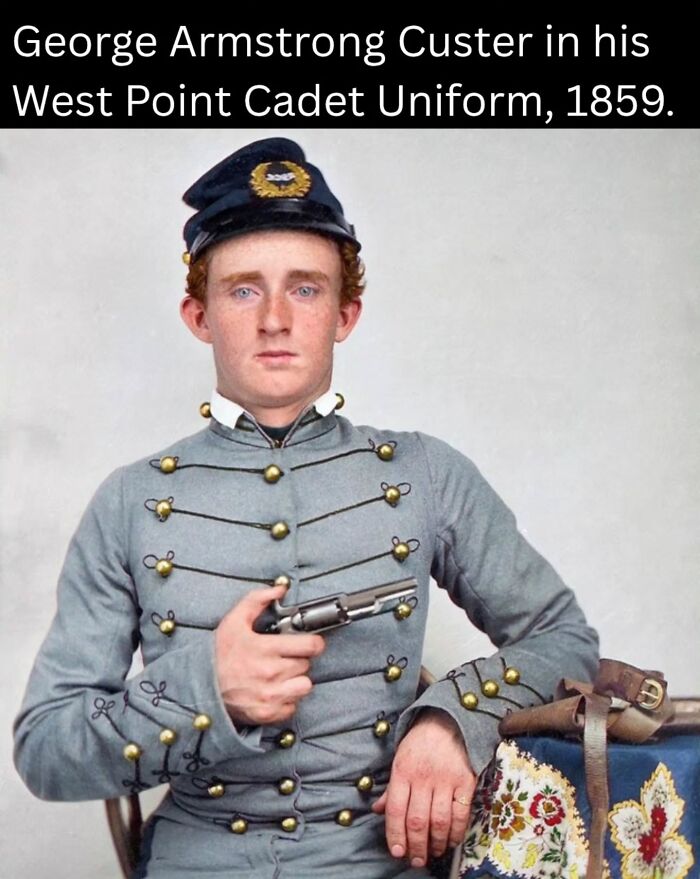
Image source: historycoolkids
#15
“Adjusting for inflation, $550 in 1961 is equivalent to about $6,000 in 2026.
Not a bad price for a fallout shelter, but it does look pretty small and no frills.
Most of these early shelters were compact, often just a small reinforced room with bare essentials: a concrete or steel structure, a few cots or benches, and perhaps some basic ventilation.
No plumbing, no running water, minimal storage, and certainly no decorative touches. They were all about survival, not comfort—enough to ride out radiation fallout for a limited period of time.”
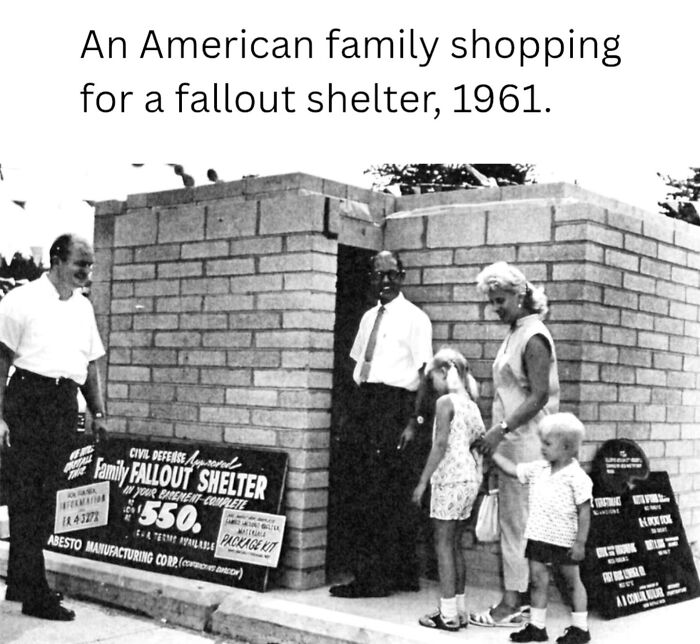
Image source: historycoolkids
#16
“Kaiser Wilhelm II was the last German Emperor and King of Prussia, ruling from 1888 to 1918.
He was born in 1859, the eldest grandson of Queen Victoria, which made him closely related to many European royal families. A difficult birth left him with a withered left arm, an injury that shaped both his personality and his lifelong need to project strength and authority.
Wilhelm dismissed his powerful chancellor Otto von Bismarck in 1890 and took a far more personal role in governing. Under his rule, Germany pursued an aggressive foreign policy known as Weltpolitik, aimed at expanding its global influence. He dramatically expanded the German navy, challenging Britain and intensifying rivalries among the European powers. His impulsive speeches and erratic diplomacy often worsened tensions.
When WW1 broke out in 1914, Wilhelm supported Austria Hungary against Serbia, helping set the wider conflict in motion. Although he was emperor, real military power increasingly shifted to generals such as Paul von Hindenburg and Erich Ludendorff during the war. As Germany faced defeat in 1918, revolution spread at home. Wilhelm abdicated in November 1918 and fled to the Netherlands, where he lived in exile until his passing in 1941.”
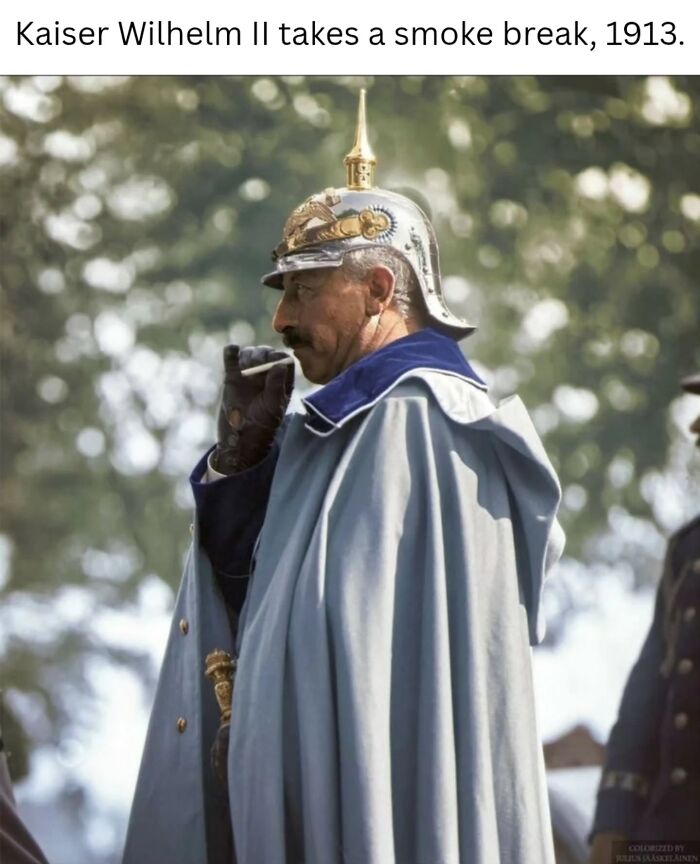
Image source: historycoolkids
#17
“The flag taken from the Spanish warship San Ildefonso, measures 10 m × 14.5 m (33 × 48 feet) and is made of wool.
The Battle of Trafalgar was a decisive naval engagement fought in 1805 during the Napoleonic Wars, in which the British Royal Navy, under Admiral Horatio Nelson, defeated the combined fleets of France and Spain. The battle took place off the coast of Cape Trafalgar, near Cádiz, Spain, and ensured British naval supremacy for over a century.
Nelson’s innovative tactics, including breaking the enemy line, allowed the outnumbered British fleet to achieve a stunning victory. Despite his success, Nelson was mortally wounded during the battle, becoming a national hero in Britain.
The defeat severely weakened Napoleon’s plans to invade Britain and marked a turning point in European naval history.”
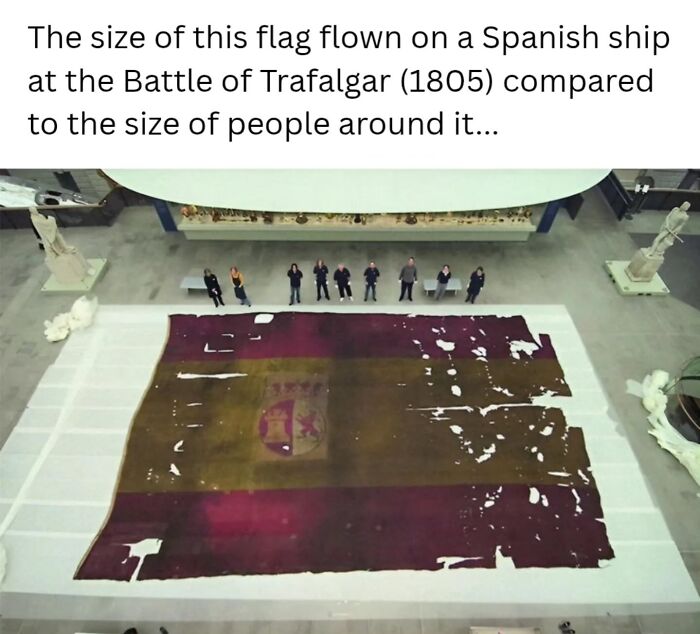
Image source: historycoolkids
#18
“These tools (dating to the 1st century AD) were manufactured using bronze and iron, and their designs remained largely unchanged for centuries.
Among the find were scalpels with steel blades, various types of forceps used for removing bone fragments or teeth, and diverse probes (specilla) used to explore wounds or apply medication. The collection also included speculums, used for internal examinations.
While these tools demonstrate high technical skill, Roman surgical practice was conducted without the benefit of modern germ theory or general anesthesia, instead relying on herbal sedatives like opium or mandragora and basic antiseptic agents such as vinegar and wine.
The presence of these tools confirms that Roman surgeons were capable of performing amputations, trepanations, and internal gynecological procedures by 79 AD.”
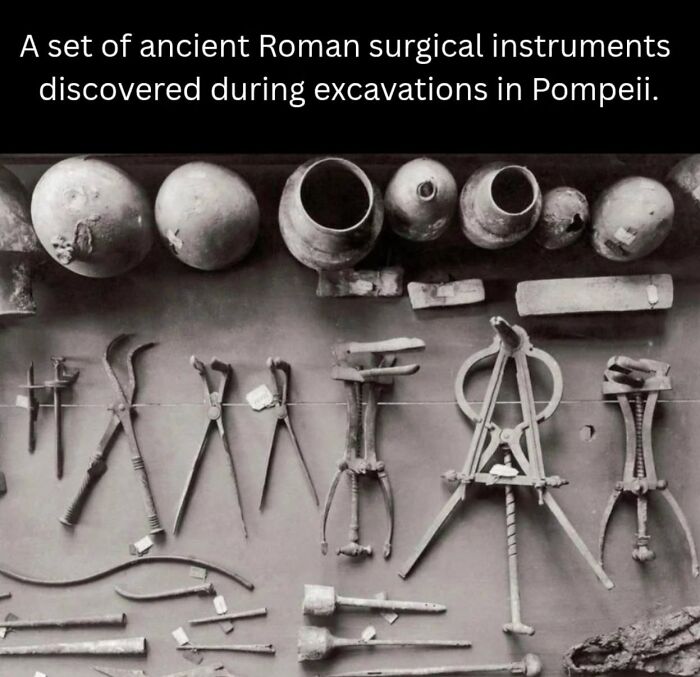
Image source: historycoolkids
#19
“Original caption: Coal miner, six of his seven children. His wife is usually sick with a bad bronchial condition, Chaplin, West Virginia.
Image by Marion Post Walcott.”
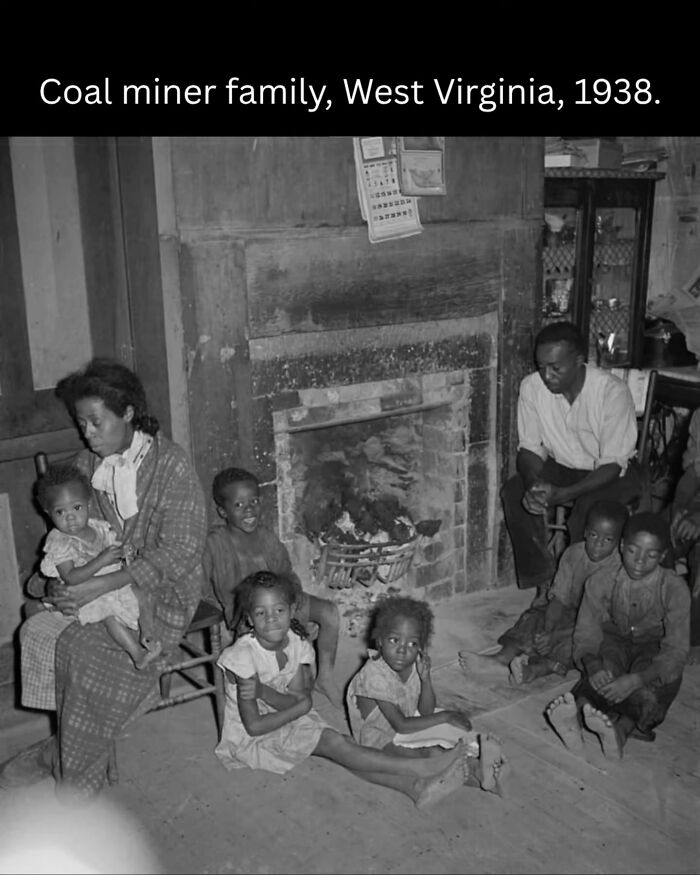
Image source: historycoolkids
#20
“I wasn’t sure what was different to be honest, but after I zoomed in a bit I noticed the following:
1. The whole Korean peninsula is highlighted in red.
2. There is no demarcation for where the DMZ should be.
3. Cuba is bigger than Florida.
4. Hawaii is missing.
5. Newfoundland is missing.
6. South America
7. Italy looks emaciated.
8. New Zealand is included!”

Image source: historycoolkids
#21
“Audrey Hepburn, Grace Kelly, Jackie Kennedy, and Barbara Walters were also born in 1929.
Dick Van Dyke who was born in 1925 is still alive today at age 100!”
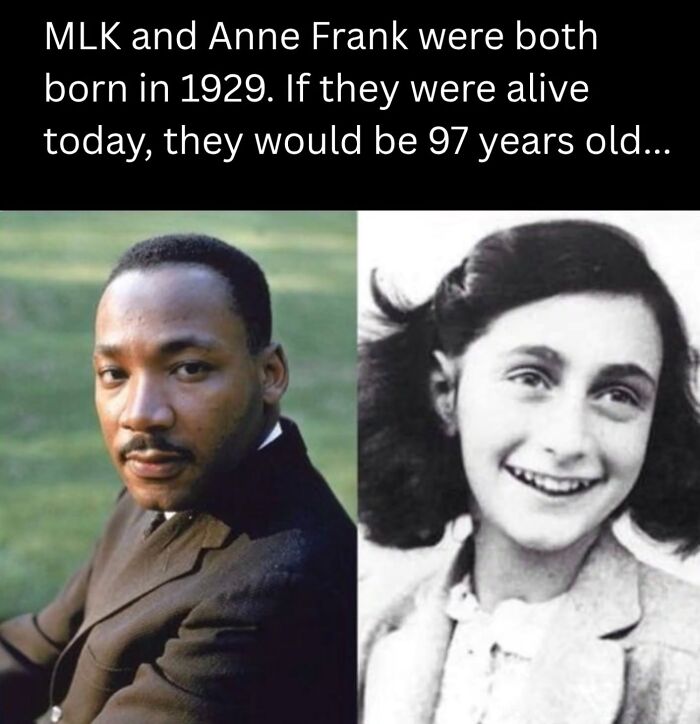
Image source: historycoolkids
#22
“Urk was once a small island sitting in the Zuiderzee, surrounded entirely by open water and relying almost completely on fishing for its survival.
For many centuries it remained cut off from the mainland. This changed in the 20th century with the large scale Zuiderzee Works, one of the most ambitious engineering projects in Dutch history.
The Zuiderzee was sealed off from the North Sea by the construction of the Afsluitdijk, turning the saltwater inlet into a freshwater lake known as the IJsselmeer. After this, vast areas of the seabed were slowly drained and converted into land, including the creation of the Noordoostpolder.
By the 1940s, the waters that had once completely surrounded Urk had largely disappeared, replaced by new farmland and reclaimed land.”
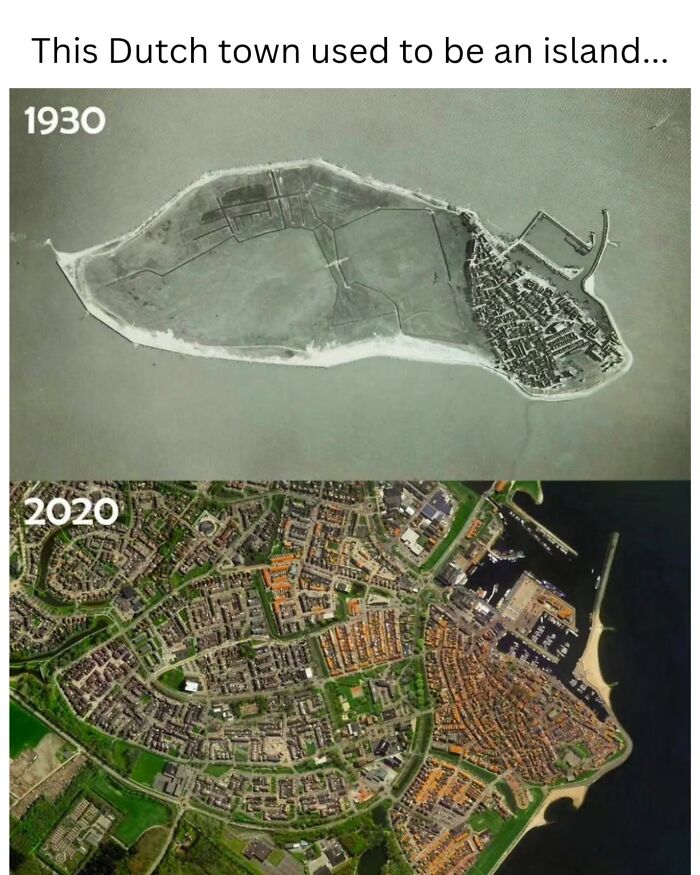
Image source: historycoolkids
#23
“The concept of “Iron Fist” training typically involves a progressive regimen of striking bags filled with mung beans, then gravel, and eventually iron filings to desensitize the hands and create micro-fractures that heal into denser bone—a process known as Wolff’s Law.
However, Bruce Lee actually moved away from traditional, “hard” knuckle conditioning later in his career. In his earlier years, he did use a bucket of pebbles or sand for conditioning, but he eventually cautioned against the more extreme forms of solid-object striking because he feared it would lead to arthritis or a loss of the manual dexterity he needed for his intricate trapping and grappling techniques.
Instead of focusing solely on the “forged” resilience of his knuckles through impact with gravel or stone, Lee prioritized functional power and speed through tools like the heavy bag, the speed bag, and his famous Makiwara board. He believed that the alignment of the wrist and the “one-inch punch” mechanics were more vital than having calloused, rigid knuckles.
While his hands were certainly toughened by years of martial arts practice, his legendary striking power was more a result of generating force from the ground up through his hips and shoulders rather than the sheer hardness of the bone in his fist. He often emphasized that a martial artist should not turn their hands into “clubs” at the expense of their ability to feel and react to an opponent’s movements.”
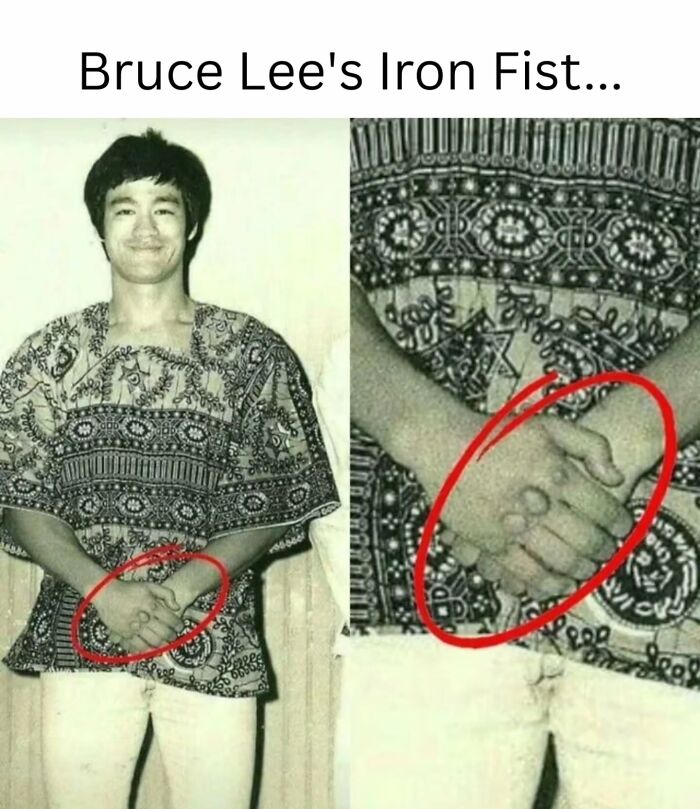
Image source: historycoolkids
#24
“In 1963, a photograph showed Howard G. Rogers standing with his team in a lab filled with about 5,000 bottles of chemical compounds, each one representing a different experiment in their effort to perfect instant color photography.
At Polaroid Corporation, Rogers and his colleagues spent years testing thousands of dye and chemical combinations in order to develop a film that could produce color images within minutes instead of hours.
Their major breakthrough came when Rogers created a dye developer system that enabled color photographs to develop quickly inside the film, paving the way for practical instant color photography.”

Image source: historycoolkids
#25
“The 1954 Rolls-Royce Silver Wraith was one of the most prestigious luxury automobiles produced by Rolls-Royce after WW2.
The Silver Wraith was manufactured between 1946 and 1959 and served as the company’s flagship model during that period. Unlike mass produced cars, these vehicles were built as rolling chassis, meaning customers purchased the mechanical base from Rolls Royce and then had the body custom built by independent coachbuilders. Owners could request highly unusual features and luxurious interiors, which sometimes resulted in eccentric modifications such as cocktail cabinets, writing desks, or other personalized fittings.
The car itself was powered by a smooth inline 6 cylinder engine and was known for its quiet ride, heavy construction, and exceptional craftsmanship. Silver Wraiths were often purchased by royalty, diplomats, and extremely wealthy individuals. In fact, specially modified versions were also used by the British royal family, including vehicles built for Queen Elizabeth II in the early years of her reign.”
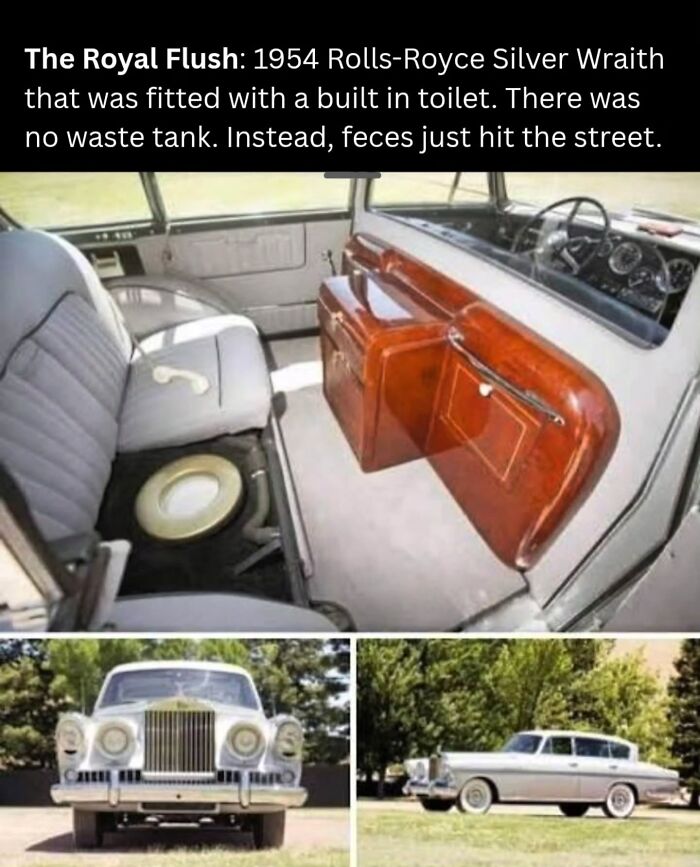
Image source: historycoolkids
#26
“Koreans in the Soviet Union, known as Koryo-saram, are descendants of migrants who moved from Korea into the Russian Far East in the late 1800s, many fleeing poverty, famine, and Japanese rule.
By the early 1900s, tens of thousands had settled in areas near Vladivostok, maintaining their language and farming communities under the Russian Empire and later the Soviet state.
In 1937, under Joseph Stalin, the Soviet government forcibly deported about 172,000 Koreans from the Far East to Central Asia, mainly to Kazakhstan and Uzbekistan.
The official reason was fear that they might act as spies for Japan, which controlled Korea at the time. The deportation was brutal, with many perishing during the journey or soon after due to harsh conditions.
Despite this, Koryo-saram communities adapted and became successful, especially in agriculture, helping develop rice farming in Central Asia. Over time, many lost the Korean language and adopted Russian as their primary language, but they retained aspects of Korean culture.”
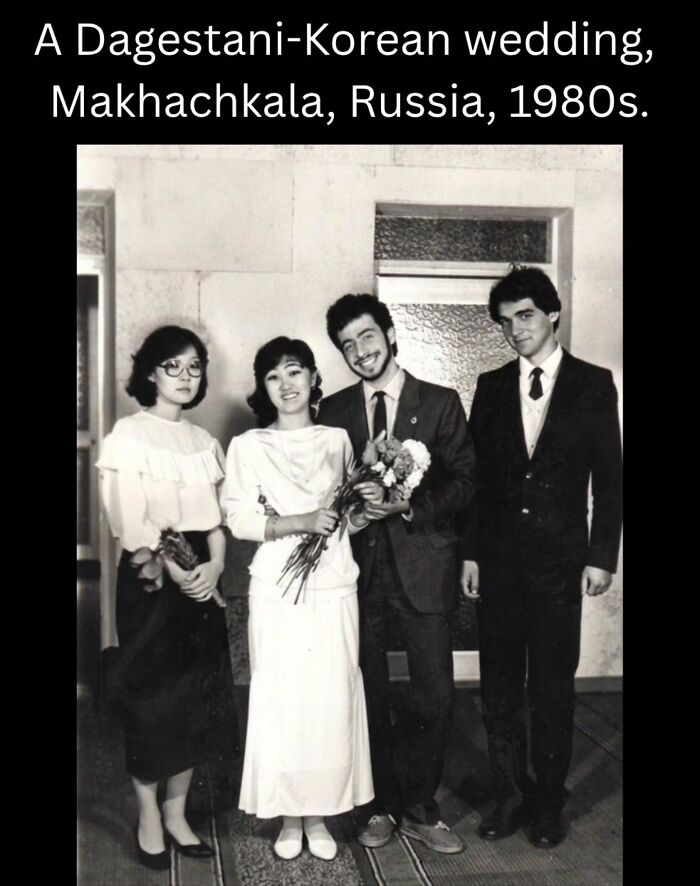
Image source: historycoolkids
#27
“In under 3 years, the 1918 influenza pandemic affected roughly 30% of the global population and is estimated to have led to the loss of up to 5% of humanity worldwide, with total fatalities commonly placed between 50 million and 100 million.
By comparison, COVID 19 has resulted in several million fatalities globally, with excess mortality estimates often ranging from about 7 million to 15 million.
In terms of severity, the 1918 virus was generally more aggressive, frequently triggering severe immune responses, particularly in young adults. This often led to rapid respiratory failure and intense inflammation in the lungs, making the illness especially devastating in many cases.”
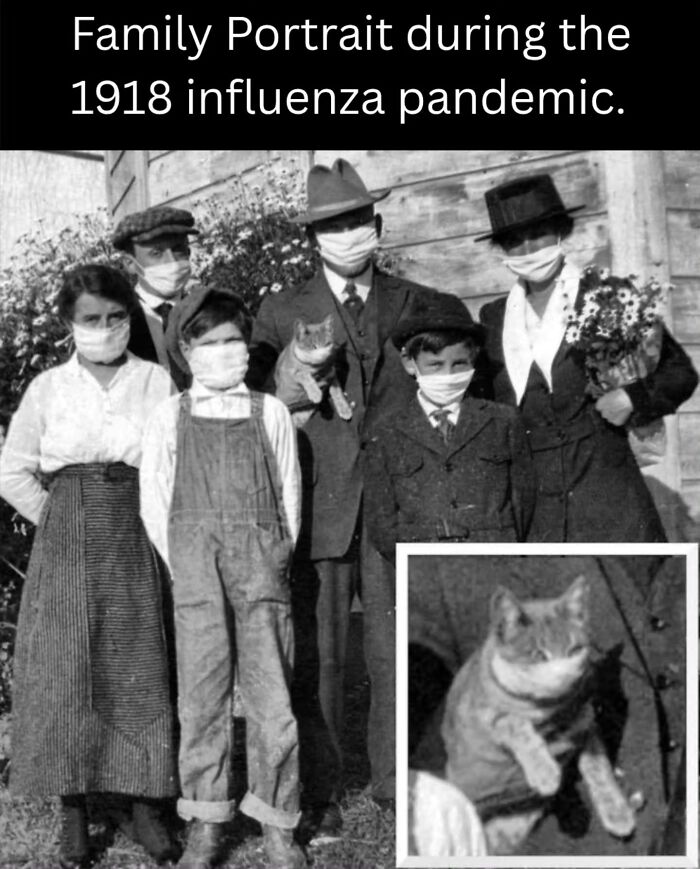
Image source: historycoolkids
#28
“Early quarters and many traditional U.S. coins used imagery that comes from classical Greco Roman visual language.
The most obvious example is the use of profile portraits on coins, which traces back to ancient Roman coins that featured emperors and important figures in profile relief. This style was widely revived in European coinage during the Renaissance and carried into American coin design through the neoclassical tradition.
Another Roman inspired element is the frequent use of the eagle. While the bald eagle is native to North America and not Roman, the idea of an eagle as a symbol of state power was strongly associated with Rome, where it represented imperial authority and military strength. The United States adapted it into a republican symbol rather than an imperial one.”
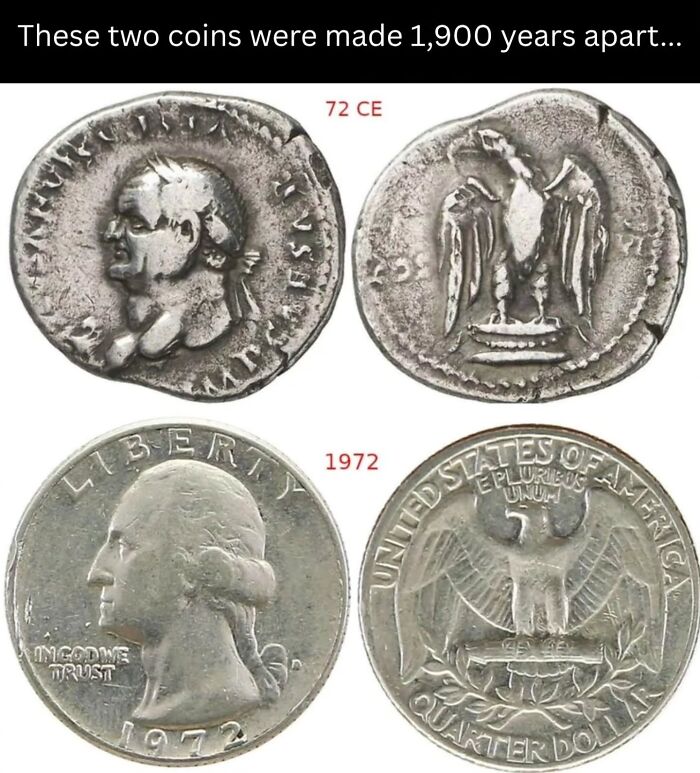
Image source: historycoolkids
#29
“Catharijnekade, was originally part of Utrecht’s medieval canal system.
By the mid 20th century, especially in the 1960s, city planners across Europe prioritized cars. In Utrecht, a large section of the canal was filled in and converted into a multi lane highway. The water disappeared, replaced by asphalt, traffic, and concrete infrastructure.
Starting in the late 20th century, they removed the highway, excavated the old canal route, and restored the water. By 2015, the canal had returned, complete with trees, walkways, and space for cyclists and pedestrians.”
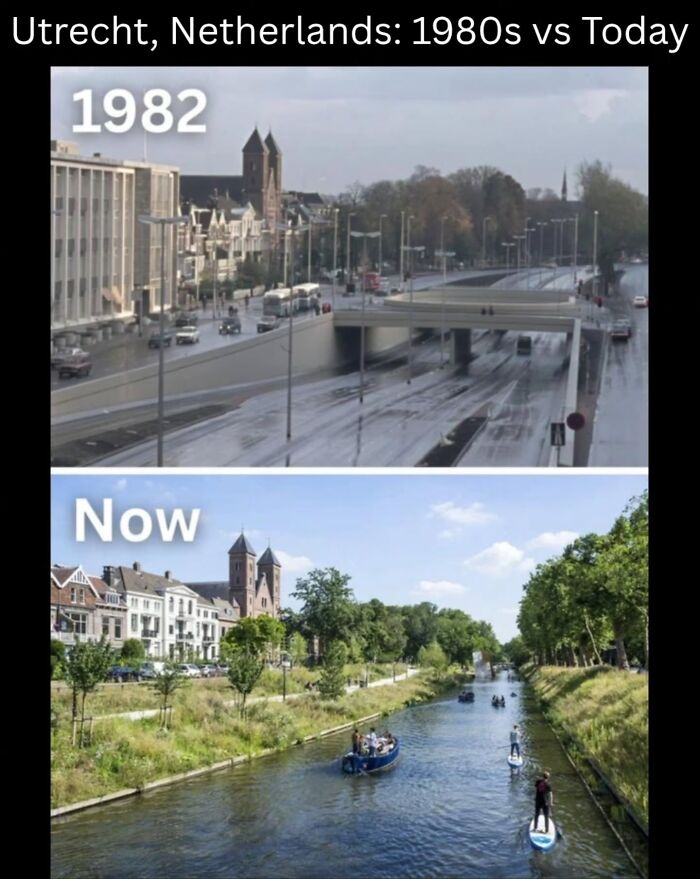
Image source: historycoolkids
#30
“Originally, Cheonggyecheon was a natural stream that flowed through the center of Seoul for centuries.
During the Joseon Dynasty (1392 – 1897), it played an important role in drainage and flood control, though it was often polluted and required regular maintenance. The government carried out large scale dredging projects to manage flooding and sanitation.
By the mid 20th century, after the devastation of the Korean War, the area around the stream became overcrowded with informal settlements. Pollution worsened to the point that the stream was considered a public health hazard.
By the late 1970s, the stream was covered up with concrete and an elevated highway was built above it during South Korea’s rapid industrialization. This reflected the development priorities of the time, focusing on cars and economic growth rather than environmental or historical preservation.
By the late 20th century, the highway had deteriorated and the area was seen as congested and outdated. In 2003, under then mayor Lee Myung-bak, a major restoration project began. The highway was demolished, and the stream was reconstructed using pumped water and modern engineering.
The restored Cheonggyecheon reopened in 2005 as a 10.9 km long urban park. Today, it is known for reducing urban heat, improving air quality, and revitalizing central Seoul both economically and culturally.”
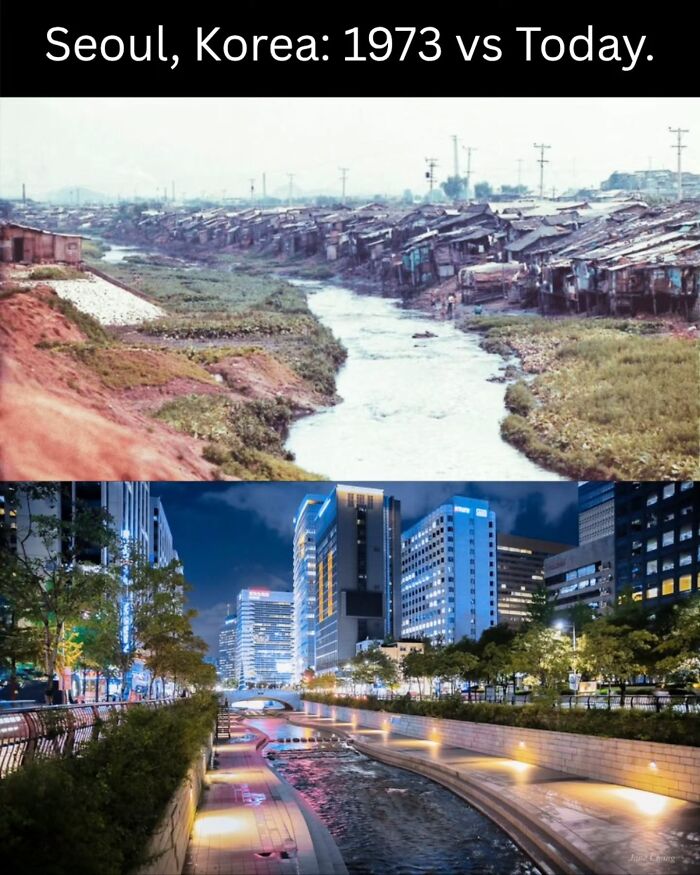
Image source: historycoolkids
#31
“The sale of Sir Isaac Newton’s tooth occurred at a London auction in 1816 for the price of £730.
At the time, this was a record-breaking amount for a human tooth, eventually earning a spot in the Guinness World Records. The tooth was purchased by an unnamed nobleman who reportedly had the specimen set into a gold ring to be worn as a memento of the physicist’s intellectual legacy.
The modern valuation of the artifact is subject to significant debate because the ring has remained in private hands and has not appeared on the open market for a long duration. While some estimates value it between $30,000 and $60,000 based on the 1816 price adjusted for inflation, its actual market value would depend entirely on a contemporary auction.
The record for the most expensive tooth sold at auction was officially reset in 2011 when a molar belonging to John Lennon sold for £19,500, which was approximately $31,200 at the time.”
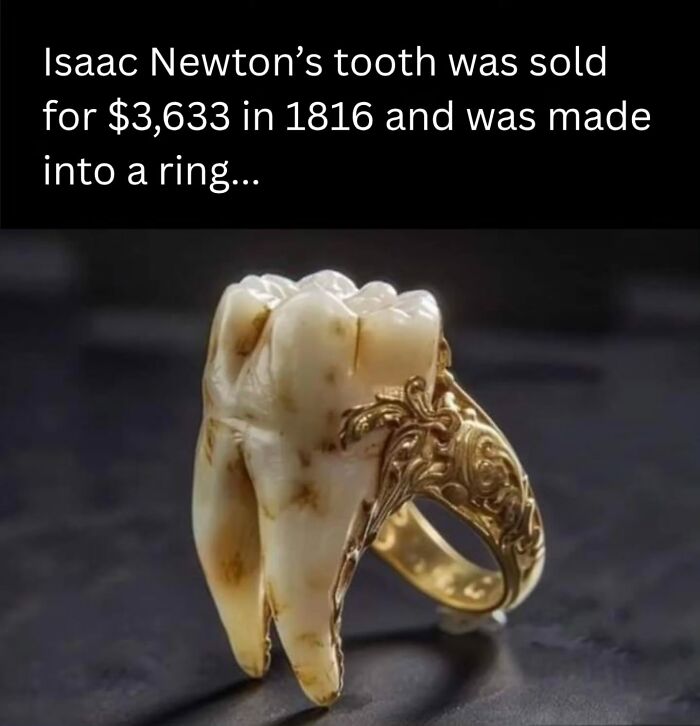
Image source: historycoolkids
#32
“A year after this photo was taken, Kahlo would be severely injured in a bus accident, breaking her spine, collar bone, ribs, pelvis and fracturing her right leg in 11 places.
An iron handrail impaled her through her pelvis, piercing “the way a sword pierces a bull.” She spent 3 months in a full body cast before regaining the ability to walk again.
Before the accident, Frida was studying to become a physician. However, she decided to become an artist while she was recovering at the hospital. Frida would go on to have more than 30 surgeries in her life, culminating in the amputation of her right leg due to gangrene in 1953. Her body of work heavily deals with her personal struggles with chronic pain, polio, amputation and infertility, giving us a unique glimpse into the patient’s experience.”
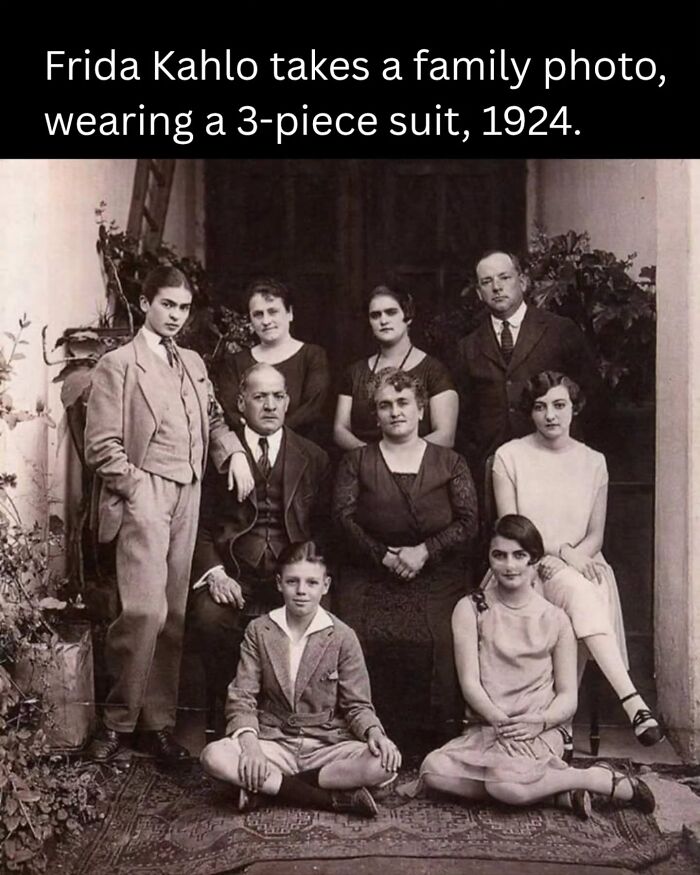
Image source: historycoolkids
#33
“The 1924 living chess match took place on July 20 in Palace Square, Leningrad (now St. Petersburg).
The game featured the Red Army (the black pieces) competing against the Red Navy (the white pieces) on a board measuring approximately 5,000 square meters. The moves were directed by Soviet chess masters Peter Romanovsky and Ilya Rabinovich, who communicated their strategy via telephone from the rooftops of the General Staff Building.
The event utilized Soviet soldiers as pawns, sailors as various pieces, cavalry officers on horseback as knights, and artillery units as rooks. After five hours of play and 67 moves, the match ended in a draw by mutual agreement.”
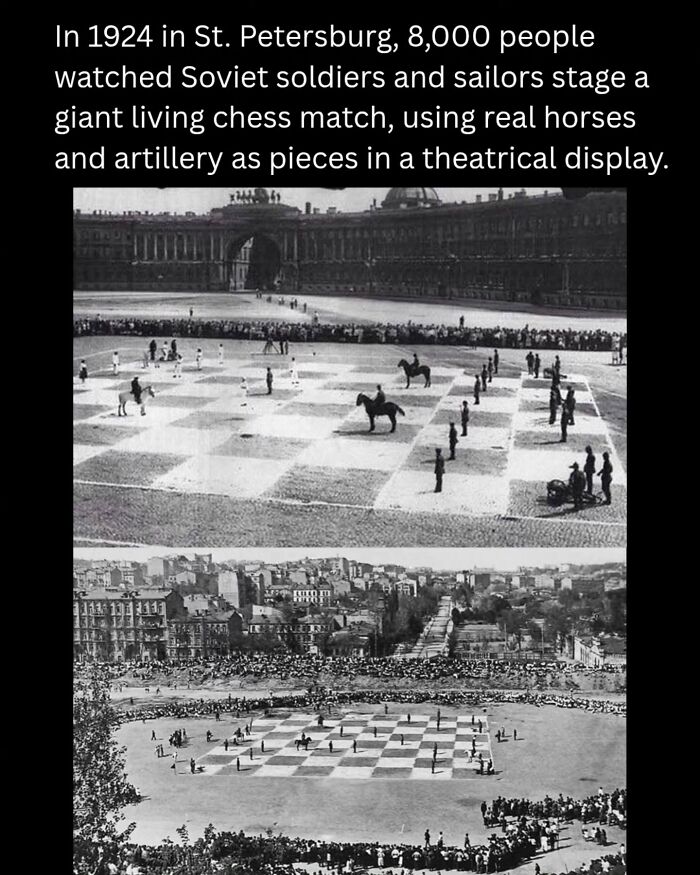
Image source: historycoolkids
#34
“By 1930, Krupskaya had become a quiet but persistent nuisance to Stalin, expressing concern over the growing cult of personality surrounding the General Secretary.
Stalin’s said to her, “We can always find someone else to be Lenin’s widow.” It was a brutal reminder that in the Soviet state, even personal history and marital status were subject to Party approval and could be reassigned to a more compliant figure.
The circumstances surrounding her passing in 1939 remain one of the Great Purge’s most enduring mysteries, primarily because the timing was so surgically precise. Krupskaya fell ill on February 26, 1939, during a celebration for her 70th birthday where she had consumed sweets sent specifically by Stalin. She succumbed to her illness the following day from peritonitis, a condition often resulting from an untreated burst appendix or gallstones.
While a poisoned cake is the most popular theory, many historians have suggested that the Kremlin doctors delayed her hospitalization and surgery for several critical hours. This delay ensured that the woman who was rumored to be preparing a final, critical speech for the upcoming 18th Party Congress would never take the podium, allowing Stalin to maintain his image as a devoted disciple by personally carrying her funeral urn.”
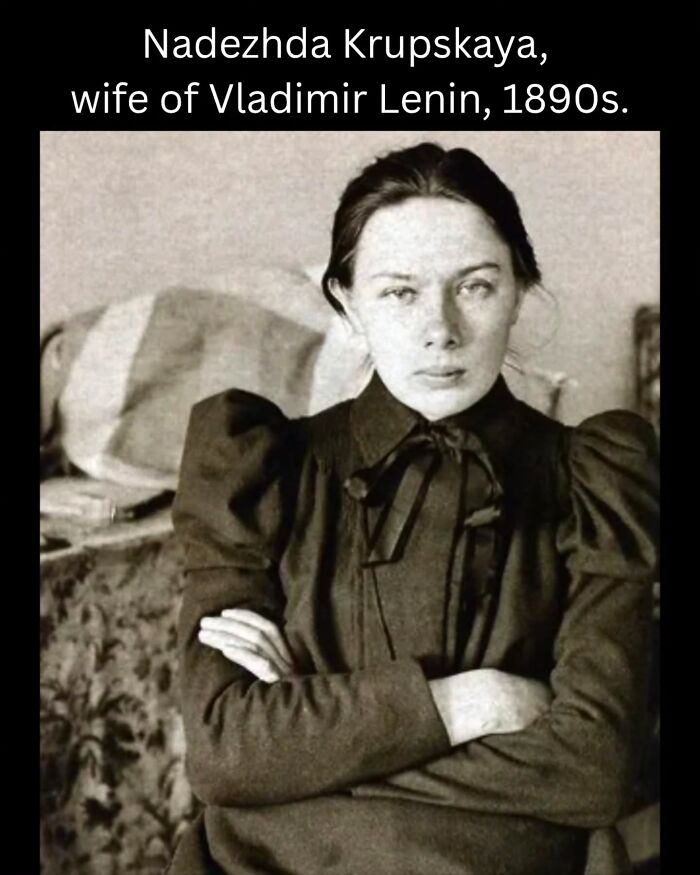
Image source: historycoolkids
#35
“Nicholas II and Prince Nicholas of Greece and Denmark were first cousins through the Danish royal line.
Nicholas II’s mother, Dagmar of Denmark (Empress Maria Feodorovna), and Prince Nicholas’s father, King George I of Greece, were siblings, both children of King Christian IX of Denmark. This made Nicholas II and Prince Nicholas very close relatives within the tightly intermarried royal families of Europe.
Grand Duke Boris Vladimirovich of Russia was a more distant relative of Nicholas II, belonging to a different branch of the Romanov family. He was the son of Grand Duke Vladimir Alexandrovich, Nicholas II’s uncle, making Boris a first cousin of Nicholas II. Within the Russian imperial family, Boris was part of the inner aristocratic circle and often present at court life and military service alongside the emperor.”
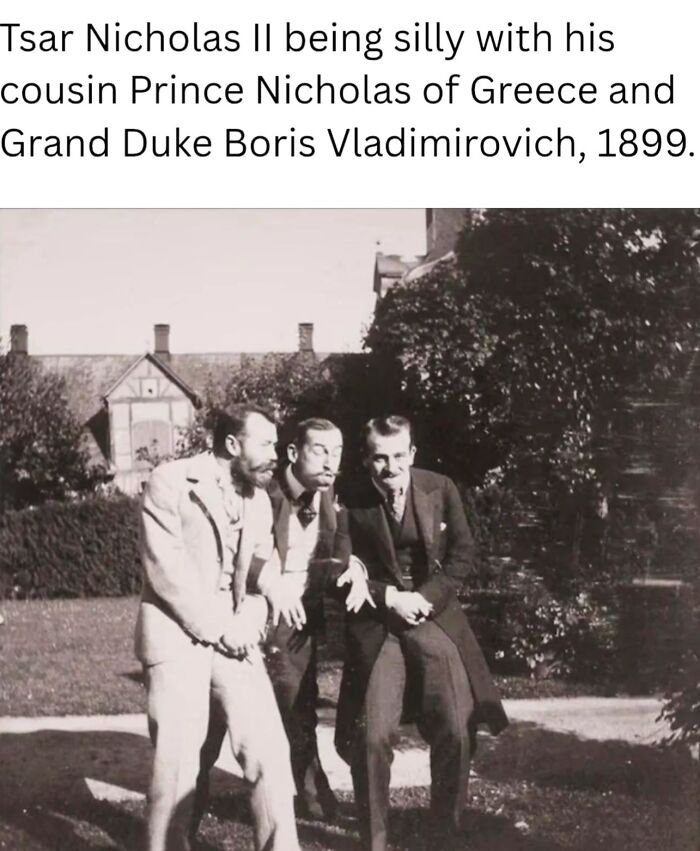
Image source: historycoolkids
#36
“Tunnel Rock in Sequoia National Park is a naturally occurring granite boulder that became famous not because it was built or carved, but because early road engineers chose to route the highway beneath it rather than remove it.
The rock itself is part of the ancient Sierra Nevada batholith, a massive body of granite formed deep underground roughly 100 million years ago when molten rock slowly cooled and crystallized. Over millions of years, uplift and erosion exposed these granite formations, leaving behind the dramatic boulder landscapes seen throughout the region.
When the Generals Highway was being constructed in the early 1930s, workers from the Civilian Conservation Corps were building a route through extremely steep and rocky terrain to connect major areas of the park. Instead of blasting or relocating Tunnel Rock, engineers decided to use the natural opening beneath it as part of the roadway.
For several decades, vehicles passed directly under the rock, making it one of the more unusual driving experiences in the park. As traffic increased and vehicle sizes grew, the road was eventually rerouted for safety and efficiency, but the original alignment was preserved as a roadside turnout.”
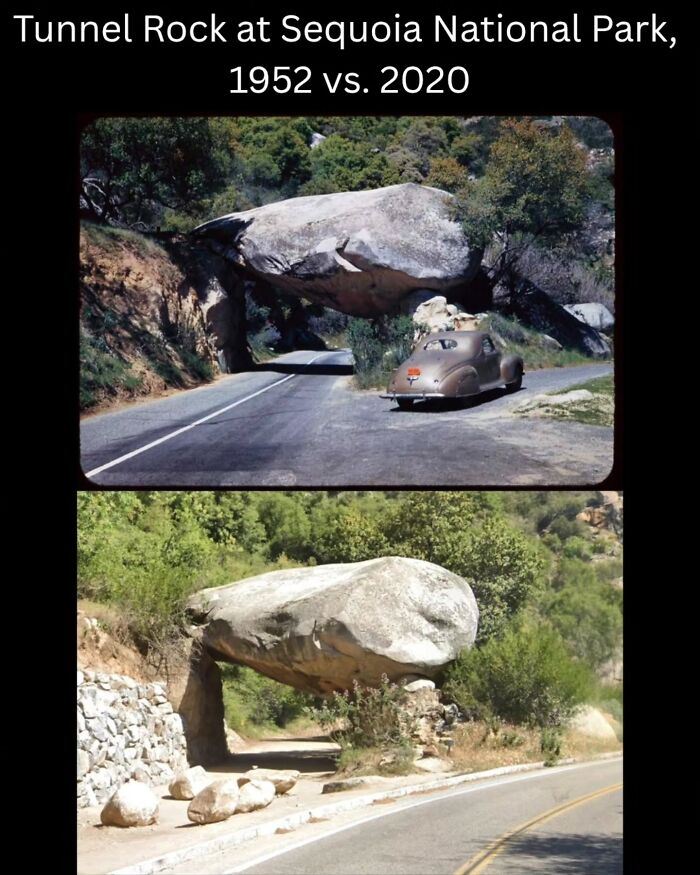
Image source: historycoolkids
#37
“Hen and Chicks by Yamaguchi Okatomo is an 18th century ivory netsuke from the Kyoto school.
Okatomo was a pupil of Izumiya Tomotada and worked in Higashiyama, Kyoto. He specialized in finely carved animal subjects with naturalistic detail. This particular piece was created when netsuke served both as practical clothing toggles and as collectible miniature artworks.”
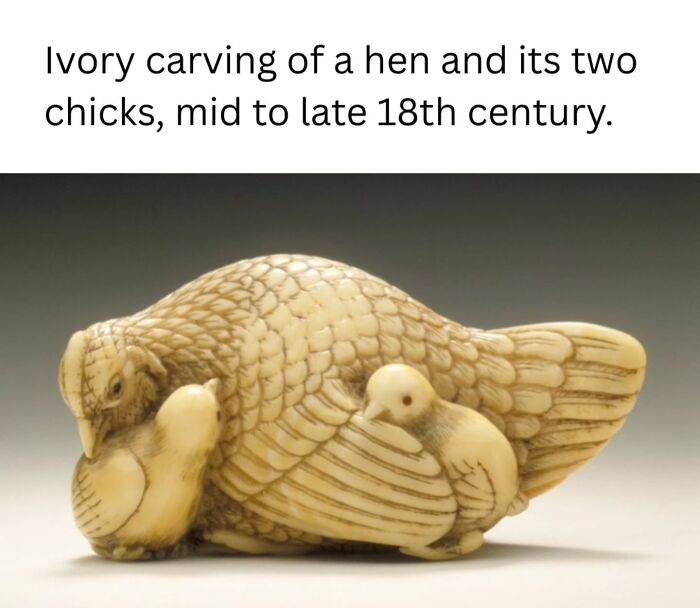
Image source: historycoolkids
#38
“This mug shot comes from a police identification book believed to be from the 1930s. It was originally found in a junk shop by a member of the public and subsequently donated to Tyne & Wear Archives & Museums. No information is available to confirm which police force compiled it but evidence suggests it’s from the Newcastle upon Tyne area.”
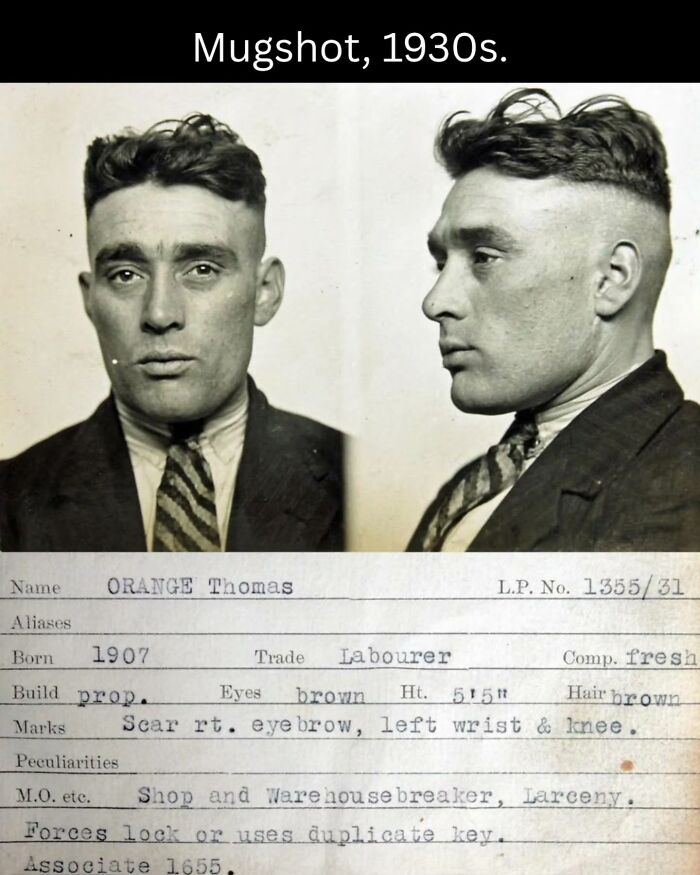
Image source: historycoolkids
#39
“The Wright brothers only flew together once, during a six minute flight on May 25, 1910.
They had promised their father, Milton Wright, that they would never share a flight, so that if anything went wrong, one brother would survive to continue their work.
Soon after, Orville Wright gave his 82 year old father the only powered flight of his life, lasting nearly 7 minutes. As the aircraft climbed to about 350 feet, Milton called out, “Higher, Orville, higher!”
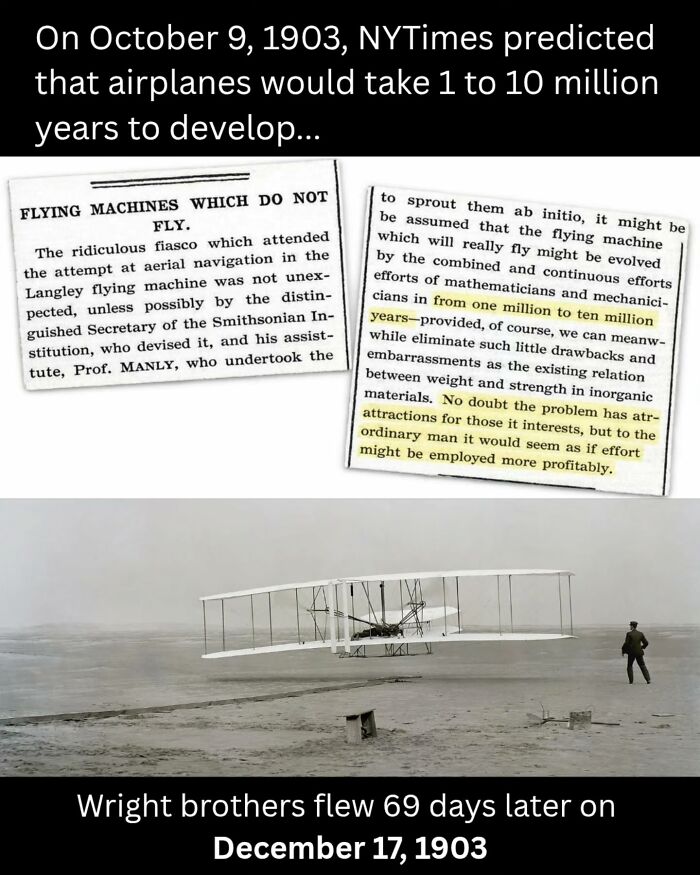
Image source: historycoolkids
#40
“The French bulldog is adorned with a gold necklace set with green stones, while its eyes are embellished with blue stones, and the lower portion of the handle features gold fleuron motifs.
Someone must have really loved their doggo to have commissioned this…”
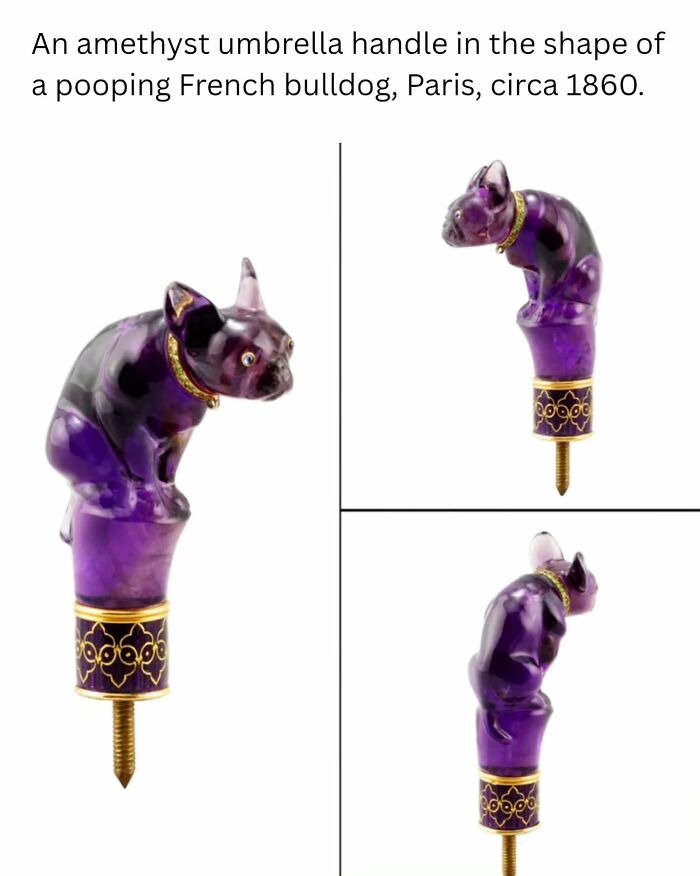
Image source: historycoolkids
#41
“The sculpture was created in 1959 by American artist Julian Hoke Harris.”
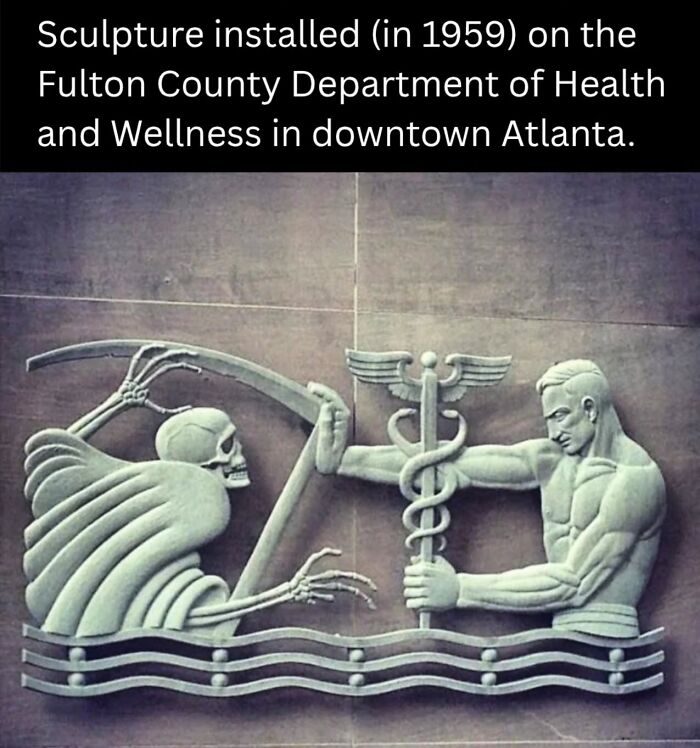
Image source: historycoolkids
#42
“Odoardo Beccari was one of the most important European naturalists to explore Southeast Asia in the late 19th century, especially the island of Borneo.
He collected thousands of plant specimens, many of which were previously unknown to science. His work significantly advanced knowledge in tropical botany, particularly in the study of palms. In fact, he became one of the world’s leading experts on palm species and later published major works such as Malesia, a multi volume study of the region’s flora.
Although primarily a botanist, Beccari also documented animals and local cultures. His encounters with orangutans helped provide early scientific observations of these great apes. At the time, orangutans were still poorly understood in Europe, and records like his photographs and notes contributed to broader awareness of their behavior and physical characteristics.”
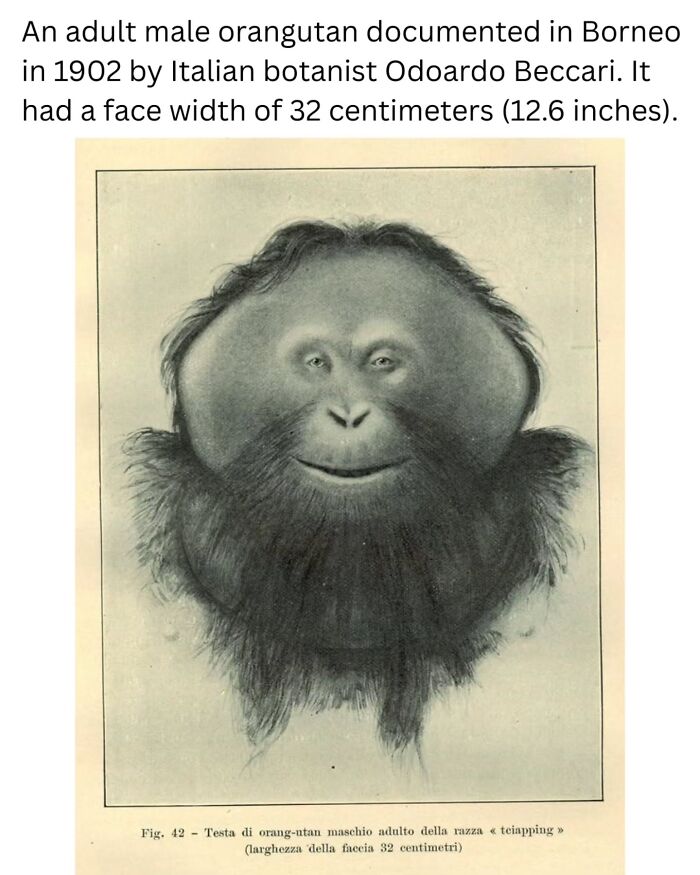
Image source: historycoolkids
#43
“The story goes that Wonhyo and his best friend Uisang were traveling toward China in 661 to study Buddhism more deeply.
During their journey through Baekje (Korean kingdom located in southwestern Korea), they were caught in heavy rain and took shelter in what they believed was a cave.
At night, Wonhyo became very thirsty and found a container that he assumed was a gourd filled with water. He drank from it and felt refreshed. The next morning, they discovered the shocking truth that their shelter was actually an ancient tomb filled with human skulls, and the “gourd” had been a skull filled with stagnant rainwater. What had felt pure and refreshing was, in physical reality, something horrifying.
It was at that moment that Wonhyo realized that nothing in the water itself had changed, only his mind’s interpretation of it. That insight led to a direct realization of Yogacara philosophy, often summarized as “mind only,” meaning that experience is shaped entirely by consciousness rather than external objects having fixed meaning. After this realization, he concluded that seeking teachings in China was unnecessary, since truth was not located in distant places or external authority but in understanding the mind itself.
Soon after, Wonhyo left formal monastic life after having an affair with a princess named Yoseok. He chose instead to teach Buddhism as a lay practitioner under the name “Layman of Minor Lineage.” He became known not only for his influential writings and commentaries, but also for an unconventional approach to spreading Buddhist teaching.
Traveling through towns and villages, he used songs and dances as a form of instruction, and is also said to have visited bars and brothels, played the lute, and stayed in the homes of ordinary people. While these actions went against traditional monastic norms, they were later understood as “skillful means,” intended to reach people in whatever circumstances they were in.”

Image source: historycoolkids
#44
“Will West and William West, two men who were incarcerated at Leavenworth Prison in Kansas in 1903.
One was a new inmate, while the other was already in the system, but prison staff initially struggled to tell them apart because they had extremely similar facial features and very close physical measurements under the Bertillon identification system, a criminal identification method developed in 1879 by Alphonse Bertillon, a Paris police clerk. It was widely used from 1882–1905 and relied on physical measurements, photographs, and physical descriptions to identify criminals and repeat offenders.
The two inmates were not actually identical twins and were not completely identical in every measurement. The confusion came from how limited and error prone the Bertillon system could be when dealing with similar looking individuals and inconsistent record keeping. Once the mix up was recognized, it became one of several real world examples that pushed law enforcement agencies toward fingerprinting, which was already emerging as a more reliable method because fingerprints are unique and remain unchanged over a lifetime.”
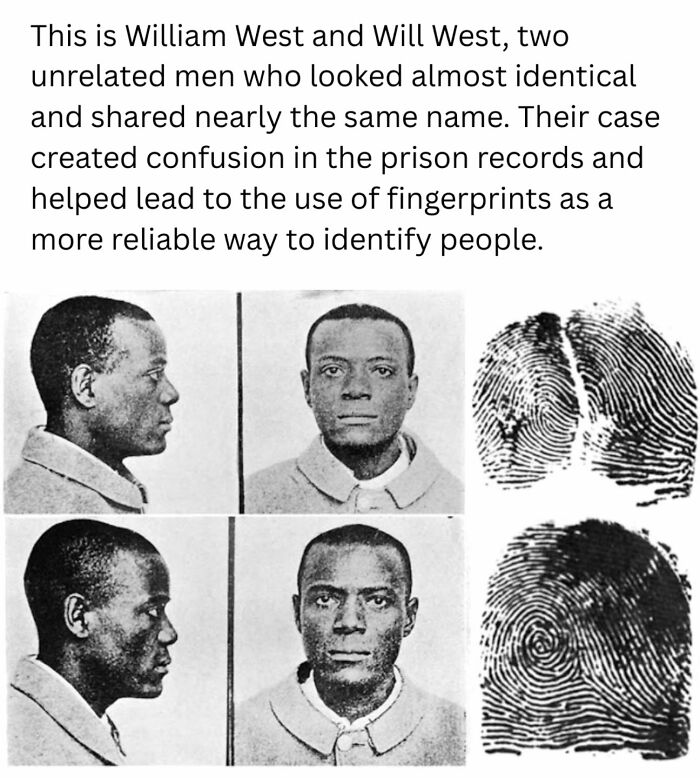
Image source: historycoolkids
#45
“In 2024, Ibrahim Mbogo and Tabitha Wangui gained widespread attention when they held a church wedding in Mukurweini after being together for more than 6 decades.
The couple had lived as husband and wife for 64 years under customary law, a practice common in many parts of Kenya where marriages are traditionally recognized through community and cultural ceremonies rather than formal church or civil registration. Even so, they had long hoped to officially bless their union in a Christian ceremony that aligned with their faith.
After the ceremony, Ibrahim joked that they were finally “official,” while Tabitha said their relationship endured because of respect, patience, and forgiveness over more than 6 decades together.”
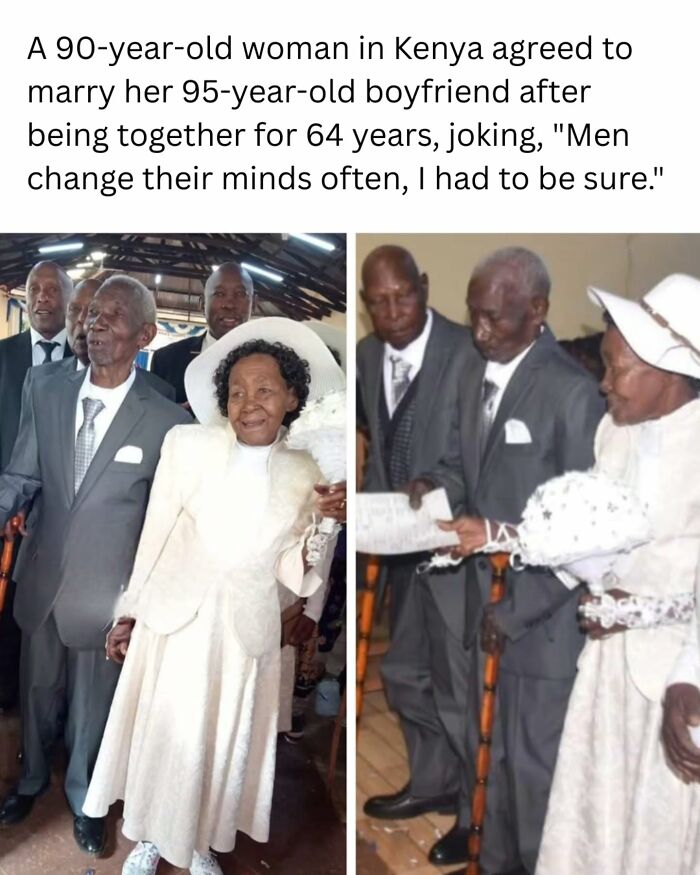
Image source: historycoolkids
#46
“Mount Rushmore felt a lot more impressive when I was younger until I realized what it was like before…
Sculptor Gutzon Borglum’s plan in the mid 1920s was far more expansive than what was eventually completed. He originally intended to carve the presidents down to their waists, including detailed features such as hands and symbolic objects representing their achievements, creating a much larger narrative carved into the mountain.
The project was ultimately scaled back due to ongoing funding issues, technical challenges with the granite, and Borglum’s death in 1941. As a result, construction stopped after only the four presidential faces were completed: George Washington, Thomas Jefferson, Theodore Roosevelt, and Abraham Lincoln.”
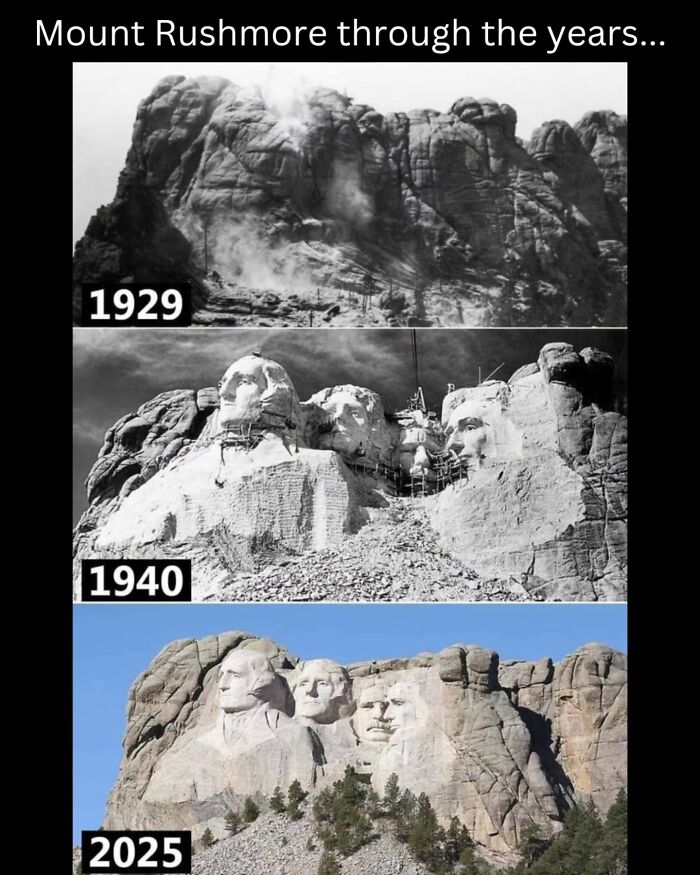
Image source: historycoolkids
#47
“At just 15, Rosie Hamlin, turned a poem she wrote for her boyfriend into “Angel Baby,” recording it with Rosie and the Originals in a small, makeshift studio.
The song’s raw, echo heavy sound and emotional sincerity helped it stand out, and in 1960 it climbed to about No. 5 on the charts, becoming a lasting classic of early rock and doo wop. Decades later, John Lennon called it one of his all time favorite songs and even recorded his own cover, introducing it to a new generation.
Because she was only 15 and new to the industry, control over the song’s publishing and business side ended up in the hands of others, including people tied to the small label that released it. In that era, it was very common for young or inexperienced artists, especially women and artists of color, to sign deals that gave away significant rights without fully understanding the long term impact.
There were longstanding disputes about ownership and credit, including questions over how much of the songwriting credit and publishing income she actually controlled. As a result, even though the song became a major hit and continued to be played, covered, and licensed for decades, her financial return was relatively limited compared to its success.”
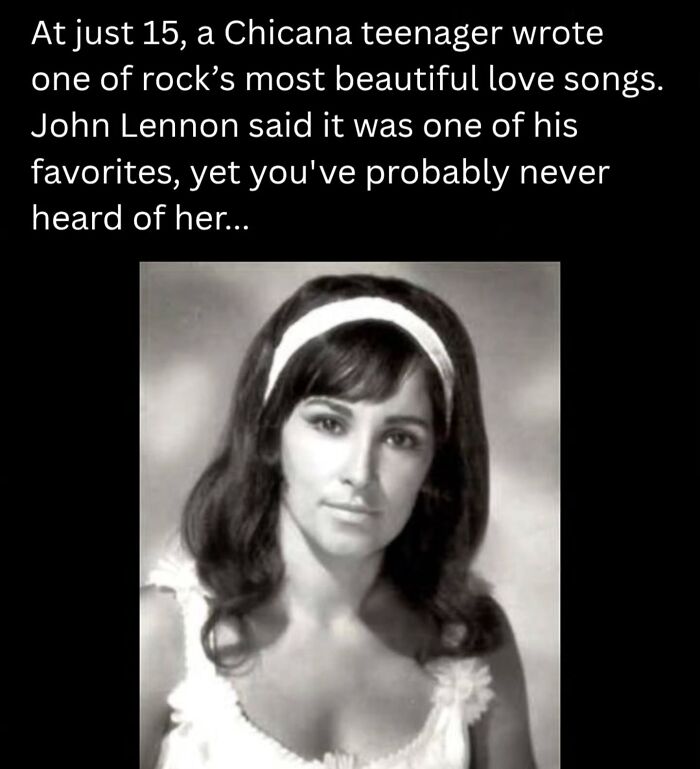
Image source: historycoolkids
#48
“A flock of about 48 sheep was brought in to graze on the South Lawn, effectively replacing lawnmowers while many White House groundskeepers had enlisted in the military.
The sheep were part of a broader wartime push for efficiency and patriotic resource saving. Their presence also fit with the era’s “victory garden” mindset, where public and government spaces were used to support food production and reduce waste. The sheep were managed by a shepherd and rotated across the lawn so the grass would be evenly trimmed, which made them a practical solution as well as a symbolic one.
After the war, the flock was sheared and eventually sold at auction in 1920. The wool and sheep sale together raised about $52,823 for the American Red Cross, a significant charitable contribution at the time.”
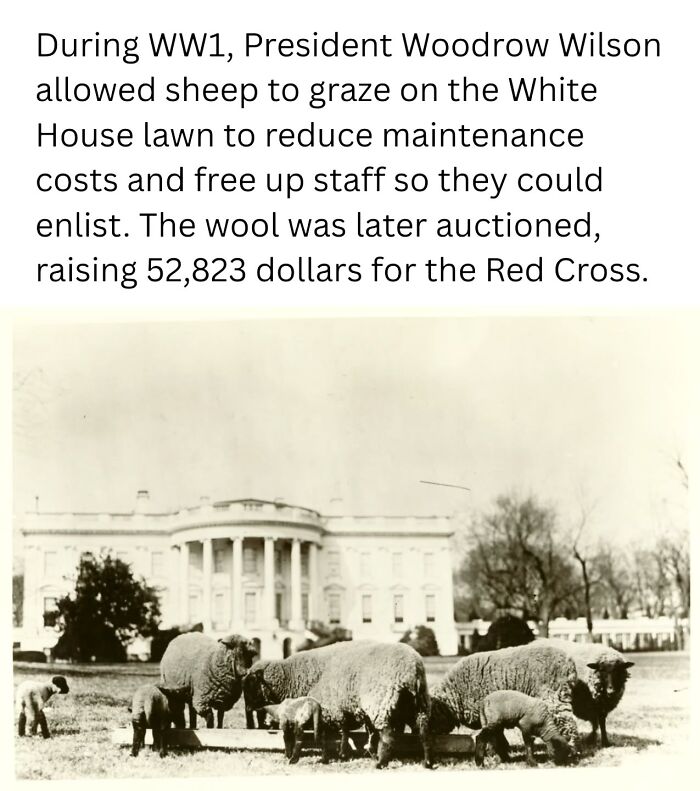
Image source: historycoolkids
#49
“It stood 190 ft. tall and weighed 1,320 tons (for ref: The Statue of Liberty is 151 ft. and weighs 225 tons).
Guan Yu is one of the most famous figures from Chinese history and legend, best known for his role during the late Eastern Han dynasty and the Three Kingdoms period (roughly 184 to 280 CE). He served as a general under Liu Bei, one of the key warlords who eventually founded the state of Shu Han.
Historically, Guan Yu was celebrated for his loyalty, bravery, and martial skill. He is recorded in the historical text Records of the Three Kingdoms as a highly capable military commander. However, much of his later fame comes from the novel Romance of the Three Kingdoms, where he is idealized as the ultimate symbol of righteousness and brotherhood.
In that tradition, he is often portrayed as a near perfect warrior who values honor above all else, even personal survival. Famous stories include his “oath of the peach garden” with Liu Bei and Zhang Fei, where they swear brotherhood, and his legendary crossing of five passes and slaying of six generals while escorting Liu Bei’s family.
Over time, Guan Yu evolved beyond history into a cultural and religious figure. He is worshipped as Guandi, a god of war, loyalty, and justice in Chinese folk religion, Taoism, and even some forms of Buddhism. Temples dedicated to him can be found across East Asia, and he is also revered in business culture as a symbol of integrity and trust.”
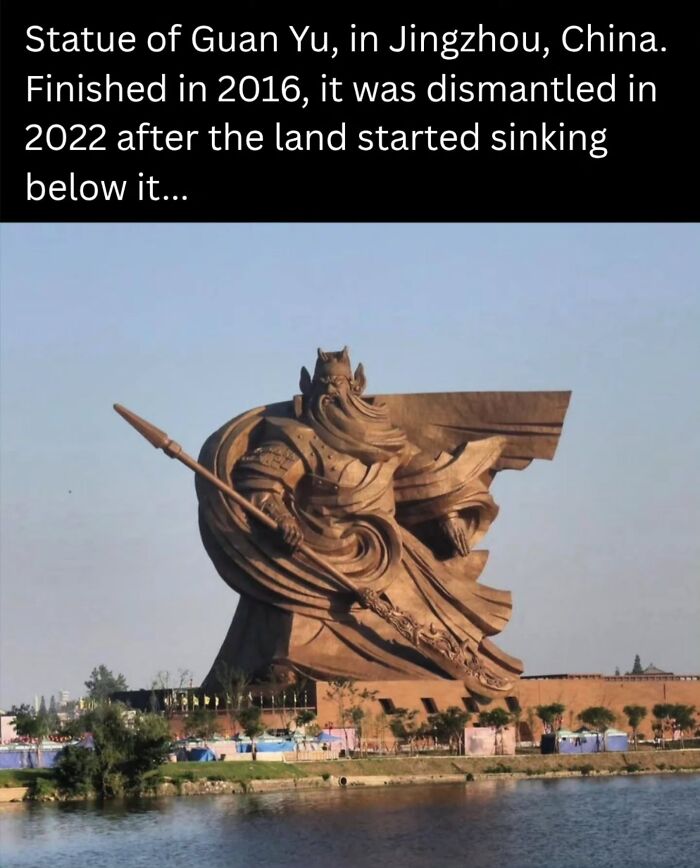
Image source: historycoolkids
#50
“The Ainu are an Indigenous people of northern Japan, especially Hokkaido, as well as parts of southeastern Russia.
Traditionally, Ainu women practiced mouth tattooing called anchi piri, along with occasional tattoos on the arms, using soot made from birch bark fires and applied gradually over many years. The markings began in early childhood and were slowly enlarged through adolescence, often reaching a full design around adulthood.
These tattoos were historically linked to identity, social status, protection, and readiness for marriage, and they were an important cultural practice marking life stages. The tradition was later restricted and discouraged under Japanese government policies during modernization, leading to its decline. Ainu culture also included distinct clothing made from elm bark fiber and animal hides, animist spiritual beliefs centered on nature spirits, and rituals honoring animals such as bears.”
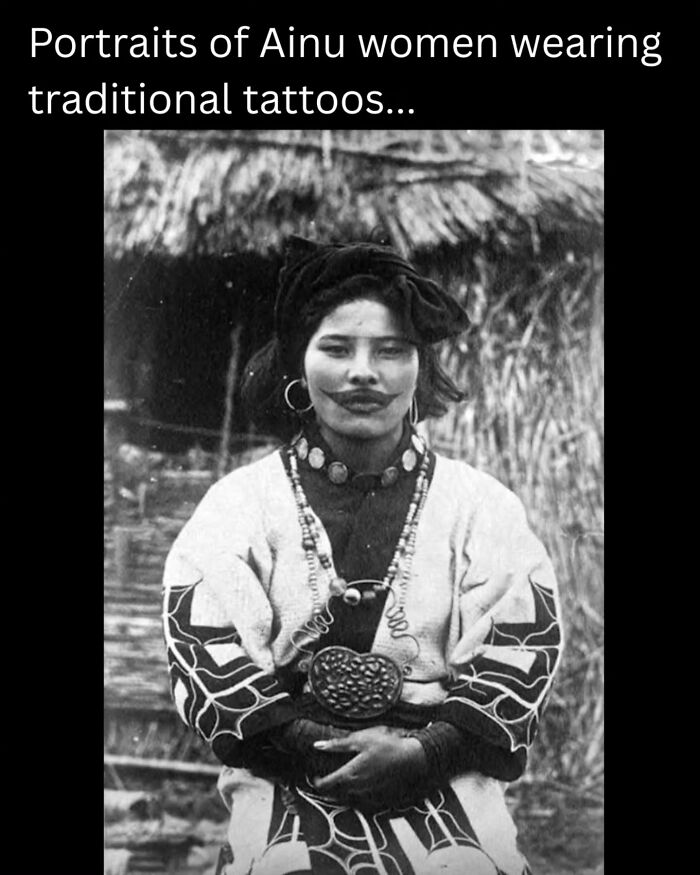
Image source: historycoolkids
#51
“I’m assuming everyone has heard of Hemingway, but Roald Dahl is also famous in his own right.
He was born in Wales to Norwegian parents and spoke Norwegian at home during early childhood. He served as a Royal Air Force fighter pilot in WW2 and was seriously injured in a 1940 crash in North Africa. After his military service, he became a writer and produced some of the most widely read children’s books in modern literature, including Charlie and the Chocolate Factory, Matilda, James and the Giant Peach, The BFG, Fantastic Mr. Fox, The Witches, George’s Marvelous Medicine, and Danny, the Champion of the World.”
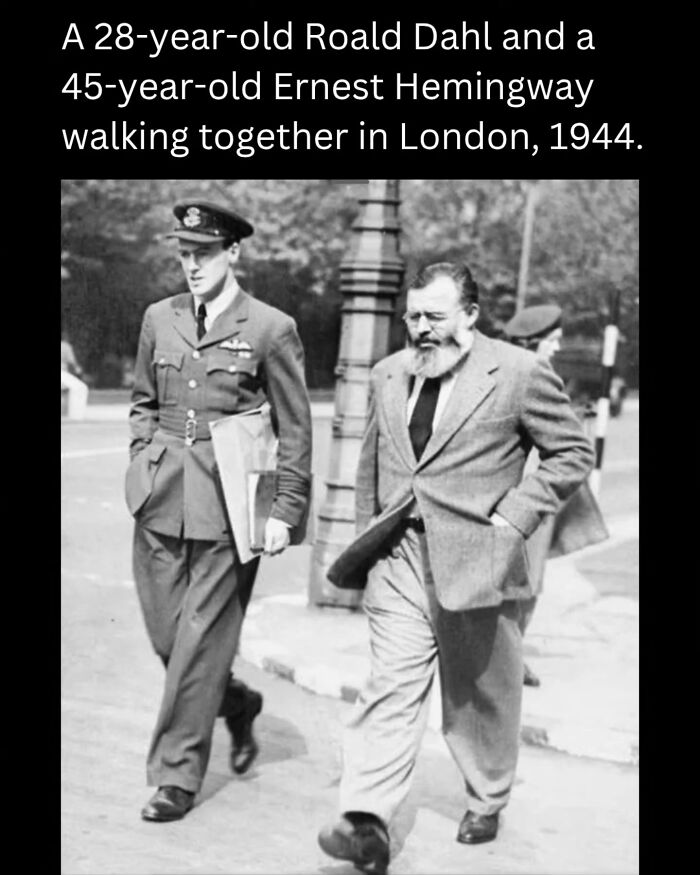
Image source: historycoolkids
#52
“Scientists studying ancient Maya remains have found clear evidence that, more than 1,000 years ago, dental practitioners were performing surprisingly advanced restorative procedures.
They drilled into teeth to create precise cavities for jade inlays, which were used both as decoration and likely as markers of status. What stands out most is the adhesive material used to secure these inlays.
Analysis suggests it was a carefully prepared cement made from mineral components such as calcium phosphate mixed with organic resins. This combination not only bonded strongly to tooth structure but also appears to have had antibacterial properties, which would have helped reduce infection in a pre modern medical setting.
In several recovered specimens, the cement has remained stable enough that the inlays are still firmly attached, despite centuries of burial and environmental exposure. This level of durability has led researchers to compare the material, in a loose sense, to modern dental cements used for restorations today.”
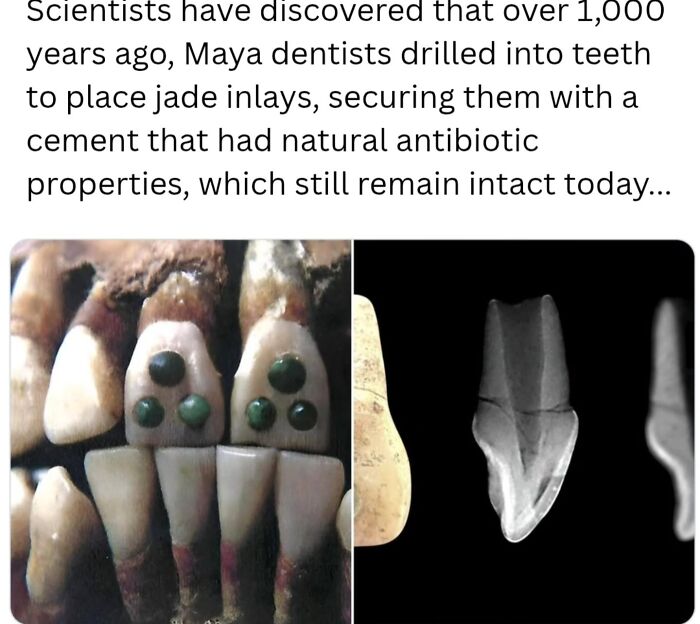
Image source: historycoolkids
#53
“I guess he got way too excited to be on the moon that he totally forgot to ask Buzz to take a few photos of himself.
During the Apollo 11 Moon Landing, Neil Armstrong and Buzz Aldrin used a modified Hasselblad 500EL with a special electric motor drive so they could operate it with their stiff lunar gloves. The cameras also had a simple fixed-focus setup and a reseau plate, which placed tiny calibration marks on each frame to allow precise scientific measurements of distances and scale in the images.
Some of the cameras were intentionally left on the lunar surface to save weight for returning samples to Earth. Across the Apollo program, several Hasselblad units remain on the Moon as artifacts. They are still there today.”
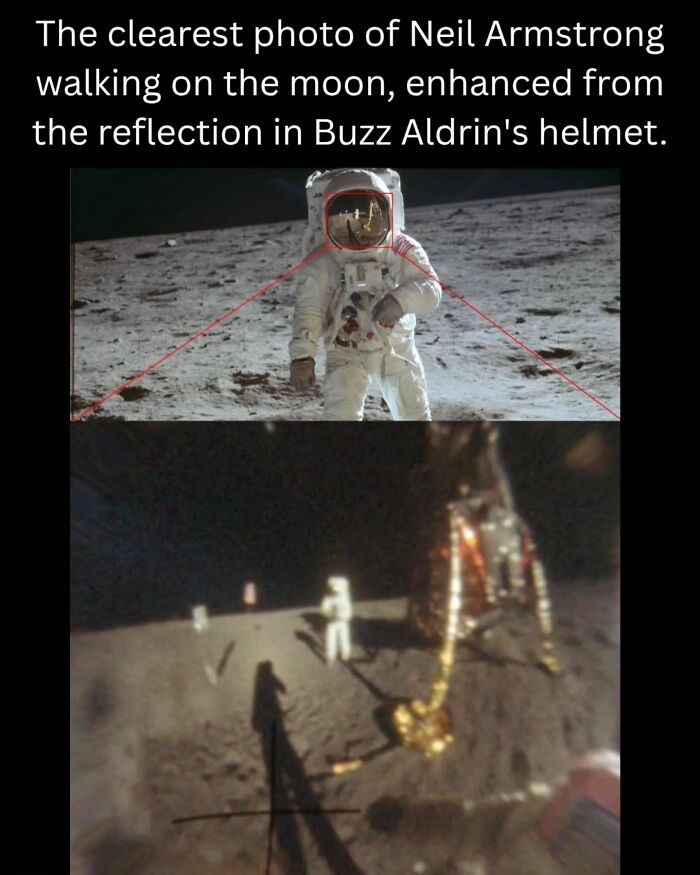
Image source: historycoolkids
#54
“The goal was not practical transportation, but research into aerodynamics, track stability, braking behavior, and the limits of steel wheel on steel rail systems at extreme speeds.
When activated, the engines produced massive thrust, pushing the railcar along straight test tracks at speeds far beyond normal passenger trains. Because of the danger and instability at high speed, these tests were conducted on isolated tracks with extensive instrumentation and emergency safety measures.
The broader context is that the Soviet Union, like other major powers, was exploring futuristic ground transport concepts during the Cold War, including hovercraft trains, magnetic levitation ideas, and jet propulsion experiments.
Most of these remained experimental because jet propulsion on rails was extremely inefficient, noisy, and difficult to control compared to conventional electric or diesel traction.”

Image source: historycoolkids
#55

Image source: historycoolkids
#56
“The more things change, the more they stay the same…”
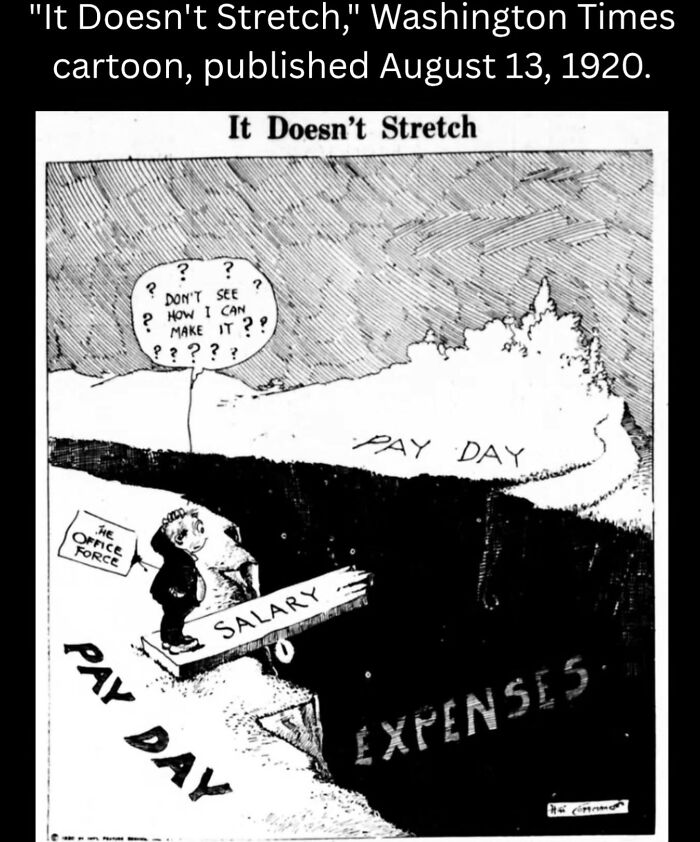
Image source: historycoolkids
#57
“It was published in the Monday Evening on January 2, 1950.
Vivian Brown wrote:
“Since 1900, women have been growing by leaps and bounds. In that year, the average woman was about 5 feet tall, wore a size 3 shoe, and was as dainty as a Dresden figurine. Today, 36 percent of the female population is between 5 feet 4 inches and 5 feet 10 inches, and at age 18 the average shoe size is 7. By the year 2000, experts figure that the average height should have crept up to between 5 feet 10 inches and 6 feet 2 inches, and shoes will look like violin cases.”
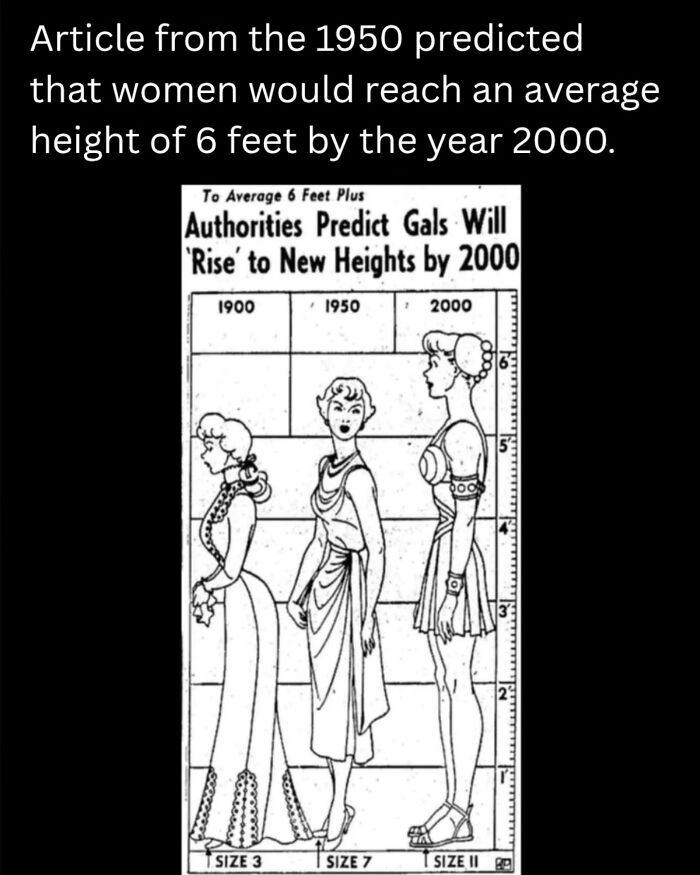
Image source: historycoolkids
#58
“The “Lest You Forget Kiss Card” was a novelty paper item popular from the 1930s to the 1950s.
It was typically sold for 1 cent through vending machines located in arcades, amusement parks, and similar public venues. The card featured printed prompts such as checkboxes and fill in sections for short messages. A designated area instructed the sender to leave a lipstick imprint. It was part of a larger category of inexpensive vending machine cards that included jokes, fortunes, and romantic themes.”
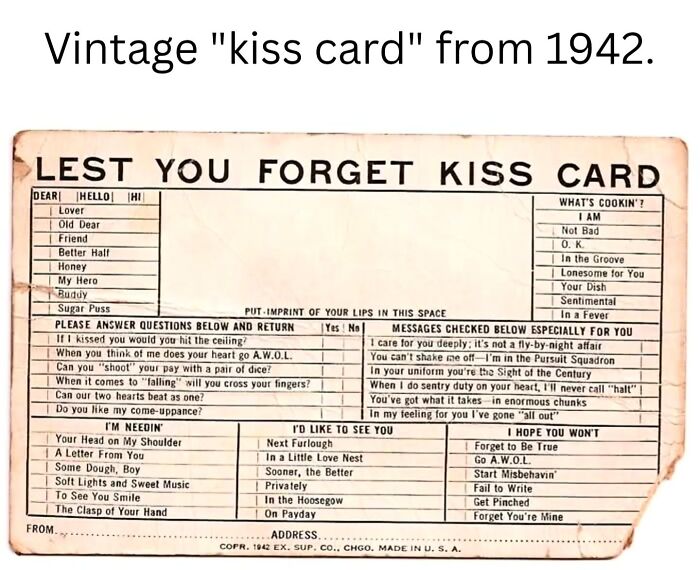
Image source: historycoolkids
 Follow Us