“Stupid is as stupid does.”
Intelligence isn’t just about solving puzzles under time pressure or acing some IQ test — it shows up in the little things we do every day.
Even a person with a high IQ can act in a dumb way, making their actions the true measure of their intellect.
Some signs are quite obvious, like believing everything you see on social media or using artificial intelligence for every little task. Others are more subtle, like empathy or patience.
When people online were asked what instantly screams low intelligence, they did not hold back. Some even went all out, listing big, dramatic red flags.
And just to be clear: when we talk about low intelligence here, we’re not talking about people with learning or intellectual disabilities. It’s more about everyday patterns.
#1
Being confidently wrong and completely uninterested in learning otherwise.
DoubleShift87:
Worked with a guy who confidently told a customer our POS system “runs on blockchain” because he heard the word once. Never corrected himself, never looked it up. Just kept saying it. Confidence without curiosity is a dangerous combo.

Image source: Emmaamaddison, A. C./unsplash
A lot of these answers have less to do with academic knowledge and more to do with how people react to situations — and science actually backs that up.
A recent study found that people who jump to conclusions instead of pausing to think carefully do worse on tests that measure problem-solving and mental flexibility.
For example, someone might assume a rumor at work is true and start repeating it without checking the facts first, or decide a restaurant is terrible based on one minor mistake.
Experts say that the brain’s natural shortcuts, like relying on the most memorable story instead of weighing the evidence, can lead to biased thinking and poor judgments.
On the other hand, people who stay curious usually make way smarter calls than those who don’t question their assumptions.

#2
Any form of bigotry. Racism, sexism, homophobia, etc. Tell me you never evolved to think critically and empathetically.
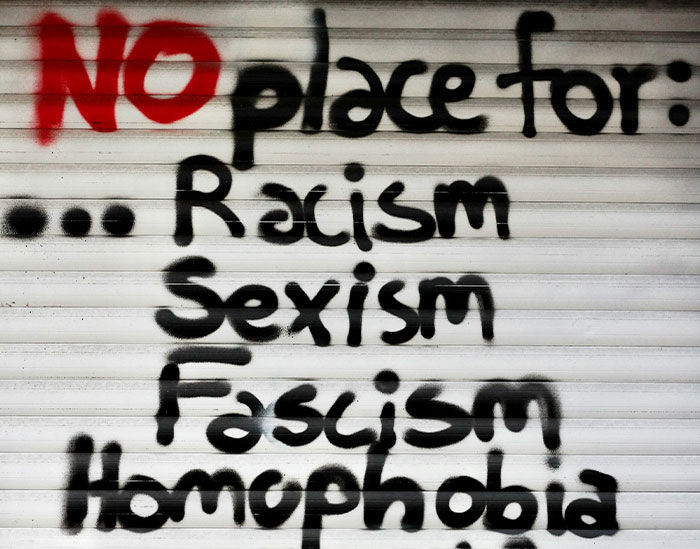
Image source: SpiderSixer, Bekky Bekks/unsplash
#3
Making your political party your identity.
CaptainRhetorica:
Making any sort of tribe your identity.
Political party, sportsball team, religion, race, nationality, ethnicity, occupation, fraternity/sorority, socioeconomic class, educational level, the list goes on forever.
Taking your association with or inclusion in any group way too seriously is tribal and inherently primitive.

Image source: moderartethis, Ramsés Cervantes/unsplash
There’s also something called the Dunning-Kruger effect. It’s when some people believe they know more than they do — when they actually know very little. It happens especially because they don’t realize there’s more to learn.
A lot of people confidently comment on social media without having all the facts, generally because they see only a small piece of the picture and assume it’s the whole story.
They spot one detail that seems right and immediately feel like an expert, jumping in to correct others even when they’re missing the bigger context.
#4
Inability to see things from another perspective.
mattigus7:
“The test of a first-rate intelligence is the ability to hold two opposing ideas in mind at the same time and still retain the ability to function” – F Scott Fitzgerald

Image source: glowrosexxx, Getty Images/unsplash
#5
Fear and hatred in response to any people/culture that is unfamiliar.
specialPonyBoy:
“Why would I eat that, go there, read that, try….?” Some people live in a tiny world and cling to it for dear life.
TileFloor:
One time a guy a knew saw an Indian woman in a beautiful sari and his response was, “ew! Who would date that?” We weren’t friends after that.
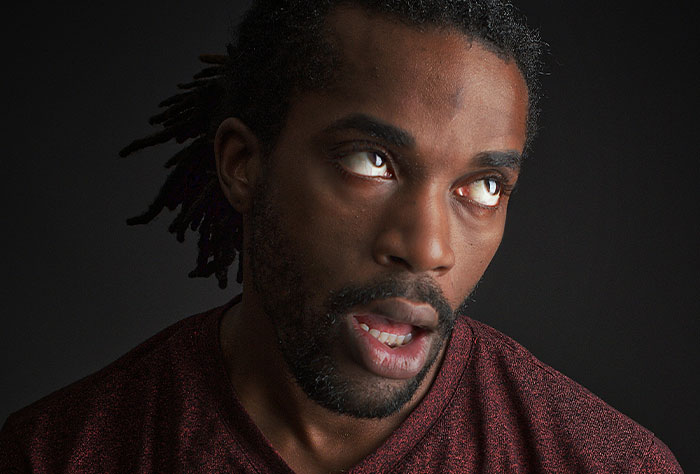
Image source: Faust_8, Dorrell Tibbs/unsplash
Being able to admit you don’t know everything and genuinely consider new or contradictory information is actually linked to better reasoning and less bias in decision‑making.
Studies have found that humble people, or those with higher intellectual humility, spend more time thinking about information that goes against their beliefs. They also fact‑check more and are less likely to fall for misinformation.
For example, they might double‑check the source before sharing a viral news story or read multiple articles before forming an opinion. They could also ask questions in a debate instead of insisting they’re right, or consider advice from a coworker they normally wouldn’t listen to.
Even simple things, like trying a new recipe a different way after reading reviews, show this kind of open‑minded thinking in everyday life.
#6
Believing anything they read on social media.
Kerensky97:
Or online.
The minute they say “I did my research” referring to surfing the Internet until they found someone who agrees with their bad take.

Image source: Fresh-Reign, Getty Images/unsplash
#7
Anti-vaxxers.
Alcoholic_Bananas:
My wife is a doctor and the number of people she has had to treat at her hospital that “don’t trust vaccines” is staggering. The logic just isn’t there. You don’t trust vaccines but when you are now actively [passing away] from sickness you trust the same system to then hook you up with life saving treatments at the hospital? During peak covid she would have patients who legit nearly died from it and STILL wouldn’t get vaccinated after recovery lol.
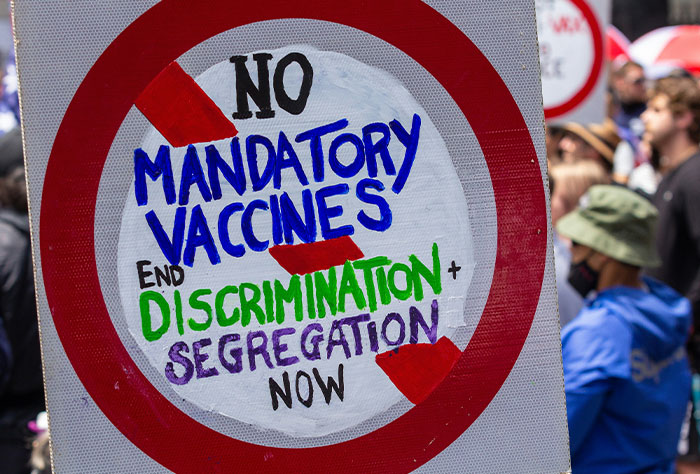
Image source: Different_Seaweed534, DJ Paine/unsplash
#8
Personally treating people bad based on their status or what they own screams low intelligence.. empathy is a virtue and a gift and mostly it’s attributed with highly intelligent individuals.

Image source: Large-Low5893, Els Fattah/unsplash
If you’re reading this, it means your brain is getting a little, but much-needed, workout.
Because the one pattern that keeps popping up in this list is… reading (or not reading).
Plenty of people will tell you that if you read — books, articles, news, whatever catches your eye — it’s a pretty good sign of your intelligence.
Research links frequent reading with stronger vocabulary and better reasoning skills.
Teenagers who read in their spare time know 26% words than those who never read, a study shows.
“The link between reading for pleasure and better vocabularies suggests that if young people are encouraged to discover a love for books, it could alter the course of their lives, regardless of their background,” says lead author of the study Dr Alice Sullivan.
Adults who make reading a habit tend to do better on literacy and thinking tests. It even seems to protect them against cognitive decline over time.
#9
Never reading. I mean anything. How do some people read nothing all year? You don’t read books, or articles, or news papers, or essays, or poetry, or scripts, or journals, or blogs, or comics?

Image source: acurious0ne, Sincerely Media/unsplash
#10
Whenever anyone says “I would encourage you to do your own research” after you’ve questioned yet another dumb conspiracy theory.

Image source: ict7070, Unsplash+ Community/unsplash
#11
Flat Earth theory.
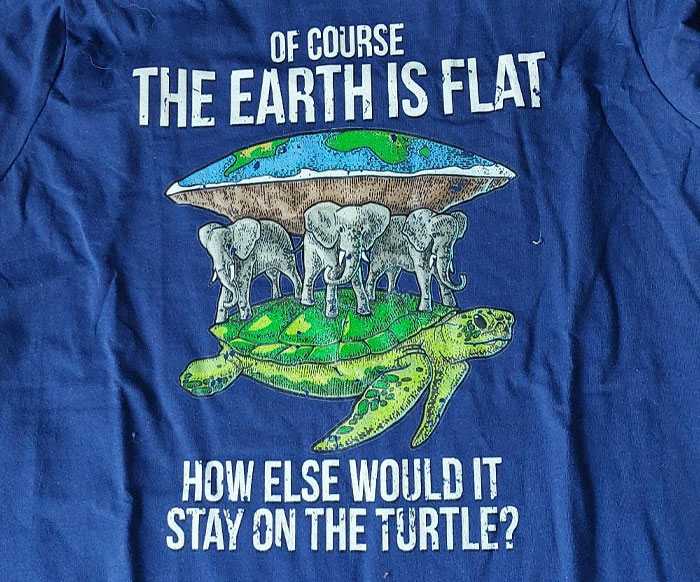
Image source: Serious-Cup-9222, SuzieSue32/reddit
But the sad news is that surveys show a big decline in daily reading among kids and teens over the past few decades.
In the US, the share of 13‑year‑olds who read for fun almost every day dropped to about 14 % in 2023, down sharply from 27 % in 2012.
In the UK, research found that fewer than one in three children aged 8–18 read daily for enjoyment in 2023, down from nearly 38 % in 2005.
#12
Using AI relentlessly.
IceSeeker:
They’re not even trying to think anymore which is worse. Choosing to rely on AI is an insult to someone with a functioning brain.

Image source: jerrryboree, Emiliano Vittoriosi/unsplash
#13
MAGA hats. It’s helpful that they wear them so proudly so we can easily avoid them!

Image source: Unstupid, Natilyn Hicks Photography/unsplash
#14
“I’M AN ALPHA MALE!”.

Image source: BajaRooster, Levi Meir Clancy/unsplash
Another big and common trait people associate with intelligence is empathy — the ability to understand and connect with how others feel. And it goes beyond just feeling the feels.
Studies show that people who can put themselves in someone else’s shoes are better at noticing emotions and understanding other people. This skill also helps them think more clearly and solve problems in flexible ways.
People who have higher emotional intelligence also show stronger empathy, suggesting that understanding others emotionally is part of broader mental ability, not just kindness.
It’s not that everyone who’s book‑smart is naturally empathetic. But being able to understand other minds, and consider perspectives different from your own, is a kind of social reasoning that proves you have sharper cognitive skills.
#15
For me it’s extreme certainty about everything. Not lacking knowledge, but acting like you already know it all and never need to question yourself. Smart people can be confident, sure, but they usually leave room for nuance, doubt, or the possibility they might be wrong.

Image source: Winkaholic, Getty Images/unsplash
#16
An inability to listen to other view points or information that conflicts your views. I don’t mean agree with it or change your mind, I mean listen in the first place.

Image source: Level_Comfortable649, Getty Images/unsplash
Another pattern that keeps showing up among people with lower reasoning skills is blindly believing stuff online or falling for conspiracy theories.
A large-scale survey found that about 78.6 % of American adults agreed with at least one conspiratorial idea when asked a set of standard conspiracy‑thinking questions. And about 19 % agreed with all of them.
In one study, researchers found that people who really believe in conspiracy theories have a habit of thinking more through their gut feeling. They’re also less likely to question things or stay open-minded.
But the good news is that when these folks were nudged to slow down and think more carefully, they were less likely to buy into the conspiracies.
Basically, it’s not as simple as “conspiracy believers are stupid.” But that conspiratorial thinking goes hand in hand with a lower inclination to analyze, question, and reason.
#17
Not realizing everyone can see through your continuous lies and attempted manipulation.

Image source: Backwards_Mullet, Getty Images/unsplash
#18
Being rude, calling it honesty.
WereFlyingOverTrout:
So true. Kindness requires reflection and effort in thought.

Image source: Ill_Walk961, Getty Images/unsplash
Experts say people should make sure they have the full story about a situation before they take a stand or make a decision.
“Your first move when you disagree with someone should be to think, ‘Is there something that I’m missing that would help me see their perspective and understand their position better?’ That’s the way to fight this illusion of information adequacy,” Angus Fletcher, a professor of English at The Ohio State University, says.
#19
Confusing opinions with facts.

Image source: 538_Jean, Vitaly Gariev/unsplash
#20
Willful ignorance in the face of facts and evidence.

Image source: The_Kthanid, Lidia Stawinska/unsplash
#21
When someone says “my truth”. There is no such thing as your truth, there is just *the truth*.

Image source: MySweatyMoobs, Getty Images/unsplash
If you catch yourself slipping into one of the habits on this list, there’s actually good news: intelligence isn’t some fixed thing you’re born with.
Your brain stays flexible and can get sharper over time if you keep learning and challenging it.
That’s why reading regularly, journaling, engaging in thought-provoking discussions, developing emotional awareness, and practicing mindfulness all strengthen cognitive pathways that serve you in real life, and not just on paper.
#22
Becoming insulting with someone they disagree with.

Image source: RepresentingJoker, Adi Goldstein/unsplash
#23
Raising your voice to prove a point.

Image source: juicera, Abubakar Isa/unsplash
#24
A lack of curiosity or desire to learn.
Image source: zekezander
#25
Resorting to violence instead of logic.
Image source: me_doingmethings
#26
Playing s**t music loudly through speakers on public transport.
Image source: kooky_kabuki
#27
Constant interrupting.
Image source: Pro_Gamer_Queen21
#28
Blind obedience to party politics.
Image source: antiquity_queen
#29
Being overly concerned with appearing intelligent.
Image source: bmf1989
#30
Getting all the news from not reliable source and believing everything they read without critical thinking and questioning things.
Image source: Mountain_Current_841
#31
Trying to prove the Red pill ideology.
Image source: Ill_Walk961
#32
Covid denial.
Image source: Lunabuna91
#33
Maxing out credit card and only making the minimum monthly payment.
Image source: RageWynd
#34
Littering.
Image source: Carl33ze
#35
Celebrity worship.
Image source: asifs6585
#36
I’m sorry to be blunt, but being overly religious. Like the type that can’t fart without checking with the church/bible.
Image source: neitheroldnoryoung-
#37
Thinking you are smarter than everyone else in the room.
Image source: Brilliant-Rock-3173
#38
Saying ‘it’s just their opinion’ after being caught with a stupid take.
Image source: OneOfTheWeebs
#39
My litmus test for this for a while was people saying “you know that they have litter boxes in school bathrooms now, because the kids identify as cats!”.
Image source: NewFlynnland
#40
You think being louder means you are winning an argument.
Image source: joefred111
#41
Idiocy of “I’m a ______.”
mama bear
pitbull mom
Girl dad
Boy mom
On YouTube, I always get a St. Jude ad where the dude comes in with “As a girl dad, bla bla bla …” then they show a sick child.
Image source: Sulli_in_NC
#42
An absurdly high monthly car payment.
There’s a lot of ways people can over-indulge, but ordinary, working class people buying/leasing new cars every few years and paying north of $900 a month is one of the dumbest things they could do. It just screams gullible and being bad with money.
Image source: CrunchyKorm
#43
Copy/pasting status updates that say “I do not give Facebook the right to use my photos” or whatever the scam of the week is.
Image source: Unlikely-Boat3202
#44
Lack of impulse control, highly reactive, unable to emotionally regulate themselves.
Image source: aquagardener
#45
Not allowing people to change.
Image source: moving_forward_today
#46
Insisting that pasteurization is bad and that raw milk is healthier.
Bro the scary science word “pasteurization” is literally just heating the milk to [get rid of] bacteria. Even traditional livestock ranchers have been doing this for centuries. You’re basically insisting on drinking cow germs as an “appeal to nature” fallacy.
Image source: Heroic-Forger
#47
Thinking your main problem is immigrants. (Or whatever the tabloid news tries to tell you the big problem is at the time).
Image source: Godmil
#48
Speaking loudly on phones on public transport, specifically when it’s a call that in their mind, makes them look better, powerful etx.
Image source: OkWing5717
#49
The two stupidest people I have ever talked to, both believed the earth was flat, space is water, gravity is fake and there is a dome over the earth.
I just smiled and sighed.
Image source: daisy0723
#50
Saying they’re not doing something they’re clearly doing, like yelling or being [a jerk]. And then justifying it by being defensive and blaming the other person or everyone else. Saying that they did something because of someone else. Basically lying to someone’s face and blaming them for their actions.
Image source: larsloveslegos
#51
Not being able to self-reflect.
Image source: Helpful_Pirate261
#52
Not forming own opinions and just piggybacking on whatever everyone currently in the room is saying or speaking confidently on topics you know NOTHING about. Also, continuing to make the same grammar/spelling mistakes after being corrected 50 times.
Image source: AriSpice
#53
Several things for me:
~A make America great hat
~Confederate tattoos
~People that say “speak American” or “speak english”
~People that don’t read or explore
~ Republicans.
Image source: Opposite-Value-5706
 Follow Us