Imagine just going about your day, maybe talking to your mom on the phone, and suddenly you’re stopped by people in masks trying to scare you.
This has become a reality for some Americans as the Immigration and Customs Enforcement agency, or ICE for short, widens its crackdown.
A woman faced a similar situation recently when she was briefly detained by two ICE agents in a parking lot. Sharing her story online, she revealed that one of the agents started texting her a few days later, and even asked her out on a date.
A woman was briefly questioned by ICE agents in the US

Image credits: jota_buyinch (not the actual photo)

She said one of the officers started texting her later, and asked her out on a date
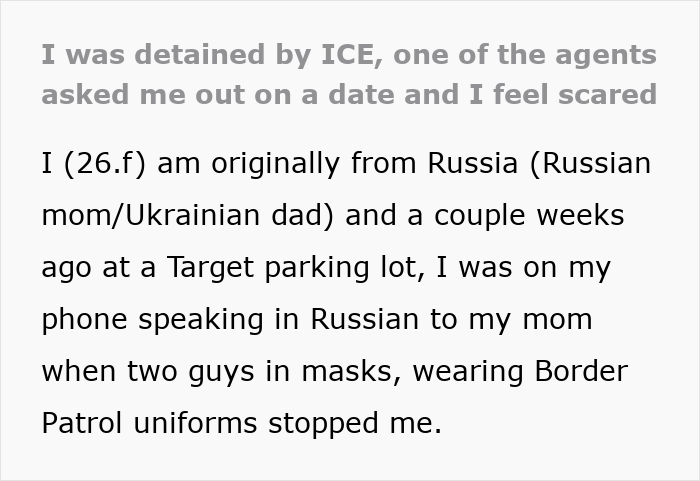
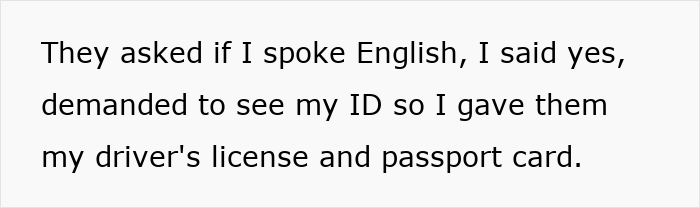
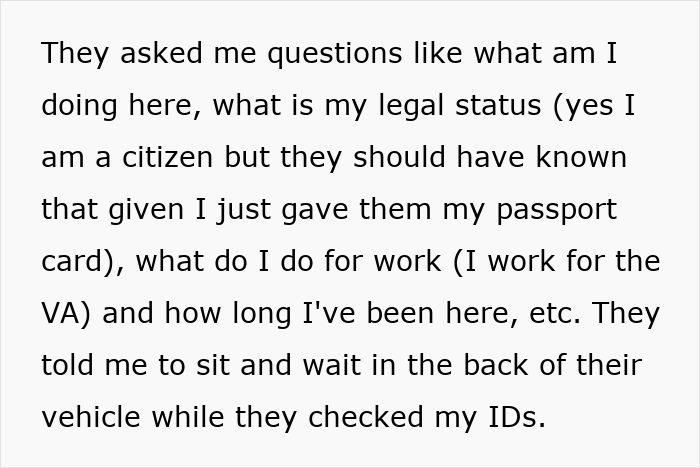
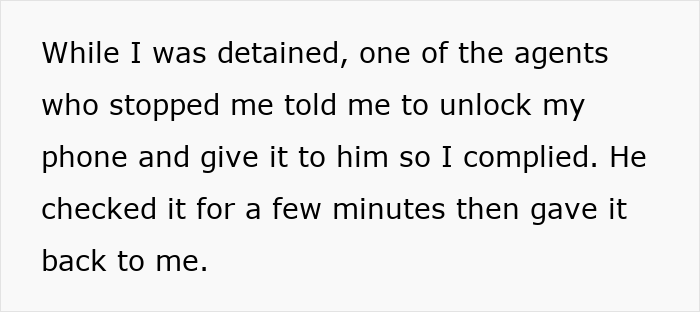

Image credits: bnenin (not the actual photo)
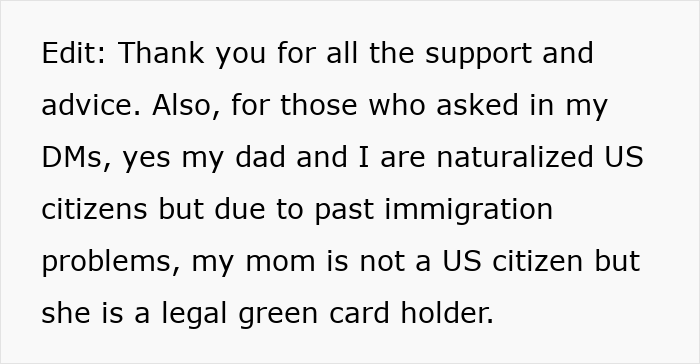
Image source: MsNewHere404
Behind the badge: ICE, its officers, and their responsibilities
Image credits: Getty Images (not the actual photo)
The Immigration and Customs Enforcement agency (ICE) has made thousands of arrests since US President Donald Trump returned to the White House in January 2025.
These agents roll up in dark masks and bulletproof vests, and they’ve basically become the face of Trump’s hardcore immigration crackdown.
The organization was formed as part of the Homeland Security Act of 2002, a response to the terror attacks on September 11, 2001.
Today, it is the highest-funded US law enforcement agency after its budget skyrocketed in 2025.
Over the past year, ICE has been all over the news for its use of force and intimidation, especially after a string of shootings and aggressive raids.
People have been thrown to the ground, tased, and mistakenly arrested. Some have been hit by pepper balls, rubber bullets, and tear gas and mauled by an “attack dog.”
“We’ve never in this country had federal law enforcement agents routinely cover themselves up in masks and stand in front of cars or at the side of cars. The things that this administration is ordering agents to do are resulting again and again in them violently confronting members of the public,” Naureen Shah, director of government affairs in ACLU’s equality division, told PBS.
Other experts say these agents usually don’t have the kind of experience, background and training to work in an environment that can actually become a bit hostile.
ICE agents differ from border patrol in the sense that they focus on enforcing immigration laws inside the country and tracking people down in cities, workplaces, and sometimes even knocking on the doors of houses.
Meanwhile, border patrol agents are supposed to be focusing on the external edges, the physical borders, of the country.
But under recent immigration crackdowns, both groups have shown up in city environments far from the border, and sometimes wear similar tactical gear. This has blurred the lines for people who see them in the streets.
That overlap doesn’t change their core missions, though, but it does help explain why so many people mix them up.
A recent poll found that about 65 % of Americans think ICE has “gone too far” in enforcing immigration laws.
In recent months, there have also been several protests against the agents.
However, opinions are highly polarized by political affiliation even now.
Reports show patterns of alleged harassment, force, and neglect by ICE agents
Image credits: Valery Tenevoy (not the actual photo)
At least two dozen ICE employees and contractors have been charged with crimes since 2020. They’ve been accused of physical harassment, violent behavior, corruption, and other misconduct.
A report found that some agents have also used their credentials and government resources to try to avoid arrest or receive favorable treatment.
While federal officials have justified ICE’s aggression, critics say the agency’s massive hiring blitz has meant more and more agents are coming on board with rushed vetting and less training.
“Once a person is hired, brought on, goes through the training and they are not the right person, it is difficult to get rid of them and there will be a price to be paid later down the road by everyone,” says Gil Kerlikowske, who served as commissioner of US Customs and Border Protection from 2014 to 2017.
Recently, a former detention officer in Louisiana pleaded guilty to physically harassing a woman over several months while she was imprisoned. Federal prosecutors called it a “romantic relationship.”
Some agents have been recorded or accused of using derogatory language about women or people of color.
How to protect yourself from those who misuse power

Image credits: Hoi An and Da Nang Photographer (not the actual photo)
While some might dismiss texts as a simple attempt to ask someone out, the context shared by the author of the viral online post makes them clearly inappropriate.
When a person in a position of authority, especially a federal law‑enforcement officer, contacts someone they detained and had access to through an official capacity, there’s a clear power imbalance.
The agent got her number without her consent, while she was in a vulnerable situation, under his authority, and scared for her safety.
Formal ethical guidelines say that law‑enforcement officers should respect personal and professional boundaries. They are advised not to use their professional position to pursue “inappropriate” relationships with members of the public.
A recent report revealed that a woman was deported from the US one day after suing over alleged harassment by an ICE contractor. Her lawsuit claimed that the official sent her explicit text messages and videos.
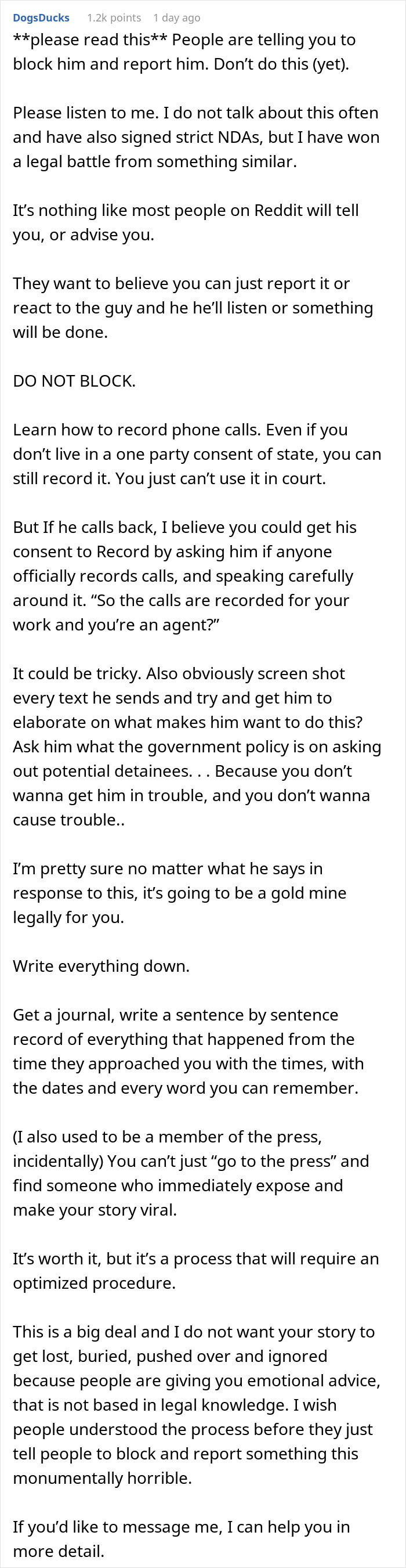
Experts say survivors should document every single piece of info when such a case happens—write down dates, times, locations, what was said or done, and if any witnesses were present.
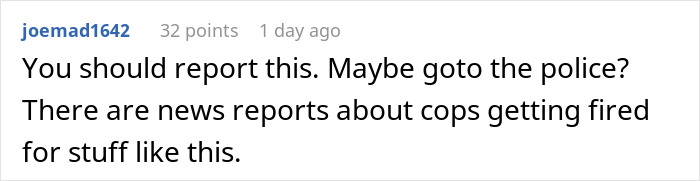
“Repeated text messages that are affecting your health should be reported. Everyone has different stress and anxiety thresholds, and once harassing texts have elevated you past these, it is time to contact the police,” writes attorney Lisa M Schaffer, Esq.
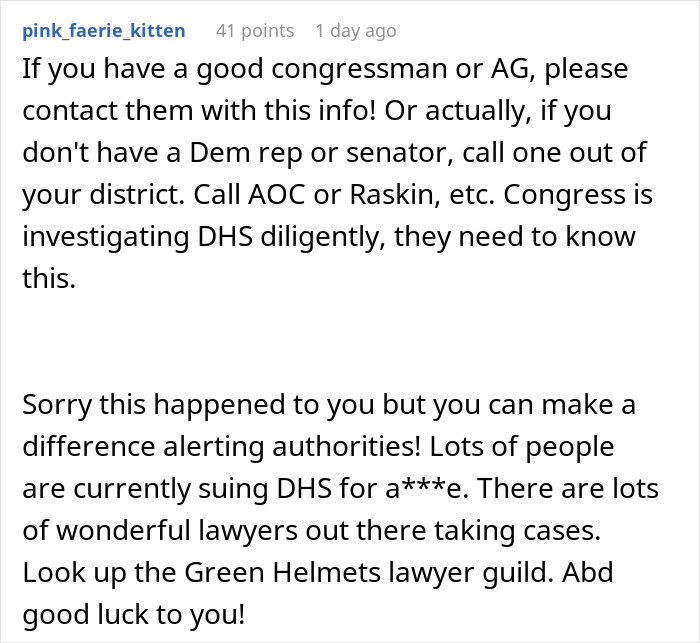
People can also contact independent oversight officials who investigate government misconduct and complaints against public officials.
The woman said she has contacted her lawyer to discuss the next steps
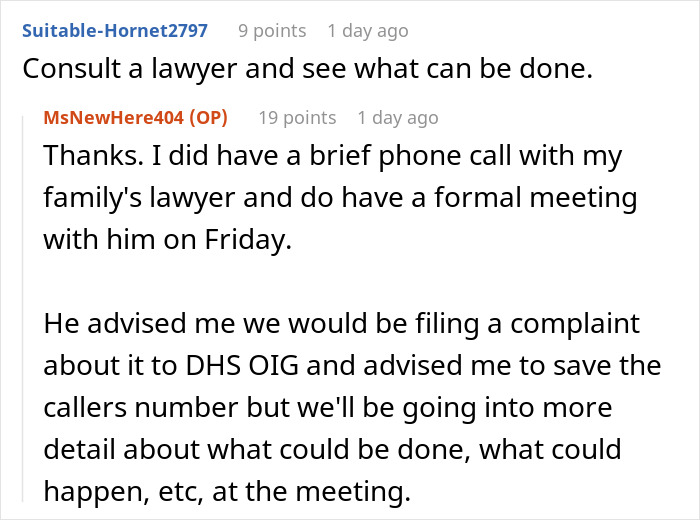
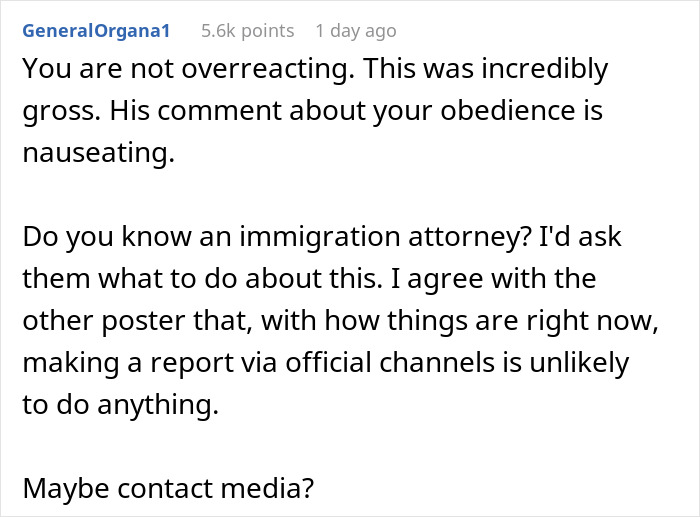
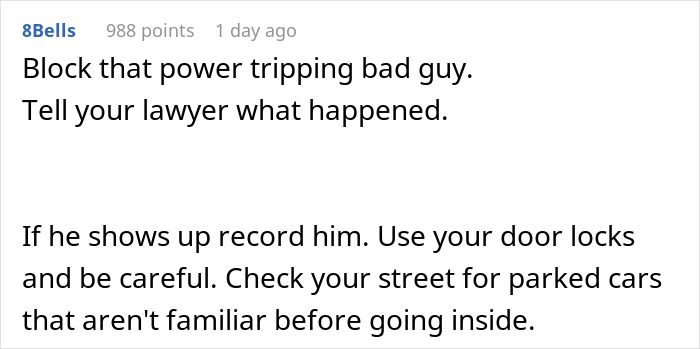
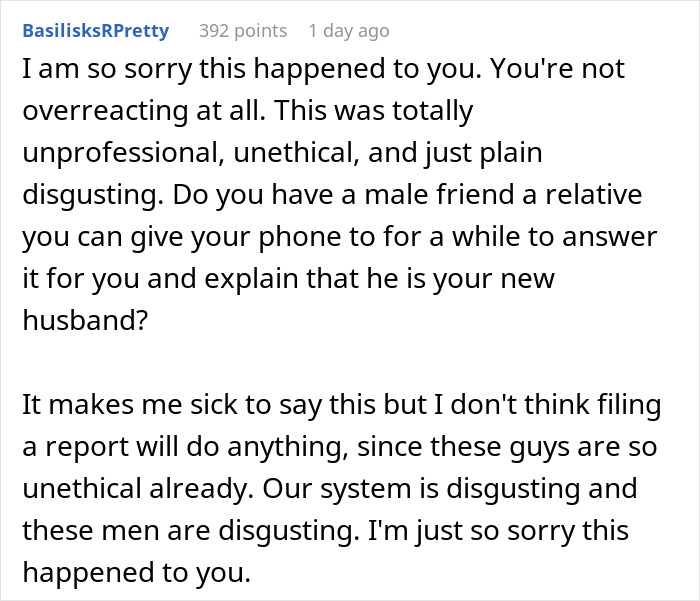
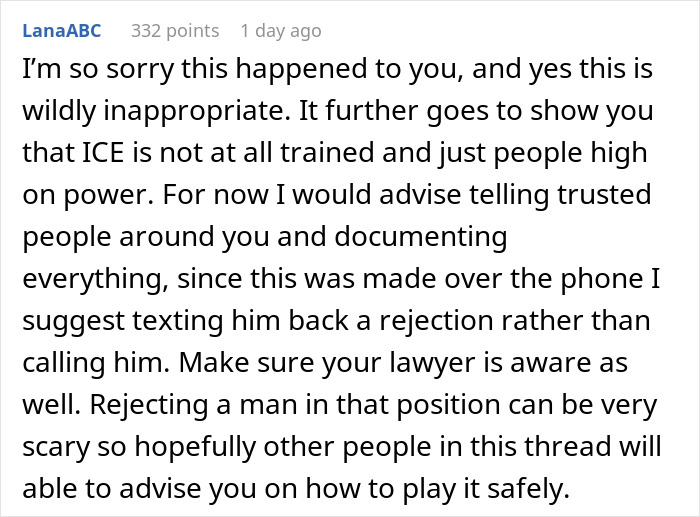
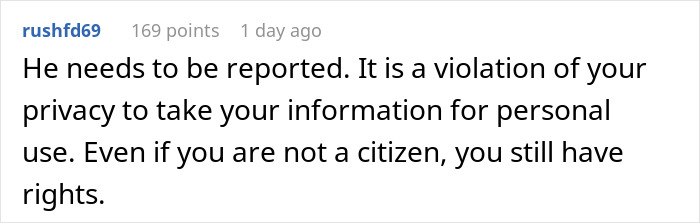
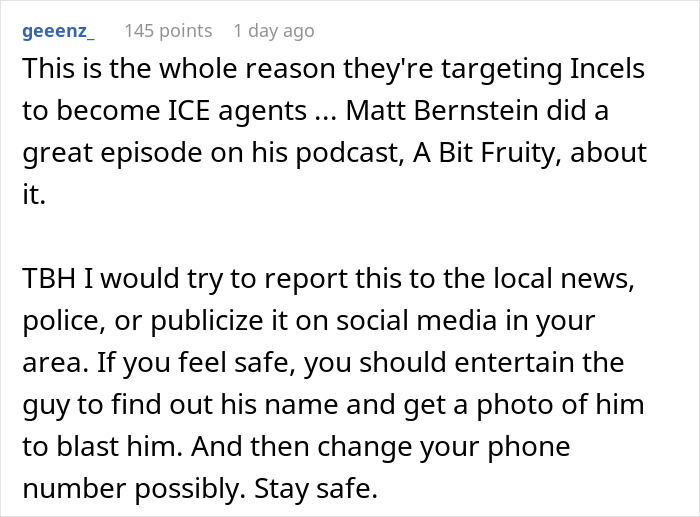
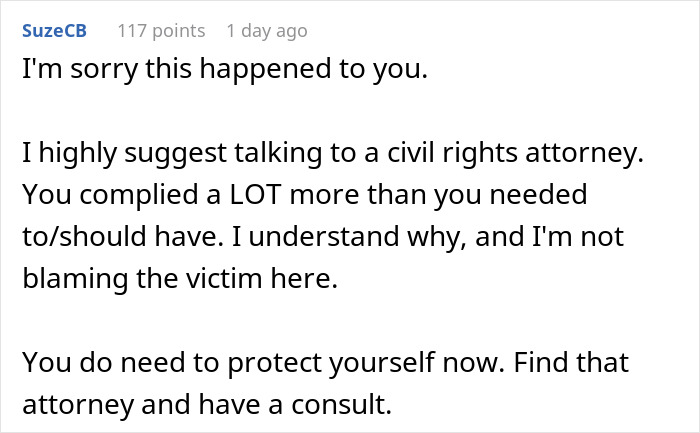
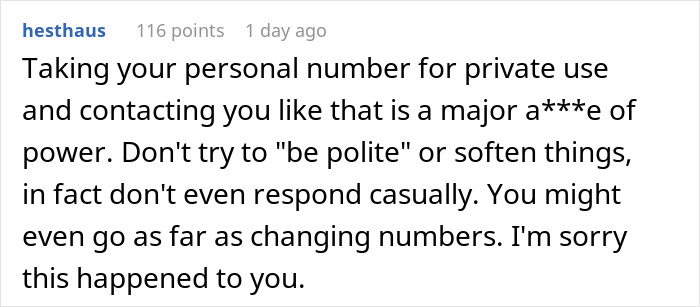
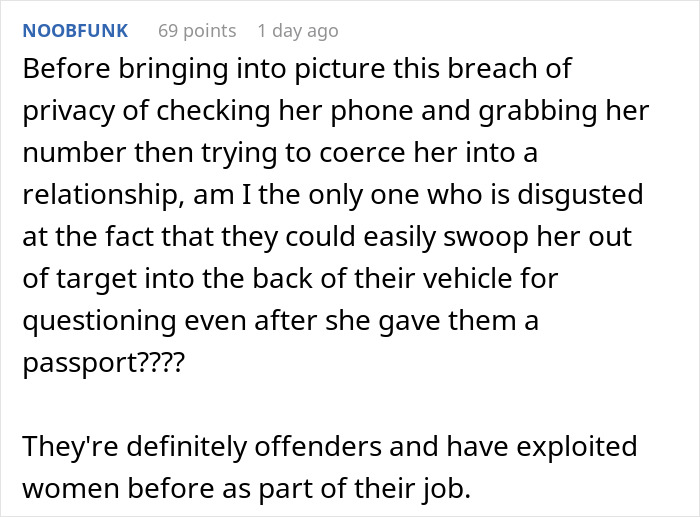
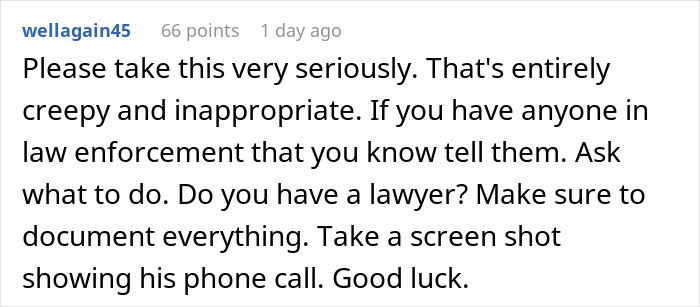
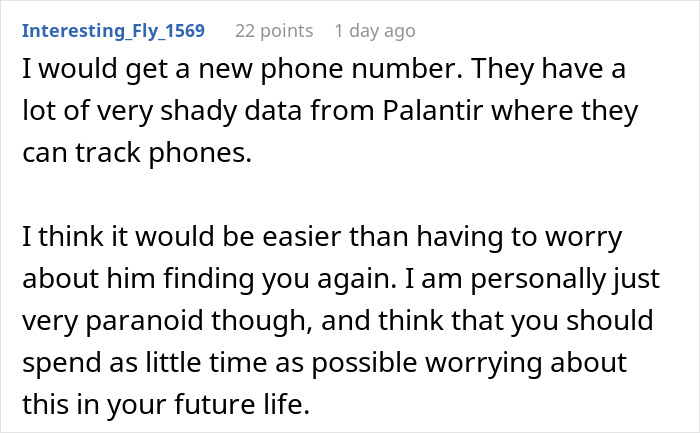
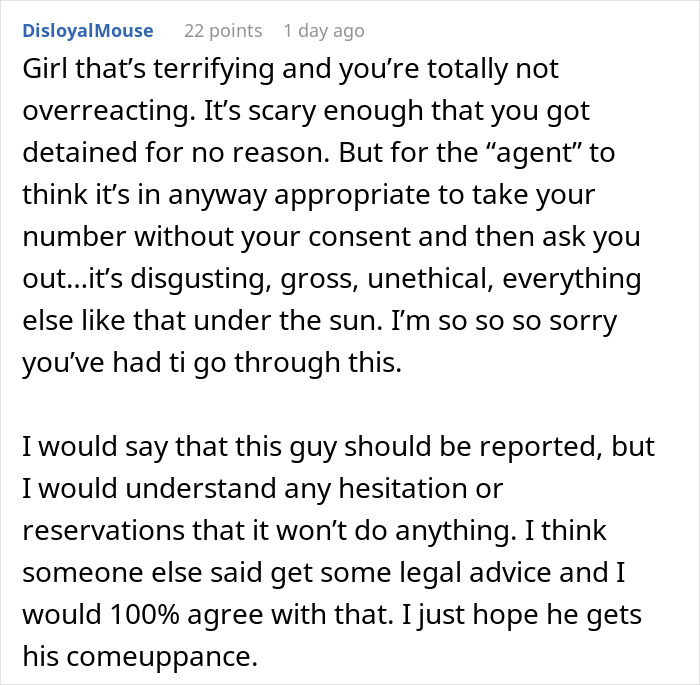
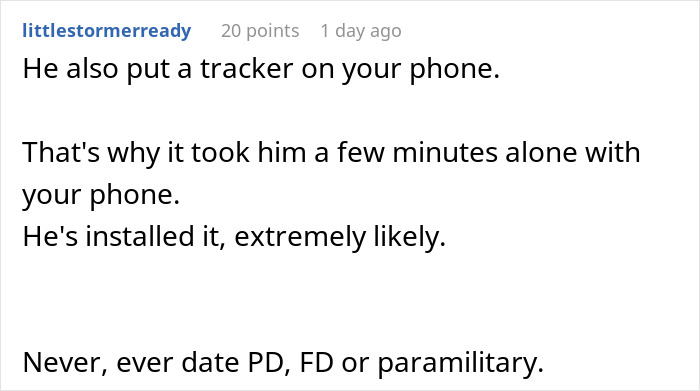
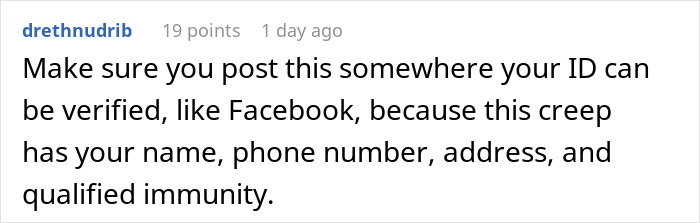
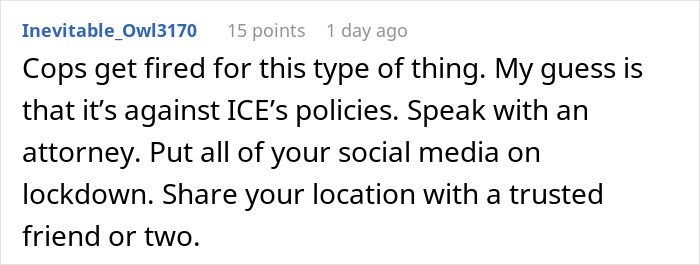
Many people reacted with outrage against the ICE agent, and some gave legit advice








 Follow Us