Every so often, history hands us a real person who sounds like fiction, someone whose life was so unusual that it survives as equal parts record and rumor.
Tarrare is one of those cases. An 18th-century Frenchman with a seemingly bottomless appetite, he drew the attention of doctors, soldiers, and crowds alike. Some details of his story appear in medical notes and eyewitness accounts; others grew into legend over time, and separating the two is part of what makes his case so unsettling.
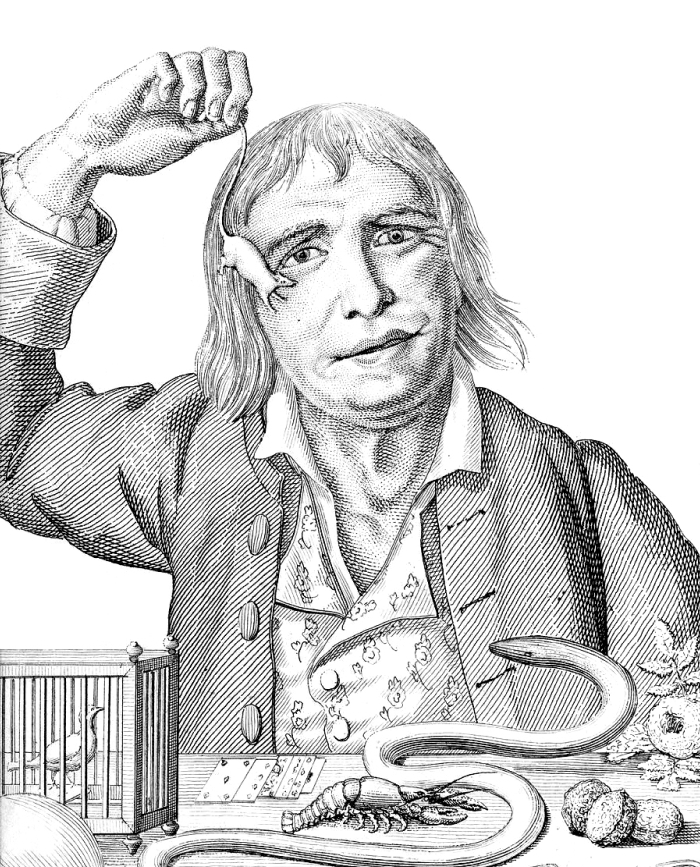
Image credits: Unknown author / wikipedia.org
Was he a medical marvel? A monstrous cannibalistic French spy? A man cursed with such bottomless hunger that he defied biology? He was all three, and more.
This man with an insatiable appetite proved that almost anything is possible. People still try to dissect his story almost 230 years after his death, yet every answer seems to raise five more questions.
We’ll recount the story of the hungriest man in history, diving headfirst into the world of a human being who could reportedly out-eat livestock, swallow objects whole, and, allegedly, chew his way through things that no person should ever consider food.
And just when you think the story couldn’t get any stranger, we’ll reach the chilling moment when doctors finally uncovered what was really going on inside that fascinating body.
Like many creepy accounts of history, Tarrare’s story is as tragic as it is engrossing. But when it comes to folklore, it doesn’t get much weirder than this.
The Many Legends of Tarrare
Long before Tarrare became a medical marvel, or a medical nightmare, depending on who you ask, he was a seemingly normal child who grew up in rural France. But there was one thing that quickly set him apart from his peers: his insatiable appetite, which nobody could explain.
Early accounts are limited, but across the centuries, it has been reported that he could devour food meant for multiple people in one sitting, yet remained very thin.
Neighbors gossiped about him, other children were wary of him, and his reputation quickly ballooned beyond his small village. By his teens, Tarrare wasn’t just a boy who ate too much; he was a walking curiosity.
However, it’s said that his insatiable hunger didn’t curb with age; it only grew more dramatic. Various word-of-mouth claims say that he could eat entire baskets of apples at once, swallow stones, and even force live animals down his throat in one gulp.

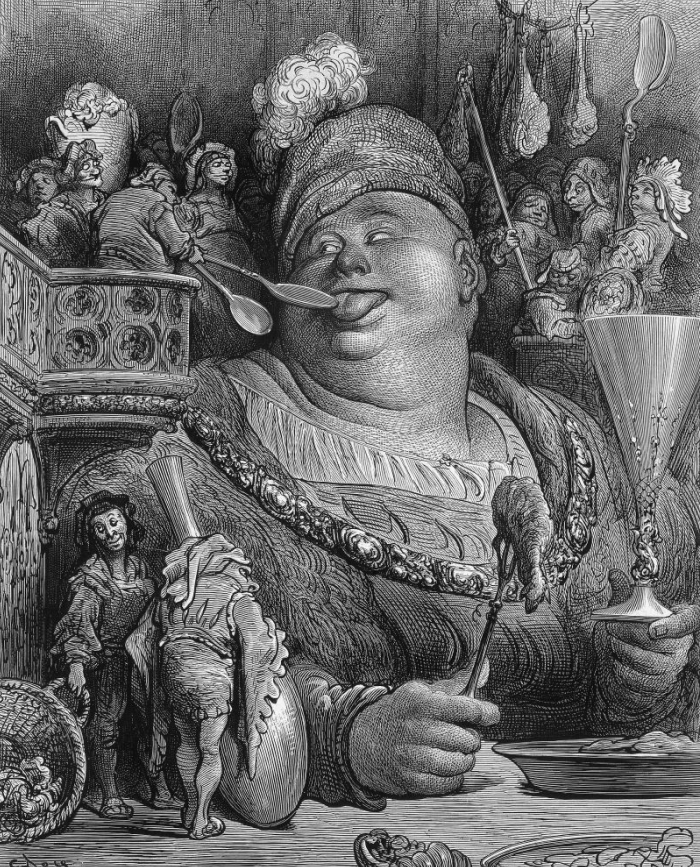
Image credits: DEA / JE BULLOZ / Getty Image
Some of the stories about Tarrare sound too excessive to be real, whereas others were documented by physicians who witnessed his feeding feats firsthand. The case of Tarrare is a tricky one to pin down because little is known about the man himself.
He was supposedly born in the Lyon region in 1772, but his official birthday, family members, and even his full name aren’t documented, so he’s seen more as a legend than a historical figure.
According to folklore, his enormous appetite meant his parents could no longer provide him with enough food. The teenage Tarrare had become something of a public spectacle, so it wasn’t long before traveling performers took notice of him.
He joined several groups of showmen, carving out his own niche as a one-man stomach. It allowed him to sate his hunger and make money at the same time.
According to the Ohio State University, crowds paid to see Tarrare swallow things whole, gorge himself to the point of discomfort, and even consume live animals, including snakes, puppies, and entire eels. His gluttony was both fascinating and grotesque, the type of circus performance where you want to look away but can’t.
He could consume his body’s weight in bullock, but people wanted to see how far he would take his act. 🤯
Traveling sideshows were a common form of amusement in the 18th century, but Tarrare was a true novelty. People kept talking, and as the stories of Tarrare’s bizarre feats were passed down, they became stranger and stranger.
It’s accepted as fact that he really could consume his weight in meat and swallow animals and objects, but folklore has a way of stretching the truth just enough to make us question history.
The Realities Behind the Feats
The Tarrare we talk about today is part man, part mystery. He’s a figure of real-life legend, and the embellishments, rumors, and theatrical retellings are all part of his story.
But what is the actual reality?
The most consistent accounts of Tarrare’s condition come from medical records kept by surgeons and military doctors who studied him, baffled, alarmed, and morbidly curious about the things they witnessed.
Many historians point to Dr. Pierre-François Percy, who treated Tarrare at a French military hospital after he joined the French Revolutionary Army.
Percy’s paper, which was included in the London Medical and Physical Journal, included details about Tarrare consuming the meals of 15 laborers, yet still remaining gaunt. His abdomen would distend while eating, then go back to normal.
Percy believed he had a unique physical illness and wanted to find a cure, though Tarrare often resisted help.
The tales of Tarrare also consuming inedible objects, are also believed to be true, supported by several historical testimonies.
According to Project Gutenberg, Tarrare was a medical anomaly who would “quickly devour” anything placed before him, whether it was food or not. He reportedly swallowed corks and flints, as well as increasingly more concerning objects during his time in the military. But beyond these corroborated feats, a number of Tarrare tales are difficult to pin down.
Some claim that he feasted on corpses in morgues, drank human blood, and even ate a live toddler, but no concrete accounts confirm this.
It has been mentioned that he rummaged through blood and waste buckets during his hospital stay, but whether he actually consumed things as disgusting as human fluids and flesh is unconfirmed.
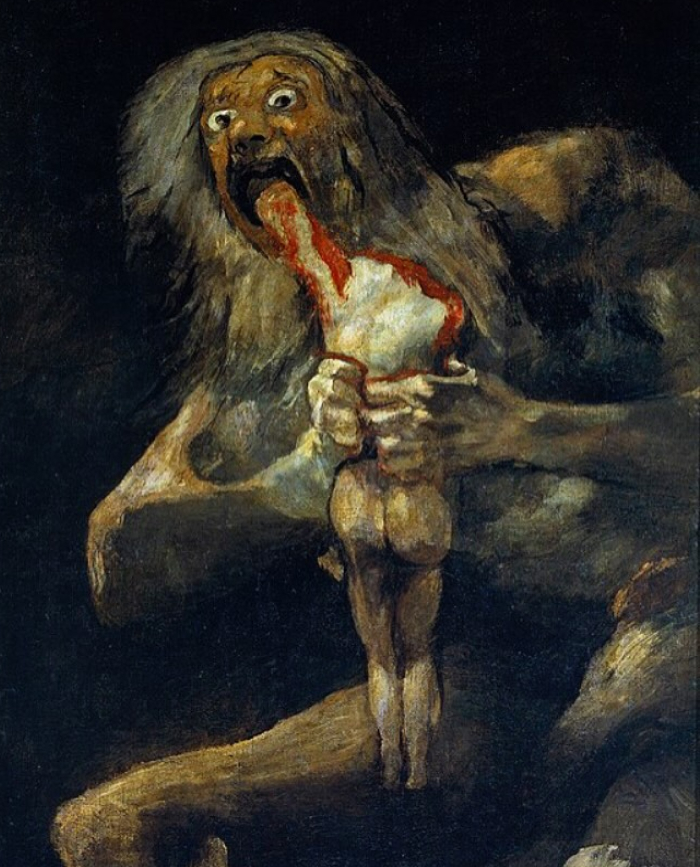
Image credits: wes_sherman / Instagram
The media in Tarrare’s time was very similar to that of today, so it makes sense that some stories would be exaggerated to excite audiences or terrify the public. However, those tales may also contain strands of truth. The resulting historical record blurs fantasy with reality, portraying a man with a genuine medical condition whose legend is as relentless as his hunger.
Tarrare as a Spy
Before he was admitted to a military hospital, Tarrare served in a very unique role in the French Revolutionary Army.
Rather than treat him as a regular soldier, his superiors decided to put his talents to use and employed him to swallow documents whole, then reproduce them later, still intact. This was done by having him ingest a wooden box containing a coded message and carry it across enemy lines.
It seemed like an ingenious plan, but it went sideways almost immediately. The story goes that Tarrare swallowed the box and crossed into Prussia, but he was captured almost instantly.
He raised suspicions because he didn’t speak the local language, wandered around aimlessly, and had the appearance of a starving man. According to Bath Spa University, the Prussians detained him, but later released him because they couldn’t make sense of what he was trying to do.
Even worse, the message he risked his life to deliver was apparently a trial run, so the information contained nothing of value. Tarrare was said to be furious when he realized that he had endured torture for what was basically a digestive science experiment. However, he was soon discharged due to exhaustion and because military rations alone couldn’t sustain him.
Tarrare’s espionage stories are an example of how embellished some of his feats were. Some people now maintain that he was used as a tragic weapon by officers, or that he was a caricature who used his brutal consumption against his enemies.
Sensationalism turned one disastrous stint as a spy into a convoluted story that made him seem more like a supernatural creature than a real man; a sentiment about him that still persists today.
Tarrare’s Decline and Death
For all the spectacle surrounding his life, the end of Tarrare’s story is marked by a steady, painful unraveling.
Both his hospitalization and increasingly unmanageable hunger had an impact on his health, and he became less of a public spectacle and more of a medical concern. Modern medical professionals continue to speculate about what truly caused Tarrare’s condition, but Baron Percy was determined to find out.
According to folklore, he tried everything, from wine vinegar baths designed to cool down his appetite to opium treatments intended to slow his digestion. Nothing worked.
Tarrare continued to consume anything he could get his hands on, including trash, food scraps, and hospital leeches. These grim episodes were reportedly what fuelled the rumors about him sneaking into the morgue to eat corpses and drink the blood of patients.
However, it was the rumor about him eating a lost toddler that damaged Tarrare’s reputation more than anything he had previously done, and he was chased from the hospital, never to return.
As Tararre’s condition deteriorated, he was said to have maintained a public profile, though he was too weak to perform as a showman anymore and had to keep returning to the hospital, this time in Versailles.
Towards the end of his life, Tarrare contacted Dr. Percy, who came to see him. His doctors noted that he had severely declined physically and emotionally. He complained of weaknesses all over his body and told Percy that he had swallowed a golden fork years ago, which he believed was lodged inside him.
Eventually, Tarrare agreed to any procedures that could save his life, but he could not stick to a controlled diet because he was always hungry.
In his firsthand account, Percy diagnosed Tarrare with advanced tuberculosis, and after one more agonizing month, the world’s hungriest man passed away.
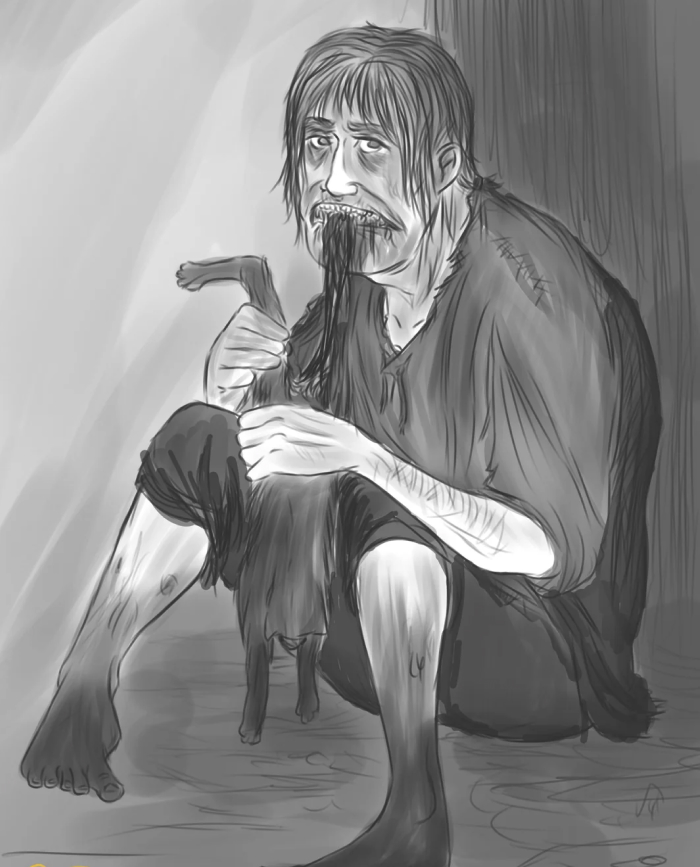
Image credits: MisterDaedelus / reddit
He left behind a wealth of unanswered questions and curiosity. People were morbidly interested in his upcoming autopsy, though hospital surgeons refused to dissect his rotting corpse until a man named Tessier, who worked at the hospital, urged them to do it.
The stage was set for Tarrare’s final show, ready to close the curtains on one of the strangest cases in medical history.
The Autopsy Unveiled
The doctors who performed Tarrare’s autopsy weren’t entirely sure what they would find inside him, but they hoped it would be biological machinery that made it clear how a gaunt man was able to ingest endlessly, yet remain constantly hungry. In a way, they were right, but the results were still beyond their wildest imaginations.
Though no primary medical accounts survived, the story goes that Tarrare’s stomach was enormous, and his liver and gallbladder were abnormally large.
His throat also had a broad canal into the stomach, which is what allowed him to swallow large objects and animals without chewing them, as well as his unusually loose jaw and esophagus.
His stomach was covered in ulcers and pus, but doctors never found the golden fork they were searching for. It was most likely the internal inflammation that caused the pain Tarrare felt at the end of his life, which may have been caused by his eating habits, though this was seemingly never officially diagnosed.
The sheer size of Tarrare’s stomach explained why he could store so much food without gaining weight.
However, the autopsy came with one final twist of its own: it was never finished. It is said that the delay in starting had caused Tarrare’s body to deteriorate seriously, and it was emitting such a stench that the surgeons were physically driven back.
Part of Tarrare’s body was left unexamined, and doctors were satisfied with the incredible things they had already discovered.
Those findings were enough to cement Tarrare’s place in history as a medical legend. The combination of confirmed abnormalities and his corroborated feats was enough to satisfy even the most macabre of minds.
According to The Tarrare Project, a completely finished autopsy may have revealed a few more secrets about Tarrare’s body, but those lingering “what ifs” only intensify his remarkable legacy.
Truthfully, the book may never be completely closed on Tarrare. Those who know his story are constantly flicking through it to compare historical records with contemporary myths. And perhaps that’s the most fitting end for the man with the most insatiable appetite: a death as strange and all-consuming as his life.
FAQ
Which parts of Tarrare’s story are documented, and which are legend?
The most reliable details come from medical observations and military-era accounts. The most extreme claims (especially cannibalism and the missing child story) are widely repeated but not supported by solid primary documentation.
Did doctors ever identify a clear cause for his hunger?
No definitive diagnosis exists. Modern theories range from metabolic and endocrine disorders to severe malabsorption, but the historical record doesn’t include enough clinical detail to confirm one explanation.
Was Tarrare really used as a spy?
Accounts of a failed espionage attempt are common, but specifics vary by source. It’s best treated as plausible but inconsistently documented.
What makes the autopsy claims hard to verify?
Many autopsy details are repeated in later retellings, and the original documentation is incomplete or disputed, so the broad takeaway is clearer than the exact anatomy described.
 Follow Us