Raising young children often means navigating more than just snack schedules and bedtime routines. It also involves building relationships with other parents, especially when kids form close friendships. When families live just a few doors apart, shared playtime can feel like a natural and welcome part of daily life.
However, what happens when that arrangement starts to feel one-sided? Today’s Original Poster (OP) became fast friends with her neighbor especially since their daughters were of the same age. But over time, their regular playdates exposed a growing imbalance between the households, leading her to question whether setting firm boundaries made her the bad guy.
More info: Reddit
Healthy relationships, whether between friends, neighbors, or parents coordinating playdates, tend to work best when there’s balance

Image credits: ArthurHidden / Freepik (not the actual photo)

The author noted that she and her neighbor have two 4-year-old girls, and are living three doors down, so they frequently visited each other’s homes to play


Image credits: prostooleh / Freepik (not the actual photo)
While she could have her neighbor’s daughter over without issue, she noticed that her own child was repeatedly sent back within minutes




Image credits: freepik / Freepik (not the actual photo)
The neighbor then stated that the reason for this was because she didn’t want to clean up after the author’s daughter’s mess



Image credits: AfricanHornet
The author then decided that playdates must be reciprocal, and that her daughter wouldn’t visit the neighbor’s house if the reverse isn’t allowed
The OP shared that her daughter and her neighbor’s are 4 years old and were born only four days apart. She added that they live just three doors down in the same townhouse complex, making spontaneous playdates incredibly convenient. For months, the neighbor’s daughter has regularly come over to play, and there were no complaints at first.
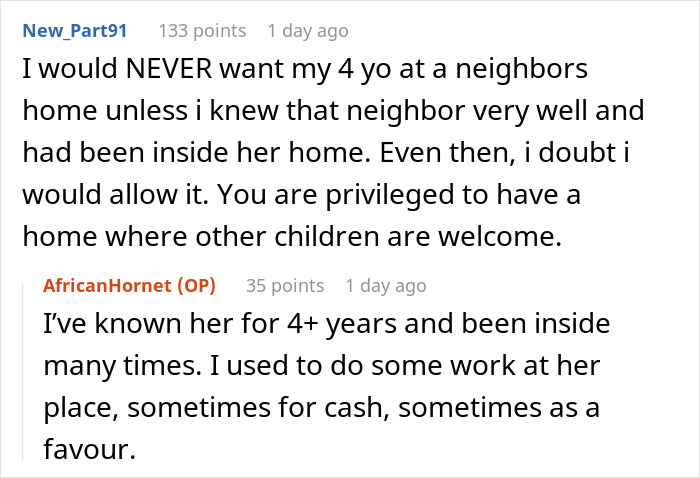
However, the OP noticed that whenever her daughter would go to the neighbor’s place, she would return only five minutes after. She also noted that the neighbor is a single mom who often uses the help of her own mom and a family friend to take care of her daughter.
The neighbor’s mom and family friend then told her that they didn’t want the OP’s daughter over anymore because they didn’t “want to clean up the mess”. Unfortunately, the imbalance didn’t stop there because on multiple occasions, instead of walking three doors down to pick up her daughter, the neighbor texted and asked for her child to be sent home.
When the OP spoke to the neighbor about her observation, she responded that she wished the issue had been raised sooner and emphasized that she’s a single mom without help. The OP thought this was interesting because she was in the exact same boat, but she set a boundary. If her daughter wasn’t allowed at the neighbor’s place, then her daughter also wasn’t allowed at hers.

Image credits: mariadevicente / Freepik (not the actual photo)
Navigating playdates may seem simple, but for single parents, even these small social interactions can become surprisingly stressful. Parenting expert Anita Cleare explains that single parenting is tough, but strong support networks can significantly reduce stress. Without help, routine activities like arranging visits, setting boundaries, and managing supervision can turn a joyful experience into a logistical challenge.
This is particularly relevant given that single parents make up a significant portion of households. Research from the Badger Institute shows that many of these parents report higher stress levels due to limited support systems. Even seemingly straightforward playdates often involve unspoken rules, constant negotiation, and careful planning.
Without a reliable network, small social interactions for children can inadvertently become a source of pressure for their caregivers. Fortunately, cooperative parenting strategies can help alleviate some of this stress. Raising Children highlights that establishing clear, agreed-upon rules for playdates, covering things like duration, supervision, snacks, and pick-up times, reduces recurring conflicts and emotional labor.
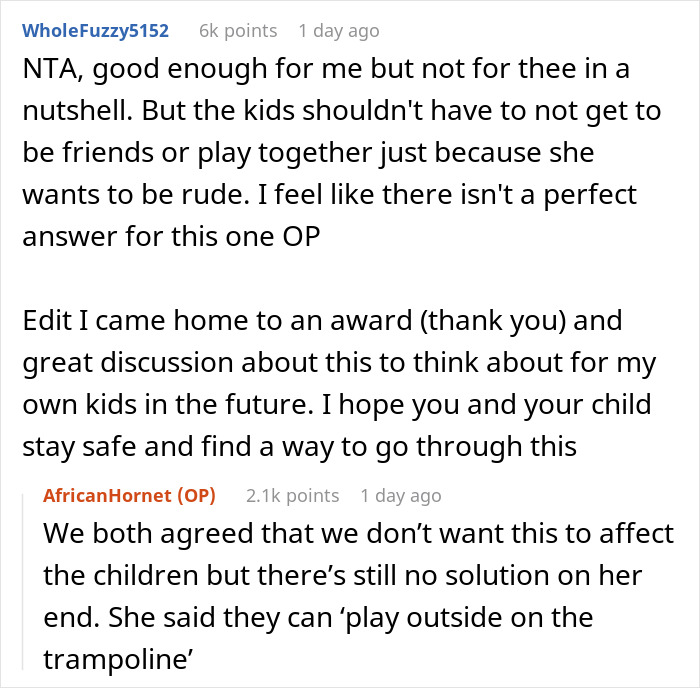
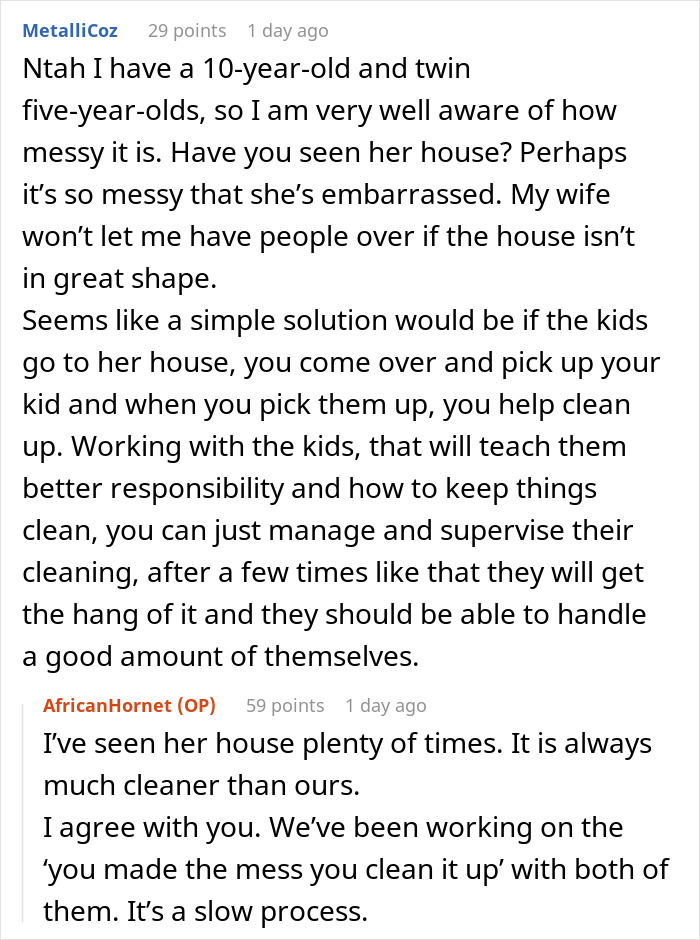
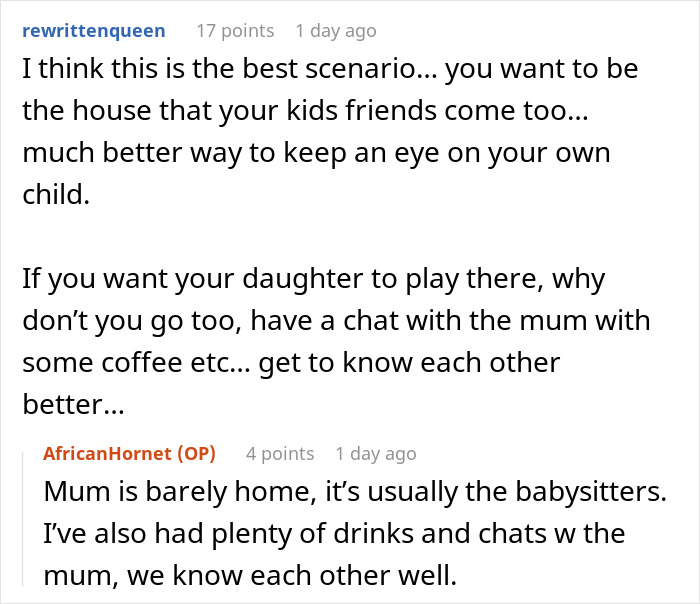
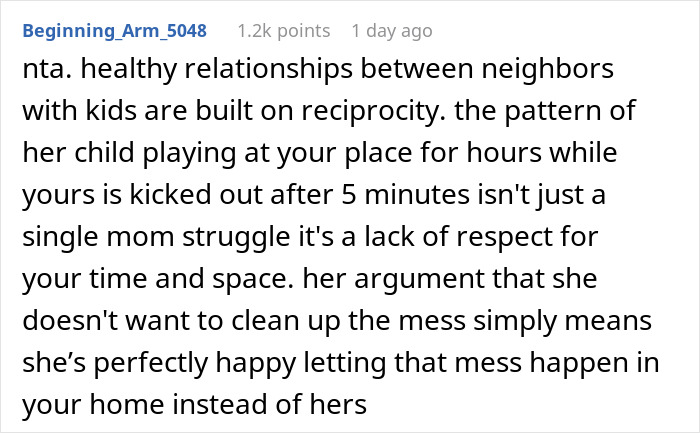
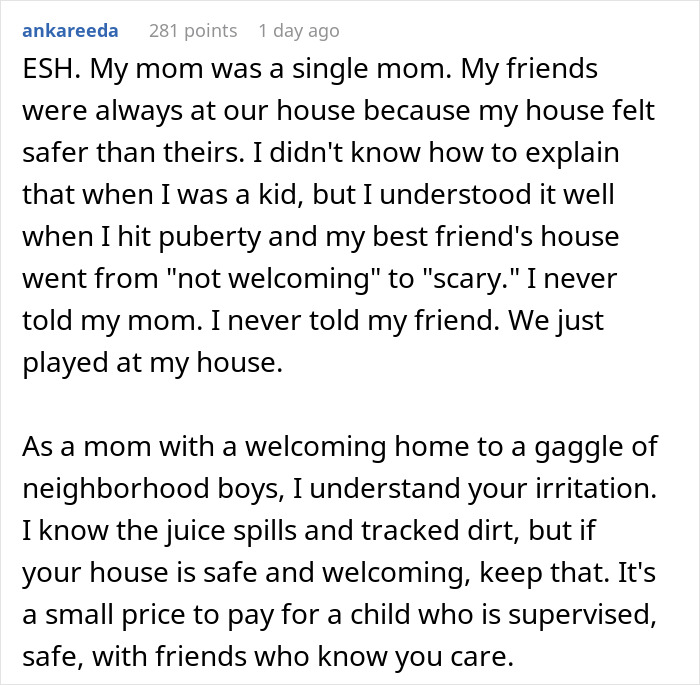
Netizens sided with the OP, agreeing that fairness and reciprocity are important in playdates. However, they also emphasized that kids’ friendships shouldn’t be punished over adult disagreements, noting the potential emotional impact on children. Do you think it’s fair to set strict rules for playdates, or should kids be allowed to visit freely? We would love to know your thoughts!
As much as netizens believed the neighbor was being unfair, some suggested empathy for hersituation while still prioritizing the children’s well-being








 Follow Us