When you have a partner, you want to at least be amicable with their friends, too. Doing them favors, being polite and friendly, and generally showing effort can lead to better relationship satisfaction. Friends’ opinions matter. In fact, one in five women say they wouldn’t date someone their friends don’t like.
But where’s the line when it comes to how much a person should bend over backwards to please their partner’s friends? This guy thought his girlfriend had crossed that line when she volunteered his free weekend for some shelf building at her friend’s. The girlfriend thought he should be willing to do it to get in her friend’s good graces, but he saw this as an insult to him and his time.
A guy landed in hot water with his GF after he refused to help his friend out for “brownie points”

Image credits: itzabshubo (not the actual image)

Unbeknownst to him, she offered for him to build some shelves for her friend, but he refused to sacrifice his weekend




Image credits: freepik (not the actual image)



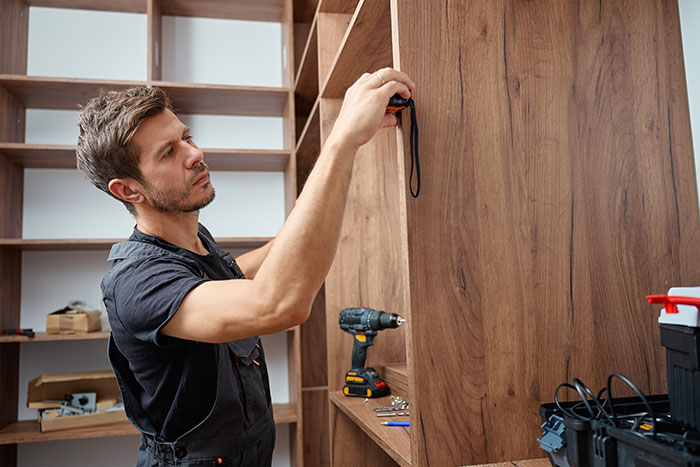
Image credits: lazy_bear (not the actual image)

Image credits: Longjumping_Mix_8693
People, especially women, care what their friends think about their partners and romantic relationships
It might seem silly, but a romantic relationship isn’t just about the two people who are in it. Family and friends of both partners matter too, and that’s what often makes them so complicated. You have to get along with your partner’s parents, siblings, friends, and sometimes even colleagues.
While it’s not fair to offer your partner’s free services to your friends and plan their time without their consent, there is some truth to the girlfriend’s “brownie points” argument. How a partner gets along with your friends matters.
As social psychologist Erica B. Slotter, Ph.D., explains to Psychology Today, a relationship doesn’t happen in a vacuum. “The truth is that our romantic connections are embedded within our broader social lives,” she writes. “Our romantic relationships occur in and around our broader social networks and relationships with family and friends.”
Women might care more about what their friends think of their boyfriends. Research shows, for example, that they feel happier in relationships when their best friends approve of their partners. Women whose partners and best friends get along report higher life satisfaction and self-esteem.
This, of course, depends on the person. In a 2015 study, researchers found that those who are more independent tend to care more about what their social circle has to say. Such individualistic people tend to resist what their friends and family think and desire to make their own choices.
People can’t assume their partners will be at their or their friends’ beck and call every time
With that in mind, it’s important to respect your partner’s boundaries, time, and skills. Some people forget that. Like “Elizabeth” in this story, they assume a partner will go the extra mile just because the two people are in a romantic relationship.
In a healthy relationship, partners shouldn’t keep score. Sure, the boyfriend in this instance could’ve canceled his plans out of love for his girlfriend and chosen to help her friend. But he didn’t, and her assumption that he should have points to entitlement.
In a romantic relationship, the time both partners have matters. As American psychologist Mark Travers writes for Forbes, “relationships thrive when both partners feel seen and supported.” And in this case, the girlfriend failed to do that by ignoring the boyfriend’s plans and how much they meant to him.
He recommends that couples look at relationships through the lens of fairness and mutual respect, rather than feeling like they are owed something. “Elizabeth’s” selfish assumption that her boyfriend will do something just because it would please her or her friend doesn’t take into account his needs and wants.
Relationships where both partners are dedicated to caring for others and caring about the universal good are proven to be more successful. “People with pro-relational attitudes tend to demonstrate more empathy, actively nurture the relationship and approach conflicts with a focus on collaboration rather than personal gain,” Travers goes on to explain.
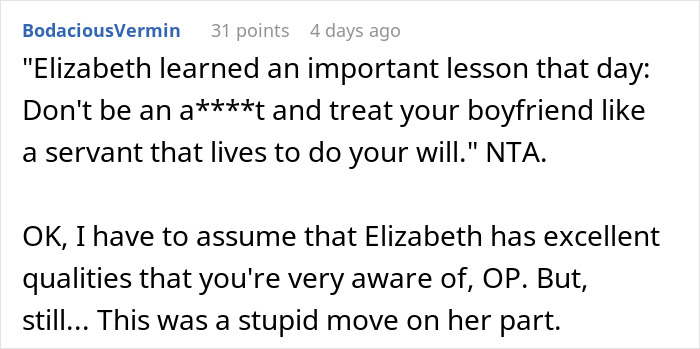
“Neither one of us gets to make decisions for the other,” the guy said, defending his position in the comments
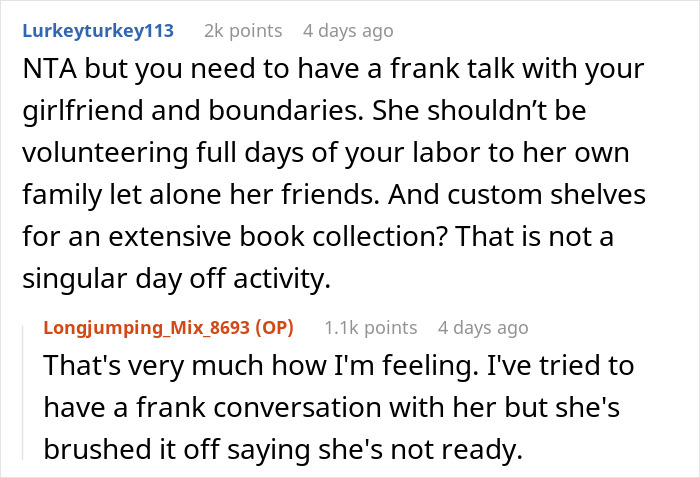
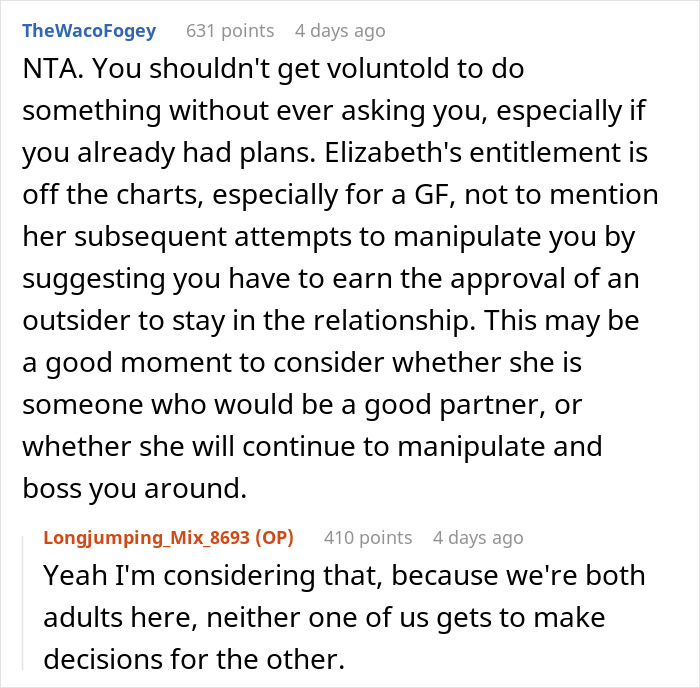
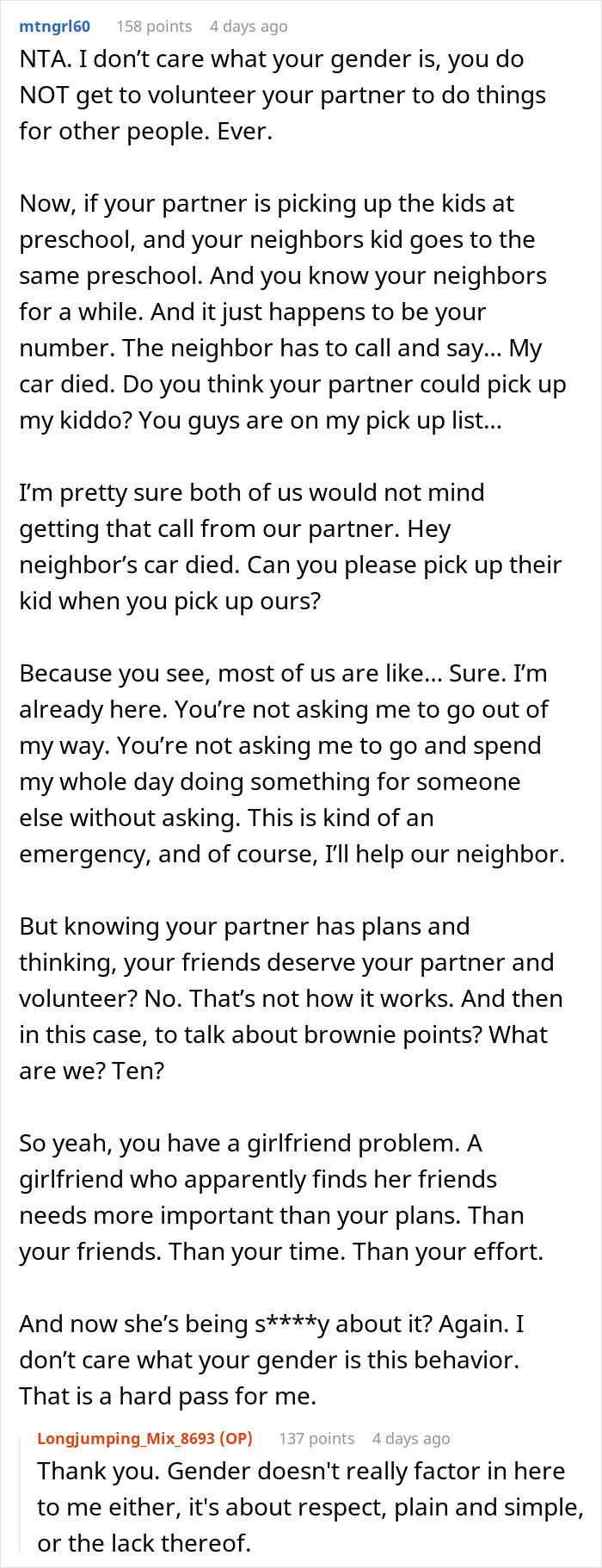
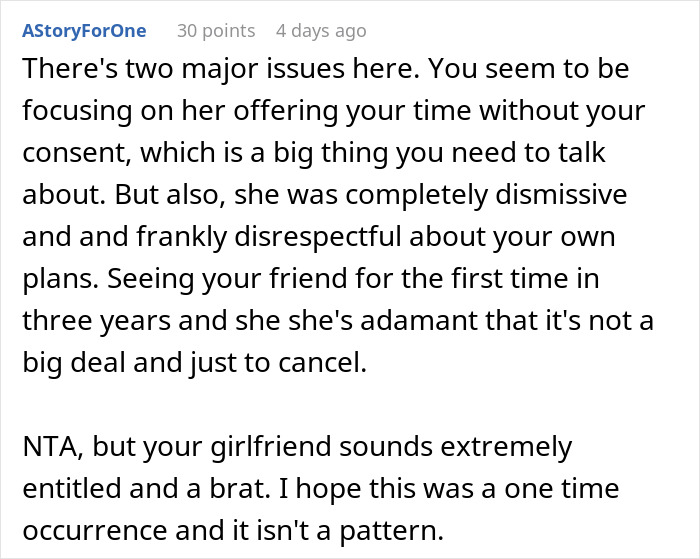
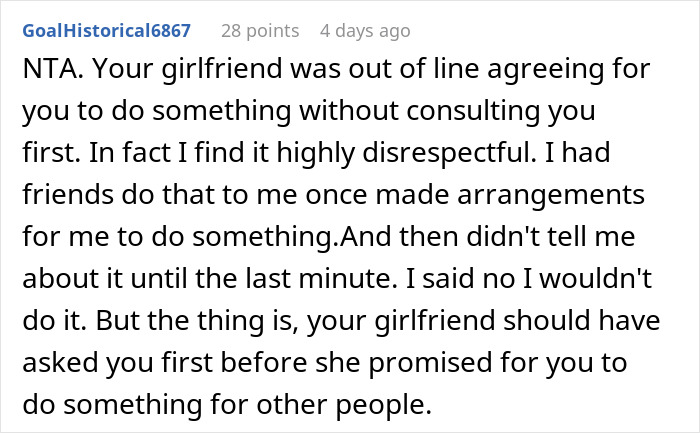
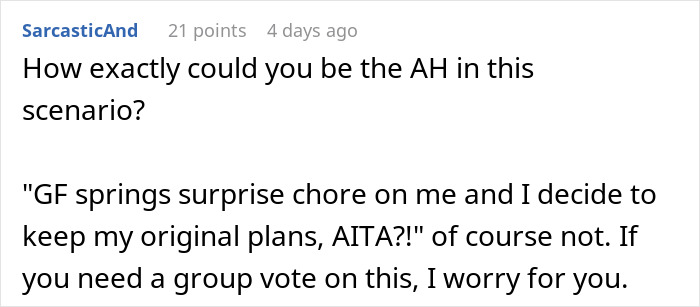
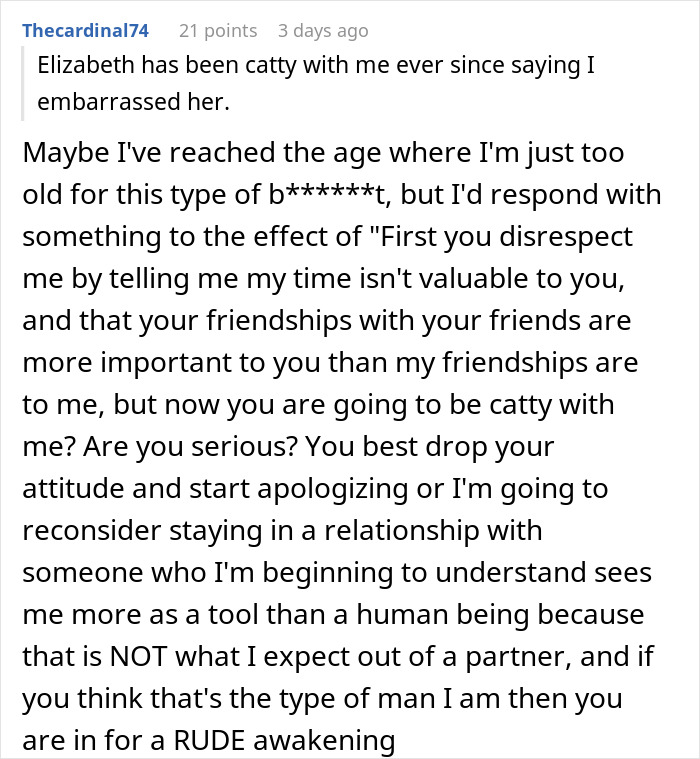
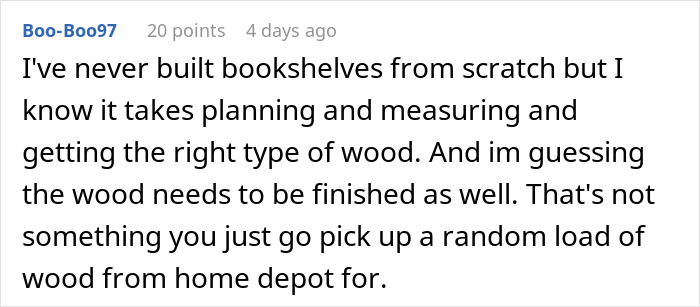
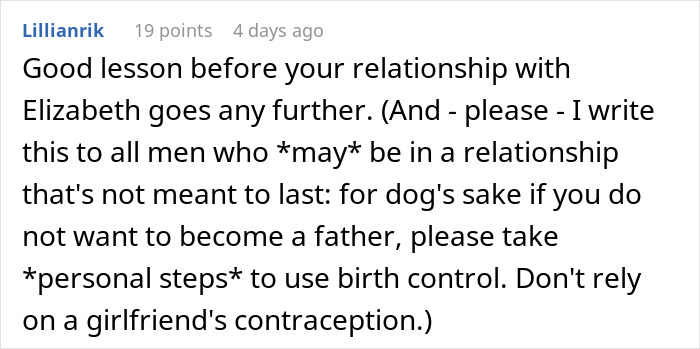
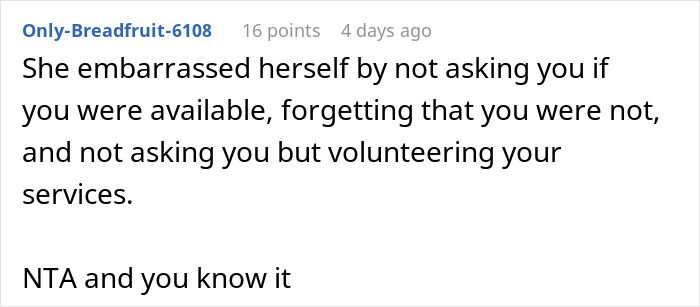
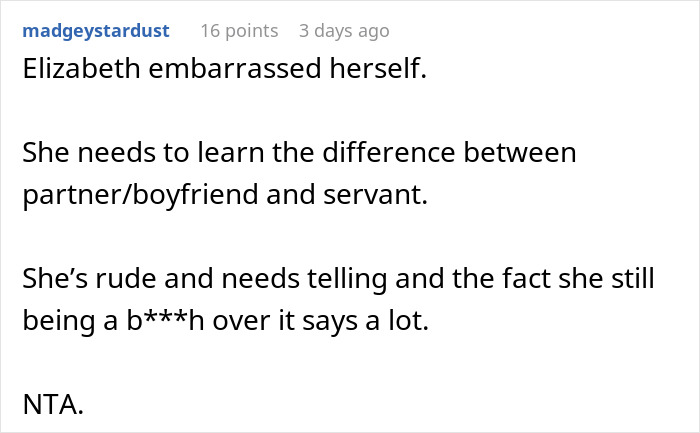
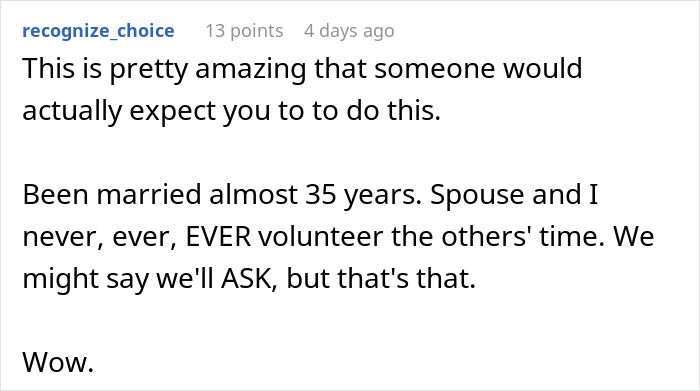
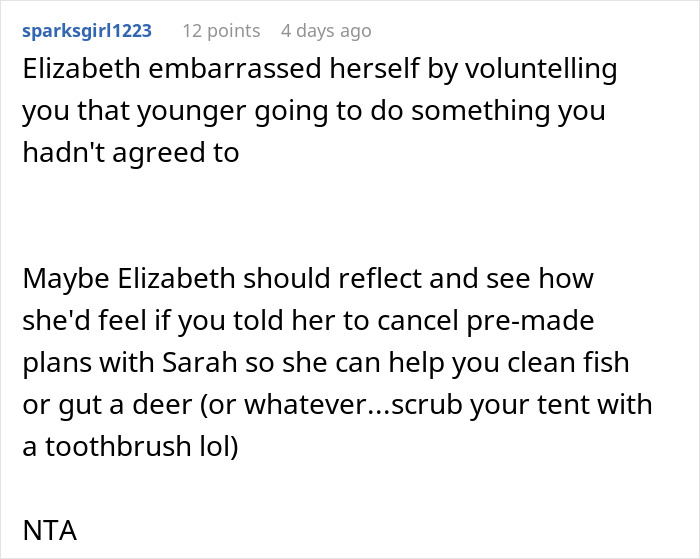
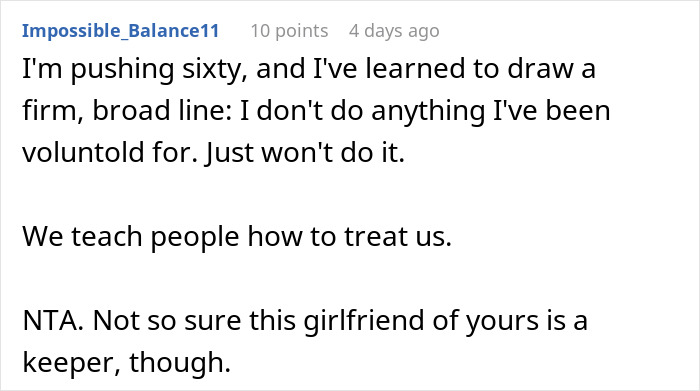
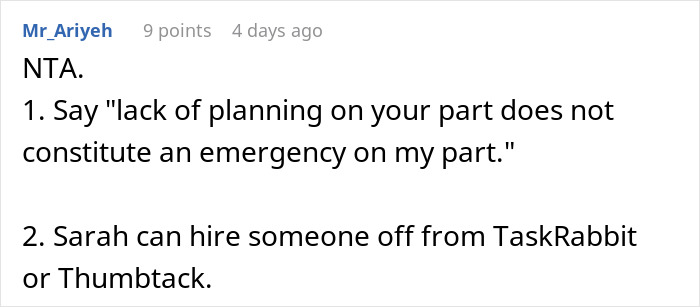
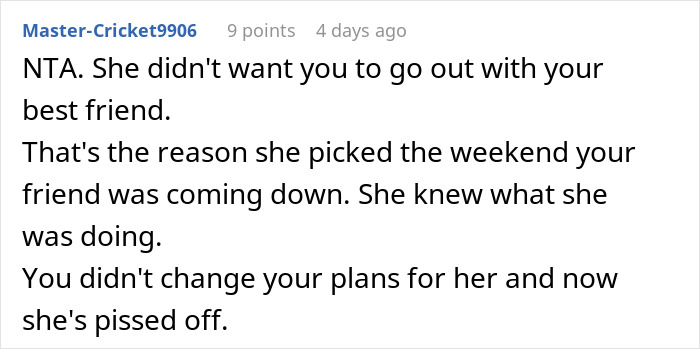
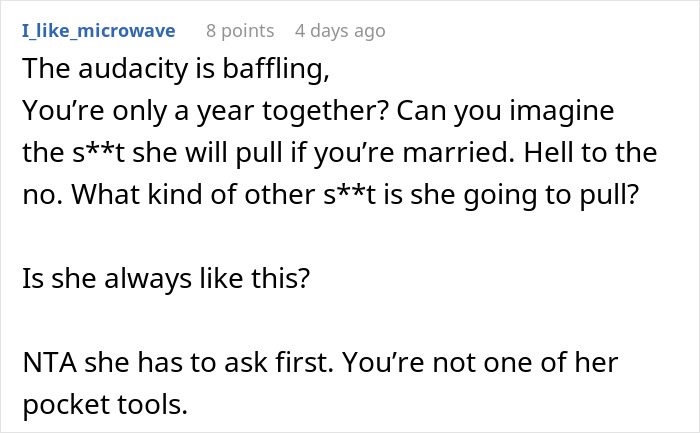
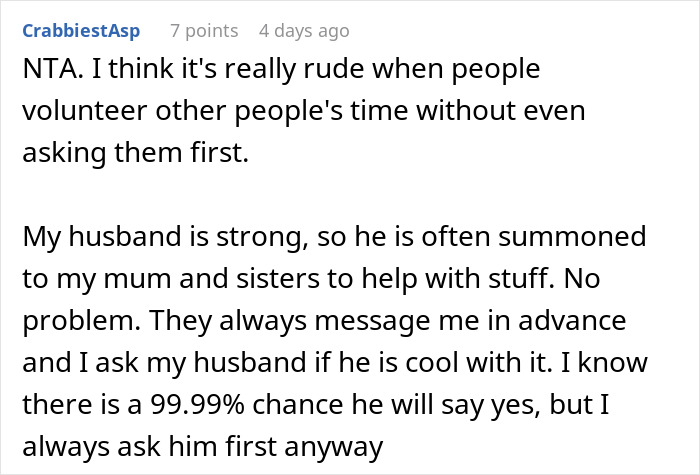
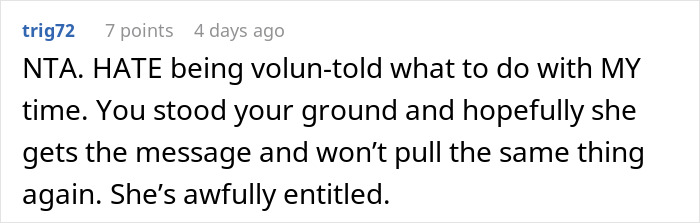
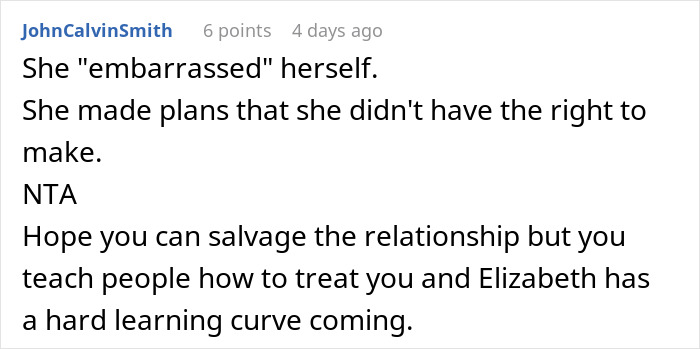
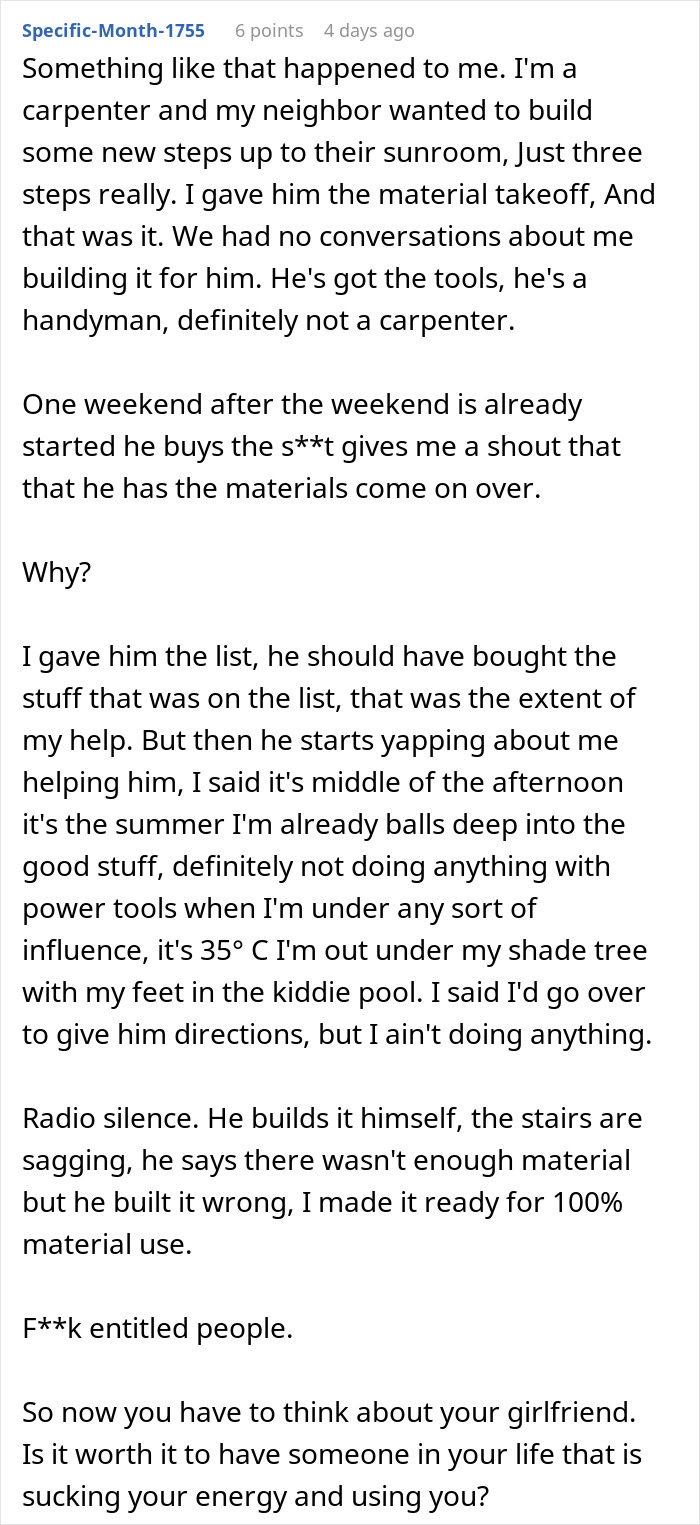
Most commenters sided with the boyfriend: “Replace the GF”


















 Follow Us