Do you have a garden in your house? Well, why not plant a dianthus in it? It’s not the traditional flower we think of first in mind. When beautifying a garden with flowers, people usually go with the rose. Sure, it is the most generic choice. However, why not try something new? Why not go against the trend and go with dianthus plants?
But before you rush to buy the seeds and plant them in your garden, learn a thing or two about the history of the plant!
Now, the story behind the flower is older than you might expect. Greeks mentioned Dianthus caryophyllus, a variety of flowers, 2,000 years ago. Theophrastus, a Greek botanist, coined the term we use today. It comes from two words — dios (divine) and anthos (flower). So, if looking at it literally, dianthus is a divine flower. It is a perfect addition to your version of the Garden of Eve.
In those 2000 years, dianthus flowers became quite popular. One might even say that it rivals the classical rose. It is all thanks to the symbolism behind the flower. While the name might hint at religious traditions, dianthus flowers are commonly associated with the same virtues as roses. Love, affection, and admiration are all associated with these flowers.
Still interested in this beauty of a flower? Well, stroll through our planting and dianthus care guide. We will talk about the ins and outs of this plant, from where to plant it to the pests that might attack it. Also, we will answer some general questions at the very end.
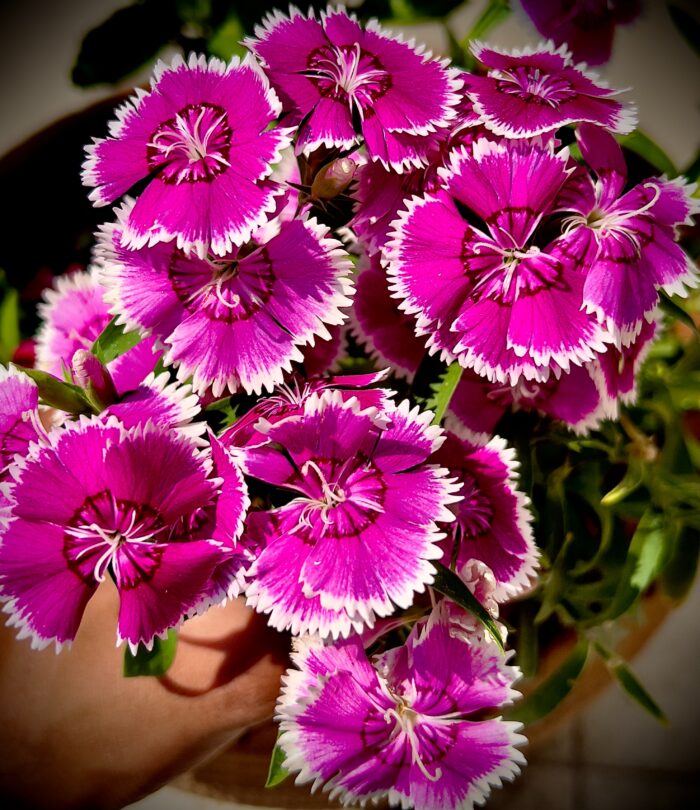
Image credits: Photography by Ishank Kumar.
Pros And Cons of Growing Dianthus Flowers In Pot or Ground
To understand the ins and outs of dianthus care, you might want to learn the advantages and disadvantages of growing it. The pros and cons of growing this flower depend on whether it is in the ground or a pot. Where it is growing, the plant will benefit and suffer differently.

Pot-Grown Dianthus Flowers
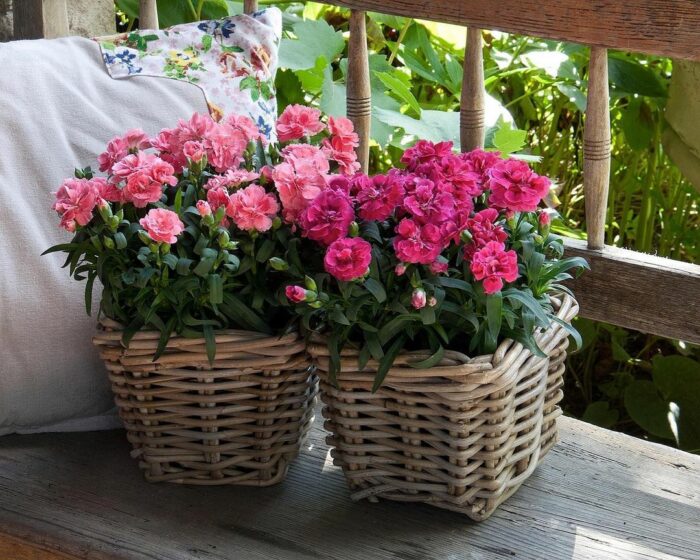
Image credits: Photography by Urban Jungle Plant Co.
Usually, growing these divine flowers in a pot can provide several significant benefits. Since it is in a pot, you can move it wherever you want. You can move it from outside to inside with simple ease. Secondly, you can easily maintain the nutrients in the soil. Also, the pot protects dianthus from significant pests and hazards.
However, the same protection creates some constrictions. The pot stops the root canal from expanding too much. The small space can also create other problems for your dianthus barbatus flower. Water has a more challenging time to drain away, and thus rot can develop.
Ground Grown Dianthus Flowers
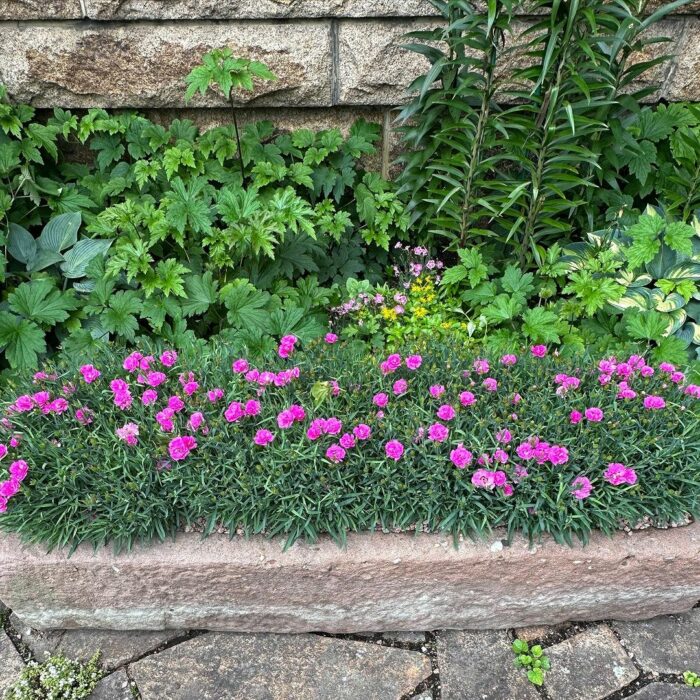
Image credits: Photography by Martha Stewart.
The freedom that the ground provides benefits for the dianthus care process. The ground allows for the flower to have an extensive root canal. The large root canal drinks up excess water, keeping the plant flourishing without watering it too often. Also, you don’t need to buy dirt if your yard has enough soil.
But, the ground’s freedom also opens the plant to some problems — mainly pests and diseases. The harsh environment outside allows the plant to be affected by external factors. Also, it is harder to maintain the nutrition of the soil. So, sometimes, your soil can be too acidic or basic if you don’t keep a close eye.
Most Popular Dianthus Flower Varieties
As with any flower, you can choose between different dianthus varieties, depending on the colors and style you like. So, to make the choosing process slightly easier (as if you had any trouble with that), we have compiled the most popular varieties. Pick one of them, or maybe mix up your garden by planting more than one variety.
Dianthus Caryophyllus
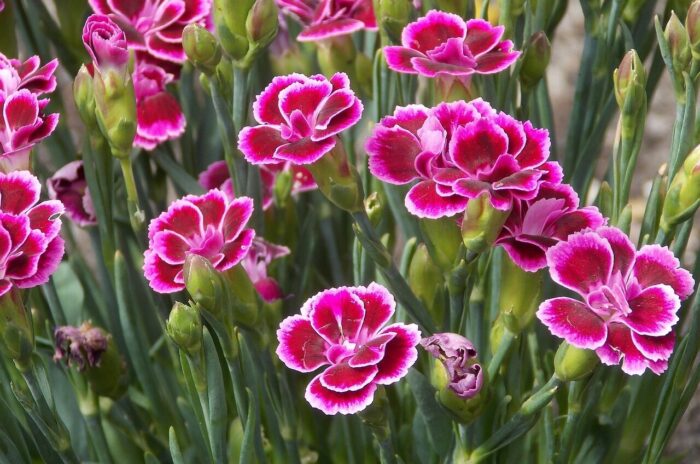
Image credits: Photography by BarBus.
As mentioned above, dianthus caryophyllus is the flower that caught the attention of the Greeks. Native to the Mediterranean region, it is also known as clove pink or, more commonly, coronations. Initially, only pinkish-purple flowers grew. However, cultivators have created white, green, and even red coronations.
Dianthus Chinensis
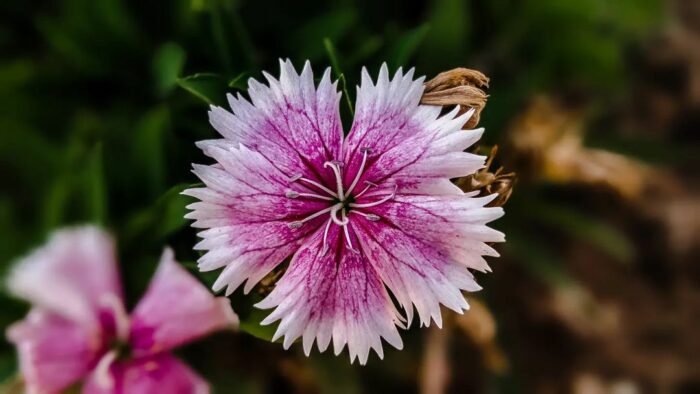
Image credits: Photography by Shamnad.
This variant is quite colorful. Growing natively in East Asia, the dianthus chinensis (the most scientific name ever heard) gets cultivated for its looks alone. The colors have quite a range. The palettes can range from pink to white and even dark red. So, if you want a garden full of vibrant flowers, plant some to bring out the colors.
Dianthus Barbatus
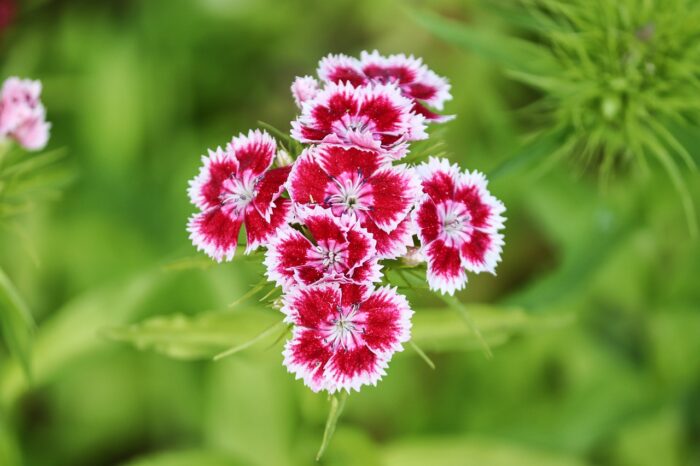
Image credits: Photography by manfredrichter.
Non-toxic, you can eat the dianthus barbatus variety of flowers. Known as Sweet William, this beauty grows in clusters. Up to 30 flowers can grow on top of the stems. There are two variants of this dianthus flower — European and Asian. The difference is in leaves, with European ones being broader, up to 2 centimeters.
Dianthus Deltoides
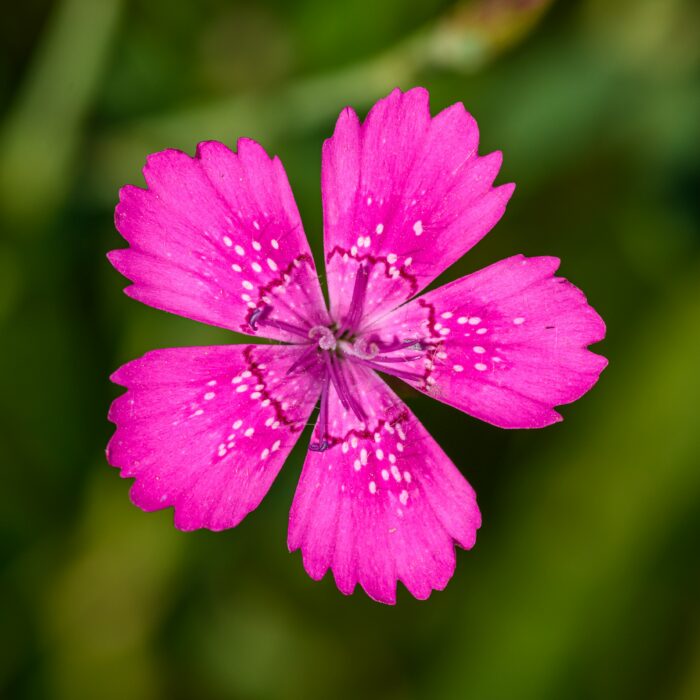
Image credits: Photography by Petr Ganaj.
Dianthus deltoides comes close to beating even the most beautiful of tattoos. The flowers are just 1.5 to 2 centimeters long, but so much beauty fits in that space. These flowers are usually pink, but there are white ones, too. The flower is native to Western Asia and Europe. It’s a beautiful addition to your garden, acting like spice.
Dianthus Pink Kisses
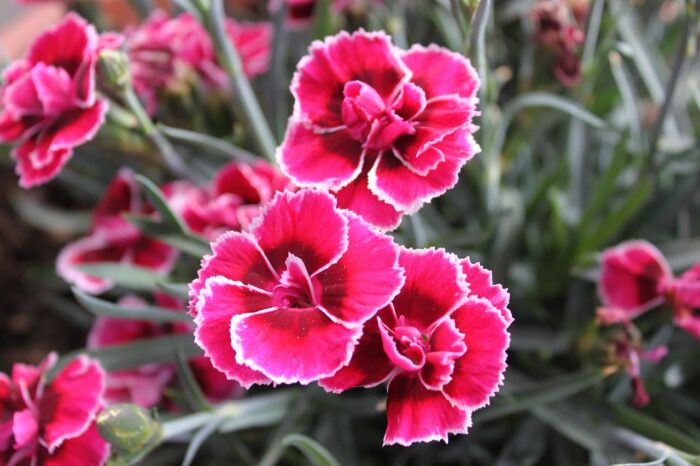
Image credits: Photography by machtl01.
As the name gives out, they are pink and act like kisses to our eyes. Dianthus pink kisses are the safe solution for any new gardener. Beautiful and plentiful, they are easy to plant and easier to maintain. It’s best to grow these at the front of your garden, as they will require a lot of sunlight to flourish.
Planting Dianthus Flowers
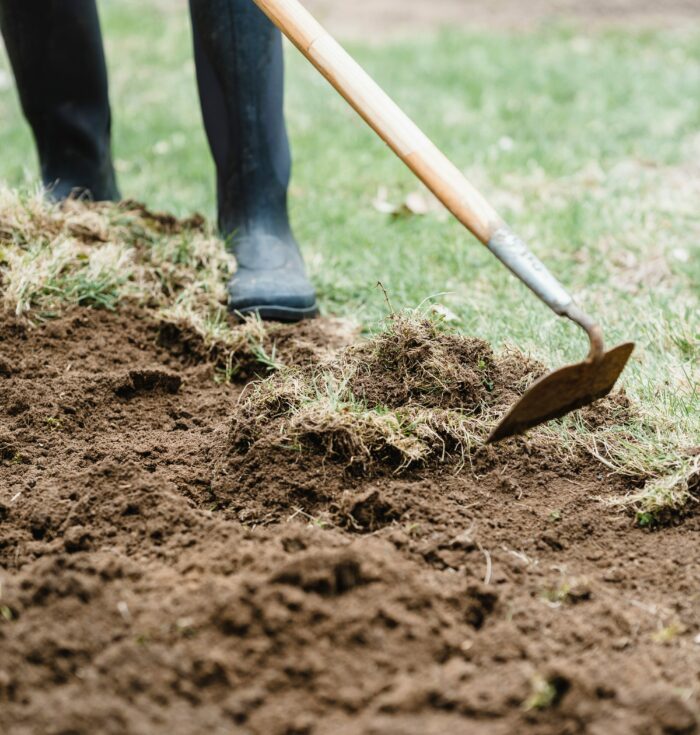
Image credits: Photography by Greta Hoffman.
Growing something from scratch is challenging. It’s not as easy as sticking some seeds in the ground (for the most part). There are some factors you have to account for. From soil to fertilizer and the time of the year, since dianthus perennial (majority of flowers) are planted once, take the time to learn the craft.
Best Dirt For Your Dianthus Plants
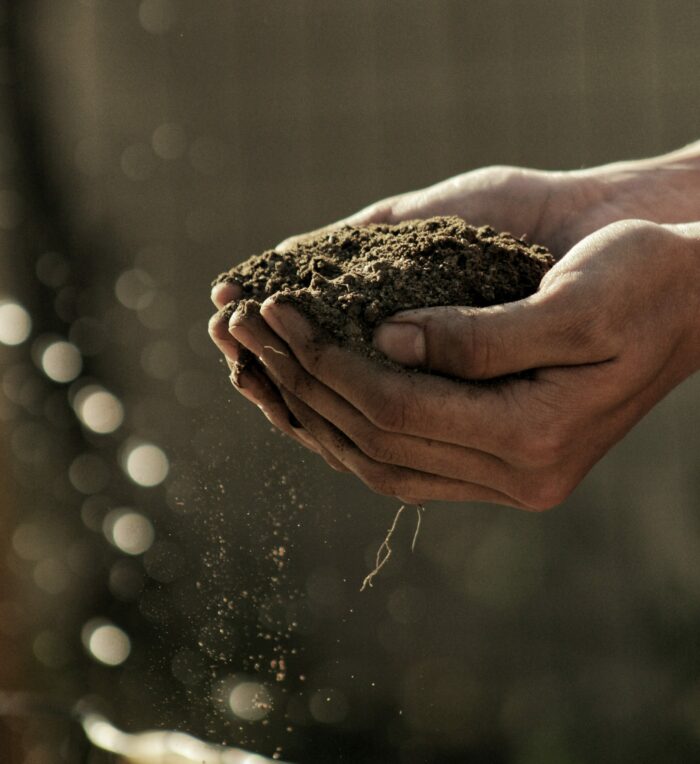
Image credits: Photography by Gabriel Jimenez.
Everything starts from the ground up, the dirt itself. The dirt must be rich for most dianthus flowers (caryophyllus, barbatus, and pink kisses), not money-wise. The soil should contain a lot of substances in it.
The most important thing is to keep the dirt at certain levels of water and acidity. The dirt has to be damped, but not too much. The water has to flow easily. Also, it is vital to take notice of the PH level. Too much acidity could lead to a plant withering away. We suggest a more alkaline soil.
Fertilize Your Soil
Dianthus perennial flowers grow for over two years (in most cases). It’s best to start the right way. The soil will do most of the work for the next two years, so picking the right fertilizer is essential. It’s best to go with two:
Luckily, when it comes to the dianthus care process, the fertilizer can work slowly. The longer it lasts — the better it is for the dianthus flowers.
Best Time and Place To Plant
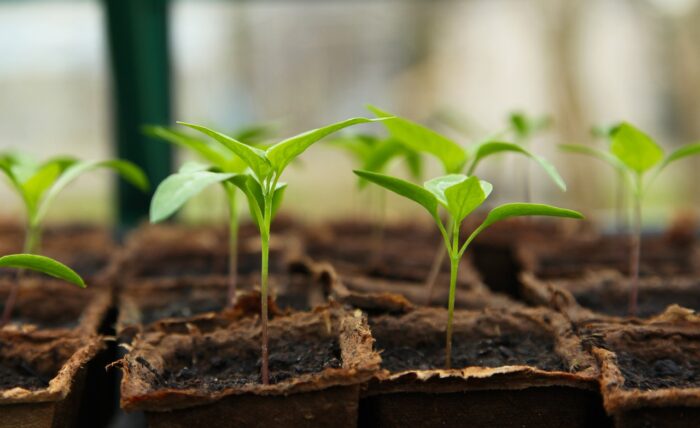
Image credits: Photography by jag2020.
The right place and time can make all the difference regarding dianthus care. If you are growing from the seed, you must plant them in the early spring months. If planting outside right from the start, do so in the months when frost occurs. However, if you start indoors, do so 10 to 12 weeks before the last spring frost occurs.
However, you can also plant slightly grown dianthus flowers. If you are planting this way, you might want to do it during the cooler months to encourage the growth of deeper roots. It is best to plant these grown plants during the early spring and late fall months. Since you are planting them for the long term, you might as well pick the correct location.
Maintaining Dianthus Flowers
When you plant the flower, all you need to do now is to maintain it. The better you keep an eye on it — the healthier your plant will be. If you take good care of the plant, the dianthus flower will keep the beauty of your garden up and even provide some ingredients for your food. So, we have compiled a relatively simple five-step maintenance guide and a simple harvesting tutorial.
The Six-Step Guide to Dianthus Care
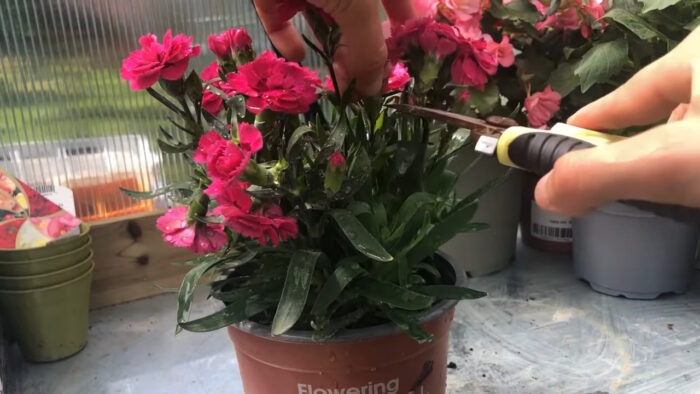
Image credits: Photography by Horticulture Magazine.
Even a starter can easily maintain a garden full of dianthus flowers. If it is your first time growing them — we have compiled the five things you need to look out for.
Propagating Dianthus Flower
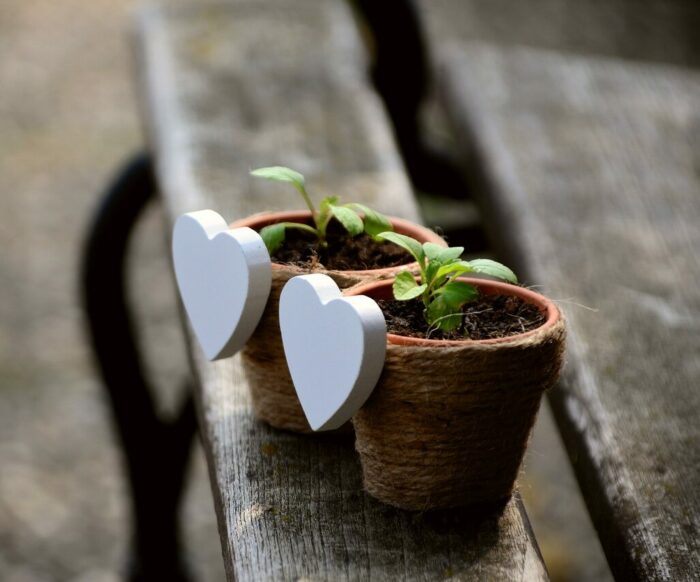
Image credits: Photography by congerdesign.
Sometimes, growing your plants is cheaper than buying new seeds. Following a clear guide, you can propagate a dianthus plant relatively quickly. We have compiled the steps to grow another dianthus barbatus in your garden.
1. Cut a few non-flowering stems from a healthy dianthus plant during summer.
2. Leave 4 to 5 sets of leaves on the top part, cutting off the rest.
3. Plant the stems into a pot of compost or potting soil.
4. Water the plant.
5. Place the pots in a well-lit space.
6. After 4 to 5 weeks, the plants should start to root.
7. Plant them in pots or on the ground when spring comes.
Common Problems Linked With Dianthus
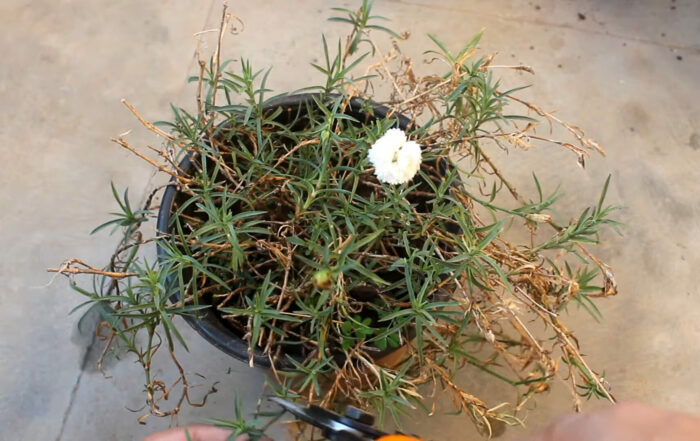
Image credits: Photography by Gardening Upbeat.
Sometimes, problems can occur. Even the most beautiful dianthus pink kisses can make your day quite bad. Usually, these problems come in the form of pests and diseases. For the most part, dianthus flowers tend to attract several pests.
The best cure for these pests is through maintenance and usage of additional chemicals. Also, the plant is prone to catching some diseases. The dianthus care process is the best way to fight off ugly diseases and keep your plant alive and healthy. Depending on the situation, you can fight these diseases in different ways.
However, there are many more problems you can encounter. All of the issues are solvable by constant care and careful planting. Luckily, if you read through our guide, you will meet only limited problems. One of them is that there aren’t enough dianthus flowers in your garden.
Practical Use of Dianthus Flowers
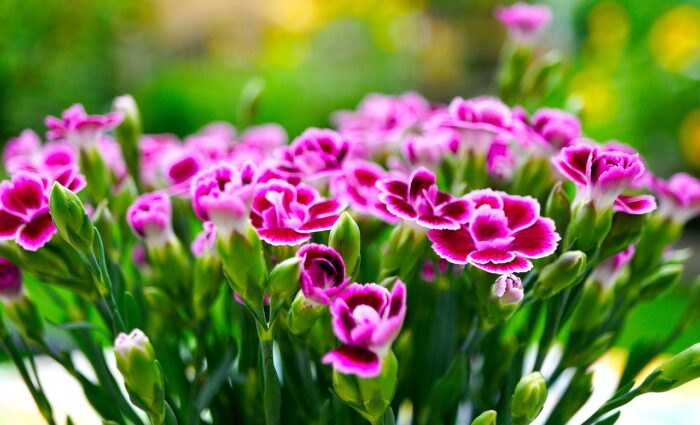
Image credits: Photography by matthiasboeckel.
Now that your beautiful flowers are blooming, you might want to know — is there more to them? These plants are not only beautiful but also rather practical. With so many different varieties, you can find the use even for the most basic dianthus pink kisses. From medicine and food to decorations, a creative mind will always find a way to use them.
Medically, several varieties of this flower contain interesting chemicals. Dianthus barbatus variety, for example, contains saponins, a chemical found in fire extinguishers and steroids. However, other flowers have chemicals that bring even more benefits to the person.
You might not know it, but dianthus flowers also see usage in the world of cooking. However, you must be careful with your varieties, as some can be lethal. However, people have found some usage with the edible ones.
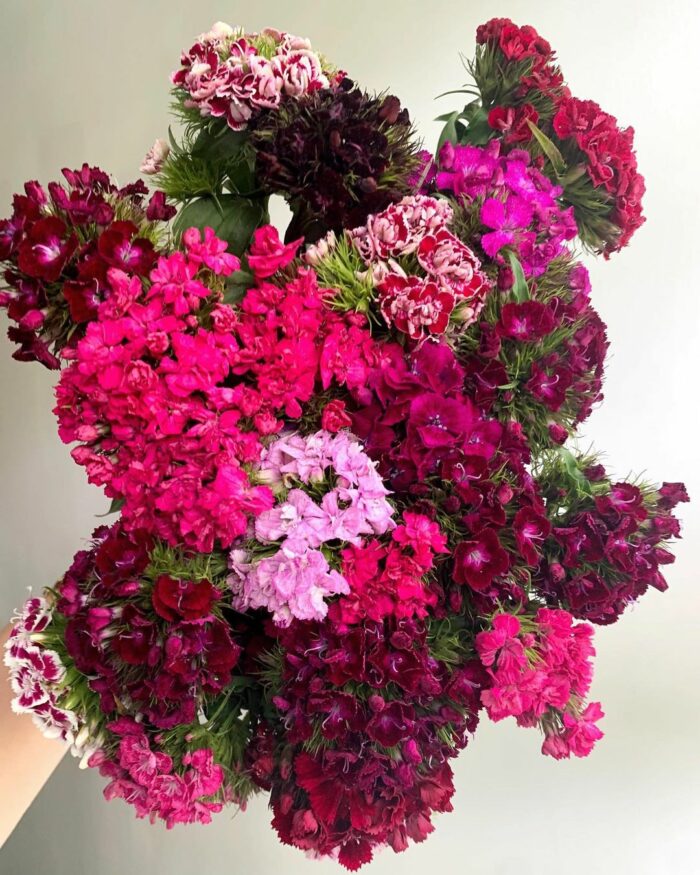
Image credits: Photography by Potomac Floral Wholesale.
Since it is a flower, you can also use dianthus for unique decorations. With such a large variety, it is easy to think of a million ideas where you can use them. Universally, these flowers spice and beautify gardens around the world. However, cultures found other uses for multiple varieties of this plant.
So, if beauty alone is not enough for you, our suggestions might help you. Just don’t go over the board with the flowers. Make sure to use them moderately. You don’t want to stick the flowers into every dish you will cook.
FAQ About Dianthus Flowers
What is the life cycle of dianthus?
You have a wide choice regarding the lifespan of the plant. You will find that dianthus perennial flowers can live for more than two years. Biennial flowers will live for around two years. However, if you want more temporary plants — go with annual ones. They will live for a year, and then that is it.
What pairs with dianthus?
Alone — these flowers are already beautiful. Why not add some spice to the mix? You can always mix one or two varieties and get various colors. However, you might want to incorporate a rose or two into the garden. These flowers complement each other rather perfectly.
 Follow Us