For nearly two years, Marcel Taret lived with a question he increasingly believed would never be answered.
His 83-year-old wife, Paulette Landrieux, had vanished from their home in Andenne, Belgium, on November 2, 2020.
She had Alzheimer’s disease and required constant supervision. Marcel had left her alone for only a few minutes while he stepped outside to hang laundry.
When he returned, she was gone.
Police searched from the air and ground. Tracking dogs were brought in. Neighbors, relatives, municipal workers, and specialized missing-persons officers combed the surrounding area.
Nothing.
Then, almost two years later, a neighbor opened Google Street View and discovered the heartbreaking truth.
Paulette Landrieux wandered away from home, the only clue of her whereabouts being a Google photo
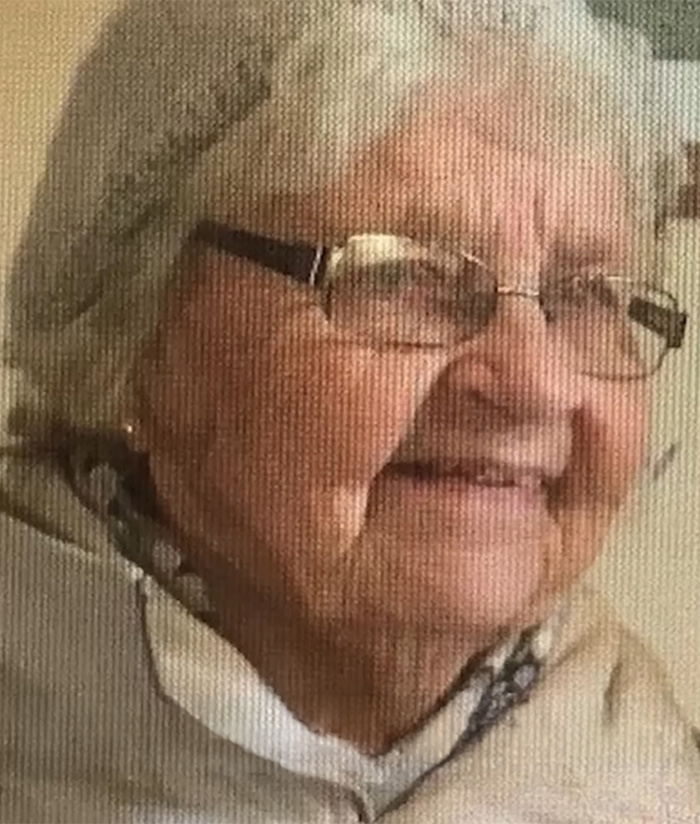
Few details about Paulette Landrieux’s early life, career, or family history have been made public.
What is known is that by her early 80s, she was living with her husband, Marcel Taret, on Rue de Reppe in Andenne, a Belgian city in the province of Namur.
The couple had reached an age when many spouses expect to spend their remaining years together.
Instead, Marcel increasingly became Paulette’s caregiver.

Alzheimer’s is a progressive neurological disease that gradually damages memory, reasoning, communication, and the ability to independently complete everyday tasks.
For Paulette, the deterioration had reached the point where ordinary activities could no longer be taken for granted.
She needed reminders to eat. She needed help remembering when to take her medication. Most concerning of all, she had developed a tendency to wander.
Marcel’s life had become a constant exercise in vigilance.
“Sometimes she would just wander off without telling Marcel and he would have to go and corral her and bring her back home,” former Navy SEAL and podcaster Jonathan Bartlett would later say.

Sometimes Paulette would leave the house and knock randomly on neighbors’ doors.
Each time, Marcel would search for her, find her, and bring her home.
There was no reliable way of knowing when Paulette might become confused, forget where she was, or decide that somewhere else seemed familiar.
By November 2020, Marcel was effectively her sole caregiver.
He had learned to live around the unpredictability of the disease. Then came the afternoon when everything changed.
Marcel left her watching television for only a few minutes before she vanished
Jsme MILA/Pexels (Not the actual image), ai-assisted image
On November 2, 2020, at around 1 pm, Paulette was inside the couple’s home watching television.
Marcel had prepared food for her and believed she was settled comfortably in front of the TV.
Marcel stepped outside to hang the laundry, leaving Paulette inside watching television. He was gone for only a few minutes, but when he returned, she was no longer where he had left her.
Maria Fonseca Bauza/Pexels (Not the actual image)
Because Paulette had wandered away before, Marcel immediately began searching the house and surrounding area, expecting to find her nearby as he had on previous occasions.
“He searched the outside of the house but she wasn’t there,” Bartlett later recounted. “He even knocked on some neighbours’ doors but they hadn’t seen her.”
This time, however, Paulette had seemingly disappeared. At 83 and suffering from Alzheimer’s, she could not safely remain on her own for long and had apparently left without a phone or bank cards.
Marcel contacted police, who recognized the urgency of the situation. Within approximately an hour, a search helicopter was flying over the area around the couple’s home.
Given how little time had passed and Paulette’s limited mobility, Marcel had every reason to believe she would soon be found somewhere nearby.
Police launched a massive search around the couple’s home
Police immediately treated Paulette as a vulnerable missing person and launched an extensive search around Andenne.
A Federal Police helicopter equipped with thermal-imaging technology searched from above, while three tracking dogs, the Missing Persons Unit, municipal workers, relatives, neighbors, and local authorities covered the ground.
Appeals were also circulated through the media and on Facebook, warning that Paulette had Alzheimer’s and could appear confused.
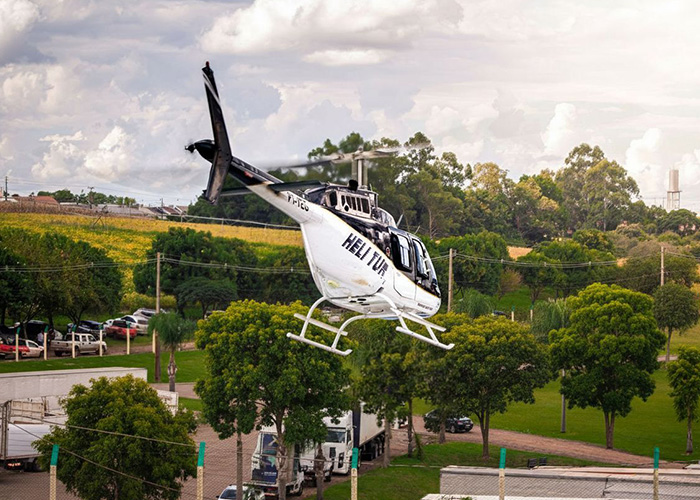
Bernardo Roessler/Pexels (Not the actual image), ai-assisted image
Foundries site, and examined areas along the Meuse River, focusing on any place she could reasonably have reached on foot.
Despite the scale of the operation, night fell without any sign of her, and the following days brought no breakthrough

“Over the next few days and weeks Paulette didn’t turn up,” Bartlett said. “Nobody had any idea where she was.”
For Marcel, the constant responsibility of caring for his wife was replaced by a different kind of torment.
He no longer knew whether she was lost, injured, alive, or already beyond help, and every day that passed made the possibility of finding her safely more remote.
Weeks became months, and months became years
Svitlana Shakalova/Pexels (Not the actual image)
Investigators periodically revisited Paulette’s disappearance, contacting relatives and neighbors again and reviewing the original search in case something had been missed. Still, no useful sightings, financial activity, communications, or physical evidence emerged.
The lack of answers was especially frustrating because the areas immediately surrounding the couple’s home had already been searched extensively. As the months passed, Paulette seemed to have disappeared without leaving any trace behind.
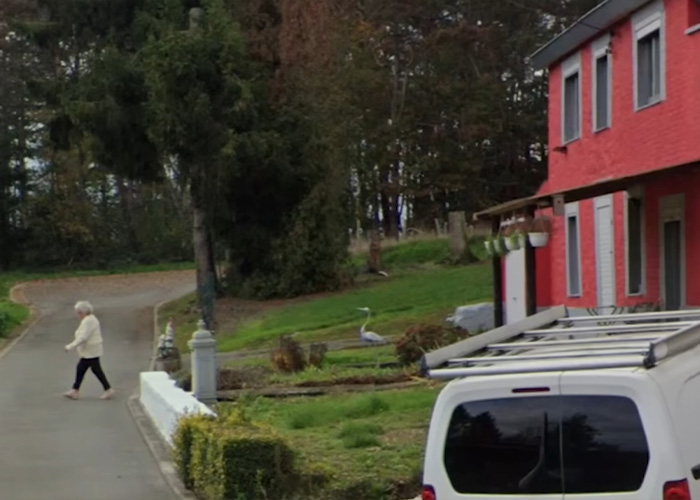
Cold Case Detective/Google Maps
“Months turned into two full years that nobody had seen Paulette,” Bartlett explained.
By then, Marcel had begun accepting the possibility that he might never learn what had happened to his wife.

“He had basically resigned himself to the fact that he very likely would die without ever figuring out what happened to his wife,” Bartlett said.
The public prosecutor was reportedly close to closing the case as an unsolved disappearance when a neighbor made an unexpected connection that would finally change the investigation.
A neighbor realized Google had photographed their street that day
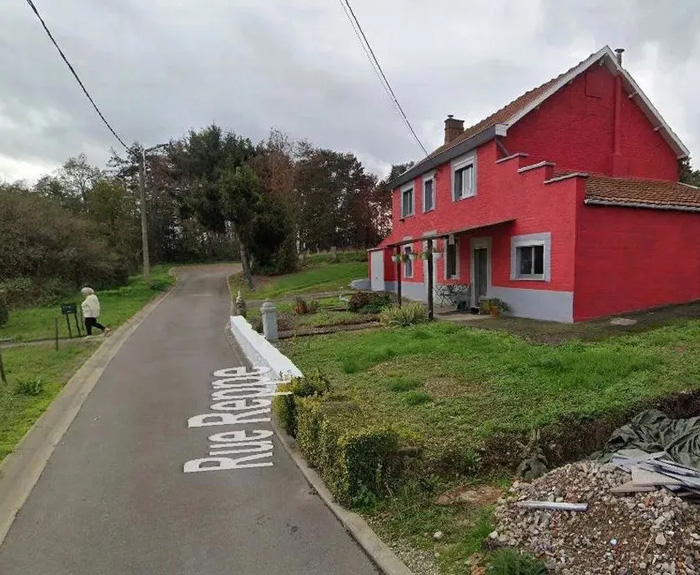
The breakthrough eventually came from an image that had been sitting unnoticed online for almost two years.
In 2022, a neighbor familiar with Paulette’s disappearance realized that a Google Street View car had photographed Rue de Reppe on November 2, 2020, the same day she vanished. Curious, he began examining the images around Marcel and Paulette’s home.
One of them immediately stood out.
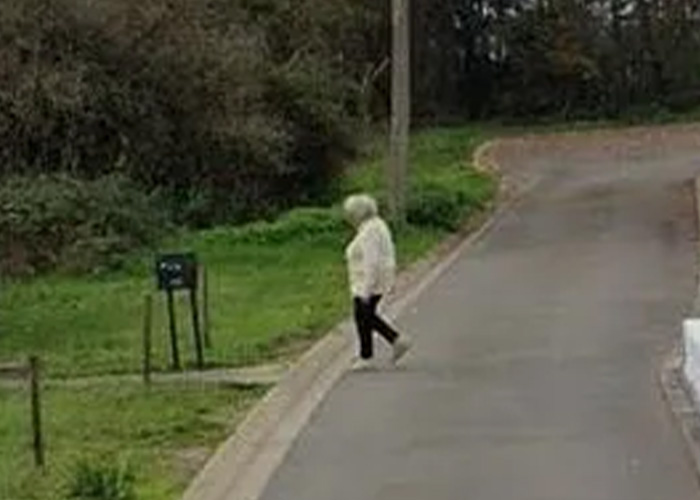
Google had captured Marcel outside hanging laundry while, only a short distance away, Paulette could be seen crossing the street and walking away from the house.
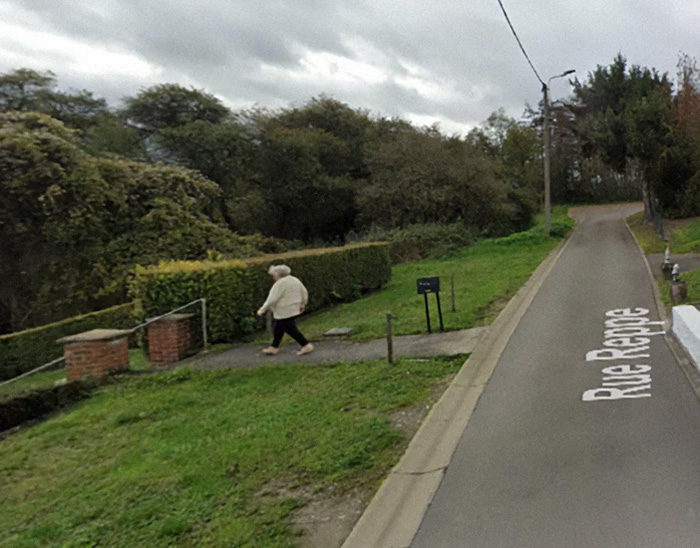
The timing could hardly have been more precise. The image appeared to preserve the few minutes between Marcel stepping outside and returning to discover that his wife was gone.
For almost two years, investigators knew where Paulette had started but had no reliable indication of where she went next. The Street View image finally provided that missing piece.
Police were alerted and verified that the woman captured by Google was indeed Paulette. She appeared to be crossing Rue de Reppe toward a neighboring property directly opposite her home, giving investigators a specific route to examine again.
The Google image redirected investigators toward a neighboring property
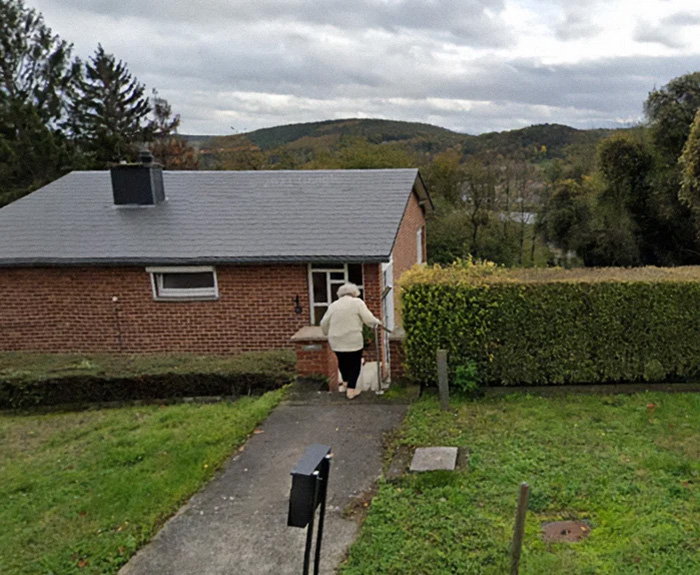
Police returned to the area and focused on the direction Paulette had been walking when the Google car passed.
Behind the neighboring property were old communal paths and difficult, heavily overgrown terrain. Initial searches still failed to locate her, so authorities expanded the operation and brought back the Missing Persons Unit alongside Civil Protection personnel and Federal Police intervention officers.

This time, teams concentrated on sections of the property that had been especially difficult to access during the original investigation.
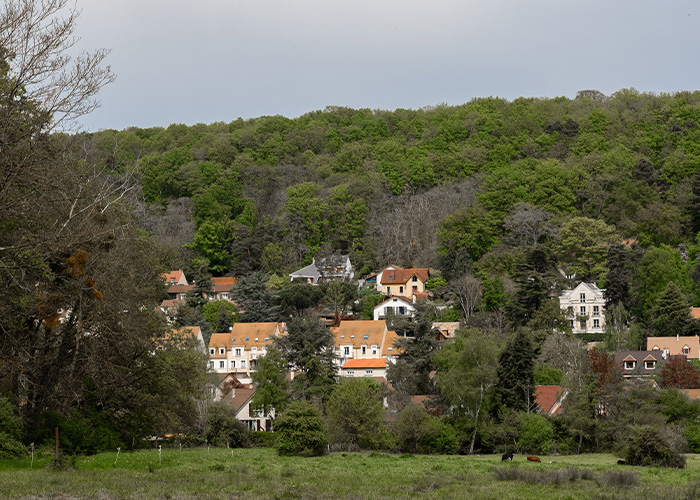
At the rear of the garden was a steep embankment leading down into dense vegetation made up of brambles, hawthorns, and vines. Years of unchecked growth had made the bottom of the slope extremely difficult to see or reach from above.
On October 13, 2022, searchers finally discovered human remains beneath the vegetation.
Nearly two years after she disappeared, Paulette had been found.
Investigators concluded Paulette had fallen only a short distance from home
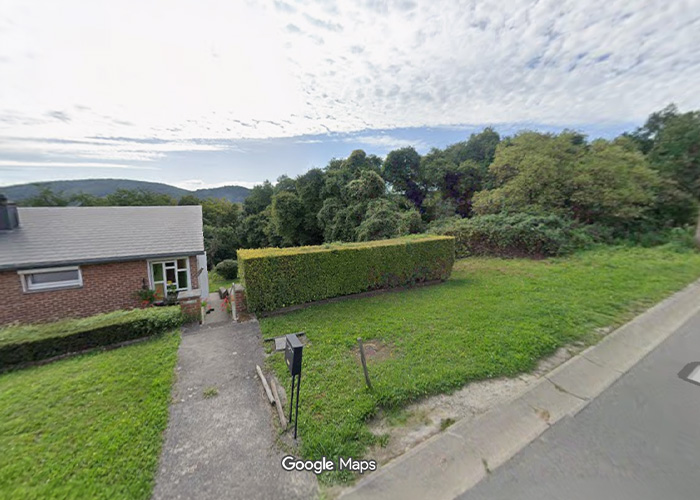
Authorities reconstructed her final movements using the Google image and the location of her remains.
While Marcel was still outside hanging laundry, Paulette apparently left the house, crossed Rue de Reppe, and entered or passed through the neighboring property. In her confused state, she eventually reached the steep ground at the rear and fell down the embankment.
At the bottom, she became trapped in the dense vegetation.
“Across the street was a steep hill that led down to a thick bramble bush,” Bartlett explained.
Her body was found inside that overgrown area, providing investigators with a tragic explanation for why such an extensive search had failed to locate her.
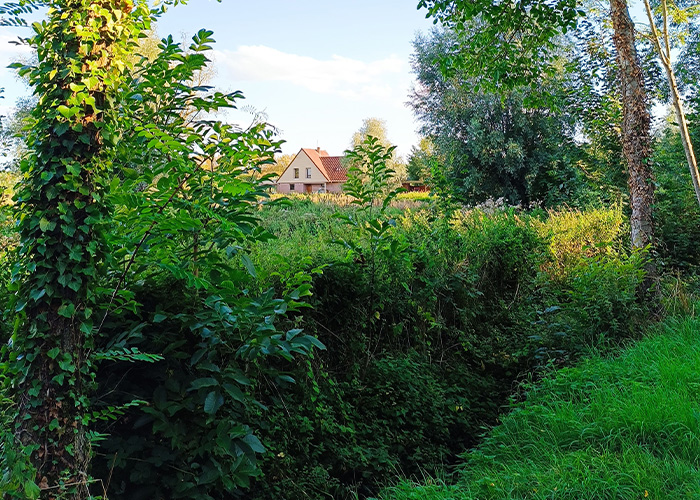
Isabelle Carin/Pexels (Not the actual image)
Paulette may have been only a short distance from the people looking for her during the first hours and days after her disappearance.
“When that huge search for her was going on, very likely she was just trapped down there,” Bartlett said. “She didn’t understand what was going on, couldn’t necessarily yell up to communicate with anybody and so she stayed down there and died.”
The thick vegetation made the bottom of the slope difficult to inspect, even though search teams had covered the surrounding area.


Investigators believe Alzheimer’s made the situation even more dangerous.
They argued that without cognitive impairment might have understood what had happened, repeatedly called for help, or attempted to find a route back toward the road. Paulette may have been unable to properly understand where she was or how to escape.
The same disease that had already caused her to wander away from home may therefore have prevented her from recognizing that safety was only a short distance away.
Google captured the final moments before Marcel realized she was gone
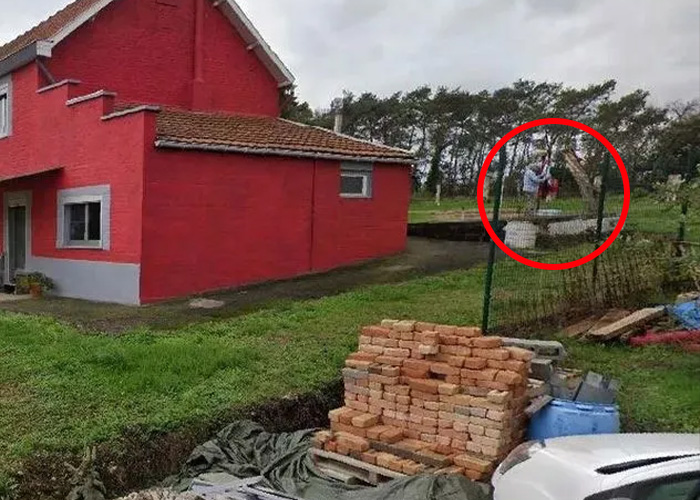
The Street View image eventually became one of the most haunting pieces of the entire case.
Marcel can be seen outside carrying on with the household chore that briefly took his attention away from Paulette. In the same image, his wife is crossing the street behind him.
Neither could have known that those few minutes would be the last time Marcel would see her alive.
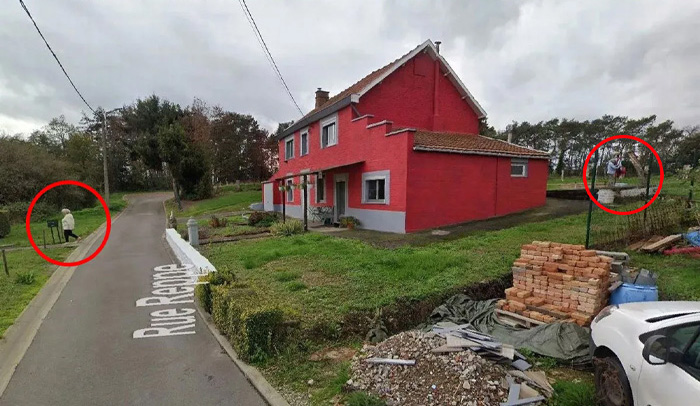
He would soon walk back inside expecting to find Paulette watching television, only to spend almost two years wondering where she had gone.
Without the Google camera car passing Rue de Reppe at precisely that moment, investigators may never have discovered which direction she took.
Bartlett described the timing as an “amazing coincidence.” Technology intended simply to document streets for navigation had accidentally captured the most important lead in a missing-person investigation.


Once Paulette’s remains were recovered and formally identified, they were returned to her family. Authorities concluded that her death had been accidental, with no evidence that another person had been involved, and the investigation was closed.
For Marcel, the discovery finally ended almost two years of uncertainty.
The answer was devastating, but he no longer had to live with the possibility of never knowing what had happened to his wife.
Paulette’s case remains a painful example of the dangers of dementia-related wandering

cottonbro studio/Pexels (Not the actual image)
As of August 2026, Paulette Landrieux’s case remains closed, but the extraordinary role played by Google Street View has kept her story circulating through podcasts, documentaries, technology coverage, and true-crime reports.
Behind that unusual technological twist lies a much more familiar tragedy for families caring for people with Alzheimer’s.
Paulette’s illness had gradually reduced her ability to remember basic necessities, remain safely at home, and understand the world around her.
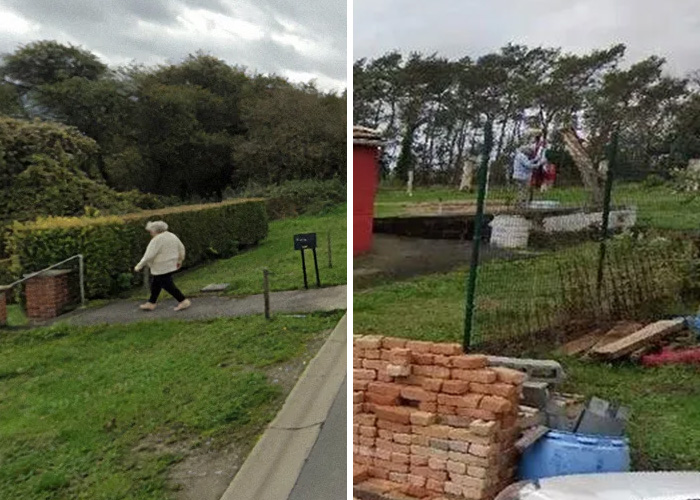
Marcel knew the risks and had spent years adapting his life around them, finding her whenever she wandered, making sure she ate, and keeping track of her medication.
Ultimately, only a few unsupervised minutes were enough.
While Marcel hung laundry, Paulette walked out of the house, crossed a familiar street, and entered terrain from which she could not find her way back.
Police helicopters flew over the area. Tracking dogs searched nearby. Officers, relatives, neighbors, and municipal workers looked for her while Marcel desperately waited for news.
She had been frighteningly close the entire time.
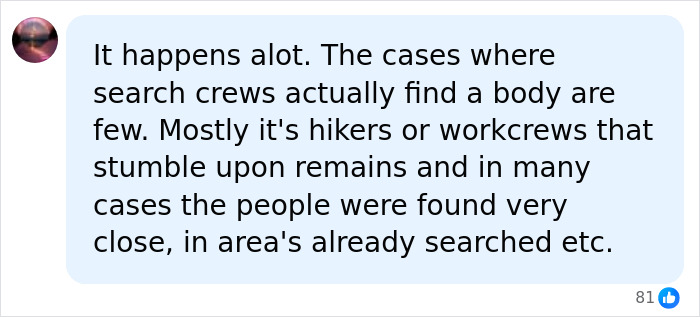
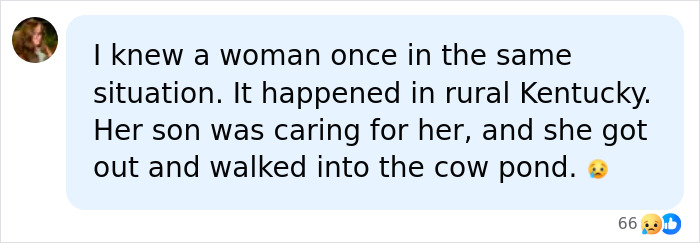
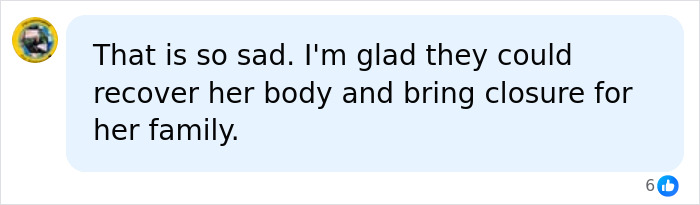
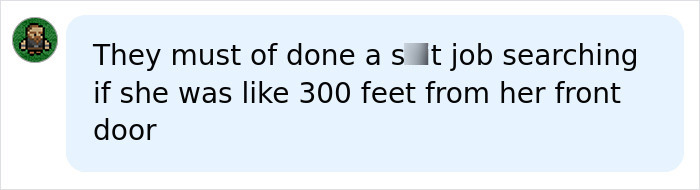
“What a scrappy job.” Readers strongly criticized the rescue effort











 Follow Us