A woman named Chelsea Blake documented her battle with liver failure, raising awareness about the dangers of drinking and showing how the disease affected her life.
Blake, who received a liver transplant at age 40, warned that drinking had “destroyed my life, my health, my ability to function.”
The content creator, who goes by MamaChels online, showed her swollen ankles and feet, as well as the buildup of fluid in her abdomen after years of drinking.

Image credits: chelseablake1125/TikTok
Filming herself from a hospital bed, she said she was “puking volcanos of blood” as she expressed regret over her heavy drinking.
“Here is your sign to stop drinking now before it k*lls you,” Blake wrote over one of her videos.
The mother further described feeling nauseous, saying, “I have to throw up, but I don’t wanna throw up blood again, get hospitalized again, and then delay the process of me being put on the list again.”


Image credits: chelseablake1125/TikTok


In a separate video filmed in February after her liver transplant, Blake reflected on her past actions, admitting that her own “horrible choices” had left her fighting for her life.
She said she had developed an alc*hol dependency and turned to liquor both to cope with painful situations and to celebrate happy moments.
Blake emphasized that her dependency ultimately “destroyed” her life and that of her family members.

Image credits: chelseablake1125/TikTok
“But I’m sober,” she celebrated. “I feel amazing. And it’s crazy to look back on those videos and the pain that I caused myself. I wouldn’t wish that on anyone. So if this video speaks to you, maybe this is your sign that you need to put the alc*hol down.
“Reach out for help. There are other solutions out there. I’m still trying to figure those out, but I know they’re out there.”
According to the American Liver Foundation, alc*hol is the most frequently misused dr*g in the world.
Alc*hol-related liver disease causes approximately 37,000 fatalities in the US each year, Yale Medicine notes.


Responding to those who asked how much she drank before developing stage 4 liver failure, Blake shared an old video showing her filling a plastic cup halfway with vodka and halfway with amaretto.
“That is my drink for however long it lasts me,” the woman explains in the video. “I don’t measure, I just pour.”
Her videos, which have amassed more than 10 million views on TikTok, have resonated with people living with liver failure and alc*holism, many of whom thanked Blake for candidly sharing her journey and raising awareness about the disease.

Image credits: chelseablake1125/TikTok
Heavy drinkers may not realize the extent of the harm they are causing their bodies, as severe liver failure develops over many years, Dr. Alastair O’Brien, Professor of Hepatology at University College London, told Bored Panda.
“Repeated heavy drinking leads to liver scarring, which over a long period (10-30 years) may cause cirrhosis and liver failure. This happens to about one-third of people who drink alc*hol to excess regularly.”
Cirrhosis of the liver, the largest internal organ in the body, is characterized by scarring of its tissue after long-term inflammation.
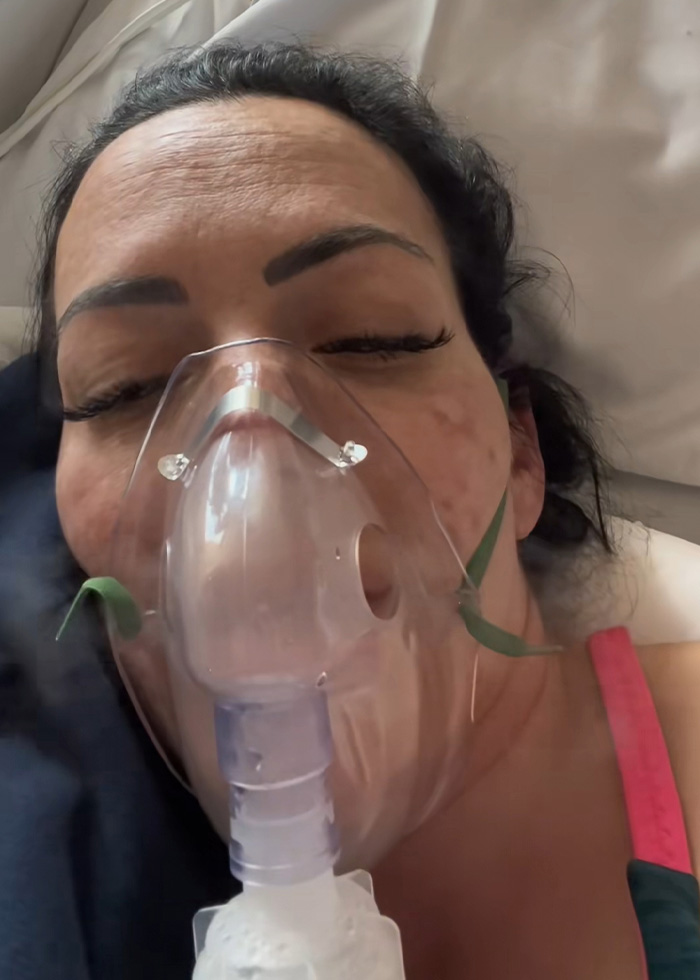
Image credits: chelseablake1125/TikTok


The doctor said, “Importantly, we are unable to predict who is going to ‘get away with it’ and there are many other adverse health consequences of excess alc*hol drinking, such as cancer, and so it is best to stick to government recommended guidelines of 14 units per week.”
The most common symptoms of liver failure are a buildup of fluid in the legs and abdomen, which can cause up to 12-14 liters of fluid to accumulate, Dr. O’Brien explained. This can lead to poor mobility, abdominal pain, and reduced appetite.
Other symptoms of the potentially fatal disease include confusion and drowsiness, jaundice (yellowing of the skin and eyes), and vomiting blood.
“This isn’t even a quarter of all my hospital stays,” the mom captioned one of her videos


But alc*hol-related liver failure can be treated and does not always require a transplant, the expert said.
“The key treatment is to stop drinking, which will improve their health for the vast majority of people.”
A buildup of fluid can also be treated with medication, though it often requires a drain to be inserted for six hours.

Image credits: chelseablake1125/TikTok
There are no particular symptoms that are more common in liquor-induced liver failure than in other causes of liver failure, such as viral hepatitis or fatty liver disease. However, according to Dr. O’Brien, alc*hol is the most common cause for liver failure, accounting for approximately 85% of cases.
Following her liver transplant, Blake began noticing positive changes in her body, including getting her period back after five years.
“If your liver doesn’t work, nothing else works,” she told her followers.
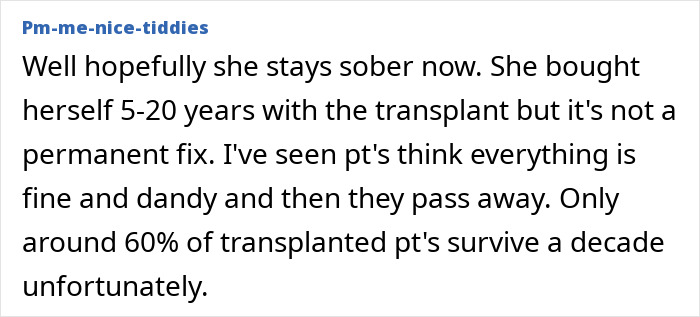
While liver transplants reverse all symptoms caused by liver failure, the procedure requires lifelong medication and monitoring, including regular checks of blood pressure, cholesterol, and blood sugar levels.
“Life expectancy is 90% in the first year [after the transplant] and >70% by 5 years, with many patients living in good health for 20 or more years,” Dr. O’Brien noted.
“However, there are a limited number of livers available for transplant and if people recover after stopping alc*hol, they will not need this.”



 Follow Us