Horror movies are one of humanity’s most enduring and baffling recreational choices. Fear is not a nutritional requirement, and yet, every single year, millions of people voluntarily sit down in darkened rooms, pull a blanket up to their chin, and press play on something specifically designed to make them deeply uncomfortable.
Science, to its credit, decided to take this seriously. Rather than simply asking people which films they found scary, researchers have used biometric data, heart rate monitors, and physiological stress responses to actually measure fear in real time. The result is a list that is partly what you’d expect, partly deeply surprising, and entirely useful for anyone planning a movie night they want nobody to recover from quickly.
#1 Sinister (2012)
Director: Scott Derrickson
Resting BPM: 64
Movie BPM: 86
Difference: 22
Highest BPM Spike: 131
Total Score: 96
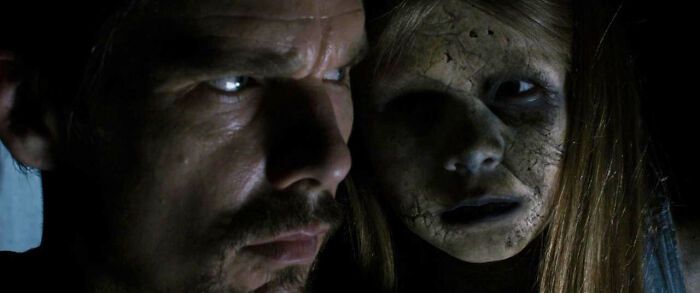
Image source: Sinister

#2 Host (2020)
Director: Rob Savage
Resting BPM: 64
Movie BPM: 88
Difference: 24
Highest BPM Spike: 130
Total Score: 95
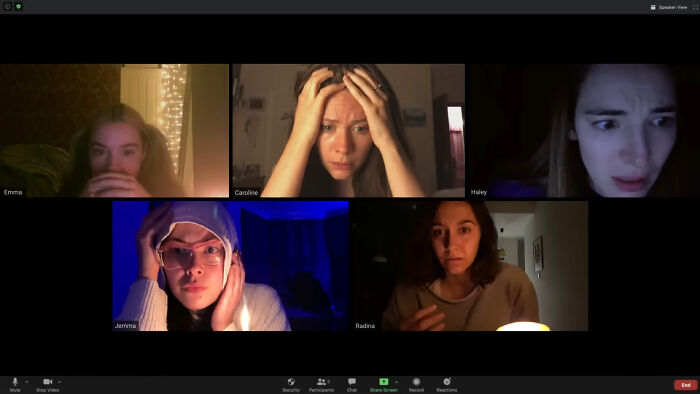
Image source: Shudder
#3 Skinamarink (2022)
Director: Kyle Edward Ball
Resting BPM: 64
Movie BPM: 84
Difference: 22
Highest BPM Spike: 113
Total Score: 91
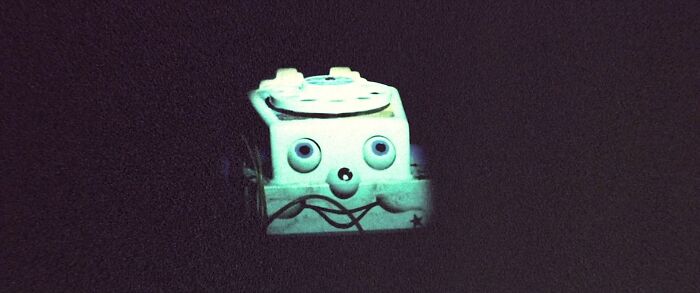
Image source: Skinamarink
Not all horror is created equal, and science has some fairly strong opinions about which variety will do the most damage to your nervous system. According to Rotten Tomatoes, psychological and supernatural horror consistently rank as the scariest subgenres, and the reason comes down to something deeply hardwired. These films tap into primal fears of the unknown, loss of control, and sensory deprivation.
Your brain, it turns out, is significantly more disturbed by what it can’t see or explain than by anything a special effects budget can physically produce. The sustained heart rate data back this up comprehensively. Slasher films spike fear in short, sharp bursts, a jump scare, a chase sequence, a sudden reveal. Psychological and supernatural horror does something considerably more insidious.
It builds dread slowly, keeps it there, and refuses to resolve it cleanly. The threat is never fully explained, the rules are never fully established, and the ending rarely provides the comfort of complete resolution. Your nervous system stays activated long after the credits roll, which is a very good reason to watch something with Meryl Streep instead.
#4 Insidious (2011)
Director: James Wan
Resting BPM: 64
Movie BPM: 85
Difference: 21
Highest BPM Spike: 133
Total Score: 90
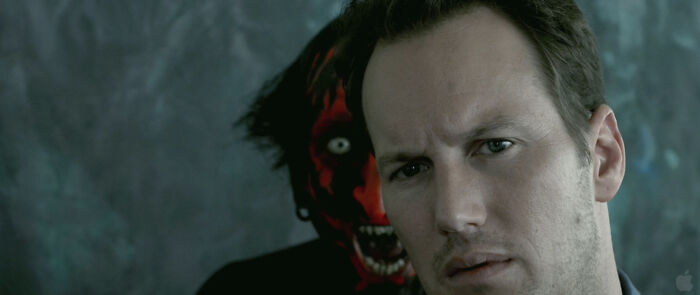
Image source: Insidious
#5 The Conjuring (2013)
Director: James Wan
Resting BPM: 64
Movie BPM: 84
Difference: 20
Highest BPM Spike: 132
Total Score: 88
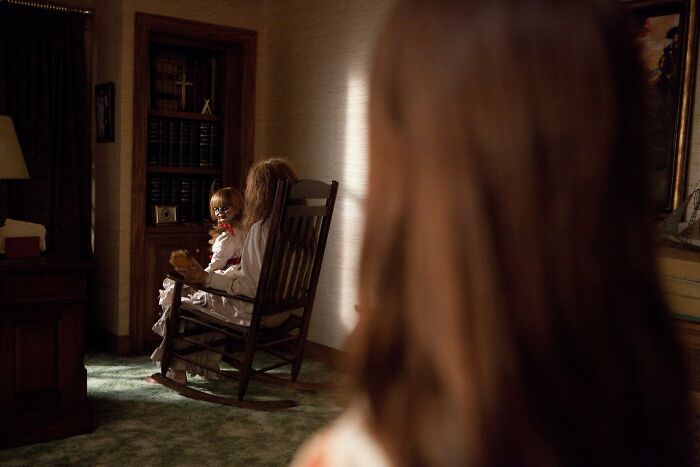
Image source: Imdb
#6 Hereditary (2018)
Director: Ari Aster
Resting BPM: 64
Movie BPM: 82
Difference: 18
Highest BPM Spike: 104
Total Score: 81
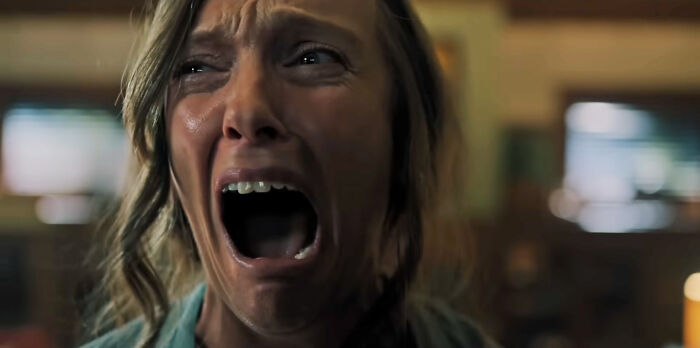
Image source: A24
Before we get to the list itself, it would be journalistically irresponsible not to acknowledge the films that arrived with their own real-world horror attached. The Omen, released in 1976, features what many consider the most statistically impossible string of bad luck in Hollywood history.
Actor Gregory Peck’s plane was struck by lightning. Screenwriter David Seltzer’s plane was struck by lightning, separately. A producer visiting Rome narrowly avoided a third lightning strike. At a certain point, this stops being a coincidence and starts being a memo from somewhere.
The production had chartered a small plane for aerial shots but changed their schedule at the last minute. The plane they were originally supposed to use crashed on takeoff, ending everyone on board. And then, most chillingly of all, special effects director John Richardson, who had designed the film’s famous gore scene, was involved in a real-life car accident.
His assistant lost their head in the crash, just like the character in the film. They came to rest beside a road sign that read: Ommen, 66.6 km. The film is about the Antichrist. Make of that what you will, but perhaps make of it somewhere well-lit.
#7 Smile 2 (2024)
Director: Parker Finn
Resting BPM: 64
Movie BPM: 83
Difference: 19
Highest BPM Spike: 110
Total Score: 79
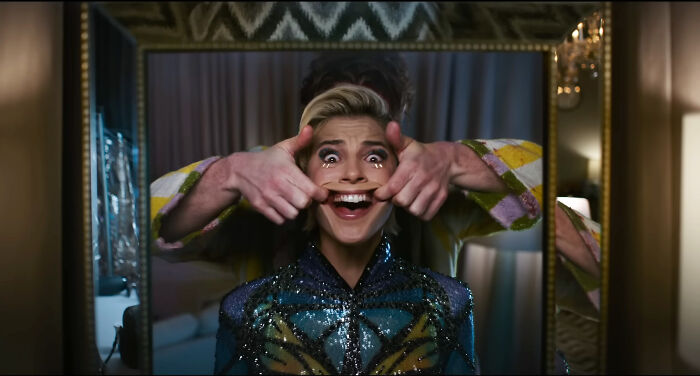
Image source: Paramount Pictures
#8 Smile (2022)
Director: Parker Finn
Resting BPM: 64
Movie BPM: 83
Difference: 19
Highest BPM Spike: 114
Total Score: 78
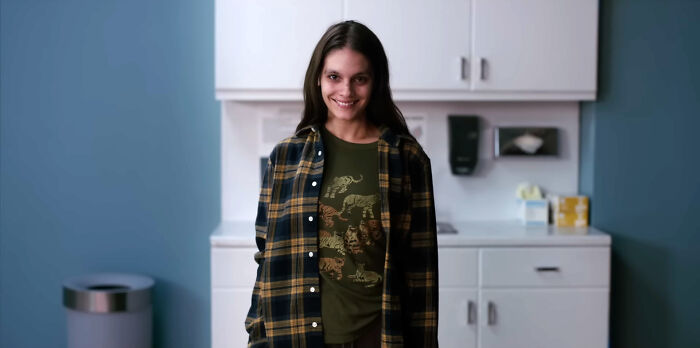
Image source: Paramount Pictures
#9 The Exorcism Of Emily Rose (2005)
Director: Scott Derrickson
Resting BPM: 64
Movie BPM: 82
Difference: 18
Highest BPM Spike: 96
Total Score: 76
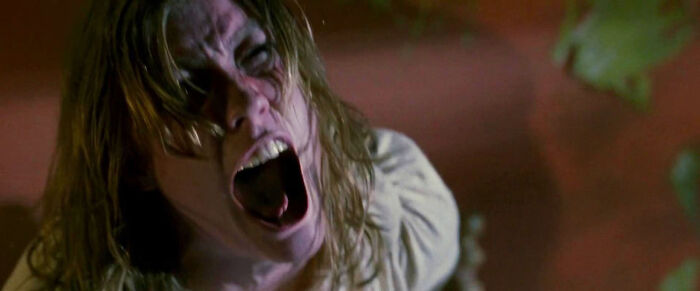
Image source: The Exorcism of Emily Rose
The Poltergeist curse is one of Hollywood’s most documented and genuinely tragic production stories. It begins with a detail so extraordinarily poor in judgment that it almost defies belief. The production used real human skeletons for the iconic muddy pool scene because they were cheaper to source than plastic ones. Real. Human. Skeletons. In a horror film. About a haunted house.
The decision was made purely on budget grounds, which suggests nobody in that production meeting paused to consider the optics. What followed devastated the young cast of the franchise. Dominique Dunne, who played the older sister in the first film, was un-alived by an ex-boyfriend just months after the premiere. She was 22 years old.
And Heather O’Rourke’s (Carol Anne, the little girl at the centre of the entire story) life ended suddenly at age 12 from a medical misdiagnosis, right before Poltergeist III was completed. Two young women from the same franchise, gone within years of each other. Whether you believe in curses or not, the Poltergeist story is genuinely, irreducibly heartbreaking.
#10 Talk To Me (2023)
Director: Danny and Michael Philippou
Resting BPM: 64
Movie BPM: 79
Difference: 18
Highest BPM Spike: 106
Total Score: 75
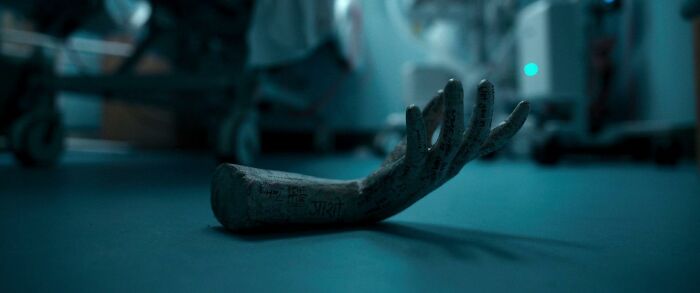
Image source: Talk To Me
#11 Hell House LLC (2015)
Director: Stephen Cognetti
Resting BPM: 64
Movie BPM: 81
Difference: 17
Highest BPM Spike: 107
Total Score: 75
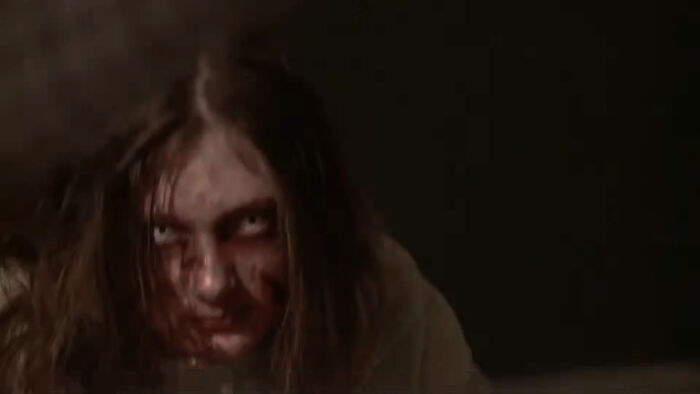
Image source: Bloody Disgusting Horror
#12 The Conjuring 2
Director: James Wan
Resting BPM: 64
Movie BPM: 79
Difference: 15
Highest BPM Spike: 116
Total Score: 74
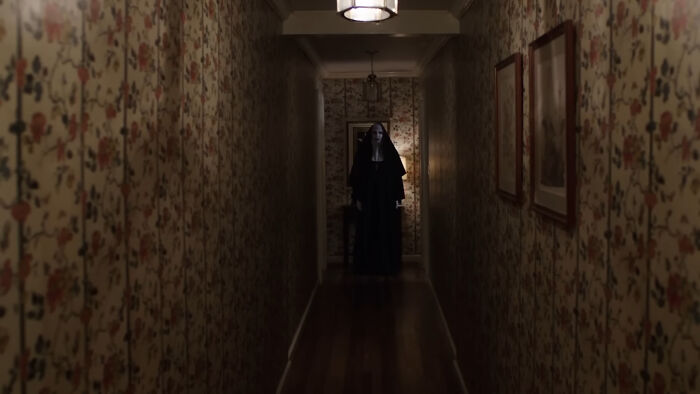
Image source: ClipZone: Horrorscapes
The Exorcist arrived in cinemas in 1973 and promptly caused a level of public distress that no film before or since has quite managed to replicate. People didn’t just dislike it, they fled. Audiences fainted in the aisles, threw up in theatre lobbies, and left in states of distress so genuine that several London cinemas stationed ambulances outside specifically to treat traumatised patrons.
It remains the most famous example of a film being simply too much for a general audience to process, which might be the greatest marketing story in cinema history. Lars von Trier’s The House That Jack Built achieved something similarly spectacular at its Cannes Film Festival premiere in 2018, though with considerably less ambulance involvement.
Over 100 audience members walked out during the screening in a mass exodus that became international news. The film’s unflinching, graphic depictions of violence against women and children crossed a line that even Cannes couldn’t accommodate. Von Trier, it should be noted, did not appear particularly surprised by this response. Which is its own kind of unsettling.
#13 It Follows (2015)
Director: David Robert Mitchell
Resting BPM: 64
Movie BPM: 81
Difference: 17
Highest BPM Spike: 96
Total Score: 74
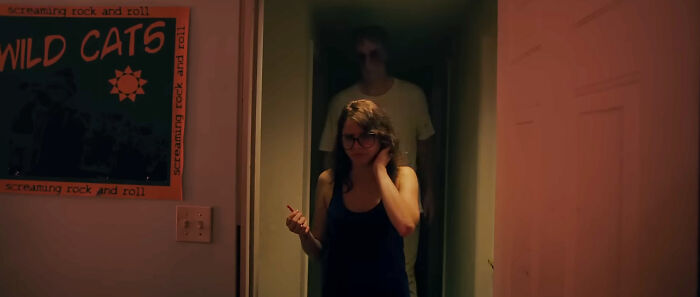
Image source: Rotten Tomatoes Indie
#14 The Dark And The Wicked (2020)
Director: Bryan Bertino
Resting BPM: 64
Movie BPM: 80
Difference: 16
Highest BPM Spike: 88
Total Score: 74
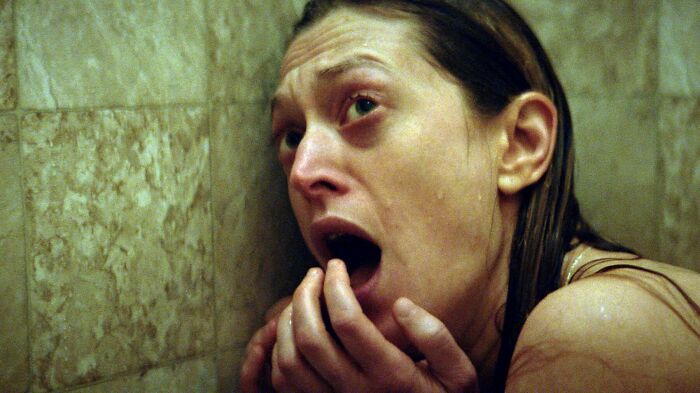
Image source: Imdb
#15 The Descent (2005)
Director: Neil Marshall
Resting BPM: 64
Movie BPM: 79
Difference: 15
Highest BPM Spike: 121
Total Score: 74
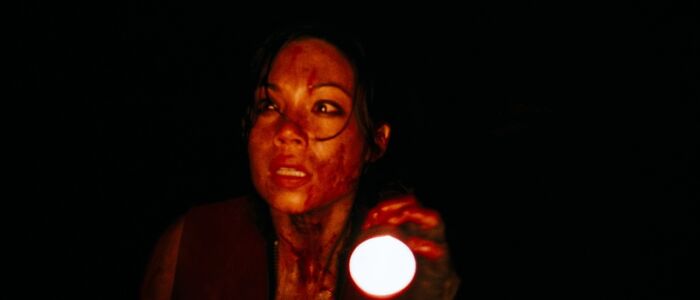
Image source: The Descent
Horror movies are not entirely consequence-free entertainment, and psychologists have some valid concerns worth knowing about. The core issue is one of biological miscommunication. Your prefrontal cortex (the rational, reasonable part of your brain) knows perfectly well that you are sitting on a sofa watching a film.
Your amygdala, the ancient, primal part of your brain responsible for threat detection, does not care about this distinction at all. It sees threat. It responds to threat. It floods your system with adrenaline, cortisol, and norepinephrine regardless of whether the threat is fictional.
For most people, this is temporary and resolves once the credits roll and the lights come on. For individuals already managing chronic stress, anxiety disorders, or panic conditions, psychologists warn that the intentional cortisol spike produced by horror films can actively worsen real-world anxiety, disrupt sleep patterns, and elevate blood pressure in ways that linger well beyond the viewing experience.
The body, in other words, files the memory of the threat without the footnote that says it wasn’t real. Which explains both why horror is so effective and why the list of films below should come with the advisory that knowing your own limits is, on this occasion, genuinely useful information. So, see this as our warning; make your way through the list with caution!
Which one of these movies scared the living daylights out of you? Share your trauma with us in the comments!
#16 Paranormal Activity (2009)
Director: Oren Peli
Resting BPM: 64
Movie BPM: 80
Difference: 16
Highest BPM Spike: 115
Total Score: 73
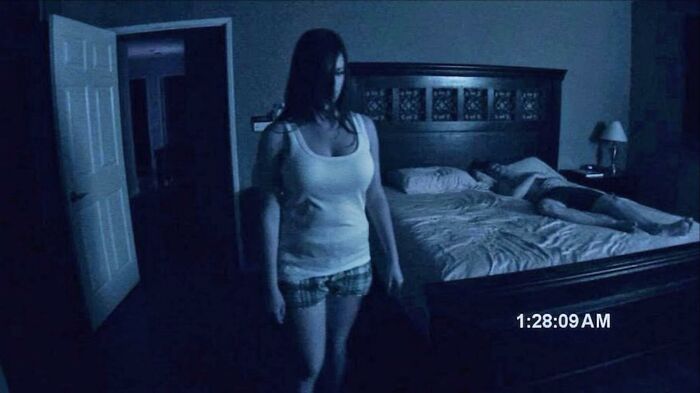
Image source: Paranormal Activity
#17 The Babadook (2014)
Director: Jennifer Kent
Resting BPM: 64
Movie BPM: 79
Difference: 15
Highest BPM Spike: 119
Total Score: 72
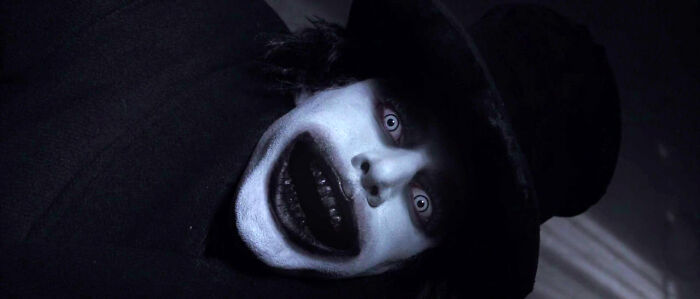
Image source: The Babadook
#18 A Quiet Place Part II (2021)
Director: John Krasinski
Resting BPM: 64
Movie BPM: 80
Difference: 16
Highest DMP Spike: 123
Total Score: 71
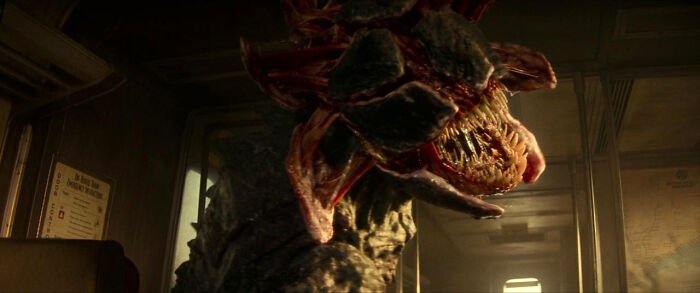
Image source: A Quiet Place Part II
#19 The Autopsy Of Jane Doe (2016)
Director: André Øvredal
Resting BPM: 64
Movie BPM: 78
Difference: 14
Highest BPM Spike: 122
Total Score: 70

Image source: The Autopsy of Jane Doe
#20 Insidious: Chapter 2 (2023)
Director: James Wan
Resting BPM: 64
Movie BPM: 78
Difference: 14
Highest BPM Spike: 118
Total Score: 70
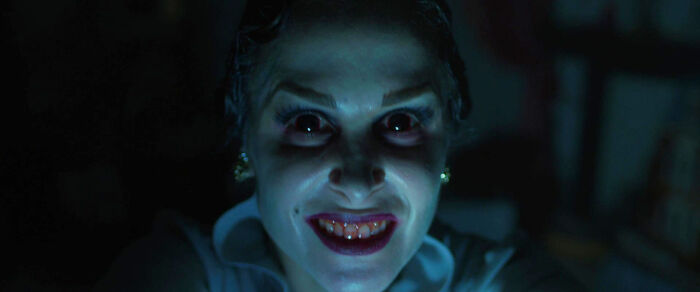
Image source: Insidious: Chapter 2
 Follow Us