There’s something quietly powerful about art that doesn’t try to dominate nature, but instead listens to it. Across forests, coastlines, deserts, and open skies, artists are stepping away from traditional studios and into something far more alive. The works you’re about to see weren’t made on the Earth; they were made with it. Created by members of the global Land Art Collective, these pieces blur the line between creativity and ecology, inviting us to rethink not only what art is, but how we exist within the world around us.
Founded in 2020, the Land Art Collective is more than just a creative community; it’s a growing international movement rooted in connection, collaboration, and care for the planet. Bringing together artists, educators, and thinkers from around the world, the collective supports creative practices that deepen our relationship with Land, Sea, and Sky, offering workshops, residencies, talks, and mentorship opportunities for artists at every stage of their journey. At its core is a simple but radical idea: that creativity can be a catalyst for ecological awareness and meaningful change.
More info: bio.site | Instagram | Facebook
#1 The Entropic Human
Bjørg-Elise Tuppen’s work is rooted in natural science, especially quantum mechanics and neuroscience. History also plays a role, echoing and hi-lighting the quantum rules that govern our lives, such as entropy and time. She values knowledge and facts, especially those related to natural science and history, and advocates the understanding of these as a way for us to move forward in a responsible manner.Still, through her depictions and sculptures she explores feelings; how the laws and nature of our existence, as well as the history embedded in our societies affects us. Bjørg-Elise unites theory and facts with the human emotion, ties them together as us; a part of the universe made conscious.
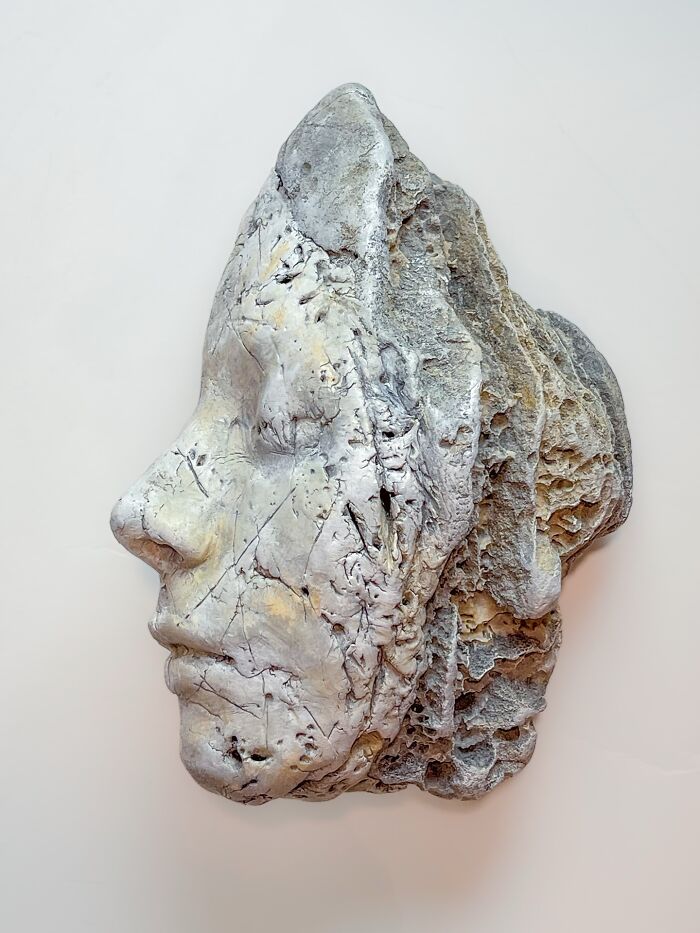
Image source: @bjorg_elise_art
#2 “Ben Sometimes Felt He Carried His Artist Girlfriend A Lot, But She Painted Him Stars While He Slept”
Judith Nangala Crispin is an acclaimed poet, visual artist, motorcyclist, conservationist and volunteer firefighter, who lives on unceded Ngunnawal/Ngambri Country near Braidwood on the NSW Southern Tablelands.
Judith has directed and worked on two major social justice research projects–The Julfa Project, which preserved photographic records of a destroyed Armenian cemetery and digitally reconstructed the site from new and existing images; and Kurdiji 1.0, an Aboriginal suicide prevention app, which strengthens resilience in young indigenous people by reconnecting them with community and culture.
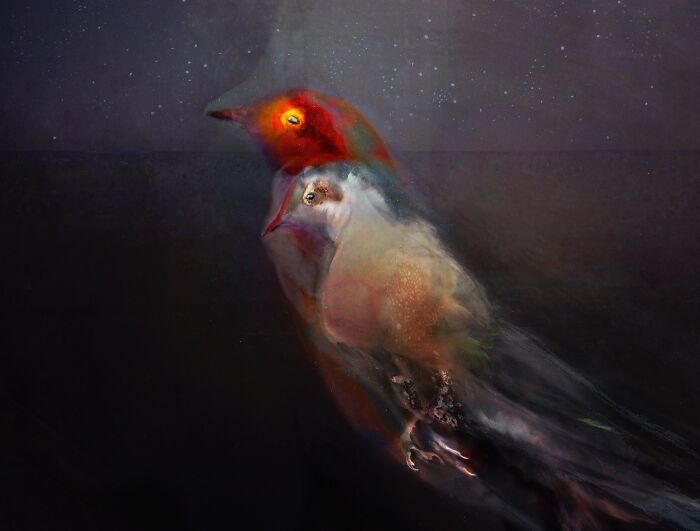
Image source: @judith_nangala
#3 Maize Diversity, Colorful Seeds Of A Few Corn Cultivars
Jonas Frei is a Swiss author, photographer, landscape architect, and city ecologist from Zurich. His expertise includes botany, documentary films, illustrations, and creating free spaces. Frei is known for his fascination with crop diversity and his focus on seeds. He has a reference collection of around 1,000 plant seed species.
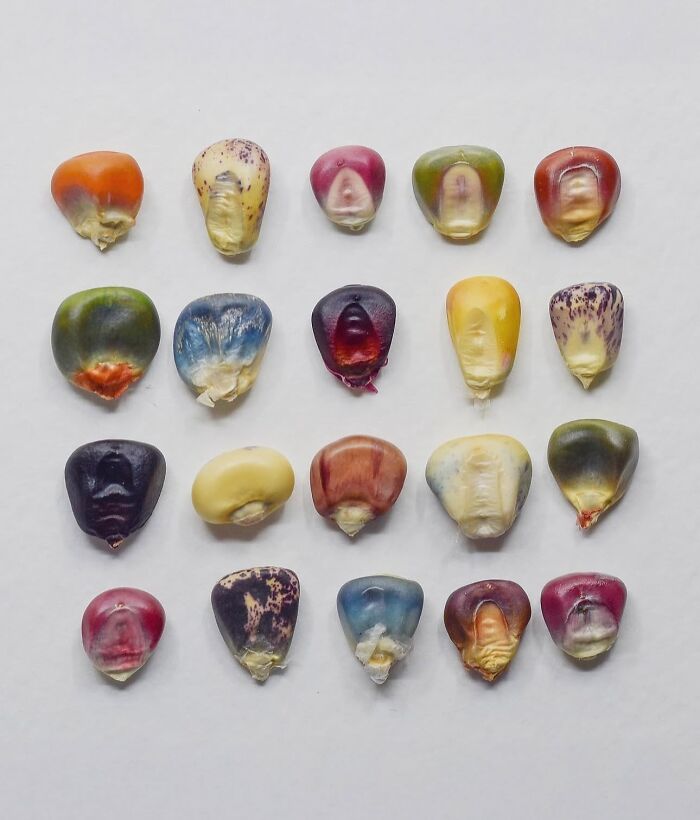
Image source: @j.d.frei
#4 Layers That Germinate
This work draws parallels with nature, where growth asks for patience, care, and time. Just like a garden, relationships cannot be rushed, and their future can not always be understood while they are growing.
The project reflects how I see the world: layered, complex, and evolving. It is a reminder to pause, to ask for the same patience from one another that we ask of the seeds we sow.
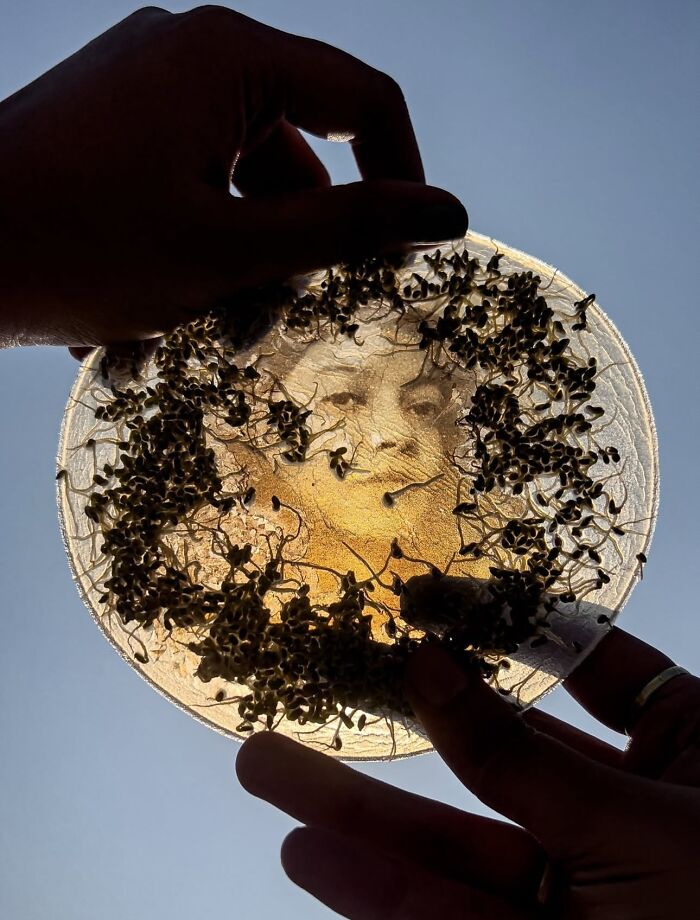
Image source: @riya_panwar_
#5 Our Fragile Home
The artwork references Donald Rodney’s 1996-7 project, “In the House of my Father,” often looking at themes of home as a delicate or temporary space.
The fragile beauty of butterflies, and their resilience to migrate thousands of miles, became the inspiration and material for this transient tiny home. To quote Rebecca Solnit ‘ The world is blue at its edges and in its depths. This blue is the light that got lost.’
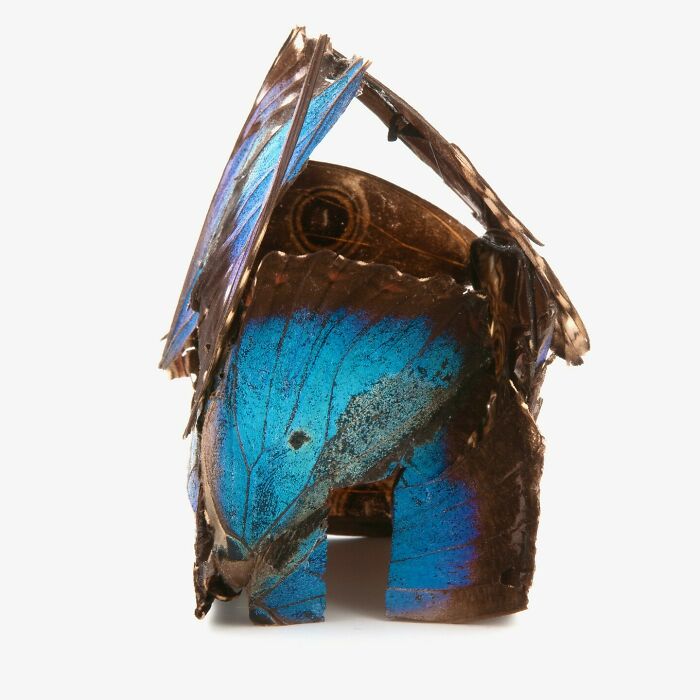
Image source: @jwoho
#6 Chrysalis
Laurie Kaplowitz is an American Postwar & Contemporary painter and artist born in 1951, known for her figurative and expressive art. Based in Massachusetts, she is a professor at UMass Dartmouth and focuses on themes of adornment, memory, and environmental themes like “Marine Snow”. Her work typically features layers, textures, and a “ghostly” figurative style.
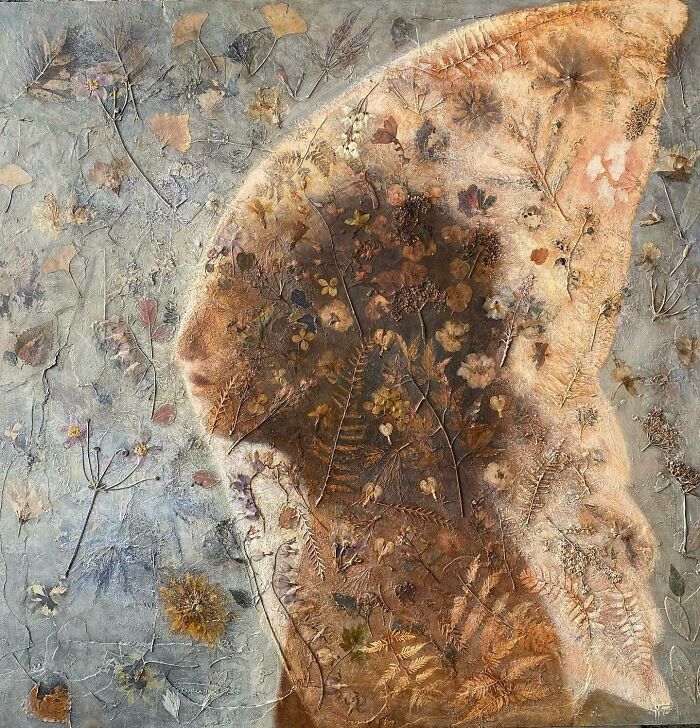
Image source: @laurie.kaplowitz
#7 Lumen
Kate MccGwire is a British, London-based artist who spent her childhood growing up on the Norfolk Broads. MccGwire’s early memories of this distinct landscape, dominated by its wetlands, serpentine waterways and the wildlife that lives along the region’s waters, form the foundations of her practice, which is inspired by the cycles, patterns and dualities of nature.
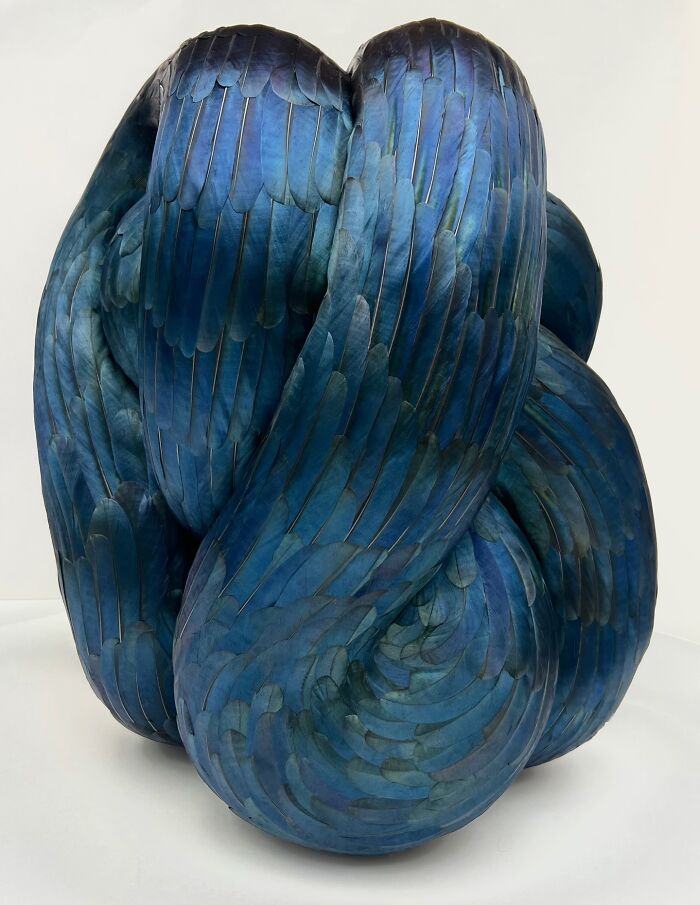
Image source: @kate_mccgwire
#8 Why Do We Build Castles In The Sky?
Su Blackwell often works in the space between fairy tales and folk tales, dissecting words and phrases from the pages of second-hand books, and shaping the text into three-dimensional forms. The book is often the starting point for her inspiration.
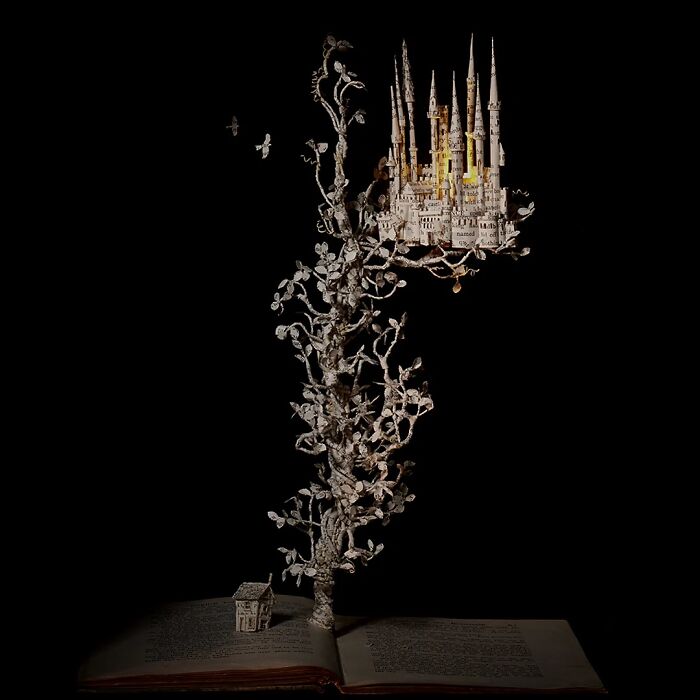
Image source: @sublackwellstudio
#9 Points Of Access
Planetary Intimacies explores landscape as a fragile, ever-changing system – through artistic research, painting, and poetic gestures. At the intersection of art and research, the project investigates shifting relationships with landscape in the Anthropocene. It engages with processes of transformation, friction, and resilience. How do landscapes remember? How do they dissolve, reform, and alter the ways we perceive them? Planetary Intimacies creates spaces for encountering landscapes beyond human-centered perspectives, embracing change, material agency, and planetary time. The project unfolds in glaciers, mountains, and meteorite impact zones – where planetary forces shape both the visible and the invisible, tracing fragile stories of intimacy and change.
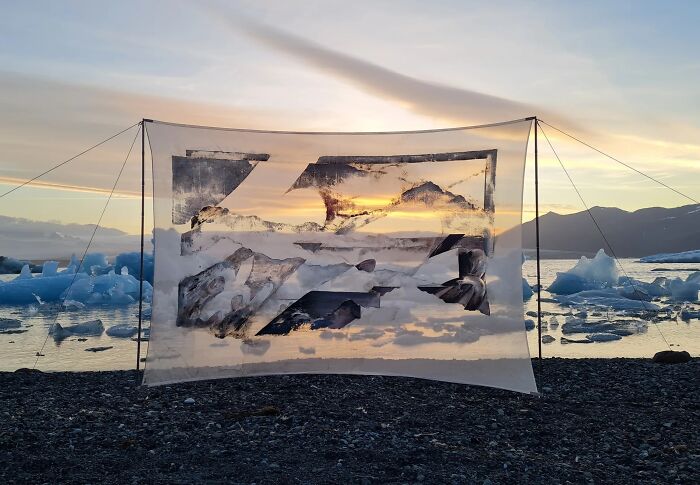
Image source: @planetary.intimacies
#10 Grey Study
Jeanne K Simmons is an eco-artist who creates ephemeral land art by weaving natural materials like grass, bark, and flowers into sculptural forms that often incorporate the female body, blending human and landscape into a unified expression.
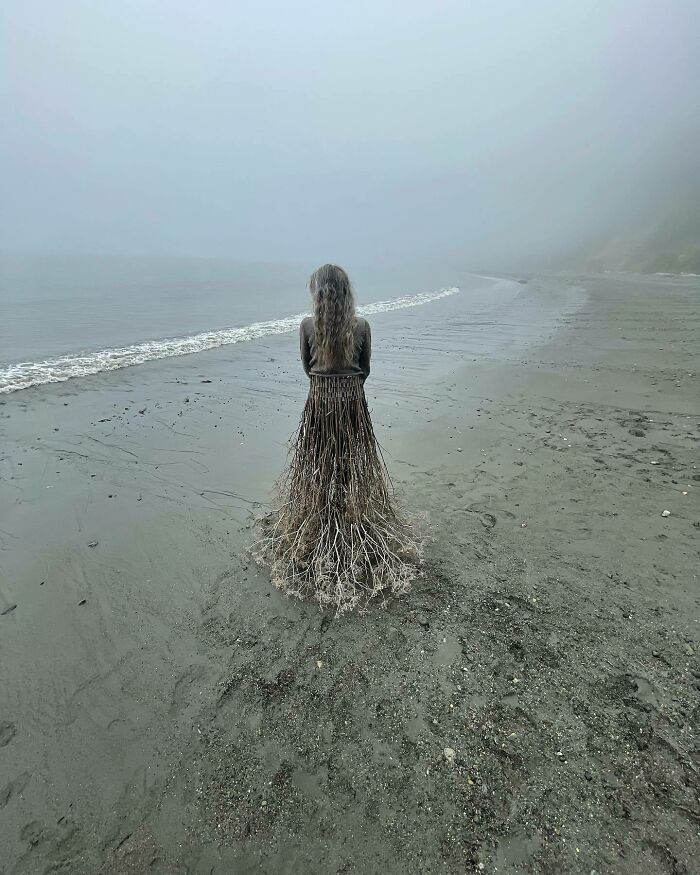
Image source: @jeanneksimmons
#11 Where The Wild Awakens
These photographs invite us to embark on a journey through time, a temporal movement, delving into the subconscious of rural communities. Like a bestiary, masks emerge as a living witness of traditions, still today they whisper stories of a palpitating past in our present and guide the cyclical course of their community: The masks of the fertility rituals performed by the Amazigh in the High Atlas Mountains of Morocco, the “bear dances” protagonists of the New Year festivals in Moldova, the rural carnivals of the mountains of Cantabria in Spain and the transgressive masks of the Navarrese carnivals, unfold like mythological beings, revealing the wondrous essence of customs and tradition. An extraordinary look at various ritual traditions of Spain, Portugal, Romania, Bulgaria, and Morocco, whose approach constitutes the graphic memory of a remote past that is updated in the present.
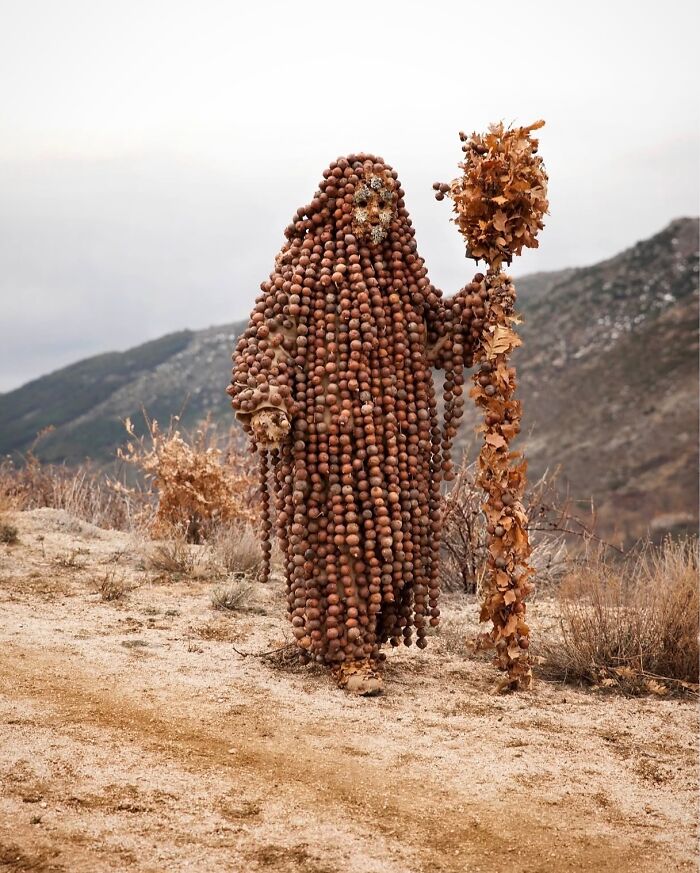
Image source: @carlos.gonzalez.ximenez
#12 Earth Body
Arran Gregory is a British–Sri Lankan artist based in the UK. His sculptural practice explores impermanence, transcendence, and the primal psyche through working with raw materials such as clay-earth, sand, and natural pigment. His works draw on ancient building techniques within a contemporary framework. Through his ongoing Earth Body series, Gregory travels to create works in landscapes across the globe. Understanding soil as a living organism (rather than a material), emerging from the landscape, returning to it, and dissolving into space. Alongside these works, his practice spans performance and short film- expanding the narratives of his sculptures, offering reflections on the elemental and non-human forces that shape us. His practice invites a slowing down and a grounding, framing sculpture as a conversation with the living world.
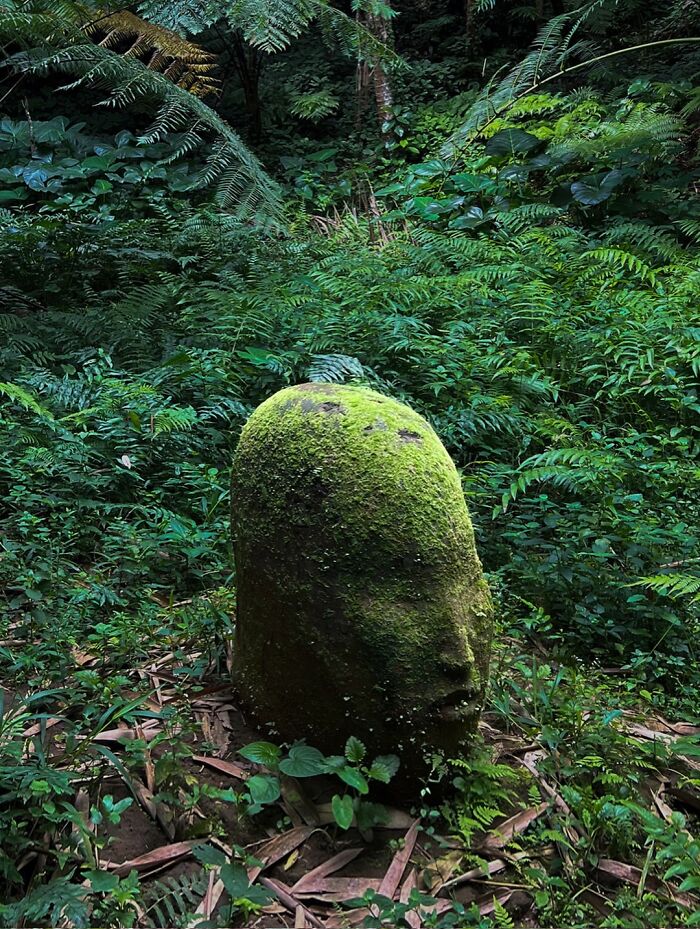
Image source: @arrangregory
#13 Materia Liquida
Laura Lowe is an emerging oil painter working with the iridescent colour spectra found in oil slicks and coal seams. Rather than using pigment, Lowe’s Structural Colour Paintings produce colour by building up layers of translucent paint, which bend and refract light like a prism. Her practice is informed by laboratory experimentation and an alchemical interest in the interplay of light and matter.
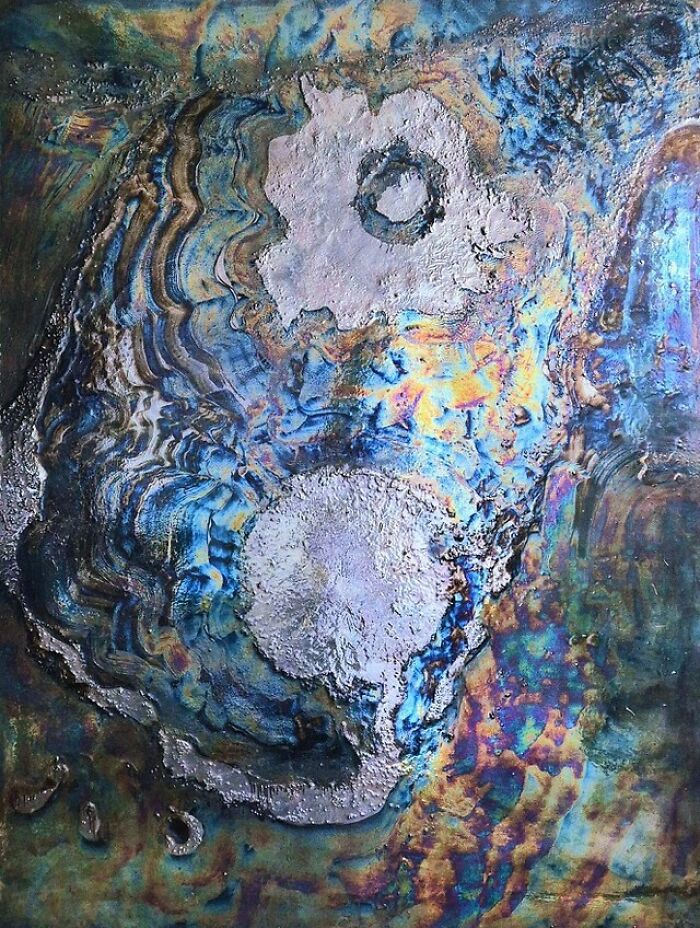
Image source: @lauralowestudio
#14 Botanical Beings
Riya Bhartia is a self-taught visual artist from Calcutta, India. Her work explores emotional landscapes of being and becoming through material inquiry and play. There is a conscious slowness to her process ~ a desire to sense, respond to and grow with the materials rather than extract from them ~ uncovering hidden intelligence in nature through observation and time. She views matter as kin and making as an act of care, with the work becoming a medium for the quiet stories nature is trying to tell us.
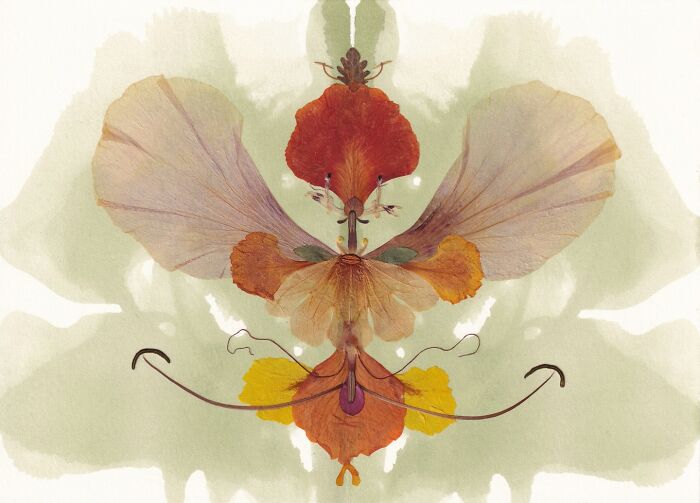
Image source: @riyabhartia
#15 Holme Fen 10
Holme Fen 10 by Wycliffe Stutchbury is a marvel of precision and patience. His making process is slow and meditative; delicately hewn tiles of wood are placed by hand to create abstract compositions that are at once emotive, intuitive, and conceptual. Patterns emerge in linear forms and subtle tonal changes susurrate across the picture’s surface – reminding us of the wood’s creation and guiding us back to place.
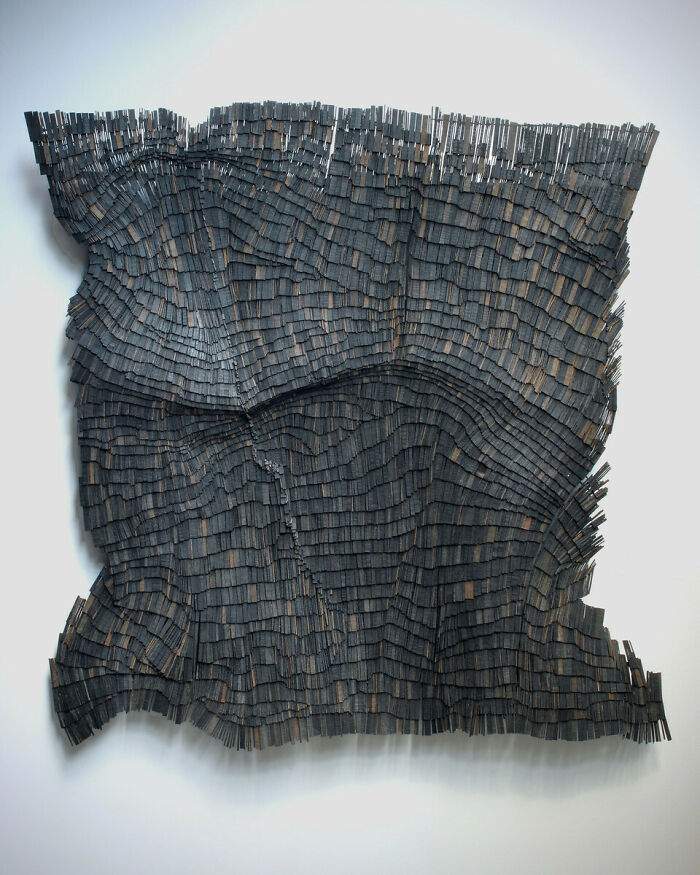
Image source: @ wycliffestutchbury
#16 The Book Collector
Su Blackwell conjures intricate worlds from the pages of old books, transforming paper into delicate three-dimensional dioramas that feel plucked from a dream. Working from her studio in the UK, Su’s poetic sculptures explore themes of memory, fragility, and storytelling, drawing deeply from fairy tales and folklore.
This sculpture from 2022 was a commission from a well-thumbed full-size Penguin Book copy of Wuthering Heights, printed in 1953. And when the moon is lit, silhouettes of the novel’s tragic lovers ‘Cathy and Heathcliff’ can be seen.
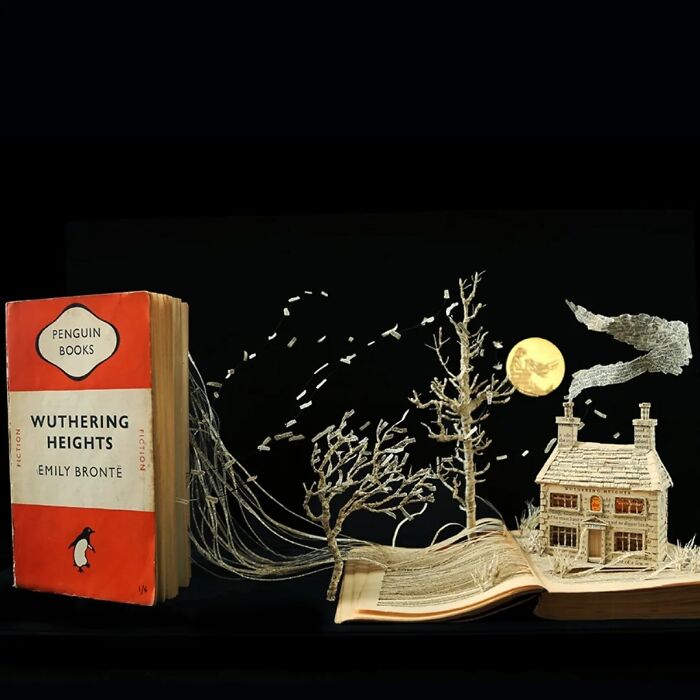
Image source: @sublackwellstudio
#17 Art That Resonates – Bringing The Outside In
Fran’s work captures the dialogue between inner and outer landscapes. Her abstract works are inspired by shifting landscapes—of coastlines, mist, wind, moss, light, and the unseen depths beneath the Earth – of mycelium, roots, tendrils, caves.
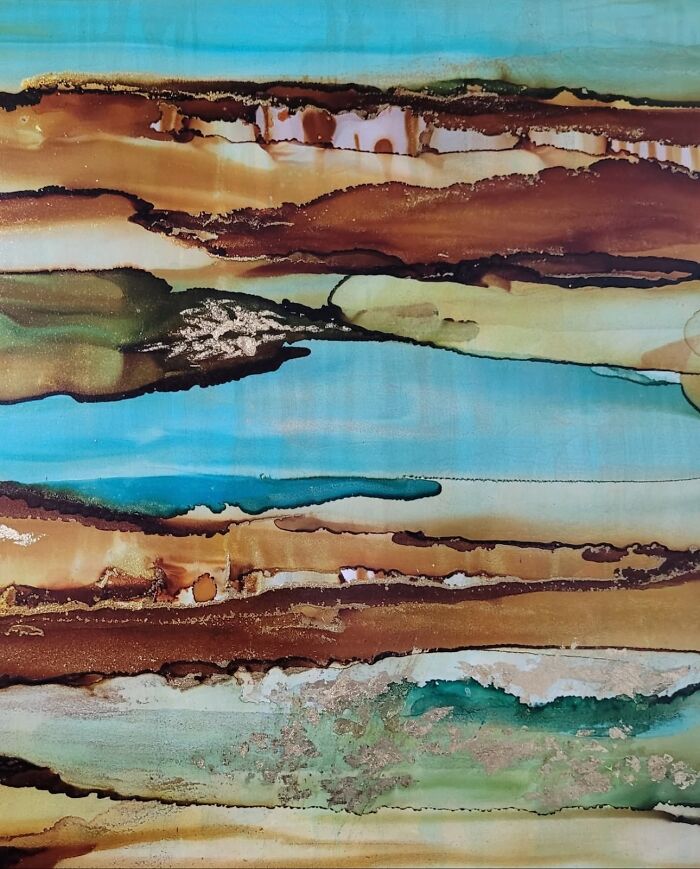
Image source: @franduncanart
#18 Darkness And The Light
“We all carry within us the darkness and the light, both partly submerged and out in the open.”
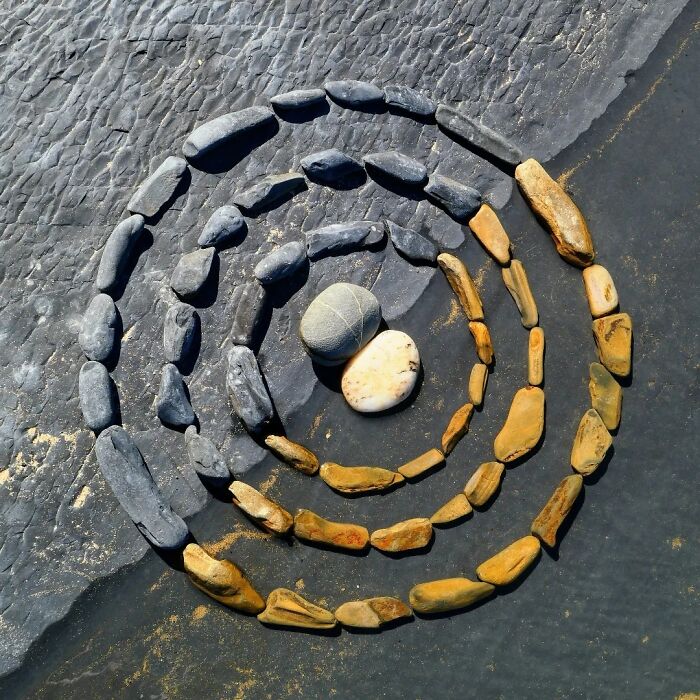
Image source: @my.creative.nature
#19 Gathering Project
Anna Gillespie is a figurative sculptor, exploring both personal and political themes through the sculpted human form. As with leaves, so with humans; we are each individual and yet part of a mass in which our presence is unnecessary. A further contradiction explored is the contrast between strength and vulnerability. In sculptural terms, mass and fragility co-exist through the device of hollowed out forms.
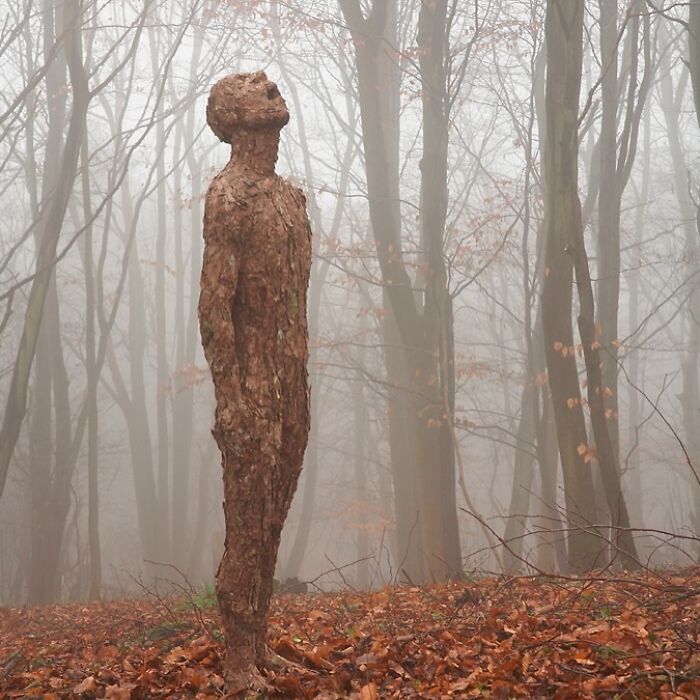
Image source: Anna Gillespie
#20 Frozen Flowers
Azuma Makoto acclaimed flower artist and pioneer in the field of botanical sculpture, investigates the life-cycle of flowers from the moment of planting through to decomposition, adding sensitivity to the ikebana tradition of listening to flowers.
In his concept it is important that a florist treats flowers with respect and devotion. Generally recognised as ‘living art’, his work draws from the Japanese concept of mono no aware, which loosely translates as “attraction to things that fade”. This concept deals with the transcendent sentiment of death. There is also a sense of transience accompanied by the gratitude of being present to witness this fleeting moment. Everything is temporary, and this is a call for us to be present in the moment.
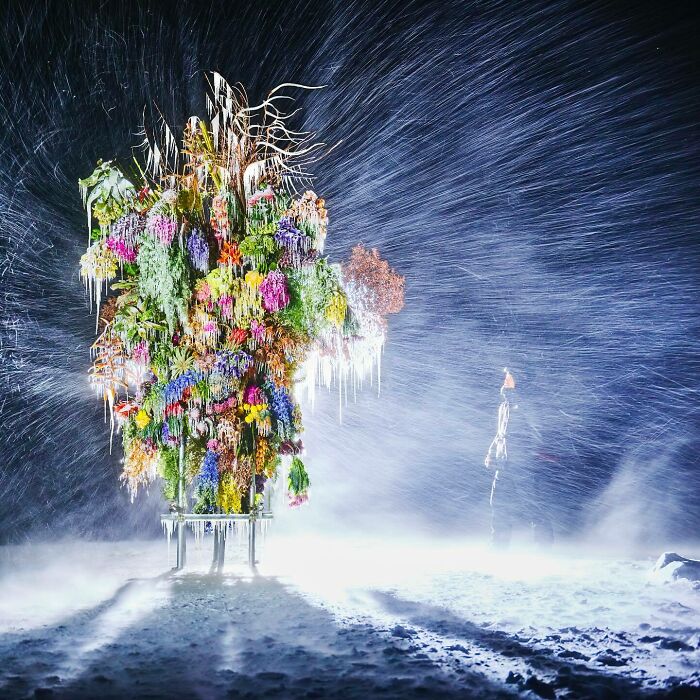
Image source: @azumamakoto
#21 Grass Cocoon
Jeanne K Simmons is an artist working in nature to address issues concerning humanity and the Earth. Her work combines land art and body art to make eco sculptures. “I contemplated making Grass Cocoon for two years. The image was persistent, and it took up residence in my imagination, so I finally committed to making it and enlisted the help of a friend, naturalist, educator, basket-maker, and now beloved model, Nicole Larson.”
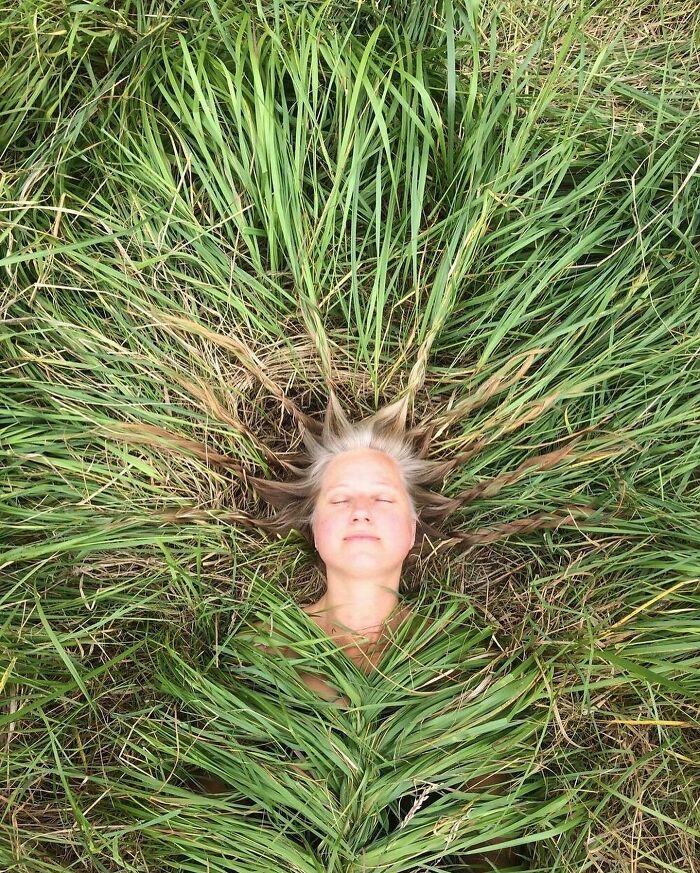
Image source: @jeanneksimmons
#22 Maple Samara
Elishia Jackson is multidisciplinary artist living and working on Wurundjeri land, Victoria, Australia. A compulsive creator, Elishia advocates using art as a way to live authentically and to connect with our true selves.
Elishia has worked in the visual arts for over 20 years with a background in painting, drawing, and collage. Currently she is exploring the world of fibre art and modern sculptural basketry.
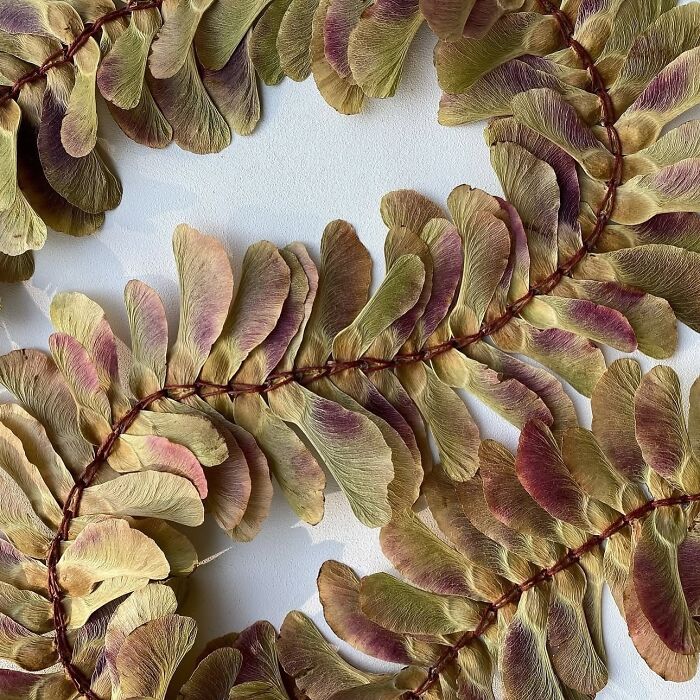
Image source: @elishia.jacksonart
#23 Chlorophyll Printing
Jane’s inspiration and ideas tend to come mainly from the trees, plants and living creatures that populate the green spaces around her home in Essex, United Kingdom.
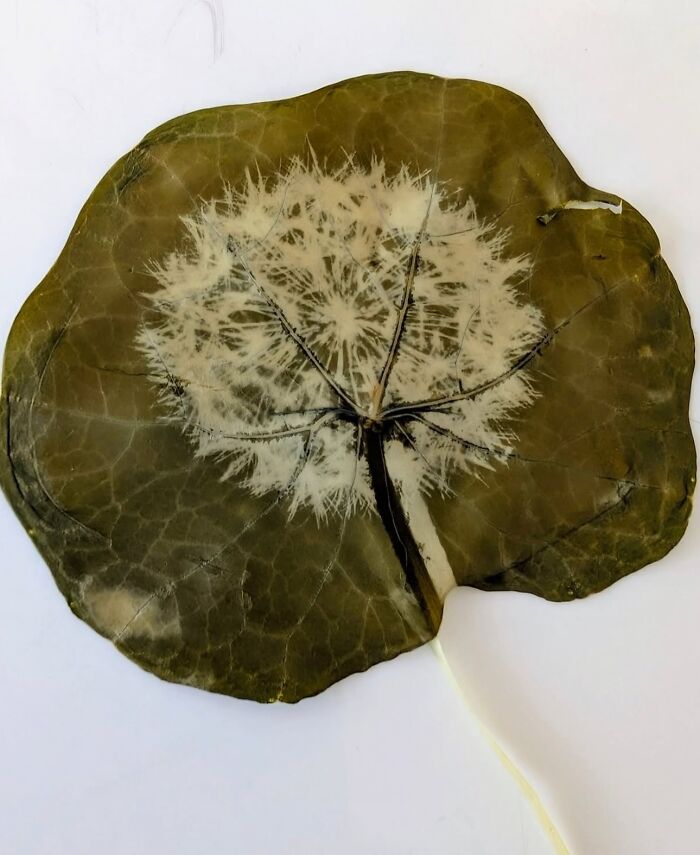
Image source: @inkydogstudio
#24 Textiles Pieces By Julia Wright
Julia Wright is a mixed media textile artist. She is drawn to weathered, organic, irregular forms and the repetition of simple shapes like clusters of barnacles, knotted tree roots and growth patterns of lichen.
Made from recycled fabrics and fibres, her textiles pieces suggest fragments of landscape without being figurative. Her work is heavily textured, with undulating surfaces made from tightly bound fabric bundles, structural wraps, and raised sculptural forms punctuated by densely embroidered surfaces.
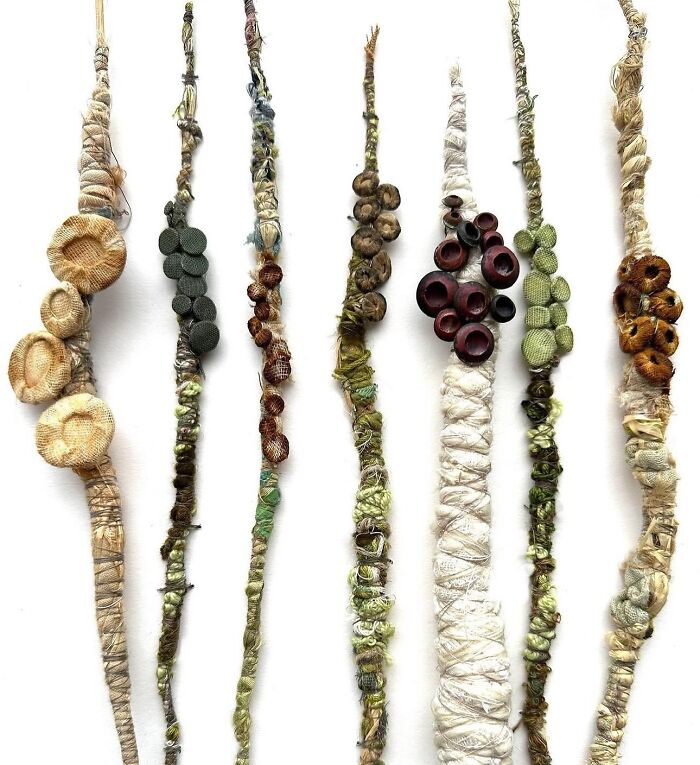
Image source: @julia_._wright
#25 The Scallop
The Scallop, dedicated to Benjamin Britten, was created by Maggi Hambling in 2003. Fifteen feet high, it sits on the beach at Aldeburgh in Suffolk and consists of two interlocking broken scallop shells. Cut into the rim of the upright shell are the words “I hear those voices that will not be drowned” from Britten’s opera Peter Grimes, about a small fishing community on the East Coast of England.
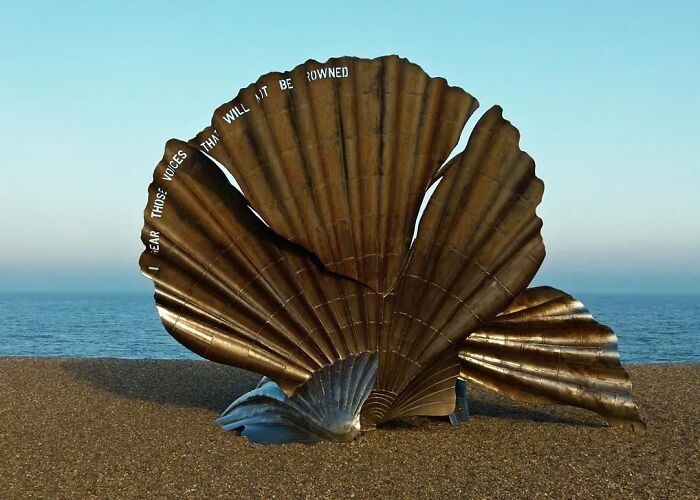
Image source: @hambling_hambling
#26 Vrinda Blue
Marta Abbott is a multidisciplinary Czech-American artist who was born in Amsterdam, grew up in the U.S., and lives and works in Rome. Her practice is rooted in a personal curiosity about themes from nature and our human experience of the non-human natural world. Abbott moves between realms of light and shadow to explore how nature influences the ways spirit gives form to matter, and how we understand our earthly existence.
She offers a filter made of time, and notions of alchemy and transformation, through which to view the world and identify the invisible paths that connect heaven and ground. Drawn to organic materials as instruments of expression but also as voices that contribute to the stories she wants to tell, Abbott often works with natural inks or pigments she prepares herself, analogue photographic methods, and clay. Ancient and antique mediums used in a contemporary context inform a practice which is led by intuition but built upon knowledge.
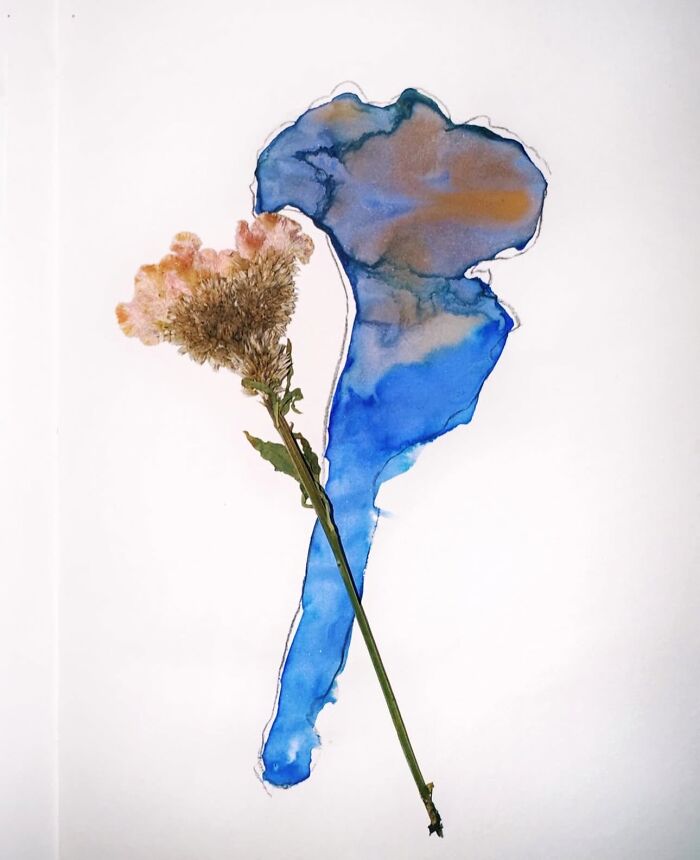
Image source: @martaabbott
#27 All Things Considered
South African artist Dillon Marsh uses photography and CGI to visually represent the scale of humanity’s impact on our planet.
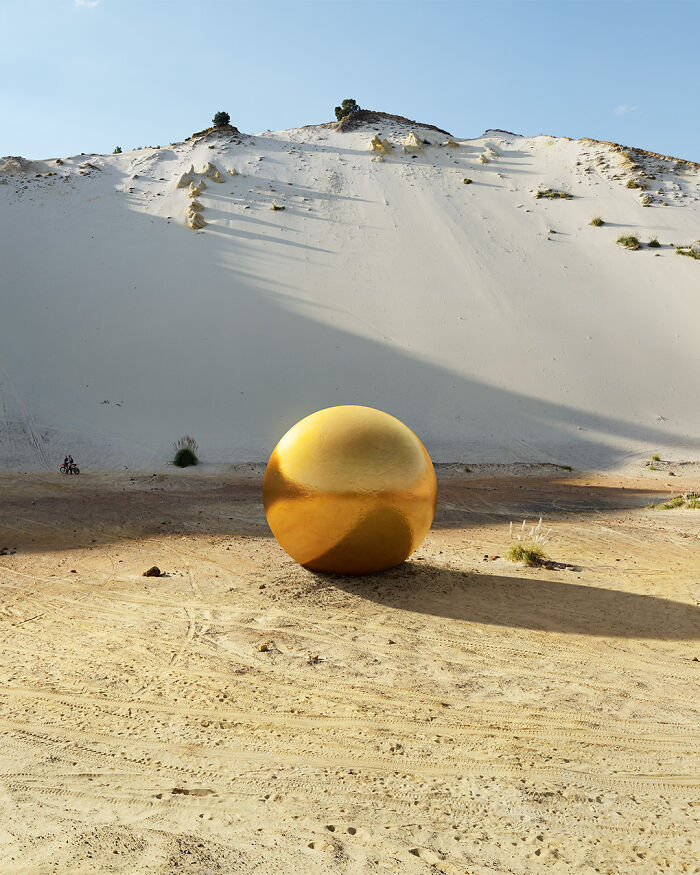
Image source: @dillonmarsh
#28 Mending Nature
Hannah Stiefkerk is a Dutch textile artist known for her unique and thought-provoking installations that often engage with themes of nature, environmentalism, and the passage of time.
While she trained in interdisciplinary art and initially explored digital media, Stiefkerk has found her distinctive voice in slow textile techniques like embroidery and crocheting. She doesn’t strictly define herself as a “textile artist,” but rather as an artist who utilizes textiles when they serve the concept of her work.
A significant aspect of her art involves “mending” nature. She creates site-specific installations, often on trees or natural objects, using yarn and stitches to draw attention to environmental issues and the idea of repairing our relationship with the natural world. Her work is a deliberate act of investing time and care, hoping to inspire viewers to reflect on what is truly valuable in a fast-paced society.
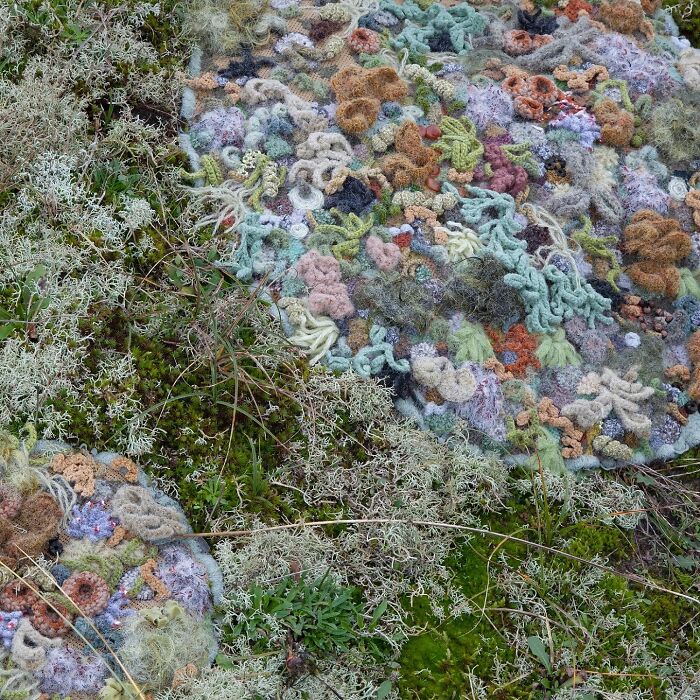
Image source: Hannah Stiefkerk
#29 Wheatfield – A Confrontation
Agnes Denes’s ‘Wheatfield – A Confrontation’ was a 1982 art project where she planted a two-acre wheat field on a landfill in lower Manhattan, next to the World Trade Center and Wall Street. The project was a powerful commentary on issues like global hunger, waste, and misplaced priorities, by juxtaposing a rural harvest with the urban financial center. The work highlighted the contradictions between urban and rural life, commerce and food and the mismanagement of the economy and environment.
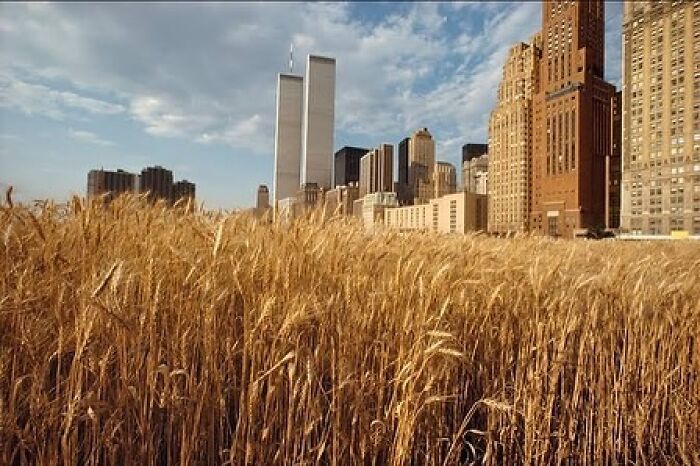
Image source: Agnes Denes
#30 Snow Drawings
The piece was created over two days with the help of approximately 70 participants from the surrounding communities. The piece wraps around a mountainside, stretching upward along a hiking trail/mountain road (ski slope during winter). Participants entered the “snow canvas” from different locations along the hiking trail to start the extensive drawing from as many access points as possible.
Snow Drawings introduces an alternative winter outdoor experience – one that encourages participants to interact more deeply with nature. Walking circular patterns within these stunning landscapes, listening to the crunching sounds of ones own footsteps in the snow, as the weather changes light and mood through alternating sun, clouds, fog and snowfall, is a form of meditation. Snow Drawings are a symbiosis between immersive nature experience, meditation and collaborative art creation.
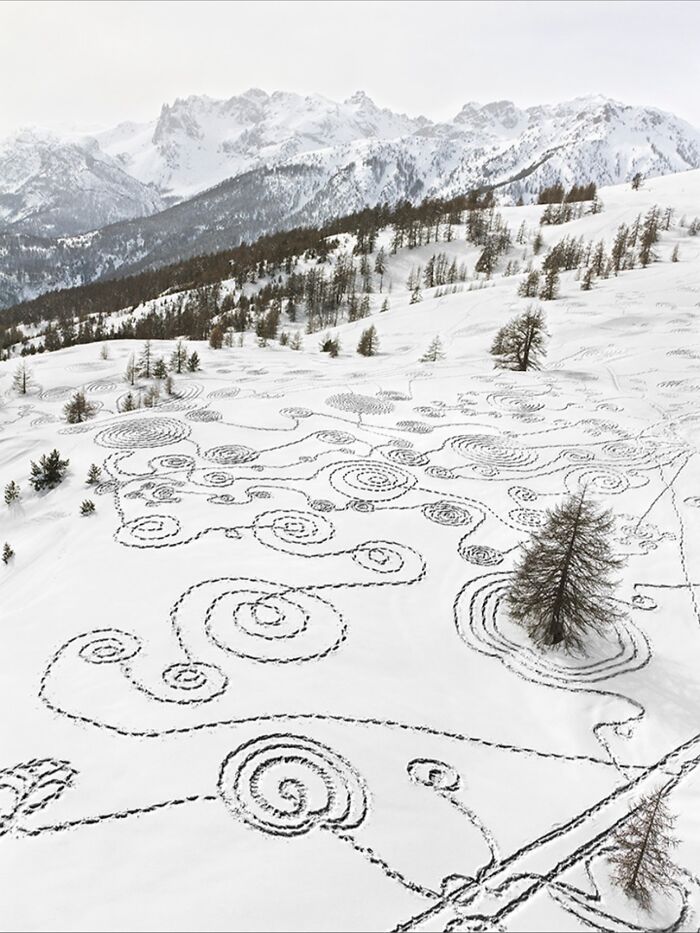
Image source: @sonjahinrichsen
 Follow Us