The stereotype that men going through a midlife crisis often turn to much younger women for a relationship is deeply rooted in real life. We see this preference even with famous celebrities — like the internet joke about Leonardo DiCaprio refusing to date anyone over 25. But outside of Hollywood, this dynamic can play out with devastating real-world consequences.
That is exactly what happened to one man who walked away from a 32-year marriage to build a new life with a woman almost half his age.
The man’s daughter recently shared the fallout on Threads. Her post instantly went viral, with over 30,000 likes — with many users sharing eerily similar stories in the comments.
Read on to see how the story unfolded, and how her father is now making desperate attempts to win back his ex-wife.
A woman said her dad left his 32-year-long marriage for a younger partner

Image credits: lifestock / Magnific (not the actual photo)

She said her mom then started to build a good, happy life from scratch
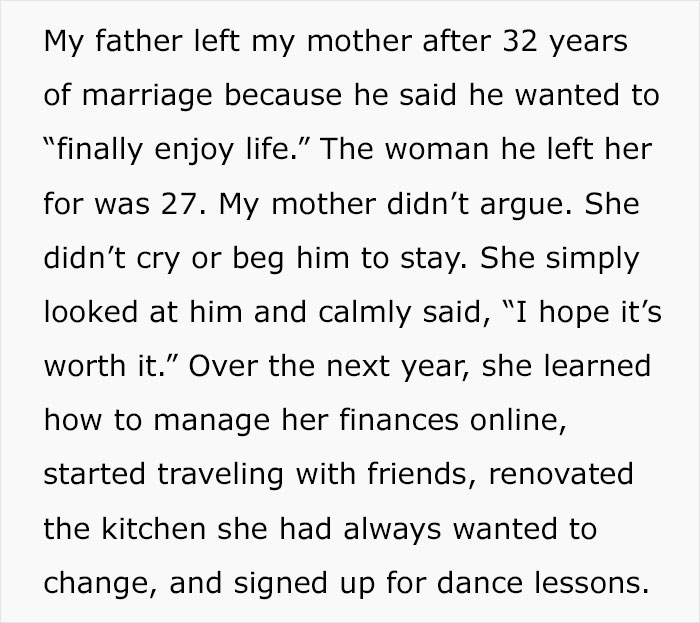
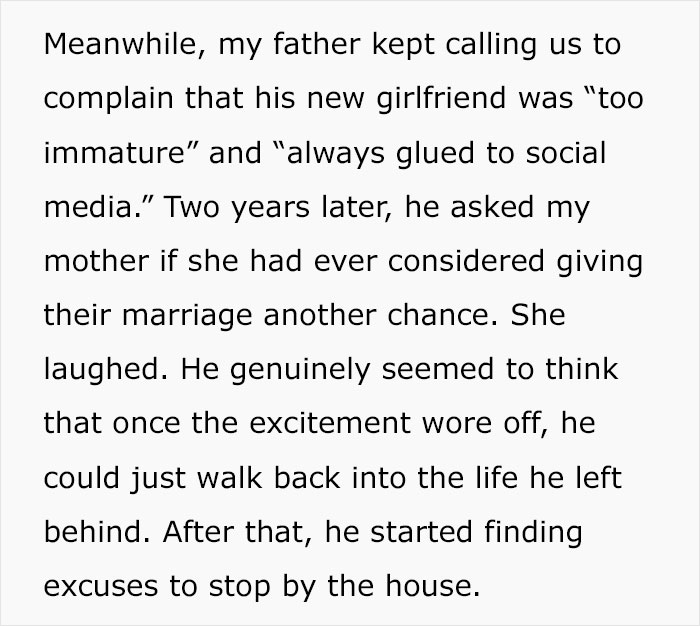

Image credits: ashleylouise_a65
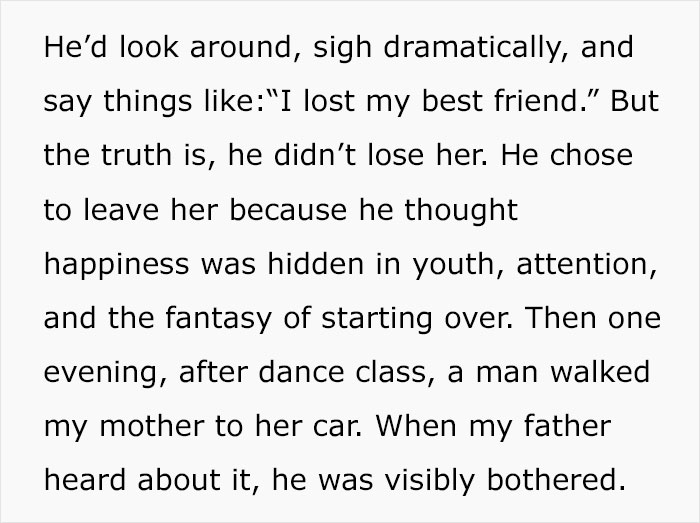

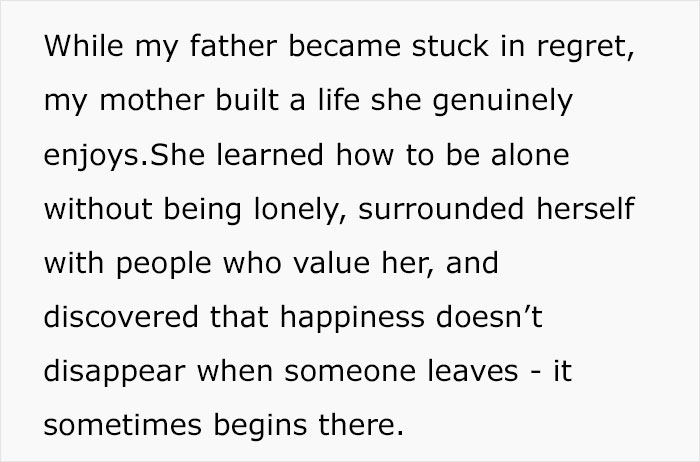

Image credits: shurkin_son / Magnific (not the actual photo)

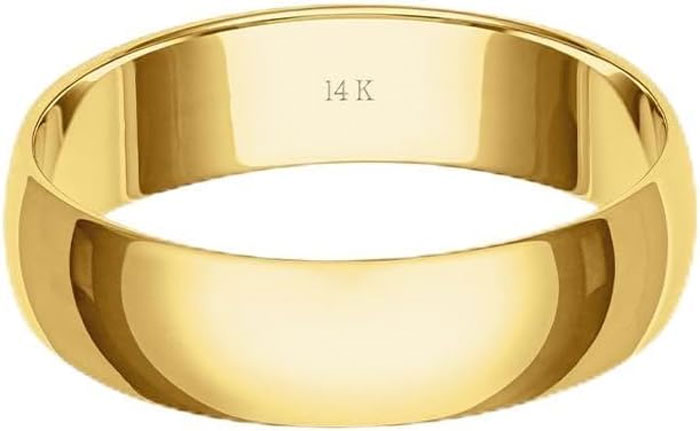
Image credits: Amazon

Image credits: ashleylouise_a65
Mid-life and later years bring different relationship challenges
People who usually leave decades-long marriages for younger partners often do so out of a panic regarding mortality or a midlife crisis, according to some experts.
“A midlife crisis goes beyond reevaluating and making some adjustments. Someone going through a midlife crisis makes drastic and severe changes in an almost desperate manner. One of the easiest and most immediate things to change is your relationship,” says marriage and family therapist Dr. Kurt Smith.
“After all, changing yourself takes work. But checking out of a relationship just takes packing a bag, getting drunk every day, or having an affair,” he adds.
While opportunistic lust and a craving for novel validation before aging can also drive a man to abandon a 32-year marriage — much like the author’s father did — vanity is rarely the whole story.
Some experts believe that the deeper motive is often a retreat from accountability.
“Some men don’t leave for youth. They leave for inexperience. They leave for someone who won’t notice what’s missing. They leave for someone who won’t ask the hard questions. Because if she doesn’t know what she should be feeling, she won’t realize what he’s no longer offering,” says Vanessa Cardenas, a relationship reset expert.
Studies show that overall divorce rates have been declining among younger populations. At the same time, “gray divorce” — divorce among adults 50 and older — more than doubled between 1990 and 2021 in the US.
The research conducted by the National Center for Family and Marriage Research showed that the largest increase was in women aged 65 and older.
The post-divorce paradox, and how men and women cope differently
With over one million Americans divorcing yearly in the US, you have to wonder if ending their marriages ultimately makes them happier.
Conventional wisdom would suggest it does. But it turns out this depends on gender as well.
According to a study, divorce makes most men feel devastated, confused, and betrayed. On the other hand, women are more likely to feel relieved, liberated, and happy following a split.
Women are also much more likely to focus on positive healing, such as leaning on friends and family or seeing a therapist. Meanwhile, men tend to look outward for a distraction, often burying themselves in their work or rushing to find a new partner.
The report suggested that the figures were the result of women’s greater emotional strength, pointing to differences in coping strategies among both genders.
The survey also found that more than two years after a divorce, 41% of men were still sad about the failure of their marriage. But for women, the figure was only 33%.
That is not to say that break-ups do not affect women at all. It just means that in general, and this does not apply to everyone, women find better ways to cope.
For many women, a long marriage can inadvertently limit personal growth and economic autonomy.
“One possible explanation could be that women who enter into an unhappy marriage feel much more liberated after divorce than their male counterparts,” says Professor Yannis Georgellis of Kingston Business School.
The divorce then grants them the first real opportunity to build their own financial independence and social networks completely from scratch — much like the author’s mother did.
This hard-won happiness explains why a woman who has successfully rebuilt her life will often flatly refuse an ex-husband’s desperate attempts to reconcile.
Ultimately, this viral story teaches us that relationships are built on consistent loyalty, and not temporary whims and fantasies.
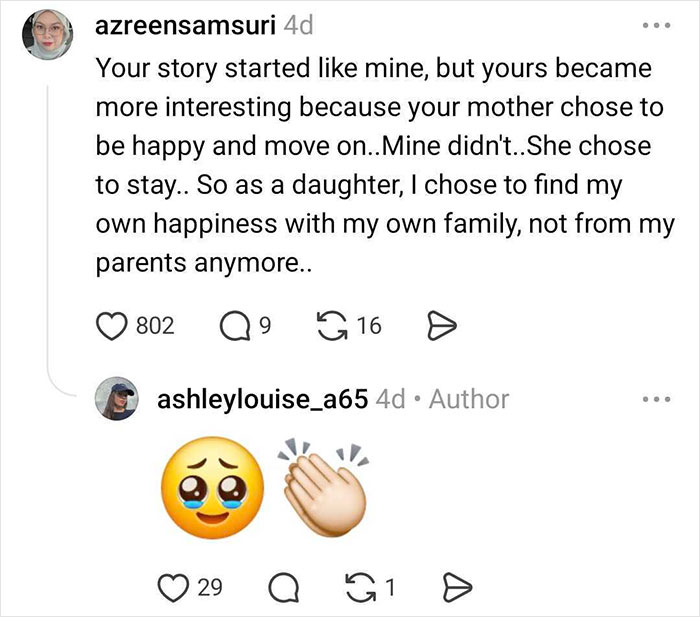
People in the comments shared their opinions; some even talked about similar experiences

















 Follow Us