When it comes to weddings, it feels like most people should get a little etiquette handbook before showing up—if only to know what’s appropriate and what’s better saved for another day. Wearing a dress that looks suspiciously similar to the bride’s? Big no. Bringing kids to a strictly child-free wedding? Also no. Creating unnecessary family drama when everyone is supposed to be celebrating? Please, just don’t.
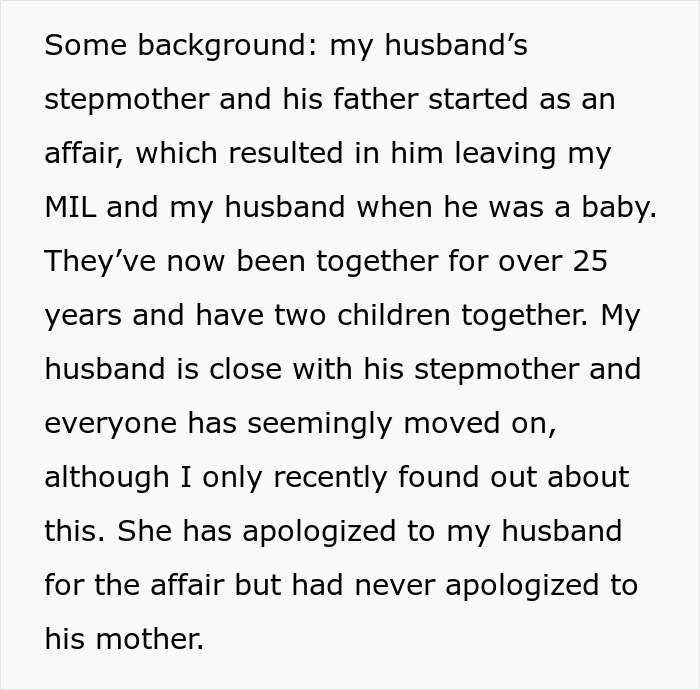
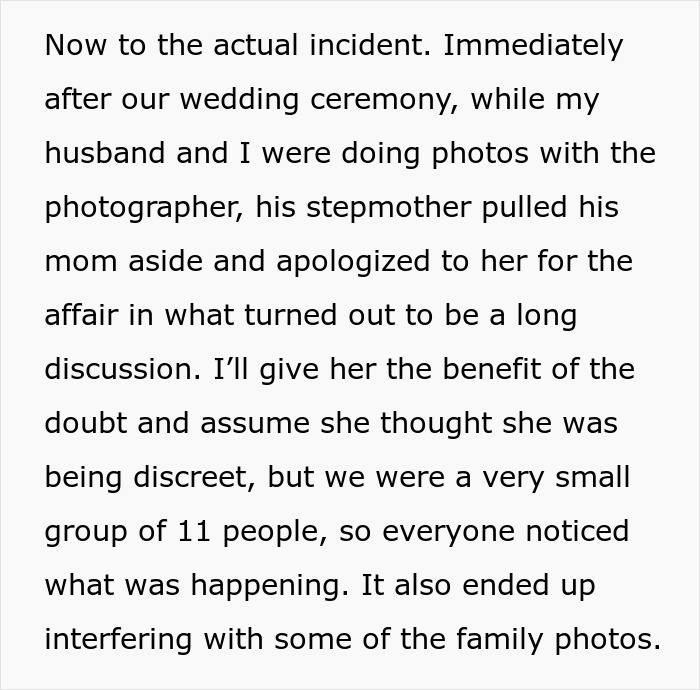
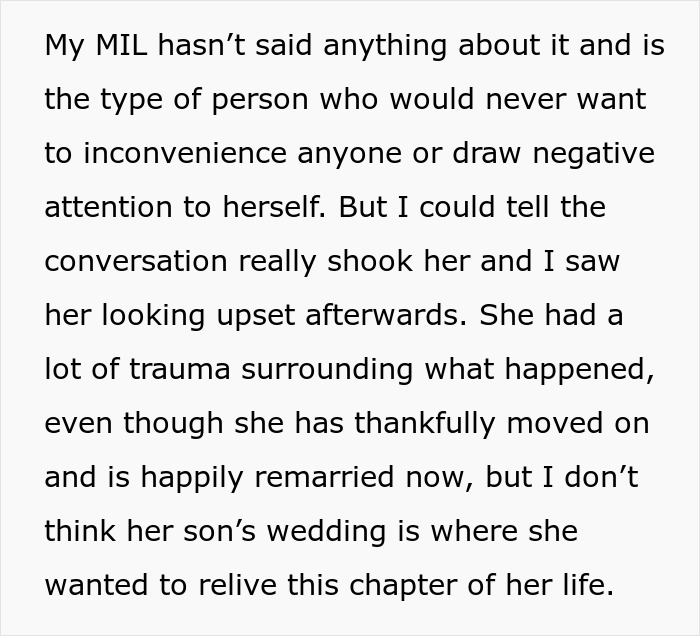
And that brings us to today’s story. A woman shared how her husband’s stepmother decided to pull her mother-in-law aside for a long-overdue apology immediately after the wedding ceremony. Now, an apology might sound like a thoughtful and meaningful gesture—but there was one major problem: the timing. Keep reading to find out why the bride was left feeling uncomfortable and wondering why this particular conversation had to happen on her wedding day.
Family members and relatives can sometimes make a wedding ceremony even more meaningful but they can also bring unexpected tension and drama
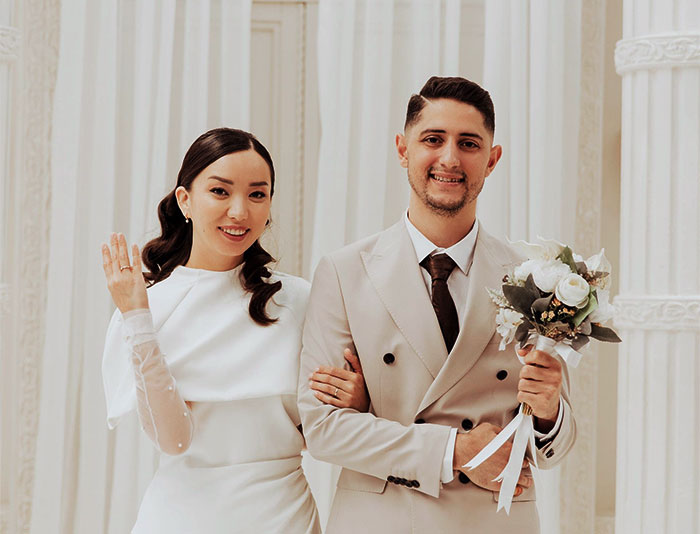
Mina Fotoğraf / Pexels (not the actual photo)

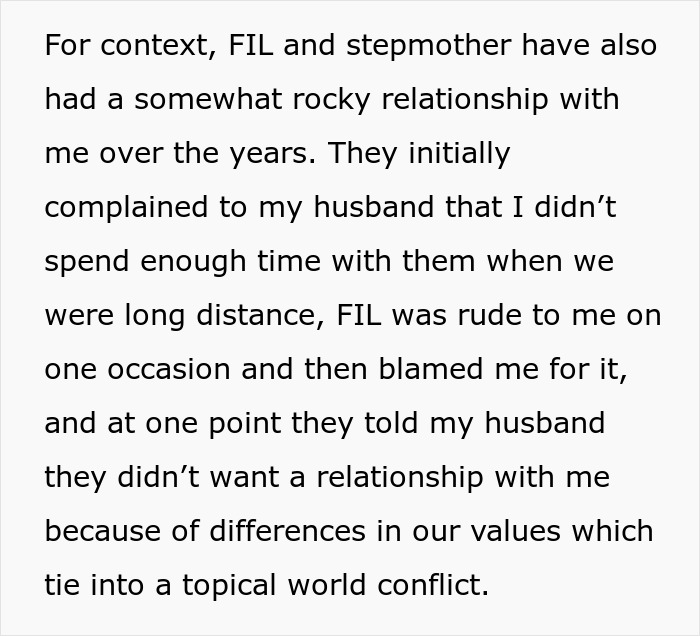
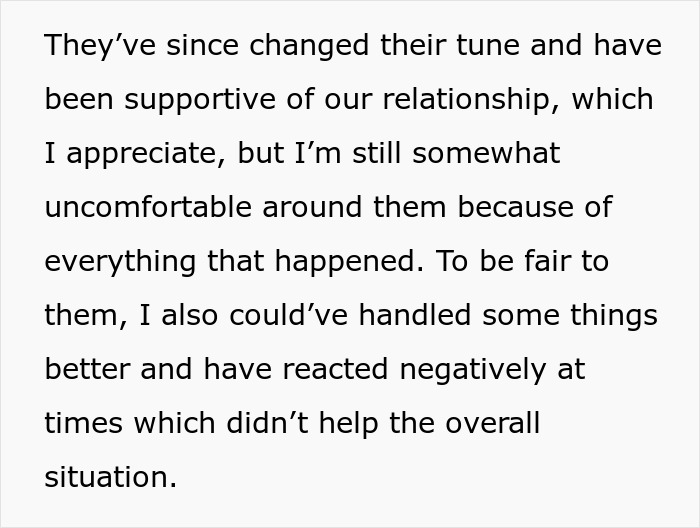
A woman shared how her husband’s stepmother caused an uncomfortable situation immediately after their civil wedding
ageing_better / Unsplash (not the actual photo)

Darina Belonogova / Pexels (not the actual photo)

Timur Weber / Pexels (not the actual photo)
cottonbro studio / Pexels (not the actual photo)

The woman later shared an update, revealing that her husband had started going to therapy
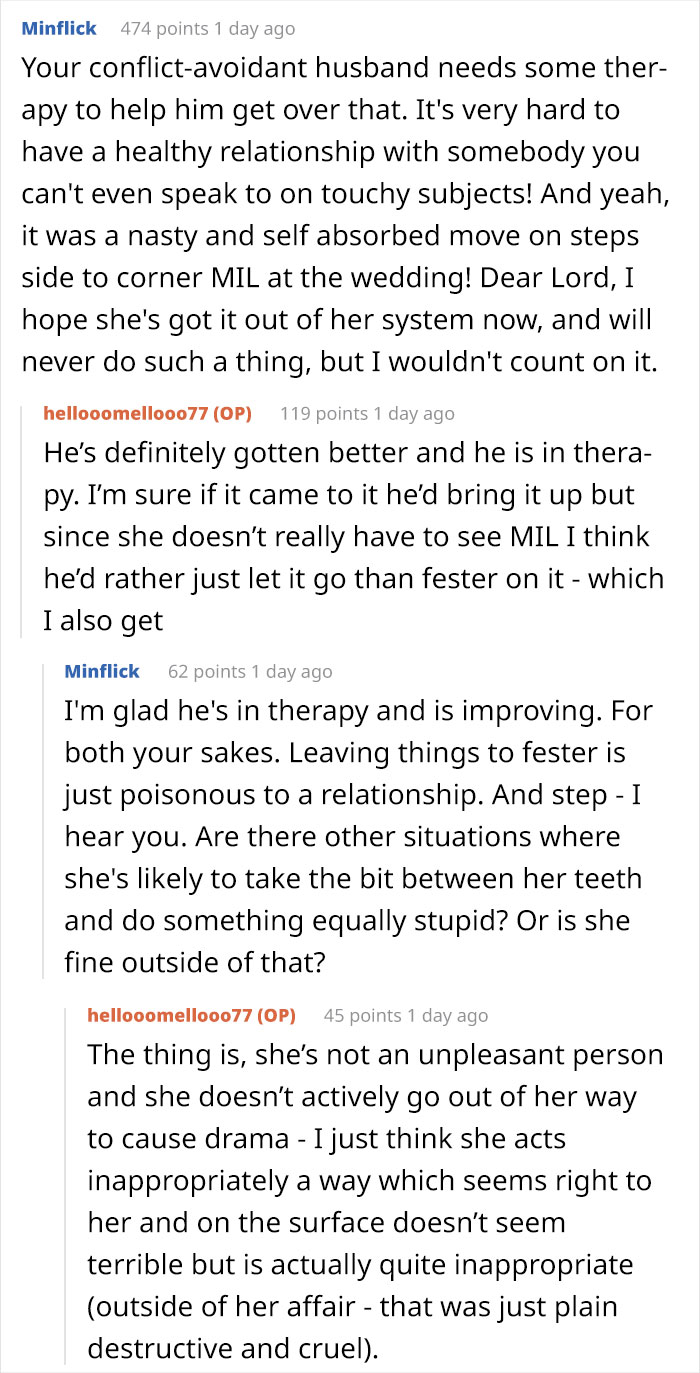
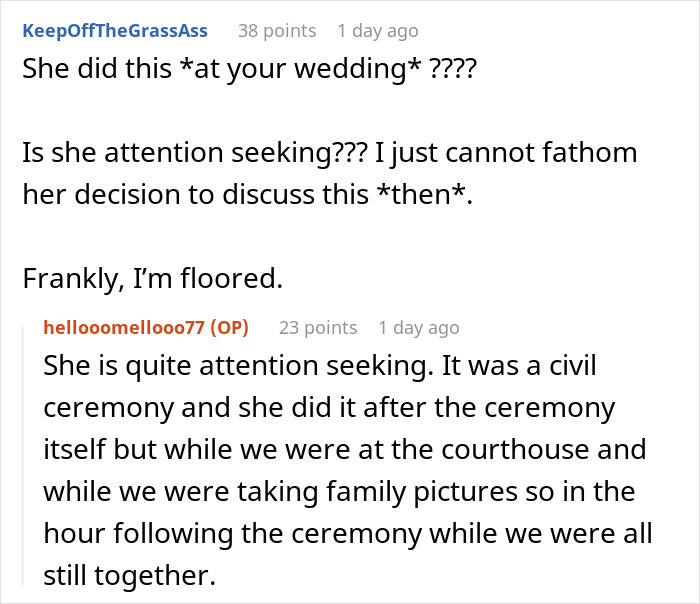
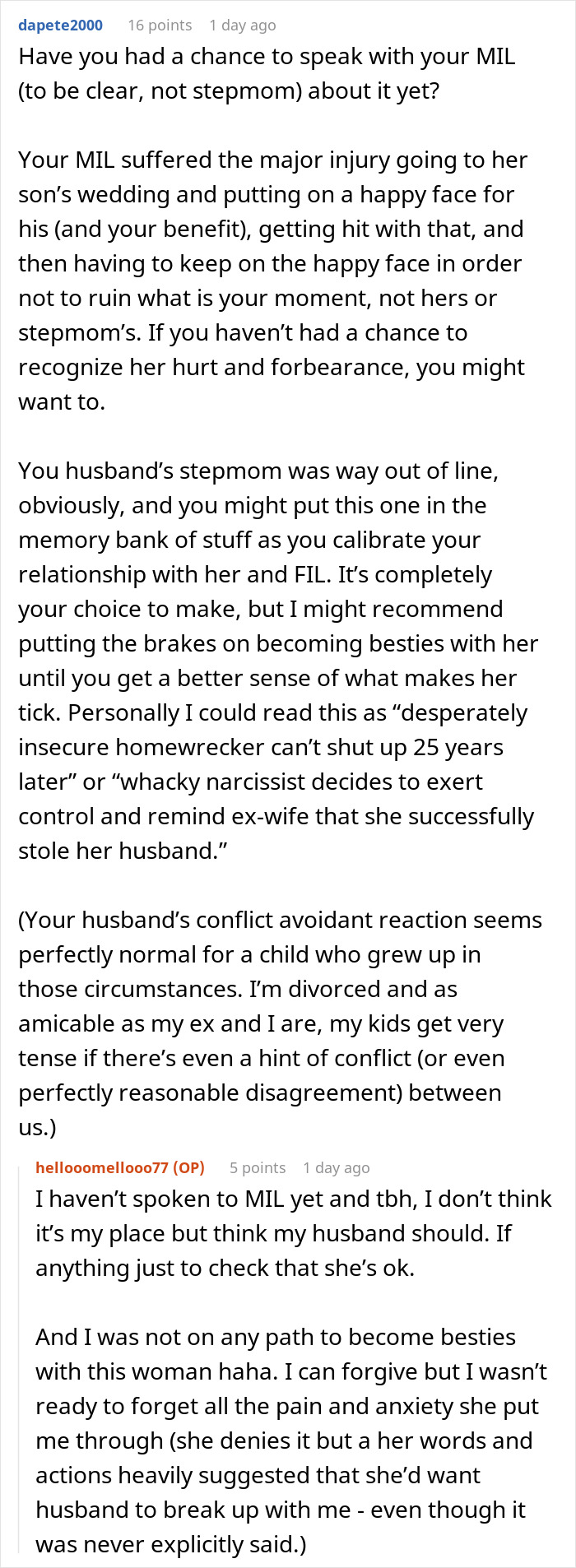
Weddings can be expensive, with US couples spending an average of nearly $6,927 on catering alone
It’s no secret that planning a wedding is a huge undertaking. From finding the right venue and choosing the food to sorting out invitations, seating arrangements, decorations, music, photography, and all the tiny details in between, couples can spend months making sure everything comes together. And while most of those things can be planned, organized, and checked off a list, there’s one unpredictable element that no seating chart or wedding planner can completely control: the guests. You can plan the perfect day, but you can’t always predict how everyone will behave once they arrive.
And no, we’re not talking about the harmless little hiccups that inevitably happen at almost every wedding. We’re talking about the choices that create unnecessary tension, distract from the celebration, or put the couple in an awkward position on a day that is supposed to be about them. To understand some of the etiquette behind these situations, we can turn to one of the most widely recognized guides on modern wedding manners, Emily Post’s Wedding Etiquette, 6th Edition by Anna Post and Lizzie Post. Written by the great-great-granddaughters of legendary etiquette expert Emily Post, the book serves as a practical guide to everything from invitations and attire to guest behavior and the responsibilities of the wedding party. Its underlying message is fairly simple: everyone involved has a role to play, and knowing where the boundaries are can make the day much smoother for everyone.
One of the book’s most practical lessons is that guests shouldn’t assume they can bring additional people or children unless they have been specifically invited. It might seem harmless to think, “What’s one extra person going to hurt?” but weddings are expensive events, and every additional guest can affect the couple’s budget, seating arrangements, catering numbers, and overall planning. According to Zola’s Wedding Cost Index, the average wedding catering cost in the U.S. is around $6,927, with many couples spending between $5,500 and $8,300. That works out to roughly $46–$55 per person for catering alone. So while bringing an unexpected plus-one might seem like a small decision from a guest’s perspective, it can represent a very real additional expense for the couple. Unless the invitation clearly includes a plus-one or children, it’s generally best to respect the guest list rather than putting the couple in an uncomfortable position.
Dress codes are another area where a little consideration can go a long way. Guests don’t necessarily need to arrive looking like they stepped out of a royal wedding, but they should make an effort to follow whatever dress guidance the couple has provided. And, of course, there’s the classic wedding rule: don’t wear white unless the couple has specifically asked you to. Speaking to The Knot, wedding dress designer Madeline Gardner has emphasized that guests should avoid outfits that could upstage or upset the bride, noting that it’s safest to stay away from clothing that is predominantly white, cream, or ivory. Beyond potentially competing with the bride’s look, a white outfit can create awkward confusion in photographs or simply come across as disrespectful. There are plenty of colors in the world, so choosing one that doesn’t look like a wedding dress is usually a pretty easy win.
Then there’s the phone problem. We all love our phones, and considering that people globally spend an average of around four hours and 37 minutes on their phones each day, it’s safe to say they have become a permanent part of our lives. But a wedding ceremony is probably one of those rare moments when putting the phone away is the considerate thing to do. A ringing phone, loud notification, or guest standing in the aisle trying to get the perfect video can distract the couple, interrupt the ceremony, or block the view of someone who has traveled a long way to be there. Unless the couple has specifically encouraged guests to take photos or use their phones, staying present and letting the professionals handle the photography is often the better choice.
It’s important for couples to plan the seating arrangements carefully, especially when complicated family dynamics are involved
The wedding party also has an important role to play. Bridesmaids and groomsmen are usually chosen because the couple trusts them, and that trust comes with a certain responsibility. Their job isn’t to create extra stress, compete for attention, or turn every minor planning disagreement into a crisis. Instead, they can support the couple by helping with practical tasks, keeping an eye out for problems, calming nerves, and handling small hiccups without making everything feel like an emergency. Wedding planning can be stressful enough without someone close to the couple adding unnecessary drama. Sometimes the most helpful thing a bridesmaid or groomsman can do is simply notice that something needs handling and quietly take care of it.
Of course, couples themselves can also take a few steps to prevent potential drama before the big day. Family situations can be particularly complicated, especially when divorced parents, remarried partners, estranged relatives, or other difficult relationships are involved. Seating arrangements may require some careful thought, and it can be worth discussing sensitive family dynamics with the people involved beforehand rather than hoping everyone will simply behave once they arrive. Clear invitations, clearly stated expectations, thoughtful seating plans, and honest conversations can prevent a surprising number of awkward situations. That said, couples also need to accept that not everything will go according to plan. Someone may arrive late, a speech may go off-script, the cake may lean slightly to one side, or a relative may say something they really shouldn’t. Not every imperfection needs to become a crisis.
Ultimately, there is no such thing as a completely flawless wedding. Every couple has different priorities, traditions, family dynamics, and ideas about what makes their day special. Good wedding etiquette isn’t really about following a giant list of arbitrary rules; it’s about remembering that the couple has put a tremendous amount of time, money, energy, and emotion into creating this celebration. A little awareness from everyone else can make a huge difference. Guests don’t have to be perfect—they just need to be considerate, respect the couple’s wishes, and remember that the spotlight belongs to the people getting married.
Coming back to today’s story, it certainly feels like the stepmother could have chosen another time and place for such a deeply personal conversation. An apology may have been long overdue, but immediately after the ceremony, on someone else’s wedding day, probably wasn’t the ideal moment. What do you think, Pandas? Was the stepmother simply trying to make amends, or should she have waited until after the celebrations were over? Let us know what you think in the comments.
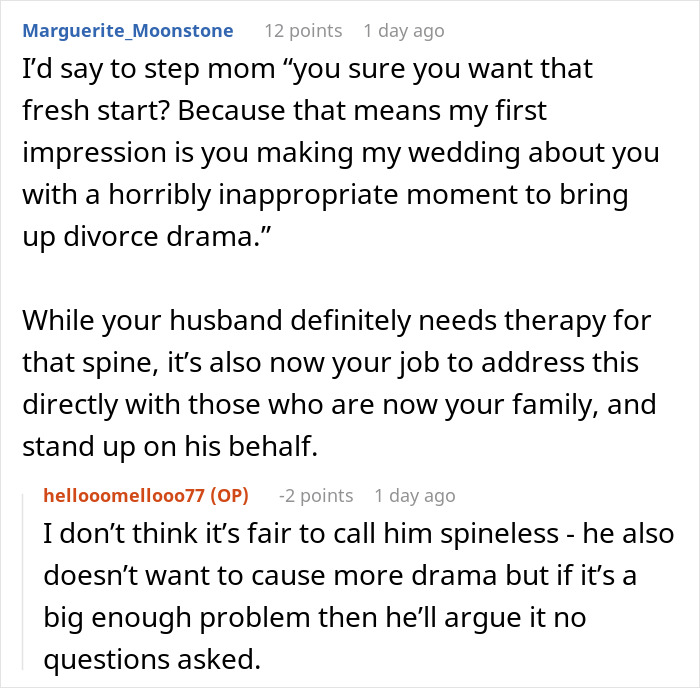
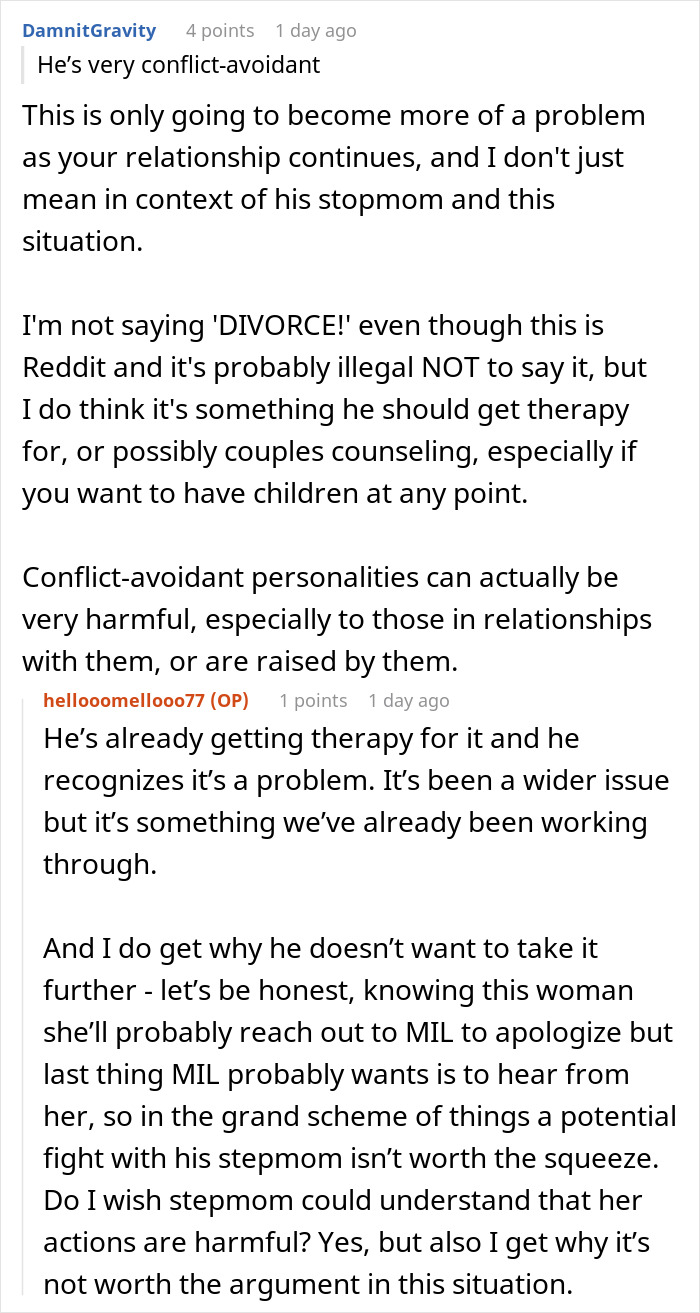
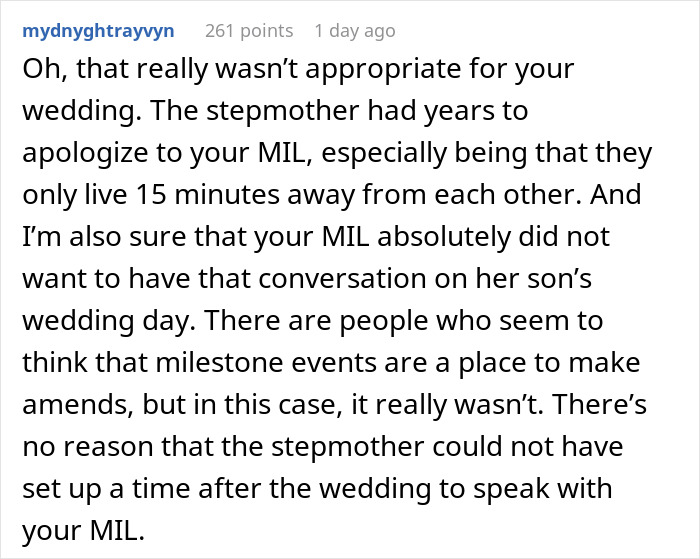
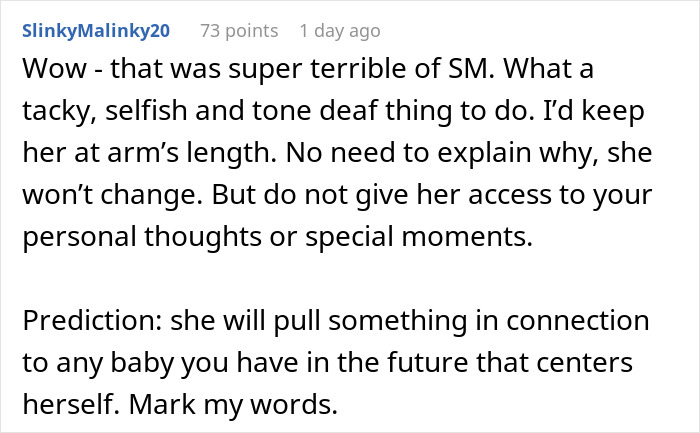
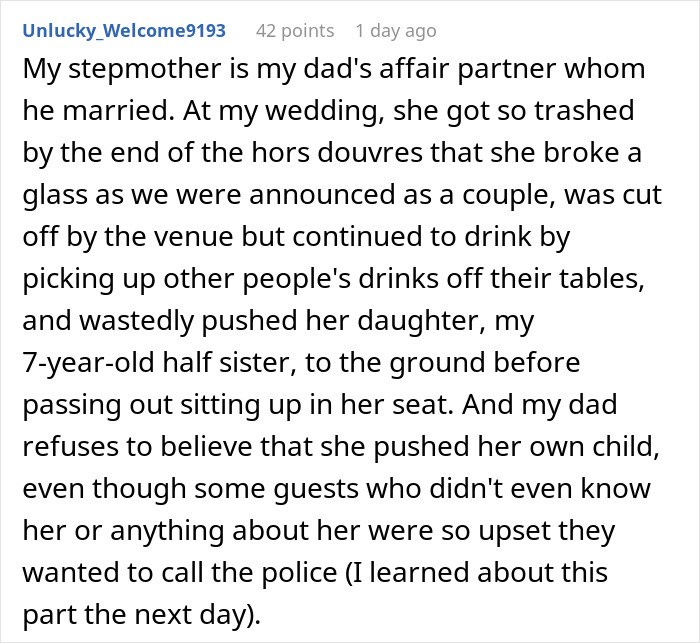
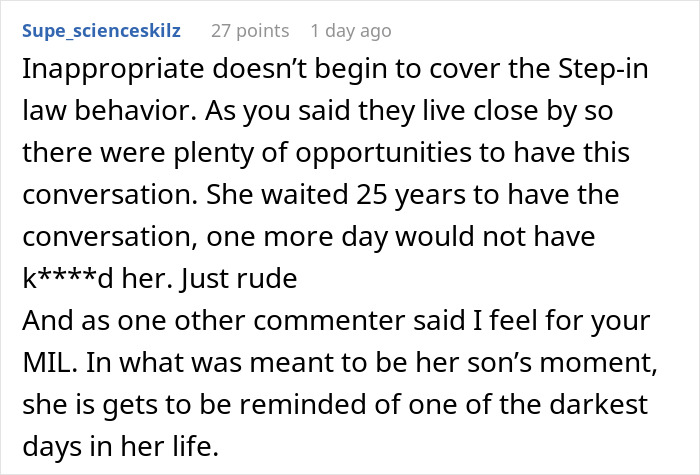
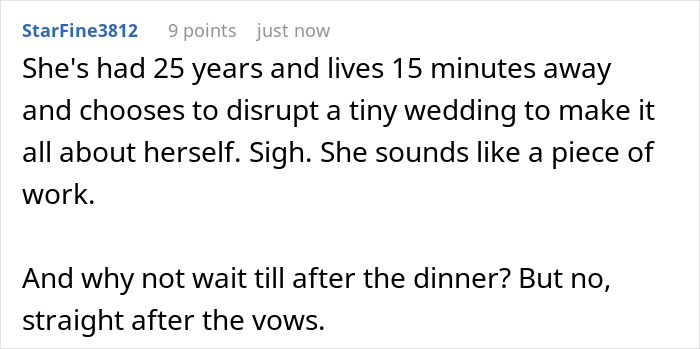
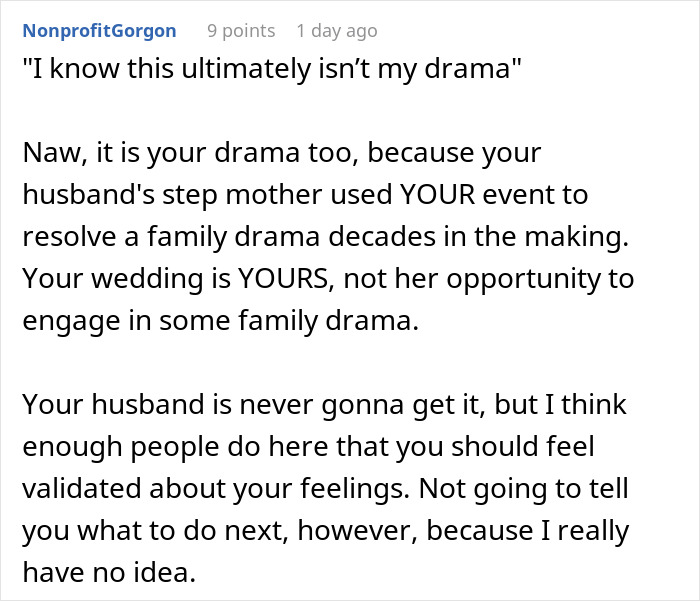
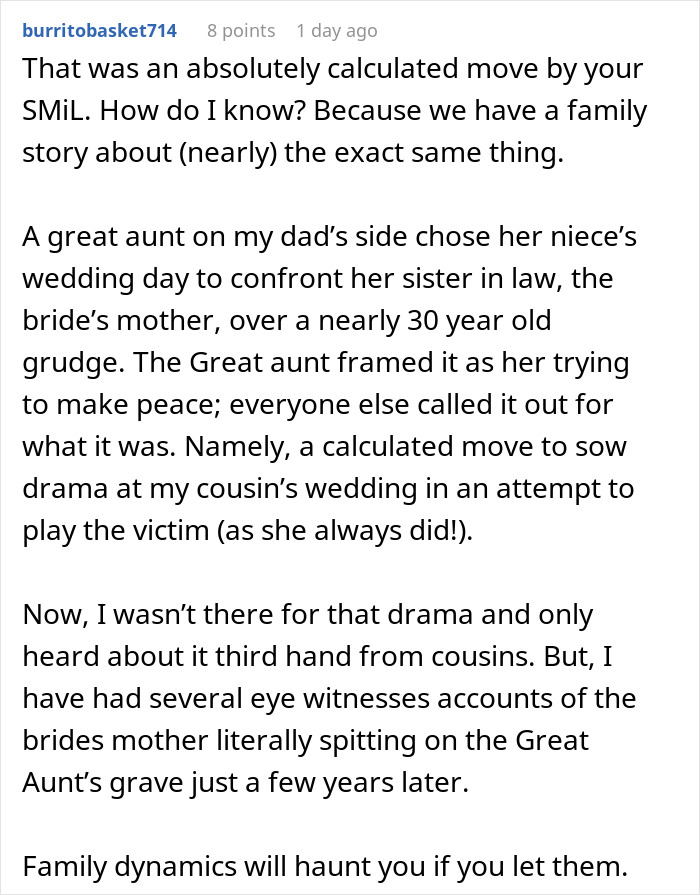
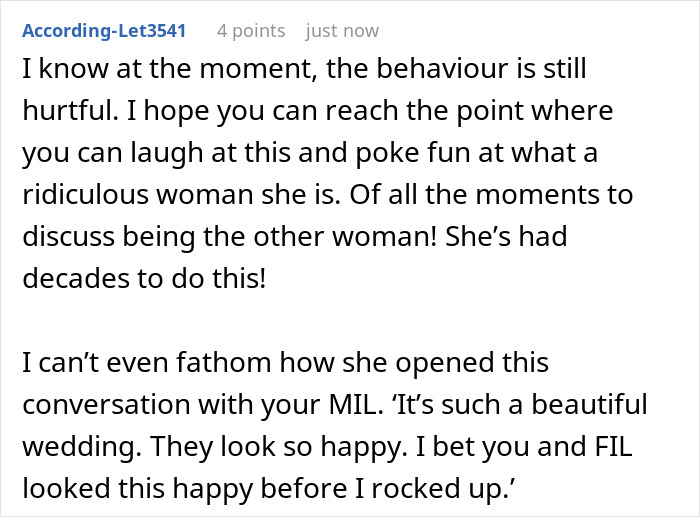
People felt that the man’s stepmother had chosen an inappropriate time to address such a sensitive family matter






 Follow Us