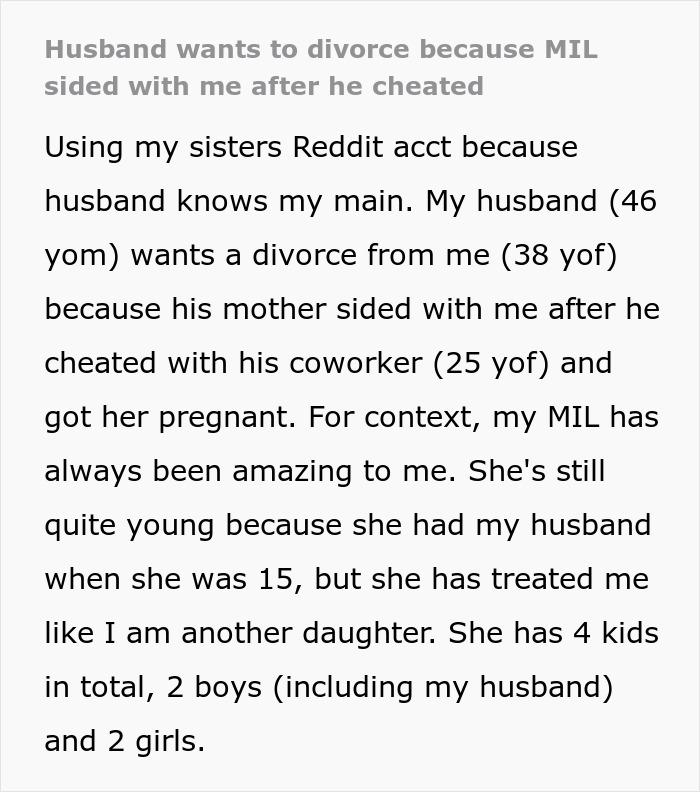
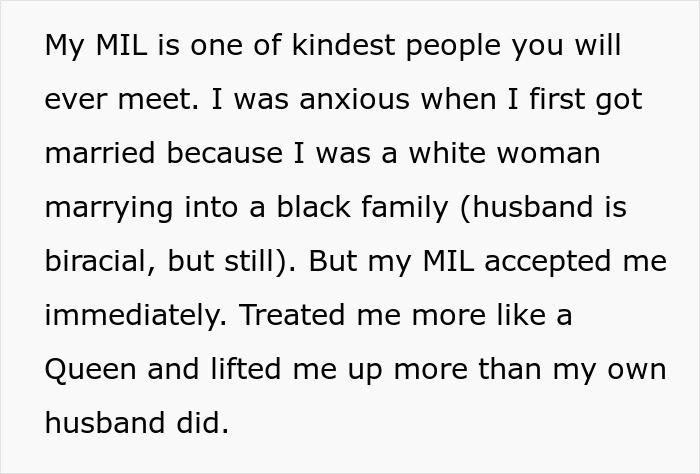
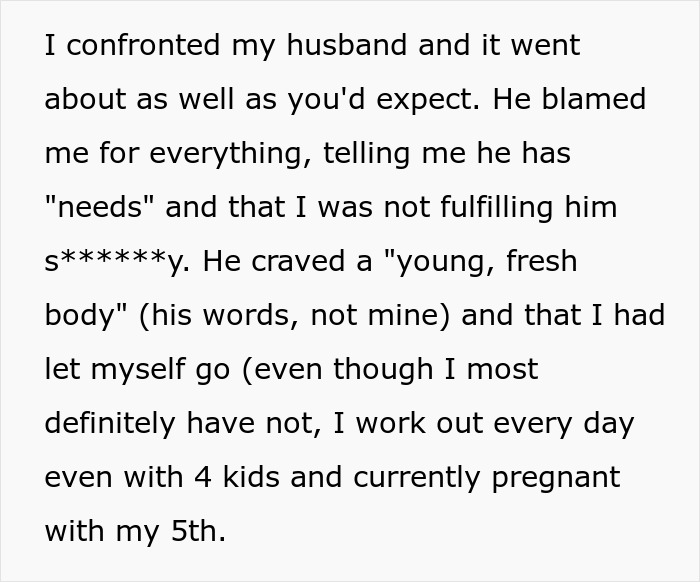
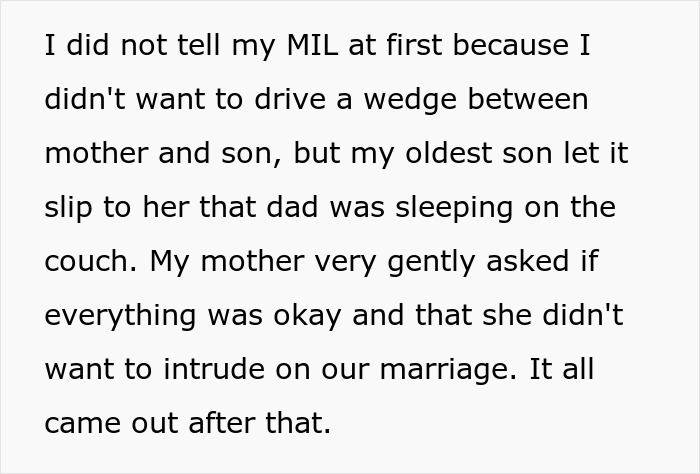
We’ve often heard that a mother’s love is unconditional. And while many moms will always have a soft spot for their children, that doesn’t automatically mean they will support them when they are clearly in the wrong. Sometimes, loving someone also means holding them accountable and refusing to defend their actions simply because they are family.
Today’s story is a powerful example of that. A woman shared how she raised four children while expecting her fifth, with support from not only her own mother but also her loving mother-in-law. But her life was turned upside down when she discovered that her husband had been having an affair with a much younger coworker—and had gotten her pregnant. During one of the most difficult periods of her life, her mother-in-law chose to stand by her rather than excuse her son’s behavior. And how did he react when his own mother refused to take his side? Keep reading to find out.
When a partner cheats in a relationship, the betrayal can completely shatter trust and leave the other person questioning everything they thought they knew about their relationship

magnific (not the actual photo)

One woman shared how she discovered that her husband was cheating while she was pregnant with their fifth child




Stockbusters / magnific (not the actual photo)



sosiukin / magnific (not the actual photo)





yanalya / magnific (not the actual photo)




charlesdeluvio / unsplash (not the actual photo)



Some research suggests that mothers may be more lenient with their sons than with their daughters, often giving boys more freedom
Many of us are familiar with the idea that mothers will go above and beyond for their children. From worrying about whether they have eaten properly to staying awake until they get home safely, a mother’s care can show up in countless big and small ways. Mothers are often the first people their children turn to for comfort, advice, encouragement, or simply a reassuring hug when life gets difficult. No matter how old their children become, many moms never quite stop worrying about them—or wanting to make their lives a little easier.
Interestingly, some research suggests that mothers may treat sons and daughters differently. A survey of around 2,500 mothers conducted by parenting website Netmums found that nearly half knew it was wrong to treat boys and girls differently, yet almost 90% admitted that they did so in some way. The research suggested that mothers were twice as likely to be more critical of their daughters than their sons. More than half also said they felt a stronger emotional connection with their sons. These findings do not mean that mothers love their daughters less. Rather, they may reflect long-standing expectations about how boys and girls are supposed to behave. Daughters may sometimes be expected to be more responsible, mature, helpful, or emotionally aware, while sons may be given more room to make mistakes.
The survey also found that more than one in five mothers admitted they sometimes ignored behaviour from their sons that would have resulted in criticism or punishment if a daughter had behaved the same way. Nearly half described their sons as “mummy’s boys,” while more than one in four said they loved their sons differently from their daughters. Loving children differently does not necessarily mean loving one child more than another. Parents may connect with each child in unique ways, depending on personality, shared interests, family roles, or life experiences.
A mother’s love and support for her son are not necessarily bad. In fact, books like Strong Mothers, Strong Sons: Lessons Mothers Need to Raise Extraordinary Men by Dr. Meg Meeker highlight how a mother’s approval, encouragement, and emotional support can play an important role in building her son’s confidence and character. Mothers can also help raise respectful, compassionate, and emotionally healthy men by teaching them empathy, responsibility, independence, and how to form healthy relationships. Of course, like any close relationship, balance matters—supporting a child and being emotionally present is very different from becoming overly involved in their decisions or relationships.
However, a problem might arise when a mother becomes overprotective of her son, though the reasons behind this can be more complicated than simply “spoiling” him. Parenting patterns can be shaped by culture, family traditions, personal experiences, anxiety, and the expectations people grow up with. In some families, boys are seen as needing more care and protection, while girls may be expected to mature earlier and become independent sooner. A mother may continue cooking, cleaning, solving problems, or making decisions for her adult son because she genuinely sees these actions as expressions of love and care. However, when support becomes excessive and takes over tasks or decisions an adult can handle independently, it can interfere with the development of autonomy and confidence.
Generational conditioning is one reason some women may feel it is their responsibility to care for and protect their sons, even after they become adults
These ideas can be easier to understand through everyday examples. Imagine a family where a teenage daughter is expected to help with cooking, clean up after dinner, and remember important appointments, while her brother is excused because “boys are less organized” or “he will figure it out later.” The mother may not intend to be unfair. She may simply be repeating the expectations she grew up with. Or perhaps an adult son calls his mother whenever he disagrees with his partner, and she immediately takes his side without hearing the full story. In both situations, care can slowly turn into overprotection. The son may become used to having someone solve his problems, while the daughter may feel that she is expected to be more responsible simply because she is a girl. These patterns can affect everyone involved, even when they begin with good intentions.
Generational conditioning may also play an important role. In many societies, sons were historically viewed as future family providers, heirs, or the people expected to carry on the family name. These beliefs can continue influencing family dynamics long after social expectations have changed. Another possible factor is emotional enmeshment, which happens when personal boundaries between family members become unclear. A mother may rely heavily on her son for emotional support that she is not receiving from a partner, close friends, or other adults. She may share problems with him that are too heavy for his age or expect him to comfort her whenever she feels lonely or upset. As the son grows older, the relationship may remain unusually dependent. He may feel guilty about making decisions without his mother’s approval or worry that creating distance will hurt her. This does not mean that a close mother-son relationship is unhealthy. Strong family bonds can be deeply meaningful. The difficulty arises when emotional closeness leaves little room for independence, privacy, romantic relationships, or healthy boundaries.
Things can also get more complicated when a mother’s protectiveness affects her relationship with a daughter-in-law. Some mothers may worry that their son’s partner is taking up too much of his time or changing the relationship they once had. Others may fear that the daughter-in-law will not care for him properly or that they will feel left out as their son begins building a family of his own. In some cases, jealousy, insecurity, or difficulty accepting change can create tension. A mother may compare herself with her daughter-in-law or feel as though she is competing for her son’s attention. Of course, not every difficult mother-in-law relationship stems from these feelings, and conflict can come from many directions. But when boundaries are unclear, even small disagreements can grow into long-term resentment.
Every mother-son relationship is different. There is absolutely nothing wrong with loving a son deeply, supporting him through difficult moments, or maintaining a close relationship as he grows older. In fact, children often benefit from knowing that their parents are there when they need guidance or comfort. The goal is not for mothers to become distant or stop caring. Instead, healthy support often means knowing when to help and when to allow a child to take responsibility for their own choices.
For instance, the mother-in-law in today’s story was willing to hold her son accountable after his actions caused immense pain. By standing beside her daughter-in-law, she was not choosing one family member over another or loving her son any less. Instead, she was recognizing that what he had done was wrong and refusing to excuse his behavior simply because he was her child. Sometimes, supporting someone does not mean defending every decision they make—it means being honest with them and holding them accountable when they have hurt others.
And while it is heartwarming that the woman in today’s story has a caring mother-in-law standing beside her, her husband’s behavior remains deeply troubling. He reportedly carried on a long-term affair, got his coworker pregnant, blamed his wife for his choices, and then became angry when his own mother refused to take his side. Her support may offer the woman some comfort during an incredibly painful time, but it does not erase the betrayal or make the difficult road ahead any easier. What do you think about this situation, Pandas? Let us know your thoughts in the comments below.
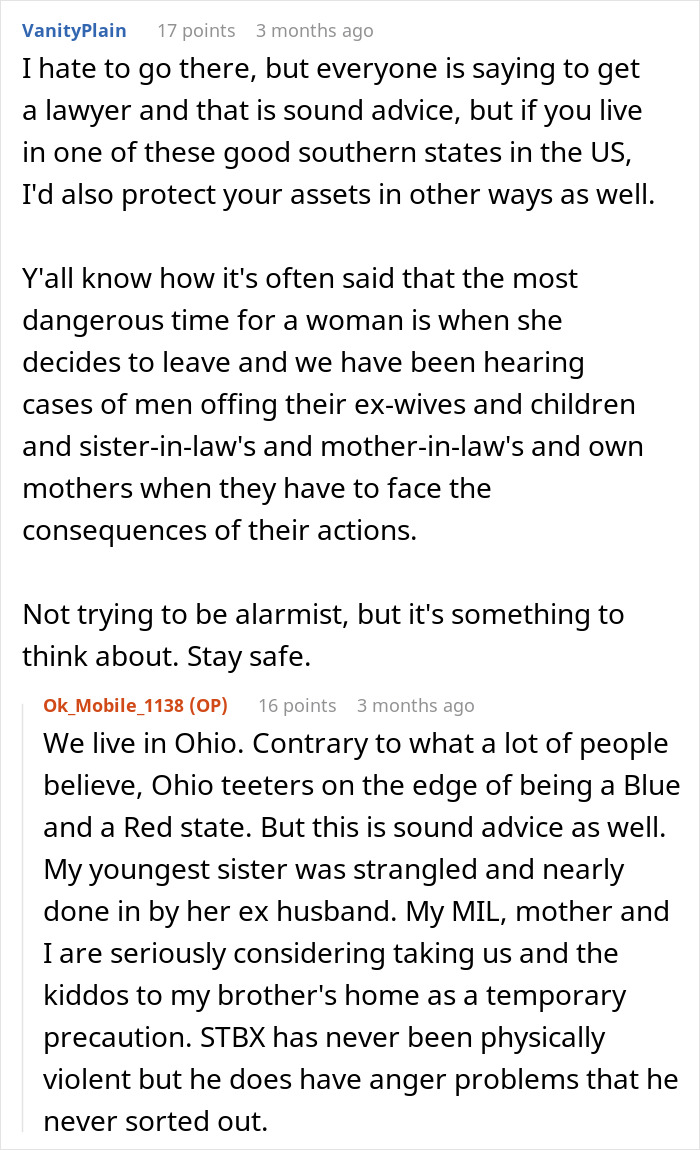
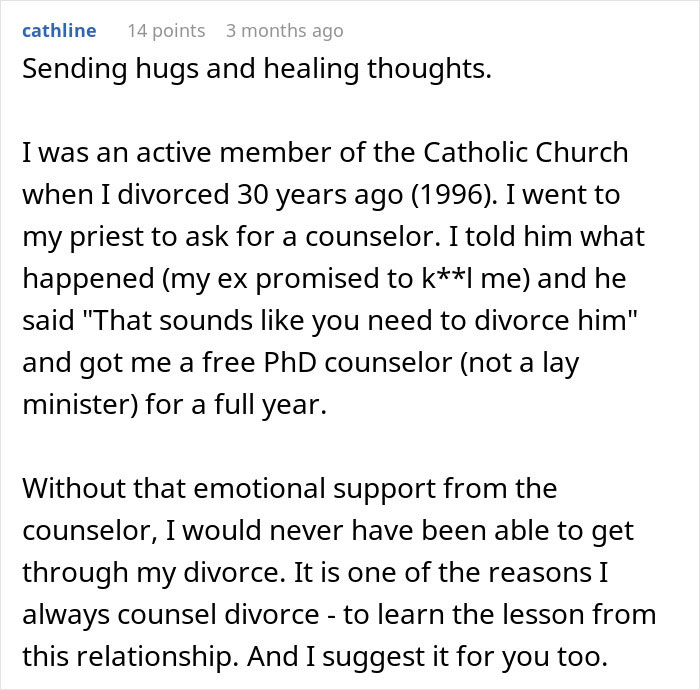
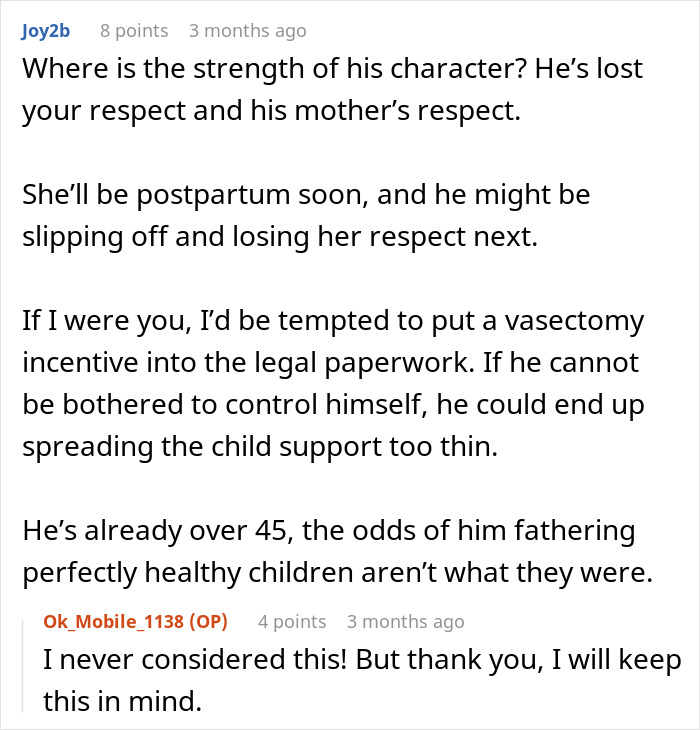
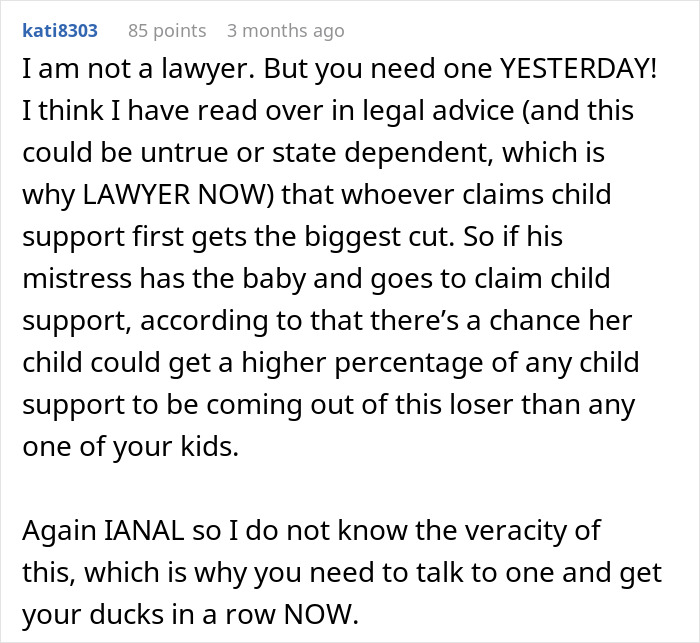
People were very pleased and impressed by the woman’s mother-in-law’s behavior
















 Follow Us