I don’t think there’s anyone who hasn’t been held up by traffic before. It’s quite common to leave the house convinced everything will go perfectly, only for you to encounter traffic. If you’re not trying to catch a flight, you might sigh, accept your fate, and maybe apologize for running late. Others, though, decide that the best solution is to ask an entire group of strangers to rearrange their day.
That’s exactly what happened at one local tourist attraction after an employee shared a memorable phone call on Facebook. The worker described how a guest, who was running so late that they would miss their scheduled tour by an hour, repeatedly insisted the attraction delay a sold-out experience just for them.
More info: Reddit
Sometimes, the most responsible thing to do is accept the consequences of our own miscalculations rather than expect everyone else to adjust around them

Image credits: carlosbarquero / Magnific (not the actual photo)

A guest called the attraction to say they would arrive around 5:30 p.m. for their 4:30 p.m. tour because of heavy traffic
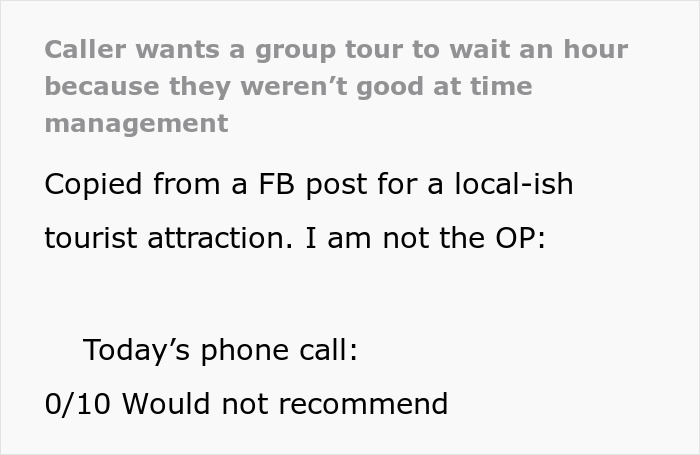
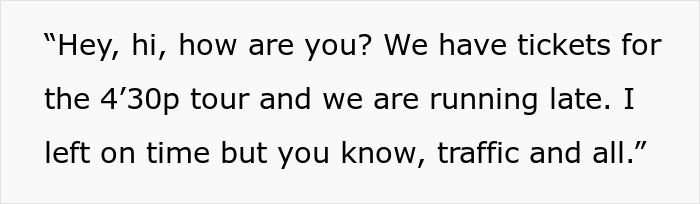
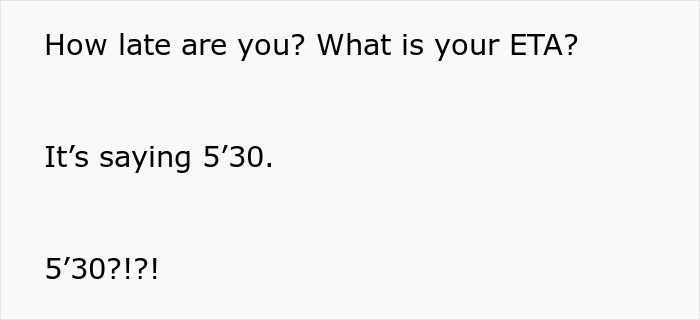
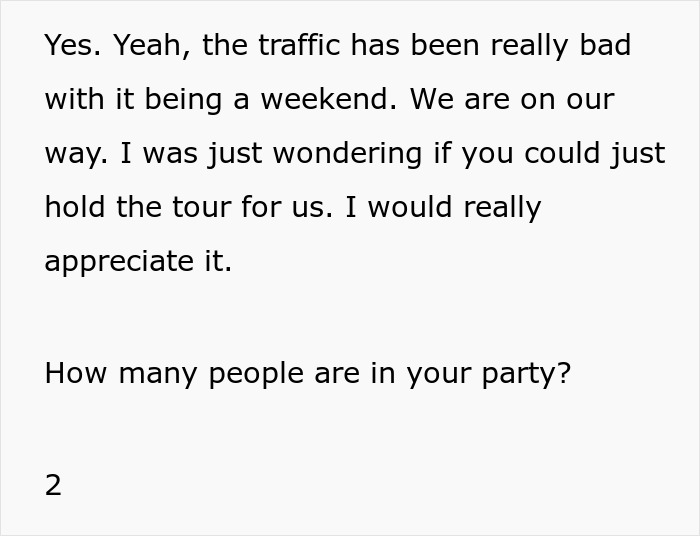
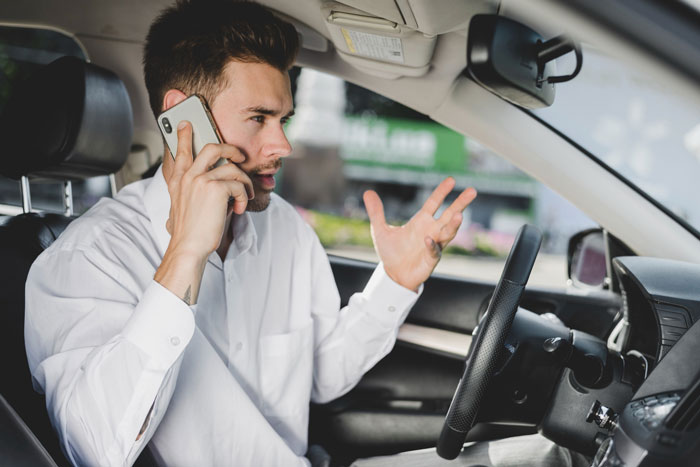
Image credits: freepik / Magnific (not the actual photo)
The employee explained that the sold-out tour could not be delayed and that other guests who arrived on time could not be kept waiting
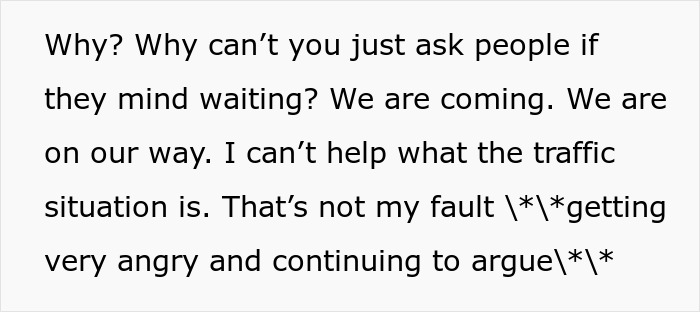
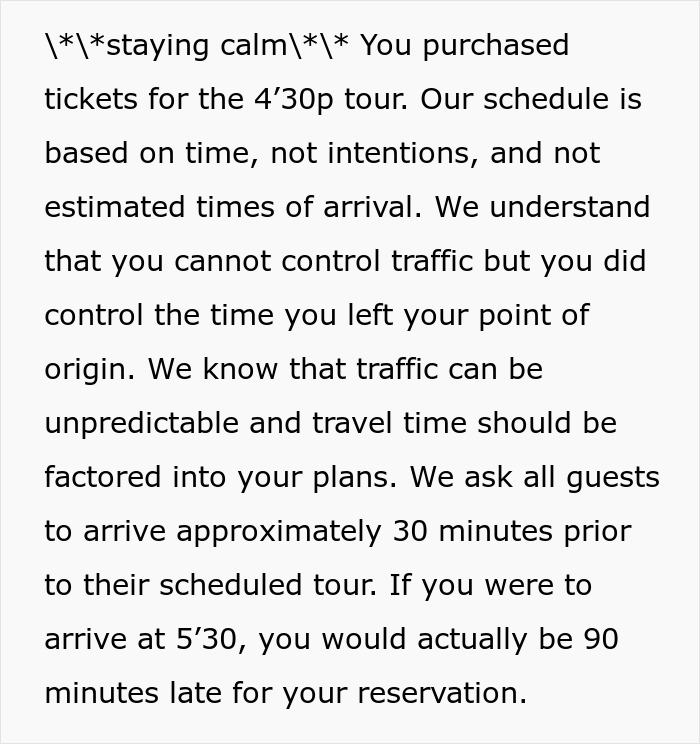
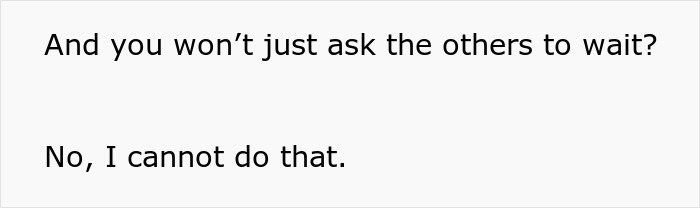

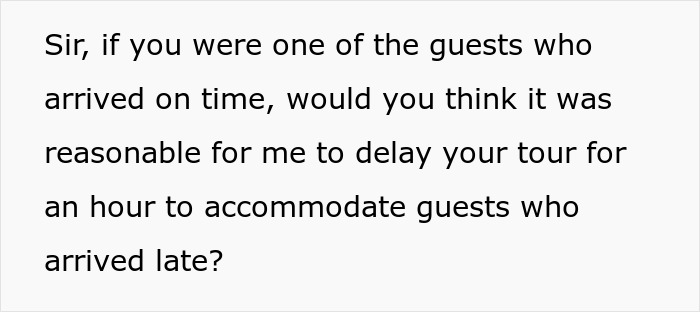
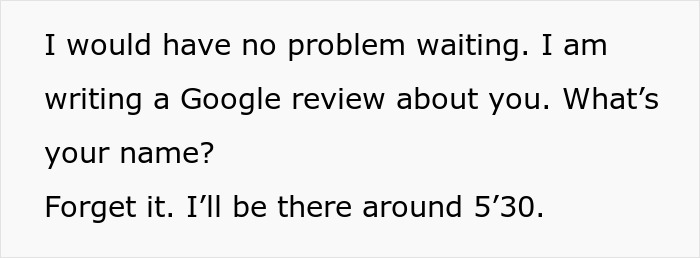

Image credits: Ycazac / Magnific (not the actual photo)
The guest continued arguing, demanded the staff ask everyone to wait, and became upset after being told they would miss the tour
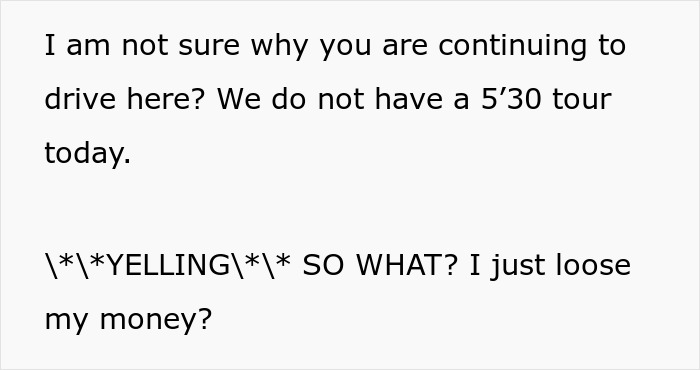
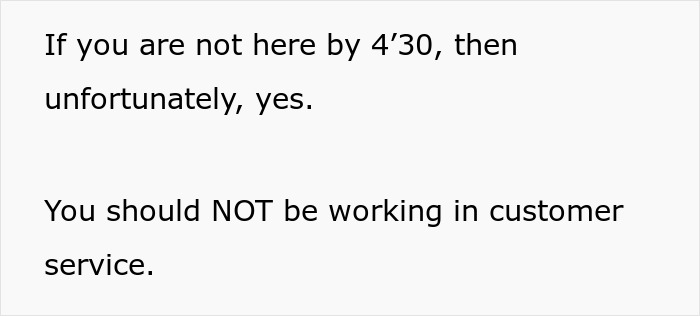
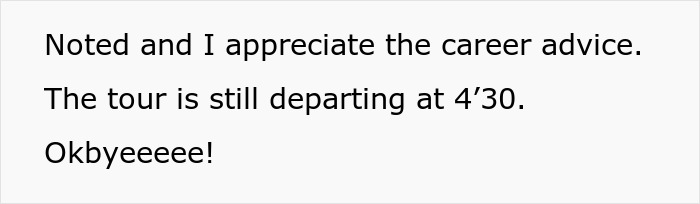
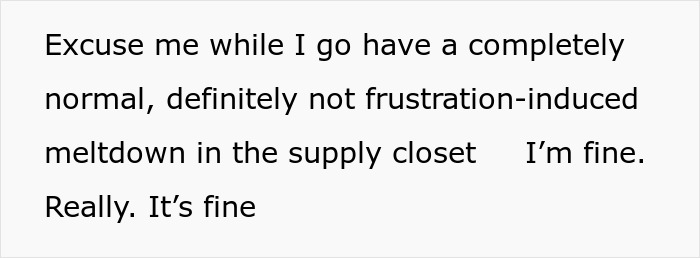
Image credits: lizlemonworld
The employee stood by the schedule, ended the call politely, and later shared the frustrating customer service experience online
The employee explained that the call started politely enough. A guest with tickets for a 4:30 p.m. tour said they had left on time but had been caught in heavy weekend traffic. According to their navigation, they wouldn’t arrive until around 5:30 p.m. After learning there were only two people involved, the employee explained that the tour was already sold out and would leave on schedule.
Rather than accepting the situation, the caller repeatedly suggested the employee simply ask everyone else if they would mind waiting. They argued the delay wasn’t their fault because traffic had slowed them down and insisted the attraction should accommodate them. The employee calmly explained that while traffic is unpredictable, visitors are responsible for planning enough travel time.
They also pointed out that guests are encouraged to arrive roughly 30 minutes before their scheduled tour, meaning the caller would actually be about 90 minutes late for their reservation. At this point, the employee threatened to leave a negative Google review and criticized the employee’s customer service.
Despite being told there wasn’t even a 5:30 p.m. tour scheduled that day, the caller said they were still driving to the attraction. When they realized they would lose the money spent on their tickets, they became increasingly frustrated and told the employee they shouldn’t be working in customer service.

Image credits: New Africa / Magnific (not the actual photo)
Asking guests to arrive before their scheduled tour is standard practice across much of the tourism industry. According to Zentix, many attractions advise visitors to check in roughly 15 to 30 minutes early. This extra time allows for practical steps such as finding parking, validating tickets, checking in with staff, and preparing groups for departure.
Of course, unexpected delays can happen to anyone, and traffic is one of the most common reasons travelers fall behind schedule. However, possible delays should be considered when planning trips tied to specific reservation times. Time-management strategist Kelly Nolan recommends adding extra buffer time to travel plans, particularly on weekends or when visiting popular destinations where heavier traffic is more likely.
The employee’s refusal to hold the tour also reflects a wider principle in customer service: fairness often means applying the same rules to everyone. According to FasterCapital, policies help businesses maintain trust with customers. While making an exception might solve one guest’s problem, it can also negatively affect dozens of others who arrived on time and planned their day around the advertised schedule.
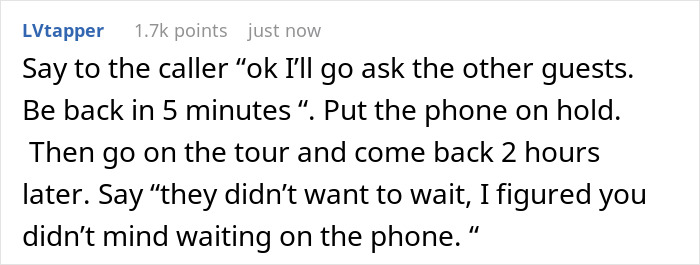
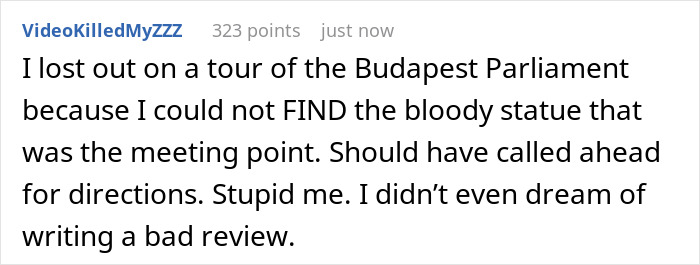
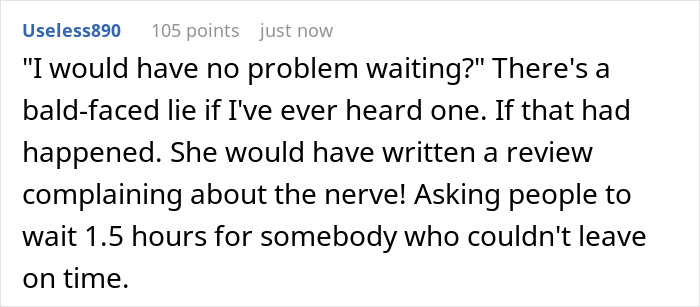
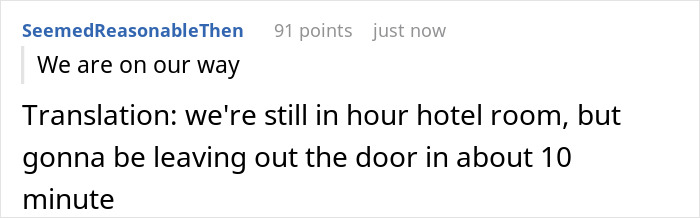
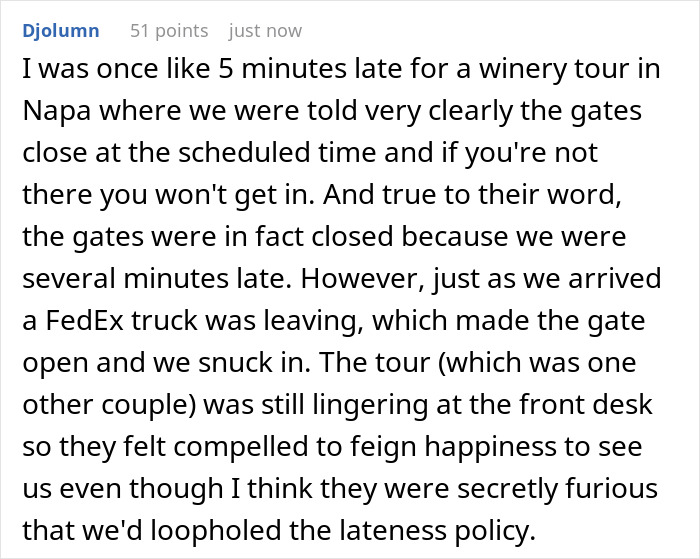
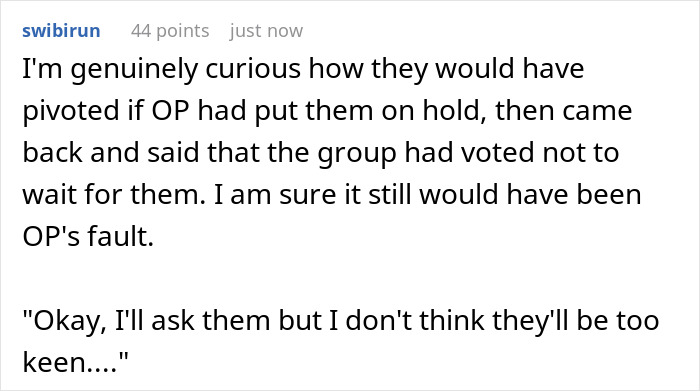
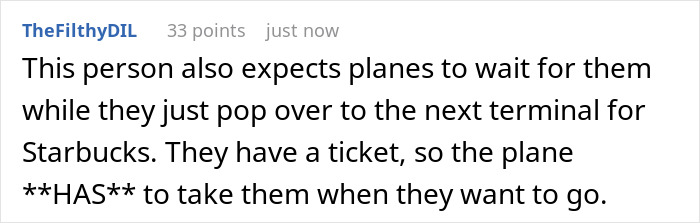
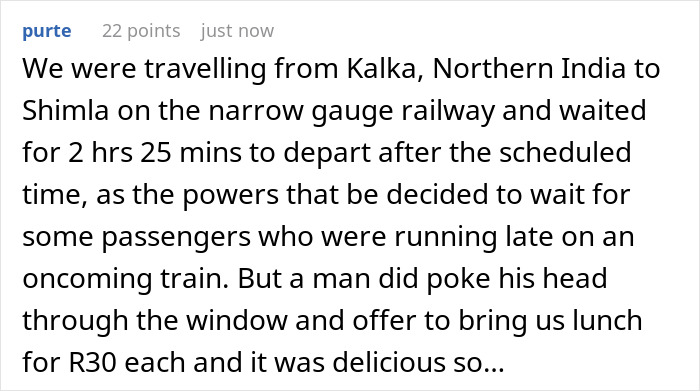
Netizens insisted that the late guests were unreasonable for expecting an entire group to lose time because of their delay. Many pointed out that scheduled experiences, such as tours or flights, cannot simply be rescheduled for one person’s convenience. What do you think? If you were one of the guests who arrived on time, would you agree to wait for the late duo? We would love to know your thoughts!
Netizens focused on the fairness aspect, arguing that people who arrive on time should not be punished for someone else’s poor planning







 Follow Us