Choosing whether or not to have kids is a deeply personal decision. And yet, people who choose to stay childfree often find themselves repeatedly explaining that choice to others. Friends, family, and even acquaintances sometimes feel the need to question it or try to convince them they’ll eventually change their mind.
One woman shared how her friend kept pushing the topic for years, even though she had always been clear about not wanting children. The final straw came at a wedding, when the friend loudly told her across the table, “Well, I hope you get pregnant.” What happened next left everyone at the table stunned—keep reading to see how she responded.
It is a personal decision whether to have kids or not, and nobody should pressure you into one or the other

Image credits: AI25.Studio/Pexels (not the actual photo)

A woman vented online about how a ‘frenemy’ of hers kept shamelessly testing her childfree boundaries
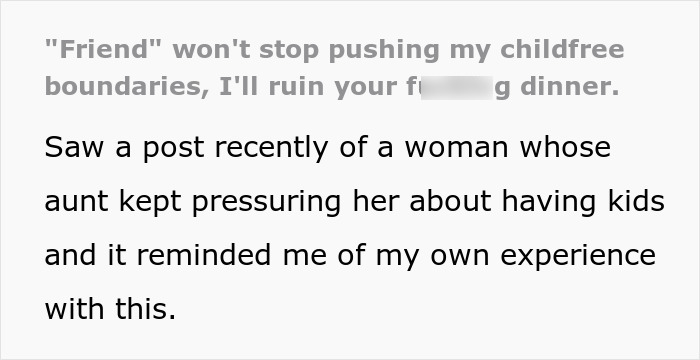
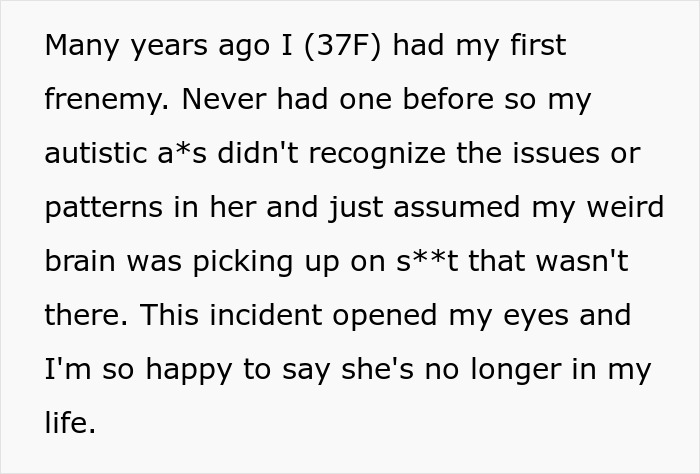
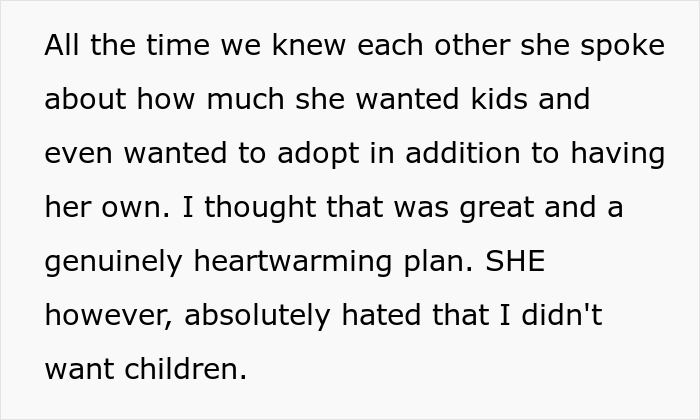
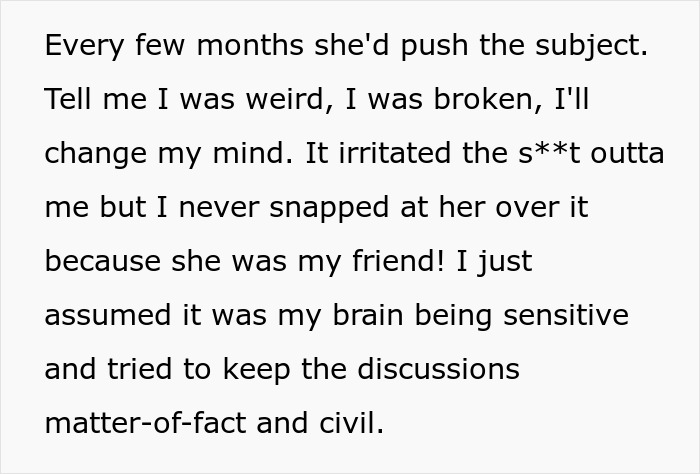
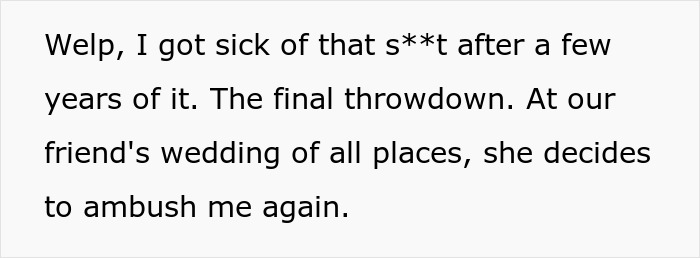
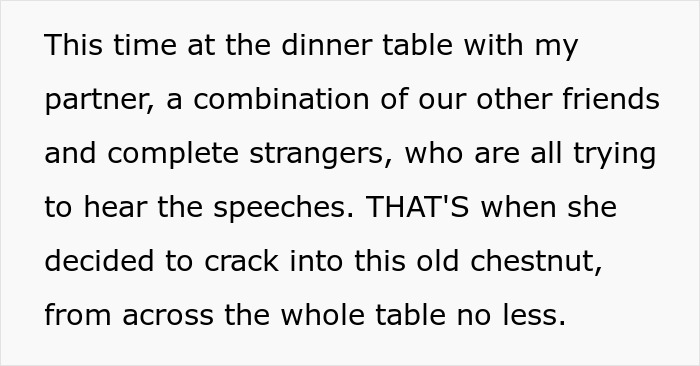

Image credits: Ayşenur Tekinel/Pexels (not the actual photo)
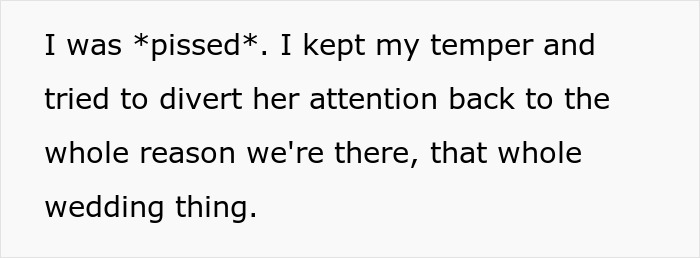

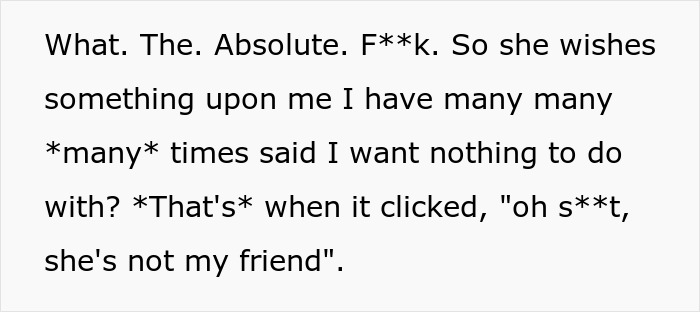
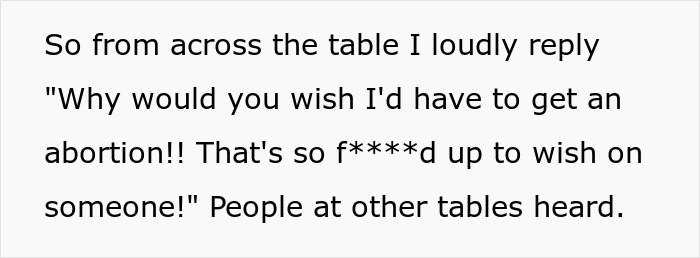

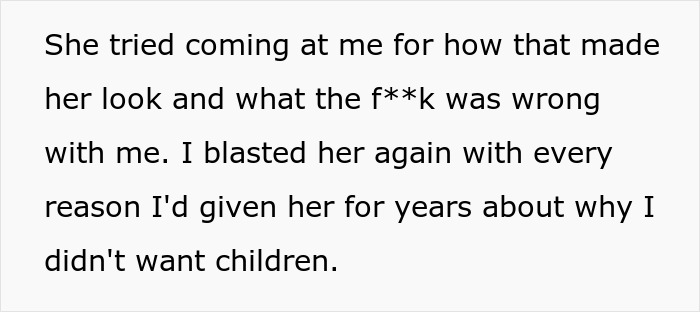
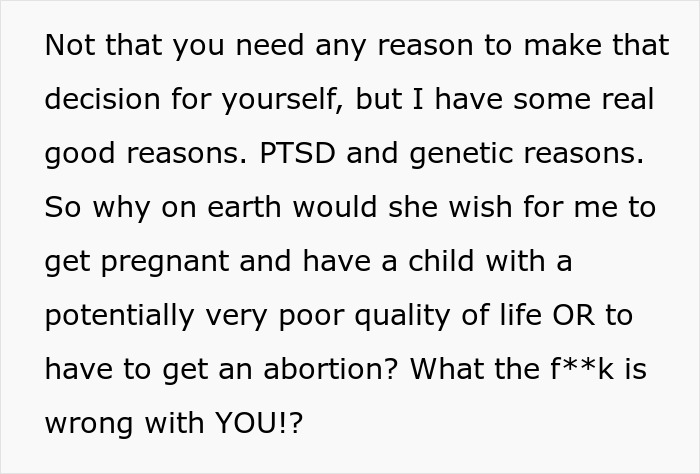
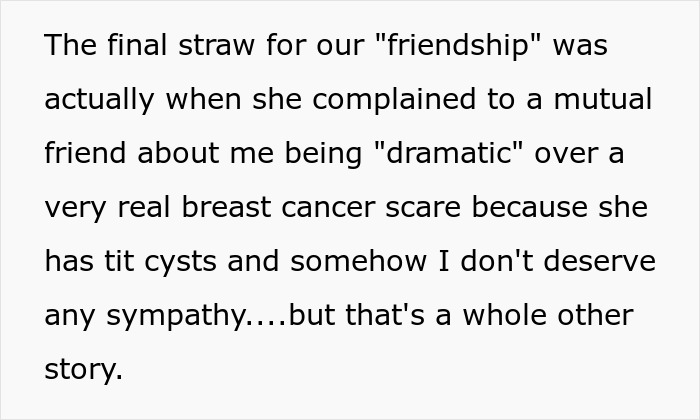
Image credits: suzy9mm
Many Gen Z adults say they are choosing not to have children because of the financial strain and rising cost of living
Image credits: Nuwan Bandara/Pexels (not the actual photo)
Parenting is no easy task, and most of us have heard the stories (whether from friends, cousins, or coworkers) about sleepless nights, endless laundry, and the chaos of raising little humans. In fact, the internet is packed with memes joking about the daily struggles of being a parent. Yet despite all the challenges, many moms and dads say the journey is deeply rewarding. For them, the joy of watching a child grow often outweighs the exhaustion. Parenting can bring meaningful moments, strong family bonds, and a sense of purpose that many people cherish. At the same time, it’s also a life choice that requires time, energy, and long-term commitment. And that’s exactly why some people take their time thinking carefully about it.
Beyond the day-to-day challenges of raising a child, there are many factors people consider when deciding whether parenthood is right for them. In recent years, more Millennials and Gen Z adults have openly talked about choosing to delay or skip having children altogether. Research from the Pew Research Center shows that the U.S. fertility rate reached a historic low in 2023. At the same time, a growing share of women ages 25 to 44 report that they have never given birth. These trends reflect changing lifestyles, priorities, and economic realities. People today are thinking differently about relationships, careers, and personal goals. And for some, that reflection leads to a different vision of adulthood than previous generations had.
One of the biggest factors influencing this decision is finances. Raising a child can be incredibly expensive, and many young adults are becoming more aware of those costs before making long-term commitments. According to a survey by MassMutual, nearly a quarter of Millennials and Gen Z adults without children say they don’t plan to become parents. Their main reason? Financial concerns. From childcare to healthcare and education, the price of raising kids can feel overwhelming. Many people worry about whether they’ll be able to provide the lifestyle and opportunities they would want for their children. As a result, finances have become a major part of the conversation around family planning.
That same survey revealed something interesting about how people think about money and parenthood. About 23 percent of adults between the ages of 18 and 43 said their decision to remain childfree is tied to two key financial concerns. First, many value the financial flexibility that comes with not having children. Without the costs of childcare, schooling, and other expenses, people often feel they have more control over their budgets. The second concern is uncertainty about whether they could comfortably afford the long-term costs of raising a child. For some, the question isn’t about whether they want children; it’s whether they could realistically support them without constant financial stress.
When you look at the bigger picture, those concerns start to make sense. Living costs have been steadily rising in many parts of the world. Rent, groceries, healthcare, and everyday expenses can already stretch budgets pretty thin. Buying a home, something many people once considered a major step before starting a family, has also become far more difficult for younger generations. With student loans and economic uncertainty in the mix, financial stability can feel harder to achieve. For many couples or individuals, the idea of adding the cost of raising a child on top of everything else can feel overwhelming. So naturally, people are thinking twice before making that decision.
And then there’s the sheer cost of raising a child itself. In a piece discussing the topic Fox News mentions, experts estimate that raising a child to the age of 18 now costs over $300,000 in the United States. And that number doesn’t even include college expenses. Once higher education is factored in, the total can easily climb into six figures more. When you break it down, the expenses add up quickly—food, clothing, healthcare, school supplies, childcare, and extracurricular activities. Over the years, these costs can quietly stack up into a massive financial commitment.
It’s important for people to respect others’ decisions about having children and avoid pressuring them to change their minds

Image credits: Rene Terp/Pexels (not the actual photo)
For some individuals, the decision not to have children is also influenced by health or genetic concerns. Certain people live with medical conditions or inherited disorders that they worry could affect future children. Others may carry personal experiences with illness in their families that make them cautious about passing those challenges along. These decisions are often deeply personal and emotional. People who make them usually spend a lot of time reflecting on what feels right for their circumstances.
There are also lifestyle reasons why some people choose to remain childfree. Many say the choice allows them to dedicate more time to hobbies, interests, and passions that matter to them. Without the responsibilities of parenting, they might travel more, explore creative pursuits, or invest more energy into personal growth. Others focus on building their careers, saving for the future, or maintaining an active social life. For these individuals, the freedom to shape their lives in different ways feels fulfilling. It’s not necessarily about rejecting family life; it’s simply about prioritizing different goals. And for them, that path feels right.
Ultimately, deciding whether or not to have children is a deeply personal choice that looks different for everyone. Some people dream of becoming parents and building a family, while others feel happier pursuing different life paths. Neither decision is inherently right or wrong. What matters most is that individuals feel supported in making the choice that aligns with their values, circumstances, and well-being. Conversations about parenthood are becoming more open and nuanced as society evolves. And perhaps the most important takeaway is that everyone deserves respect for the life they choose to build.
In this particular case, it seemed like the author’s friend simply refused to respect her decision to remain childfree and kept pestering her about it for years. Eventually, the author decided to stand her ground and respond firmly when the comment crossed the line. What are your thoughts on this situation? Do you think she handled it the right way?
Here’s how readers reacted to the viral story while the author interacted with them in the comments
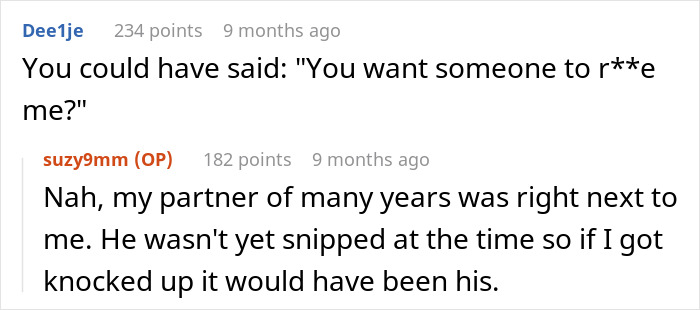
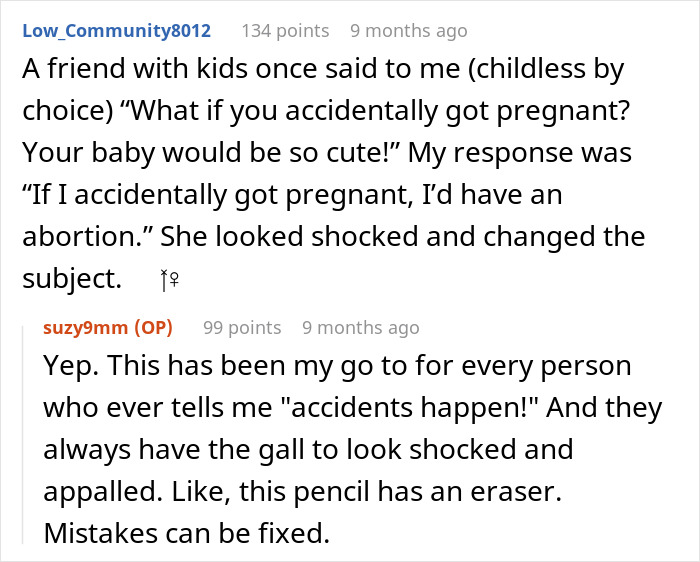
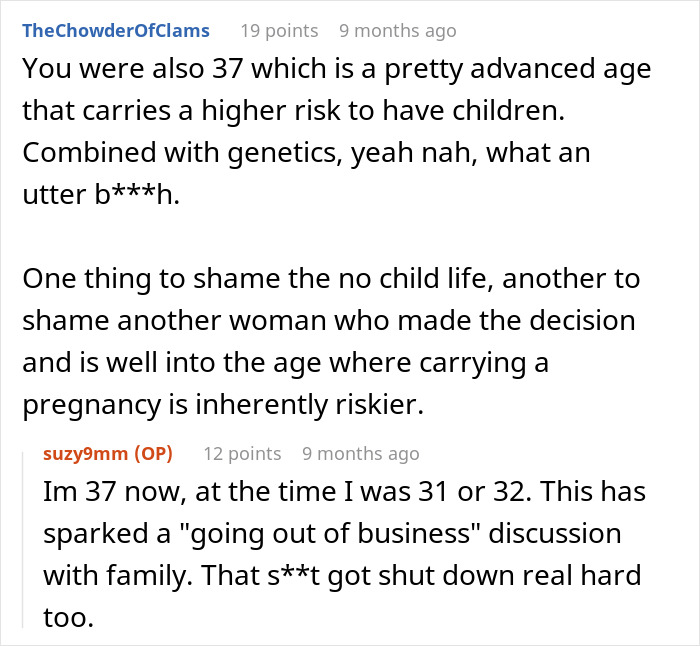
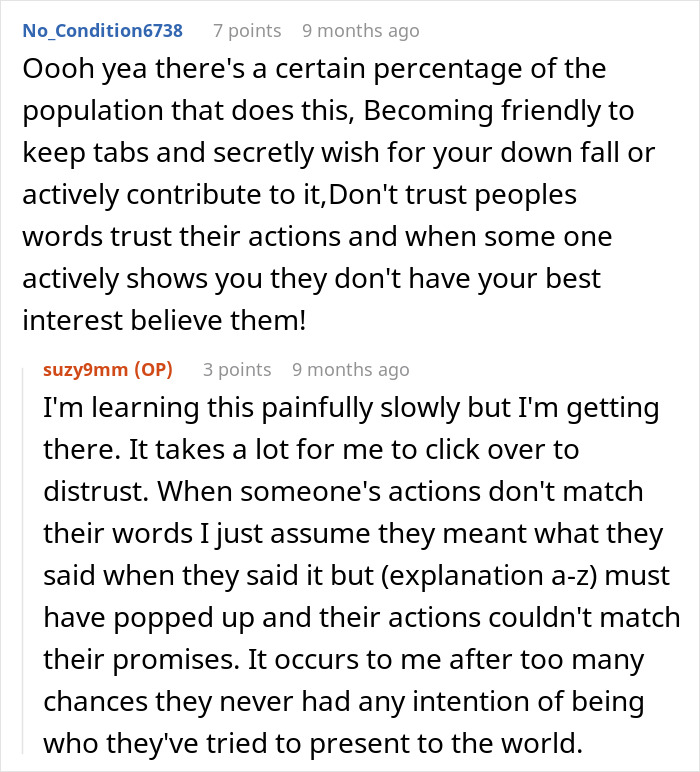

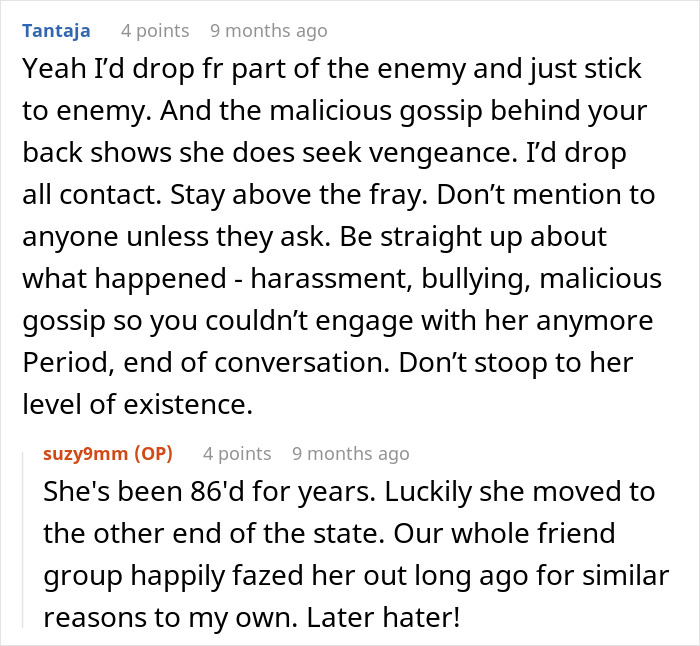

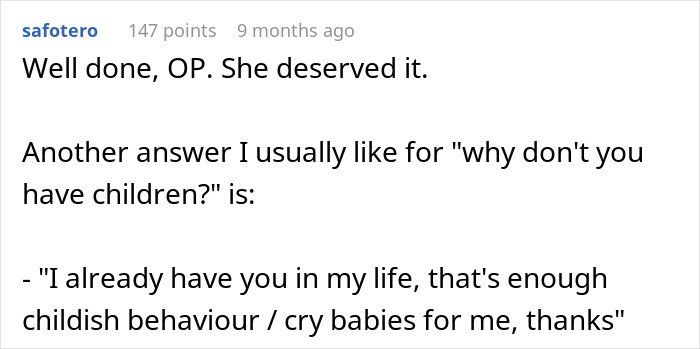
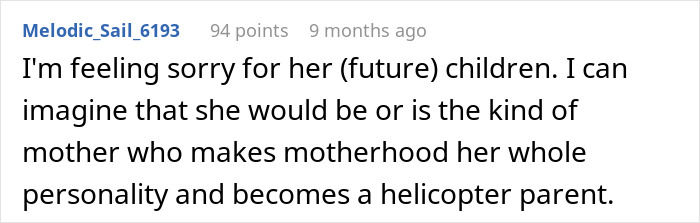
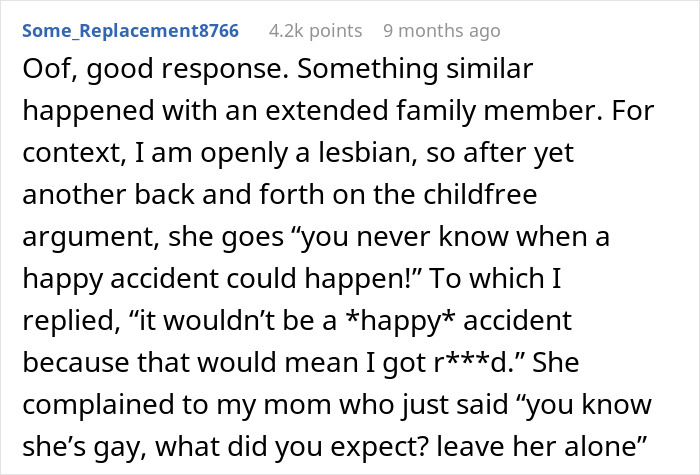
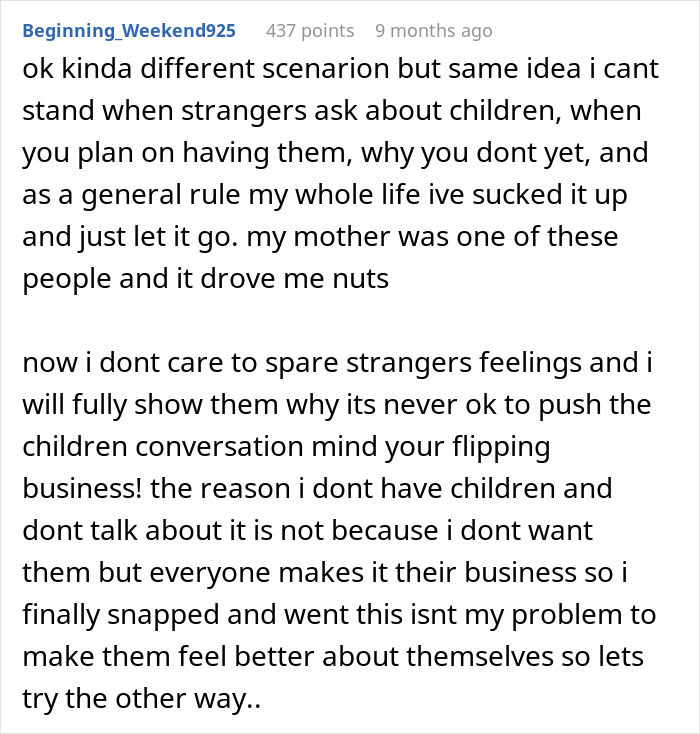
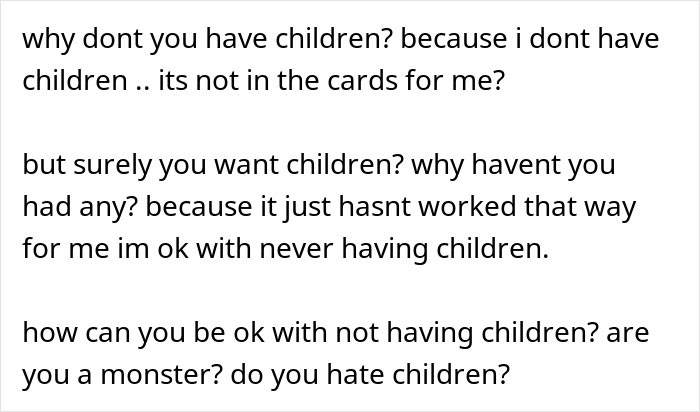
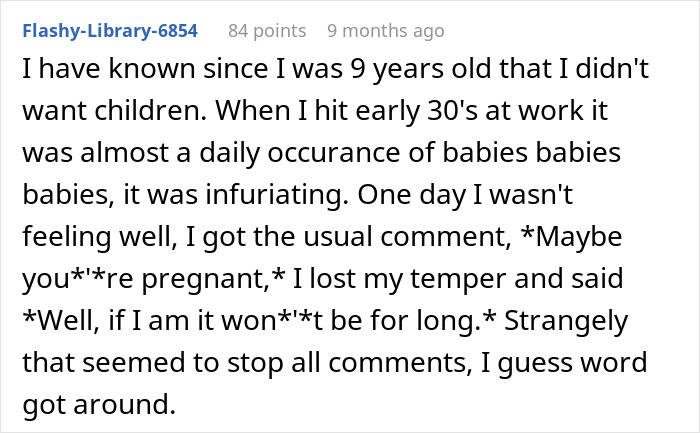
Some internet users shared similar stories


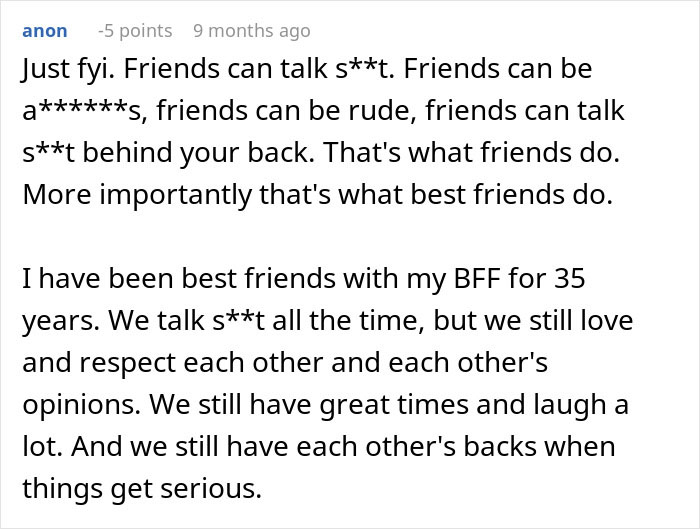
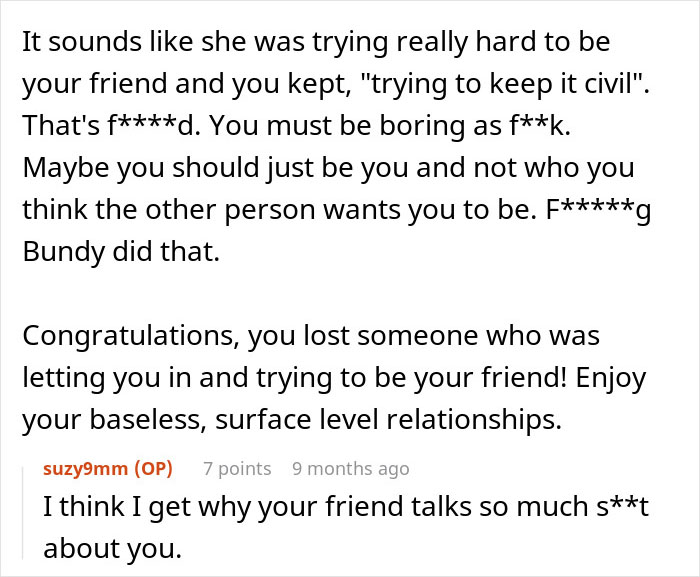
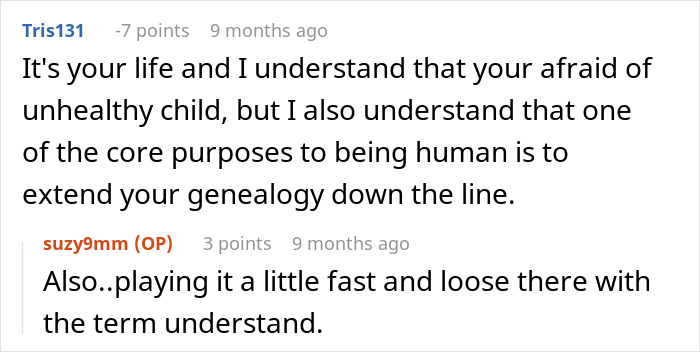
Not everyone was on the same page. Some readers disagreed with the author
 Follow Us