After the World Cup, perhaps everyone understands a little better why sports get so much hype. For years, it was seen as just another funny male hyperfixation, but it’s hardly surprising that people are now realizing just how fun it can be.
And of course, it’s not just football (or soccer, depending on where you are) that’s drawing people in. Across the pond, it’s all about American football, and some people, like the man in today’s story, are even season ticket holders for the Denver Broncos. As he explains on Reddit, whenever he can’t make it to a game, he lets his coworkers use his tickets. But this time, someone made him regret his small act of kindness.
Some sports fans are so passionate that they get season tickets for all games in advance

thapanee srisawat / Unsplash (not the actual photo)

A Denver Broncos fan did that, but after generously giving away a ticket that he wouldn’t be able to use, he realized that not everyone is as ethical as he is


Christian Velitchkov / Unsplash (not the actual photo)

Ashton Clark / Unsplash (not the actual photo)
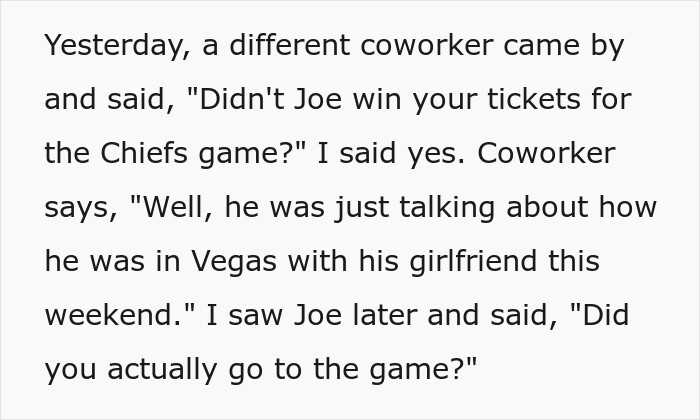
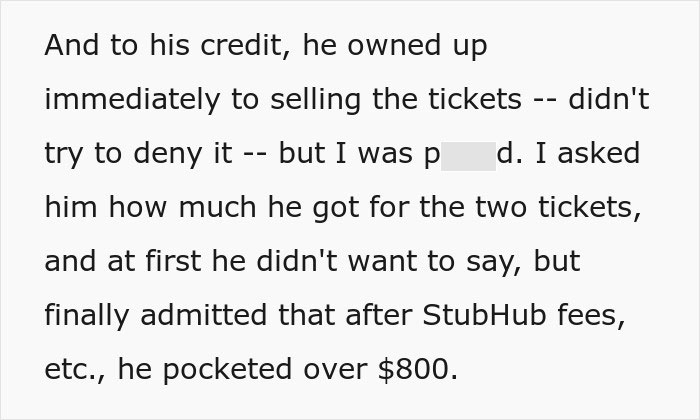

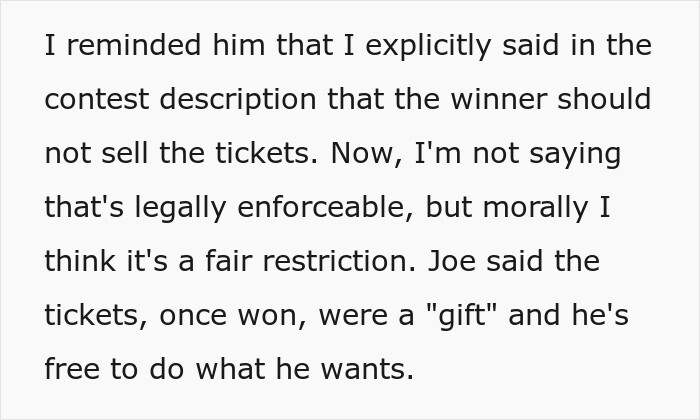
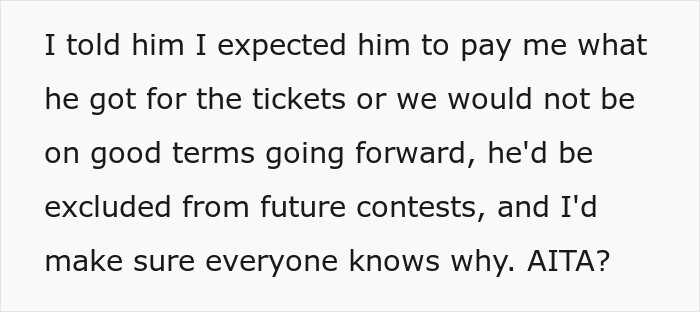
The men are both valid by looking at the situation differently
This story actually has two sides, and both may be right in their own way: the ticket holder’s and his colleague’s. Behavioral economist Dan Ariely divides human interactions into two worlds: social norms, based on community-driven exchanges, and market norms, driven by cost-benefit calculations. The ticket holder operated under social norms, while his colleague did the opposite.
They’re just looking at the situation differently. For the ticket holder, however, the exchange also carried a much greater emotional weight. Psychologists have found that experiential gifts, like concert tickets, sporting events, and trips, can have stronger social bonds than material gifts or cash. This makes the exchange far more meaningful to the person who values the experience, in this case, the narrator.
However, despite seeing things differently, the colleague, Joe, might actually be experiencing what Dr. Albert Bandura calls moral disengagement. This is when ordinary people convince themselves that ethical rules don’t apply to them in certain situations, allowing them to act selfishly without feeling guilty.

Alexander Mils / Unsplash (not the actual photo)
By flagging resold tickets, the narrator could lose his ticket holder privileges
Morally and ethically, selling the ticket, even if it technically belonged to him, is generally frowned upon. The Emily Post Institute, considered the gold standard for modern etiquette, states that passing along or regifting something is only acceptable if you’re certain the original giver wouldn’t mind. In this case, Joe knew the narrator didn’t want the tickets sold.
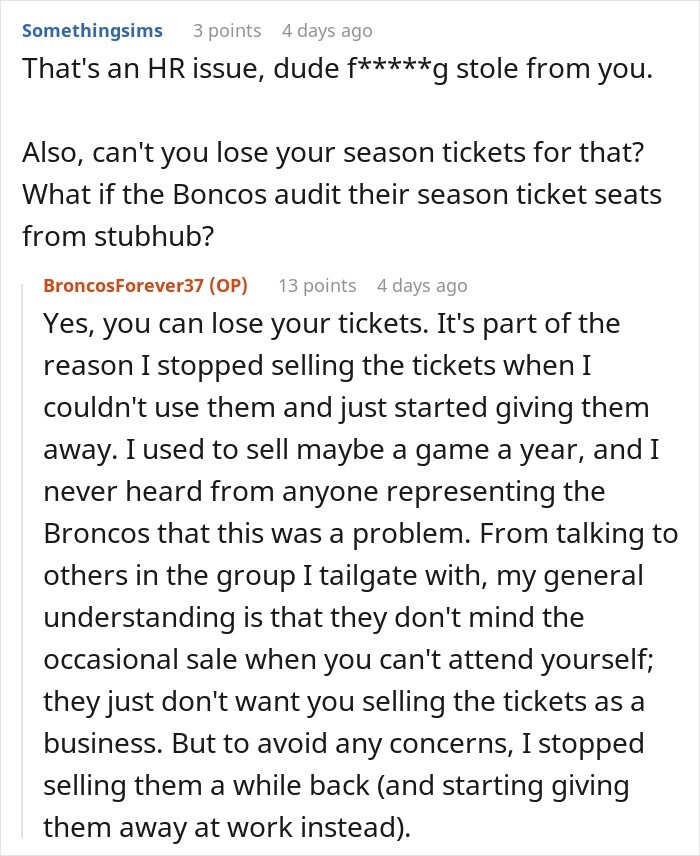
Moreover, this could also have consequences for the narrator. NFL teams actively track the digital barcodes of season tickets, and if they flag a season ticket holder for repeatedly transferring tickets to different accounts, they could classify them as a commercial broker and revoke their privileges.
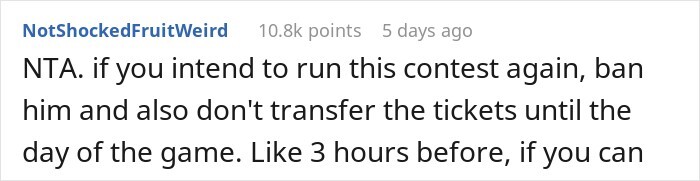
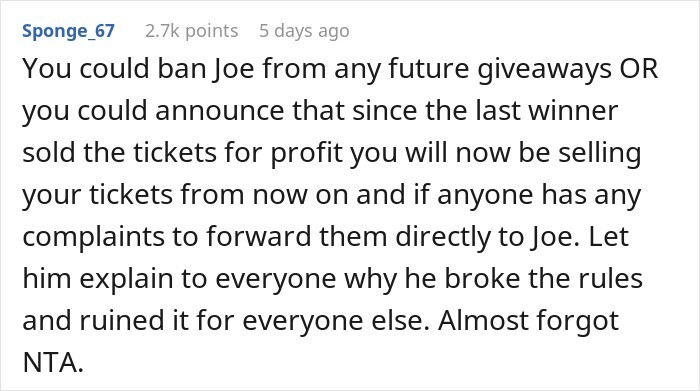
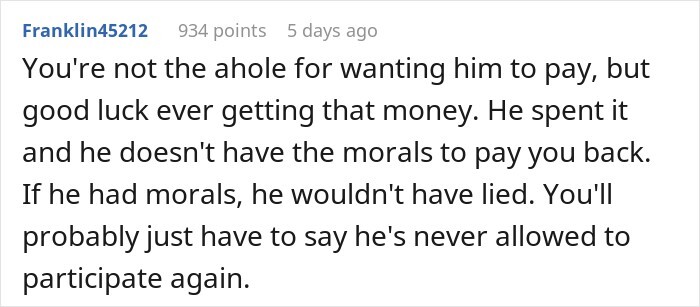
Now, this is where the narrator might be overstepping: he shouldn’t ask for the money back. Experts emphasize that once you transfer ownership of a prize, trying to collect money for it can become a personal boundary issue. But what do you think, Pandas? Should he try to get the money back, or let it go and simply ban Joe from his contests?
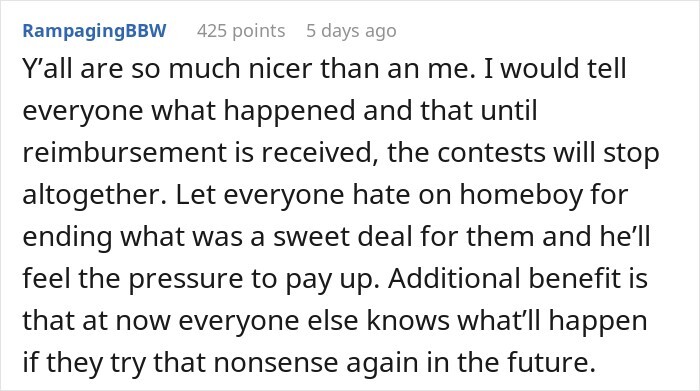
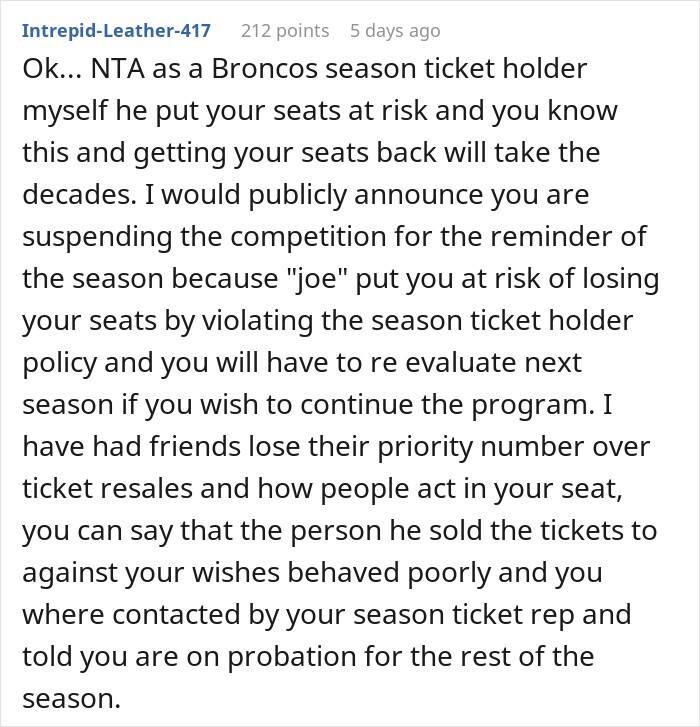
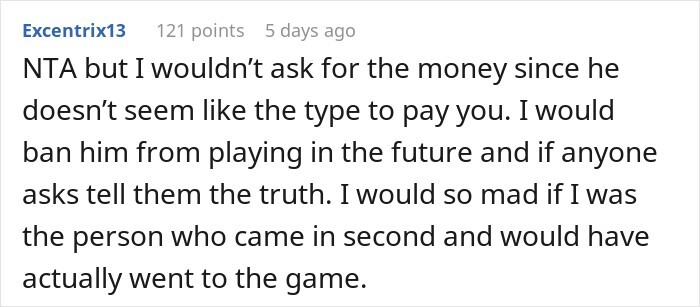
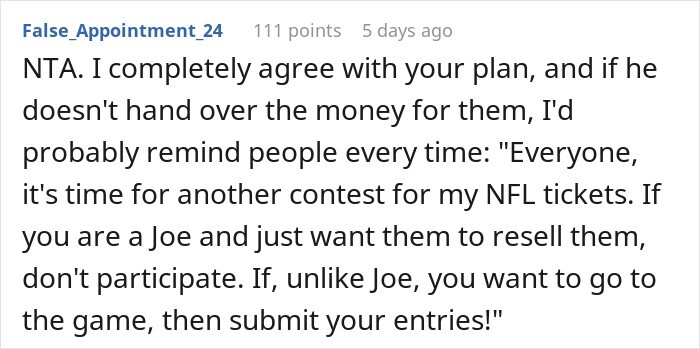
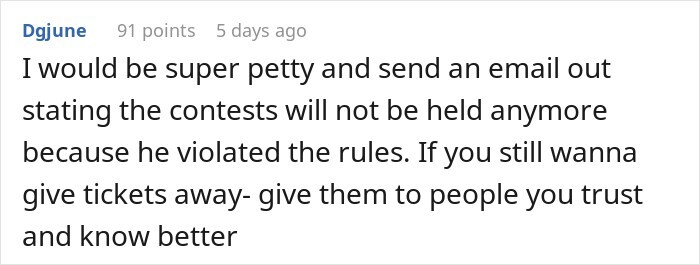
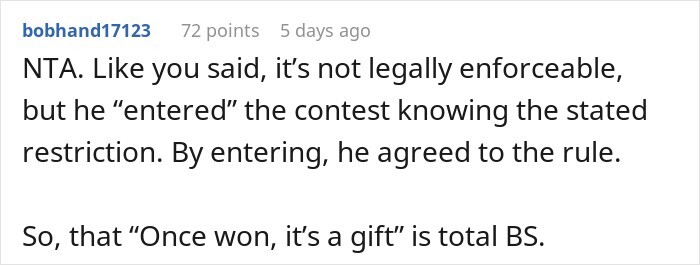
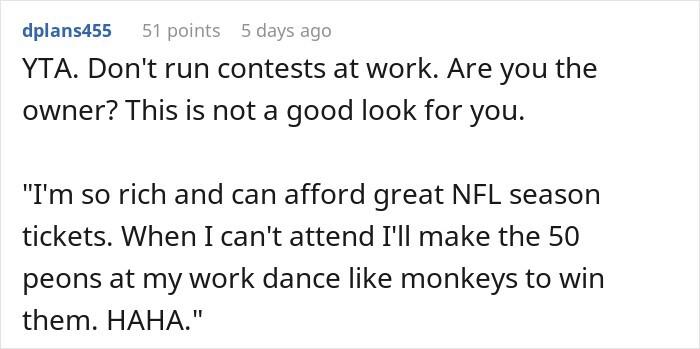
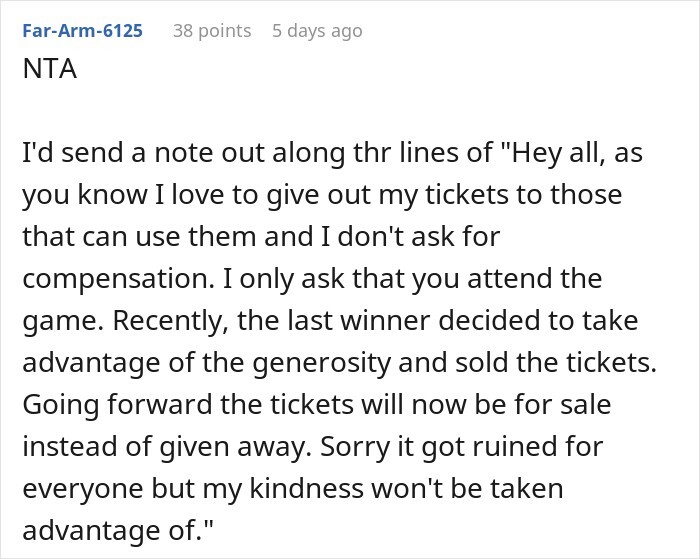
Most readers believe the narrator was in the right to be upset, but some also agreed with the man who sold the tickets








 Follow Us