Infidelity ruins lives. Worse, it’s a slow burn where the pain may go on for years since the cheating happened.
In this story’s case, the trauma had stayed with the person who experienced it since they were a seven-year-old child. As the author shared, their dad, who ended up marrying his affair partner, suddenly wants to be involved.
The individual didn’t want any relationship with their father, who tried to flip the script by playing the victim rather than apologizing.
The pain of infidelity can persist for years after the incident

Image credits: The Yuri Arcurs Collection / unsplash (not the actual photo)

This person has not forgiven their dad for cheating when they were seven years old
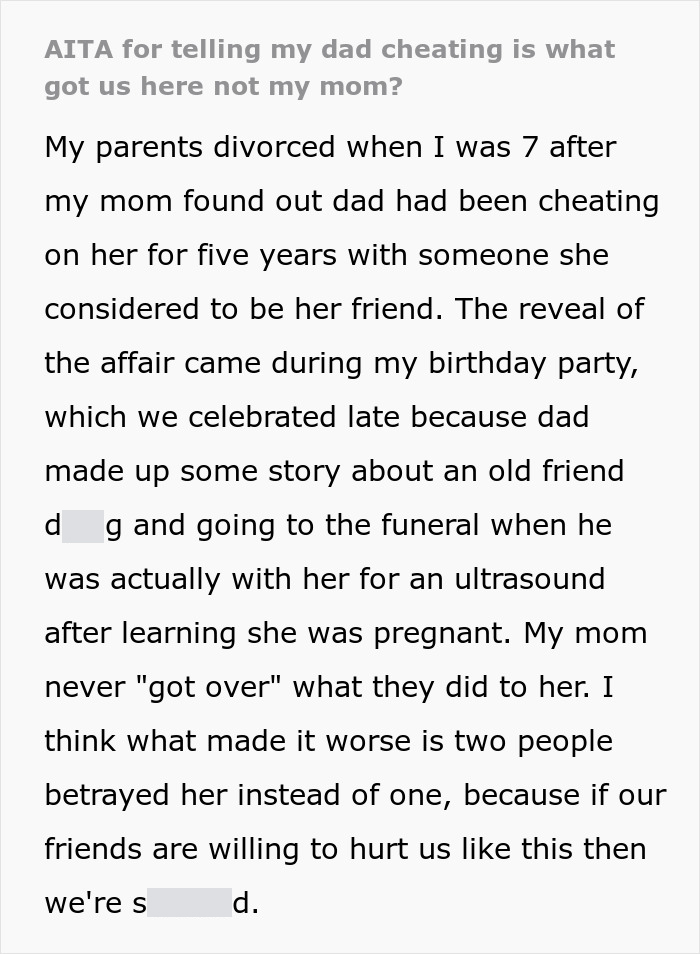
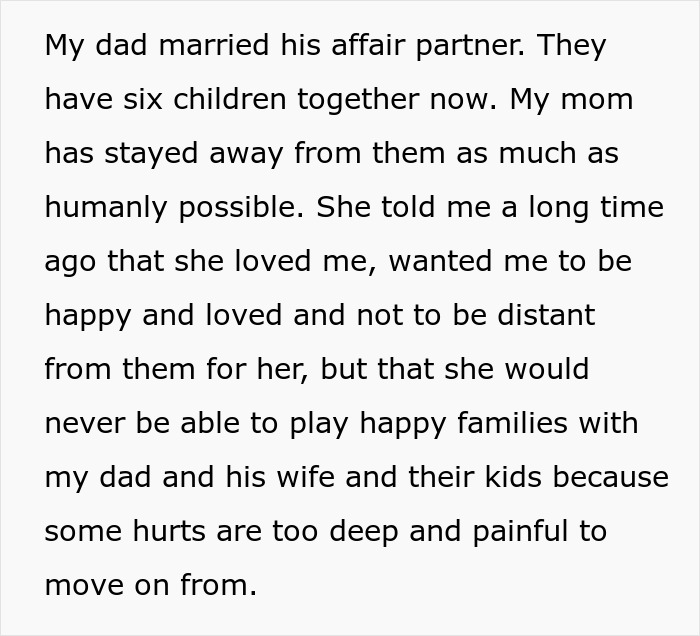
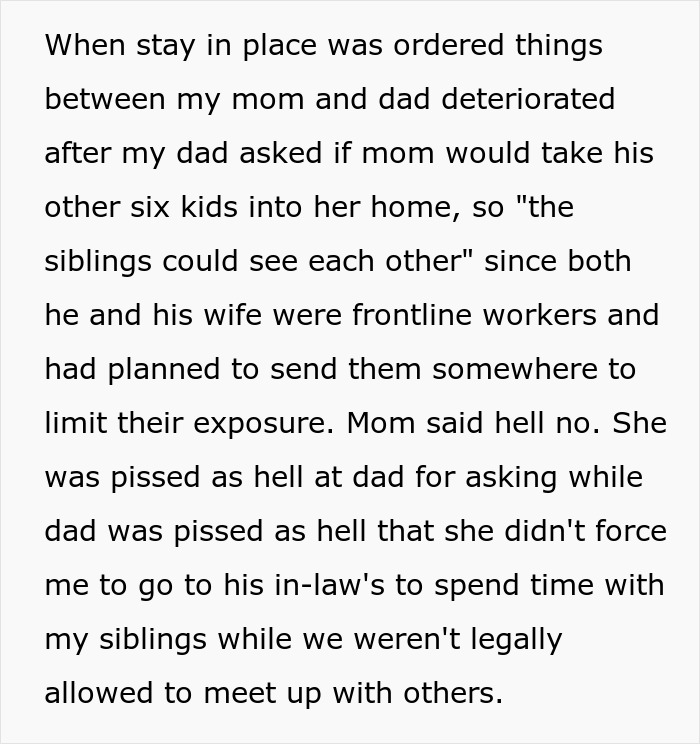
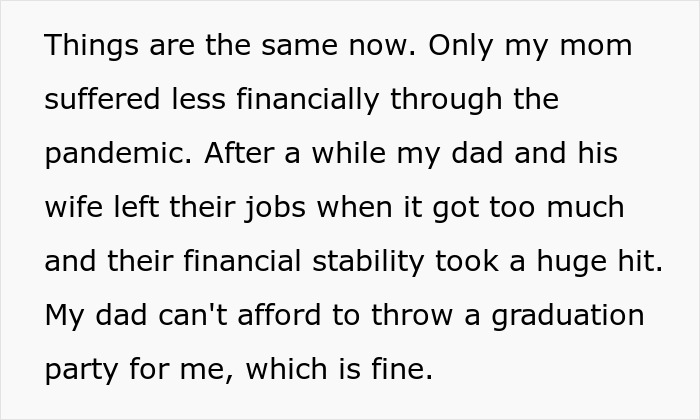
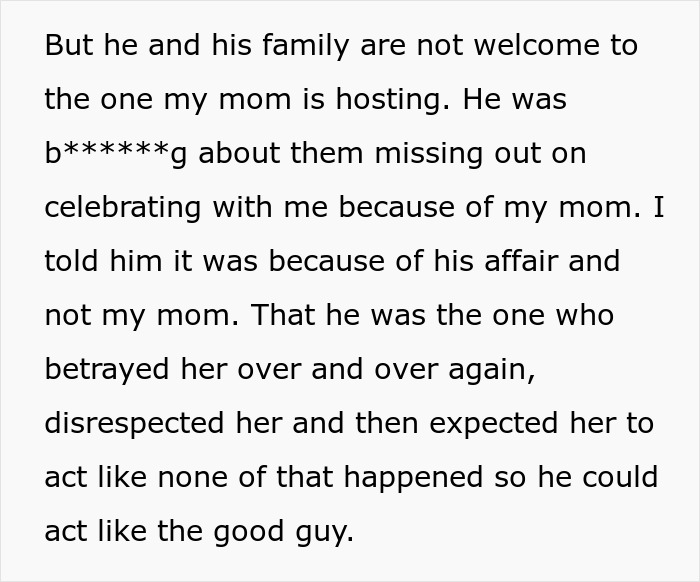
Image credits: Luisbaneres / envato (not the actual photo)
Instead of apologizing, the dad tried to flip the script
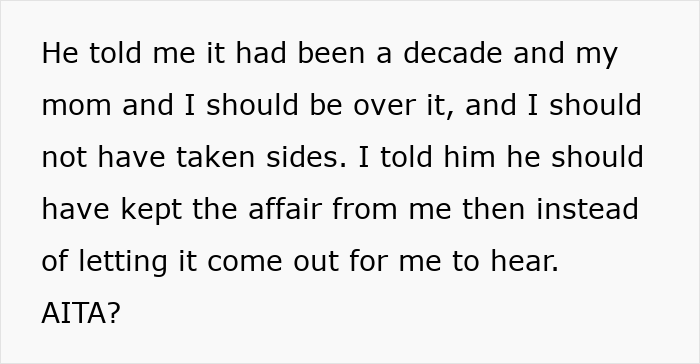
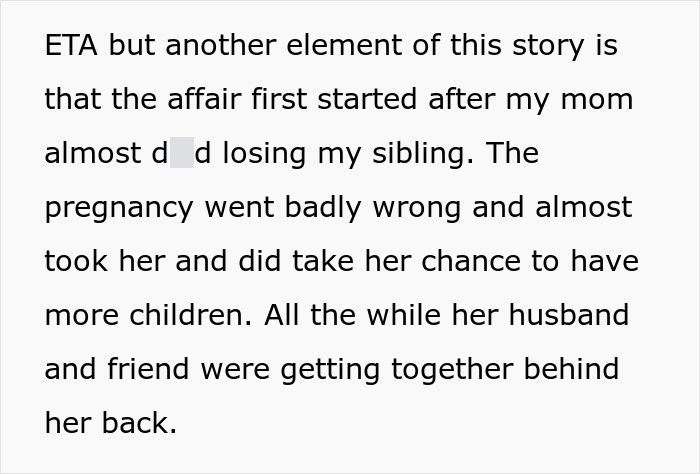
Image credits: Affectionate_Air_633
Children are idealists, and it is why they withhold love from an unfaithful parent

Image credits: artfolio / freepik (not the actual photo)
The author experienced their father’s infidelity at seven years old. It is an age when a child’s world is black-and-white, and when transgressions deserve proper punishment.
According to Adelphi University psychology professor Lawrence Josephs, it’s because children are idealists and become disillusioned with parental infidelity.
“It’s hard to respect or want to emulate a deceitful parent who has violated a marital vow,” Josephs wrote. “It’s hard to trust that parent going forward, because how do you know whether or not the unfaithful parent is currently being truthful and honest?”
Josephs added that children tend to punish their parents by withholding love and affection for an indeterminate period. It is more about seeing if they show remorse or make amends.
Then, there’s betrayal trauma, which, according to clinical psychologist Dr. Sabrina Romanoff, can also lead to more problems in adulthood, such as mental health issues like anxiety, depression, PTSD, and substance use.
“What makes betrayal trauma so painful is that the person who is betrayed often cannot simply sever their relationship with the perpetrator,” Dr. Romanoff said.
While the story’s author needs to find healthier coping mechanisms, perhaps even professional help, they have the right to disassociate from their father, who has not even shown an ounce of remorse. He even tried to shift the blame, which adds insult to injury.
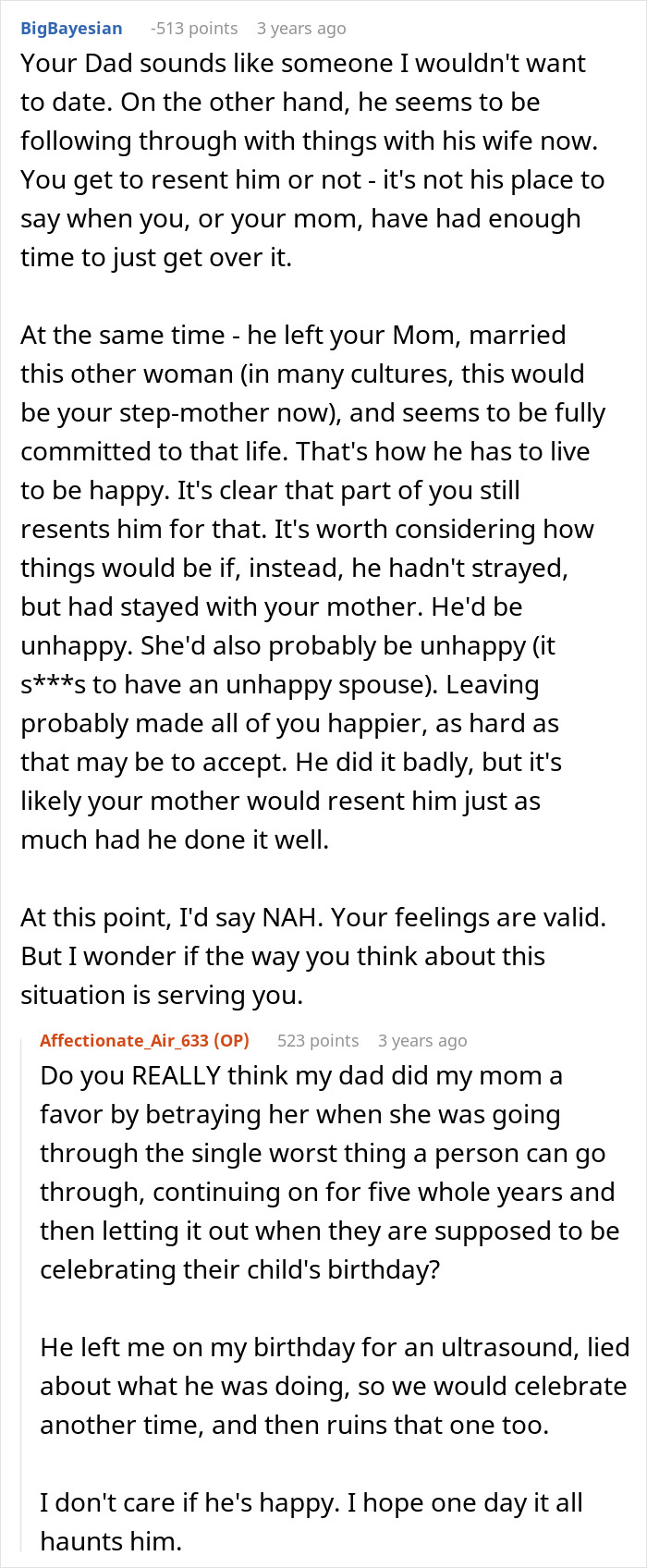
The author provided more information about the story
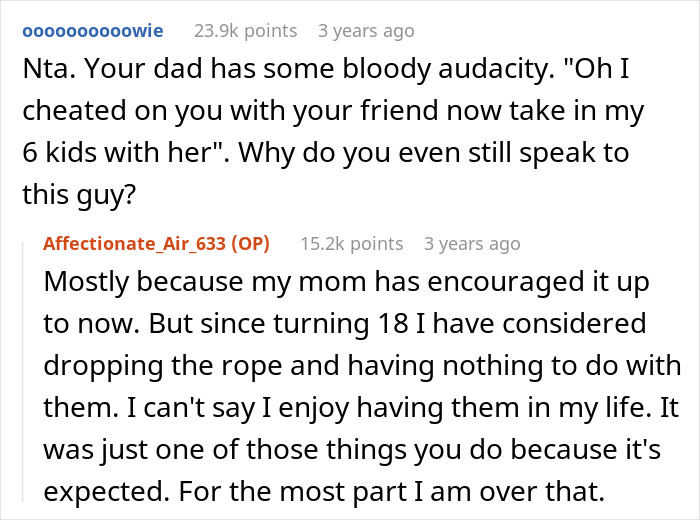
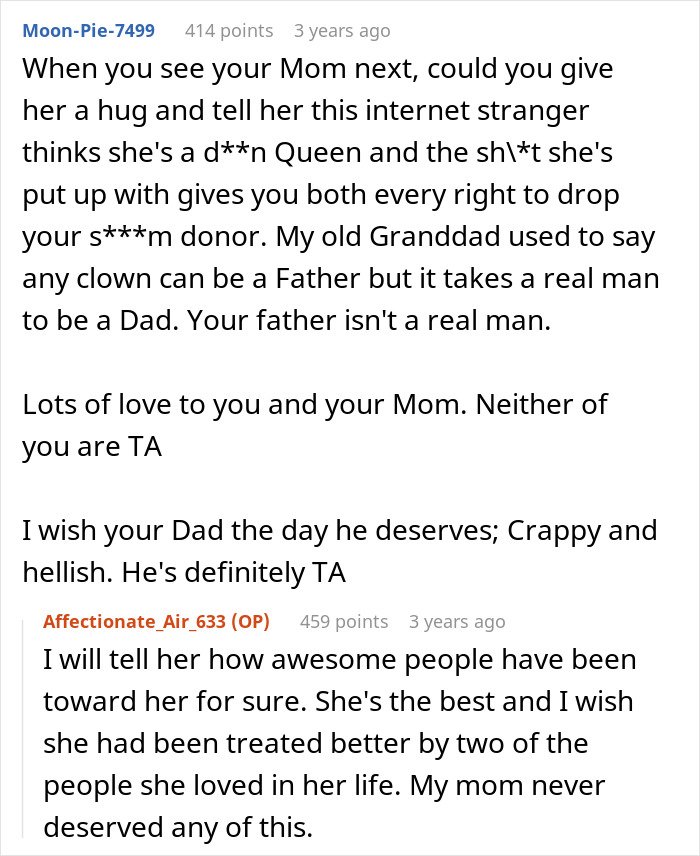
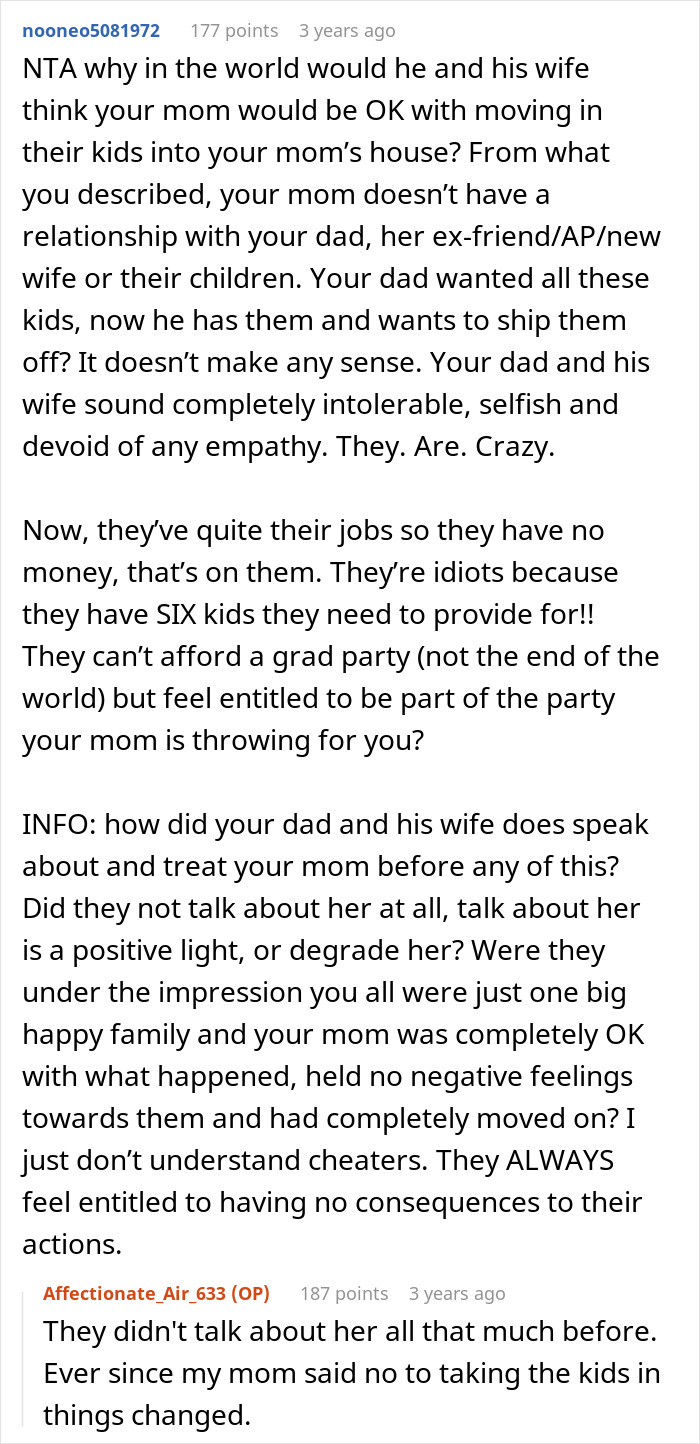
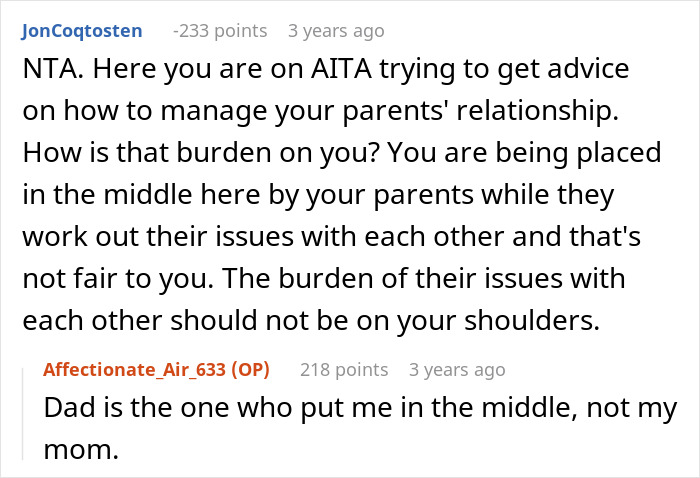

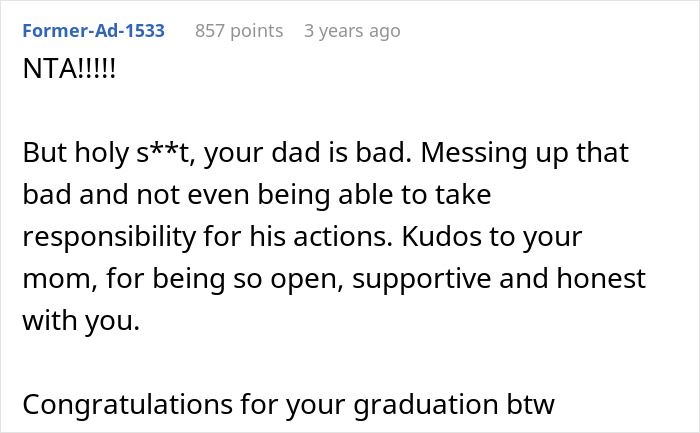
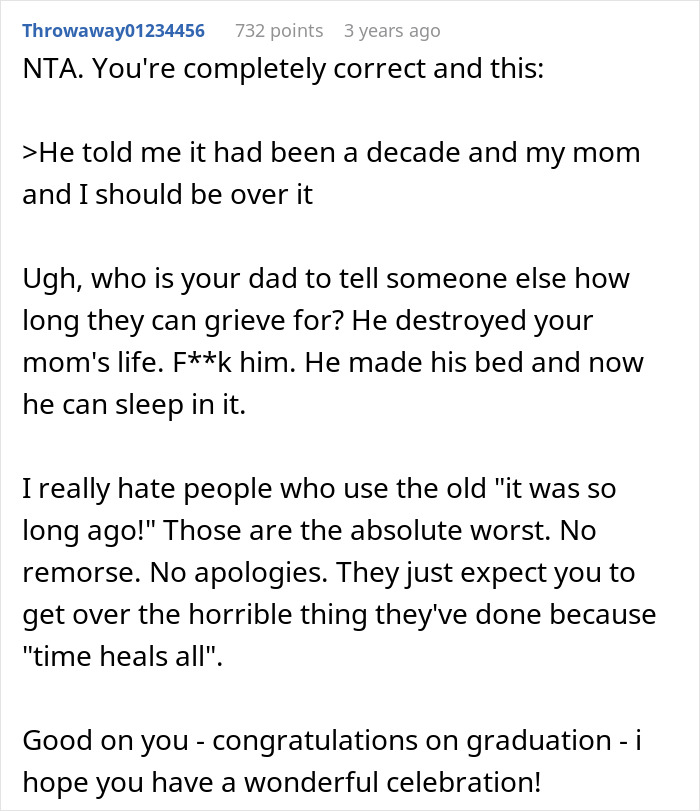
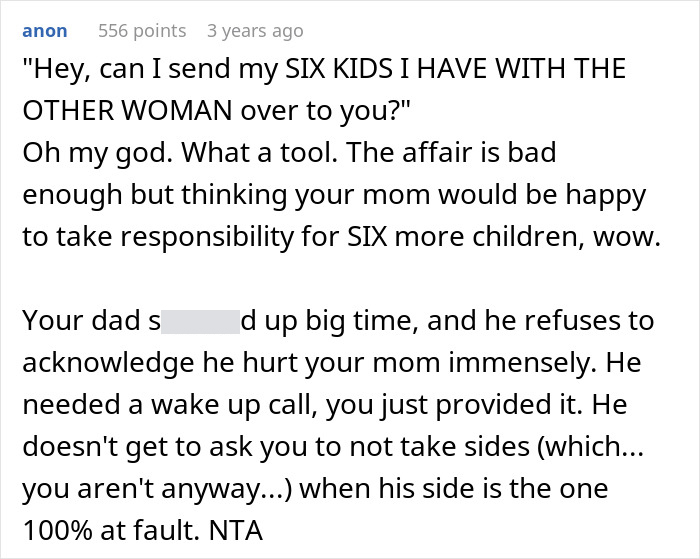
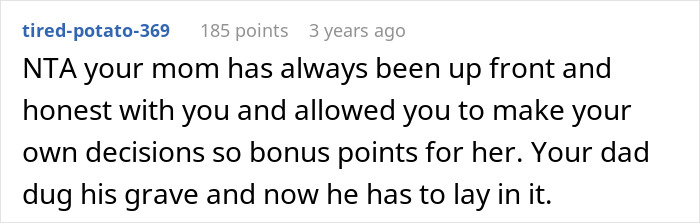
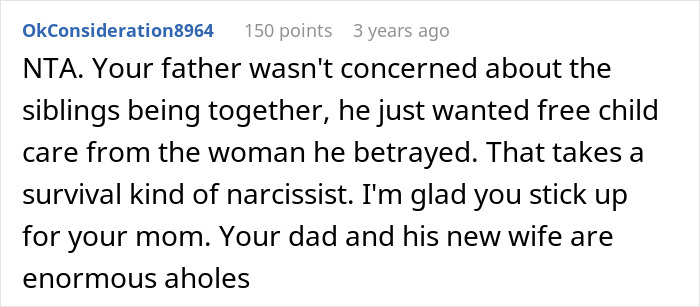
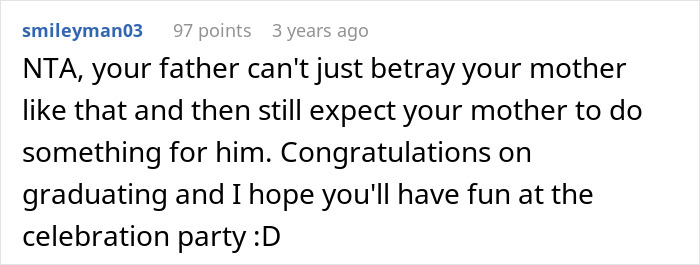
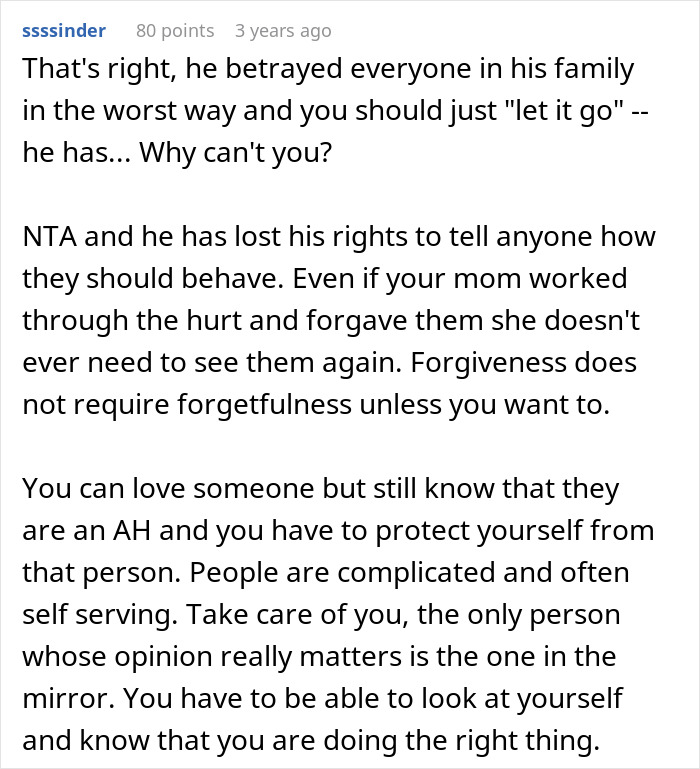
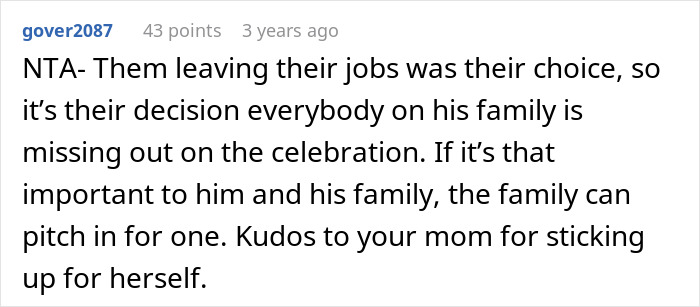
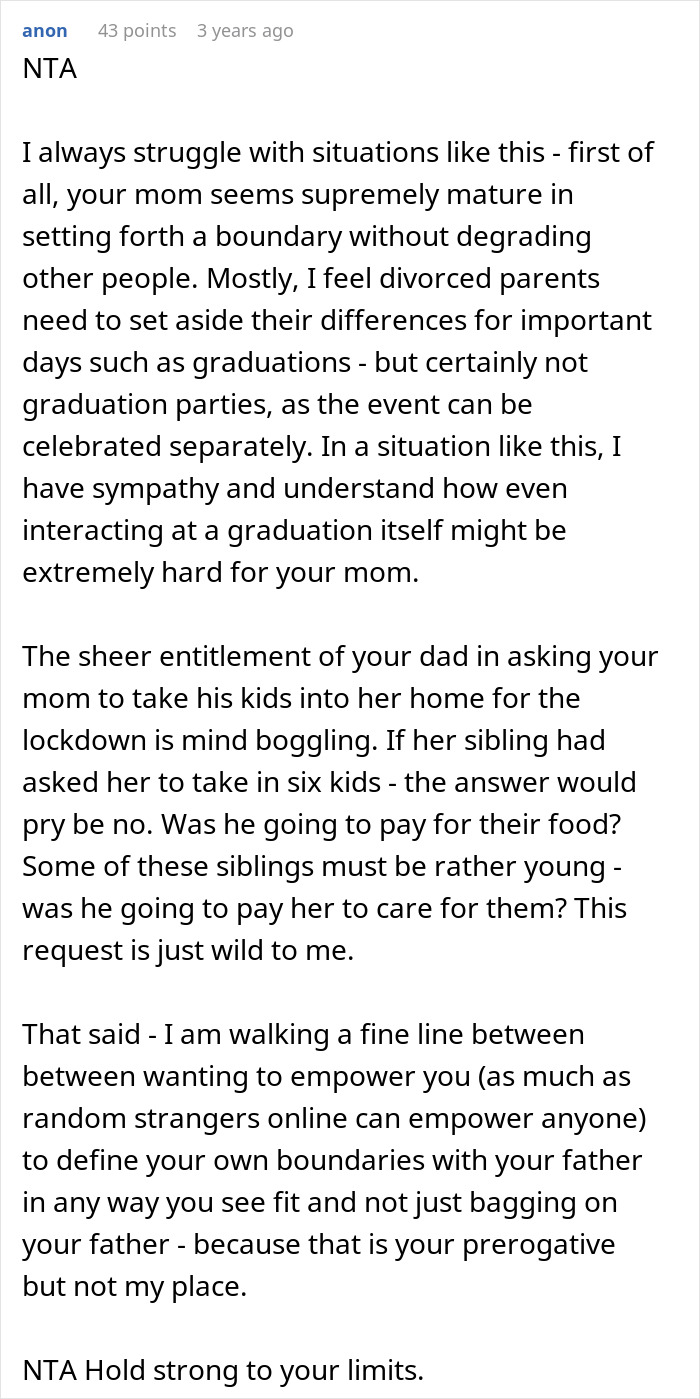
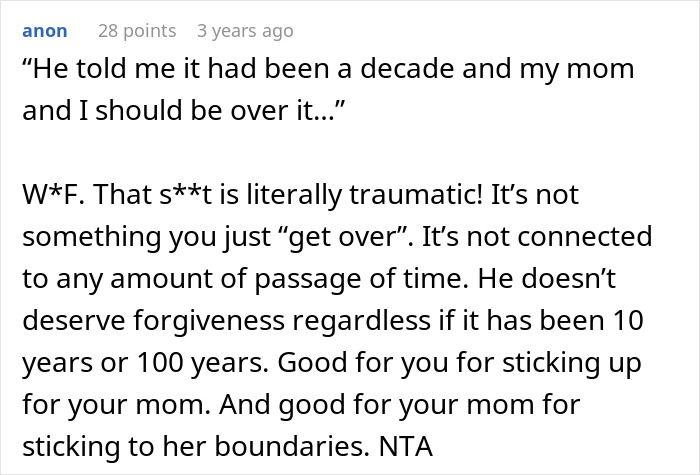
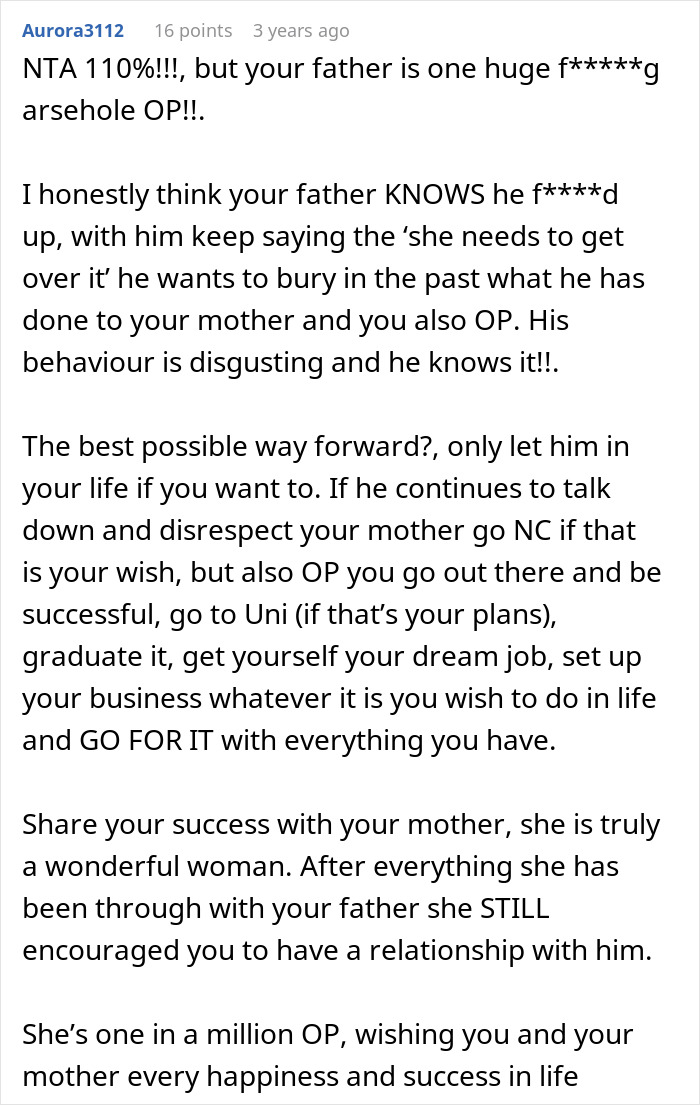
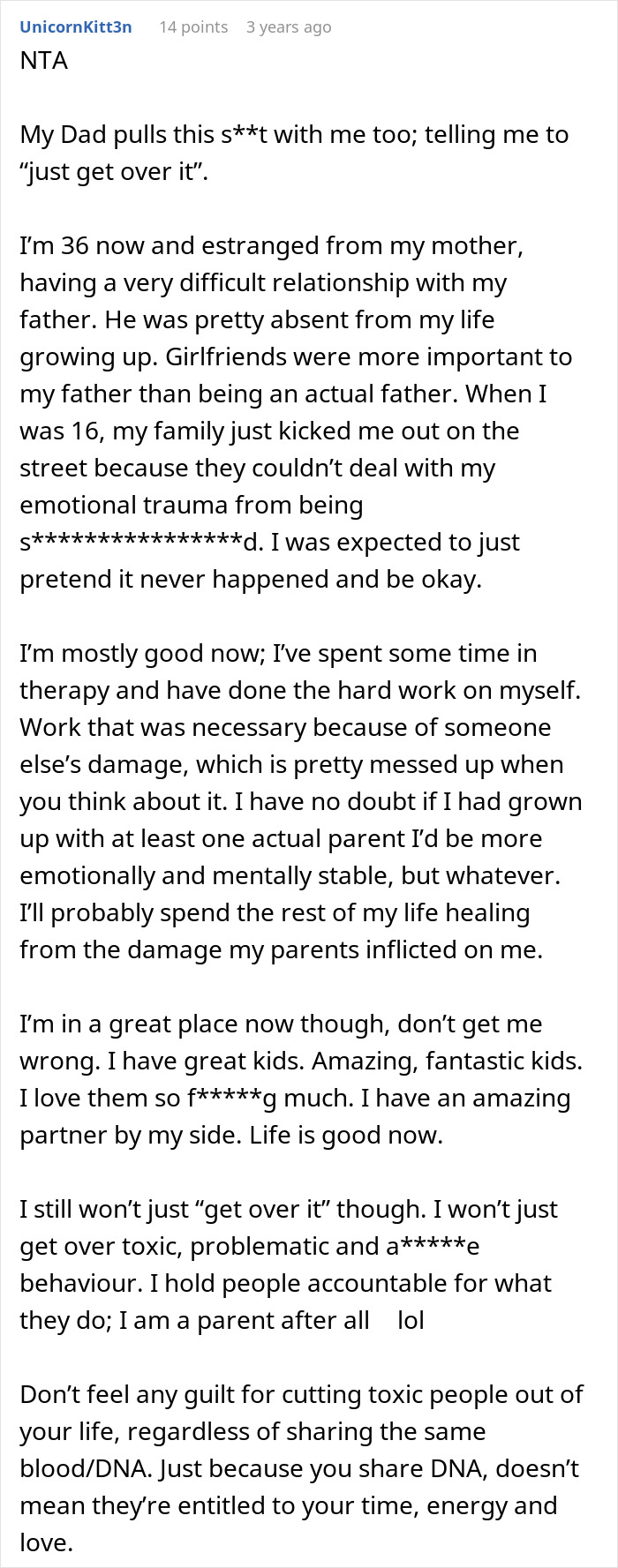
Most people sided with the author











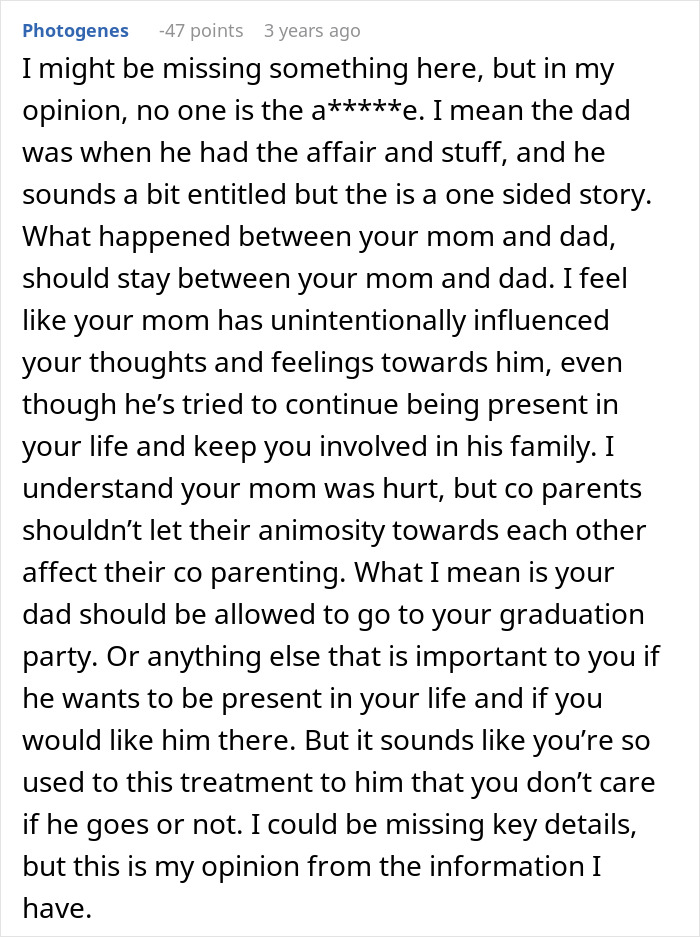
Some thought no one was at fault
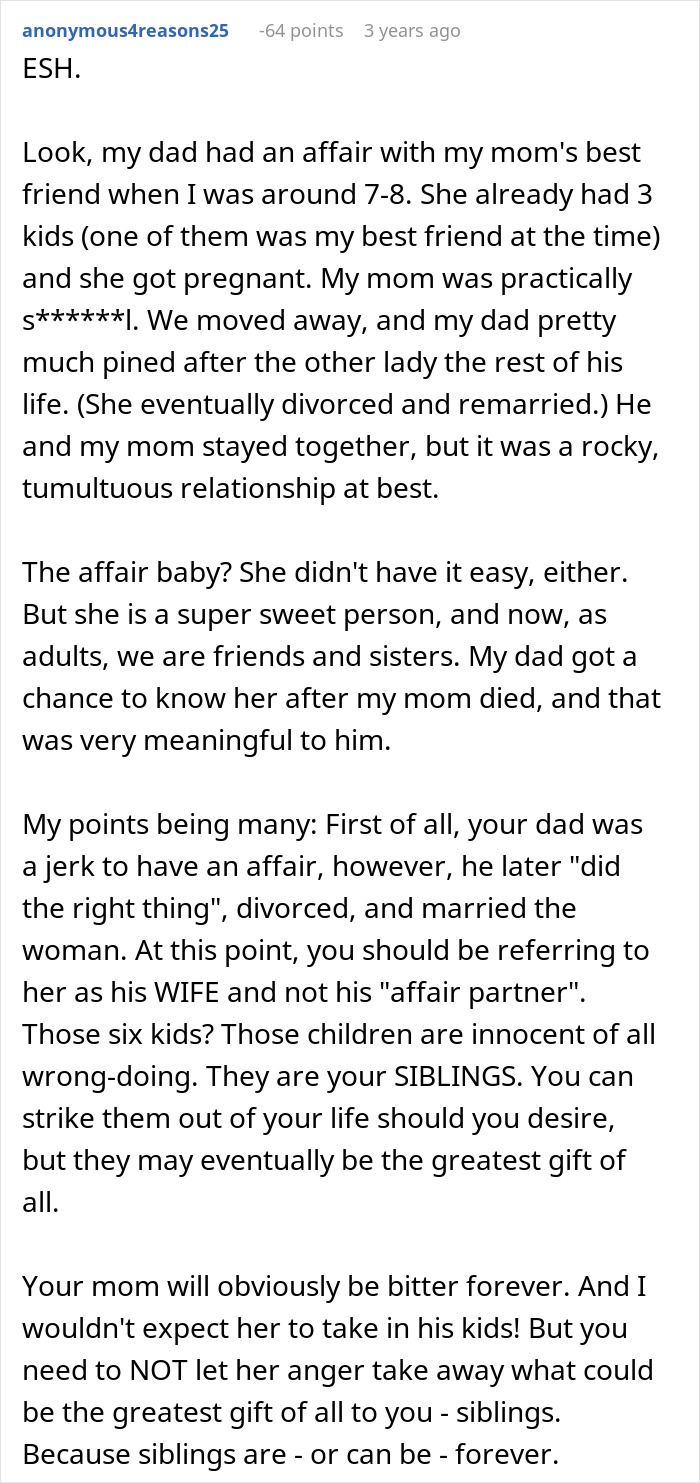
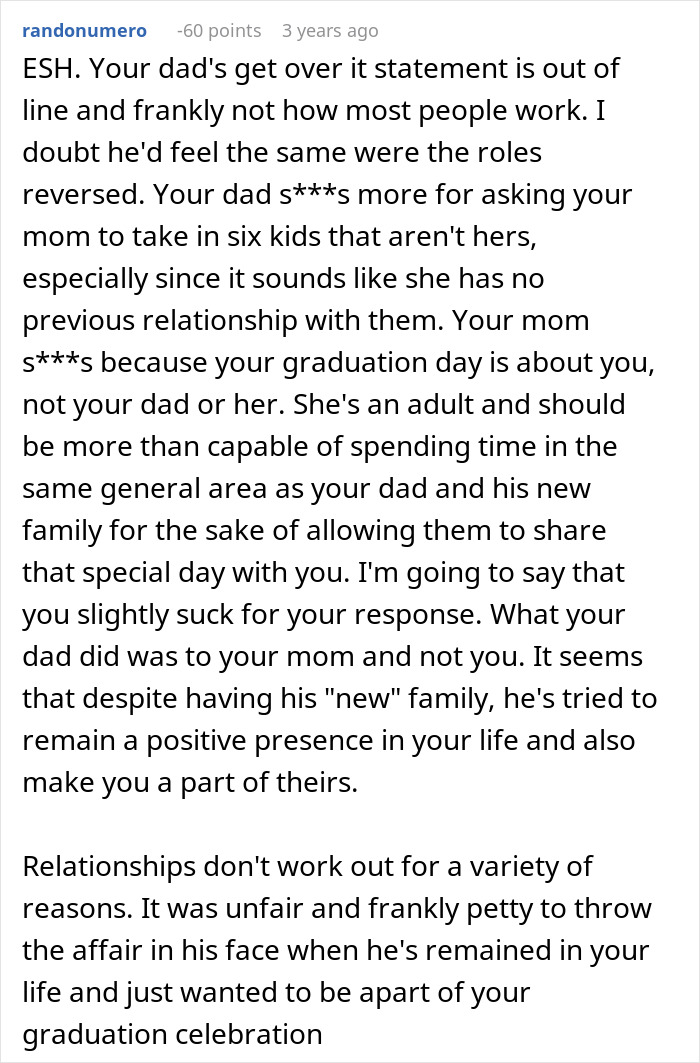
While others pinned the blame on everyone
 Follow Us