Hypothetical questions are a fun way to really understand what kind of a person your partner is. Their reactions are clues to their personality, and sometimes, they can reveal way more than their actions ever can. And when the questions are about gender, things can get pretty wild.
One couple shared a video where the hypothetical question had a “relaxing” answer for the man, but turned into “absolute terror” for his wife. It garnered over 1.6 million views, but it also sparked a massive online debate, bringing some couples closer while leading to breakups among others. Well, you can try it to test your partner, too!
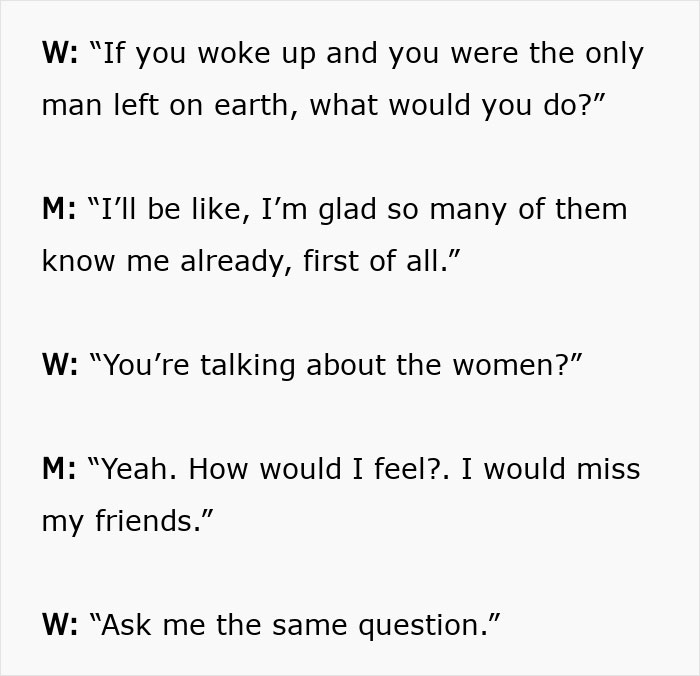
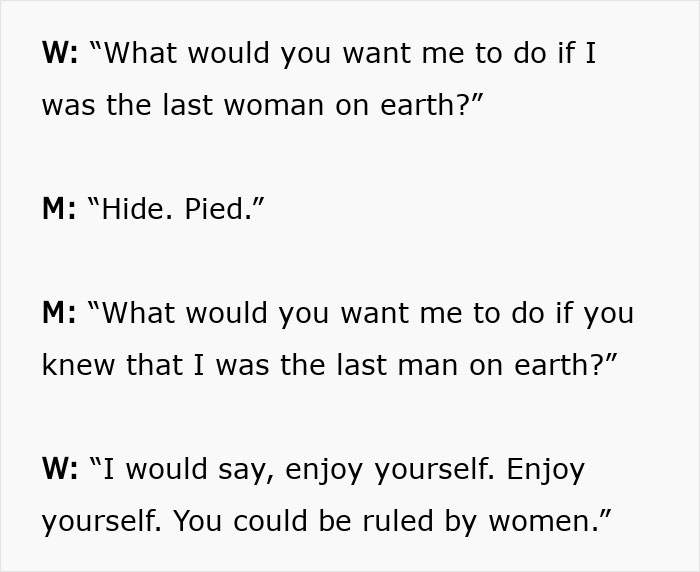
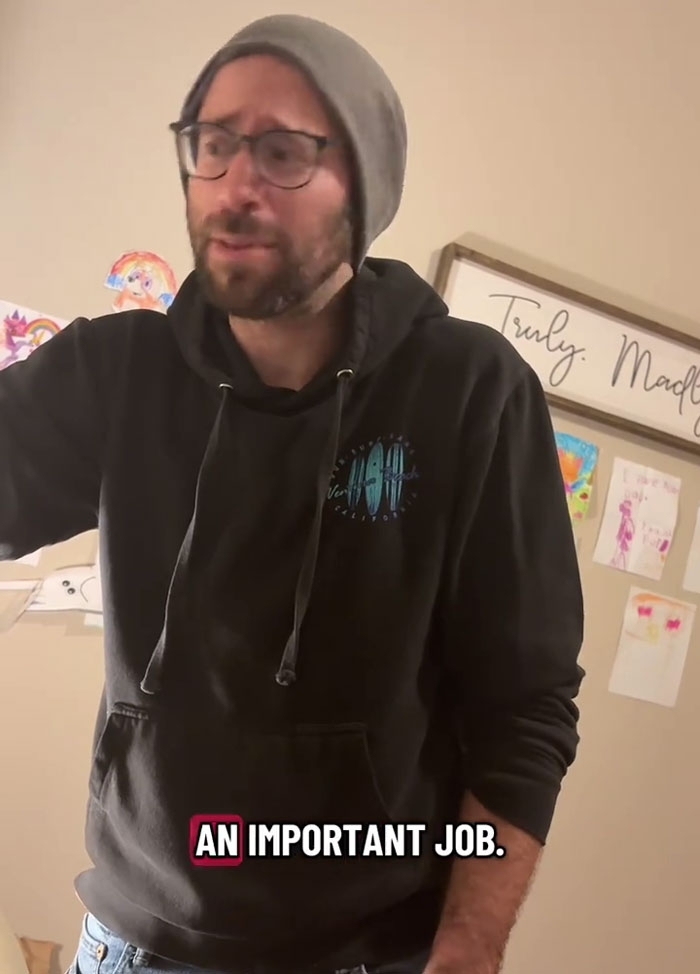
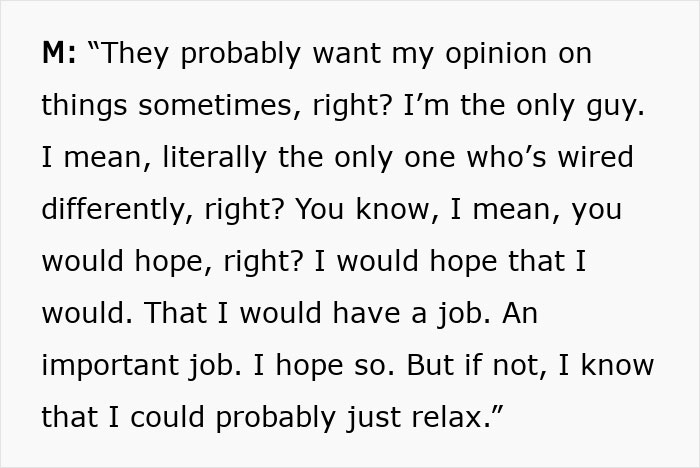
A woman asked her husband what he would do if he were the only man on Earth
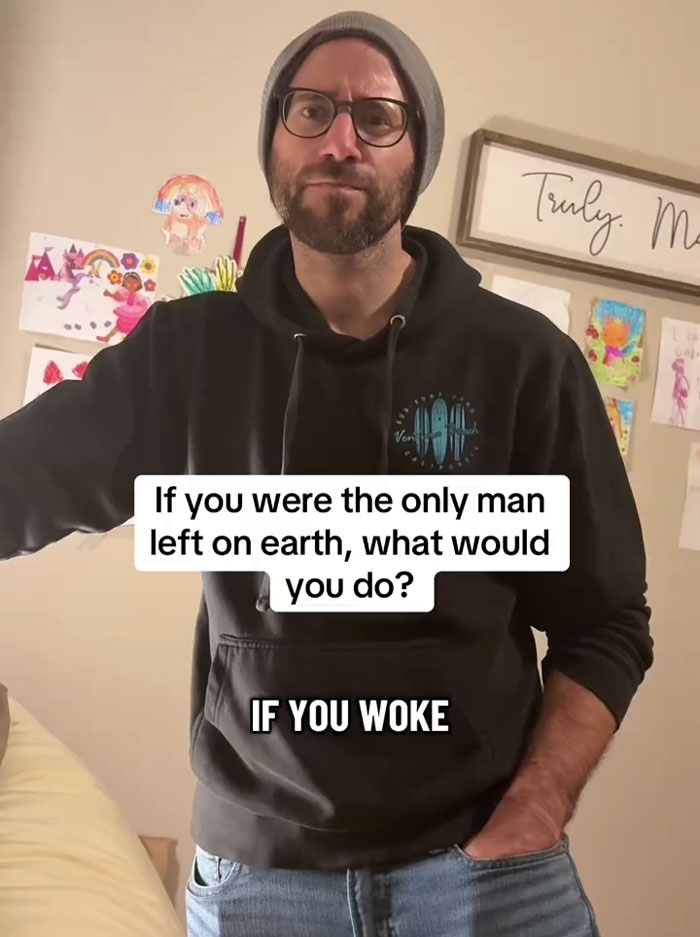

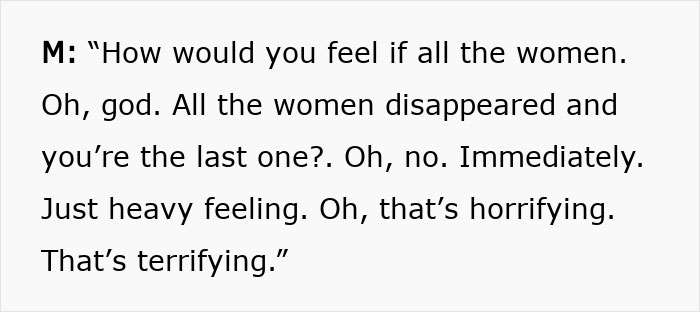
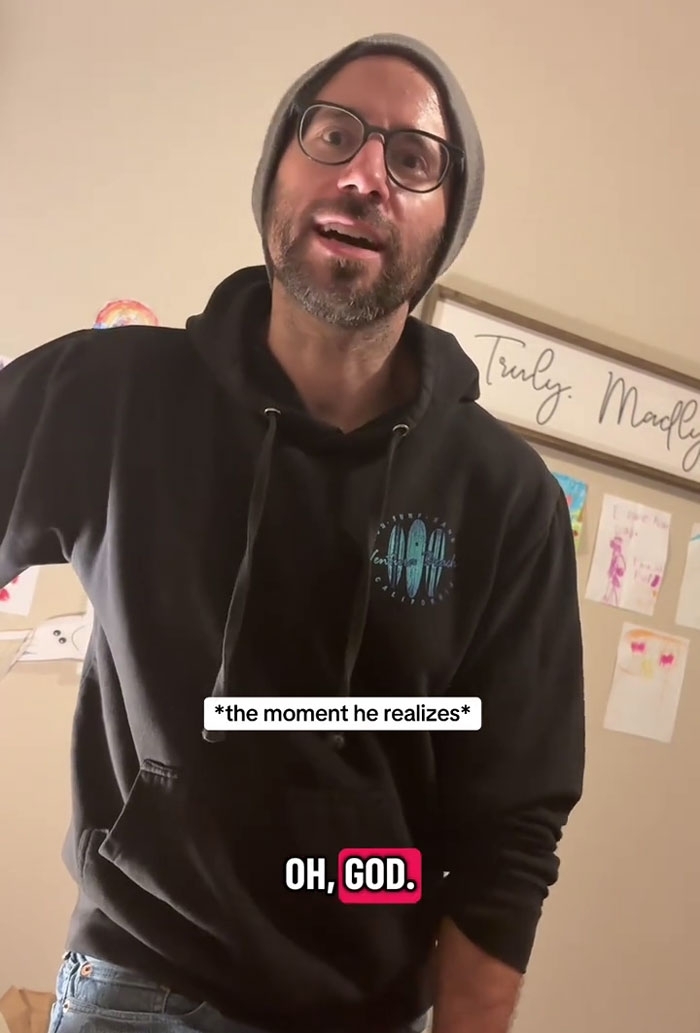
His answer was “relax,” but he was horrified when he asked her what she would do if she were the only woman left

franco alva / unsplash (not the actual photo)
Katie’s question was reminiscent of the viral “Man vs Bear” moment
Most of us have heard of the “man versus bear” TikTok debate that went viral in 2024. It sparked controversy because many women said they felt safer encountering a bear in the forest than a man. The surprising part was that while men criticized the question as misandrist, some also chose “bear” when asked whether they would trust their daughters with one.
According to socialist Monica Radu, this whole debate isn’t really about wilderness survival. It’s about fear, women’s safety, and how gender and society shape those things. She stated that when women said they’d rather face a bear than a man, many weren’t being literal. Monica also added that they were speaking from experience of walking alone, being followed, ignored, dismissed, or harmed.
She continued that “sociologists call this gendered socialization. From a young age, women are taught to watch for danger, assess threats, and be polite and cautious. Meanwhile, many men are socialized to be protectors, competitors, or unaware that others may fear them simply for existing in a space.”
“This connects to broader ideas like toxic masculinity (the cultural pressures on men to appear dominant, aggressive, or emotionally detached) and hegemonic masculinity, which is the socially accepted ‘ideal’ of manhood that often centers power and control over others, especially women,” Monica added.
She believes that these norms not only limit men’s emotional expression but can also contribute to gendered violence, creating environments where intimidation is used to assert dominance. That’s probably why Katie Fillmore’s hypothetical question to her husband Jay could spark massive debates among couples.

Getty Images / unsplash (not the actual photo)
Globally, about 1 in 3 women have experienced some form of violence
While “not all men” is true, gendered socialization can make them seem scary to women. In a follow-up video on the same question, Jay admitted he would feel safe, but Katie would be in danger in that situation. They also discussed a scenario where a child is the only one left. Again, they concluded they would feel safer keeping it with women than men.
The truth is that we can’t really ignore the disturbing stats that show up when it comes to women’s safety. A United Nations report states that gender-based violence targets or affects women and girls disproportionately. Horrifyingly enough, it claims that about 1 in 3 women worldwide have experienced physical and other forms of violence.
Despite the high numbers, the report adds that crimes involving violence against women are among the most under-reported and the least likely to end in conviction. It also highlights survivors’ conditions. They often face significant obstacles due to gaps in criminal law and procedure, gender stereotypes, victim blaming, and inadequate responses of criminal justice institutions and professionals, leading to secondary victimization.
Also, when women who faced gender-based violence were studied, they described a series of psychological disorders that lasted over time, burdening them with enormous suffering. This made it difficult for them to relate to the rest of society, especially men.
It’s possible that the inability to relate can trigger fear. No wonder women have such extreme answers when it comes to such hypothetical questions. What are your thoughts about it? Let us know in the comments!
Here’s the video of the couple answering the hypothetical question
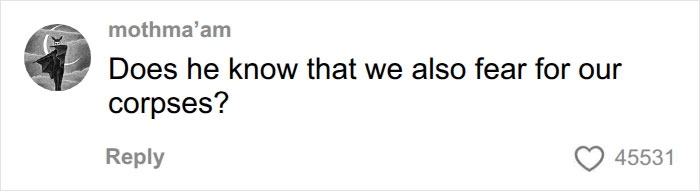
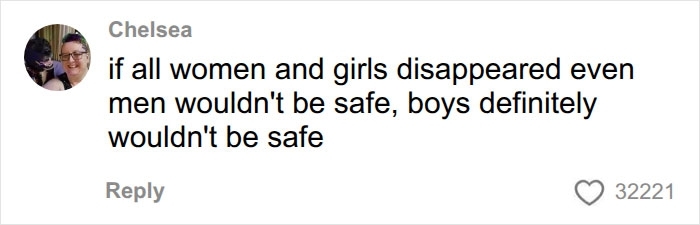
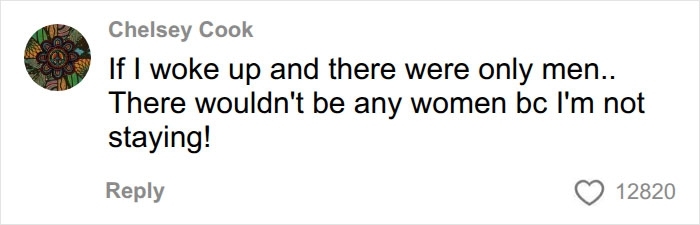
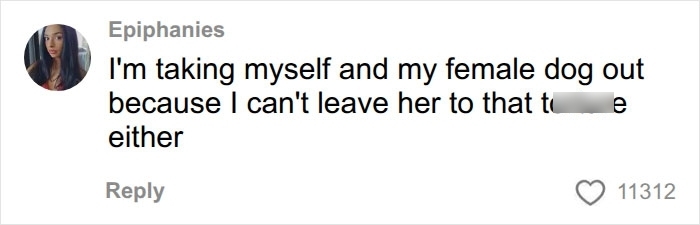
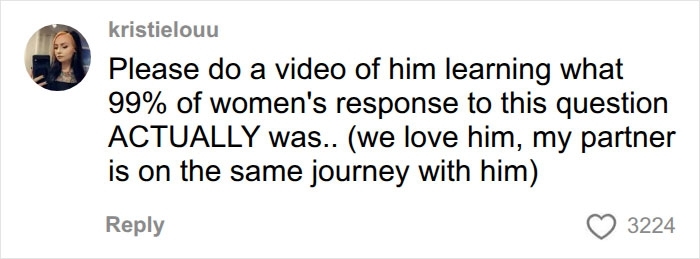
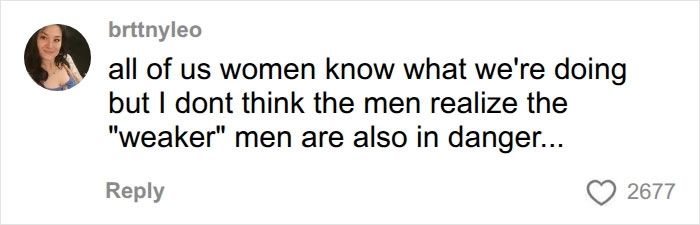
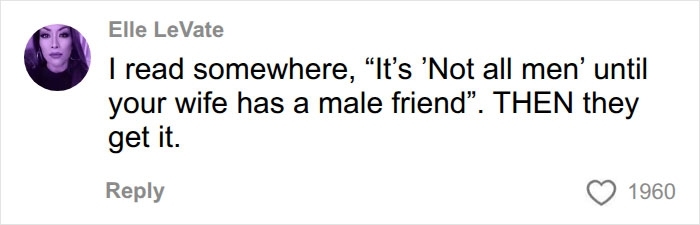
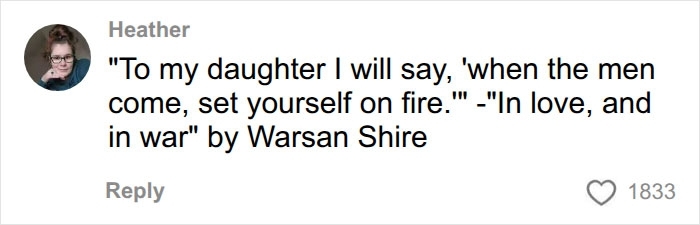
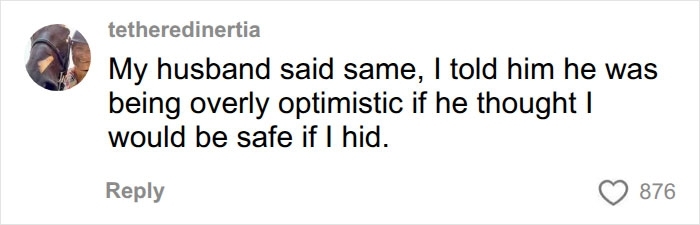
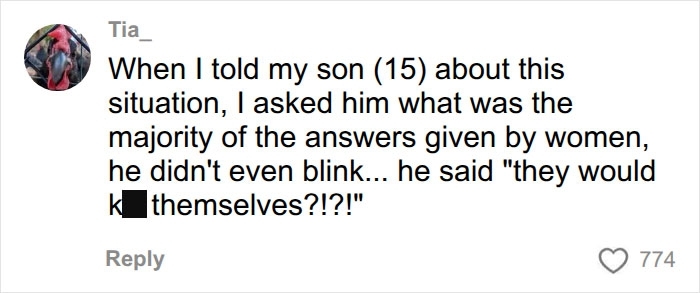
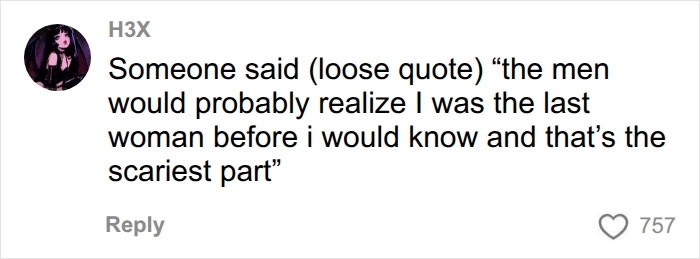
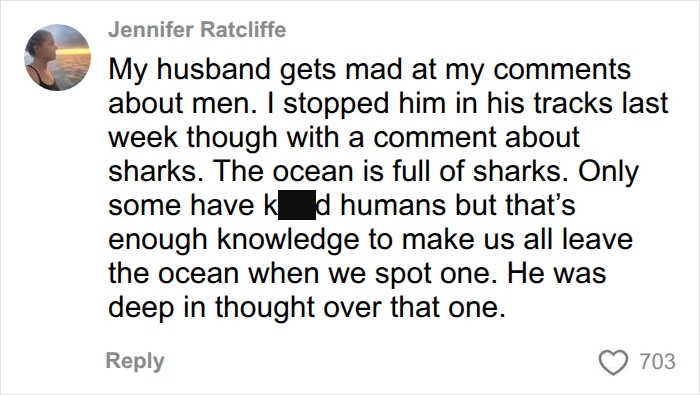
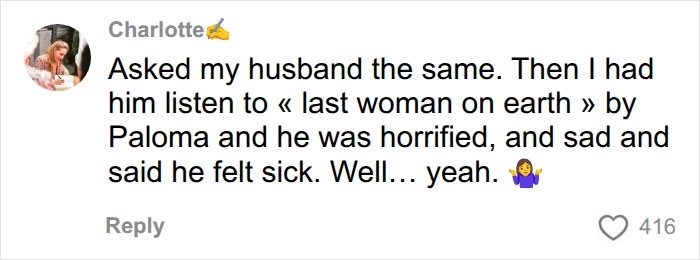
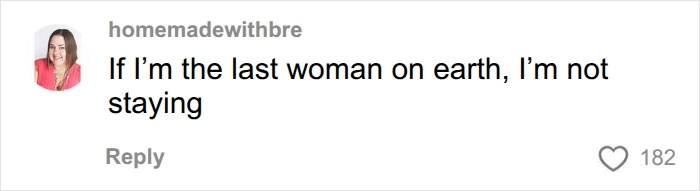
A lot of netizens had grave reactions when it came to the issue of women’s safety











 Follow Us