Every parent has their own ideas about how to raise their children and what rules to set for them. But that doesn’t mean they get to decide how other families should do things.
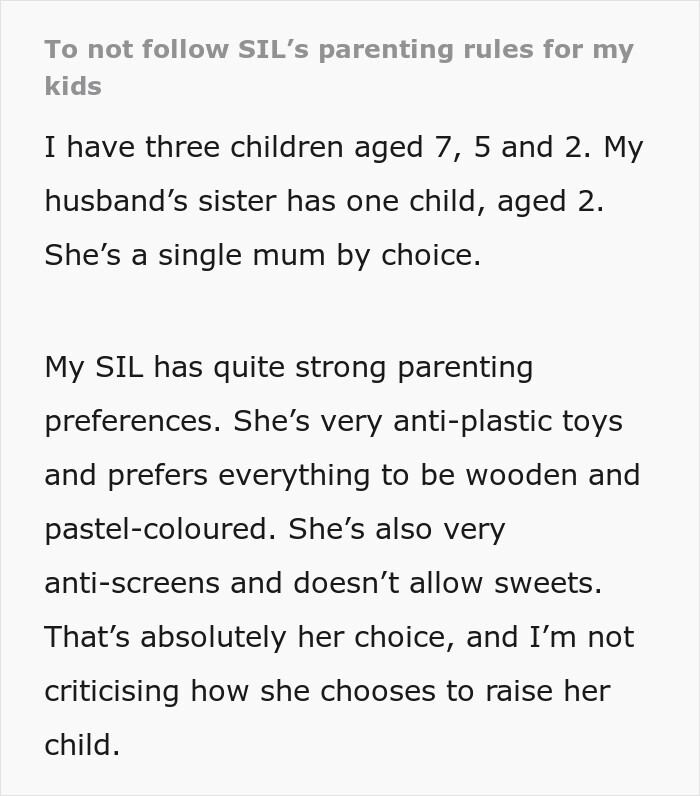
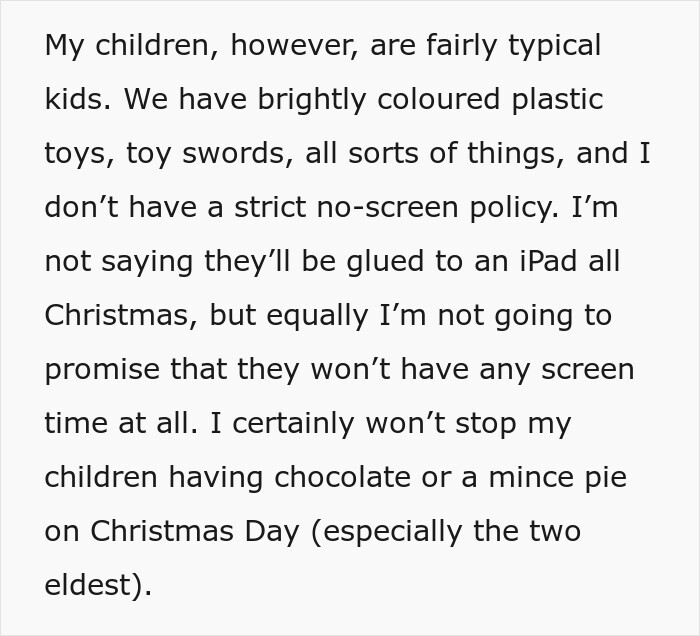
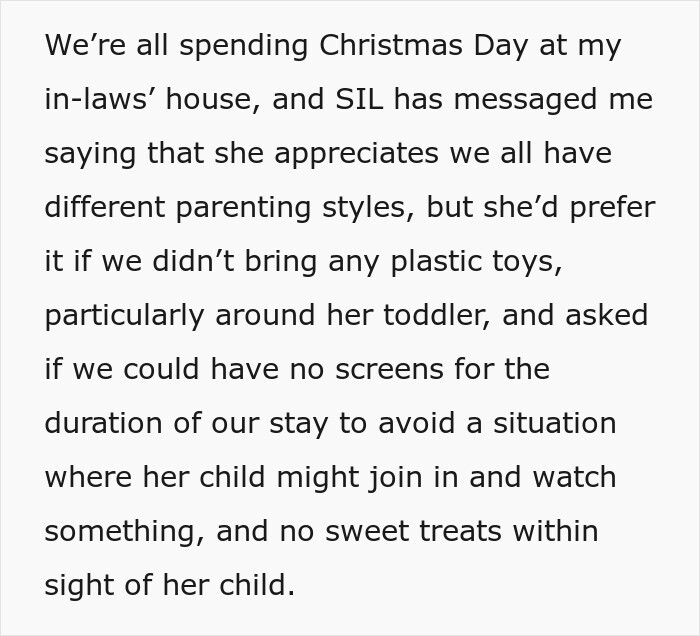
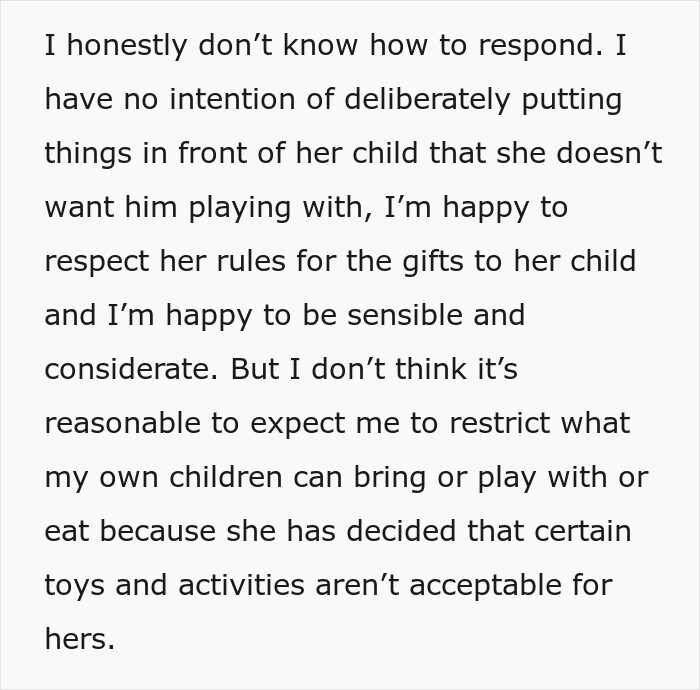
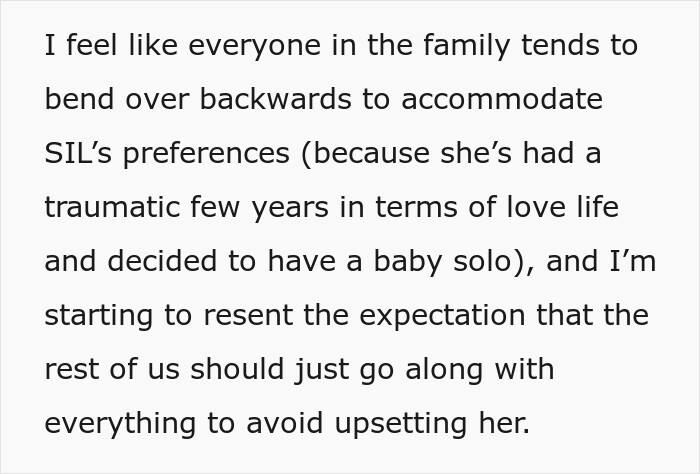
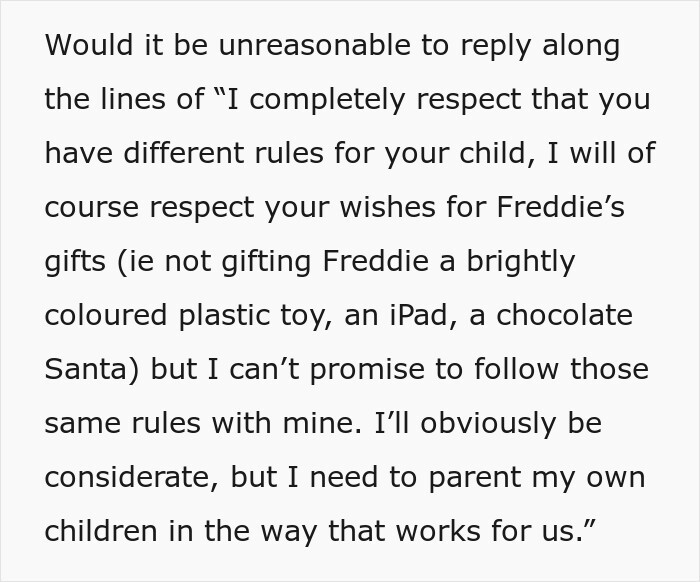
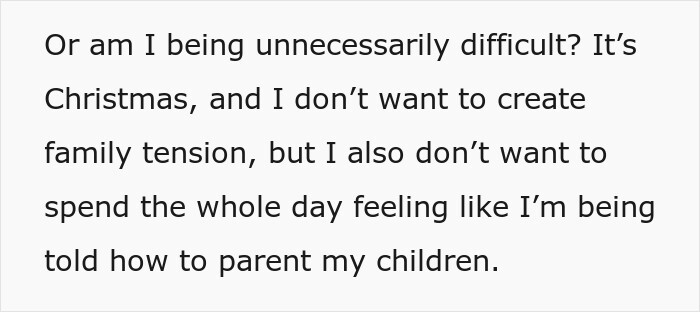
One mom, for instance, doesn’t allow her toddler to have plastic toys, sweets, or screen time. And with Christmas approaching, she expects the other children to follow the same rules whenever they’re around her son. Her sister-in-law, however, thinks she’s asking for far too much.
One woman expected the whole family to follow her strict parenting rules at Christmas
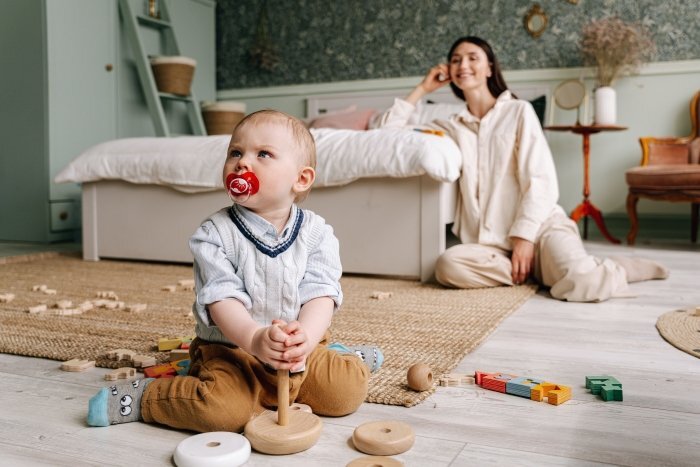
Ivan S / Pexels (not the actual photo)

Her sister-in-law, however, thought she was asking for far too much

Helena Lopes / Pexels (not the actual photo)


https://kaboompics.com/ / Pexels (not the actual photo)
Are plastic toys, candy, and screen time really that bad for children?
Most parents want their children to grow up healthy, happy, and well-adjusted. Naturally, that means setting certain rules rather than letting them do absolutely anything they want. But deciding where to draw the line isn’t always straightforward. There are plenty of approaches to parenting, and every family has its own ideas about what works best.
The sister-in-law in this story, for instance, doesn’t allow her toddler to have plastic toys, candy, or screen time. And with the family spending Christmas together, she wants to make sure those rules are followed throughout the celebration. But are all these things really that bad for children?
When it comes to plastic toys, there are concerns about their environmental effects. According to the United Nations Environment Programme, the world generates around 400 million tonnes of plastic waste each year.
There are also worries about potentially harmful chemicals in certain toys. European safety testing has confirmed that some can contain excessive levels of these substances. However, only 8 out of the 94 plastic toys tested exceeded safety limits. So, while there are reasons to be cautious, the findings don’t suggest that all plastic toys need to be avoided.
As for colors, it’s true that babies are naturally drawn to bright shades, like red and green, and high-contrast patterns, such as black and white. Their vision is still developing, so these are easier for them to see and focus on.
Muted colors, on the other hand, can be harder for very young babies to distinguish, making them less visually engaging. Still, there’s no established evidence that playing with beige or pastel toys harms children’s development.
Then there’s the issue of candy. It’s understandable why parents might want to limit how much sugar their children consume, especially at a young age. The CDC recommends avoiding added sugars for children under two. Excessive sugar consumption can also contribute to tooth decay and other health concerns.
But being too strict about candy can also backfire. A study published in the American Journal of Clinical Nutrition found that restricting children’s access to desirable snacks could actually increase their interest in those foods. In certain circumstances, they even ate more when the restrictions were lifted.
Screen time is another particularly heated parenting debate these days. With tablets and smartphones becoming such a normal part of childhood, many parents worry about their effects on attention and behavior.
Teachers have been raising similar concerns. In a 2026 survey, 52% of primary school staff identified excessive screen use as a factor contributing to children starting school unprepared.
Those fears aren’t entirely unfounded, especially when excessive screen use replaces sleep or opportunities to play with others. Yet watching an occasional cartoon and spending hours scrolling through videos are very different activities.
According to the American Academy of Pediatrics, there’s no single screen-time limit that suits every child. Instead, research suggests that focusing on what children watch and how screens fit into their daily lives may be more beneficial than simply limiting the amount of time they spend using them.
Of course, the bigger disagreement in this story concerns whose rules everyone should follow. The sister-in-law has every right to decide what’s appropriate for her toddler, and asking relatives to respect those choices is reasonable.
But requesting that other parents keep their own children away from ordinary Christmas treats and activities raises another question. After all, Christmas is a time for having fun, enjoying good food, and spending time with loved ones.
What do you think, Pandas? Would it be considerate to follow the sister-in-law’s preferences for one day to keep the peace? Or should the woman stand her ground and let her children enjoy Christmas as they normally would? Share your thoughts in the comments!
Lefteris Pachis / Pexels (not the actual photo)
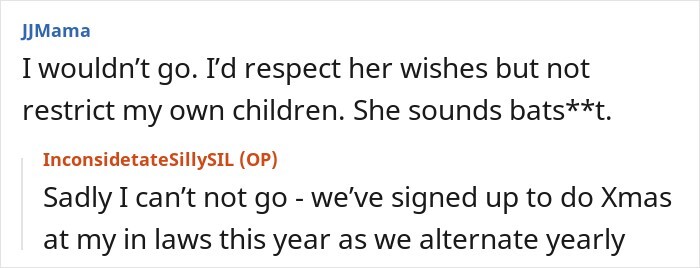
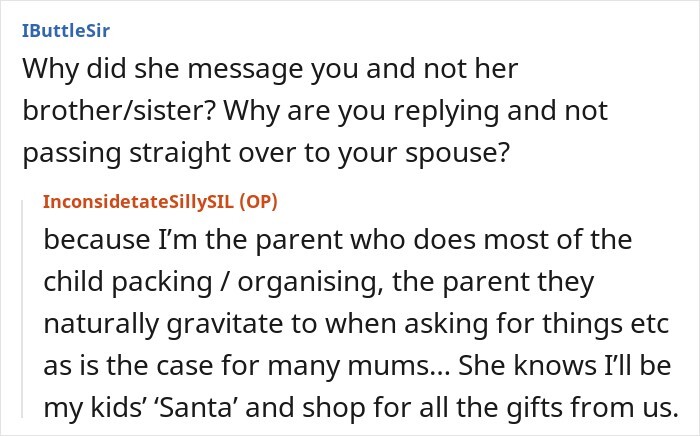
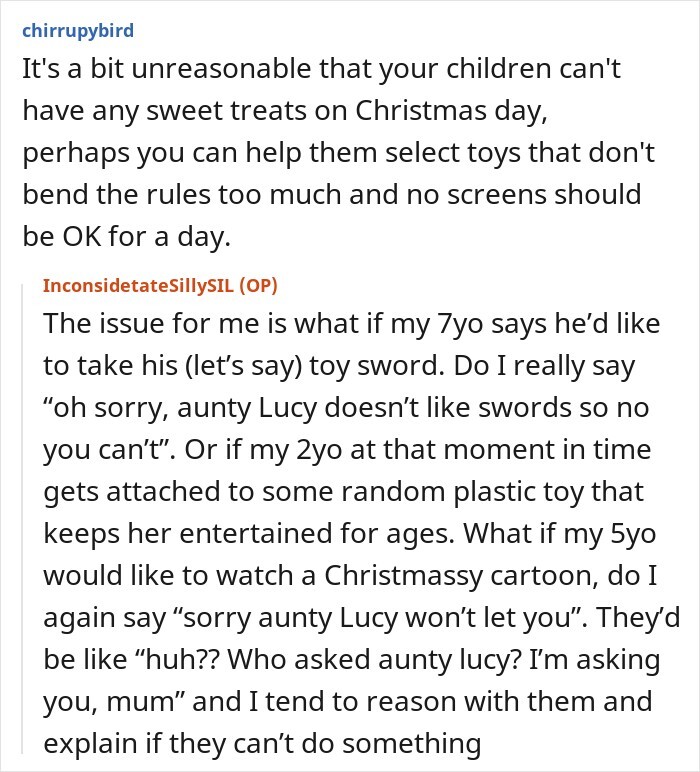
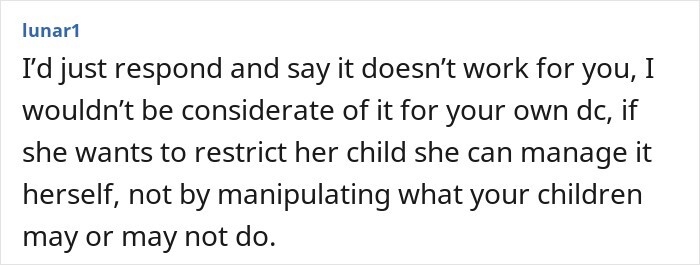
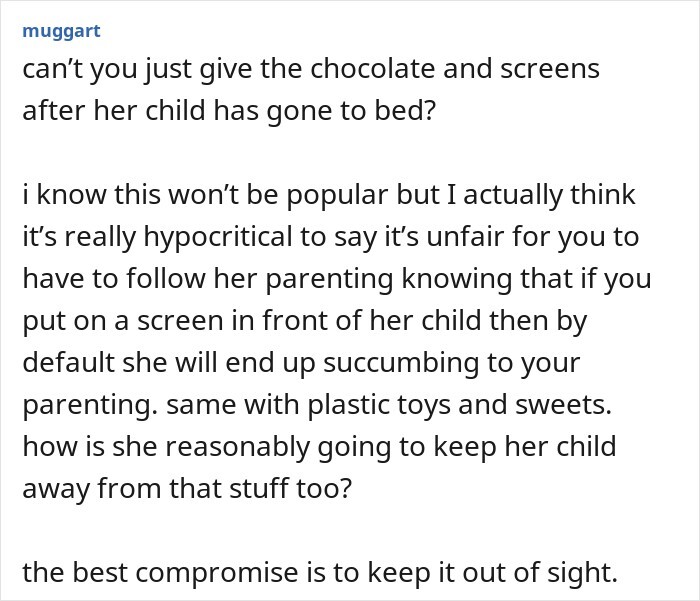
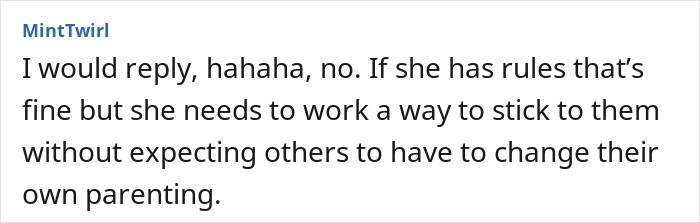
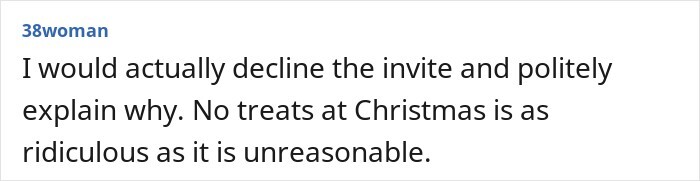
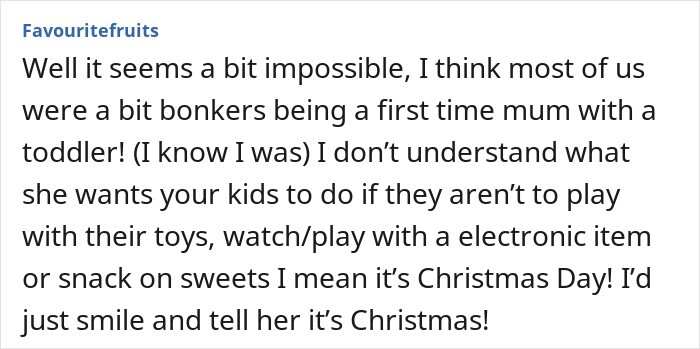
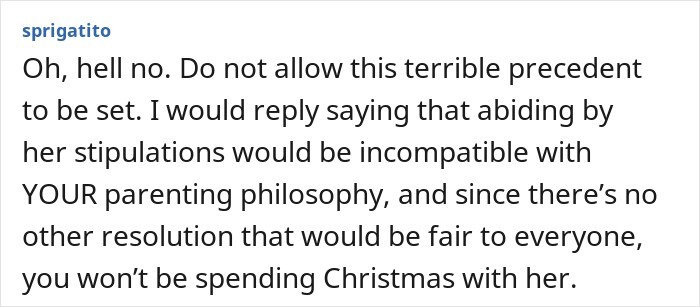
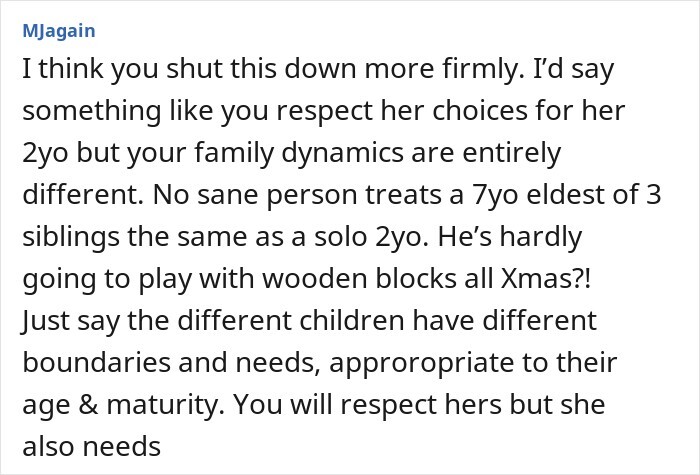
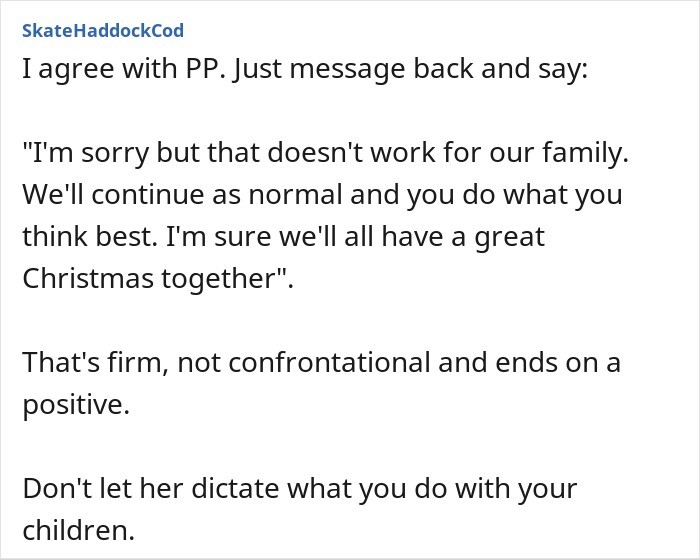
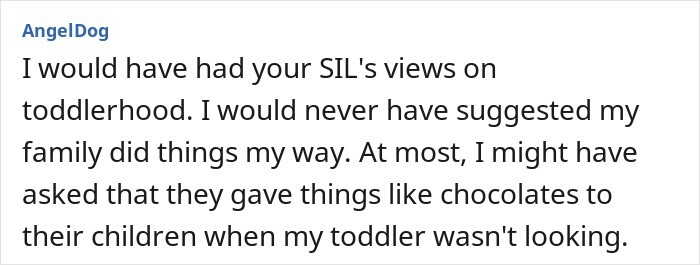
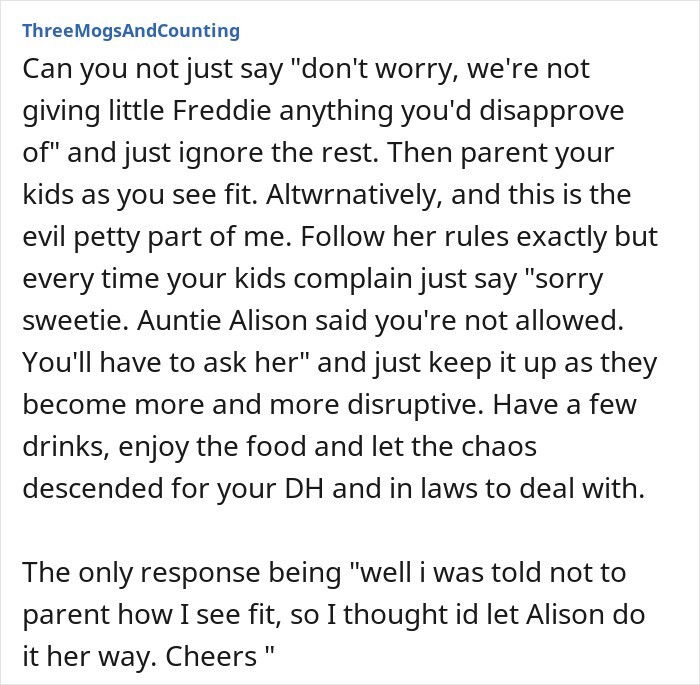
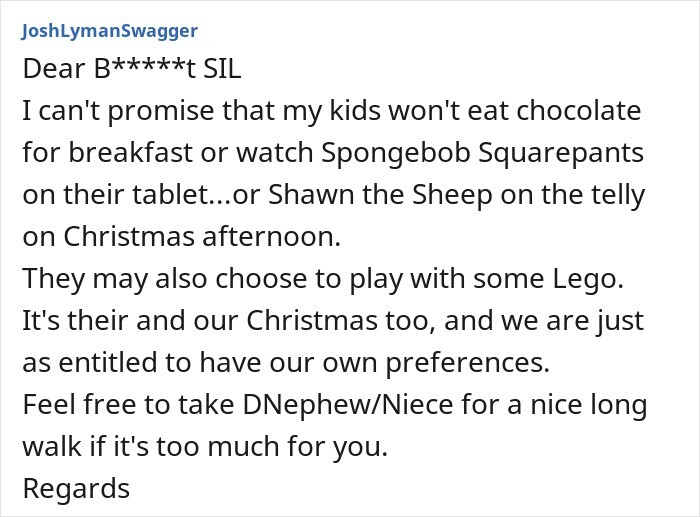
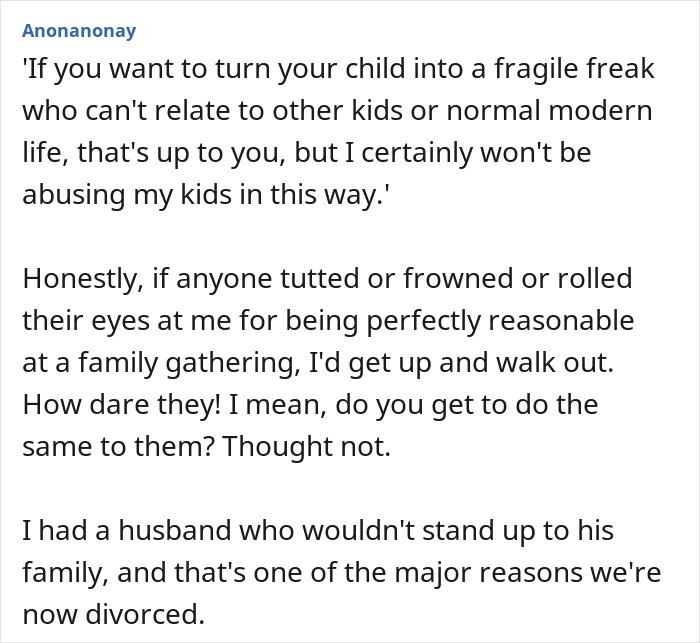
Readers shared their thoughts and offered possible solutions





MrDm / Magnific (not the actual photo)
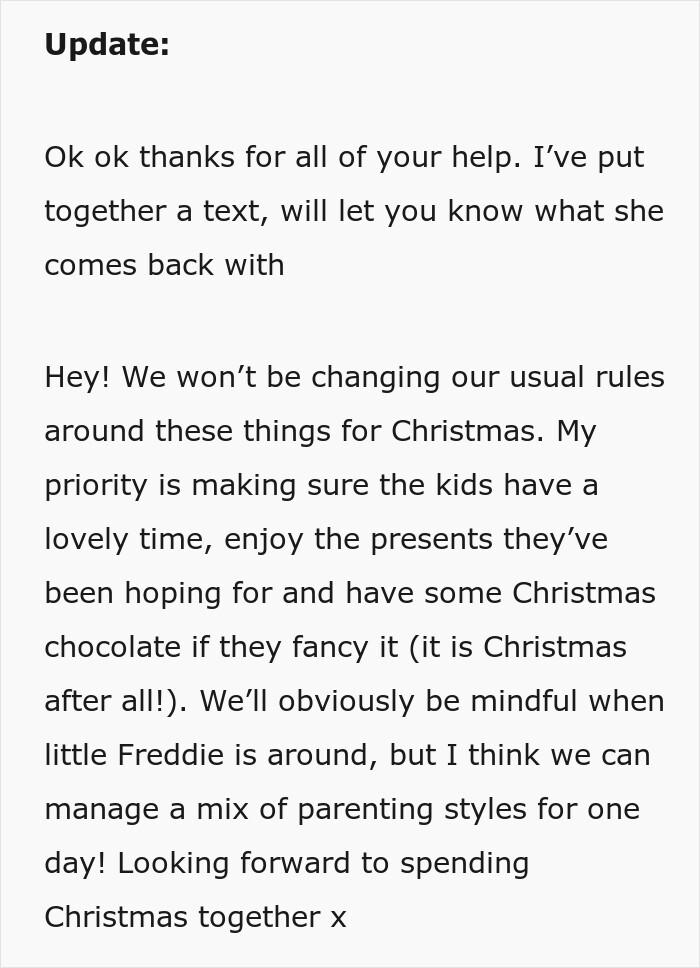
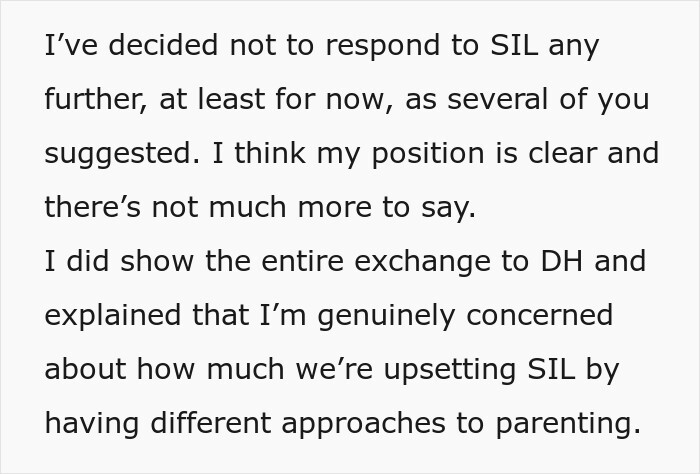
The woman eventually sent a message explaining that she wouldn’t change the rules for her own children

Engin Akyurt / Magnific (not the actual photo)
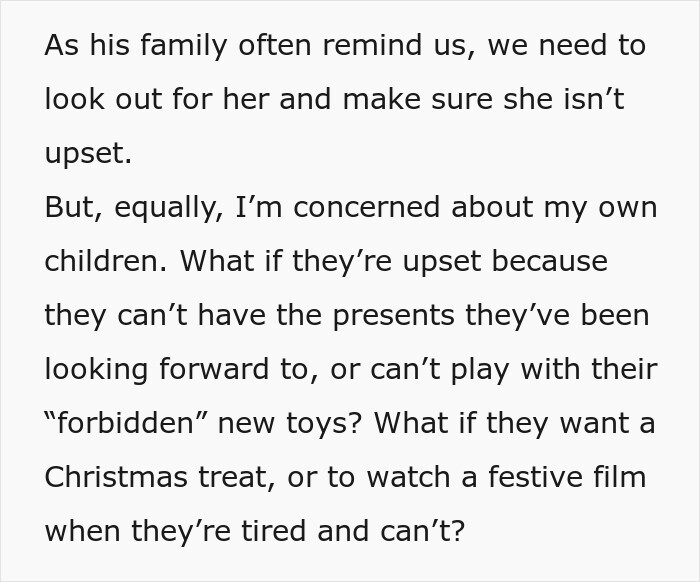
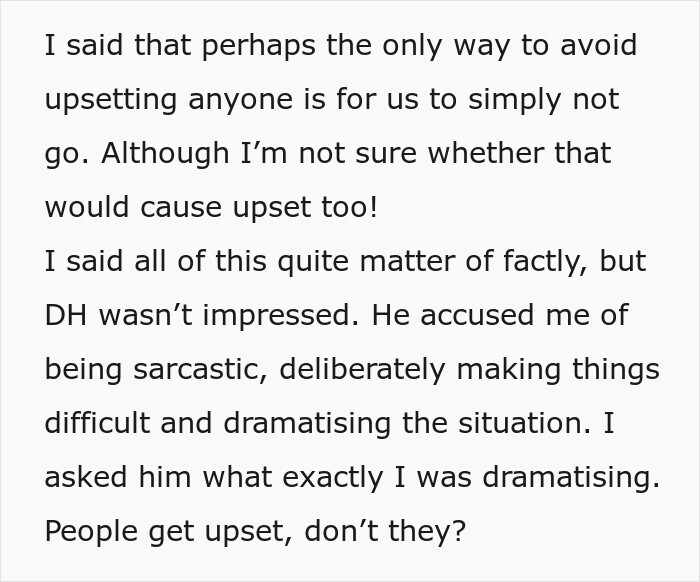
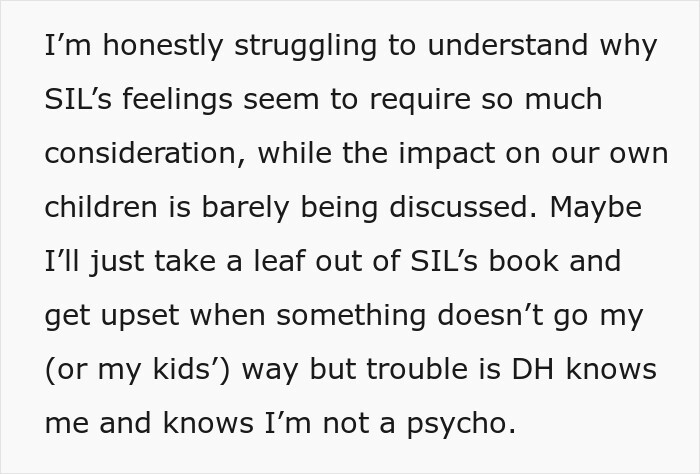
But her sister-in-law wasn’t pleased with her response


Helena Lopes / Pexels (not the actual photo)

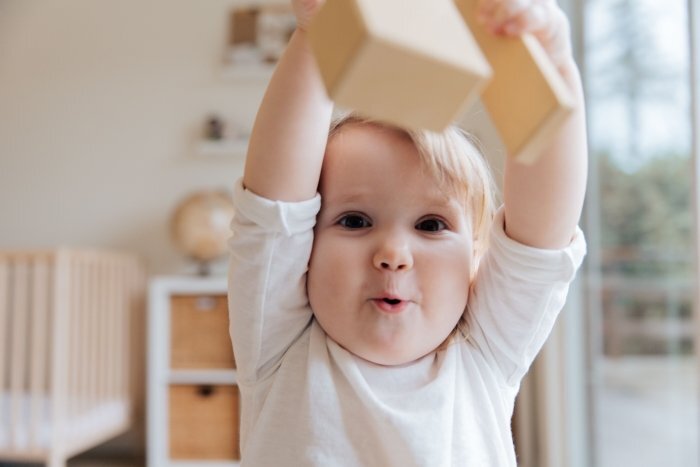
Tatiana Syrikova / Pexels (not the actual photo)

gpointstudio / Magnific (not the actual photo)

andreas / Magnific (not the actual photo)
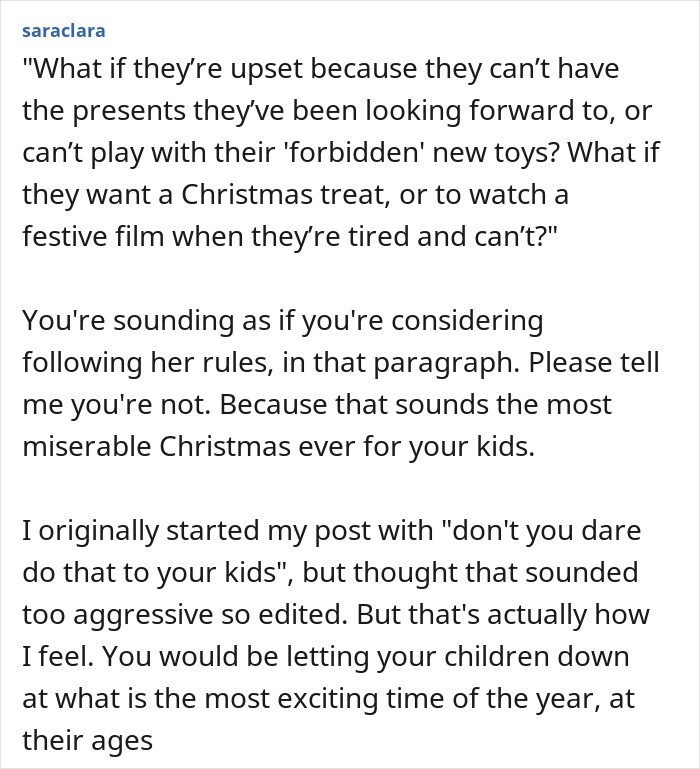
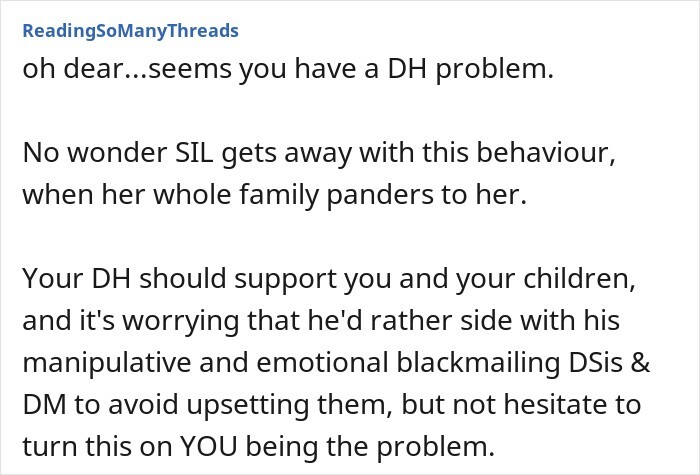
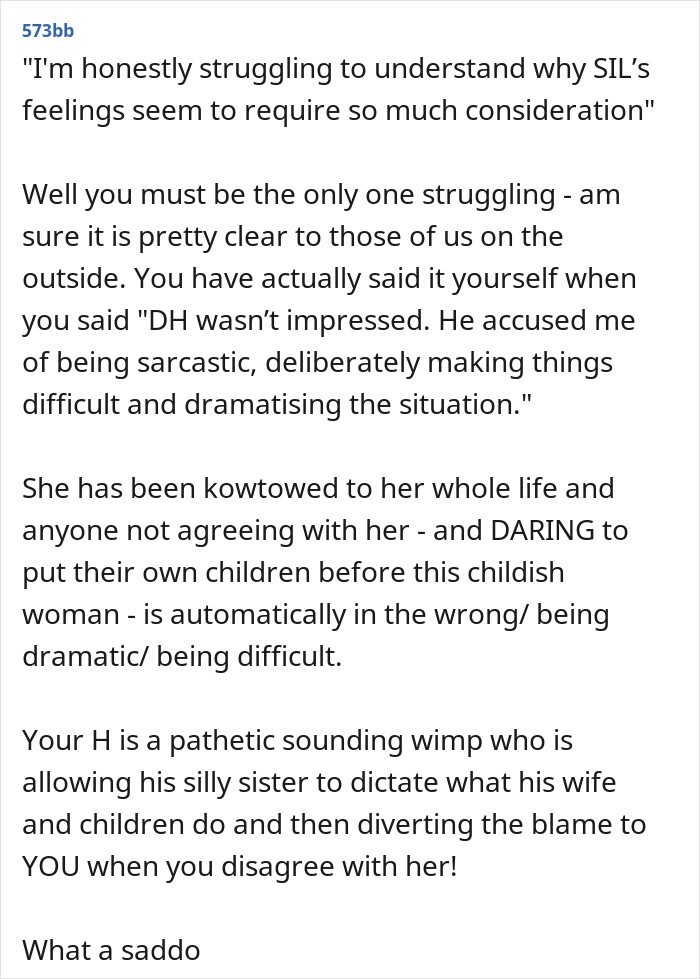
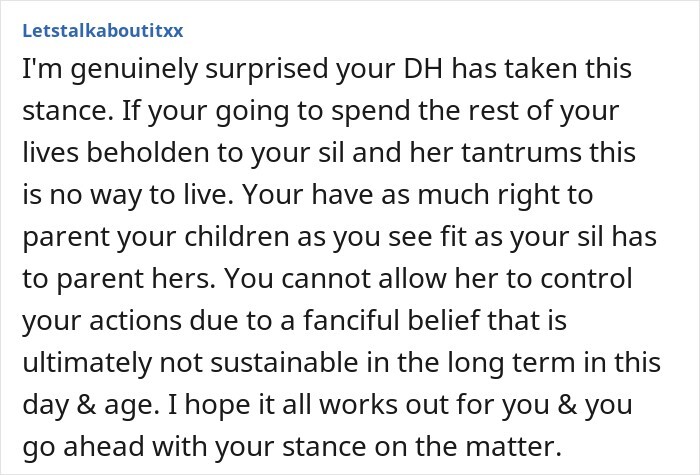
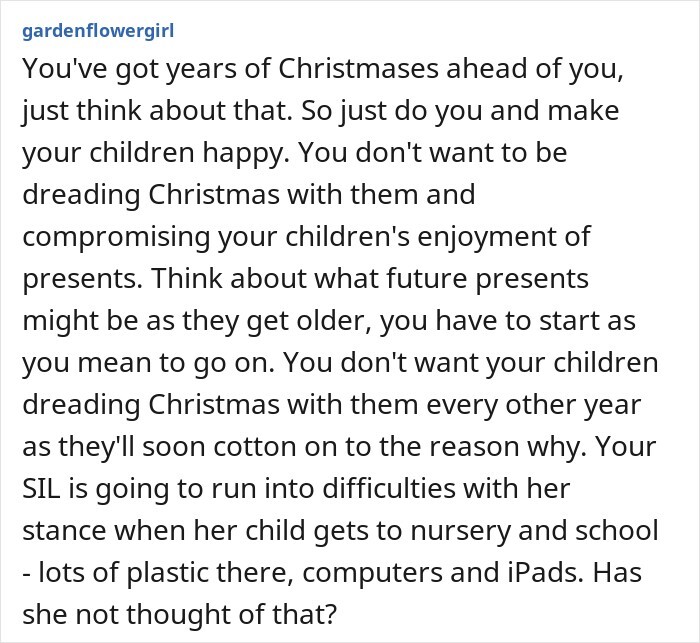
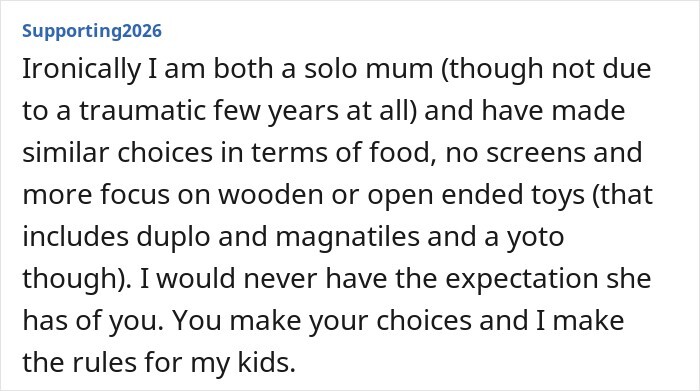
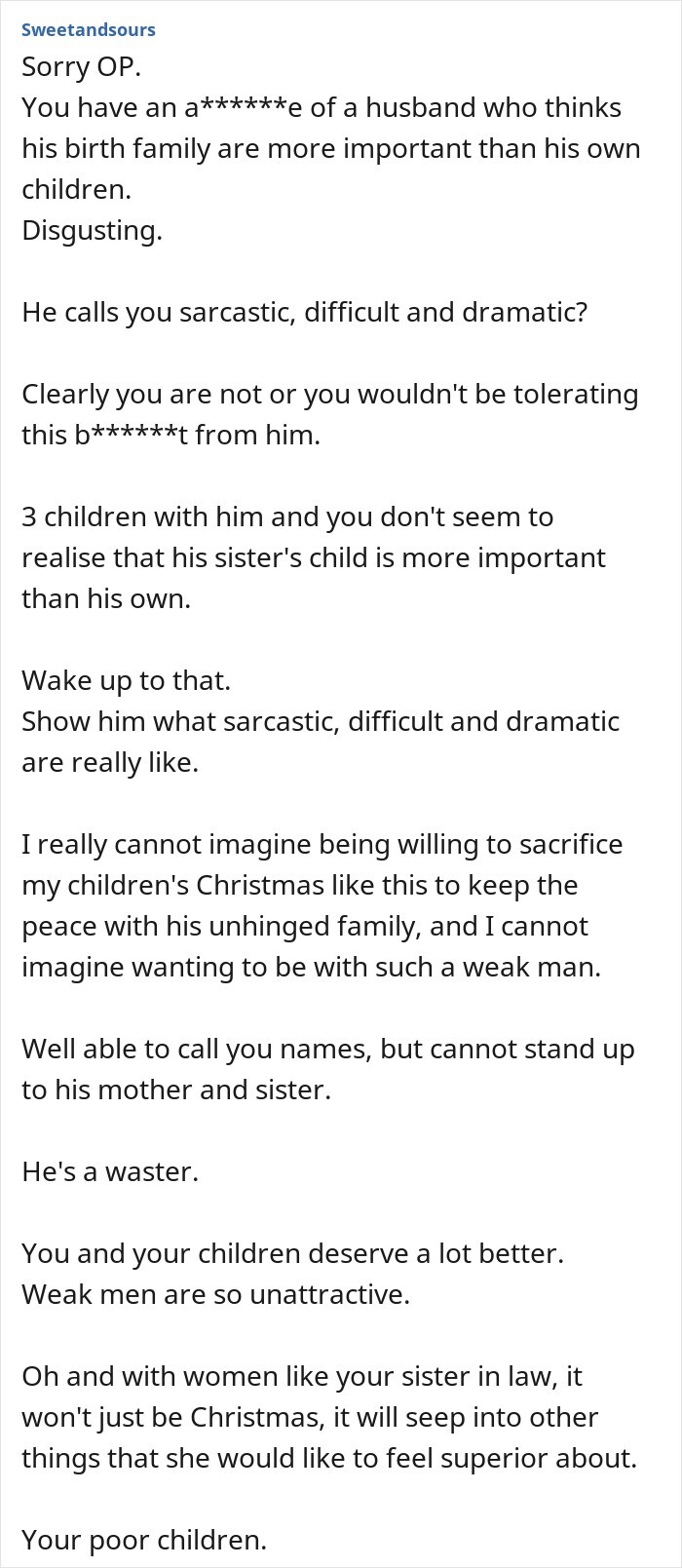
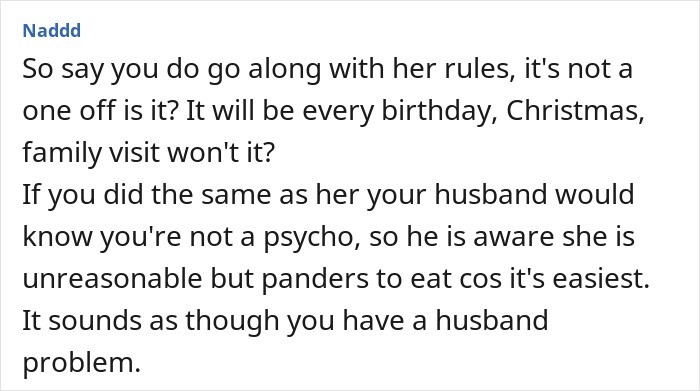
Readers encouraged the woman to stand her ground



 Follow Us