The idea that raising a newborn is just a few more hours of work a week is so absurd that it seems impossible that anyone would still believe it. Except, of course, that the internet is littered with stories of new moms discovering that their partner has no plans to actually step up.
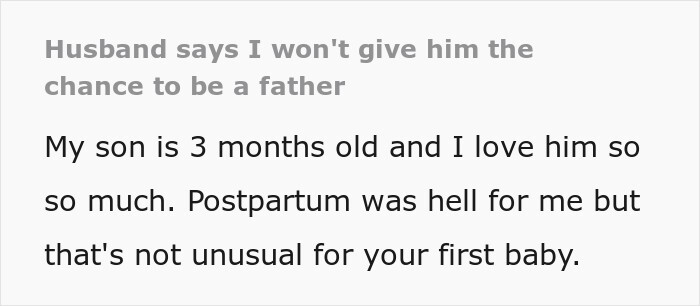
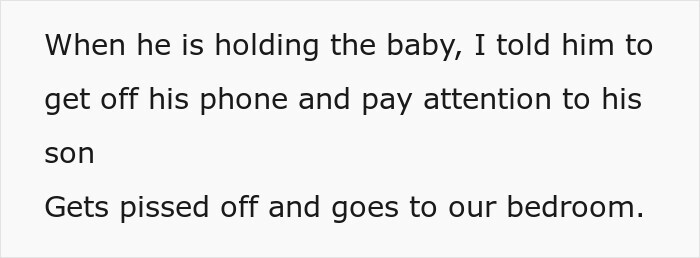
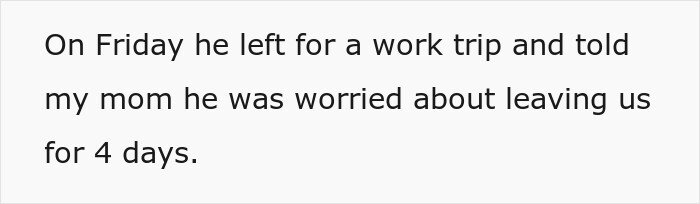
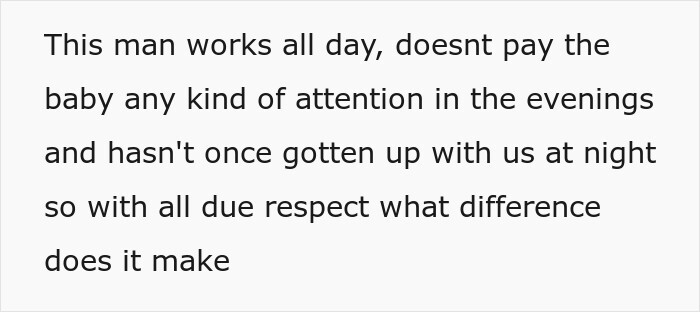
A woman turned to the internet to vent about her husband and his behavior after she gave birth. Even though she would do nearly all of the actual work, diapers, baths, and feeding, he still somehow insisted that she wasn’t giving him a chance to be a father. Folks online shared their thoughts and reactions to her situation.
Newborns are a lot of work
magnific / magnific (not the actual photo)





dmytrenko.fsk / magnific (not the actual photo)




The Yuri Arcurs Collection / magnific (not the actual photo)




visionarypixel / magnific (not the actual photo)
Some men think the bare minimum is already too much
Plenty of us have met a version of this husband, along with the defense that comes with him. He works long hours, he is tired, he never learned how, he just needs room to figure it out. Before accepting any of that, it helps to look at who actually does what in homes with young kids, because the story you just read is an extreme case of a very common pattern.
Start with the big picture. Pew Research Center’s 2026 survey of working parents found that in couples where both parents work full time, 52 percent say the mother handles more of the parenting tasks, while only 10 percent say the father does. Dads in those households were also far more likely than moms to be satisfied with how the work is divided, 55 percent versus 36 percent. That gap says a lot. One partner feels fine about an arrangement because the other is absorbing the cost of it. The report also found that even when the mother puts in more hours at her paid job, people are still more likely to say she does more at home.
An earlier Pew analysis of time use found that full time working moms spent about 1.4 hours a day on childcare compared with about one hour for dads, a modest difference on paper. The gap people feel is bigger than the one a clock picks up, which may reflect all the planning and remembering that never shows up on a timesheet. Now compare that to the household in the story. A father who skips baths, diapers, bottles and every night waking is not sitting at one hour a day. He is closer to zero, and no clock would be kind to him.
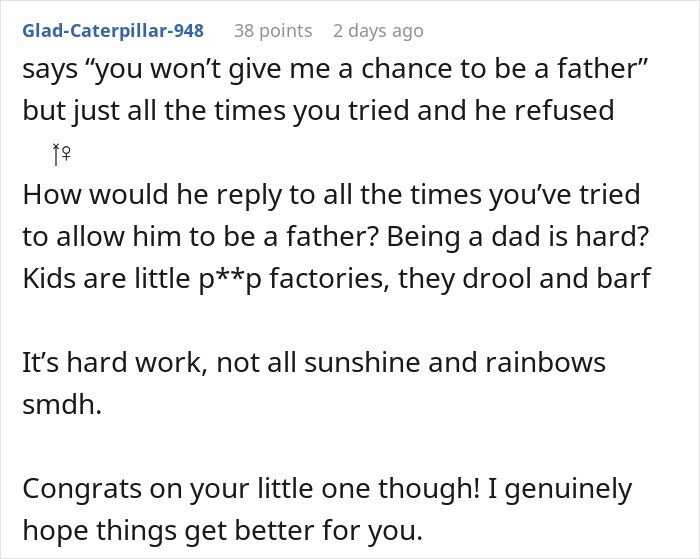
This is where entitlement comes in, and it rarely looks like shouting. It looks like treating leisure as the default setting and childcare as a favor. It looks like a day on the pickleball court right after the hospital, then a complaint that there is no time left for him. It looks like asking for a chance to learn after turning down every chance to learn. Fatherhood does not require a mother’s permission. It requires repetitions, and nobody can be shut out of a skill they were repeatedly invited to practice.
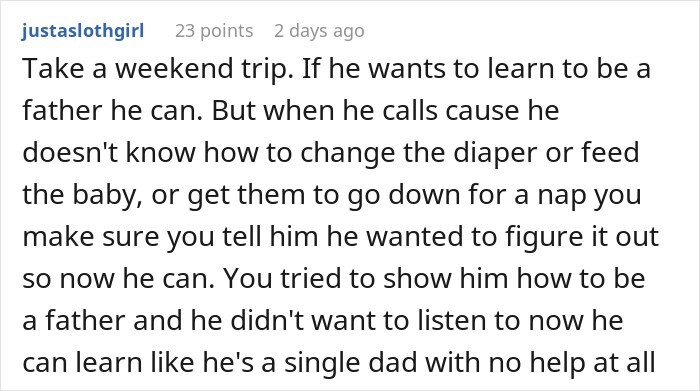
The research here is encouraging. A five year University of Manchester study followed couples in which fathers took sole charge of the baby for a stretch of parental leave. Those dads built confidence, practical skill and a clearer picture of the unseen work involved, and they stayed more involved years later. It was a small study, just ten couples, so treat it as a strong hint rather than a law. Still, it fits with earlier Manchester research suggesting that fathers who handle night wakings and diaper changes in the first nine months are more likely to still be doing hands on care when the child is three, five and seven. Early habits set the pattern, and so do weekends spent elsewhere.
Parenting is hard, regardless of who you are
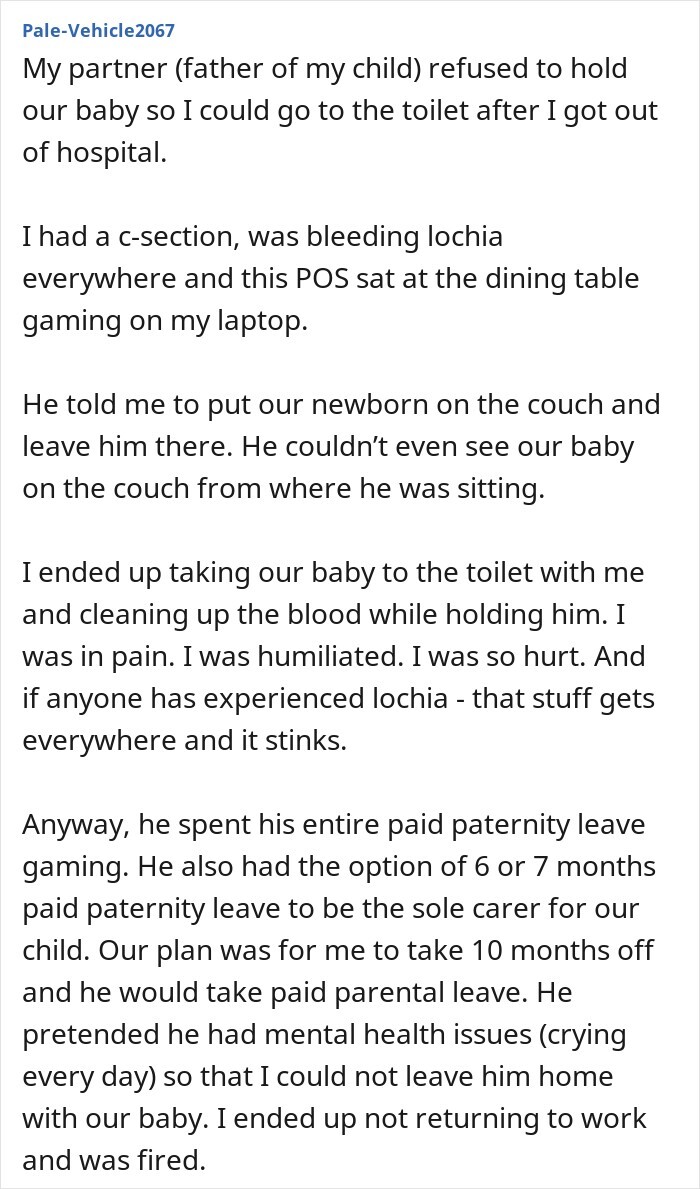
There is a fair counterpoint. New dads can struggle too. Studies cited by University of Illinois Chicago researchers put postpartum depression in roughly 8 to 13 percent of fathers, with rates climbing when the mother is affected as well. If a dad feels overwhelmed, the right move is to say so and get help, for his sake and the family’s. The wrong move is to retreat into a screen or leave for the night while his partner is in tears. Struggling can explain a person, but it does not turn a refusal into a contribution.
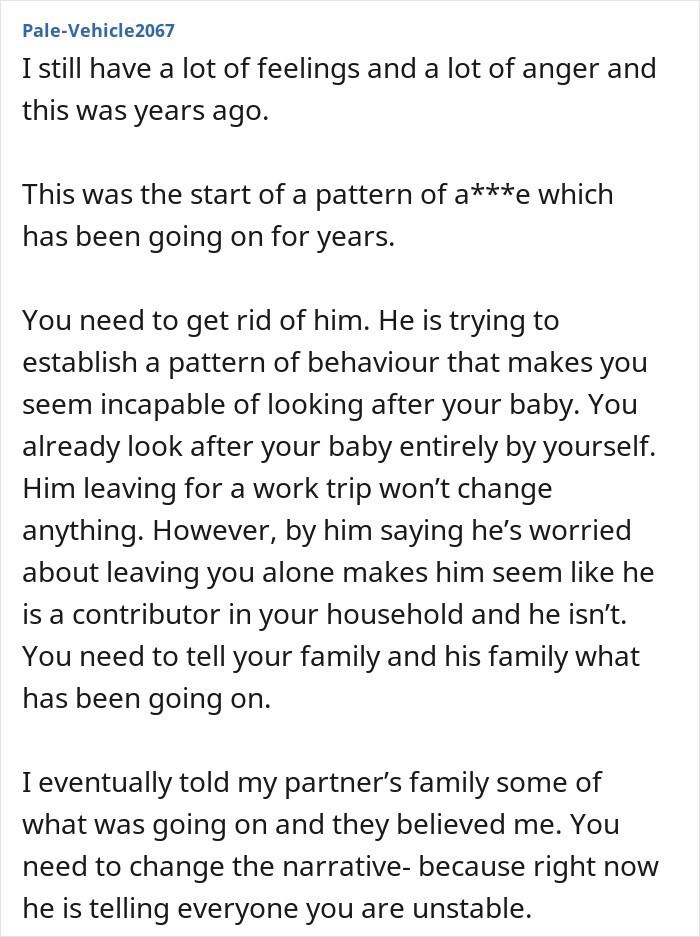
The stakes go beyond fairness, too. A population study of Japanese mothers found that women who had help from relatives and friends but no support from a partner still had roughly three times the odds of postpartum depression compared with mothers who had both. Other helpers matter a great deal, but they cannot fully stand in for the person who shares the house and the baby.
So what should readers take from all this? Perhaps that “helping” is the wrong word, since it implies the job belongs to someone else. Perhaps that worry before a work trip counts for little unless it has been practiced at home. And perhaps that when a household is split this unevenly, the most useful question is not whether a mother is giving a father a chance, but what he has done with the chances he was already handed.
She chatted with a few readers
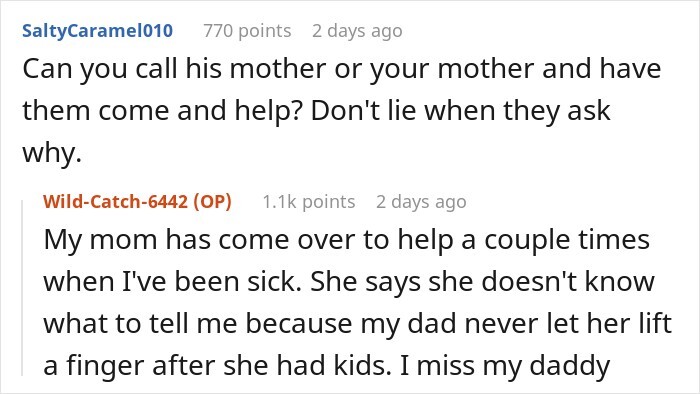

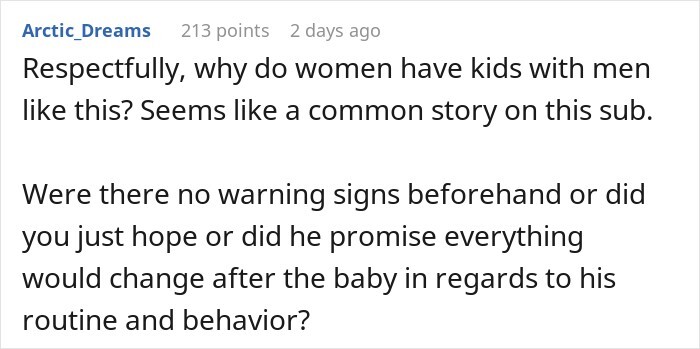
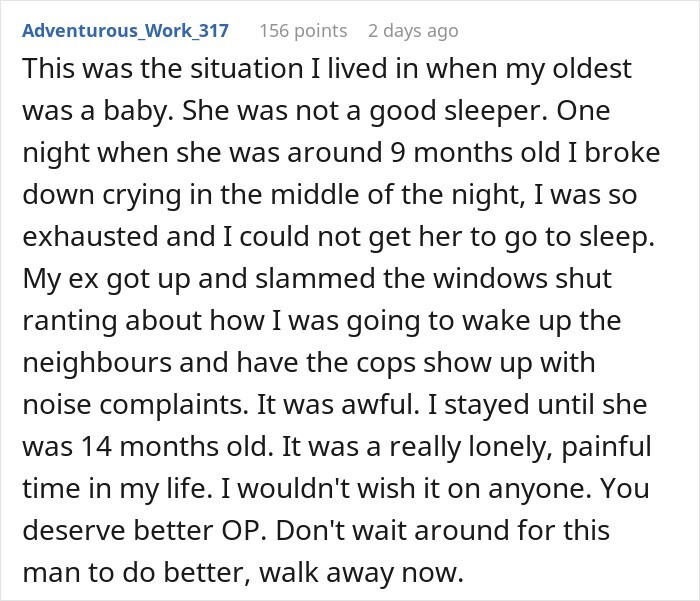
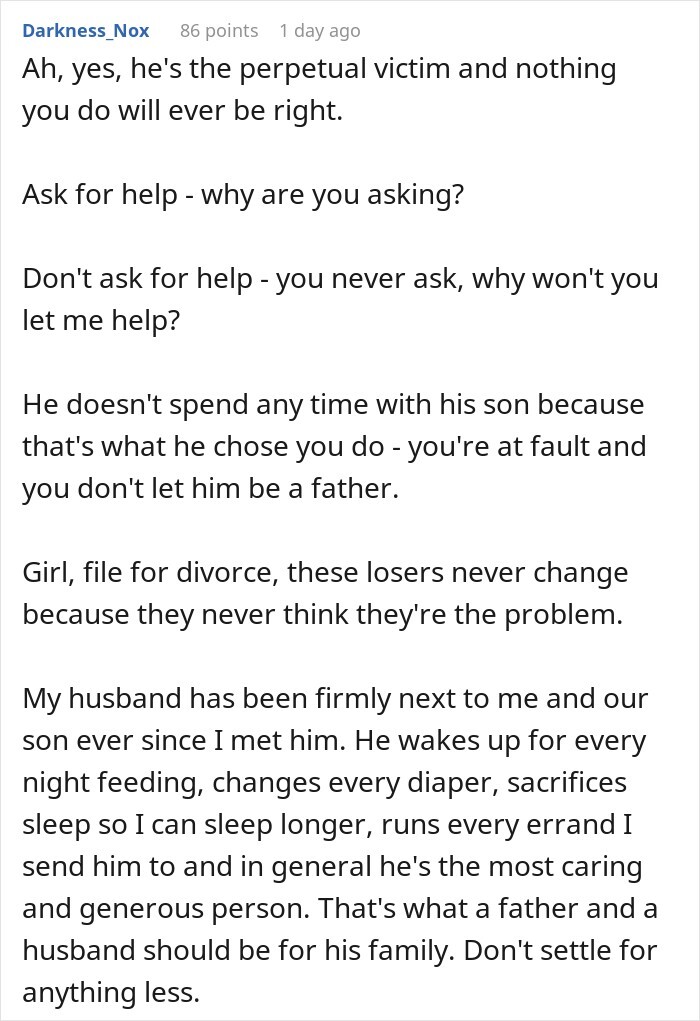
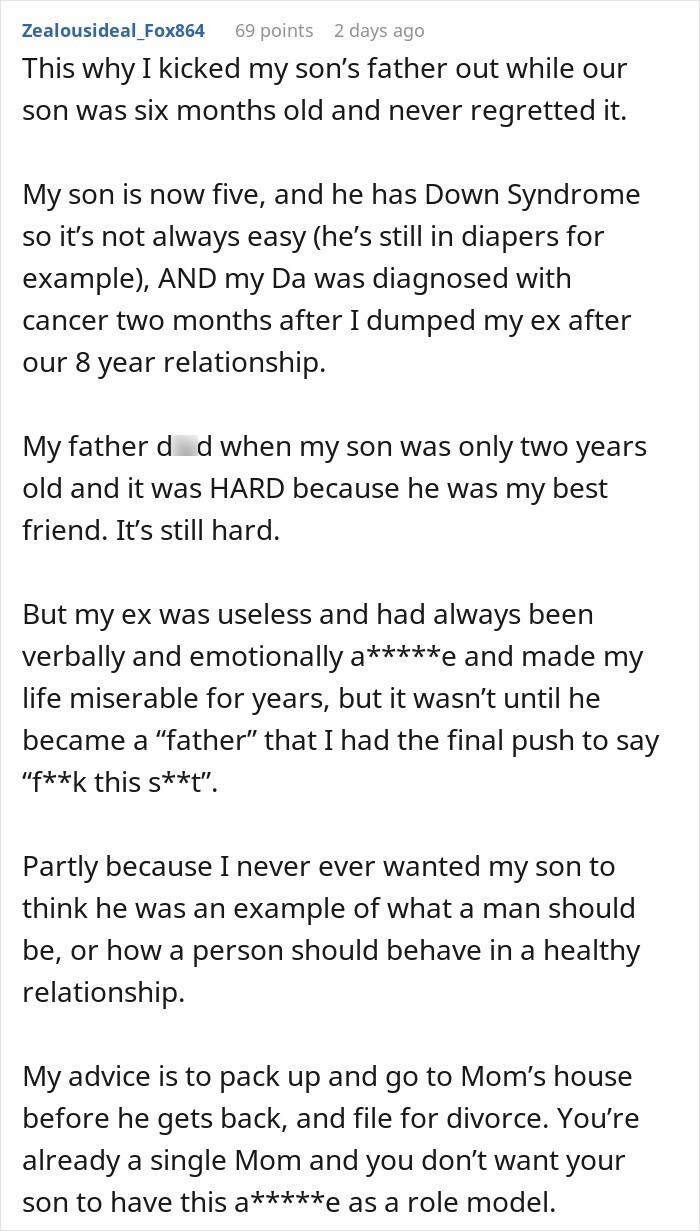
Netizens questioned if she should even stay with him














 Follow Us