Africa has always been a place where wildlife thrives, and its fossil beds hold the proof. They show how ancient animals evolved, spread across the continent and learned to live in very different environments. One of the newest chapters in that story comes from Zimbabwe, where scientists have identified a previously unknown dinosaur. The animal has been named Musango matusadonaensis, and it lived around 210 million years ago, in the Late Triassic. Its discovery hints that Zimbabwe’s prehistoric wildlife was more distinctive than anyone had realized. Some of its dinosaurs, it turns out, were different from the ones found in neighboring South Africa.
Scientists in Zimbabwe have identified a previously unknown dinosaur that lived around 210 million years ago
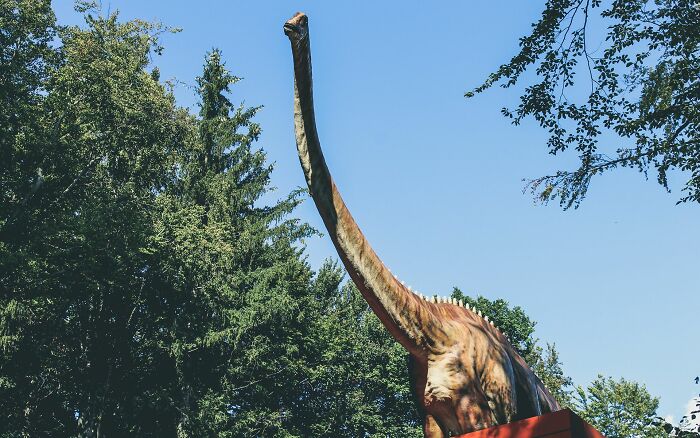
Musango belonged to the sauropodomorphs, the group that eventually produced enormous, long-necked giants like Diplodocus. It looked nothing like them, though, because it walked on two legs. From its incomplete skeleton, researchers estimate that it grew to roughly 4.5 meters (15 feet) long and weighed about 220 kilograms (485 pounds).
Growth marks in its bones show that it hadn’t quite reached adulthood when it died. Its skull wasn’t preserved, so nobody can say for sure what it ate, but many of its close relatives were plant-eaters.

Musango walked on two legs, grew to roughly 4.5 meters (15 feet) long and weighed about 220 kilograms (485 pounds)
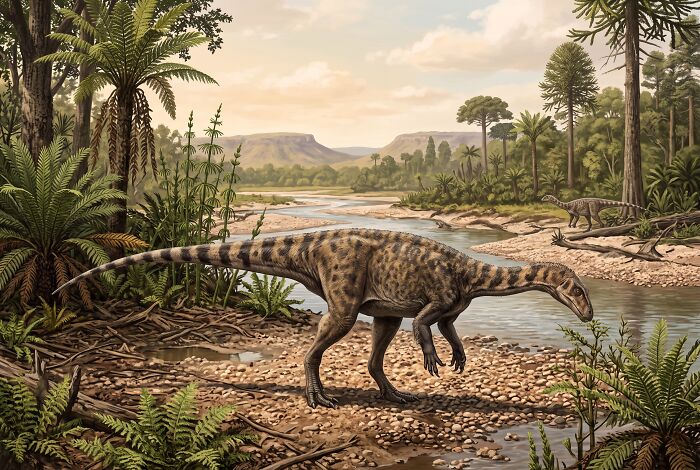
Bored Panda, ai-generated image
People have reported dinosaur bones in Zimbabwe since 1916, yet many early finds drew little scientific interest. That began to change in the 1970s, when Zimbabwean paleontologists Geoffrey Bond and Michael Raath uncovered large fossil deposits in the country’s southwest and the lower Zambezi Valley. At the time, many of those fossils were assigned to species already known from South Africa. Decades later, a local safari camp manager, Steve Edwards, found productive new fossil sites along the shores of Lake Kariba, which makes up much of the border between Zimbabwe and Zambia. His discoveries reached Jonah Choiniere, an early dinosaur specialist at the University of the Witwatersrand in Johannesburg, who pulled together an international team to look into them.
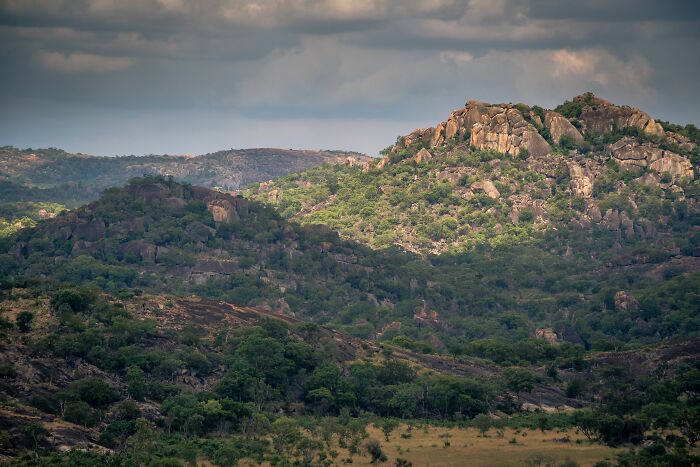
Getting to the sites wasn’t easy, since they sit deep inside Matusadona National Park. So during expeditions in 2017 and 2018, the researchers turned a houseboat on Lake Kariba into their base camp. They collected fossils from reddish mudstones and sandstones that ancient rivers laid down long ago, and they’ve been cleaning and studying the specimens ever since.
A local safari camp manager named Steve Edwards found productive new fossil sites along the shores of Lake Kariba
Those rocks also give a glimpse of the world Musango called home. Evidence from the geology and from fossilized plants suggests that the area was fairly dry, with big conifer trees scattered across the landscape. Rivers that never ran dry created greener strips of vegetation, which made valuable habitats for the animals of the time. The deposits have also produced fossils of lungfish and phytosaurs, aquatic reptiles that looked a lot like crocodiles.
The team expected to find dinosaurs similar to those in South Africa, given how close the two regions are and how similar the ages of their fossil beds are. What came out of the ground around Lake Kariba turned out to be entirely different species.
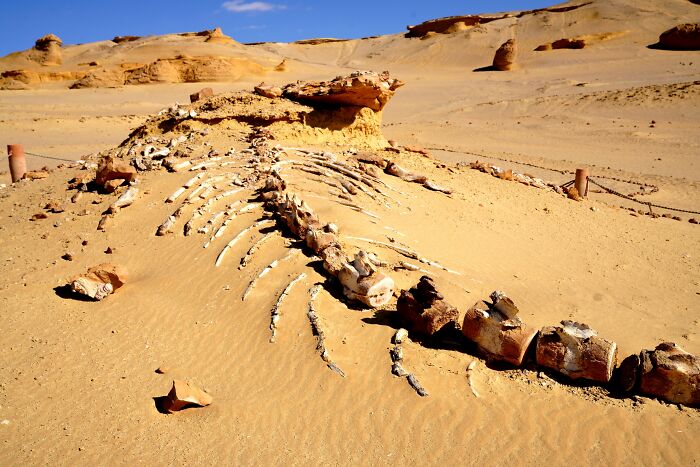
During two expeditions in 2017 and 2018, researchers collected a trove of fossils from rocks that ancient rivers laid down around 210 million years ago
Musango isn’t the only one. In 2024, researchers described Musankwa sanyatiensis, another sauropodomorph from the same deposits. Together, the two dinosaurs suggest Zimbabwe had its own dinosaur community, not just a copy of the one farther south.
Instead of South African species, the fossils around Lake Kariba turned out to be entirely different dinosaurs
Scientists are now going back through older fossil collections from Bulawayo to check whether other specimens once labeled as South African species might actually belong to different animals. Climate may help explain it. In the Triassic, Zimbabwe sat closer to the equator than much of South Africa, so the two places may have had quite different conditions. For now, that remains an idea that needs more testing.
The team plans to return to Lake Kariba to hunt for more fossils and to pin down the exact ages and environments of the rocks. The results could help show how prehistoric ecosystems varied across southern Africa and give a clearer picture of how the earliest dinosaurs evolved.
The team plans to return to Lake Kariba to hunt for more fossils and learn why Zimbabwe’s dinosaurs were so different
 Follow Us