Most of us would have to actively plot if we wanted to create a proper industrial disaster. But sometimes bad luck, unknown issues and simple negligence can do more than anyone actually accounted for.
Someone asked “What is the most horrifying scientific or industrial accident in history where a tiny, overlooked mistake led to absolute catastrophe?” and people shared stories they knew. Be warned, some are unpleasant. Otherwise, get comfortable as you scroll through, upvote your favorites and be sure to share your own examples in the comments below.
#1
Bhopal chemical accident.
Wikipedia:
On 3 December 1984, over 500,000 people in the vicinity of the Union Carbide India Limited pesticide plant in Bhopal, Madhya Pradesh, India, were exposed to the highly toxic gas methyl isocyanate, in what is considered the world’s worst industrial disaster. A government affidavit in 2006 stated that the leak caused approximately 558,125 injuries, including 38,478 temporary partial injuries and 3,900 severely and permanently disabling injuries. Estimates vary on the death toll, with the official number of immediate deaths being 2,259. Others estimate that 8,000 died within two weeks of the incident occurring, and another 8,000 or more died from gas-related diseases. In 1989, Union Carbide Corporation (UCC) of the United States paid $470 million (equivalent to $1.03 billion in 2024) to settle litigation stemming from the disaster.
The owner of the factory, Union Carbide India Limited (UCIL), was a publicly-traded company which was majority-owned and controlled by the UCC, while the remaining 49.1 percent stake was held by the Indian public and Indian government-controlled banks.[9] In 1994, UCC sold its stake in UCIL to Eveready Industries India Limited (EIIL), which subsequently merged with McLeod Russel (India) Ltd. Eveready ended clean-up on the site in 1998, when it terminated its 99-year lease and turned over control of the site to the state government of Madhya Pradesh. Dow Chemical Company purchased UCC in 2001, seventeen years after the disaster.
Civil and criminal cases filed in the United States against UCC and Warren Anderson, chief executive officer of the UCC at the time of the disaster, were dismissed and redirected to Indian courts on multiple occasions between 1986 and 2012, as the US courts focused on UCIL being a standalone entity of India. Civil and criminal cases were also filed in the District Court of Bhopal, India, involving UCC, UCIL, and Anderson. In June 2010, seven Indian nationals who were UCIL employees in 1984, including the former UCIL chairman Keshub Mahindra, were convicted in Bhopal of causing death by negligence and sentenced to two years’ imprisonment and a fine of about $2,000 each, the maximum punishment allowed by Indian law. All were released on bail shortly after the verdict. An eighth former employee was also convicted, but died before the judgement was passed.
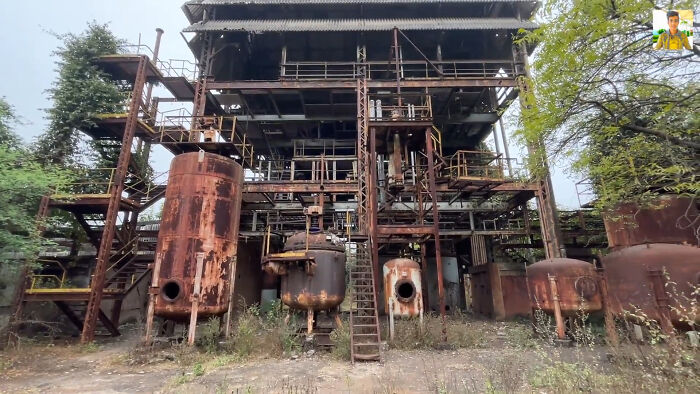
Image source: Nannyphone7, Jenil’s Unique Vlog

#2
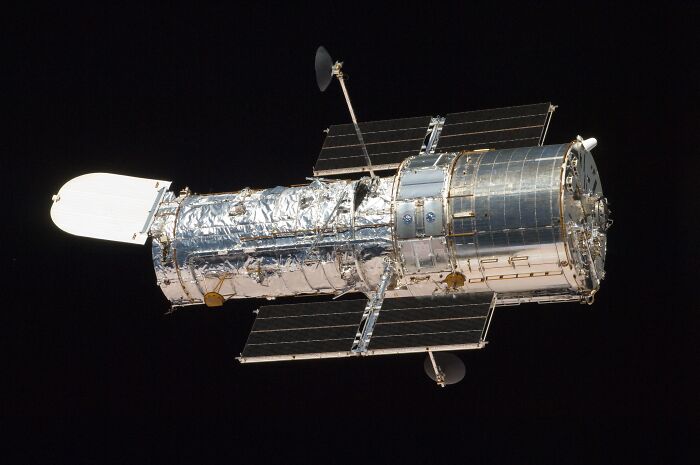
The Hubble Space Telescope lense was beveled at the wrong angle. Because the device uses to calibrate the device that measured the devices measuring the lense had a cup washer installed upside down. This wasn’t figured out until the telescope was in orbit. NASA had to develop a contact lense to put on the telescope.
lightaugust:
An astronomy professor of mine in the early 90s told us that he had spent ten years developing one of the observational tools on the Hubble. When they discovered this mistake they had to remove the tool from the Hubble to fix it and all his work went for naught.
#3
Triangle Shirtwaist factory fire. 123 women and girls, 23 men d**d from fire, smoke inhalation, or jumping because the building didn’t have a fire escape.
SaltyFriend705:
The stairway was there; it was chained shut. That isn’t tiny or overlooked–it was intentional to keep the workers inside the factory.
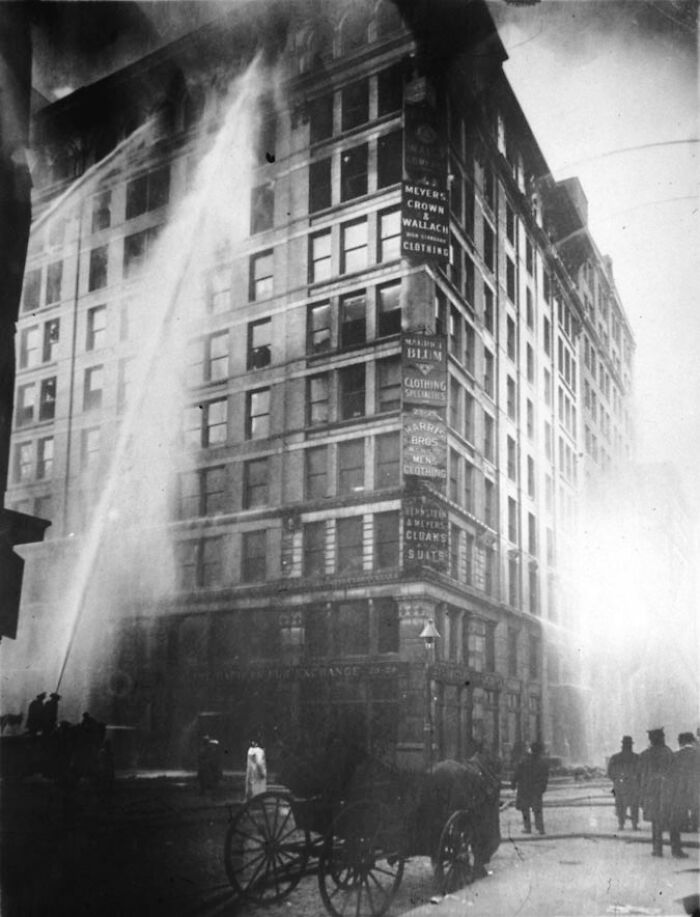
Image source: 3batsinahousecoat, Unknown author
#4
Dude dropped a socket for a wrench and caused a massive explosion in a nuclear missile silo and ejected a 9-megaton thermonuclear warhead.
Wikipedia:
The Damascus Titan missile explosion (also called the Damascus accident) was a 1980 U.S. nuclear weapons incident involving a U.S. Air Force LGM-25C Titan II intercontinental ballistic missile (ICBM) at Missile Complex 374-7 in rural Arkansas. The incident began with a fuel leak at 6:30 p.m. CDT on September 18, and culminated with an explosion inside the missile silo at around 3:00 a.m. on September 19. The 9-megaton-of-TNT (38 PJ) W-53 nuclear warhead was ejected and landed a short distance away and no radioactive material was lost.
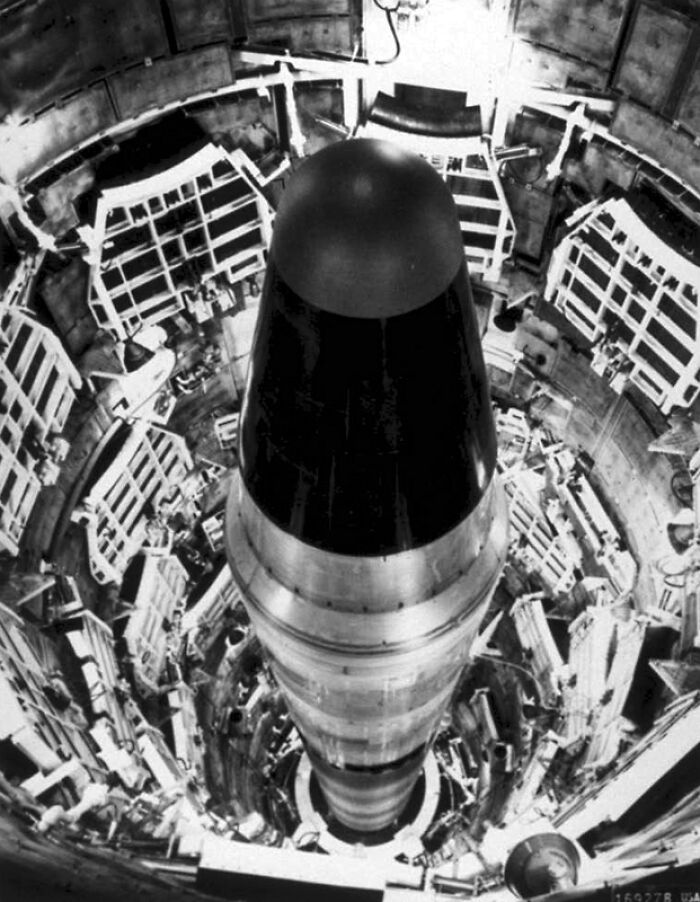
Image source: nyfael, U.S. federal government
#5
Darvaza gas crater in Turkmenistan. A Soviet drilling rig hit a natural gas cavern and the engineers decided to light it in the hopes that it would burn out in a couple of weeks.
It’s been burning continuously since 1971.
Revolutionary-Yak-47:
The US has Centralia, PA. An accidental fire in a coal deposit has been burning for 50+ years under where the town was.
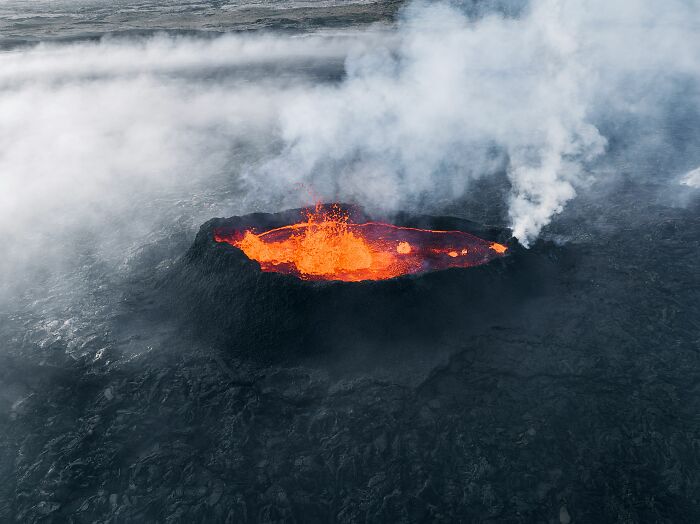
Image source: GreenCarpenter3, Joshua Earle
#6
Tons of them. Chernobyl, notably.
Wikipedia:
On 26 April 1986, reactor 4 of the Chernobyl Nuclear Power Plant, located near Pripyat in the Ukrainian SSR of the Soviet Union, exploded. The accident resulted in dozens of direct deaths and a major release of radioactive material into the environment, causing widespread health effects and requiring the establishment of the Chernobyl exclusion zone. The response involved more than 500,000 personnel and cost an estimated 18 billion rubles (about $85 billion in 2026). It remains the most destructive nuclear disaster and the most expensive disaster in history, with an estimated cost of US$700 billion. It is one of only two nuclear accidents rated at the maximum severity on the International Nuclear Event Scale, the other being the 2011 Fukushima nuclear accident in Japan.
The disaster occurred while conducting a test to simulate the cooling of the reactor during a serious accident in blackout conditions. The operators carried out the test following an accidental drop in reactor power. Upon shutting down the reactor in such conditions, pervasive design flaws led to a power surge. The reactor components ruptured and lost coolant, and the resulting steam explosions and meltdown destroyed the reactor building. This was followed by a meltdown and fire that dispersed radioactive contaminants across the Soviet Union and Europe. The Soviet government established an exclusion zone with a 10-kilometre (6.2 mi) radius 36 hours after the accident, initially evacuating around 49,000 people. This was later expanded to 30 kilometres (19 mi), resulting in the evacuation of approximately 68,000 more people. The government did not publicly acknowledge the disaster until two days after the explosion, when elevated radiation levels were detected in Sweden.
Following the explosion, which killed two engineers and severely burned two others, an emergency operation began to put out the fires and stabilize the reactor. Of the 237 workers hospitalized, 134 showed symptoms of acute radiation syndrome (ARS); 28 of them died within three months. Over the next decade, 14 more workers (nine of whom had ARS) died of various causes mostly unrelated to radiation exposure. It is the only instance in commercial nuclear power history where radiation-related fatalities occurred. As of 2005, 6000 cases of childhood thyroid cancer occurred within the affected populations (15 of them fatal), “a large fraction” being attributed to the accident. Long-term death estimates range from up to 4,000 in Ukraine, Belarus, and Russia (per the United Nations) to 16,000 in total across Europe.
Pripyat was abandoned and replaced by the purpose-built city of Slavutych. The Chernobyl Nuclear Power Plant sarcophagus, completed in December 1986, reduced the spread of radioactive contamination and provided radiological protection for the crews of the undamaged reactors. In 2016–2018, the Chernobyl New Safe Confinement was constructed around the old sarcophagus to enable the removal of the reactor debris, and clean-up is scheduled for completion by 2065.
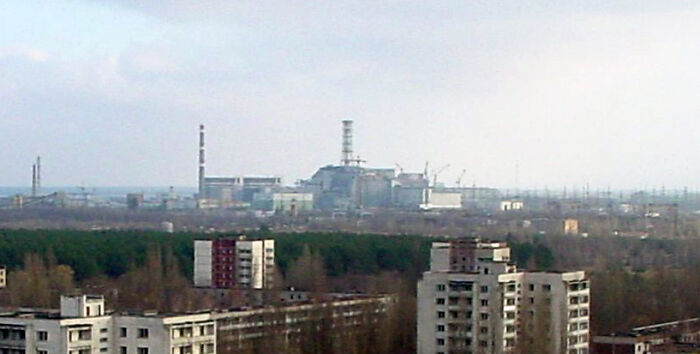
Image source: Giorgio_Keeffe, Jason Minshull
#7
Eastern Airlines flight 401. Crashed into the Everglades because the pilot and flight crew got obsessed with fixing a broken lightbulb.
In fact, most major airline crashes of the last 75 years can be traced to a single event, causing a chain reaction of events that led to the disaster.
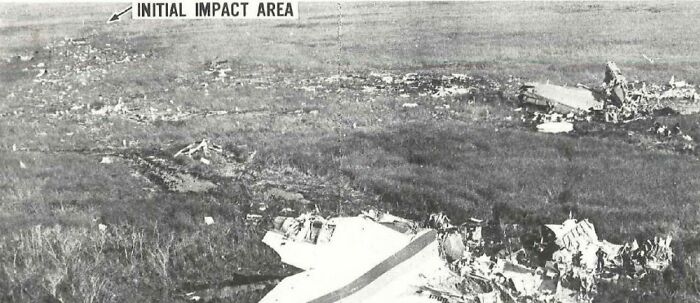
Image source: will_tellulator, NTSB
#8
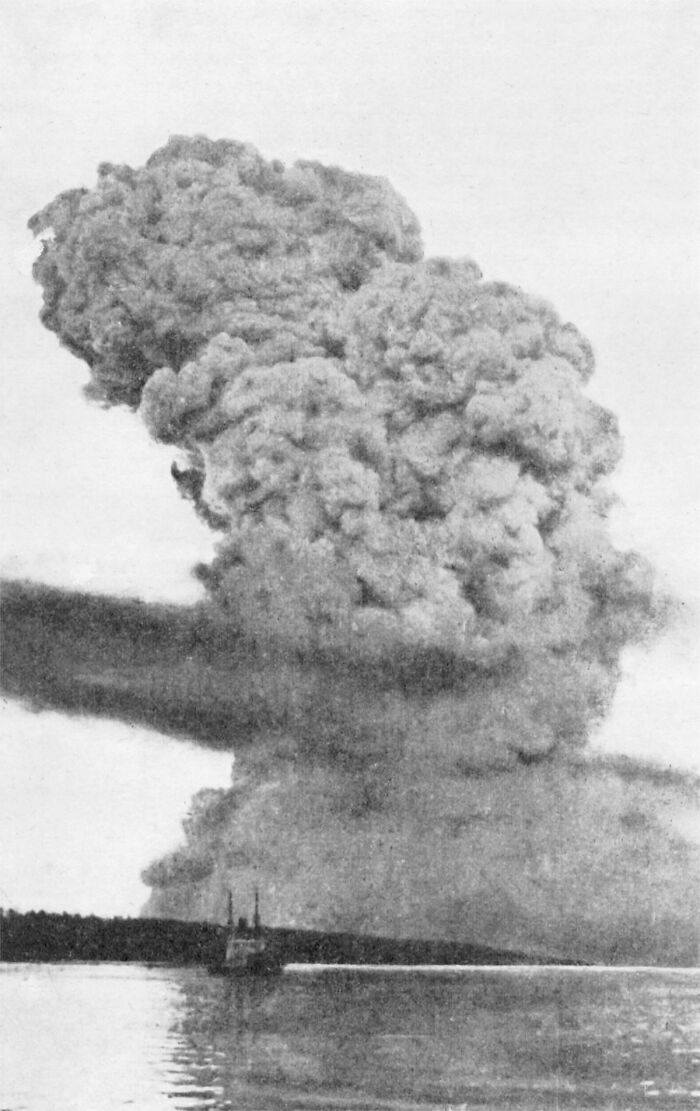
Halifax Explosion. All because the unladen ship refused to follow nautical procedure and pass port to port with the *Mont-Blanc*, which was full of TNT and Benzol. The collision knocked fuel barrels over, which caught the TNT and picric acid on fire. Almost 1,800 were k****d in a matter of seconds.
#9
Therac-25.
Wikipedia:
The Therac-25 was a computer-controlled radiation therapy machine produced by Atomic Energy of Canada Limited (AECL) in 1982 after the Therac-6 (neptune) and Therac-20 units (the earlier units had been produced in partnership with Compagnie générale de radiologie (CGR) of France).
The Therac-25 was involved in at least six incident ov****ses of radiation between 1985 and 1987: 425 leading to patient death, and contending what was, at that time, described as “the worst series of radiation accidents in the 35-year history of medical accelerators”. Because of concurrent programming errors (also known as race conditions), it sometimes gave its patients radiation doses that were up to 250 times higher than normal, resulting in death or serious injury. These accidents highlighted the dangers of software control of safety-critical systems.
The Therac-25 has become a case study in health informatics, software engineering, and computer ethics. The incidents highlight the dangers of engineer overconfidence: 428 after the engineers dismissed end user reports, leading to severe consequences.
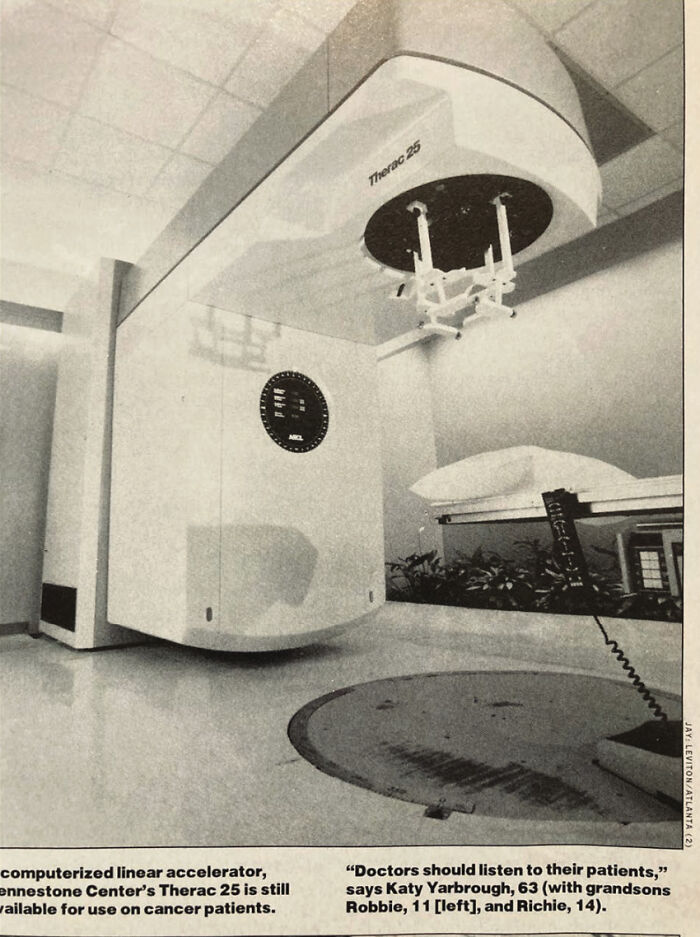
Image source: YeeahBuoy, Newspaper
#10
Aberfan.
They decided put a coal tip (huge unstable pile of waste earth from mining) on top of a water spring.
Then when it rained heavily the whole thing became a slurry and flowed directly down onto the village, k*****g over 100 children while they were at school. Horrific.
Wikipedia:
The Aberfan disaster (Welsh: Trychineb Aberfan) was the catastrophic collapse of a colliery spoil tip on 21 October 1966. The tip had been created on a mountain slope above the Welsh village of Aberfan, near Merthyr Tydfil, and overlaid a natural spring. Heavy rain led to a build-up of water within the tip which caused it to suddenly slide downhill as a slurry, k**ling 116 children and 28 adults as it engulfed Pantglas Junior School and a row of houses. The tip was the responsibility of the National Coal Board (NCB), and the subsequent inquiry placed the blame for the disaster on the organisation and nine named employees.
There were seven spoil tips on the hills above Aberfan; Tip 7—the one that slipped onto the village—was started in 1958 and, at the time of the disaster, was 111 feet (34 m) high. In contravention of the NCB’s procedures, the tip was partly based on ground from which springs emerged. After three weeks of heavy rain the tip was saturated and approximately 140,000 cubic yards (110,000 m3) of spoil slipped down the side of the hill and onto the Pantglas area of the village. The main building hit was the local junior school, where lessons had just begun; 5 teachers and 109 children were k**led.
An official inquiry was chaired by Lord Justice Edmund Davies. The report placed the blame squarely on the NCB. The organisation’s chairman, Lord Robens, was criticised for making misleading statements and for not providing clarity as to the NCB’s knowledge of the presence of water springs on the hillside. Neither the NCB nor any of its employees were prosecuted and the organisation was not fined.
The Aberfan Disaster Memorial Fund (ADMF) was established on the day of the disaster. It received nearly 88,000 contributions, totalling £1.75 million. The remaining tips were removed only after a lengthy fight by Aberfan residents against resistance from the NCB and the government on the grounds of cost. The site’s clearance was paid for by a government grant and a forced contribution of £150,000 taken from the memorial fund. In 1997 the British government paid back the £150,000 to the ADMF, and in 2007 the Welsh Government donated £1.5 million to the fund and £500,000 to the Aberfan Education Charity as recompense for the money wrongly taken. Many of the village’s residents developed medical problems as a result of the disaster, and half the survivors have experienced post-traumatic stress disorder at some time in their lives.
Image source: Hierodula_majuscula
#11
In terms of sheer scale and body count, others have provided what is likely the correct answer. In terms of overall horror, my first thought was the Byford Dolphin incident.
Wikipedia:
Byford Dolphin was a semi-submersible, column-stabilised drilling rig operated by Dolphin Drilling, a subsidiary of Fred Olsen Energy. Byford Dolphin was registered in Hamilton, Bermuda, and drilled seasonally for various companies in the British, Danish, and Norwegian sectors of the North Sea. In 2019, Dolphin scrapped the rig.
The rig was the site of several serious incidents, most notably an explosive decompression in 1983 that k**led four divers and one dive tender, as well as critically injuring another dive tender.
Image source: LocalJoke_
#12
Maybe it’s not the most horrifying, but the incidents with the “Demon Core” are pretty interesting. I’m sure someone else on here can explain it better than I could, but here’s the wiki link:
Wikipedia:
The demon core was a sphere of plutonium–gallium alloy that was involved in two fatal radiation accidents when scientists tested it as a fissile core of an early atomic b*mb. It was manufactured in 1945 by the Manhattan Project, the U.S. nuclear weapon development effort during World War II. It was a subcritical mass that weighed 6.2 kilograms (14 lb) and was 89 millimeters (3.5 in) in diameter. The core was prepared for shipment to the Pacific Theater as part of the third nuclear weapon intended to be dropped on Japan, but when Japan surrendered, the core was retained for testing and potential later use in the case of another conflict.
The two criticality accidents occurred at the Los Alamos Laboratory in New Mexico on August 21, 1945, and May 21, 1946. In both cases, an experiment was intended to demonstrate how close the core was to criticality, using a neutron-reflective tamper (layer of dense material surrounding the fissile material). In both accidents, the core was accidentally put into a critical configuration. Physicists Harry Daghlian (in the first accident) and Louis Slotin (in the second accident) both suffered acute radiation syndrome and died shortly afterward. Others present in the laboratory were also exposed to radiation during the accidents. The core was melted down during the summer of 1946, and the material was recycled for use in other cores.
Image source: SevenCedarJelly
#13
Great molasses flood of 1919
Too thin metal. Not properly maintained.
Unusually hot weather, mixed with warm incoming molasses caused gasses to build up and rupture the tank.
15 to 40 foot wave of molasses moving 35 mph! Crushed buildings. Knocked a train over and destroyed some Boston elevated railway supports.
21 d**d. Over 100 injured. Dying to that must’ve been a terrible way to go.
Image source: Informal_Ad4399
#14
The Victoria Hall Disaster that happened in Sunderland, England is the reason why we have laws that fire doors must open outwards of buildings to this day.
On 16 June 1883 a variety show was playing at the Victoria Hall, with one of the main advertisements stating that children who attend could be in with a chance of receiving a gift.
At the show’s end, an announcement was made that children with certain numbered tickets would be presented with a prize upon exit. At the same time, entertainers began distributing gifts from the stage to the children in the stalls. Worried about missing out on the treats, many of the estimated 1,100 children in the gallery surged toward the staircase leading downstairs.
At the bottom of the staircase, the door opened inward and had been bolted to leave a gap only wide enough for one child to pass at a time. It is believed this was to ensure the orderly checking of tickets. With few accompanying adults to maintain order, the children surged down the stairs toward the door. Those at the front became trapped and were crushed to d***h by the weight of the crowd behind them.
183 children, aged between 3 and 14, were crushed to d***h.
There’s quite vivid portraits I’ve seen of this disaster by journalists who saw the aftermath (This was a time before proper photography, so newspapers often had sketches instead). One of them that stuck with me was of a teenage girl with a thousand yard stare carrying her d**d younger brother home, wondering how she was going to explain this to her family.
Image source: anon
#15
Didn’t a Mars probe auger itself into the surface instead of deploying its chutes/thrusters due to a (lack of) conversion between metric and american units? Hubble telescope was initially useless as well due to a tiny mistake on the main mirror. Both of those were catastrosphies in the financial sense, not really loss-of-life.
Not exactly an overlooked mistake, but the proliferation of thalidomide for morning sickness led to a lot of birth defects. I guess the mistake was lack of testing and forethought
The same could be said about the addition of lead into gasoline, leading to all kinds of environmental and health issues.
Image source: mrbigbusiness
#16
Leaded gasoline. It is estimated to have lowered the IQ of 2 generations by 2-6% or something like that. Breathing lead in the air is bad mmmk.
Image source: Randsrazor
#17
Texas City port explosion 1947, one ship capt who decided to save his cargo over sounding the alarm when his ship caught fire. 581 people died. It was the largest explosion besides an atomic one in the US.
Image source: finedayredpony
#18
Oh man, I’ve got a good one. Or a rather terrible one really, but you catch my drift.
Here in Norway, we didn’t always have all this oil and the resulting money. We were dirt poor. Then at the tail end of the sixties, we discovered this gigantic oil reserve in the North Sea, the Ekofisk oil field, and we started brainstorming and building oil rigs, a whole other story in itself.
There were deaths and accidents sprinkled throughout development and the resulting booming business, but they were pretty isolated incidents for the most part. That is, until the 27th of March, 1980. One of our most advanced platforms, a mobile drilling platform named Alexander L. Kielland after a famed Norwegian writer from the 1800’s, suddenly buckled and capsized, k*****g 123 people on board. It was the largest national tragedy since the second world war, and shocks of disbelief and despair went through the nation.
Now, the interesting part is *why* it capsized. This relatively huge piece of machinery failed because of the tiniest of things you see, something that was missed during construction.
See, it was made in France on commission, and the construction utilized some salvaged parts, namely, parts of the platform’s partly submersible floating legs. Think of a buoy, the legs were not unlike that in the way they behaved. Anyway, these salvaged, already painted parts had to be welded into those legs. That meant that the welders had to, quite crucially, grind away every last bit of paint wherever welding was to occur. Just a tiny speck of paint can monumentally f**k up a seam. And monumentally f**k up some idiot welder did, and quite literally; one of the giant platform’s legs broke, buckled under the weight of the platform and the forces of the sea, and the platform and everyone aboard disappeared into the sea. It was a very sudden thing.
The point of failure? A tiny speck of paint, no more than few millimeters that a welder had missed. 123 people died because of that. I learned about this when I got my own welder’s certificate from this welding school in Forus, Rogaland, one of the premier certification joints for North Sea stuff.
Image source: ArtisticTraffic5970
#19
Does the Takata corporation story qualifies here?
The story in brief:
Takata Corporation was the main manufacturer of airbags in the 2010s.
To reduce costs, somebody decided to change the propellant used in the airbags for a cheaper alternative. That by itself was not the mistake.
The mistake was that the new propellant needed special handling and manufacturing process, because it was less stable and could explode more violently in certain conditions. The correct handling and manufacturing was not followed properly.
At least 13 people k****d and hundreds injured by exploding airbags resulted in the largest ever vehicle urgent recall in history. Over 100 million cars recalled because of dangerous airbags.
And, of course, the company disappeared soon after.
Edit: this is definitely not the most horrific, but people still died and there was a lot of economical damages, so maybe it fits.
Image source: MrFantasma60
#20
When I read this I immediately thought of the Abbeystead disaster in Lancashire (UK) 1984.
Not the most, by any definition but horrific non the less.
I remember it because my mum was a nurse working in the hospital on the day it happened.
It was a tour of a water pumping valve house; methane gas had built up inside the pump station and when the 44 visitors entered, the whole thing blew. 8 died instantly, basically torn to bits. Some of the survivors had horrendous injuries. I was 12 at the time and I remember my mum talking about going to start dressing a wounded limb that fell off in her hand.
Image source: Loathsome_Dog
#21
Until the 1980s, doctors assumed babies couldn’t feel pain. Surgeries survival rate rapidly increased once they gave babies proper pain medication during procedures.
Image source: Yourownhands52
#22
Salt babies in Binghamton, NY.
There doesn’t seem to be a wiki page but the tldr is in the early 60s salt was used in the nursery formula causing infants to suffer convolutions and even d***h. This was at a local hospital.
Image source: Rough_Condition75
#23
Dutchman’s Curve Great Train Wreck of 1918. Train #4 was on a double-track section, under orders to not enter a single-track section until train #1 had passed by in the opposite direction. Conductor on #4 was collecting tickets, and confused a small switch engine with train #1. Rest of crew also made similar mistakes. Train #4 then misinterpreted a “clear” signal as a signal that they could proceed.
Train #4 encountered train #1 head-on at Duchman’s Curve, where their view was blocked.
Worst passenger accident in USA. Made worse by being one of the last crashes with wooden passenger cars. The “block signaling” method became much more popular after this, where red signals stop trains except where trains are allowed by green/yellow lights.
Image source: Hot-Win2571
#24
Thomas Midgley Jr. and Albert L Henne developed Freon, a type of CFC, as a refrigerant without realizing the damage CFCs would eventually do to the ozone layer, but perhaps even worse, Midgley also invented leaded gasoline, and he and the Execs at GM knew well that lead is toxic; Midgley contracted lead poisoning himself. He eventually k****d himself with yet another one of his inventions, a device to help him get out of bed (he suffered from polio); some say his d***h was intentional, some say accidental, but the Coroner’s official word was s*****e.
Image source: MedusaHartz
#25
Coconut Grove fire, partly because the main lobby only had revolving doors and panicking people jammed them when rushing to exit. It’s why all public buildings in the US must have exit doors that swing out.
Image source: will_dog2019
#26
Titanic.
Wikipedia:
RMS Titanic was a British ocean liner that sank in the early hours of 15 April 1912 after striking an iceberg on her maiden voyage from Southampton, England, to New York City. Of the 2,208 passengers and crew aboard, approximately 1,500 died (estimates vary), making the incident one of the deadliest peacetime sinkings of a single ship. Titanic, operated by White Star Line, carried some of the wealthiest people in the world, as well as hundreds of emigrants from the British Isles, Scandinavia, and elsewhere in Europe who were seeking a new life in the United States and Canada. The disaster drew public attention, spurred major changes in maritime safety regulations, and inspired a lasting legacy in popular culture. It was the second time White Star Line had lost a ship on her maiden voyage, the first being RMS Tayleur in 1854.
Titanic was the largest ship afloat upon entering service and the second of three Olympic-class ocean liners built for White Star Line. The ship was built by the Harland and Wolff shipbuilding company in Belfast. Thomas Andrews Jr., the chief naval architect of the shipyard, died in the disaster. Titanic was under the command of Captain Edward John Smith, who went down with the ship. White Star Line’s chairman, J. Bruce Ismay, survived in a lifeboat.
The first-class accommodations were designed to be the pinnacle of comfort and luxury. They included a gymnasium, swimming pool, smoking rooms, fine restaurants and cafes, a Victorian-style Turkish bath, and hundreds of opulent cabins. A high-powered radiotelegraph transmitter was available for passenger use. Titanic had advanced safety features, such as watertight compartments and remotely activated watertight doors, which contributed to the ship’s reputation as “unsinkable”.
Titanic was equipped with sixteen lifeboat davits, each capable of lowering three lifeboats, for a total capacity of 48 boats. Despite this capacity, the ship was equipped with twenty lifeboats. Fourteen of these were regular lifeboats, two were cutter lifeboats, and four were collapsible boats that proved difficult to prepare for launch while the ship was sinking. Together, these lifeboats could have held 1,178 people – roughly half the number of passengers on board, and a third of the number that the ship could have carried at full capacity (a number consistent with the maritime safety regulations of the era). The British Board of Trade’s regulations required fourteen lifeboats for a ship of 10,000 tonnes. Titanic carried six more than that, room for 338 more people than the standard. When the ship sank, the lifeboats that had been lowered were carrying an average of 60% of their rated capacity.
Image source: ItsATrap1983
#27
The landmark American legal case 1978 case *Grimshaw v. Ford Motor Company*.
Ford did not include a 15 dollar part in the Ford Pinto. That left it exposed to explosions at low impact. Hundreds of people were k****d or had catastrophic burn injuries in collisions that led to explosions. This went on for about a decade with the Ford Pinto.
Ford had worked out that they saved more money by not including the safety part, compared to the legal consequences of accidents. One tiny part. But all Ford cared about was profit.
The case outcome: Ford was found liable for 125 million [later reduced to about 3 million] and about 2 million Pintos were recalled.
Image source: karo_scene
#28
Fukushima Daiichi. They used construction blueprints from Texas with out thinking ONCE about modifying them for Japan’s unique geographic hazards.
The back up generators it Texas were placed in the basement to protect them from tornadoes.
Japan gets less than 30 tornadoes a year. Texas gets 130+ a year, on average.
They put the back up generators in the basement, in a tsunami prone area.
Image source: Busy_Reference5652
#29
The Goiânia accident.
Goiânia, Brazil. A man looking for scrap metal to salvage, broke into an abandoned hospital and took apart several large pieces of hospital equipment. One of which was a steel and lead device the size of a room used for radiotherapy in cancer treatment. Inside the machine they found a pretty blue material, that glowed. They took it home and shared it with friends and family, kids were spreading it on their skin like glitter.
The material was Caesium-137, an extremely radioactive isotope.
I don’t remember the exact numbers, but a few people died of radiation poisoning within days. Hundreds more suffered debilitating burns and sickness. The government of a Brazil ended up screening 100s of thousands of people after quarantining an entire city. Several homes and buildings had to be destroyed, thousands of tons of topsoil had to be removed, and all the debris carted off to be safely contained.
Considered one of the worst radiological disasters in history.
Image source: CattusPater
#30
In 1947 in TexasCity, Texas, two ships full of Ammonium Nitrate fertilizer caught fire. Fire crews came to fight the fire and battled it for awhile.Apparrently, they were unaware of all the properties. At some point, it was decided to close the hatches to smother the fire. This fertilizer won’t explode from fire alone, It takes pressure and heat. With the hatches closed pressure built and the resulting explosions k****d 500-600 people and leveled part of the town. It was one of the largest non nuclear explosions in history. It knocked an airplane filming the fire out of the sky. An entire fire department disappeared. Many people were never found, assumed vaporized. D***h count may have been low as many unknown itinerant workers were present.
The simple act of closing the hatches may well have been the trigger.
It was the largest industrial or man made disaster in the US at the time. Ironically, a mile across the bay, the worst natural disaster in US history occurred in 1900 in the Galveston storm that k****d thousands. The largest man made disasters industrial and natural disasters occurred within a mile of each other.
Image source: AdShot9160
#31
Rocket blew up 37 seconds after launch due to an integer overflow error – they tried to store too big a number in the space allocated for it in the computer memory.
A software oversight blew up a rocket.
The faster acceleration was too much for the space allocated in memory, causing the insertion and updates to overwrite other critical parts of the computer program.
Image source: Ride-Entire
#32
There have been so many, but I will give you one I witnessed. The PEPCON explosion on May 4th 1988 in Henderson, Nevada. After the Challenger disaster in 1986, PEPCON continued to produce ammonium perchlorate and was stockpiling it and much of it was stored improperly. An errant spark from a welders torch set the fiberglass walls of the drying room on fire. The building did not have an automatic fire system, and the wind was blowing good that day which spread the fire to storage areas. I was in elementary and my school was about 8 miles away from PEPCON. At the time of the big detonation we were in an assembly and I can still remember the entire building rocking one way and then the other.
I thought we had been nuked.
Image source: TyranidTiramisu
 Follow Us