For Amy Lane, a mother of two living in Canberra, life with endometriosis has meant decades of constant pain. Despite having a hysterectomy, undergoing countless surgeries, and attempting to manage pain with medication, her condition continues to take a significant toll on her life.
So when she discovered pelvic Botox injections in 2024, a whole new world opened up. Suddenly, she could go on a leisurely walk without fearing that it would leave her bedridden the next day.
Lane wasn’t the only woman who was given a new lease on life thanks to this procedure. “The relief I had from that was nothing like anything else I’d ever had before in my 20 years of having these problems,” Jess McGowan told ABC News.
As of 2025, however, the Australian Capital Territory (ACT) health system decided to pull funding for pelvic Botox in Canberra, citing concerns about the long-term effects. Now, the women who relied on this treatment have been left to either suffer or pay hundreds out of pocket for the same procedure.

photoroyalty / Magnific (not the actual photo)
Endometriosis affects an estimated 10% of reproductive-age women worldwide
Endometriosis is a condition where tissue that is similar to the lining of the uterus begins to grow outside of the uterus, often causing inflammation and scar tissue formation.
This can cause extremely painful menstrual cramps, abdominal pain or back pain, heavy bleeding during periods, pain during sex, infertility, pain while urinating, and stomach problems, such as constipation, bloating, and diarrhea. These physical symptoms are often accompanied by severe frustration while seeking out treatment as well.

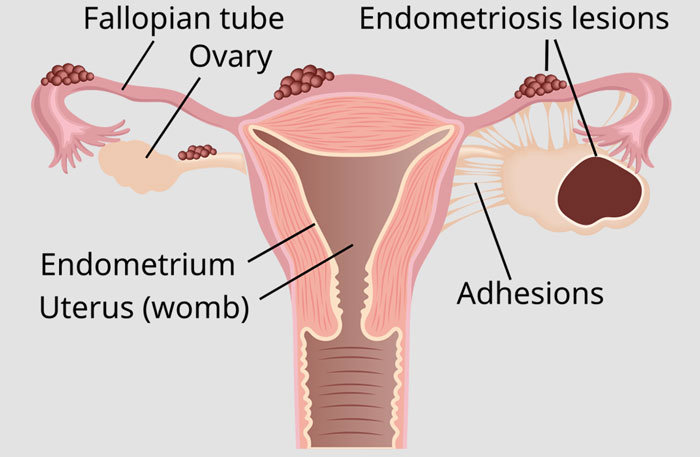
According to the World Health Organization, endometriosis affects an estimated 10% of reproductive-age women across the globe. Despite how common this condition is, there is currently no cure available. So those struggling with endometriosis can only attempt to treat their symptoms and mitigate pain.
One common treatment option involves using medication with hormones, such as birth control, gonadotropin-releasing hormones, or danazol. Other options involve surgery, such as a hysterectomy or laparoscopic surgery. But as Amy Lane experienced, these are not permanent solutions.
Part of the reason why it’s so difficult to receive proper treatment for endometriosis is that the condition is very misunderstood. Dr. Hugh Taylor, who has extensively studied the endometrium, says that it often takes between 5 and 12 years to even receive a diagnosis.
Dr. Taylor notes that the condition has often been dismissed historically. Doctors would insist that patients’ symptoms had other causes and refuse to investigate them further. And significant funding and resources were not put towards researching endometriosis until the past decade or so.

stefamerpik / Magnific (not the actual photo)
In the United States, Botox is an FDA-approved treatment option for various health conditions
Meanwhile, in the past, laparoscopic surgery was the only means of receiving a diagnosis. And patients were only presented with this option if they were in extreme amounts of pain and advocated for themselves.
There is also a historical bias in medicine prioritizing men’s health issues above women’s. Prior to 1993, it was rare for women to even be included in clinical trials. So while it is disappointing, it’s not exactly shocking that a condition impacting only female bodies has been overlooked for centuries.
Because so many women struggle with endometriosis for years or decades, finding a pain reliever that’s actually effective can be a godsend. And the idea of Botox injections being the key to reducing pain isn’t so absurd, as Botox has a history of being used to treat various medical conditions.
In 2010, Botox was approved by the United States Food and Drug Administration as a treatment for migraines. “Evidence suggests that the drug interrupts the pathway of pain transmission between the brain (central nervous system) and nerves that extend from the spinal cord,” Johns Hopkins Medicine explains.
Meanwhile, Botox is often recommended to treat temporomandibular joint disorders. Because botulinum toxin paralyzes muscles, it can prevent the muscles around the jaw from tensing up, and in turn, reduce pain and discomfort.
This is the same reason why it has been used to treat endometriosis. It freezes muscles to stop them from contracting, the Endometriosis Treatment Center of America explains. Pelvic floor muscle spasms are the culprit for a lot of the pain endometriosis patients often experience, so Botox can nip those spasms in the bud.

javi_indy / Envato (not the actual photo)
Canberra Health Services pulled the treatment due to concerns about potential side effects
In the U.S., Botox is an FDA-approved treatment option for gynecologic and urologic health issues, meaning that the government has no concerns about the safety of this procedure. It has also been available at the Royal Hospital for Women in Sydney, Australia, since 2005.
So it was a devastating blow when Canberra Health Services decided that pelvic Botox would no longer be covered for patients. It was only available for a short time to women living in the Australian capital, from late 2023 to January 2025.
During this time, one doctor was performing the procedure on nearly 30 patients. But they were forced to stop injections “as a precaution due to unknown risks.”
“The North Canberra Hospital Pharmacy Department undertook a risk assessment review into the use of BTA injections … for the treatment of pelvic pain,” a government spokesperson for the ACT health system said in a statement.
The review concluded that there was “little scientific evidence” available to support Botox injections for chronic pelvic pain. The ACT did acknowledge that this treatment can provide short-term pain reduction, but ultimately, the potential risks and side effects were of greater concern to them.
Overall, however, Botox is considered to be safe for long-term use. There will be risks associated with the procedure if it is not conducted by a medical professional or if it is performed in an unsterile setting, but the toxin itself is not known to cause health issues in those who receive regular injections.
Now, the women who were receiving pelvic injections in Australia are left with few alternatives. They can travel to Sydney, which will take at least 3 hours by car, or they can pay out of pocket for injections at a private clinic.
One clinic in New South Wales, Alana Healthcare, states on its website that injections for chronic pelvic pain cost between $500-650 AUD ($350-456 USD) per session.

diana.grytsku / Magnific (not the actual photo)
Alternative treatments for endometriosis in Australia can be extremely pricey and often have long waitlists
This isn’t the only cost associated with this condition. A 2019 study from Western University Sydney found that women with endometriosis were spending an average of $31,000 AUD ($21,757 USD) per year treating it. Over three-quarters of these costs were attributed to productivity loss, such as missing days of work due to crippling pain or doctor’s appointments.
When Botox is too expensive or inaccessible, health care providers in Australia recommend pelvic physio instead. In fact, Dr. Marilla Druitt, president of Pelvic Pain Victoria, believes that pelvic Botox should be a last resort.
“Pelvic physio has good evidence for pelvic pain, and so we should always do the safe, good evidence-based things first and then move on to other things that have way less evidence,” Dr. Druitt told ABC News. “Physio helps you with skills for life that a single episode of Botox might help kick-start.”
However, this treatment option isn’t always accessible either. Women report being waitlisted for pelvic physio for nearly a year.
Another alternative for some struggling with endometriosis is surgery, but patients have reported waiting years for this as well. ABC News reported that in November 2024, nearly 700 women were on a waitlist for gynecological surgery in Canberra.
As for the status of pelvic Botox specifically, ACT Labor MLA Caitlin Tough sponsored an ACT Legislative Assembly petition asking for the service to be reinstated, which received dozens of signatures. QENDO, an organization dedicated to improving the lives of individuals affected by endometriosis in Australia, also urged ACT Health Minister Rachel Stephen-Smith to bring back access to pelvic Botox.
Canberra Health Services says they are dedicated to finding solutions for chronic pelvic pain, but only time will tell if this procedure will be reinstated for those who desperately need pain relief.
 Follow Us