Being petite can certainly become something people feel proud of, especially when compliments, attention, or social approval reinforce the idea that being small makes them especially cute, delicate, or desirable. But when “I’m so small and tiny” becomes your entire brand, it can get really exhausting.
That seems to be what made this particular high-school friendship so irritating for this woman. Her friend wasn’t merely a petite girl who constantly emphasized her small size, especially around the woman’s boyfriend. She apparently also started taking things from his house without asking, turning an already uncomfortable dynamic into a question of basic boundaries.
There’s a surprisingly persistent idea that your body size should determine the size of everything you use, from clothes and shoes to, apparently, menstrual products

garetsvisual (not the actual photo)

In high school, the woman became increasingly annoyed by her friend’s “tiny and cute” persona and her flirtatious behavior toward her boyfriend
Cabri Caldwell (not the actual photo)
cookie_studio (not the actual photo), ai-assisted image
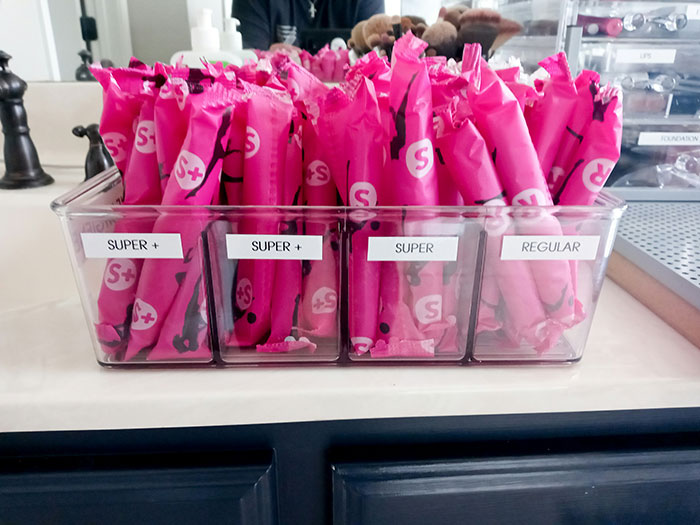
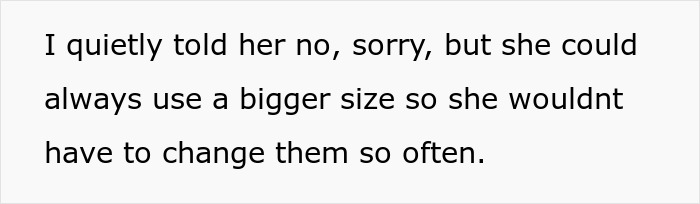
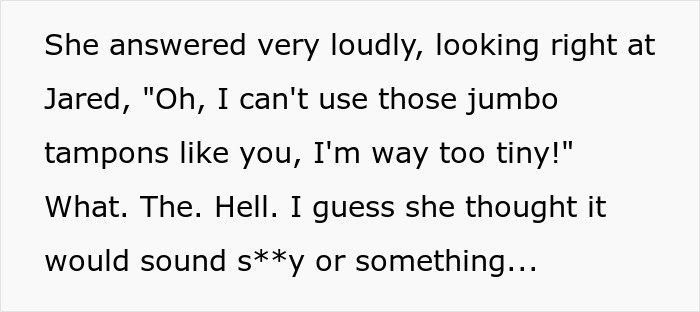
The friend repeatedly took the woman’s light tampons without asking, then made a pointed comment about being too tiny for larger ones
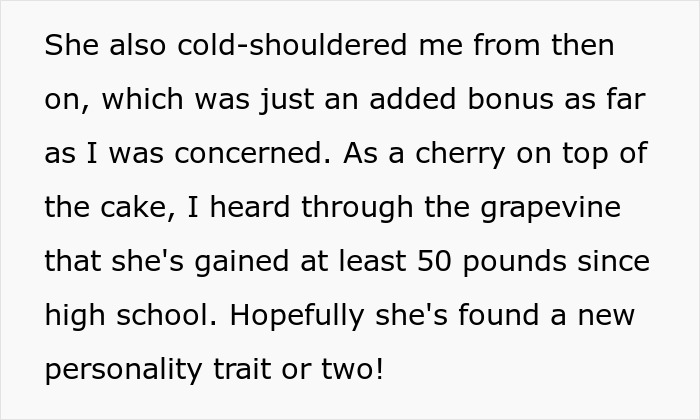
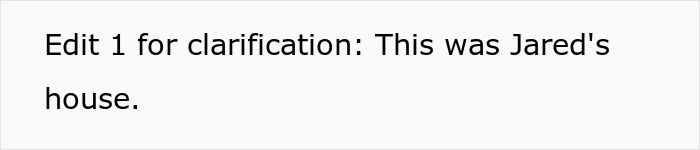
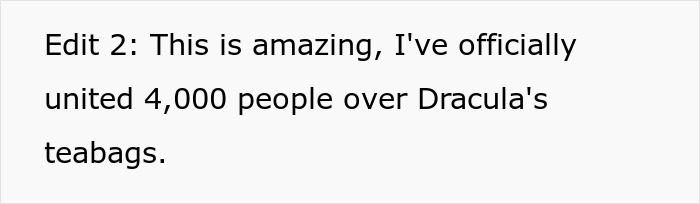
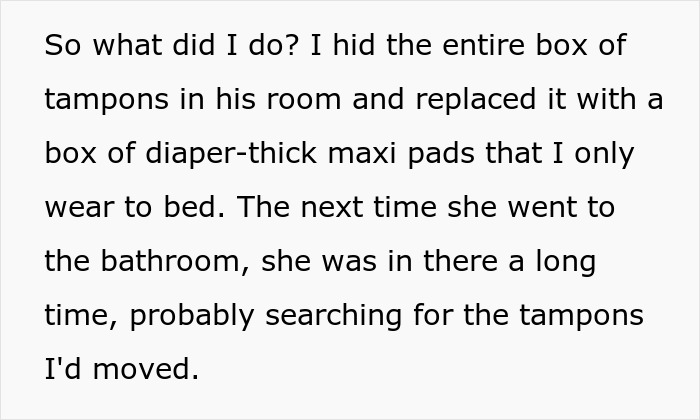
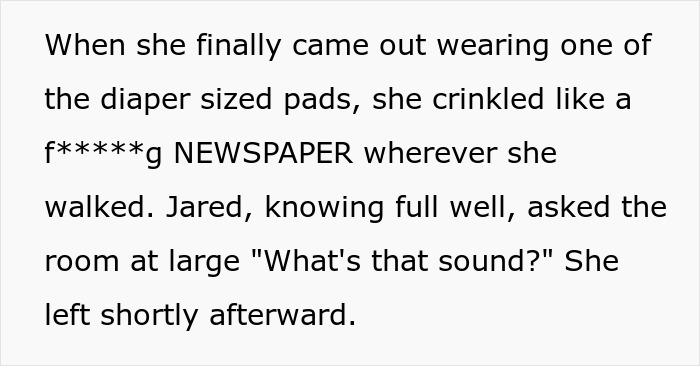
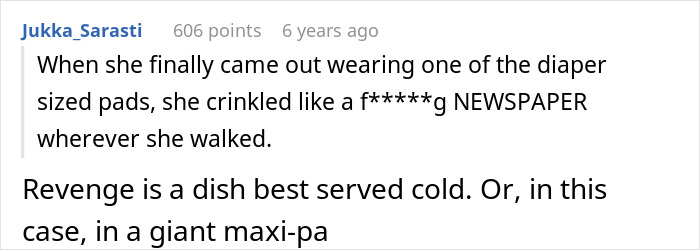
The woman eventually hid the tampons and replaced them with bulky pads, leaving the friend embarrassed and effectively ending their friendship
The girl in the story was described as petite and seemingly very invested in making sure everyone noticed it. She reportedly emphasized how small she was compared with the poster’s boyfriend. That kind of behavior isn’t necessarily unusual among teenagers, when people are still figuring out how they want others to perceive them.
Appearance can become part of a social identity, and being noticeably petite can sometimes be treated as a desirable trait rather than simply a physical characteristic. Research has even found that women’s physical stature can influence how observers perceive their personalities, although the direction and meaning of those stereotypes are complicated.
There is also a reason some people may genuinely enjoy being very thin or small, and it could be that they have learned to associate that body type with positive qualities. Being petite can make someone feel feminine, delicate, youthful, attractive, or distinctive, particularly if people around them reinforce those associations.
It’s important to note that being petite doesn’t automatically creates confidence, rather it shows that body size and self-perception can be connected in complicated ways. The distinction matters because there is nothing inherently wrong with being petite, just as there is nothing inherently wrong with being tall, muscular, curvy or somewhere in between.
wirestock (not the actual photo)
So her comments about being too small for certain products may have been meant as flirtation, humor, or simply another way to reinforce the persona she had built around herself. However, the problem isn’t being petite, tall, curvy or otherwise built a certain way, it is the idea that a person’s body has to perform a particular identity for other people.
A menstrual product is ultimately there to manage menstrual flow, not to prove anything about someone’s appearance. Strip away the high-school flirting and the deliberately ridiculous revenge, and the clearest interpersonal issue is taking someone else’s belongings without permission. If something isn’t yours, the basic rule is to ask.
People tend to react strongly when someone violates a seemingly simple boundary because the object itself isn’t necessarily the important part. Berkeley Wellbeing emphasizes that the message behind the behavior matters, and in a lot of cases it’s the person taking assumes that the recepient of their entitlement won’t stop them.
And the truth is that petty revenge usually feels tempting when a boundary has been ignored. Psychology Today acknowledges that when someone ignores a small boundary, if the victim doesn’t address it immediately, the irritation accumulates, and eventually they choose the most unnecessarily elaborate way imaginable to make their point.
Do you think there is a difference between being confident about your appearance and constantly seeking validation for it? We would love to hear from you!
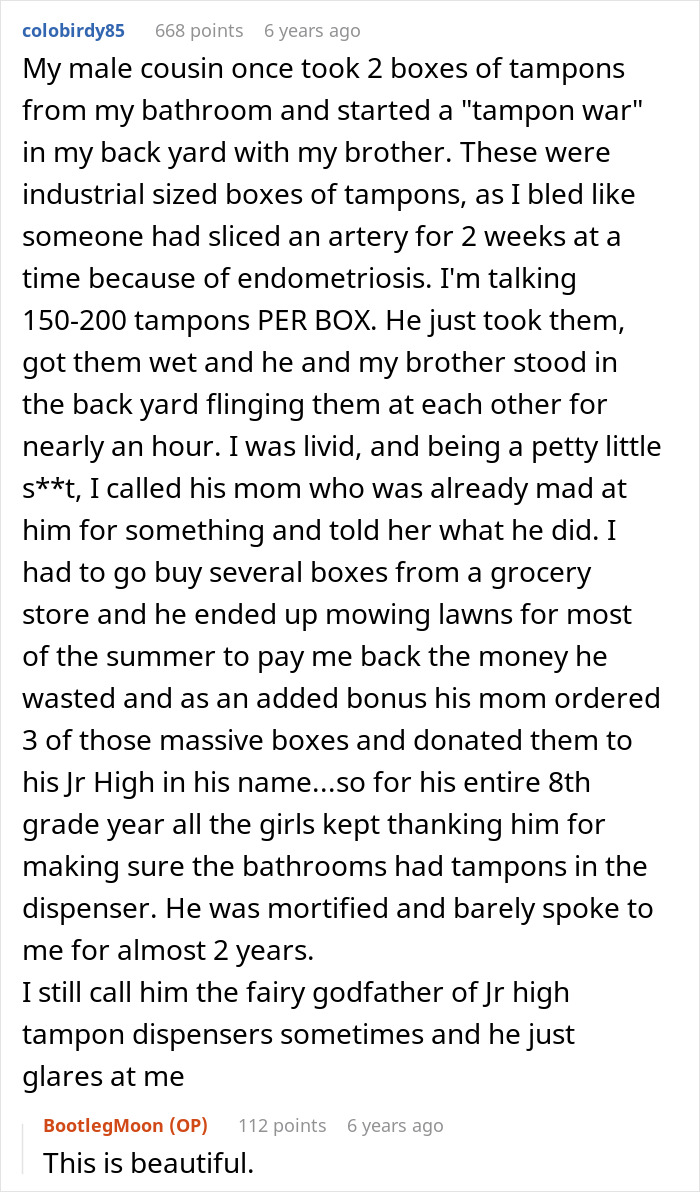
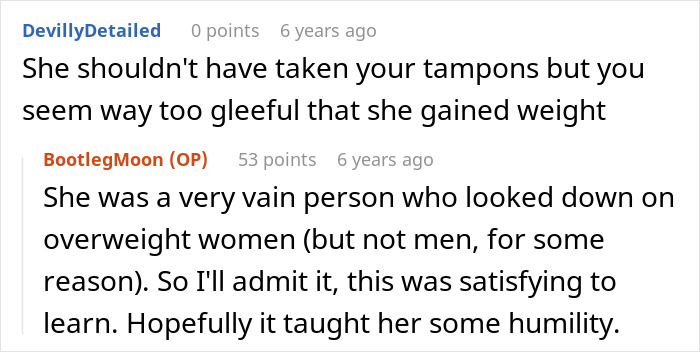
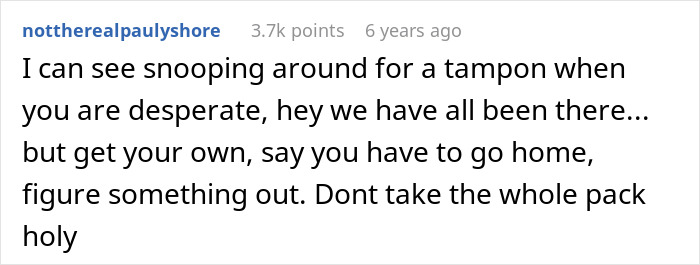
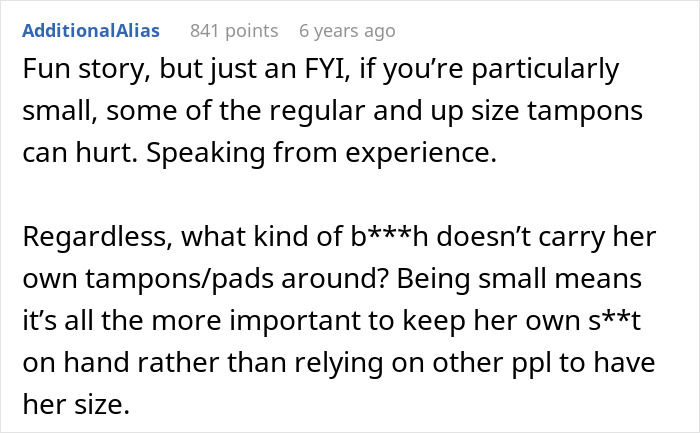
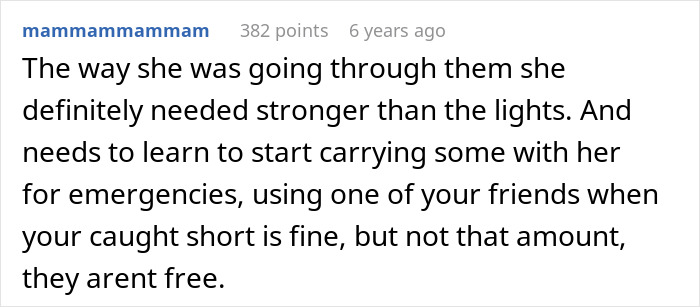
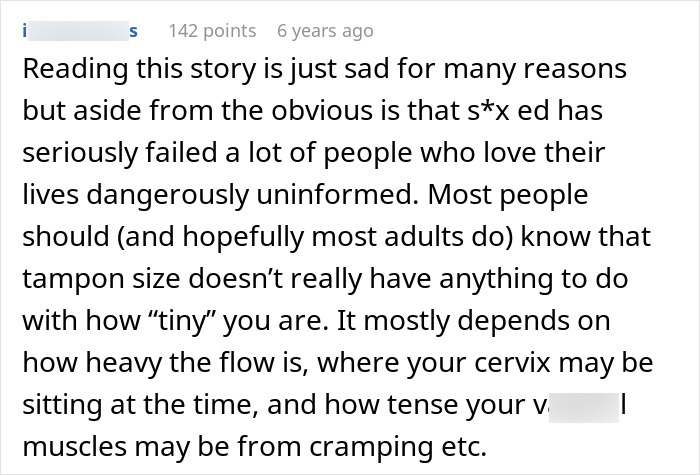
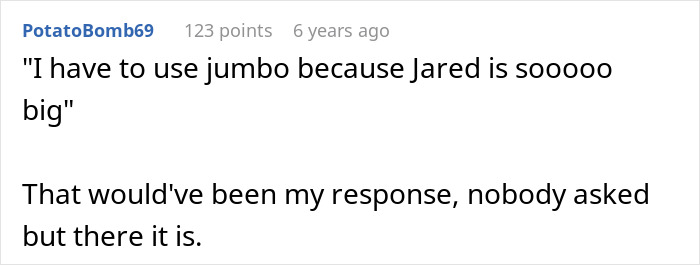
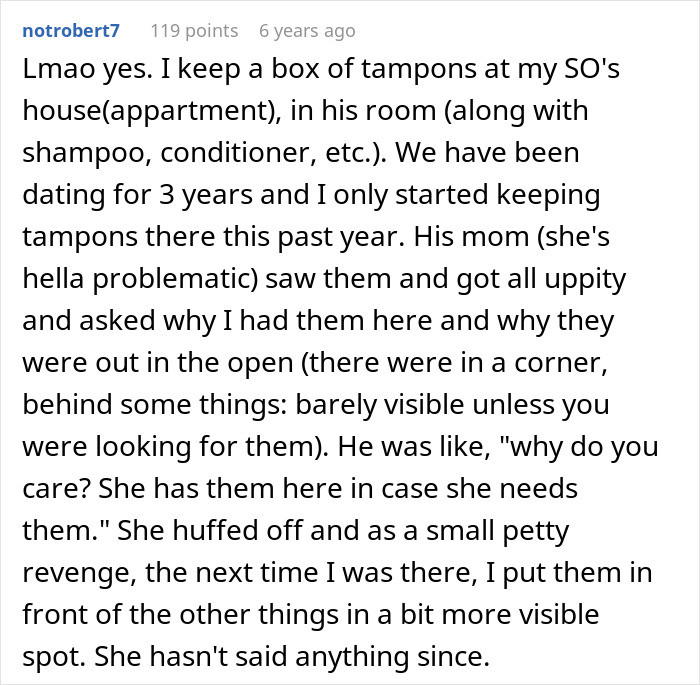
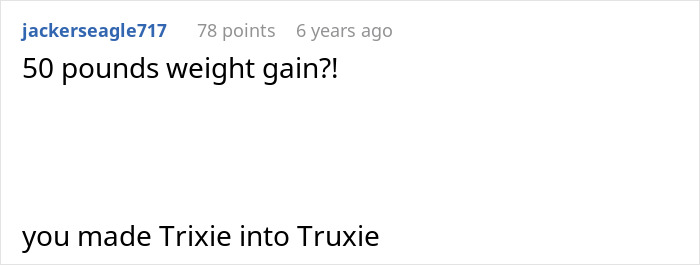
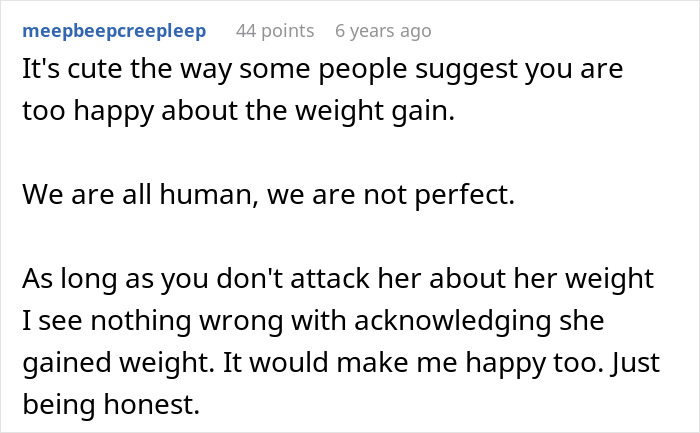
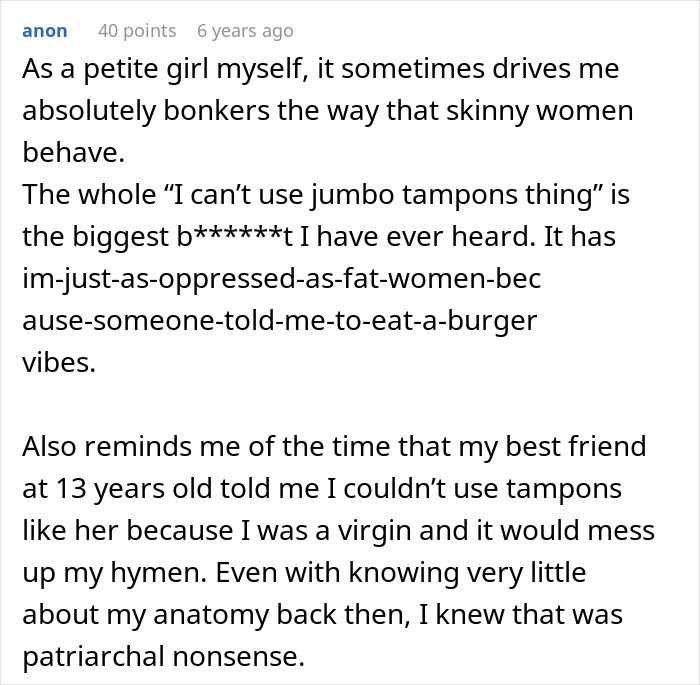
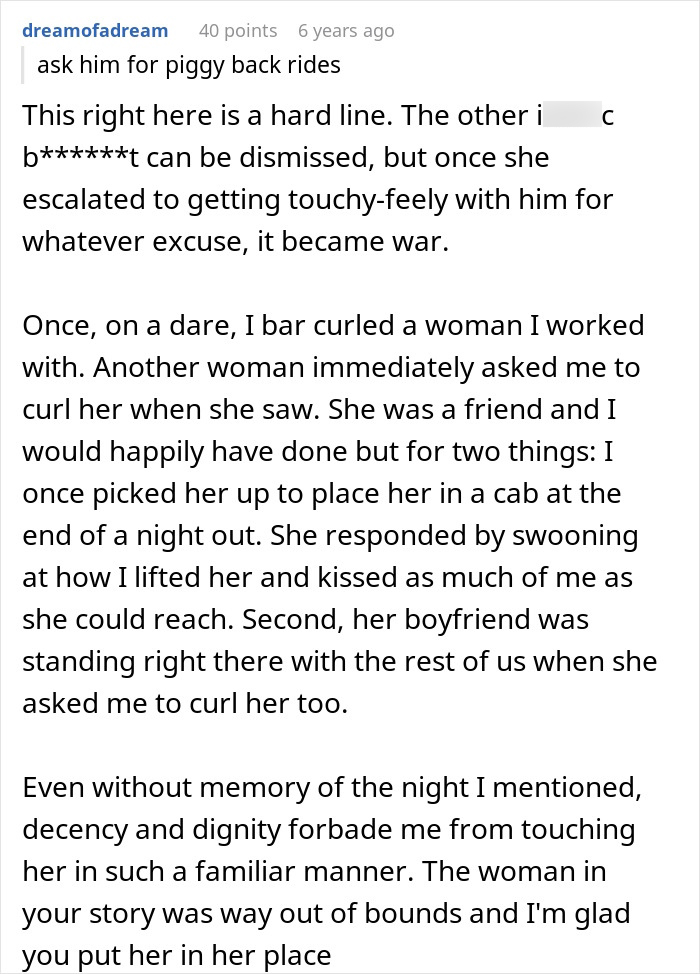
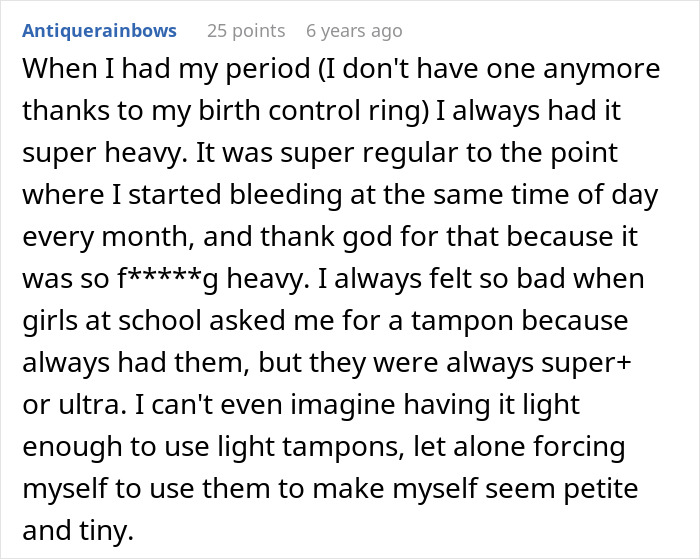
Netizens were frustrated, pointing out that product size and absorbency should depend on menstrual flow and individual comfort, not body weight or appearance




 Follow Us