The evolution of Homo sapiens is quite riveting because we can adapt so efficiently to the different environments around us. Of course, it takes thousands of years, but it happens nonetheless, and it even raises questions about what the future holds as the environment changes.
Coming back to the present, a nomadic tribe from the Philippines has developed a “new mutant gene” that helps them swim underwater for long hours. Much to researchers’ surprise, it was discovered that the secret lies in their spleen. Scroll down to read all about its fascinating evolution!
The Bajau tribe from the Philippines has developed a genetic mutation that helps them swim underwater for 5 hours a day
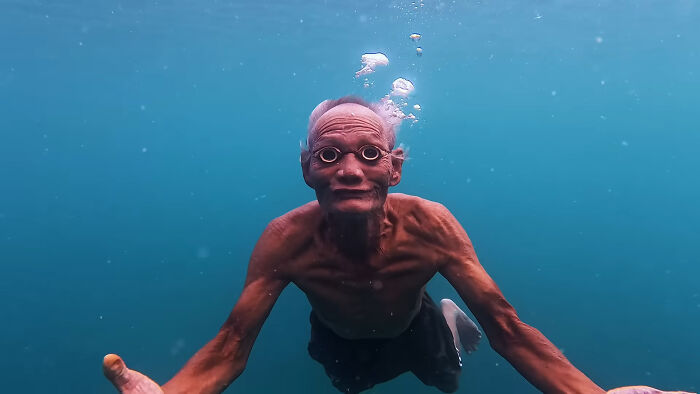
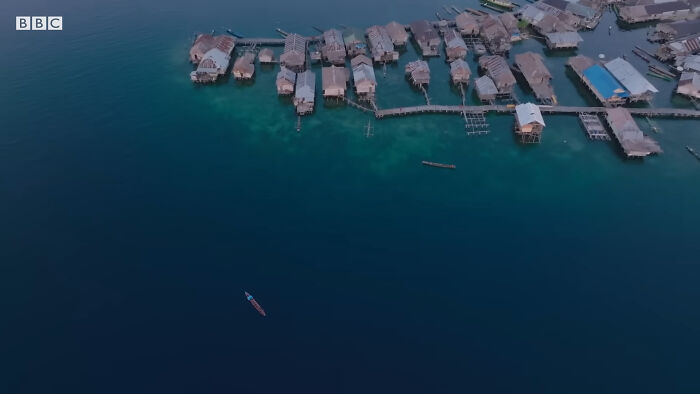
The Bajau are a nomadic and seafaring tribe in the Tawi Tawi province of the Philippines that has evolved an unusual yet fascinating genetic mutation. These “fish-men” have had a relationship with water for thousands of years.
Diving is part of their lifestyle, as they thrive on spearfishing, collecting shellfish, and even living in stilted houses over the water. Santarawi Lalisan, an 85-year-old elder statesman of the tribe, told Giuseppe from Project Happiness, “Children in the community are taught to swim almost as soon as they are born.”

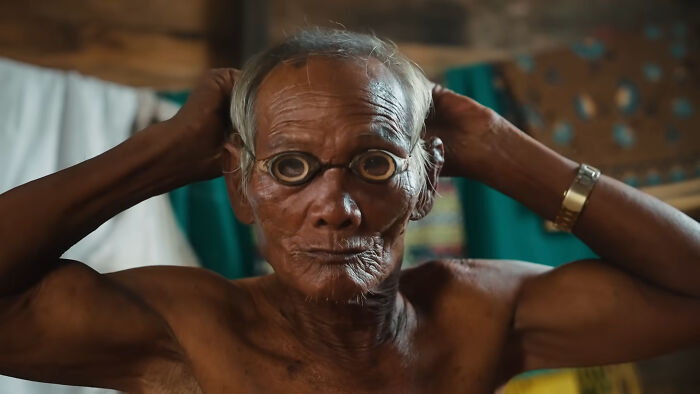
“I am a champion in Tawi Tawi. In my time I lasted eight minutes underwater, now I can last a maximum of five minutes,” he added. The Bajau people have lived like this for generations, and their aquatic lifestyle has led to an interesting biological adaptation.
Researchers have discovered that this tribe has larger spleens. Technically, the job of this fist-sized organ is to make oxygen available in the blood. Author Melissa Ilardo, from the University of Copenhagen, told the BBC that the larger spleen produces more oxygen by removing old blood cells.
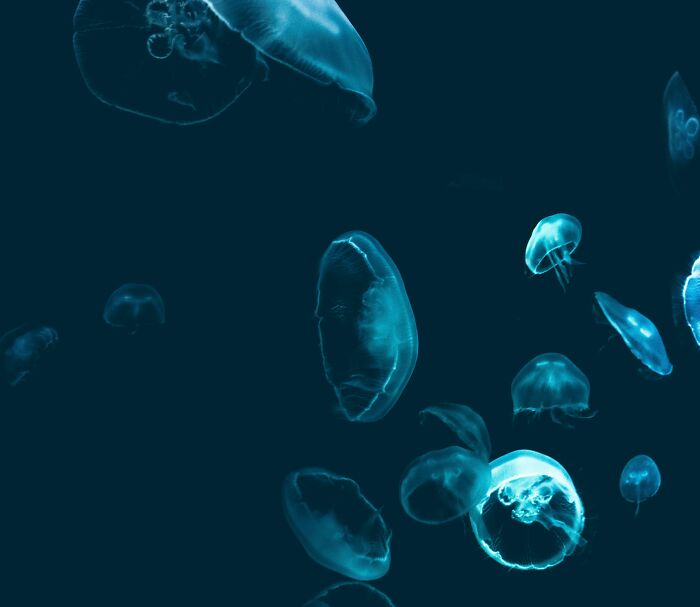
Researchers have found that the Bajau people have a 50% larger spleen than those of the neighboring region
Evelyn Verdín / Unsplash (not the actual photo)
This acts as a biological “scuba tank” during long dives. They can hold their breath longer underwater. “When they’re diving in the traditional way, they dive repeatedly for about eight hours a day, spending about 60% of their time underwater. So this could be anything from 30 seconds to several minutes, but they’re diving to depths of over 70m,” Dr. Ilardo noted.
To explore this point further, Dr. Ilardo asked the villagers if she could look at their spleens. The result revealed that the Bajau tribe’s spleens are, on average, 50% larger than those of people from neighboring regions. No wonder they only use traditional wooden masks or goggles and a weighted belt when they dive.
The study also sought to identify a genetic basis for the adaptation of this spleen, and the PDE10A gene stood out. In mice, this gene regulates a thyroid hormone that controls spleen size. Researchers concluded that this gene was far more common among the Bajau people, so it evolved their spleens to sustain their aquatic lifestyle.
This finding also reflects an earlier study on the genetic adaptation of the Tibetan population living at high altitudes. Experts believe that their gene variant came from ancient interbreeding with Neanderthals. This has raised questions about whether Bajau evolution is related to similar ancient interbreeding.
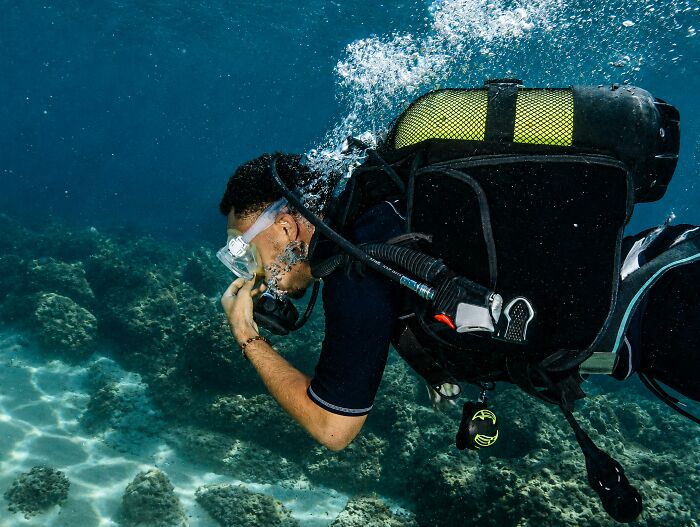
Ryan Hall / Unsplash (not the actual photo)
Unfortunately, Western influence is sparking trouble for this nomadic tribe, and plastic litter is entering their water
As far as we are aware, it was around 15,000 years ago that the Bajau diverged from the non-diving Saluan. “This was plenty of time to develop the aquatic adaptation,” claimed Dr. Ilardo.
As incredible as their lifestyle sounds, the sad truth is that Western influence is imposing a threat to their traditions and culture. Increasingly, community members are opting out of their way of life to seek a Western lifestyle. Elders are disappointed that they use plastic to buy things from the supermarket, rather than paper as they did before.
Christian Agbede / Unsplash (not the actual photo)
Moreover, pollution is taking a toll on the water and the fish that they depend on for their survival. However, there are some people who are strongly holding on to their old traditions and keeping their history alive.
“I am a true Badjao. I get some water to drink and then go into the sea. Before diving, I take another sip… but this time with salt water to feel at one with the sea… and then I dive. Living in the sea is the only thing that can make me happy… until the end of my days,” the elder Santarawi proudly told Giuseppe.
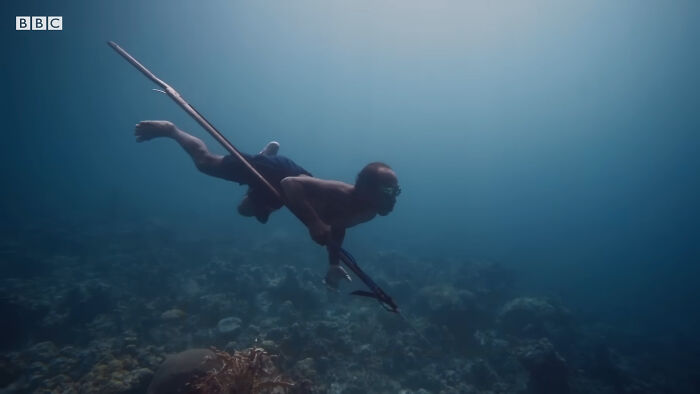
Experts found this genetic mutation really intriguing as it sheds light on humans’ capacity to adapt. Even netizens were fascinated by the Bajau people and hoped their culture and traditions wouldn’t fade away. What are your thoughts about it? Feel free to drop them in the comments below!
The Bajau people’s unusual genetic mutation fascinated netizens















 Follow Us