Scheduled for release on Netflix on September 25, 2026, Janus Metz Pedersen’s UNABOMBER is poised to reignite conversations about Ted Kaczynski. From May 1978 to April 1995, the brilliant mathematician terrorized Americans in his lone campaign against technological advancement. Kaczynski believed that such development was an evil destroying the natural environment. So he built homemade pipe bombs and mailed them to random people he deemed to be at the forefront of the ecocide. He targeted universities and airlines in the early days of his terror campaign.
As such, he became known as the Unabomber, a name derived from UNABOM (University and Airline Bombing), the code name of an FBI-led task force set up to investigate the bombings. Kaczynski’s bombs killed three Americans, with at least 23 injured before his arrest. Pedersen’s crime drama explored all of that, vis-à-vis the controversial psychological experiments he was subjected to at Harvard under Professor Henry Murray (Russell Crowe) and his partner Christiana Morgan (Annabelle Wallis). How did the duo’s story end in real life?
Did Henry Murray And Christiana Morgan’s Experiments Radicalize The Unabomber?
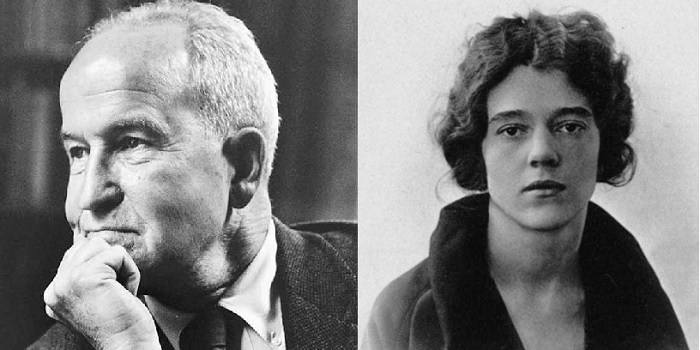
To a great extent, the premise of Pedersen’s film connects Ted Kaczynski’s terrorism to his time at Harvard, and especially to Henry Murray’s experiments. This reflects the debate that ensued after the Unabomber’s arrest. However, it’s uncertain if Murray and Christiana Morgan’s experiments contributed to the making of the Unabomber. While his lawyers suggested that Murray’s experiments shaped him in some way, Kaczynski said he was confident his participation in Murray’s study was insignificant to who he became. Nonetheless, he noted that he resented the professor and his colleagues because of the invasive nature of their experiments.
Beyond these experiments, Alston Chase, a former philosophy professor who also attended Harvard and corresponded with Kaczynski, argued that the Unabomber resulted from the corrosive power of intellect that tends to place ideas above humanity. In a lengthy piece published on The Atlantic in June 2001, Chase made a case for Harvard’s role in the making of the Unabomber, concluding that “a series of purposely brutalizing psychological experiments may have confirmed Theodore Kaczynski’s still-forming belief in the evil of science while he was in college.”
“It was the confluence of two streams of development that transformed Ted Kaczynski into the Unabomber,” Chase wrote. “One stream was personal, fed by his anger towards his family and those who he felt had slighted or hurt him in high school and college. The other derived from his philosophical critique of society and its institutions, and reflected the culture of despair he encountered at Harvard and later. The Murray experiment, containing both psychological and philosophical components, may well have fed both streams,” Chase submitted.

What Was The Nature Of The Psychological Experiments?
Multiple sources have labeled Murray’s psychological experiments as “unethical,” “extreme,” and “brutalizing.” In his piece, Chase described it as an “ethically indefensible experiment” where participants were code-named to preserve their anonymity. Chase uncovered that Ted Kaczynski was called “Lawful,” and that the experiment’s purpose was to measure how people react to extreme stress. As such, Kaczynski and other participants were subjected to “intensive interrogation–what Murray himself called ‘vehement, sweeping, and personally abusive’ attacks, assaulting his subjects’ egos and most-cherished ideals and beliefs.”
At a young age, Ted Kaczynski was subjected to 200 hours of the experiments, where his views were rudely belittled to see if he would abandon his convictions. Yet, there’s no telling whether Kaczynski’s participation in the experiments influenced him towards becoming the Unabomber. In fact, the Henry A. Murray Research Archive at the Radcliffe Institute for Advanced Study at Harvard sealed Kaczynski’s data, eradicating the chance for insight into his psychological history.
The center claims it permanently removed the file because it can’t protect its confidentiality anymore. “We have a very strong policy of maintaining the confidentiality of people who participated in studies archived here,” the Murray Center Director Annemette Sorensen said. But the Unabomber, according to Chase, “hinted darkly that the Murray Center seemed to feel it had something to hide.”
How Did Henry Murray And Christiana Morgan’s Story End?
The Harvard Psychology professor and his partner Christiana Morgan worked together for years without facing any consequences for their unethical experiments, at least not while they were still alive. Their study on Ted Kaczynski and twenty-one other undergraduates is now widely condemned, but the pair are still acknowledged for their contributions to psychology. They are particularly recognized for the Thematic Apperception Test, although Morgan’s contributions have been eclipsed over the years.
In her later days, Morgan struggled with alcoholism and depression. She drowned at age 69 in March 1967, but due to conflicting accounts of her death, several biographers suspect she might have committed suicide. Two decades later, her academic and romantic partner passed on. Henry Murray died as a highly accomplished figure in psychology. He died of pneumonia in June 1988 at age 95. Check out why Daveigh Chase left acting long before her death.
 Follow Us


